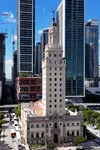
Miami's Freedom Tower. Built in 1925 as the home of the Miami Daily News, Miami's Freedom Tower became the Federal Processing Center for hundreds of thousands of Cuban refugees from 1962 to 1974.
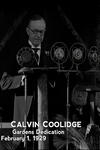
President Calvin Coolidge visited Florida in 1929, and after leaving office in 1930. His stops included Lake Wales, Mount Dora, Tarpon Springs, Rollins College, Silver Springs, and more.
Episode 66
Florida Frontiers TV - Fort Caroline
Florida Frontiers TV - Fort Caroline
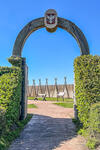
French Fort Caroline. French Huguenots built Fort Caroline in 1564 on land controlled by the Timucua-speaking Mocama and claimed by the Roman Catholic Spanish, leading to conflict.
Episode 65
Florida Frontiers TV – Ma Barker House
Florida Frontiers TV – Ma Barker House
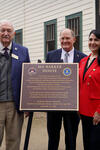
In 1935, the longest shootout in FBI history happened in Ocklawaha, Florida, resulting in the deaths of gangsters Ma Barker and her son Fred. The Ma Barker House is now a museum.
Episode 64
Florida Frontiers TV – Henry Flagler
Florida Frontiers TV – Henry Flagler
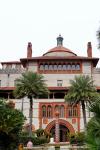
Henry Flagler. As founder of the Florida East Coast Railway, industrialist Henry Flagler played a major role in the development of the state. We visit St. Augustine, Palm Beach, and Key West to discuss his impact on Florida.
Episode 63
Florida Frontiers TV - Cassadaga
Florida Frontiers TV - Cassadaga
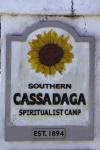
Cassadaga. Established in 1894, Cassadaga is one of Florida's most unique historic communities. Known around the world as a center for Spiritualism, the residents of Cassadaga believe that life continues after physical death, and that mediums can be used to communicate with the Spirit World.
Episode 62
Florida Frontiers TV - Fort Christmas
Florida Frontiers TV - Fort Christmas
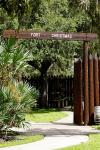
Fort Christmas was built on December 25, 1837, during the Second Seminole War. A replica of the fort is at Fort Christmas Historical Park in east Orange County, along with a collection of pioneer homes and buildings.
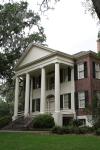
Plantations in Florida were part of an agrarian society that depended upon the labor of enslaved people. Remnants of Florida's plantation culture can still be seen today at places including Goodwood Museum and Gardens and the Grove Museum in Tallahassee, the Kingsley Plantation on Fort George Island in Duval County, and at Bulow Plantation Ruins Historic State Park in Flagler County.
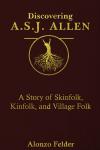
Discovering A.S.J. Allen. In 1904, the African American community leader A.S.J. Allen was killed by a white neighbor over a property border dispute. Allen's great-grandson Alonzo Felder has researched his productive life and tragic death.
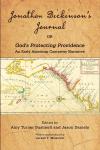
Jonathan Dickinson's Journal. Newly discovered documents from 1696 add to familiar accounts of Jonathan Dickinson's shipwreck and survival in Florida.
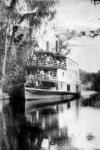
Memories of Palatka. By the mid-1800s, the historic town of Palatka was a transportation hub for steamboat traffic. In the early 20th century, it became a battleground against the Ku Klux Klan. In 1933, Ravine Gardens State Park became a WPA project. Beginning in the 1970s, The Florida School of the Arts provided performers for "Cross and Sword," the official state play of Florida.
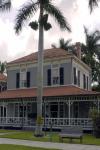
The Edison and Ford Winter Estates. Inventor and entrepreneur Thomas Edison first came to Florida in 1885, where he built a winter residence and laboratory. In 1916, Edison’s friend and collaborator, automobile manufacturer Henry Ford, bought his own Fort Myers estate, right next door to Edison’s.
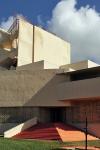
Frank Lloyd Wright is known as one of the most influential architects of the 20th century. Wright wanted to create a uniquely American style of architecture that broke away from European models, and create geometrically interesting, organic structure that blended into the natural landscape. His largest single collection of building in one location is at Florida Southern College in Lakeland. Wright’s only private residence constructed in Florida is Spring House in Tallahassee.
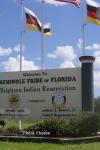
The Seminole (along with the Miccosukee) are the indigenous people of Florida. Seminole history and culture is preserved at the Ah-Tah-Thi-Ki Museum on the Big Cypress Reservation.
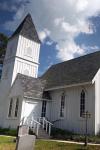
Carpenter Gothic Churches in Florida. Dozens of Carpenter Gothic style churches were built in Florida in the 19th century.
Episode 53
Florida Frontiers TV - Leon and Jewel Collins Museum of African American History & Culture
Florida Frontiers TV - Leon and Jewel Collins Museum of African American History & Culture
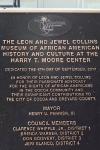
The Leon and Jewel Collins Museum of African American History and Culture in Cocoa includes exhibits about Harry T. Moore who worked in the building, Zora Neale Hurston who lived nearby, and Original Highwayman Artist R.L. Lewis.
The Florida Historical Society Public History Forum and the Annual Marjorie Kinnan Rawlings Society Conference were held together in Gainesville, in 2022.
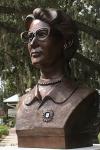
Mabel Norris Reese. Courageous journalist Mabel Norris Reese covered the infamous Groveland Rape Trial and Ku Klux Klan activities in Lake County in the mid-20th century.
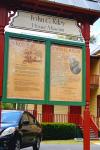
The John G. Riley House. Built in Tallahassee in 1890, the John G. Riley House is now a museum of African American history.
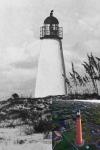
Ponce Inlet Lighthouse. Completed in 1887, the Ponce Inlet Lighthouse is the tallest in Florida, and a National Historic Landmark.
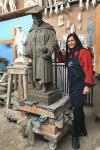
Mary McLeod Bethune was a larger-than-life educator and activist whose legacy is now remembered with an eleven-foot tall, 6,000-pound statue carved by Nilda Comas. She used the last piece of statuary marble taken from the same Italian quarry used by Renaissance artist Michelangelo. The statue will represent Florida in the US Capitol building.
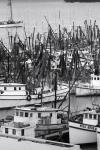
The Shrimping Industry in Florida: Commercial shrimping and shrimp boat building thrived in Florida from about 1900 through the 1980s.
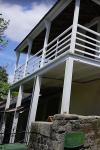
The Ximenez-Fatio House was built in 1798 in St. Augustine, during Florida's Second Spanish Period.
Prominent historians discuss the diverse population of Florida 200 years ago.
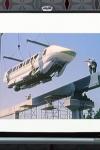
Fifty Years of Walt Disney World. Opening in 1971, Walt Disney World has had a significant impact on the economy, politics, and history of Florida.
Relevant Date