Florida Frontiers

A Tag for nodes that are relevant to Florida Frontiers.   For example if an artilce is about Florida Frontiers and you would like a 'View' to sorty by Tag criteria for it... us it.

Article Number
79
relevantdate

    In 1738, the first legally sanctioned free black settlement was established in what would become the United States.

    El Pueblo de Gracia Real de Santa Teresa de Mose, popularly known as Fort Mose, was a community of former slaves who pledged allegiance to the King of Spain, became Catholic, and agreed to defend Spanish controlled Florida from invaders.

    Located just north of St. Augustine, Fort Mose was the first line of defense against attack from British colonies. 

    As part of the War of Jenkins Ear between Spain and Great Britain, General James Oglethorpe led an invading force into Spanish Florida. In the early morning of June 26, 1740, that invasion was repelled at Fort Mose.

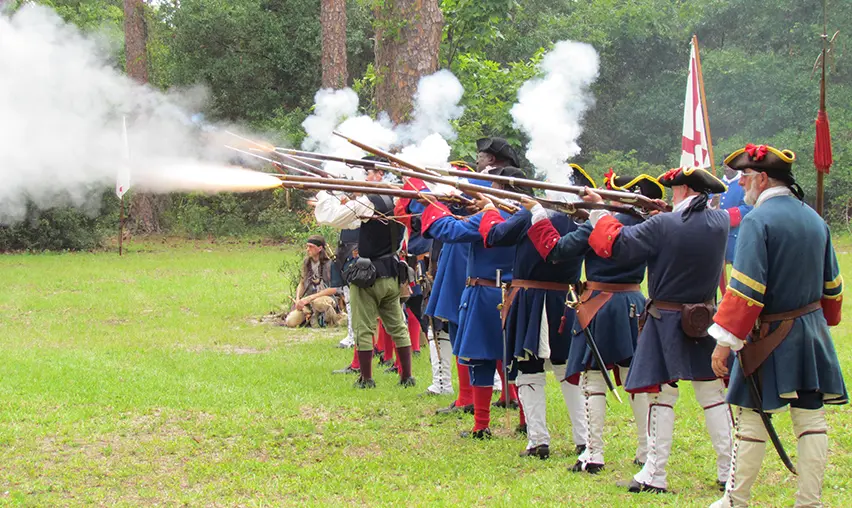
    Since 2010, an annual reenactment of the Bloody Battle of Fort Mose has been staged at Fort Mose Historic State Park. Several groups of reenactors participate in the event, coordinated by Florida Living History, Inc.

    “This is a reenactment of the surprise attack, in June of 1740, that the Spanish soldiers in St. Augustine, the black militia from Fort Mose, and Yamasee auxiliaries launched to recapture the Fort Mose site from British and Scottish invaders from Georgia and Carolina,” says Davis Walker, president of Florida Living History, Inc.

    “The attack was launched just before dawn,” says Walker. “The defending forces were caught completely by surprise and basically massacred.”

    The Bloody Battle of Fort Mose successfully ended Oglethorpe’s siege of St. Augustine, and returned control of Florida to the Spanish.

    Fort Mose was destroyed during the battle, and it would take twelve years to rebuild the outpost.

    Florida Living History, Inc. presents a variety of historical reenactments throughout the year, but the Bloody Battle of Fort Mose allows collaboration with other groups. British and Scottish reenactors come from Fort King George and Fort Frederica in Georgia. People portraying Spanish soldiers come from all over Florida. The Fort Mose Militia provides black soldiers, and Yamasee Indian reenactors come from Tampa and St. Augustine to participate.

    “We’ve always thought that this would make such a unique living history event because it involves European, black, and Native American elements,” says Walker. “Happily, our friends at the Florida Park Service and here at Fort Mose encourage that very strongly, and have been working hand and hand with us to grow this event. Also, the Fort Mose Historical Society, a volunteer group that supports the park, has taken part.”

    Andrew Batten, director of attractions at the Brevard Zoo in Melbourne, travels to St. Augustine to participate in the Bloody Battle of Mose reenactment. Batten portrays a member of the South Carolina Rangers, one of Oglethorpe’s militiamen. There were about twice as many Spanish troops at Fort Mose as there were British soldiers.

    “You have four different (British) units within this, all doing things different ways,” says Batten. “The other problem is that you have soldiers like myself, who are trying to make a little money on the side. If I capture Spanish horses, I can sell them to the British army, and I can make much more money doing that than I can doing my job. So the South Carolinians who are here, unfortunately, were poorly led, they had poor morale, very poor discipline, so you see the results in what became known as Bloody Mose. Of the 137 British troops here, 25 got out unharmed or uncaptured or alive.”

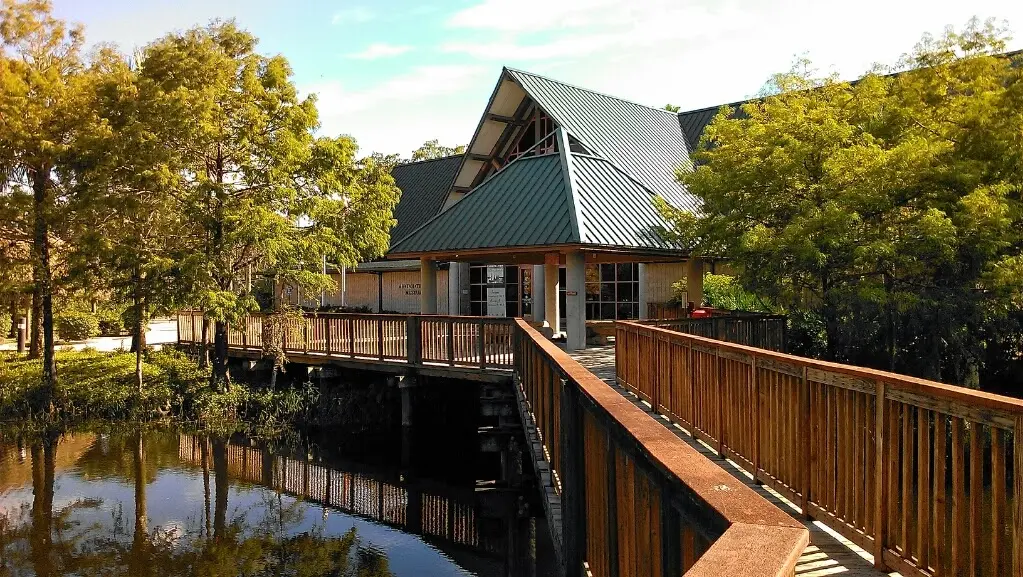
    Fort Mose Historic State Park, a National Historic Landmark, is where the battle reenactment takes place each year. A boardwalk takes visitors to marshlands where the original Fort Mose stood. The battle reenactment takes place on uplands adjacent to the marsh.

    A museum at the site tells the story of America’s first free black settlement.

    “We have a $750,000 interactive and interpretive museum where the exhibits actually respond to your movement throughout,” says Thomas Jackson, vice-president of the Fort Mose Historical Society.

    The museum is open 9am to 5pm Thursday through Monday, and is closed Tuesday and Wednesday.

    In addition to the Bloody Battle of Fort Mose reenactment in June, the Fort Mose Historical Society presents Living History programs during the last weekend of every month. These programs include demonstrations of food, the firing of muskets, and portrayals of historic figures.
     

    PDF file(s)
    Article Number
    78
    relevantdate

      The traditional culture of the Seminole Tribe of Florida is preserved at the Ah-Tah-Thi-Ki Museum on the Big Cypress Reservation in south Florida, near Clewiston.

      The state of the art museum and archival facility features permanent exhibitions and rotating gallery space, a research library, and an extensive collection of newspapers, oral histories, manuscripts, and artifacts including patchwork clothing, baskets, and dolls.

      In the Seminole language Ah-Tah-Thi-Ki means “a place to learn” or “a place to remember.”

      “That’s really what we hope to do here at the museum, is to educate the public but also to keep the traditions and culture alive within our own tribe,” says traditional arts coordinator Pedro Zepeda.

      “We want this to be the source for tribal history and culture for people,” says director Anne McCudden. “We want this to be the place where people can come to get the correct information, to meet tribal members, and to really experience tribal culture one-on-one.”

      In the 1700s, Lower Creek Indians from Georgia and Alabama migrated into Florida, blending with remnants from some of Florida’s indigenous tribes and runaway slaves. By the 1770s, this group of people became known as Seminole, which means “wild people” or “runaway.”

      Throughout the 1800s, a series of three Seminole Wars took place, as the United States government sought to expand its territory, and recapture runaway slaves. By 1858, about 300 Seminole remained in the swamps of south Florida.

      In the twentieth century, the Seminole capitalized on the state’s growing tourism, and remained active in citrus growing and the cattle industry. Today, the Seminole have expanded into the hotel, restaurant and gaming businesses as owners of the worldwide Hard Rock franchise.

      “The policy of the United States was to eradicate us in the 1800s, and we’ve survived,” says outreach specialist Willie Johns. “This museum houses all the pictures and all the stories of all these people that did survive. They made a living out of nothing in this Florida wilderness. They made the Seminole Tribe what it is today.”

      Johns travels all over the state using artifacts from the Ah-Tah-Thi-Ki Museum to introduce people to Seminole culture.

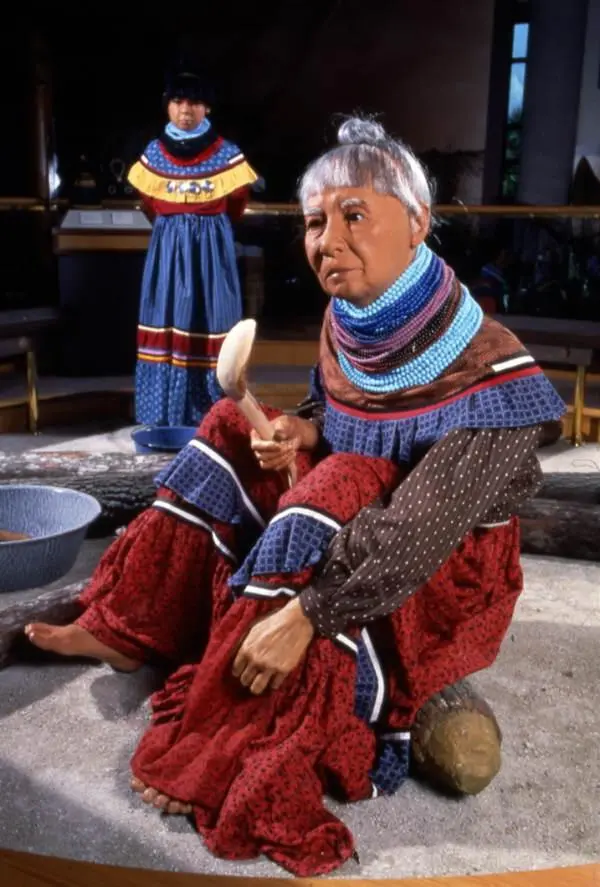
      Throughout the Ah-Tah-Thi-Ki Museum, life sized figures are used to demonstrate traditional Seminole clothing and practices such as hunting, fishing, canoeing, and performing the Green Corn Dance. Wood carvings, jewelry, and baskets are also displayed.

      “I really like the palmetto baskets that we have on display,” says Pedro Zepeda. “That’s something that my family used to make from saw palmetto stems. Seminole arts are usually associated with the sweet grass baskets, but that’s something that we didn’t develop until the tourist trade after the turn of the (twentieth) century. These palmetto baskets were our work baskets and our ceremonial baskets. Those are the ones that we used in our day to day lives.”

      “We also have Osceola’s bandolier bag,” says curator of exhibits Saul Drake. “That’s incredibly powerful for Seminole tribal members to be able to see that and connect that to a very strong portion of history in the Seminole Tribe. That’s kind of a symbol of how far the Seminole Tribe has come.”

      One of the rotating exhibitions at the museum is called “Postcards and Perceptions: Culture as Tourism.” It shows how the Seminole fueled Florida tourism in the early twentieth century.

      “These postcards that were mass produced are representations of actual real people that lived during this time period. We have tribal members that come into the museum and say ‘oh, that’s my grandmother’ or ‘that’s my great uncle’ and it’s such a strong connection,” says Drake.

      As with most museums, only a small portion of the Ah-Tah-Thi-Ki collection can be displayed at one time. The museum has a high-tech preservation and storage facility, and shares items with the Smithsonian Institution, the Museum of Florida History, and other organizations.

      More than a mile of boardwalk leads from the museum to an Indian village and ceremonial center. Visitors can experience the natural Florida while learning about how the Seminole interact with the environment.

      “Ethnobotanical signage gives you background on the plant itself, and some cultural information on how the Seminole used them in the past,” says Drake.

      The Ah-Tah-Thi-Ki Museum lives up to its name.

      PDF file(s)
      Article Number
      77
      relevantdate

        Artist Jackson Walker has dedicated his life to preserving Florida history through large oil paintings.

        “I got to thinking about Florida, and my own family’s history, and it just kind of dawned on me, well that’s what you know, that’s where you live, that’s who you are,” says Walker.

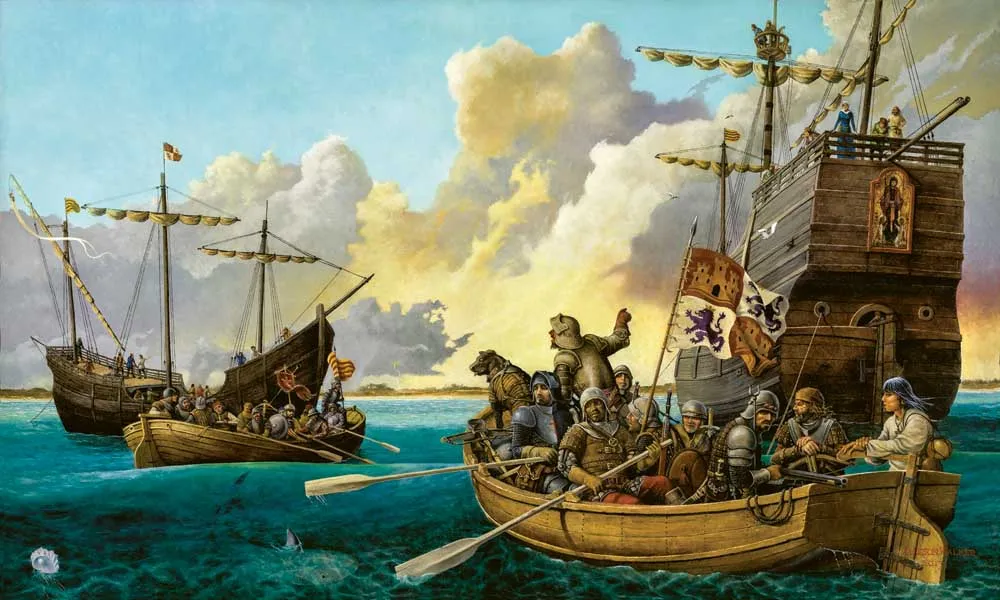
        His 48 x 72 inch painting “They called it La Florida: The First Landing of Ponce de León in Florida, April 2, 1513” will be on display July 17 through December 11 at the Brevard Museum of History and Natural Science in Cocoa as part of the “ArtCalusa: Reflections on Representation” exhibition.

        The opening reception is this Friday evening from 6pm to 8pm. Tickets are available at www.myfloridahistory.org. Walker will be on hand to sign prints of the painting, and his book of Florida art.

        The cover of the book “Recovering Moments in Time: The Florida History Paintings of Jackson Walker” features a realistic image of Teddy Roosevelt and the Rough Riders on horseback in Tampa in 1898. The fanciful towers of the Tampa Bay hotel can be seen in the background.

        Theodore Roosevelt was the 26th president of the United States, from 1901 to 1909. Several years before that, as a member of the First United States Cavalry, also known as the Rough Riders, Roosevelt and his regiment camped in Tampa while awaiting transport to Cuba during the Spanish American War.

        Other notable people depicted in Walker’s paintings include naturalist William Bartram, Seminole Chief Osceola, writer Marjorie Kinnan Rawlings, and anthropologist Zora Neale Hurston.

        Walker is a native Floridian, born in Panama City and raised in Stuart. His varied career includes two combat tours in Viet Nam with the U.S. Army, work in graphic design and advertising, and time as a singer songwriter.

        “I wanted to try oil painting as a very young guy, and struggled with it all of my life,” says Walker. “In fits and finishes my career would steadily go forth, but I had to depend on other means until I came to Orlando.”

        When Walker and his wife Nancy moved to Orlando in 1990, he decided to try painting full time.

        “About that same time I’d reached the level that I thought I would attempt something really grand,” says Walker. “That was the beginning of the Legendary Florida series.”

        Most of Walker’s Legendary Florida series is on display at the Historic Volusia County Courthouse in DeLand. In 2004, the Museum of Florida Art purchased what was then the entire series of Jackson Walker’s Florida history paintings to display in the historic venue.

        His paintings are also on permanent display in Washington, D.C., Tallahassee, and Orlando.

        “Nobody had really approached the idea of actually producing a collection of Florida history,” Walker says. “A lot of people have done Florida history paintings in the past, but I wanted to do an entire project of nothing but recovering and portraying, in nice big works, the history of Florida, the incidents and personalities that have made the state what it is, and how it got to be what it is.”

        Some of Walker’s paintings depict well known topics from Florida history such as the capture of Chief Osceola during the Second Seminole War and the Battle of Olustee in the Civil War.

        Other works focus on lesser known stories from Florida’s past such as the activity of German submarines off the coast of Florida during World War II and the shootout between Ma Barker’s family of gangsters and federal agents.

        “The concept was to do Florida history, but I didn’t want to do the most obvious,” says Walker. “There are thousands of stories that are just slipping away, so I try to seek out some of the more interesting stories.”

        Walker conducts extensive research to make each detail of his paintings as accurate as possible. He studies descriptions in historical documents, historic images, and objects in museums.

        “I’ve tried as much as humanly possible to recover these instances and these places and times accurately and honestly,” says Walker. “I got everything I wanted out of being an artist by just turning to my Florida roots and discovering the history, and hopefully retaining some of the history that may get lost.”

        PDF file(s)
        Article Number
        76
        relevantdate

          Hank Mattson is known as the “Cracker Cowboy Poet” who “tells it like it was.”

          A native of Lake Placid in Highlands County, Mattson recites his poetry and discusses Florida’s pioneer culture at libraries, schools, and festivals throughout the state.

          “When This Old Hat Was New” is a poem Mattson wrote about Jacob Summerlin’s life as a Florida cowman in the 1800s. Appalachian folk musicians Dana and Susan Robinson set the poem to music, and it earned the 2015 Will McLean Best New Florida Song Contest, selected first out of 42 entries.

          Mattson’s poetry tells the stories of colorful characters from Florida’s pioneer past such as Jacob Summerlin, Bone Mizell, and Hamilton Disston, but much of it is also based on his own experience as a “Cracker cowman.”

          “I don’t ride much anymore, but there was a day when I did,” says Mattson. “Some places they round up cattle nowadays with ATVs and the like, but on the place where I work, and there are a whole lot of others, where you can’t get those things. We still use dogs and horses as they did years ago, and you’re never gonna get away from that.”

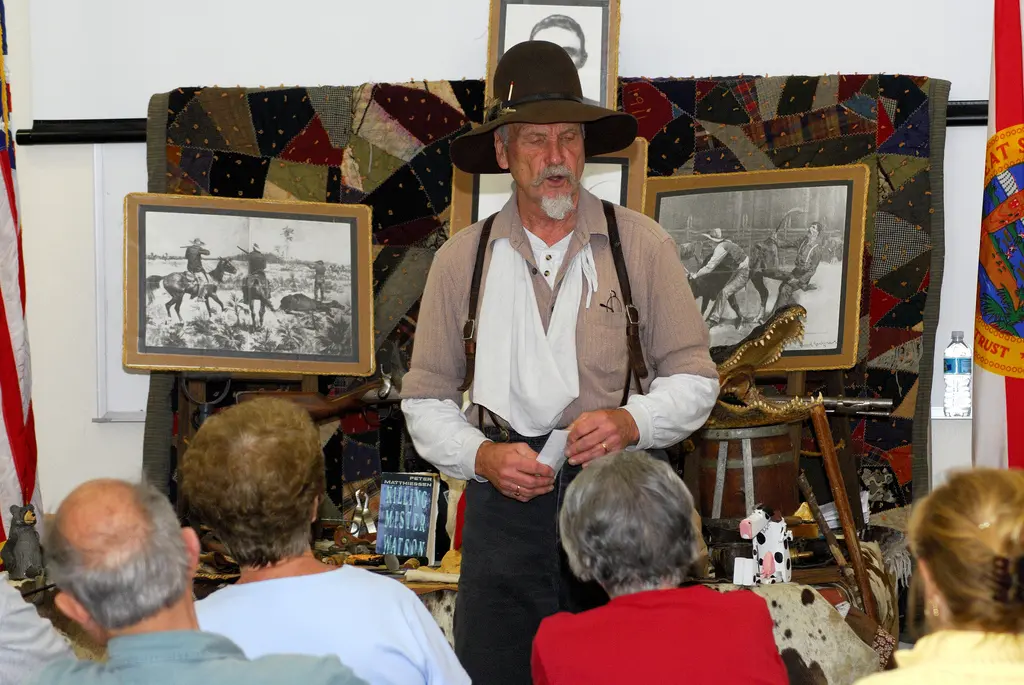
          When Mattson performs his poetry, he surrounds himself with interesting Florida artifacts and Cracker Cowboy equipment including a Civil War era McClellan saddle, branding iron tools, emasculating tools, de-horning tools, and pliers for stringing wire on fences.

          Until Florida passed a “fence law” in June, 1949, Florida cattle were allowed to roam free. As the population of the state grew in the early twentieth century, automobiles and trains were having more frequent encounters with cattle congregating on roads and tracks.

          “I was 11 years old when Florida passed the fence law,” says Mattson. “Before that, if they hit your cattle, they paid you for it. Now if a cow gets out, it’s our fault. We have to pay for the damage to the car. So things have changed.”

          In his public presentations, Mattson recites his poem about the origin of the word “Cracker.” He explains that the term goes back to the William Shakespeare play “The Life and Death of King John.” In Act II, Scene I of that play, the Duke of Austria says, “What cracker is this same that deafs our ears with this abundance of superfluous breath?”

          “He was speaking about Scotch-Irish folks, and that’s where it started from,” says Mattson. “When they came over here, the name ‘Cracker’ came with them.”

          Although the Duke in Shakespeare’s play found the talk of the “crackers” tiresome, the original meaning of the term is less judgmental. “It’s a derivative of the Gallic word ‘craic,’ which means interesting, educational conversation,” says Mattson.

          Cracked corn was a staple in the diet of the Southern people who became referred to as “crackers.” The term has also become associated with the cracking of the whip as Florida cowmen herded their cattle.

          “We’re proud of that here in the state of Florida, although sometimes people use it in a derogatory manner,” says Mattson. “That’s just part of goin’ down the trail, I guess.”

          While Cracker culture is slowly becoming relegated to history books, museum exhibits, theatrical presentations, and poetry readings, Mattson points out that some Florida families who have been working in the cattle industry for generations continue to do so.

          In one of Mattson’s most poignant poems, “Progress,” he describes how his family homestead was foreclosed on, torn down, and replaced by a giant discount store. Standing in the grocery department, he closes his eyes and imagines he can still smell the sugar cane boiling as his family makes syrup. He revels in his memories until a shopper rudely brings him back to the present.

          As urban sprawl continues to envelop Florida and take over the land that was once reserved for Cracker Cowboys and their cattle, Mattson hopes that his poetry, and now songs based on it, will preserve the memory of our state’s pioneers for future generations.

          “I just want somebody to know what went on here before they pave over the entire state,” says Mattson. “If it wasn’t for the people here in Florida raising cattle, this whole state would be paved over right now.”

          PDF file(s)
          Article Number
          75
          relevantdate

            The Plant system of railroads helped to create modern Florida.

            When Henry B. Plant was born in 1819, Florida was still under Spanish control. By 1821, Florida was named a United States Territory, and in 1845 it became a state. Before his death in 1899, Plant helped to develop Florida with railways, steamships, and luxury hotels.

            In discussions of railroads and their impact on Florida’s growth, Henry Flagler usually is the first person mentioned. Henry Plant and Henry Flagler were friendly competitors who sometimes worked together.

            “They were equally as important,” says Sally Shifke, Museum Relations Coordinator for the Henry B. Plant Museum in Tampa. “I think the reason that Henry Plant doesn’t get quite as much recognition as Henry Flagler is that Henry Flagler’s personal money was in Palm Beach.”

            “Flagler moved down to Palm Beach, had many children that continue the Flagler name today. On the other hand, Henry Plant came to the west coast of Florida, but he always remained in New York and Connecticut. He had one surviving son that lived in New York City, and when Henry Plant passed away, there was no one really to carry the torch for him. His family eventually sold off his holdings in Florida,” Shifke says.

            Henry Flagler’s railway extended from Jacksonville down Florida’s east coast, eventually linking the mainland to the Keys. He built luxury hotels along his train route, stimulating tourism. Flagler created the town of Palm Beach, and provided opportunities for development in south Florida.

            Similarly, Henry Plant linked central and west Florida to the rest of the country with his railway.

            “Plant’s railroads went up and down the southeastern United States,” says Shifke. “He started buying up bankrupt railroad lines after the Civil War, and eventually they worked themselves down to the middle of Florida and then crossed over to the west coast and went all the way down to Fort Myers.”

            Plant also operated a steamship line. After bringing his railway to Tampa, Plant used his steamship line to link west Florida to Key West and Cuba. This allowed for the transportation of both goods and people via train and steamship.

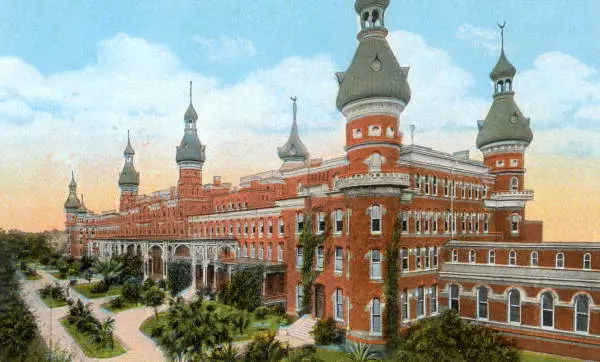
            With Tampa Bay the hub of Plant’s transportation system, in 1891 he constructed the huge and luxurious Tampa Bay Hotel.

            “When he got here in the early 1880s, there were only 750 people living here,” says Shifke. “It was a sleepy little town going nowhere. Henry Plant built the port, and eventually brought the railroads. The first hotel that he built was the Inn of Port Tampa which was only 40 rooms, and then he went on to build this colossal palace with over 511 rooms, the Tampa Bay Hotel.”

            Visitors to what is now the University of Tampa can still imagine what the Tampa Bay Hotel must have been like in its heyday. A series of silver minarets inspired by Middle Eastern architecture reach up to the sky from an elaborately ornamented brick Victorian building.

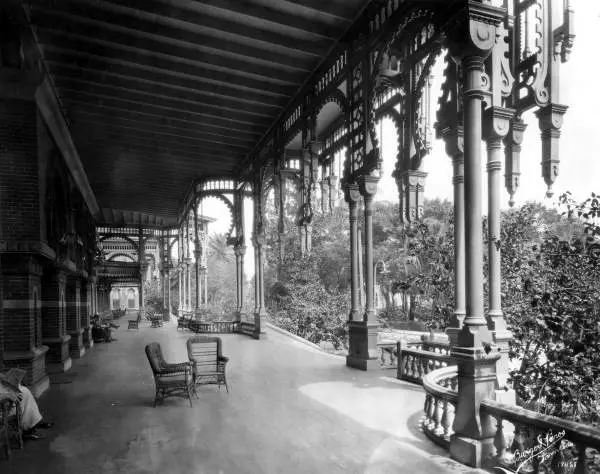
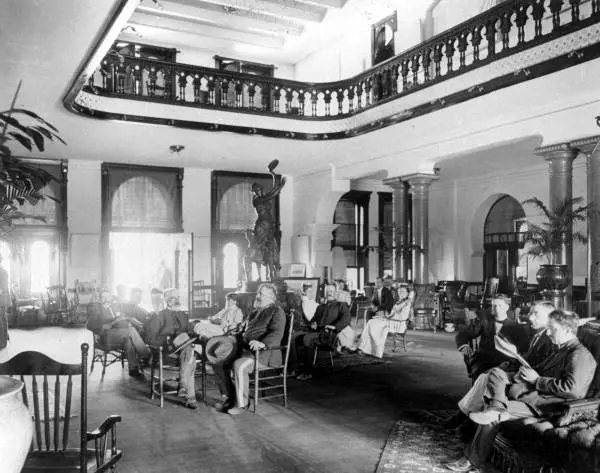
            A huge covered porch extends across the front of the former Tampa Bay Hotel. Photographs from the late 1800s and early 1900s show wealthy northerners sitting on the porch enjoying the shade. The interior of the hotel featured unique comforts for the day, such as electricity and an elevator.

            “It was one of the first buildings to be electrified in the state of Florida,” Shifke says. “He actually had to build a power plant on the grounds.”

            Plant wanted his Tampa Bay Hotel to compete with the grand hotels of his rival Henry Flagler, so visitors were offered every possible amenity. He built a golf course, tennis courts, boathouse, and horse racing track for the amusement of his guests. The floor of his 2,000 seat performing arts center and casino would roll away during the day to reveal a 50 by 70 foot swimming pool.

            The opulent Tampa Bay Hotel continued operating even after Plant’s death. It was purchased by the city of Tampa 1905. With the Great Depression of the 1930s, the Tampa Bay Hotel closed.

            In 1933, the University of Tampa took control of the building, and since that time a wing of the former hotel has been operated as the Henry B. Plant Museum.

            PDF file(s)
            Article Number
            74
            relevantdate

              When the Seminole Indians first appeared in Florida in the 1700s, they occupied lands where other Native Americans had lived for thousands of years. Tribes such as the Calusa, Timucua, and Apalachee lived in Florida long before European contact in the 1500s.

              While the archaeological record contains tools, pottery, and other artifacts, the visual record of pre-European contact people in Florida is very limited.

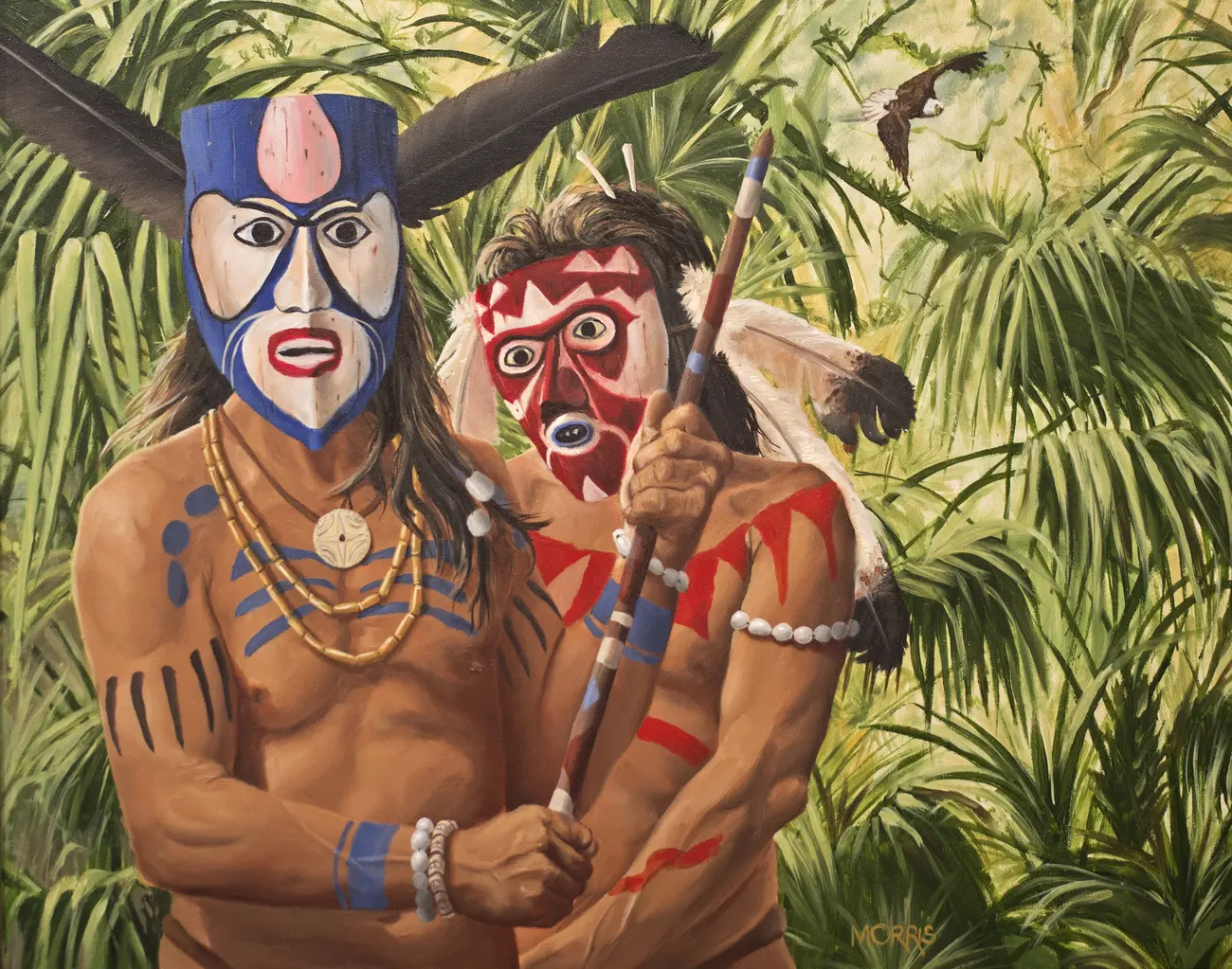
              Since 1992, artist Theodore Morris has dedicated his career to creating realistic oil paintings depicting Florida’s prehistoric and indigenous populations.

              Morris is one of a group of nine artists whose work will be shown in the exhibition “ArtCalusa: Reflections on Representation” at the Brevard Museum of History and Natural Science in Cocoa, July 17 through December 11, 2015.

              “About 1988, I started getting into Florida history,” says Morris. “I got involved with archeological digs and the archaeology community.”

              Morris was asked to create a fundraising poster depicting Florida’s native people for the Florida Anthropological Society.

              “I went to the library to get some visual reference material, and there was none,” says Morris. “There was some weird, far out things that people had drawn over the years, so I went back with the archaeologists and we pieced together what they would have looked like.”

              With experience as both a commercial artist and painter, Morris used descriptions from reliable historical documents together with artifacts discovered by archaeologists to create realistic representations of Florida’s first people.

              “I love history and I love art, and it kind of all just melded together,” Morris says.

              Before Morris started painting depictions of Florida’s indigenous peoples in consultation with archaeologists, images of prehistoric and early tribes were either non-existent, notoriously inaccurate, or so fanciful that they had no real educational value.

              Morris does extensive research to ensure that his images are realistic, going as far as participating in archaeological excavations.

              “Well, that was the number one priority, to make them as historically accurate as possible,” says Morris. “When I first got into it, of course, I didn’t know that much about them either. I knew about Seminoles, but not the early tribes, so it was a learning process for me.”

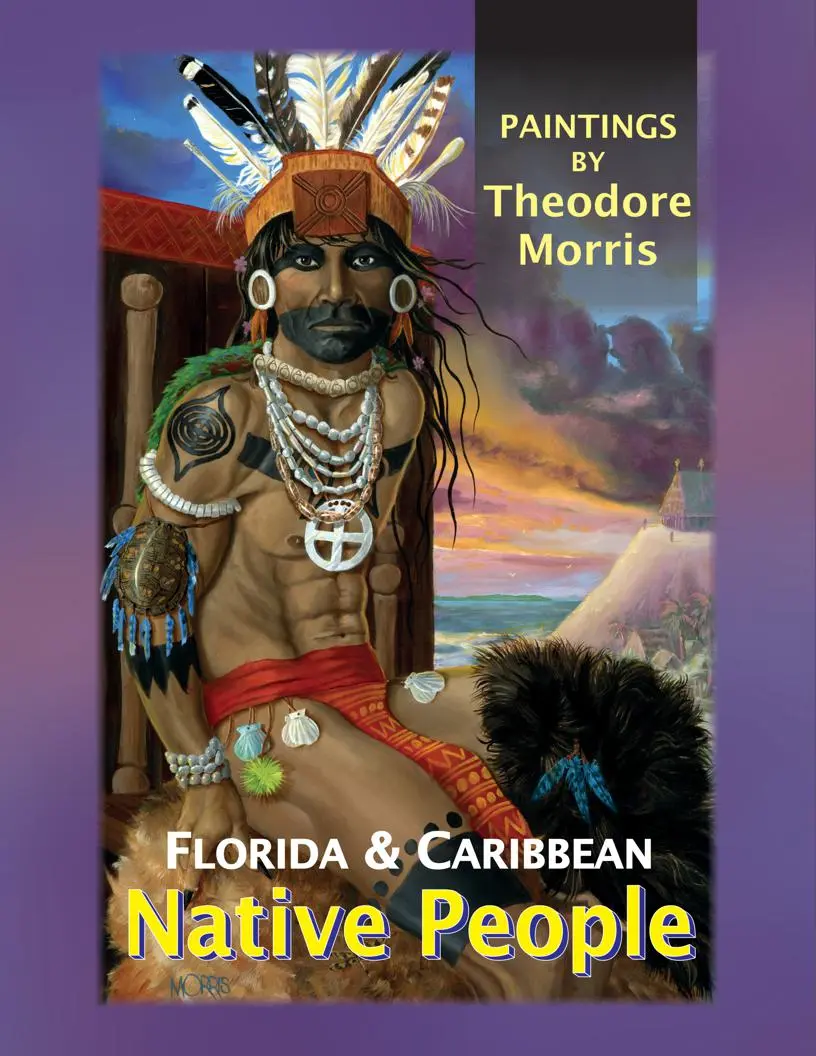
              In addition to being shown in exhibitions throughout the state, Morris’s work has been assembled in the book “Florida and Caribbean Native People: Paintings by Theodore Morris.” Each chapter of the book focuses on different tribes, with Morris’s colorful paintings introduced by leading Florida archaeologists such as Keith Ashley, Bonnie McEwan, Brent R. Weisman, and Ryan J. Wheeler.

              “From feedback I get from the archaeologists, they love to have their work put in context,” says Morris. “They’ll find a piece here and another piece over there, and to see them actually on an Indian (in a painting) makes it a little more fulfilling for them in a way, so they really like the idea.”

              Archaeologists and anthropologists are scientists, but they embrace Morris’s artistic efforts to document Florida’s indigenous people.

              “Ted’s artwork gives us a glimpse into the past that we don’t have records of,” says archaeologist Rachel Wentz.

              “Through his research and his meticulous attention to detail, we’re able to see what Florida’s early natives might have looked like, some of their activities in life, really get a visual idea of what their life was like, prior to (European) contact. Of course we have no record of that. All we have is the LeMoyne engravings from the time of contact, before then all we know is what we can discover through the archaeological record.”

              Morris’s oil paintings range from lifelike portraits of specific individuals to scenes of everyday life, with Native Floridians using tools and wearing body ornamentation that archaeologists can verify as being realistic depictions.

              Six of Morris’s paintings will be part of the exhibition “ArtCalusa: Reflections on Representation,” including “Cacique Carlos,” which is the cover image for the book “Florida and Caribbean Native People.”

              An opening reception for the exhibition will be held Friday, July 17, from 6pm to 8pm at the Brevard Museum of History and Natural Science, 2201 Michigan Avenue, Cocoa, featuring wine and cheese, live music, and some of the participating artists. Tickets are $25 and are available online at myfloridahistory.org, or by calling 321-690-1971 ext. 205.

              PDF file(s)
              Article Number
              73
              relevantdate

                Naturalist, ornithologist, and artist John James Audubon first came to Florida in 1831 to capture images of Florida birds for his illustrated book “Birds of America.”

                Audubon did not have a pleasurable stay in St. Augustine, complaining in his letters about hard rowing through the salt marshes, difficult wading through mud and water, and fighting sand flies and mosquitoes.

                When Audubon returned to Florida in April 1832, he had a much more enjoyable stay in Key West, where he wrote that his “heart swelled with uncontrollable delight” upon his arrival. Audubon was the guest of John H. Geiger, whose home is now called the Audubon House.

                “It was built in 1847 to 1849,” said Bob Merritt, director of operations for the Audubon House and Tropical Gardens. “Geiger was brought here by the U.S. Navy to be an assistant in helping with the harbor, get rid of the pirates, draw maps. He was a civilian, but he was known as an excellent ship captain, so the Navy brought him here to try to make sense. He, however, went on to become a wrecker, salvaging ships as they crashed on reef because the wreckers made so much money in Key West, and he could plainly see what a lucrative thing this was to be doing.”

                John James Audubon visited Key West and the Dry Tortugas in 1832, so he did not actually stay in what is now called the Audubon House. He did visit the Geiger home that was previously on the property.

                “Audubon drew in this garden,” Merritt said. “It was another smaller cottage, exactly where we are sitting right now. Not this building. It was so ridden with termites that it was beyond being repaired and put back together. But Audubon did use this garden, which was more advanced than many, because Captain Geiger’s wife was from the Bahamas. The Bahamas was a beautiful series of islands, whereas Key West was a rather ugly island back then, coral rock and Indian bones, and scrubby trees. They made this garden kind of a showpiece and Audubon loved it. He drew his birds here and nearby.”

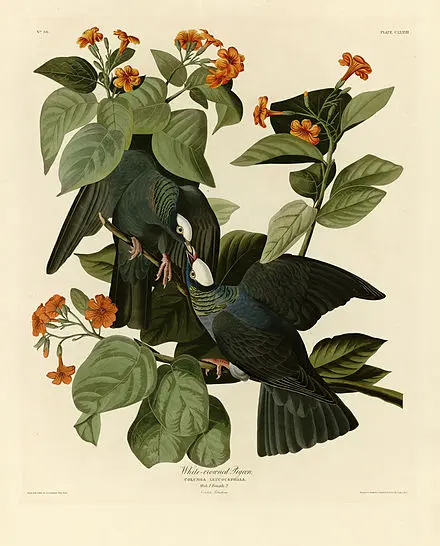
                It is believed that Audubon drew at least one image in the Geiger family garden. His depiction of the White-crowned Pigeon appears to be sitting in a particular tree.

                “It’s in the Geiger Tree, named after Captain John Geiger. It blooms many times a year with small clusters of orange blossoms, not to be confused with the Royal Poinciana which produces bouquets of orange flowers. It is almost the signature summer tree of Key West, but the Geiger tree blooms all year long.”

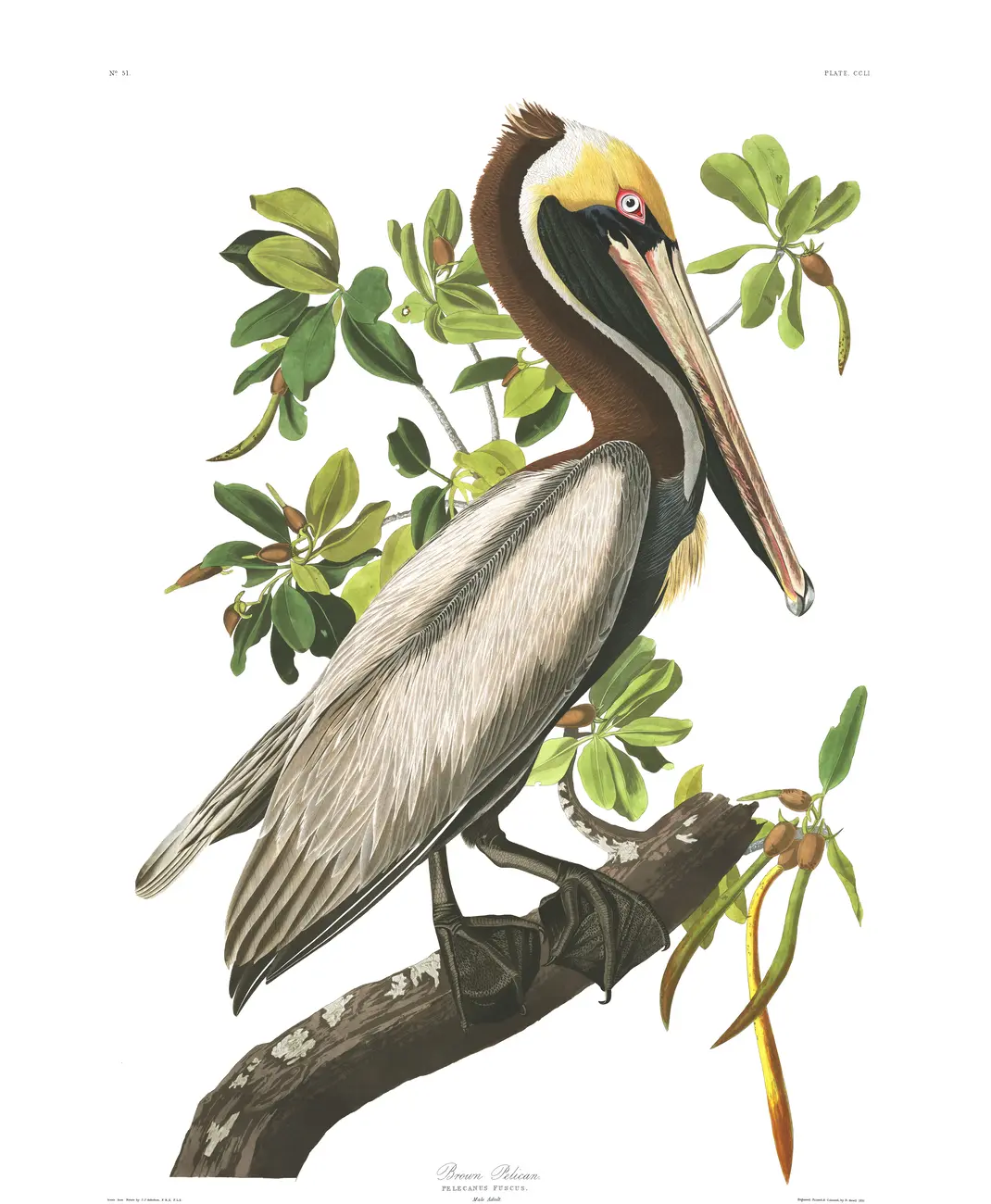
                John James Audubon created life-sized watercolor drawings of 1,065 birds for his multi-volume series “Birds of America.” While in Florida, Audubon identified 52 birds he had never seen before, and drew 18 of them. Among those were the Great White Heron, the Roseate Spoonbill, and the Brown Pelican.

                To create his colorful and amazingly detailed works of art, Audubon would shoot his subjects, and then place the birds in lifelike positions. To depict a bird in flight, he would hang it upside down so the wings would open. Joseph Mason, George Lehman, and other artists added details and assisted Audubon with his drawings.

                Twenty-eight, first edition Audubon works are displayed in the Audubon House.

                “We have them in two forms,” said Merritt. “We have the folio size which are the big ones; sometimes called the elephant size, and Audubon did all of those first. Then he went back again, sometimes with the help of his sons, and did what are called the octavos, which are smaller and are one-eighth the size of the big ones. When he first started out, his market was back in England. That’s where his patrons were. So he had to take the big ones ‘across the pond’ so to speak, to England and to some extent France. By the time he did the small ones he had an American market.”

                Also on display at the Audubon House are the hand-written field notes of John James Audubon. These observations and descriptions were later incorporated into the “Ornithological Biography” as a companion to “Birds of America.”

                PDF file(s)
                Article Number
                72
                relevantdate

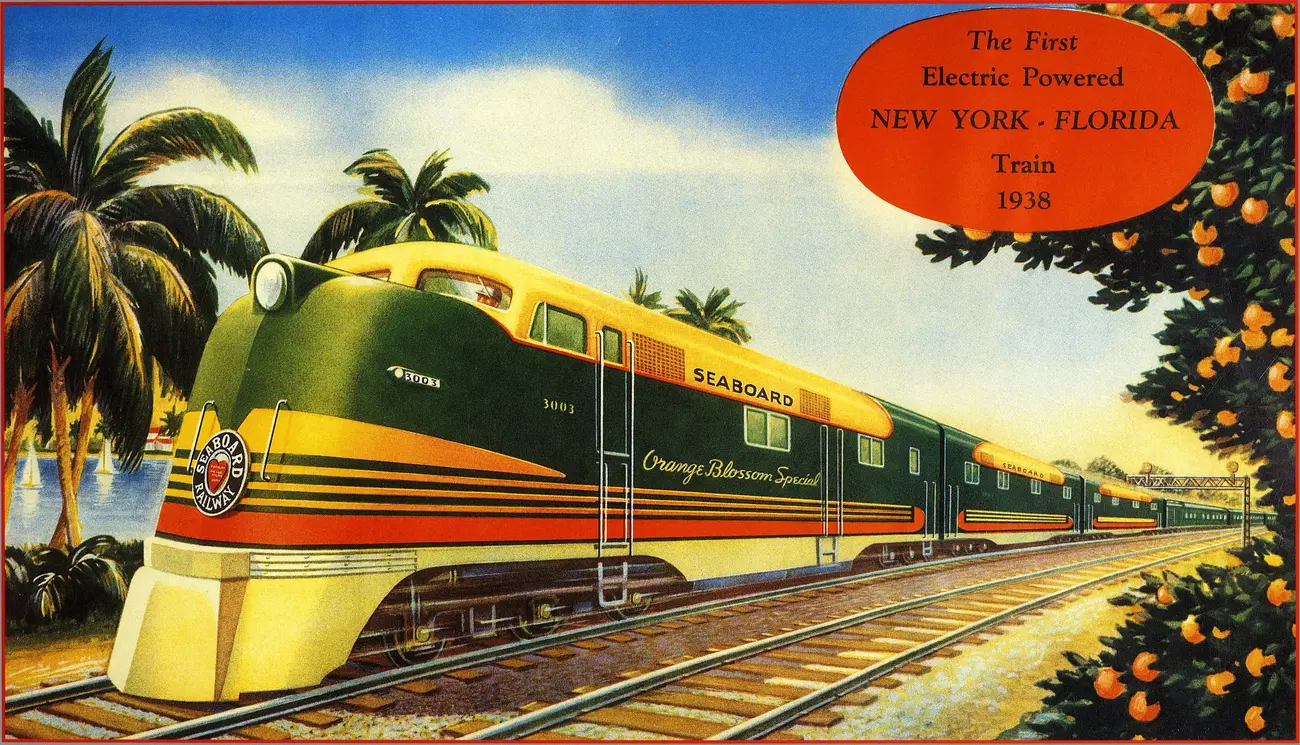
                  From 1925 through 1953, the luxury passenger train Orange Blossom Special traveled from New York City to Miami and back.

                  Other Florida stops included Jacksonville, Ft. Lauderdale, and Hollywood before the train returned north via Winter Haven, Bradenton, Tampa, St. Petersburg, Orlando, Gainesville, and Tallahassee.

                  The Orange Blossom Special came to Florida between mid-December and mid-April. Even more famous than this luxurious train and its wealthy passengers is the song “Orange Blossom Special.”

                  Tradition holds that the music to the song “Orange Blossom Special” was written by renowned fiddlers Chubby Wise and Irvin T. Rouse, and that the words were written later by Rouse’s brother Gordon.

                  “As the story goes, both Chubby Wise and Irvin Rouse visited the Orange Blossom Special when it passed through Jacksonville on an exhibition tour in 1938,” says Randy Noles, author of the book Fiddler’s Curse: The Untold Story of Irvin T. Rouse, Chubby Wise, Johnny Cash and the Orange Blossom Special.

                  “It’s hard to imagine now, but this was a huge deal. This train had brand new diesel electric locomotives and Pullman cars, and it was on an exhibition tour between Washington and Miami that stopped in every city of any size along the way for people to look at it. Now we think ‘Well gee, it was just a train,’ but at the time it was like the space shuttle coming through town.”

                  When the Orange Blossom Special stopped in Jacksonville, schools closed so children and their families could visit the train. In the two days that the train was parked there, approximately 30,000 people came to see it.

                  “They were just awestruck by it because of its design and its technology and everything it represented, and Chubby and Irvin were not immune to that,” says Noles. “They visited the train when it came through on the exhibition tour, and as the story goes, they were inspired to write the song.”

                  Even though Irvin T. Rouse is the only name that appears on the copyright for the music portion of “Orange Blossom Special,” the story that Chubby Wise co-wrote the song has gained widespread acceptance.

                  Before his death in 1996, Chubby Wise repeated his claims of co-writing “Orange Blossom Special.”

                  “I said ‘if you can do anything with it it’s all yours.’ I remember them very words as if it was yesterday, and Irvin did something with it,” said Wise. “I didn’t have nothing to do with the words. He and his brother Gordon wrote the words on it.”

                  Chubby Wise is considered to be one of the greatest fiddlers in country music. At age 15, Wise started playing in Jacksonville night clubs, and joined the Jubilee Hillbillies in 1938. In 1942, he started playing at the Grand Ole Opry with Bill Monroe’s Bluegrass Boys, and recorded with many other artists over the years. In 1984, he moved back to Florida, recording and performing infrequently.

                  Irvin T. Rouse lived from 1917 to 1981, and is also considered to be a great fiddle player. Irvin worked with his brother Gordon, traveling from Florida to New York to record and perform. Irvin suffered from mental illness and alcoholism, spending the last decades of his life playing in remote clubs near the Everglades for tips.

                  Irvin’s brother Gordon Rouse always maintained that Chubby Wise did not co-write “Orange Blossom Special.”

                  “It’s very easy to say you done something that you didn’t do,” said Rouse. “You tell people you did it and people don’t know if you did it or not.”

                  During research for his book Fiddler’s Curse, Randy Noles concluded that the story of Chubby Wise co-writing “Orange Blossom Special” is false.

                  “It’s the story that made it into the history books and that Chubby propagated repeatedly over the years. It turns out not to have been true, because the song had been written and copyrighted prior to the exhibition tour to Jacksonville, so it couldn’t possibly have happened the way Chubby described.”

                  What is indisputably true is that Chubby Wise’s outstanding fiddle playing helped to popularize the song “Orange Blossom Special” around the world.  It is a standard of the country music repertoire, and has been played and recorded by rock bands and symphony orchestras.

                  PDF file(s)
                  Article Number
                  71
                  relevantdate

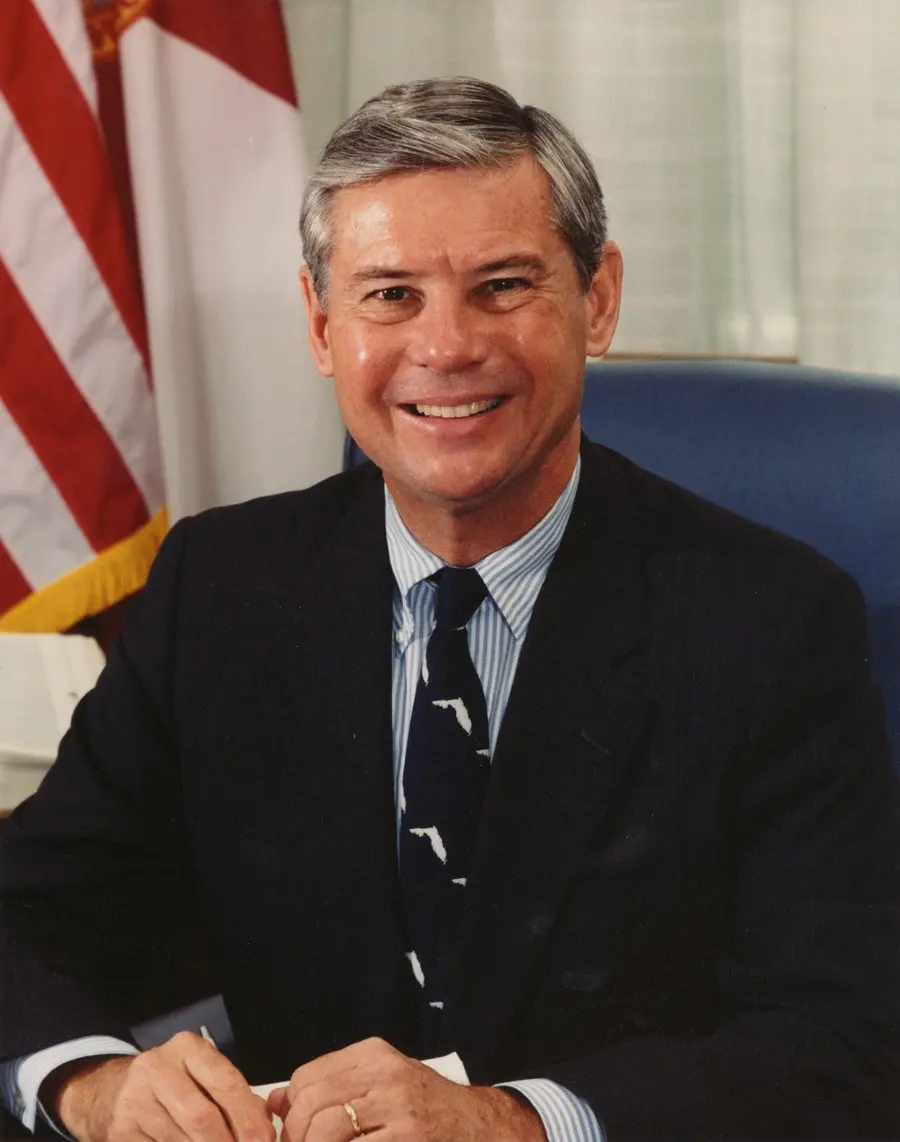
                    Senator Bob Graham has been called “the hardest working man in politics.”

                    Graham’s 38 years of public service included two terms as Governor of Florida from 1979 to 1987, and he represented Florida in the United States Senate from 1987 to 2005.

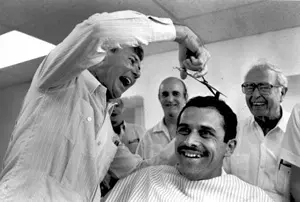
                    He famously spent more than 400 days working other people’s jobs, including days as a journalist, a fisherman, a construction worker, a truck driver, a barber, and in many other occupations.

                    Graham started his tradition of “work days” in 1974, while he was serving in the Florida Senate.

                    “I was chairman of the State Senate Education Committee, and I had been in some classrooms where I didn’t think civics was being taught very well,” says Graham.

                    “I mentioned that to some civics teachers and they said ‘the only way you can find out what’s going on is to actually go in a classroom.’ So, I accepted and ended up teaching 18 weeks of high school civics. It was a wonderful experience. I did, in fact, learn a lot about what was going on in a modern high school, but the most important thing I learned was the difference between learning by somebody giving you a lecture or reading it in a textbook, and learning by actually doing it.”

                    Graham was inspired to learn about the employment experiences of other people by actually doing their jobs. He couldn’t dedicate 18 weeks to each position as he had with the teaching job, but he did spend one full day in 408 different jobs over a 30 year period.

                    His willingness to experience the lives of other people, if only for a day, helped to make Graham a very popular politician. He left office as governor with an 83% approval rating.

                    As Governor of Florida, Graham focused his efforts on education, the environment, and jobs, with significant results.

                    “For the first time in the state’s history we saw our education programs begin to move toward, and in the case of our university system, actually reach the top quartile in the country,” says Graham.

                    “In the environment, we had a particularly aggressive program of land acquisition, added hundreds of thousands of acres of state ownership, which now are some of our most valuable environmental and recreational lands. In economic development, as an indicator of our success, for the first time in Florida history Floridians earned more money on average than did the average American.”

                    Following two successful terms as governor, Graham spent 18 years in the United States Senate. He served 10 years on the Senate Intelligence Committee, both before and after the terrorist attacks of September 11, 2001. Graham was one of the voices raised in opposition to the subsequent war in Iraq, which he says was one of his proudest moments as a senator.

                    “I wasn’t proud at the outcome, because I was fairly convinced that it was not going to be a good outcome because we had been led into this war by false information,” says Graham, referring to the unsubstantiated claim that Iraqi leader Saddam Hussein possessed weapons of mass destruction.

                    “The people who gave us that information knew, or should have known, that it was false,” Graham says.

                    Since leaving the U.S. Senate in 2005, Graham’s primary focus has been on developing the Bob Graham Center for Public Service at the University of Florida in Gainesville.

                    “My passion since I retired from the senate has been citizenship,” says Graham. “Unfortunately, by almost every indicator—voting, participation in civic organizations, joining with neighbors to solve local problems—citizenship has been in decline in America and in Florida. The purpose of the center is to try to understand that decline and then to reverse it.”

                    Graham learned about citizenship at a very early age. His father, Ernest R. Graham, was a cattleman who also served in elected office, inspiring his son’s political aspirations.

                    “I happen to have been born the same week that he was first elected to the Florida State Senate, so I grew up in a political environment,” says Graham.

                    “He was very influential is an extremely positive way. He had high values and he honored public service, and I tried to be faithful to his principles.”

                    PDF file(s)
                    Article Number
                    70
                    relevantdate

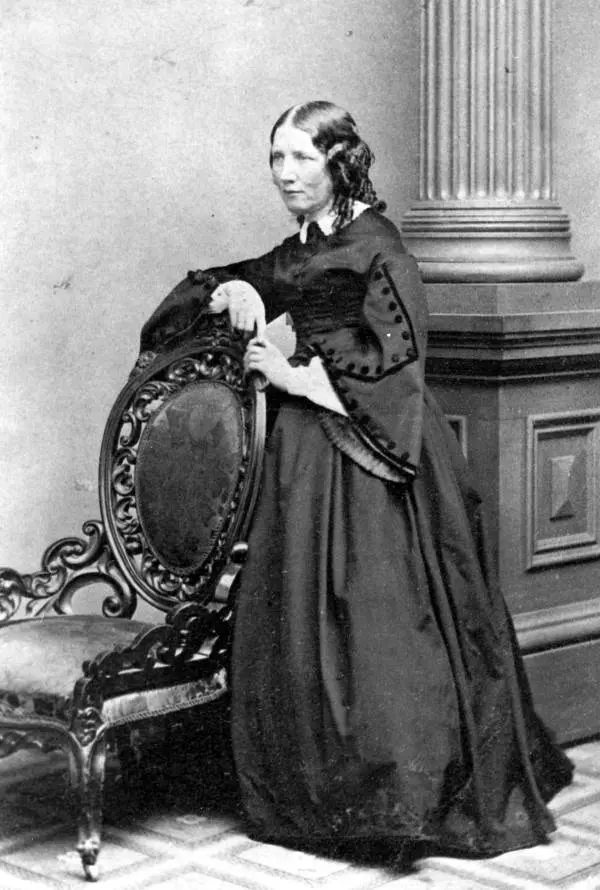
                      With the publication of her novel “Uncle Tom’s Cabin” in 1852, Harriet Beecher Stowe became the most famous writer in America. That book helped to fuel the raging debate over slavery in the United States.

                      When Stowe met President Abraham Lincoln in 1862, he reportedly said, “So you are the little lady who started this Great War.”

                      Often overlooked is the fact that Harriet Beecher Stowe is also one of the first and greatest proponents of Florida as a popular tourist destination.

                      Stowe began spending her winters in Mandarin, Florida, shortly after the Civil War ended. Her home was on the St. Johns River where she could sit on her porch and enjoy the natural environment. Stowe also traveled to places such as Silver Springs, St. Augustine, and Tallahassee, and wrote about her experiences.

                      In 1873, some of Stowe’s descriptive and colorful “tourist articles” were published in the book “Palmetto Leaves.” More recently, a collection of Stowe’s fascinating vignettes of Florida life not included in “Palmetto Leaves” has been published as the book “Calling Yankees to Florida: Harriet Beecher Stowe’s Forgotten Tourist Articles.”

                      “She was writing about what life was like here in frontier Florida, and she would publish those into periodicals up North,” says Sandy Arpen, president of the Mandarin Museum and Historical Society.

                      “She especially loved the nature here. She talked about the smell of the orange groves and of the orange blossoms, and of the moss hanging from the trees, and the beauty of the roses, and the live oaks, and all of the things that were so beautiful here. Many people became interested in touring here and coming to see what she was writing about because she was very well read in the North.”

                      Stowe became actively involved in Florida’s new tourism industry of the late 1800s. The steamship companies that brought tourists down the river paid the famous writer to stand on her porch and wave to their passengers.

                      Stowe’s book “Palmetto Leaves” consists of a series of articles written in the year 1872. She wrote many articles both before and after that year, and a selection of those articles has been assembled in the book “Calling Yankees to Florida,” edited by John T. Foster Jr. and Sarah Whitmer Foster.

                      The Foster’s believe that Stowe had a hidden agenda in writing about the natural wonders of Florida for northerners suffering through snowy winters. In addition to stimulating tourism, the Foster’s think that Stowe was trying to attract a more progressive voting block to Florida to lead the state from the Old South into a new era.

                      Following the Civil War, there were almost as many African Americans living in Florida as there were Caucasians.

                      “Florida is about half black and half white, and it wouldn’t take many newcomers to Florida to become a place different from what it had been in the past,” says John T. Foster Jr.

                      “The white population of Florida at the time was divided into different groups in terms of social origin,” says Foster. “The oldest group in Florida would have been the Menorcans, associated with the seafood industry and primarily St. Augustine. A different group would have been ‘cracker’ Florida. These are frontier and country people drifting in from Georgia primarily. This, of course, would be a main theme of Marjorie Kinnan Rawlings’ famous novels. Lastly, there would be ‘planter’ Florida in the region east and west of Tallahassee. These were people replicating the Old South in terms of slavery.”

                      Foster says that Stowe and her forward thinking associates in Florida realized that if a new population of northern whites would move to the state, progressive attitudes could prevail here.

                      Stowe’s friends in Florida included Governor Harrison Reed and his wife Chloe Merrick Reed. The governor modernized Florida’s education system and appointed Stowe’s brother Charles Beecher as State Superintendent of Education. Both Mrs. Reed and another friend of Stowe’s, John Swain, were active abolitionists in Florida.

                      Rather than aggressively promoting her political views, Stowe chose a more subtle approach to modernizing Florida. She helped to stimulate a growing tourism industry, and attracted progressive voters to the state by extolling the virtues of life in the sunshine surrounded by natural beauty.

                      PDF file(s)