Cracker Culture

Article Number
80
relevantdate

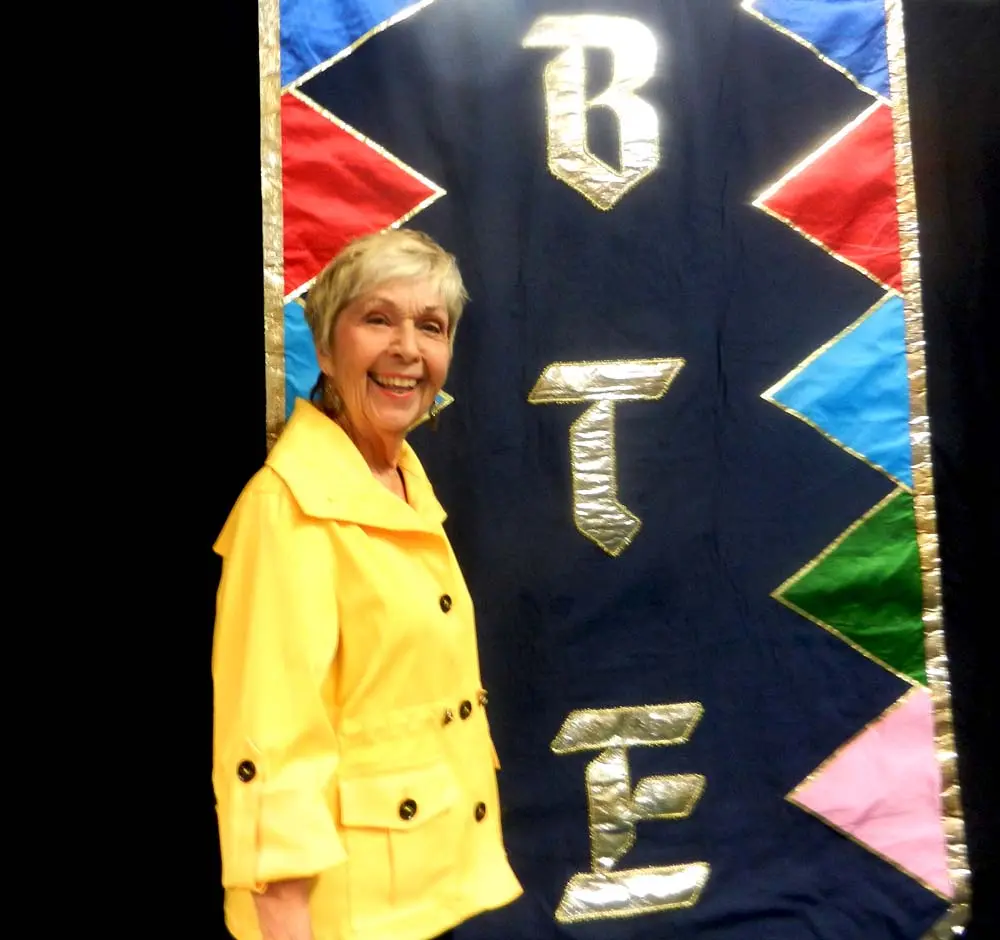
    Before the annual presentation of “Mosquitos, Alligators, and Determination” begins, Lady Gail Ryan engages audience members, finding out where they are from and leading them in a high spirited “sing along” of Florida songs including “Where the Orange Blossoms Grow” and “She’ll Be Comin’ Down the Shell Road.”

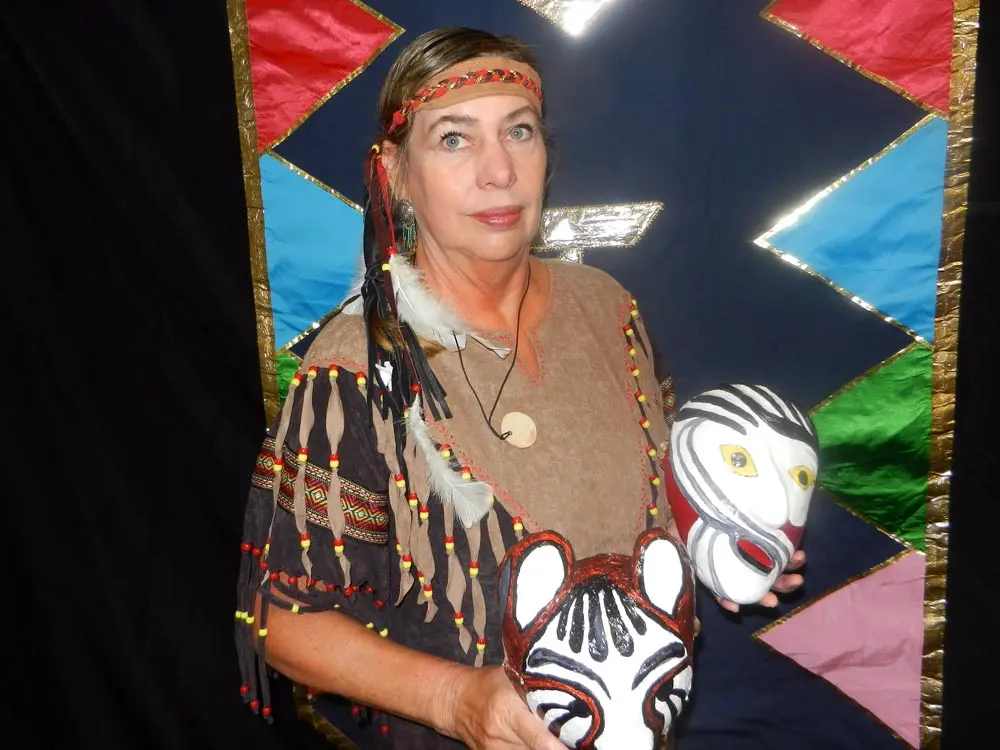
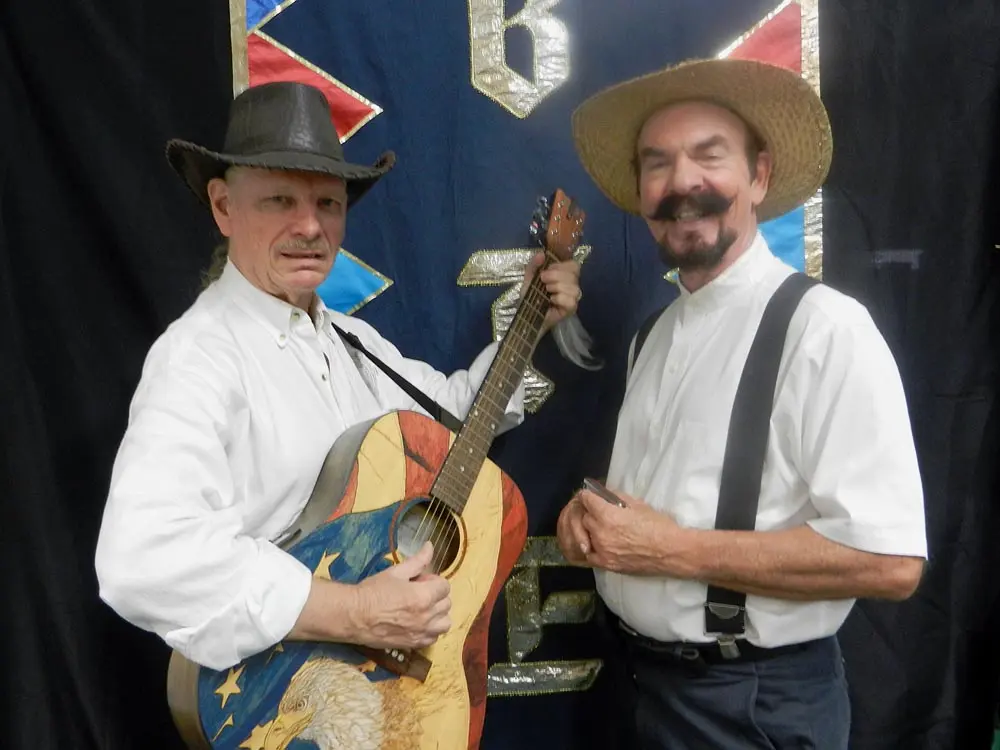
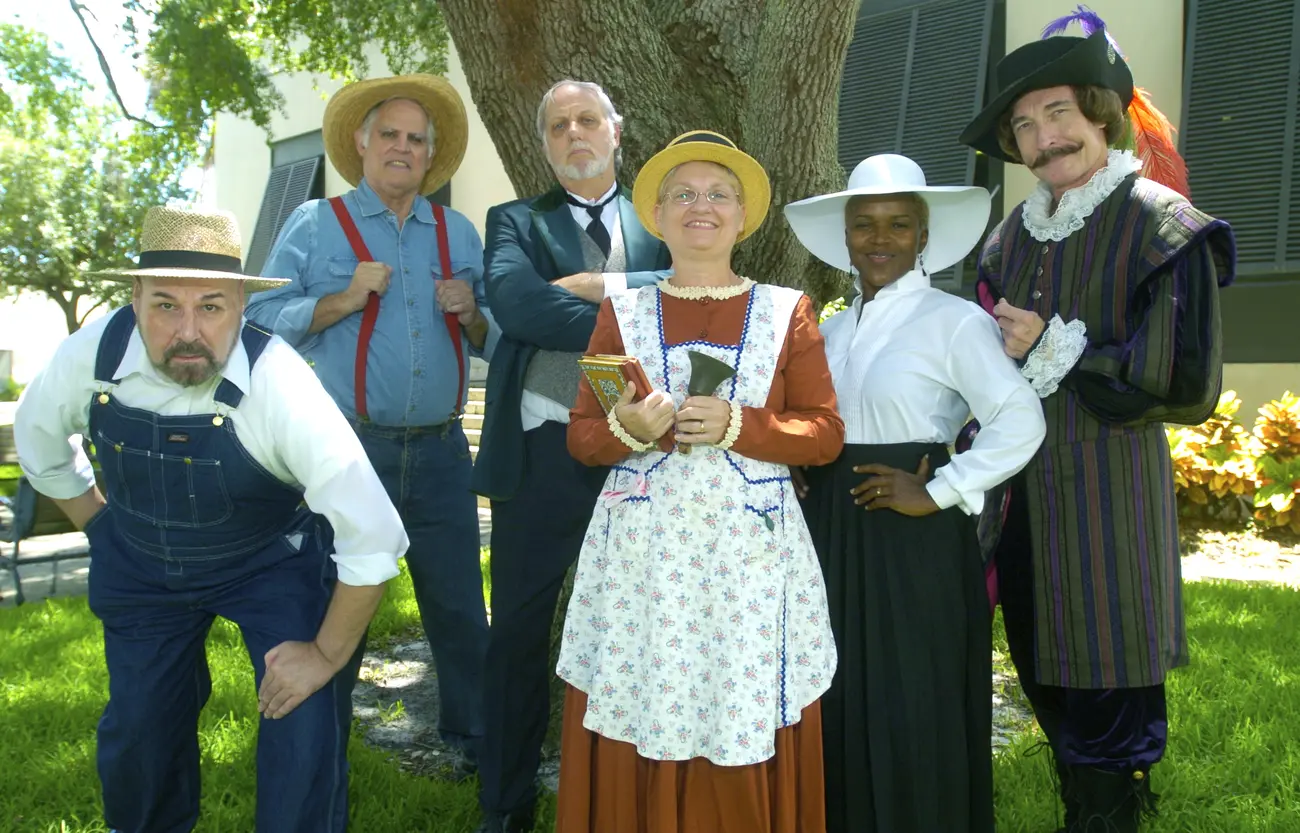
    As founder and director of the Brevard Theatrical Ensemble, Ryan is responsible for organizing the annual presentation of “Mosquitos, Alligators, and Determination.” The production, which changes every year, features a series of vignettes portraying stories of Florida history and culture, from native society to European contact to pioneer settlement to the early space program.

    A native Floridian born in Miami in 1929, Ryan’s energy and enthusiasm for the history and culture of our state is contagious.

    “I was born right in the blast of the boom,” says Ryan. “I didn’t realize anything about anyone being poor because we raised our own vegetables. We lived in the sunshine. I washed my hair in the rain. We had the best time.”

    Ryan’s parents and sister moved to Florida from Indiana, driving down in two Model “T” Fords and camping along the way. While camping just off of a shell road in Brevard County, the family was awakened by a noisy group of wild hogs. The Ryans moved on, settling in Miami.

    “Our house was built from the lumber that (Henry) Flagler sold when he tore down the Royal Poinciana Hotel,” says Ryan. “If it hadn’t been for Flagler, we wouldn’t have lived in this marvelous house. We never had any termites because he had the original Florida pine.”

    Although Ryan remembers her childhood in Florida fondly, she grew up with her heart set on seeing the world and singing opera. She achieved her goals, getting her education in Michigan and New York, and learning to speak Italian while studying in Europe.

    Ryan returned to Miami, teaching there for several decades. She earned the honorific title “Lady” from the Dade County Commission for her work organizing the Miami Renaissance Fairs.

    In the mid-1980s, Ryan moved to the Space Coast. She organized the Storytellers of Brevard, which evolved into the Brevard Theatrical Ensemble. Over the years the group has performed original productions focusing on women’s history, Native American culture, and American innovation. They have presented selected scenes from plays by Shakespeare, and an annual program of scary stories around Halloween.

    Nine years ago, Ryan was asked to research Florida’s Cracker culture and create an original production based on the state’s pioneer settlers. The result was the first version of “Mosquitos, Alligators, and Determination.”

    Ryan says that she was sometimes embarrassed to admit that she was a Florida Cracker herself, particularly while living in New York and Europe. She has since learned to respect the intrepid people who settled Florida, and now embraces her heritage.

    “I began this research, and for the first time, I really became a Floridian,” Ryan says.

    After the first couple of years focusing on pioneer culture, the program expanded to include stories from throughout Florida history. Every year different stories are performed, keeping the production constantly evolving.

    “There are so many stories to tell,” says Rayan. “I don’t want to be bored and I do not want my cast to be bored. I want it brand new and fresh.”

    The eighth production of “Mosquitos, Alligators, and Determination” includes stories about the Calusa people, Spanish conquistadors, and Florida pioneers. Audiences will be introduced to fascinating people such as cigar maker and citrus grower Count Odet Phillipe, writer Harriet Beecher Stowe, and aviator Jackie Cochran.

    Ryan says that staging this production each year has given her a new appreciation for the diverse history and culture of our state.

    “I didn’t really realize how wonderful Florida was until now,” says Ryan.

    “Mosquitos, Alligators, and Determination VIII” will be presented at the Library of Florida History, 435 Brevard Avenue, Cocoa, Friday, August 7 at 7:30 pm. Matinee performances will be presented at 2:30 pm on Saturday, August 8; Sunday, August 9; Saturday August 15; and Sunday, August 16.

    Admission is $15, and reservations are available at www.myfloridahistory.org, or by calling 690-1971 and pressing “7.” Reservations are strongly suggested, as these performances are “sold out” every year.
    PDF file(s)
    Article Number
    76
    relevantdate

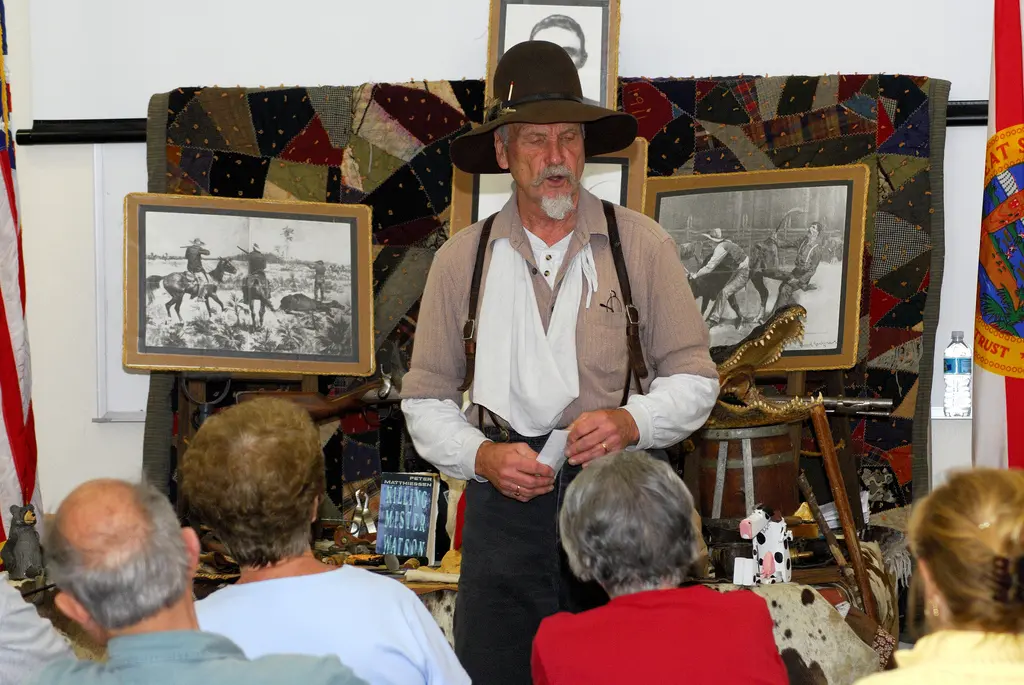
      Hank Mattson is known as the “Cracker Cowboy Poet” who “tells it like it was.”

      A native of Lake Placid in Highlands County, Mattson recites his poetry and discusses Florida’s pioneer culture at libraries, schools, and festivals throughout the state.

      “When This Old Hat Was New” is a poem Mattson wrote about Jacob Summerlin’s life as a Florida cowman in the 1800s. Appalachian folk musicians Dana and Susan Robinson set the poem to music, and it earned the 2015 Will McLean Best New Florida Song Contest, selected first out of 42 entries.

      Mattson’s poetry tells the stories of colorful characters from Florida’s pioneer past such as Jacob Summerlin, Bone Mizell, and Hamilton Disston, but much of it is also based on his own experience as a “Cracker cowman.”

      “I don’t ride much anymore, but there was a day when I did,” says Mattson. “Some places they round up cattle nowadays with ATVs and the like, but on the place where I work, and there are a whole lot of others, where you can’t get those things. We still use dogs and horses as they did years ago, and you’re never gonna get away from that.”

      When Mattson performs his poetry, he surrounds himself with interesting Florida artifacts and Cracker Cowboy equipment including a Civil War era McClellan saddle, branding iron tools, emasculating tools, de-horning tools, and pliers for stringing wire on fences.

      Until Florida passed a “fence law” in June, 1949, Florida cattle were allowed to roam free. As the population of the state grew in the early twentieth century, automobiles and trains were having more frequent encounters with cattle congregating on roads and tracks.

      “I was 11 years old when Florida passed the fence law,” says Mattson. “Before that, if they hit your cattle, they paid you for it. Now if a cow gets out, it’s our fault. We have to pay for the damage to the car. So things have changed.”

      In his public presentations, Mattson recites his poem about the origin of the word “Cracker.” He explains that the term goes back to the William Shakespeare play “The Life and Death of King John.” In Act II, Scene I of that play, the Duke of Austria says, “What cracker is this same that deafs our ears with this abundance of superfluous breath?”

      “He was speaking about Scotch-Irish folks, and that’s where it started from,” says Mattson. “When they came over here, the name ‘Cracker’ came with them.”

      Although the Duke in Shakespeare’s play found the talk of the “crackers” tiresome, the original meaning of the term is less judgmental. “It’s a derivative of the Gallic word ‘craic,’ which means interesting, educational conversation,” says Mattson.

      Cracked corn was a staple in the diet of the Southern people who became referred to as “crackers.” The term has also become associated with the cracking of the whip as Florida cowmen herded their cattle.

      “We’re proud of that here in the state of Florida, although sometimes people use it in a derogatory manner,” says Mattson. “That’s just part of goin’ down the trail, I guess.”

      While Cracker culture is slowly becoming relegated to history books, museum exhibits, theatrical presentations, and poetry readings, Mattson points out that some Florida families who have been working in the cattle industry for generations continue to do so.

      In one of Mattson’s most poignant poems, “Progress,” he describes how his family homestead was foreclosed on, torn down, and replaced by a giant discount store. Standing in the grocery department, he closes his eyes and imagines he can still smell the sugar cane boiling as his family makes syrup. He revels in his memories until a shopper rudely brings him back to the present.

      As urban sprawl continues to envelop Florida and take over the land that was once reserved for Cracker Cowboys and their cattle, Mattson hopes that his poetry, and now songs based on it, will preserve the memory of our state’s pioneers for future generations.

      “I just want somebody to know what went on here before they pave over the entire state,” says Mattson. “If it wasn’t for the people here in Florida raising cattle, this whole state would be paved over right now.”

      PDF file(s)
      Article Number
      28
      relevantdate

        Some unfortunate people suffer from the misconception that Florida history is boring.

        Other uninformed people don’t think that Florida has much significant history at all.

        None of these people has ever attended a Brevard Theatrical Ensemble presentation of “Mosquitos, Alligators, and Determination,” now in its all-new seventh edition. If they had, they would know that Florida history is exciting, entertaining, diverse, and important.

        “Lady” Gail Ryan, who earned her honorific title from the Dade County Commission for work on Miami Renaissance Fairs, is founder and director of the Brevard Theatrical Ensemble. Under Ryan’s enthusiastic and creative leadership, the group has been performing for more than twenty five years.

        The original production of “Mosquitos, Alligators, and Determination” focused on Florida’s pioneer “Cracker” culture. Ryan admits that prior to doing research to create that presentation, she was sometimes embarrassed to admit that she was a “Cracker” herself. She came to understand that the term identifies an intrepid group of people who overcame many obstacles to settle the untamed, wild Florida.

        “I’m very proud I’m a Floridian now,” Ryan says. “I was a pioneer in a sense. I wasn’t here in the 1800s, but I was born in 1929.”

        Ryan has more energy and drive than many people half her age. Rather than stage the same version of “Mosquitos, Alligators, and Determination” every year, she completely changes the stories presented, offering a new set of vignettes from Florida history in each production.

        Past productions have featured depictions of well-known figures from Florida’s past such as Ponce de León, Henry Flagler, Harriett Beecher Stowe, Marjorie Kinnan Rawlings, and Zora Neale Hurston. Much less well-known “everyday people” who have had a significant impact on our history have also been recognized.

        “You can’t have a civilization or a state without the average man,” Ryan says. “This time we tell stories more about the average people than anyone else.”

        The seventh edition of “Mosquitos, Alligators, and Determination” features tales from throughout Florida, from the Panhandle to Key West and many points in between.

        The new program opens with the “discovery” of Florida in 1513. The “Key West Wreckers,” who made fortunes salvaging shipwrecks are discussed. The story of the lost city of St. Joseph, known as “the wickedest city in America” is presented. The legend of Jacob Summerlin, “King of the Crackers” is explained, as are the challenges faced by pioneer teachers in the state.

        Also explored in the latest version of “Mosquitos, Alligators and Determination” is the 1888 Yellow Fever outbreak in Jacksonville, which significantly reduced the population of the city.

        An unexpected hurricane devastated Okeechobee in 1928. Many people sought refuge from flooding after their homes were washed away. Those who climbed trees to escape the water encountered thousands of snakes that were doing the same.

        Magazine editor Edward W. Bok created a garden and bird sanctuary with a carillon bell tower in the 1920s. Bok Tower Gardens became one of Florida’s most popular tourist destinations long before Disney arrived.

        During World War II, Nazi submarines patrolled Florida’s coastline. Florida residents had direct encounters with German soldiers.

        These and other stories are presented in the latest version of “Mosquitos, Alligators, and Determination,” along with Florida songs.

        “Lady” Gail Ryan and her troupe of performers understand that learning about Florida history can promote a sense of community for both longtime residents and newcomers to the state.


        “I want people to know that even though they might be from someplace else, it makes no difference. They’re now Floridian and we want them to be dedicated to Florida,” Ryan says.

        If you know someone who thinks that Florida history is boring or insignificant, bring them to a performance of “Mosquitos, Alligators, and Determination.” They will be entertained and enlightened.

        “Mosquitos, Alligators and Determination” will be presented at the Library of Florida History, 435 Brevard Avenue, Cocoa, Friday, August 15 at 7:30 pm, Saturday, August 16, at 2:30 pm, and Sunday, August 17, at 2:30 pm. Admission is $15, and reservations are available at www.myfloridahistory.org. Reservations are strongly suggested, as these performances are “sold out” every year.

        Dr. Ben Brotemarkle is executive director of the Florida Historical Society and host of the radio program “Florida Frontiers,” broadcast locally on 90.7 WMFE Thursday evenings at 6:30 and Sunday afternoons at 4:00, and on 89.5 WFIT Sunday mornings at 7:00. The show can be heard online at myfloridahistory.org.

        PDF file(s)