Politics

Article Number
125
relevantdate

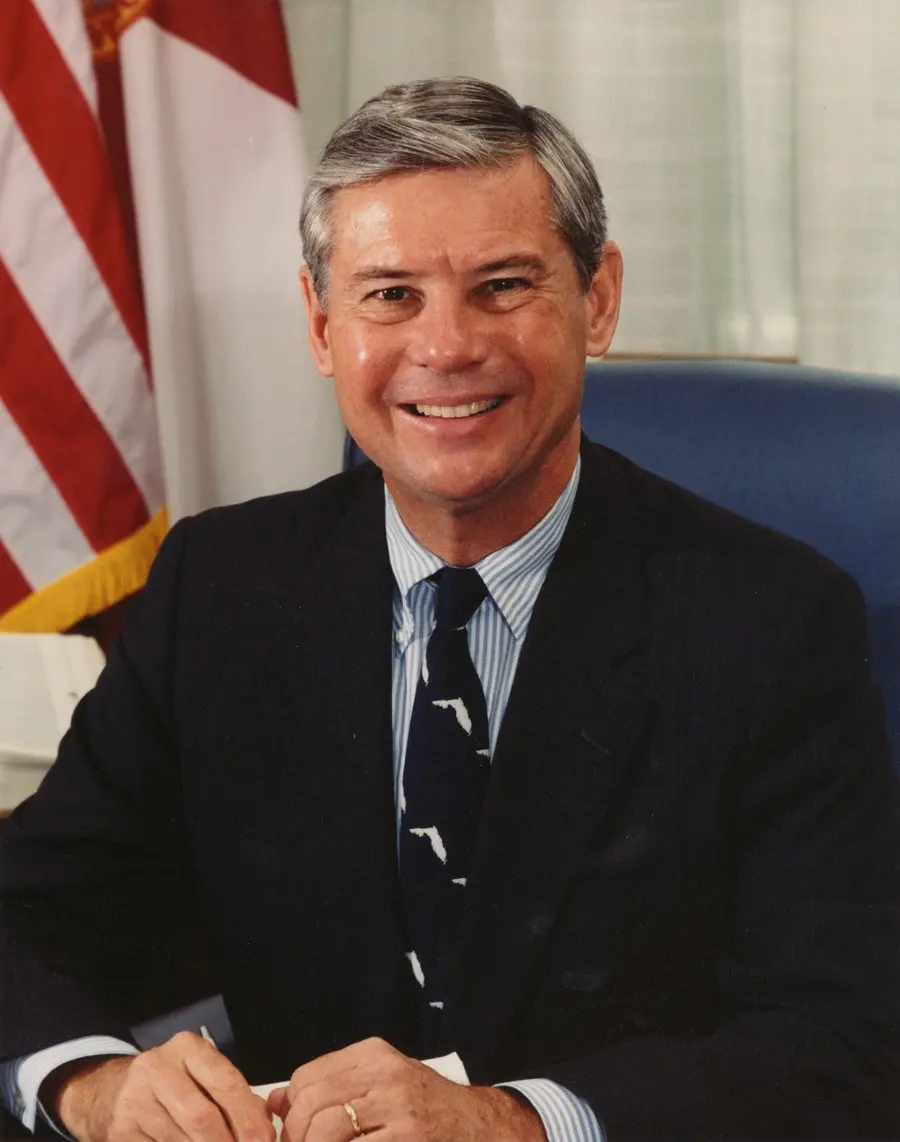
    Former Florida Senator Bob Graham co-chaired the congressional inquiry into possible links between the Saudi Arabian government and the 9/11 terrorist attacks, and since 2002 he has wanted the commission’s full report released. Twenty-eight pages had been removed from the document and labeled “classified.”

    On July 15, the missing “28 pages” were finally made public.

    The newly released document states that, “While in the United States, some of the September 11 hijackers were in contact with, and received support or assistance from, individuals who may be connected to the Saudi Government.”

    The report says that the congressional commission was presented with information “indicating that Saudi Government officials in the United States may have other ties to al-Qa’ida and other terrorist groups.”

    The commission adds the caveat that much of the information presented as part of the inquiry “remains speculative and yet to be independently verified.”

    As co-chair of the commission, Graham was frustrated that their full report was not initially released.

    Graham tried to share information about the terrorist attacks with the public, but was sometimes prevented from doing so.

    As a senator and member of the CIA External Advisory Board, Graham had to submit anything he wrote about the agency for approval before publishing. He had two non-fiction books partially dealing with 9/11 significantly edited by the CIA.

    Graham’s political experience clearly informs his suspense novel, “Keys to the Kingdom.”

    “The reason I wrote the novel was because I felt that there was some important unanswered questions coming out of 9/11. One of those was ‘what was the full extent of Saudi Arabia in assisting the 19 hijackers?’ Number two, ‘why would Saudi Arabia have turned against its strongest ally to assist what was our and their great enemy, Osama bin Laden?’ And third, ‘why has the United States gone to such lengths to cover it up?’ I’ve tried in non-fiction to tell those stories, and been frustrated by censorship, and so I decided I would tell the story as a novel, where the standards of censorship are lower, since you’re not representing this to be the truth. But in fact, forty percent or more of this novel is truth.”

    Following two successful terms as governor of Florida, Graham spent 18 years in the United States Senate. He served 10 years on the Senate Intelligence Committee, both before and after the terrorist attacks of September 11, 2001. Graham was one of the voices raised in opposition to the subsequent war in Iraq, which he says was one of his proudest moments as a senator.

    “I wasn’t proud at the outcome, because I was fairly convinced that it was not going to be a good outcome because we had been led into this war by false information,” says Graham, referring to the unsubstantiated claim that Iraqi leader Saddam Hussein possessed weapons of mass destruction.

    “The people who gave us that information knew, or should have known, that it was false,” Graham says.

    Senator Graham has often been called “the hardest working man in politics.”

    Graham’s 38 years of public service included two terms as Governor of Florida from 1979 to 1987, and he represented Florida in the United States Senate from 1987 to 2005.

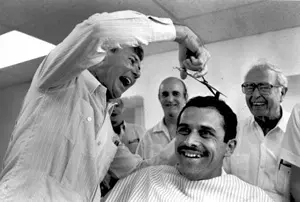
    He famously spent more than 400 days working other people’s jobs, including days as a journalist, a fisherman, a construction worker, a truck driver, a barber, and in many other occupations.

    Graham started his tradition of “work days” in 1974, while he was serving in the Florida Senate. His willingness to experience the lives of other people, if only for a day, helped to make Graham a very popular politician. He left office as governor with an 83% approval rating.

    Since leaving the U.S. Senate in 2005, Graham’s primary focus has been on developing the Bob Graham Center for Public Service at the University of Florida in Gainesville.

    Graham learned about public service at a very early age. His father, Ernest R. Graham, was a cattleman who also served in elected office, inspiring his son’s political aspirations.

    “He was very influential is an extremely positive way,” says Graham. “He had high values and he honored public service, and I tried to be faithful to his principles.”
    PDF file(s)
    Article Number
    71
    relevantdate

      Senator Bob Graham has been called “the hardest working man in politics.”

      Graham’s 38 years of public service included two terms as Governor of Florida from 1979 to 1987, and he represented Florida in the United States Senate from 1987 to 2005.

      He famously spent more than 400 days working other people’s jobs, including days as a journalist, a fisherman, a construction worker, a truck driver, a barber, and in many other occupations.

      Graham started his tradition of “work days” in 1974, while he was serving in the Florida Senate.

      “I was chairman of the State Senate Education Committee, and I had been in some classrooms where I didn’t think civics was being taught very well,” says Graham.

      “I mentioned that to some civics teachers and they said ‘the only way you can find out what’s going on is to actually go in a classroom.’ So, I accepted and ended up teaching 18 weeks of high school civics. It was a wonderful experience. I did, in fact, learn a lot about what was going on in a modern high school, but the most important thing I learned was the difference between learning by somebody giving you a lecture or reading it in a textbook, and learning by actually doing it.”

      Graham was inspired to learn about the employment experiences of other people by actually doing their jobs. He couldn’t dedicate 18 weeks to each position as he had with the teaching job, but he did spend one full day in 408 different jobs over a 30 year period.

      His willingness to experience the lives of other people, if only for a day, helped to make Graham a very popular politician. He left office as governor with an 83% approval rating.

      As Governor of Florida, Graham focused his efforts on education, the environment, and jobs, with significant results.

      “For the first time in the state’s history we saw our education programs begin to move toward, and in the case of our university system, actually reach the top quartile in the country,” says Graham.

      “In the environment, we had a particularly aggressive program of land acquisition, added hundreds of thousands of acres of state ownership, which now are some of our most valuable environmental and recreational lands. In economic development, as an indicator of our success, for the first time in Florida history Floridians earned more money on average than did the average American.”

      Following two successful terms as governor, Graham spent 18 years in the United States Senate. He served 10 years on the Senate Intelligence Committee, both before and after the terrorist attacks of September 11, 2001. Graham was one of the voices raised in opposition to the subsequent war in Iraq, which he says was one of his proudest moments as a senator.

      “I wasn’t proud at the outcome, because I was fairly convinced that it was not going to be a good outcome because we had been led into this war by false information,” says Graham, referring to the unsubstantiated claim that Iraqi leader Saddam Hussein possessed weapons of mass destruction.

      “The people who gave us that information knew, or should have known, that it was false,” Graham says.

      Since leaving the U.S. Senate in 2005, Graham’s primary focus has been on developing the Bob Graham Center for Public Service at the University of Florida in Gainesville.

      “My passion since I retired from the senate has been citizenship,” says Graham. “Unfortunately, by almost every indicator—voting, participation in civic organizations, joining with neighbors to solve local problems—citizenship has been in decline in America and in Florida. The purpose of the center is to try to understand that decline and then to reverse it.”

      Graham learned about citizenship at a very early age. His father, Ernest R. Graham, was a cattleman who also served in elected office, inspiring his son’s political aspirations.

      “I happen to have been born the same week that he was first elected to the Florida State Senate, so I grew up in a political environment,” says Graham.

      “He was very influential is an extremely positive way. He had high values and he honored public service, and I tried to be faithful to his principles.”
      PDF file(s)
      Article Number
      41
      relevantdate

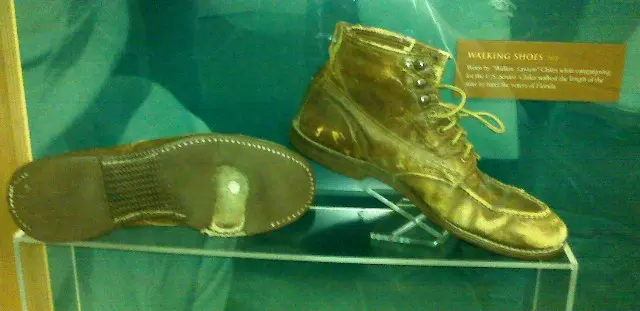
        A pair of tattered, well-worn boots with holes on the bottom and scrapes on the side is on display in the Florida Historic Capitol Museum in Tallahassee.

        The boots belonged to “Walkin’ Lawton” Chiles, one of Florida’s most respected and influential politicians.

        During his four decade career in the Florida House of Representatives, the Florida State Senate, the United States Senate, and as a two-term Governor of the state, Chiles worked for transparency and accountability in government, health care reform, children’s health and education, and successfully fought the advertising practices of the tobacco industry.

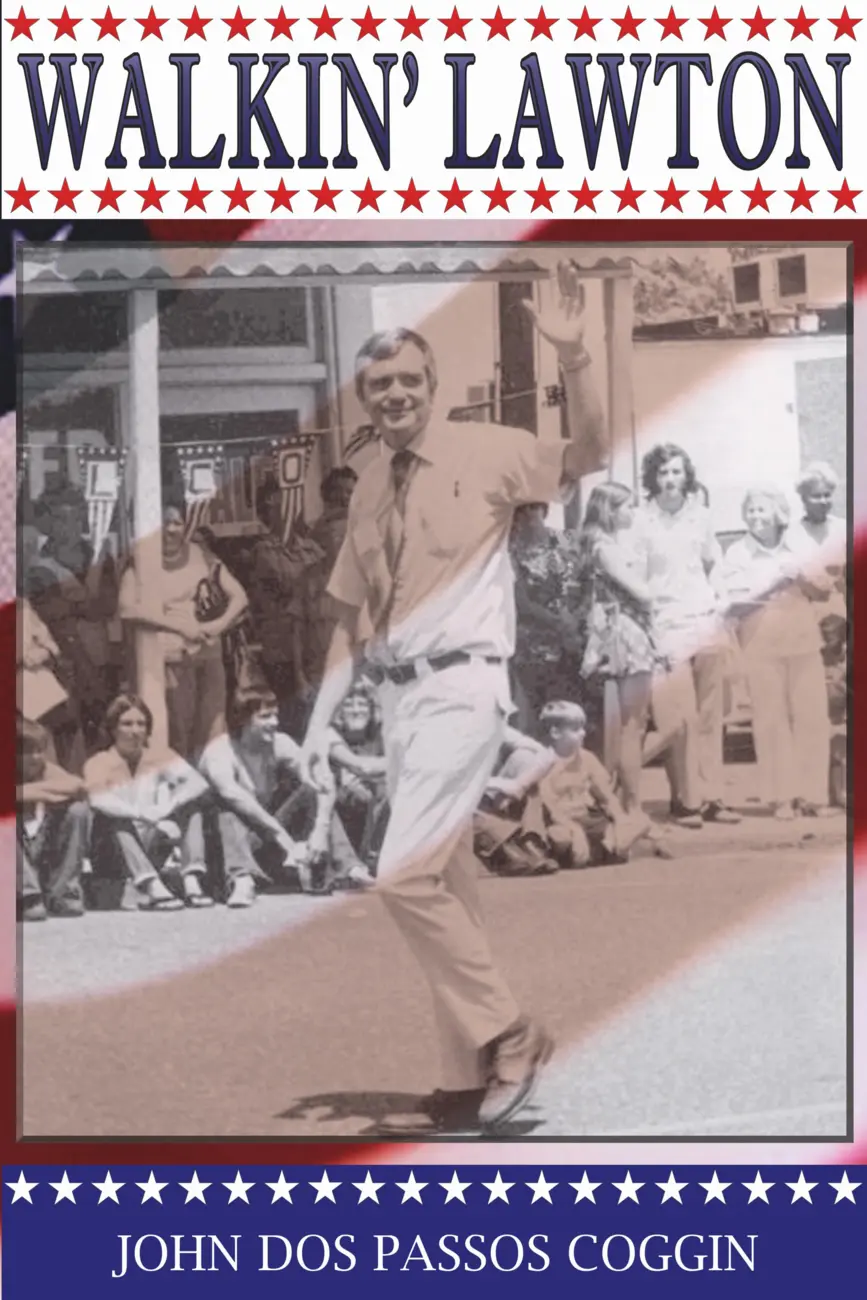
        Chiles first gained widespread notoriety by walking the entire state during his 1970 campaign for Florida’s U.S. Senate seat. He walked 1,003 miles over 91 days, shaking hands with nearly 40,000 people. Chiles began his campaign with only 4% name recognition, and ended up winning the election.

        Born in Lakeland, Florida in 1930, Chiles grew up watching politicians bring their campaigns directly to small town audiences, addressing crowds from gazebos in public parks.

        “I think the unique quality of his boyhood in Lakeland is something that we don’t appreciate any more in this age of mass media, of 24-hour news,” says John Dos Passos Coggin, author of the book Walkin’ Lawton.

        “Political engagement, attendance to political rallies that occurred in downtown Lakeland, in Munn Park specifically, was both entertainment and a source of information. It was as lively and entertaining to Lakelanders like Lawton Chiles as a trip to the movies or a trip to a baseball game. It was something that brought families together, and that families would continue to talk about at the dinner table after rallies.”

        It was this personal style of political engagement that inspired Chiles to walk the state, engaging Floridians in a meaningful dialogue. The walk captured the attention of the media, catapulting Chiles from obscurity to fame in just a few months.

        “It was something that changed him personally,” says Coggin. “He was no longer just an average Floridian who could fade into the crowd. He was no longer an average Florida politician who could fade into obscurity. The obligation he felt to Floridians, asking for their trust, person to person, shaking thousands of hands, the walk was a promise to Florida and he did his best to keep it.”

        As Chiles walked back and forth across the state, and from one end to the other, the conversations he had with the people of Florida changed some of his key political perspectives. Most notably, his views on the Viet Nam War evolved.

        “From its beginnings in Century, Florida on the Alabama border to its end in Key Largo in the furthest south Florida, it was a classroom for him where he allowed himself to be a student and allowed voters to be teachers,” Coggin says. “Perhaps the most visible impressionable change was on his Viet Nam policy where he changed over the course of the walk from a hawk to a dove.”

        Chiles’ efforts to reform health care sparked a national debate that continues today. The successful “Truth” campaign that discourages teen smoking is the result of his litigation against the tobacco industry. He championed transparency in government that resulted in important legislation. His very frugal campaigns, which were always successful, are models for modern backers of campaign finance reform.

        His ability to connect with people made Chiles one of Florida’s most popular governors. He defeated incumbent governor Bob Martinez in 1990, and survived a challenge by Jeb Bush in 1994. Chiles died of a heart attack in the Governor’s Mansion just a few weeks before the end of his second term.

        Chiles is remembered fondly by diverse groups of people for his sense of humor and compassion, as well as his political successes.

        “He not only reached across racial divides in the Panhandle and rural areas in Florida, he loved the way Spanish Florida spoke, he loved Cubans, he loved mixing with all types of cultures,” Coggin says. “I think that is what made him an enduring part of Florida’s political culture from decade to decade.”

        Aspiring political leaders today might benefit from walking a mile, or perhaps a thousand miles, in Chiles’ shoes.

        Dr. Ben Brotemarkle is executive director of the Florida Historical Society and host of the radio program “Florida Frontiers,” broadcast locally on 90.7 WMFE Thursday evenings at 6:30 and Sunday afternoons at 4:00, and on 89.5 WFIT Sunday mornings at 7:00. The show can be heard online at myfloridahistory.org.

        PDF file(s)