Florida Frontiers

A Tag for nodes that are relevant to Florida Frontiers.   For example if an artilce is about Florida Frontiers and you would like a 'View' to sorty by Tag criteria for it... us it.

Article Number
69
relevantdate

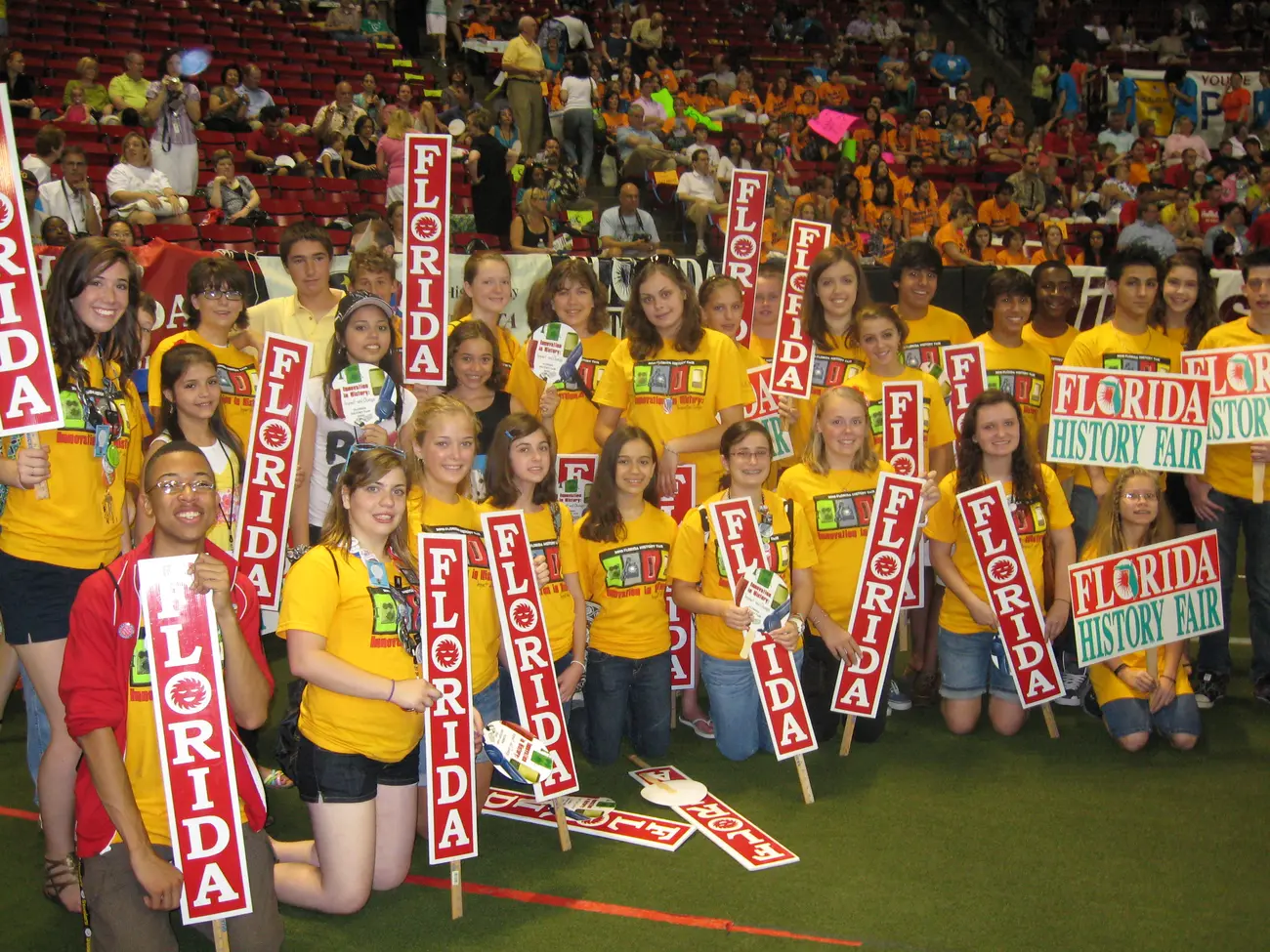
    Every year in May, nearly 1,000 students from around the state meet in Tallahassee to compete in the annual Florida History Fair. Next month, the winners of this year’s competition will travel to College Park, Maryland to compete with state history fair winners from across the country.

    “Florida History Fair is an opportunity for students from sixth grade to twelfth grade to participate in historical research and produce a product, either a documentary, an exhibit, a website, a historical paper, or a performance using primary sources,” says Trampas Alderman, curator of education at the Museum of Florida History, and coordinator of the state competition.

    The student competitors at Florida History Fair must follow strict guidelines when preparing their papers, projects, and performances. They do not just present information they have collected. The students must demonstrate analysis and interpretation of their selected topics for the judges.

    “They’re not just doing a typical paper you do in school,” says Alderman. “They’re doing what the professionals do. They’re looking at primary resources to develop a base from which to draw conclusions and to make historical analysis, just like a historian will do, or a curator at the museum.”

    Beyond training students to use critical thinking skills to analyze and draw conclusions from available facts, an evaluation of National History Day conducted in 2010 concluded that there are many benefits for participants in Florida History Fair.

    “Students who participate in the program perform better in high-stakes tests, are better writers, more confident and capable researchers, and have a more mature perspective on current events and civic engagement than their peers,” says Chris Bryans, a social studies teacher at Community Christian School in Melbourne.

    “From a personal perspective, I cannot tell you how many of my own students have grown academically and socially through their participation in this program,” says Bryans. “I know I am not alone when I say that History Fair captures the interests and hearts of a lot of students who would otherwise slip through the cracks. It’s a lot of fun, too.”

    This year nearly half of all Florida counties sent local student winners to compete on the state level at the Florida History Fair in Tallahassee. Brevard County had only two schools partipate.

    Chris Bryans served as the coordinator of the Brevard County History Fair from 2009 through 2014, building the program to include ten participating schools. This year, his teaching schedule did not allow him to continue as the county coordinator.

    “All we have to do to get it moving again is to have someone willing to take on the role of county coordinator,” says Bryans. “It doesn’t have to be a teacher or even someone within the district school system. All it needs is someone with the time and heart to help the schools organize, work with the schools and the district in organizing the county history fair in late February or early March, and be a liaison with the state history fair coordinators.”

    The theme for the 2015 Florida History Fair and the upcoming National History Day competition is “Leadership and Legacy.” Popular topics for student entries this year include entrepreneur Walt Disney, author Stetson Kennedy, and civil rights activist Rodney Hurst.

    Someone could have done a project or paper on the “Leadership and Legacy” of Chris Bryans.

    “All of my students are graduating this year and next with Florida History Fair under their belt,” says Bryans. “They have grown because of it. And what stories they have! How many folks do you know who got to spend time with the daughter of civil rights martyrs Harry T. and Harriette V. Moore, or who have spent a few hours getting to know a real Tuskegee Airman? Who wouldn’t treasure such opportunities and memories?”

    Perhaps next year more students from Brevard County will once again be able to reap the benefits of participating in history fair on the local level, move up to the Florida History Fair, and maybe even make it to the National History Day competition.

    “I have offered my six years of experience to help a new coordinator get started but haven’t had any nibbles,” says Bryans.
    PDF file(s)
    Article Number
    67
    relevantdate

      Cape Canaveral is the oldest name of a specific location to appear on a European map of what is now the continental United States.

      Every manned mission into space originating from the United States has been launched from Cape Canaveral.

      From the Spanish “discovery” of the New World to America’s manned exploration of space, Cape Canaveral helps define the boundaries of the Modern Era.

      In the late 1400s, Spain was unified under Ferdinand and Isabella, who sponsored the first European exploration and settlement of what they thought of as the New World.

      In 1513, Ponce de León literally put Florida on the map, and gave our state its name.

      “There’s still a great deal of controversy and a great deal of debate as to where Ponce de León first makes landfall and comes ashore in Florida,” says James Cusick, co-editor of the book “The Voyages of Ponce de León: Scholarly Perspectives.”

      “We know it’s along the Atlantic coast. We know it’s more than likely somewhere between Cape Canaveral and areas just south of Jacksonville.”

      Ponce de León returned to Florida in 1521, hoping to establish a colony, but his efforts were rejected by one of the many sophisticated tribes of Native Americans who had been living here for thousands of years. The Calusa Indians of southwest Florida attacked the settlers and Ponce de León died from his injuries.

      In the following decades, Spanish conquistadors including Pánfilo de Narváez, Hernando de Soto, and Tristán de Luna came to Florida seeking land, wealth, and slaves. None were able to establish a permanent settlement here.

      In 1564, the French establish Fort Caroline near Jacksonville. Spain sent Don Pedro Menéndez de Avilés to reclaim Florida.

      “Once the King of Spain hears that the French have people in what he considers to be Spanish Florida, the clock speeds up,” says Spanish colonial historian Susan Parker.

      “A major point of Menéndez’s venture to La Florida, one of the first things he has to do, is to eliminate the French from Spanish claimed territory.”

      Don Pedro Menéndez de Avilés attacked Fort Caroline, and the last surviving French fled to Cape Canaveral. Menéndez ousted them as well before establishing St. Augustine as the oldest permanent European city in what is now the United States, in 1565.

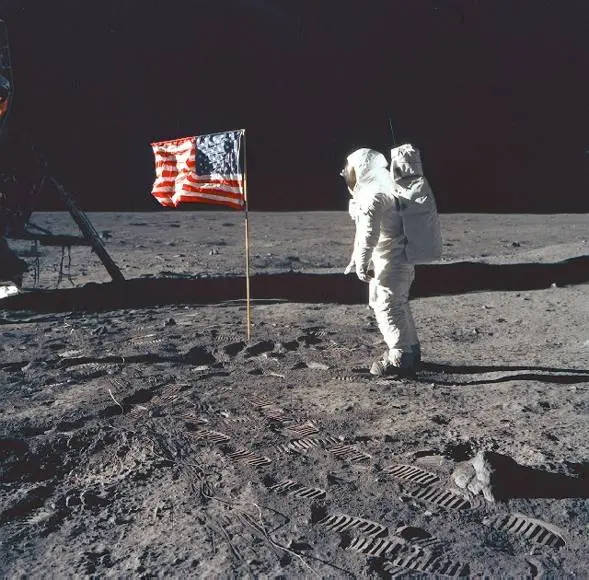
      The exploration of Florida is an important element establishing the beginning of the Modern Era. Historians, humanities scholars, and sociologists say that the moment Neil Armstrong set foot on the moon, the Modern Era ended, and the Post-Modern Age began.

      As the first steps on the moon were taken on July 21, 1969, Neil Armstrong inspired future generations of astronauts.

      “I was a freshman in college, I remember when it happened,” says NASA astronaut Winston Scott. “I was sitting in the living room, watching the television pictures along with millions of other people around the world. I can remember how exciting it was. I was captured by it.”

      Scott’s own accomplishments include serving on two shuttle missions, making two space walks, and spending nearly 25 days in space. Like the American astronauts before him, Scott launched into space from Cape Canaveral.

      “All of a sudden the clock hits zero and it leaps off the pad,” Scott says. “It doesn’t rise in slow motion the way it looks on TV. It jumps off the pad. The entire ride from earth to orbit is only eight and one half minutes. It is an incredible ride.”

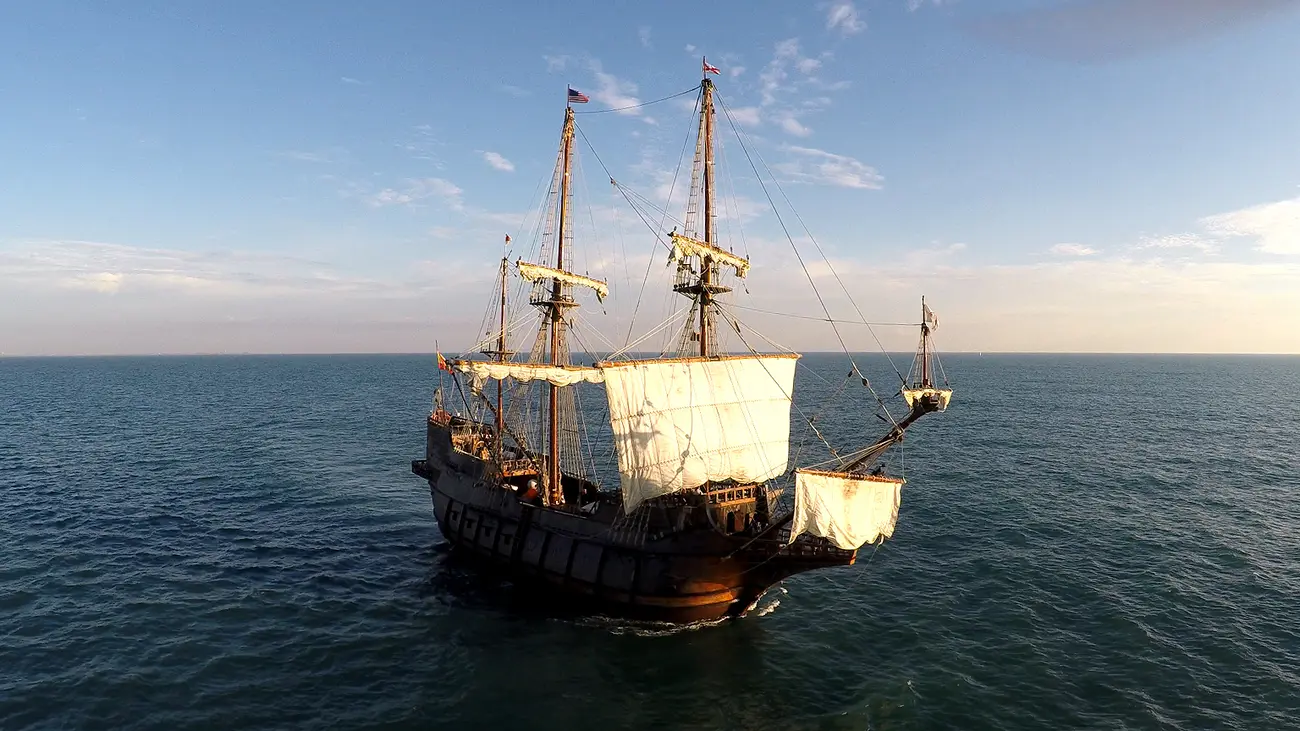
      Stars guided the navigators aboard the Spanish ships that came to Florida in the sixteenth century, many sailing past Cape Canaveral. The astronauts launched into space from Cape Canaveral continue looking to the stars and beyond.

      “I can imagine what it would be like to be on the first crew going off to Mars,” says Scott.

      “I do think it’s important that we continue to explore. That’s what we were meant to do as human beings, and we ought not to let anything get in our way of pushing the boundaries, to continue to explore in every way that we can.”

      The same brave impulse that allowed European explorers to climb aboard ships and sail across the ocean to unknown destinations, including Cape Canaveral, is alive and well today.

      PDF file(s)
      Article Number
      68
      relevantdate

        The Florida Historical Society was established in 1856, making it the oldest existing cultural organization in the state. The independent, not-for-profit organization was founded in St. Augustine and moved to several other locations during the twentieth century before making Brevard County the permanent home of their statewide headquarters in 1992.

        Based at the Library of Florida History in the old 1939 Post Office and Federal Building in downtown Cocoa, the FHS also operates the Brevard Museum of History and Natural Science adjacent to the Cocoa campus of Eastern Florida State College, and manages the Historic Rossetter House Museum and Gardens in Eau Gallie.

        The organization’s statewide activities originating from Brevard County include the production and distribution of “Florida Frontiers: The Weekly Radio Magazine of the Florida Historical Society” heard on public radio stations, and the publication of about ten books per year through the Florida Historical Society Press.

        Each May, the Florida Historical Society presents their Annual Meeting & Symposium in a different Florida location. The conference has been held regularly since 1902. In recent years, the event has been presented in Fort Lauderdale, Tampa, Jacksonville, and Pensacola.

        To mark the 500th anniversary of the naming of our state in 2013, the conference was held aboard a cruise ship leaving Port Canaveral for the Bahamas. After visiting historic sites in Nassau, the conference traveled up Florida’s east coast following the same route taken by Ponce de León in 1513.

        “Every year the Florida Historical Society gets together in May to provide a forum for Florida historians, graduate students, and any interested party to get together for the sole purpose of discussing, enjoying, and learning about Florida history,” says Ben DiBiase, FHS director of educational resources.

        “It’s a great environment not only for professionals, but for anyone who really has an interest in Florida history to be able to come out to a different city throughout the state. We travel and try and represent geographically, the entire state of Florida.”

        The 2015 Florida Historical Society Annual Meeting & Symposium will be held in St. Augustine, May 22-24, at the Renaissance World Golf Village Resort. The theme for this year’s conference is “Subjects, Citizens, and Civil Rights: 450 Years of Florida History.”

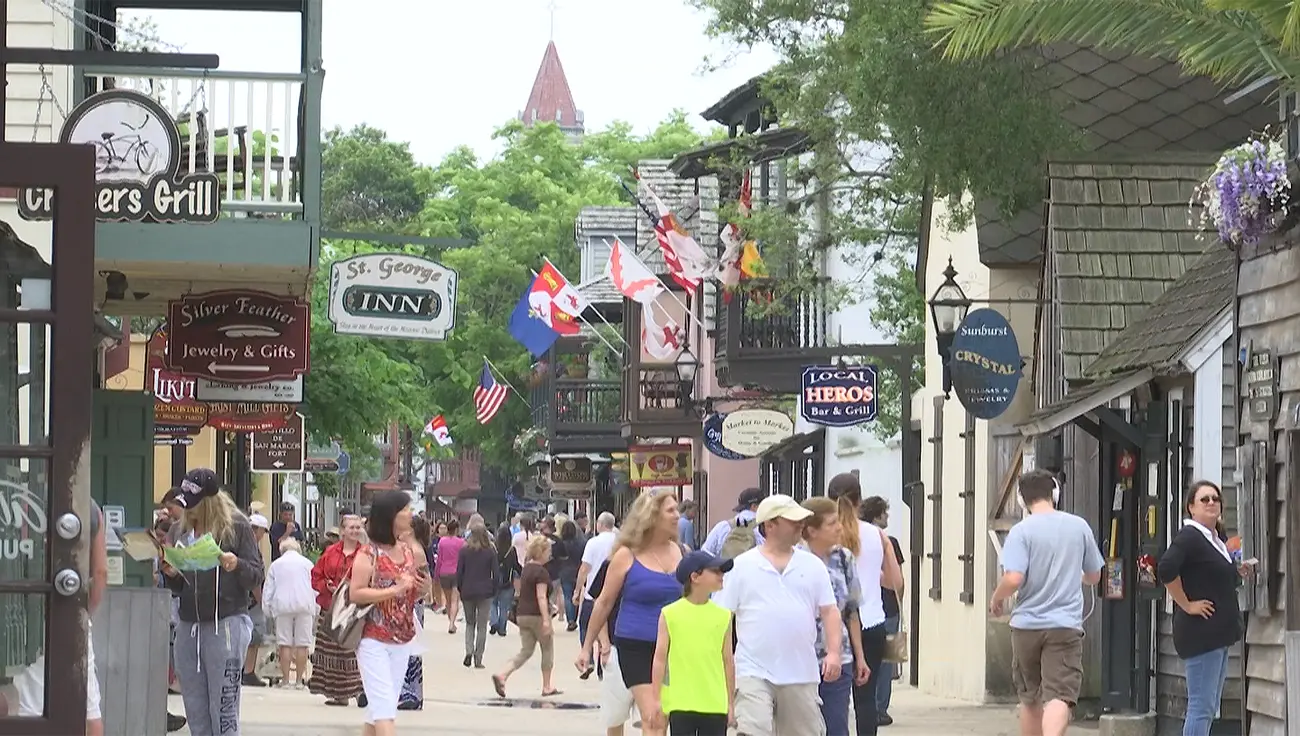
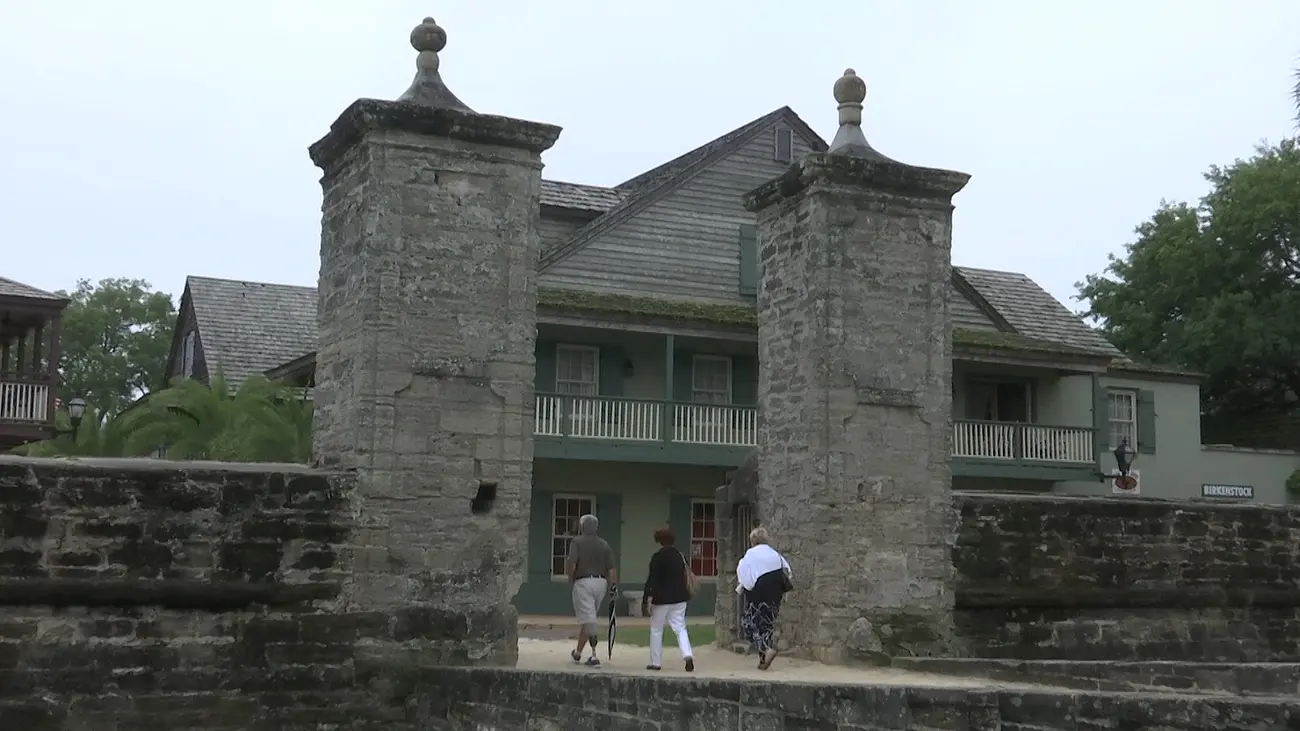
        St. Augustine was selected for this year’s event in recognition of the city’s 450th anniversary as the oldest continuously occupied European settlement in what is now the United States. Also commemorated will be the town’s pivotal role in getting national civil rights legislation passed. Demonstrations held in St. Augustine in 1964, helped to break a stalemate in the U.S. Congress over passage of the Civil Rights Act.

        Each morning of the conference, more than 100 presenters will speak on a wide variety of Florida history topics in concurrent sessions. A few of the featured speakers include Carl Halbirt, archaeologist for the City of St. Augustine for more than twenty-five years; civil rights leader Robert B. Hayling; and author, educator, and historian David R. Colburn.

        Each afternoon, conference attendees will visit historic sites in the nation’s oldest city.

        “We want to get outside of the classroom and get outside of just the academic presentation setting, so we plan a number of really exciting tours,” says DiBiase.

        “This year in St. Augustine, we’re going to have a walking tour throughout the city to discover some of the hidden archival areas. We’ll also have a trolley tour dedicated to the civil rights points of interest around the city. There will also be an historic boat tour.”

        The conference also features a reception at the Lightner Museum, an awards luncheon honoring the best books and other projects exploring Florida history, a banquet dinner at the Renaissance Resort, and a picnic at the Oldest House.

        New this year will be presentations from younger, junior historians, who created award winning papers or projects for the Florida History Fair.

        “Every year, the Florida Historical Society is, of course, involved with the state History Fair up in Tallahassee,” says DiBiase. “We’re going to be bringing some of those students to present their work at our annual meeting.”

        The general public is encouraged to attend the Florida Historical Society Annual Meeting & Symposium. Registration information is online at www.myfloridahistory.org.

        PDF file(s)
        Article Number
        66
        relevantdate

          On November 22, 1963, President John F. Kennedy was shot and killed as his motorcade drove through Dallas, Texas.

          President Kennedy spent the week before his death in Florida.

          After a short stay at his family’s winter residence in Palm Beach, Kennedy toured the NASA facilities at Cape Canaveral before visiting Tampa and Miami.

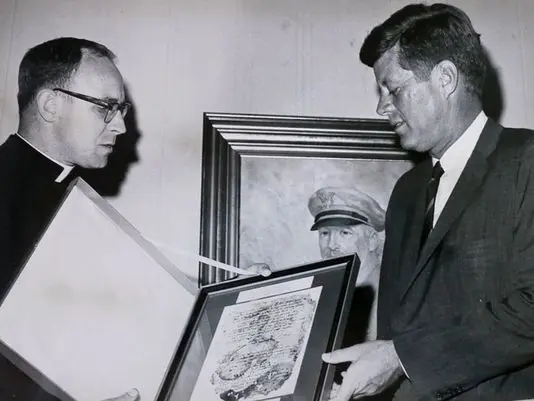
          On his last day in Florida, President Kennedy met with Florida historian and Catholic priest Michael Gannon. As the first and only Catholic American president, Kennedy was particularly interested in Gannon’s area of expertise, Catholicism in Spanish Colonial Florida.

          When Gannon spoke with President Kennedy on November 18, 1963, he was a priest in St. Augustine, preparing to celebrate the 400th anniversary of the founding of the city.

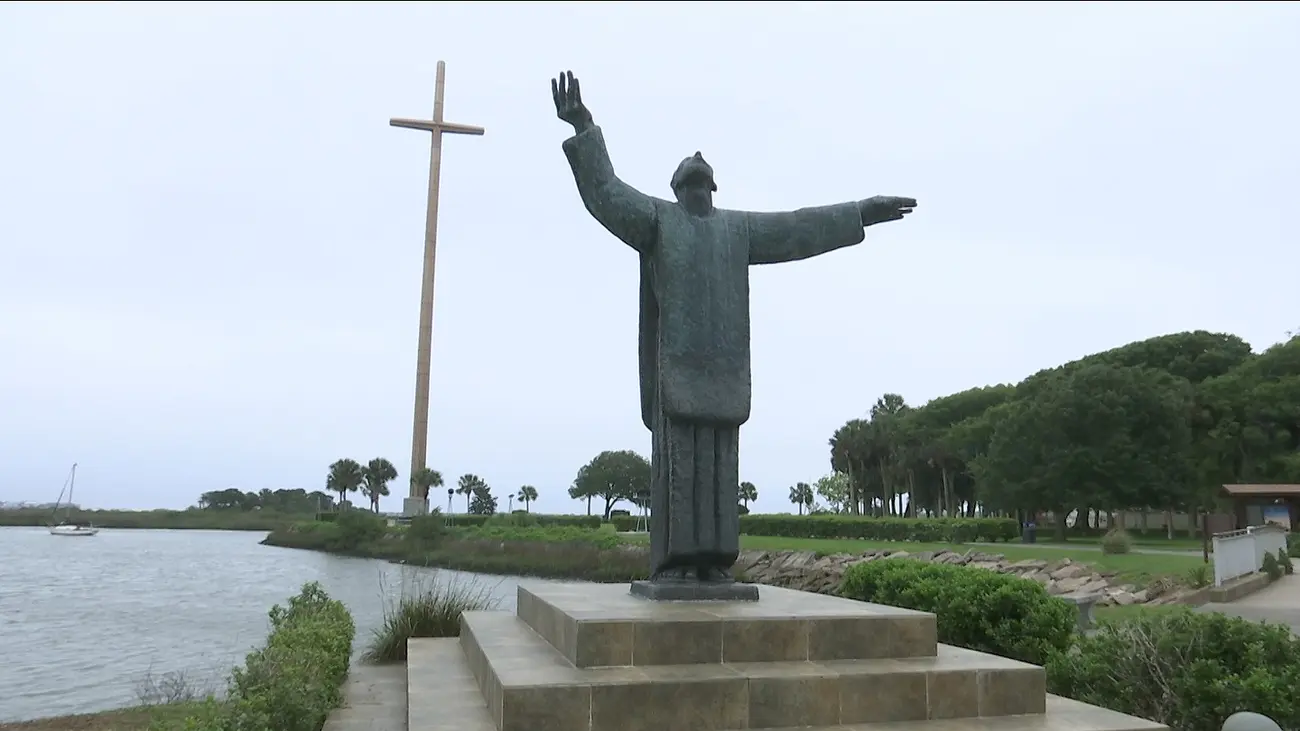
          “At the old mission where the first Parrish Mass was celebrated on September 8, 1565, it was decided to build a cross,” Gannon says. The cross was to be built on the site where Don Pedro Menéndez de Avilés first landed to settle St. Augustine, and where Father Francisco López observed the city’s first Catholic Mass.

          “Ultimately it was constructed of stainless steel and rose to a height of 208 feet. I think it’s very impressive. It can be seen 14 miles out to sea. It has become a symbol of the first mission to the North American Natives and the first Parrish established by Europeans in this country,” says Gannon.

          Also part of St. Augustine’s 400th anniversary celebration in 1965 was the expansion and redecorating of the cathedral church, the construction of a contemporary church called The Prince of Peace, and a bridge linking the new church with the historic mission grounds.

          President Kennedy’s Catholicism had been an issue during his election campaign, and he gave a national speech on the topic to reassure voters.

          Spain controlled Florida for nearly three centuries. Gannon told Kennedy about the extensive and complex history of Catholicism in Florida.

          “Everywhere Spain moved politically and economically and militarily, the church moved, too,” says Gannon.

          “The church was always a partner of Spanish expansion. The church was on the forefront. If you want to select any part of the Spanish cultural presence in Florida and the rest of North America, you would have to say that the church was in advance of all other institutions.”

          The Florida Chamber of Commerce arranged the meeting between Gannon and Kennedy as St. Augustine was preparing for its 400th anniversary celebration.

          “It was hoped by the Chamber of Commerce and by the city fathers in St. Augustine, that the president would agree to come down earlier rather than later,” says Gannon.

          “It was uncertain if he would be elected to a second term, so they wanted him to come while president and to build up interest in the city that would help generate tourist traffic for the 400th year.”

          It was arranged for Gannon to meet the president at the MacDill Air Force Base Officer’s Club.

          “I brought him a photographic copy of the oldest written record of American origin, which was a Parrish Register of Matrimonial Sacrament, a marriage between two Spaniards, a man and a woman, here in the city of St. Augustine, dated 1594,” says Gannon.

          “He seemed to be very grateful to receive the gift of the photographic copy that was beautifully framed.”

          President Kennedy was intrigued by Gannon’s stories about the oldest continuously occupied European city in what would become the United States.

          “As he left he said ‘I’ll keep in touch.’” Gannon says, pausing to recall the moment. “But four days later he was dead.”

          Gannon became one of Florida’s most respected historians, teaching at the University of Florida. He has written or edited 10 books, including the recently revised and updated “History of Florida” published by the University Press of Florida.

          To recognize the 450th anniversary of the founding of St. Augustine, the Florida Historical Society is holding their 2015 Annual Meeting and Symposium at the Renaissance World Golf Village Resort, May 22-24. More than 100 presentations on a variety of Florida history topics will be featured, along with exclusive tours of historic sites, an awards luncheon, a banquet dinner, and a picnic at the Oldest House in St. Augustine. 

          PDF file(s)
          Article Number
          65
          relevantdate

            At 4:00 a.m. on April 1, 1864, an explosion disrupted the still waters of the St. Johns River as a Confederate mine ripped through the hull of the steamship Maple Leaf. The ship was transporting Union supplies during the Civil War.

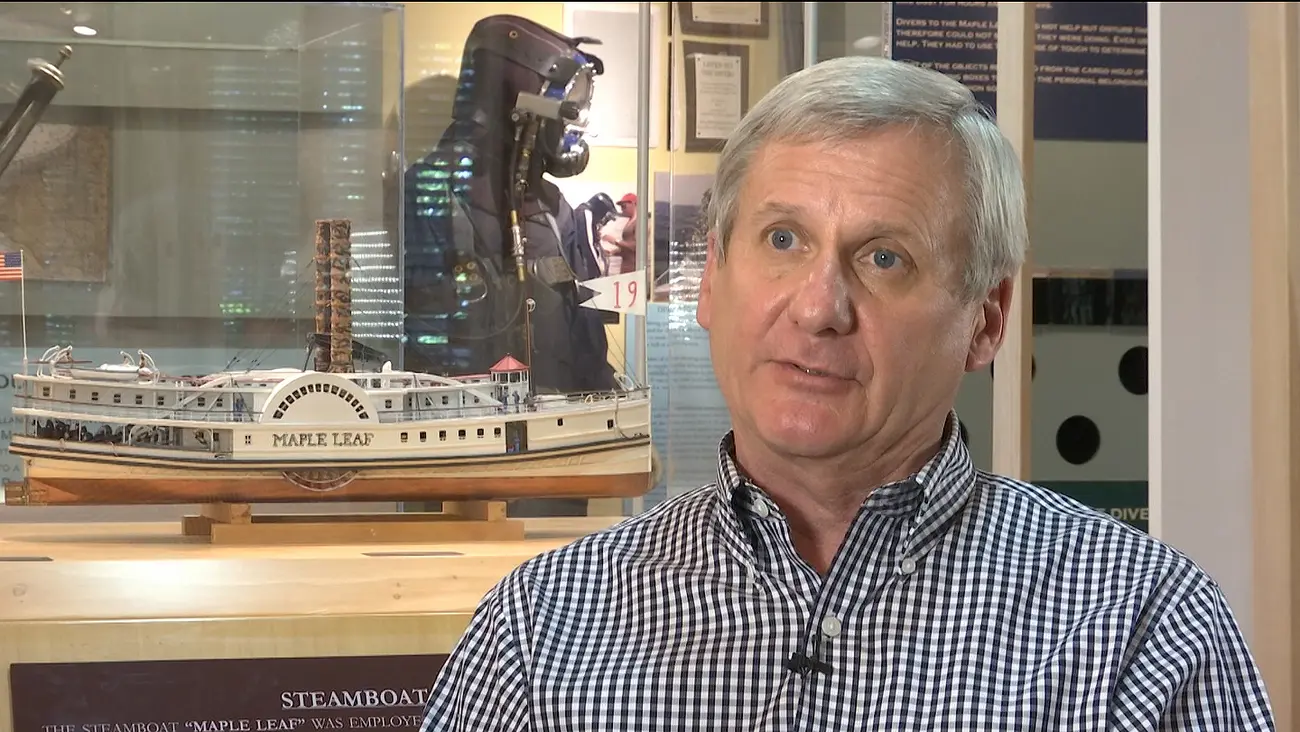
            “It was participating in the Southeast Atlantic Blockade as a troop transport,” says Keith Holland, founder of St. Johns Archaeological Expeditions, Inc.

            “After the Battle of Olustee, which was a major Union defeat, all troops were called from surrounding areas, especially Charleston, to come to Jacksonville immediately. They had camped on Folly Island, an entire brigade, for about 20 months. It took the Quartermasters approximately a month to break down the entire camp, and load up all of the thousands of soldiers personal effects into boxes. They were all placed into the Maple Leaf.”

            Before the Union supplies could be unloaded from the Maple Leaf, the ship was ordered to go to Palatka and deposit some provisions there, including a group of horses. The ship went to Palatka, but never made it back to Jacksonville.

            “They were ordered to travel at night with no lights, only the binnacle light was allowed in the pilot’s house,” says Holland.

            “It was a full moon, no wind, the river was as clear as the surface of a mirror. Romeo Murray, the pilot, was heading north. He saw nothing on the water, but there was a contact explosive mine submerged under the water. He struck that directly under the hull, approximately at the foremast, and it imploded a huge hole into the bow of the boat.”

            The front deck of the Maple Leaf caved in and the pilot house fell forward. The ship’s whistle started to blow as its wire was stretched. The pilot turned the boat in an attempt to get to the east bank of the river, but it was too late.

            After five or six revolutions of the paddle wheel, the Maple Leaf sank to the bottom of the St. Johns River.

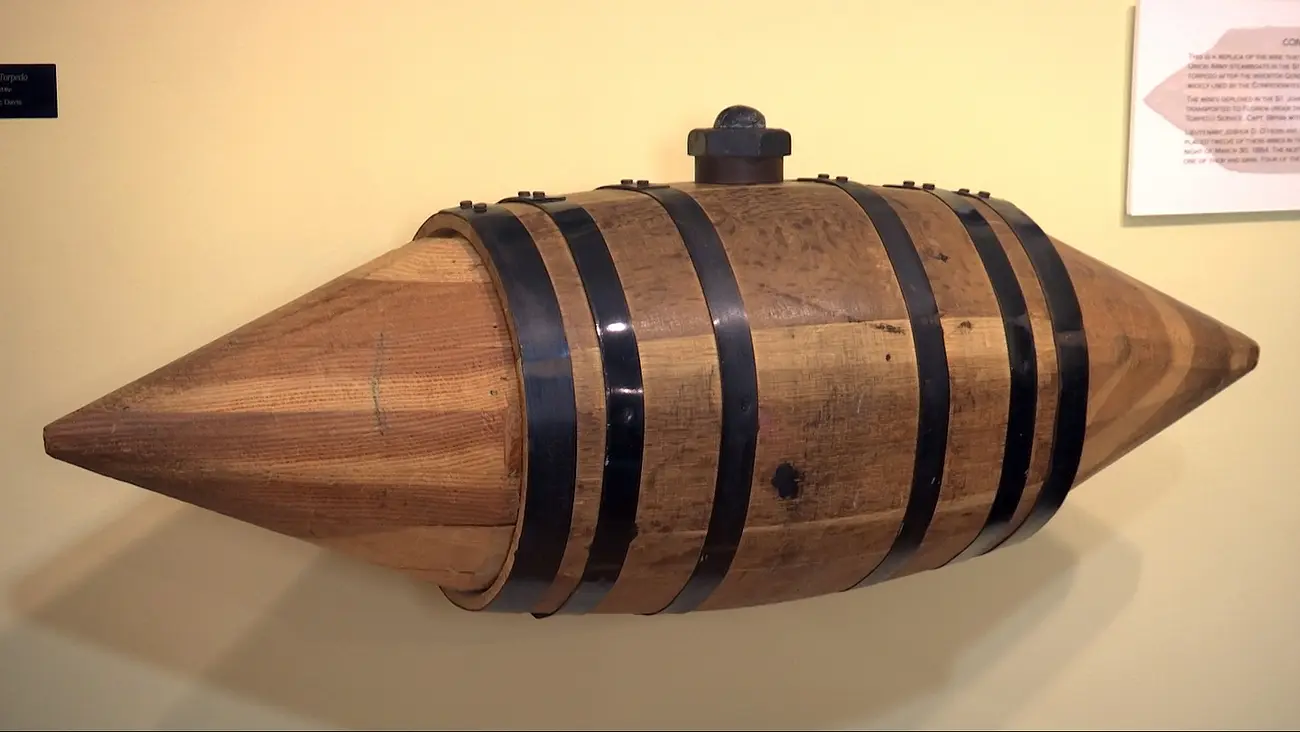
            The Confederate mine that sunk the Maple Leaf was about a yard wide. The center looked like a small barrel, but tapered wooden points on both sides made it resemble a torpedo.

            The mine blast killed four people, but the rest of the crew was able to escape in life boats.

            “The officer in charge said that he thought it would be ‘the better part of valor’ to get out of there before the Confederates approached,” says Holland. “They spent the rest of the night, from four o’clock in the morning, rowing to Jacksonville, and arrived there about 8:30 in the morning.”

            Today we view the materials left aboard the ship as having great cultural significance, but the artifacts remained undisturbed and forgotten for more than 125 years.

            In 1984, Jacksonville dentist and diving enthusiast Keith Holland became aware of the Maple Leaf story and formed St. Johns Archaeological Expeditions, Inc. to research, locate, and excavate the ship.

            Years of research led Holland to the conclusion that 800,000 pounds of personal items belonging to Union soldiers would still be aboard the Maple Leaf, preserved in an anaerobic environment.

            Holland and his team of divers dragged a metal detector across the bottom of the river, looking for the exact location of the ship. It snagged on a shrimp net, which in turn had been caught on the paddle wheel axel of the Maple Leaf. It was the only part of the ship sticking up from the river floor.

            “The main deck was buried under seven feet of St. Johns River mud,” says Holland. “This was going to take a very big deal to get to.”

            Holland’s team was able to clear away enough mud to gain access to the ship and begin recovering artifacts from the Maple Leaf. Much of that material is on display for the first time at the Mandarin Museum and Historical Society in Jacksonville along with a detailed model of the ship, a replica of the mine that sank it, and a diving suit worn by one of the excavators.

            Only a very small portion of the Maple Leaf cargo has been recovered. Most of the ship’s contents remains buried in the St. Johns River.

            Dr. Ben Brotemarkle is executive director of the Florida Historical Society and host of the radio program “Florida Frontiers,” broadcast locally on 90.7 WMFE Thursday evenings at 6:30 and Sunday afternoons at 4:00, and on 89.5 WFIT Sunday mornings at 7:00. The show can be heard online at myfloridahistory.org.

            PDF file(s)
            Article Number
            64
            relevantdate

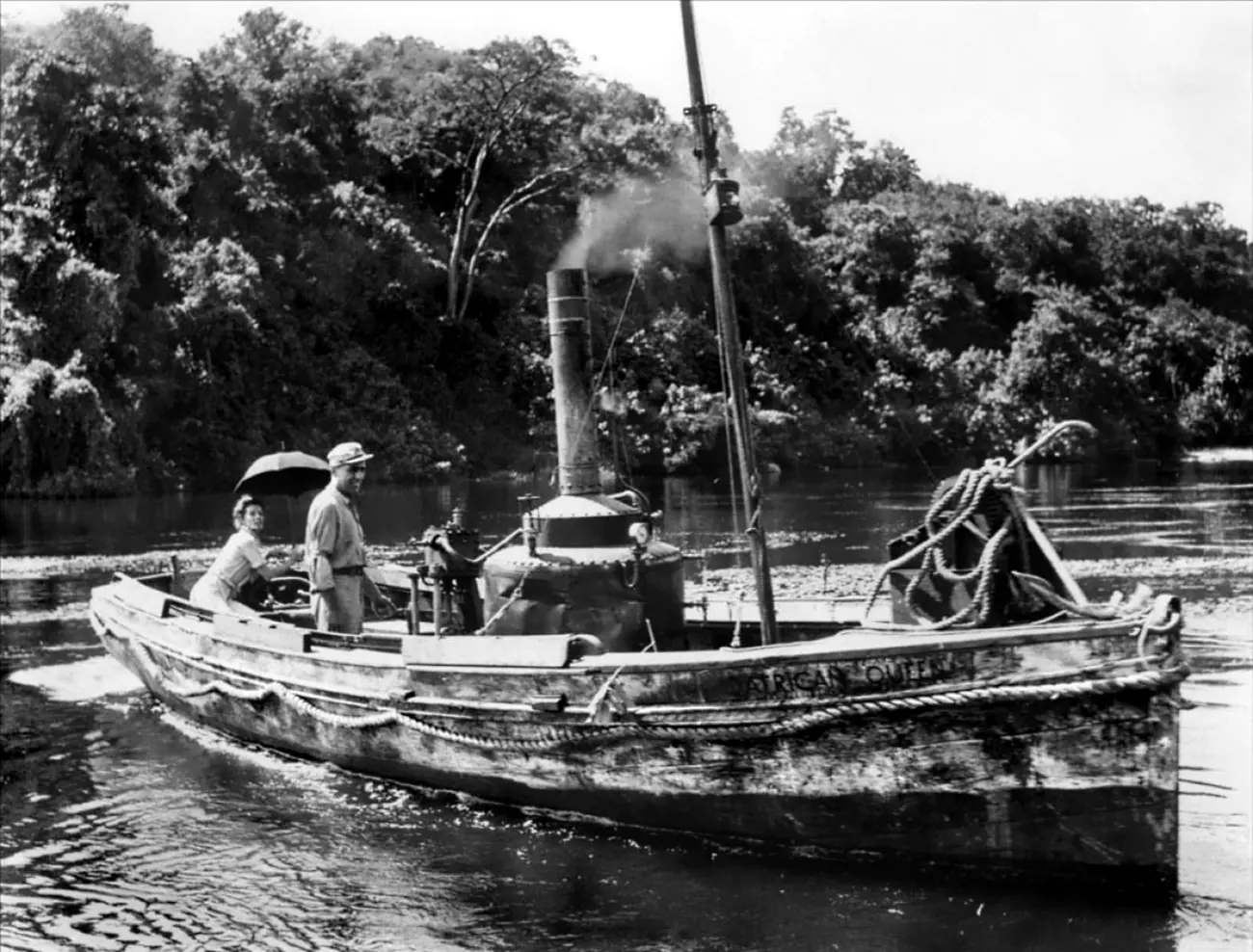
              In the classic 1951 film “The African Queen,” a small steam boat with the same name is damaged on river rapids, shot at, and ultimately destroyed while being used as a makeshift torpedo against a German vessel at the beginning of World War I.

              Models and prop boats were used during filming to portray the damage, and the real African Queen survived.

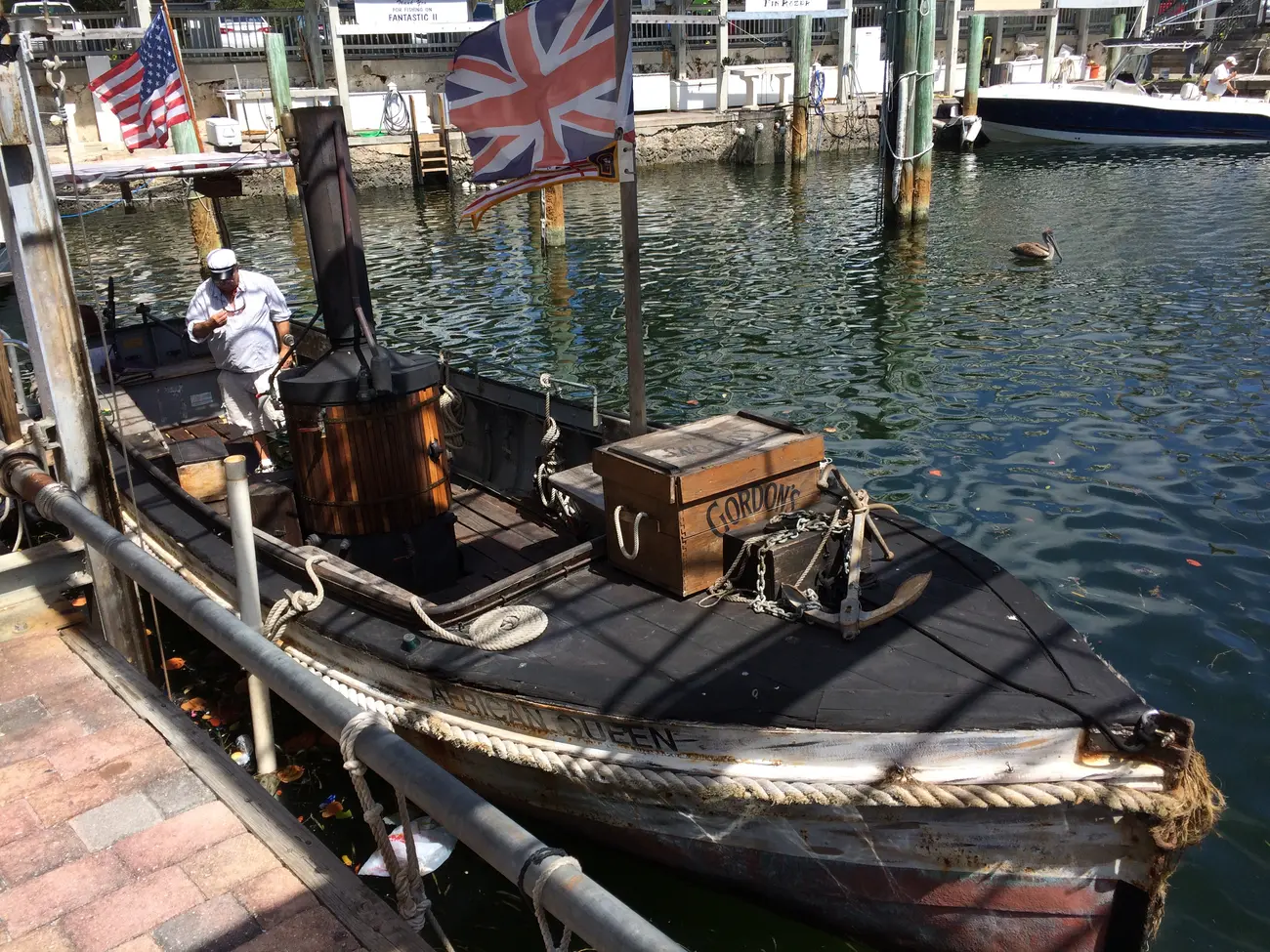
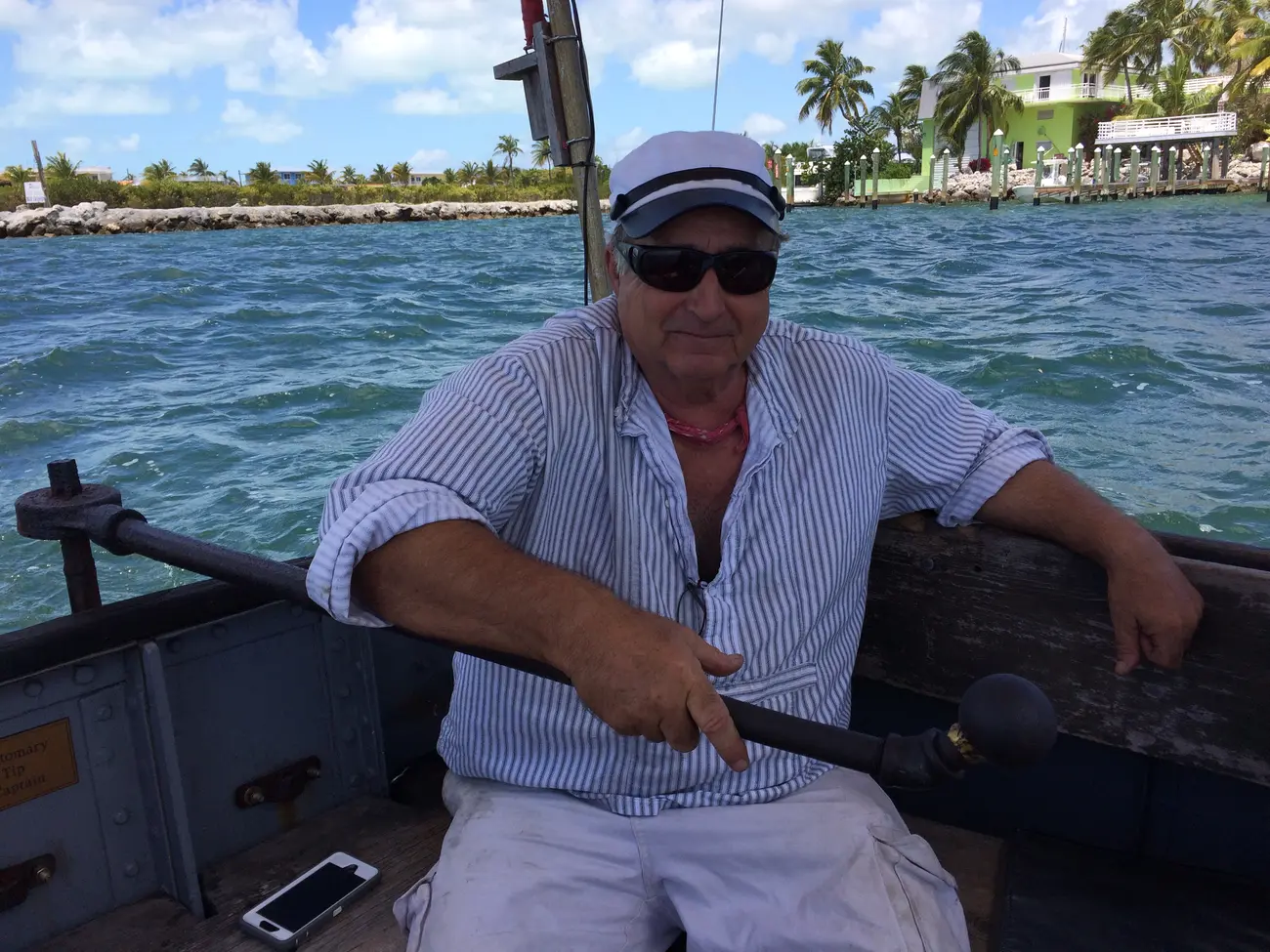
              Today, the actual boat used in the film leaves a dock in Key Largo every two hours, taking history enthusiasts, movie lovers, and other sightseers on a trip down a canal, into the ocean and back.

              “People just love this boat, especially if they’ve seen the movie,” says Michael Hewitt, who pilots the African Queen for no more than six passengers per cruise. “If they haven’t seen the movie, one thing’s for sure: when they take a ride on the boat they will see the movie later. People come from all over the country to ride on this boat.”

              The boat renamed the African Queen for the film was built in 1912 by the Abdela & Mitchell Shipyards in Brimscombe, Gloucestershire. It was shipped from Britain to the Belgian Congo for use on the Ruki River and Lake Albert. The boat was originally named the Livingstone.

              “It was a work boat,” says Hewitt. “It helped the British East Africa Railway build trestles across the waters and hauled freight, personnel, whatever was necessary. It was a real hard work boat.”

              While scouting locations in Africa for the filming of “The African Queen,” director John Huston and producer Sam Spiegel saw the work boat Livingstone, and decided it would be perfect for use in their movie.

              Based on the 1935 novel by C.S. Forester, the film “The African Queen” stars Humphrey Bogart in his only Oscar-winning role as the rough boat captain Charlie Allnut. Katharine Hepburn was nominated for her role as the proper Methodist missionary Rose Sayer.

              “The African Queen” is an adventure film. At the outbreak of World War I in 1914, Germans raid the mission village where Rose is working. Charlie helps her to escape on the African Queen, but they must evade German soldiers. Rose wants to use the boat as a torpedo to sink a German ship that is preventing British counterattacks in the area.

              Charlie reluctantly agrees to Rose’s plan, and the two very different people become a couple while facing adversity together.

              On the way to fight the Germans, the African Queen is damaged while going over three rapids, is shot at by German soldiers, and Charlie is covered with leeches while trying to repair the boat.

              The couple is captured before detonating their makeshift torpedo, but the German ship captain grants their last wish to be married before being executed. At the last minute, the unmanned African Queen completes her mission, allowing Charlie and Rose to swim to safety.

              Following the release of “The African Queen” in 1951, the boat retained its new name. It returned to service as a work boat in Uganda, East Africa in the 1950s and ‘60s, until it was brought to America and purchased by Hal and Joyce Bailey.

              The Baileys offered seasonal river cruises aboard the African Queen in Oregon. In 1971, reporter Charles Kuralt did a segment on the boat for the CBS Evening News.

              Key Largo hotelier Jim Hendricks purchased the African Queen from Hal Bailey in 1982. Hendricks provided tours on the boat from the dock outside his Holiday Inn until the engine broke in 2001. He died in 2002 before the antique engine could be repaired.

              Hendricks’s son leased the boat to Lance Holmquist, owner of Calypso Water Sports and Charters. Holmquist was able to replace the engine of the African Queen by 2012, in time for the boat’s 100th birthday.

              Holmquist says that maintaining the African Queen and keeping it operational is a labor of love.

              “For example, this is an 1896 Sisson engine, so it’s hard to get parts. We have to make them, get real creative.”

              The modern tour aboard the African Queen in Key Largo is much more sedate than the exciting adventure depicted in the film, although the scene where Rose pours Charlie’s gin overboard is recreated by enthusiastic tourist volunteers.

              Dr. Ben Brotemarkle is executive director of the Florida Historical Society and host of the radio program “Florida Frontiers,” broadcast locally on 90.7 WMFE Thursday evenings at 6:30 and Sunday afternoons at 4:00, and on 89.5 WFIT Sunday mornings at 7:00. The show can be heard online at myfloridahistory.org.

              PDF file(s)
              Article Number
              63
              relevantdate

                William Bartram fought alligators, befriended Seminoles, and meticulously documented the flora and fauna of eighteenth century Florida.

                His book “Travels through North and South Carolina, East and West Florida, the Cherokee Country, the Extensive Territories of the Muscogulges, or Creek Confederacy, and the Country of the Chactaws, Containing an Account of the Soil and Natural Productions of Those Regions, Together with Observations on the Manners of the Indians,” known today as “Bartram’s Travels,” is a classic work of Florida literature.

                William Bartram was a naturalist, botanist, artist, and explorer who followed in the footsteps of his father, John Bartram.

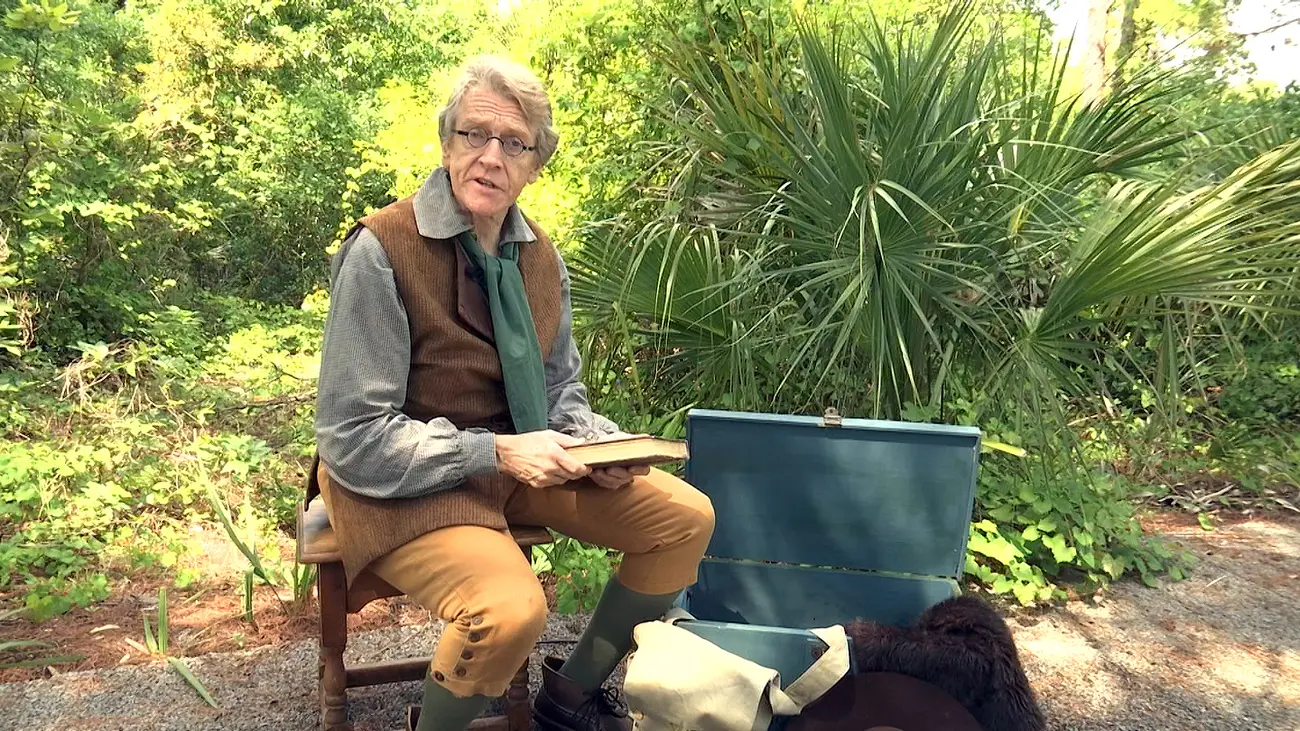
                “Without his father’s influence, William would have never gotten interested in botany,” says J.D. Sutton, actor and author of the one-man play “William Bartram: Puc Puggy’s Travels in Florida.”

                “Following the French and Indian War when Spain ceded Florida to England, John Bartram had been named botanist to the King of England. He charged John to explore the Florida territory to see what might be there, what the potentials were in the country,” says Sutton.

                In 1765, the 14 year old William Bartram joined his father on an expedition up the St. Johns River. William was so taken with Florida that he attempted to establish himself as a farmer at Fort Picolata, but the effort failed. He returned to Florida in 1774 as part of a four year trek through what is now the southeastern United States, documenting the plants, animals, and inhabitants of the region.

                Bartram sailed to Amelia Island and toured Indian mounds. He took the Intracoastal Waterway to the St. Johns River, exploring the area that would become Jacksonville. He traveled up and down the St. Johns River and visited what are now Micanopy, the Paynes Prairie Preserve State Park, Astor, and Blue Spring. Later in 1774, he traveled the Suwannee River.

                While collecting seeds and meticulously documenting Florida’s natural environment, Bartram interacted with Seminole Indians. He found the native population to be very friendly and welcoming. The Seminoles gave Bartram the nickname “Puc Puggy,” which means ‘flower hunter.”

                “I think it was kind of a put down which he didn’t quite get,” says Sutton. “He was just honored to be named ‘the flower hunter’ by the chief, and given permission to explore the territory around Tuscawilla for collecting medicinal herbs and plants, and writing about them and identifying them, and sending them on to England and to his father’s garden in Philadelphia.”

                Part of what makes Bartram’s “Travels” such a useful resource and engaging work today are its detailed drawings. Bartram was a skilled artist.

                “He was a brilliant illustrator,” says Sutton. “His drawing of the franklinia tree that they found on the Altamaha River is probably his best known. But he did pages and pages of illustrations which were then hand-colored and sent to his patron in London. They’re still there in the British Museum.”

                When Bartram’s “Travels” was first published in 1791, it was not universally praised. Some critics found the writing style overly Romantic. Some doubted the authenticity of Bartram’s accounts of his fighting with snakes and alligators, and his relations with the Seminoles. The Florida that Bartram described seemed so exotic to some readers that they compared his book to the fantasy “Gulliver’s Travels” by Jonathan Swift.

                Bartram’s “Travels” is admired and respected by modern audiences.

                “It’s a great time capsule of what Florida was like in the mid-1700s,” says Sutton.

                “He talks about flocks of the Carolina parakeet so numerous they block the sun. We don’t have that anymore, because they’re extinct, but we’ve got that visual image of what it was like. He describes gopher tortoises, which they hadn’t seen before, that are so big that a man could stand on top of them. They’re wonderful images, and that’s what makes Bartram fun.”

                J.D. Sutton will perform his one-man show “William Bartram: Puc Puggy’s Travels in Florida” at Harry P. Leu Botanical Gardens in Orlando, Thursday, April 16 at 7:00 pm. The free performance is presented by the Orange Audubon Society. Sutton’s Chautauqua-style presentation includes an interactive element with the actor answering audience questions as William Bartram.

                Bartram would feel right at home among the lush Florida foliage of Leu Gardens.

                Dr. Ben Brotemarkle is executive director of the Florida Historical Society and host of the radio program “Florida Frontiers,” broadcast locally on 90.7 WMFE Thursday evenings at 6:30 and Sunday afternoons at 4:00, and on 89.5 WFIT Sunday mornings at 7:00. The show can be heard online at myfloridahistory.org.

                PDF file(s)
                Article Number
                62
                relevantdate

                  Pirates have been romanticized in popular culture for more than a century.

                  We get our ideas about what pirates were like from sources such as the Robert Louis Stevenson novel “Treasure Island,” the Gilbert and Sullivan operetta “Pirates of Penzance,” and the fairytale “Peter Pan.” Dozens of films portray swashbuckling men of the sea, most recently the “Pirates of the Caribbean” series.

                  Most of what we think we know about pirates, based on these and other popular sources, is false. Take the concept of walking the plank.

                  “A lot of it has been fabricated by Hollywood and books and plays, and walking the plank is something that has never been documented in historical record,” says Zach Zacharias, senior curator of education and curator of history at the Museum of Arts and Sciences in Daytona Beach. “If they wanted to get rid of you, they just threw you off the ship.”

                  It is common for pirate stories to feature a map with an “X” marking the spot where buried treasure is located. According to Zacharias, such maps did not exist.

                  “There’s no treasure map that’s ever been found,” says Zacharias.

                  That makes the idea of buried treasure another myth.

                  “They wouldn’t bury their money because it wasn’t useful for them. They wanted to spend their money. They spent a lot of their money when they went into port, and burying it doesn’t do any good. You probably wouldn’t even find it again on a small island.”

                  Zacharias says that the stereotypical pirate with a peg leg, hook hand, and eye patch is also not likely.

                  “Not likely at all. That’s not to say that maybe somewhere on a ship there was somebody who was missing an arm or had an eye poked out and survived that, but for the most part that was not the norm at all. It’s not really true.”

                  Many fictional pirates have talking birds on their shoulders. Real ones did not.

                  “Talking birds are very entertaining and I can see why Hollywood would love that,” says Zacharias. “Some pirates would capture exotic birds, but they sold them at the next port town or market, and they didn’t train them to sit on their shoulders and say goofy things.”

                  So, no walking the plank. No buried treasure or maps with an “X” marking the spot. Probably no peg legs, hooks for hands, or eye patches. No talking birds for comic relief. Is all that singing and drinking real?

                  “Again, you definitely see that in the pirate movies and stories with everybody singing and swinging from ropes and drinking,” says Zacharias. “Actually, they had to sail the ship, so they couldn’t be drunk or drinking all the time.”

                  At least one of our popular ideas about pirates is true. They did have scary flags with skulls and crossed bones.

                  “They did have the Jolly Roger, they did have pirate flags, and they were used to intimidate,” says Zacharias. “What they really wanted to do was scare you into giving up. Pirates didn’t want to fight, because a small cut from a cutlass sword could become infected and you could die out at sea. They didn’t have antibiotics, and they didn’t want to fight unless they had to.”

                  Pirates began raiding Florida’s coast when the first Europeans settled here in the 1500s. When pirates were given permission to raid and pillage Florida towns on behalf of a government, they were called privateers.

                  As political situations changed in Florida’s Spanish colonial period, privateers could quickly revert back to being pirates.

                  “The Spanish were fair game for everybody, from the Dutch, to the French, to the English,” says Zacharias.

                  As the oldest permanent European settlement in North America, St. Augustine was a particularly favorite target for pirates and privateers. An attack by English privateer Sir Francis Drake in 1586, resulted in the town being burned to the ground.

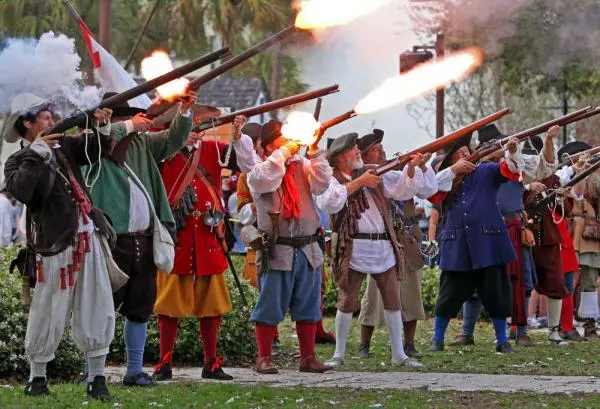
                  In 1668, Jamaican pirate Robert Searle raided and sacked St. Augustine. On Saturday, March 7, 2015, historic reenactors presented their annual depiction of Searle’s plunder of St. Augustine, offering a realistic portrayal of pirates in Florida.

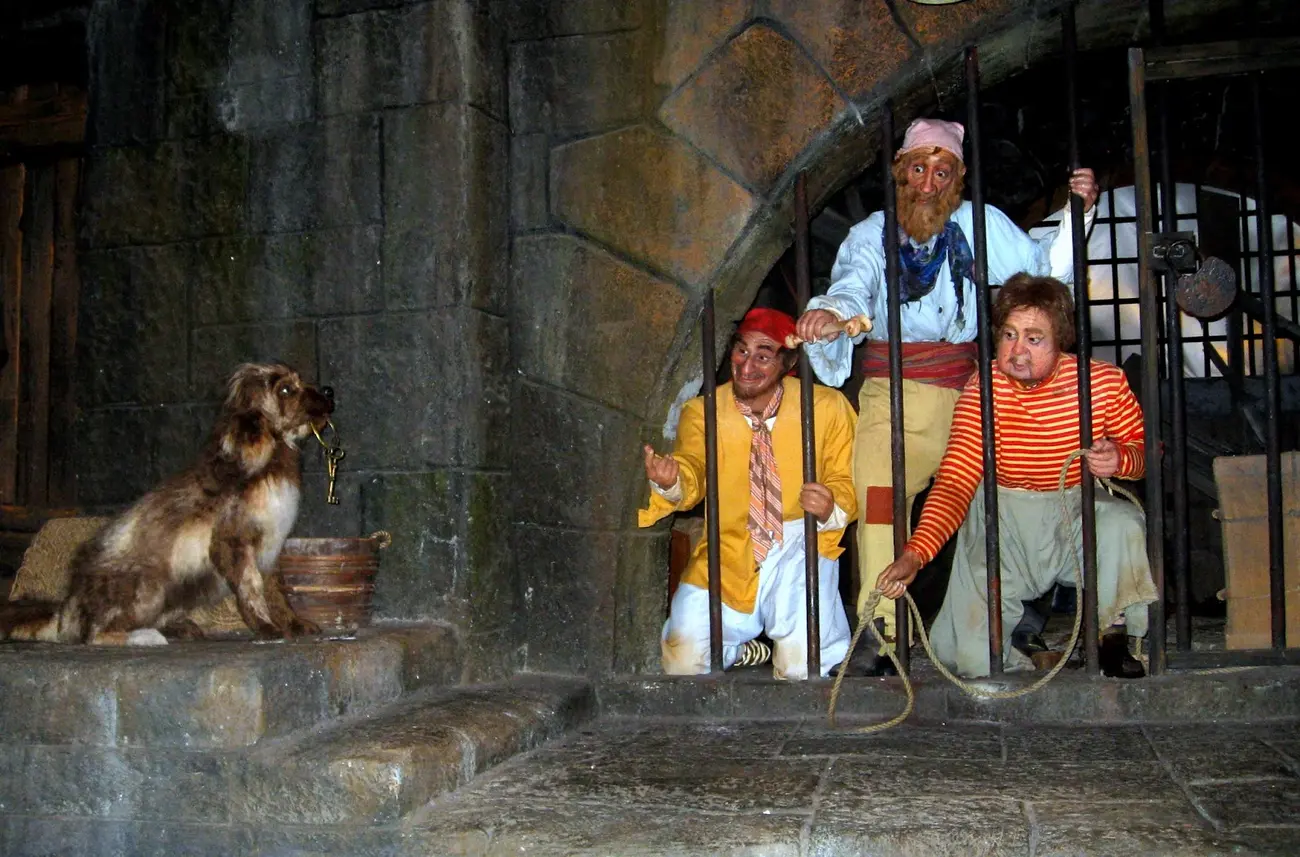
                  If you prefer your pirates fictionalized, you can always visit the Pirates of the Caribbean at Disney World.

                  Dr. Ben Brotemarkle is executive director of the Florida Historical Society and host of the radio program “Florida Frontiers,” broadcast locally on 90.7 WMFE Thursday evenings at 6:30 and Sunday afternoons at 4:00, and on 89.5 WFIT Sunday mornings at 7:00. The show can be heard online at myfloridahistory.org.

                  PDF file(s)
                  Article Number
                  61
                  relevantdate

                    Ernest Hemingway, born in 1899, published his first novel, The Sun Also Rises, in 1926. He was living in Paris with the first of his four wives, Hadley Richardson. Hemingway divorced Richardson the following year.

                    Writer John Dos Passos suggested to Hemingway that he might enjoy Key West, Florida, and in March 1928, Hemingway visited the island for the first time.

                    “He fell in love with Key West, the lifestyle, the fishing, of course,” says Dave Gonzales, director at the Ernest Hemingway House and Museum. “He kept coming back to Key West over the next two years. He’d invite his friends from the ‘Lost Generation.’ John Dos Passos came down, (artist) Waldo Peirce, (writer) F. Scott Fitzgerald, and they’d come down for fishing trips in the spring mostly, but Hemingway would spend four to six months out of the next two years here.”

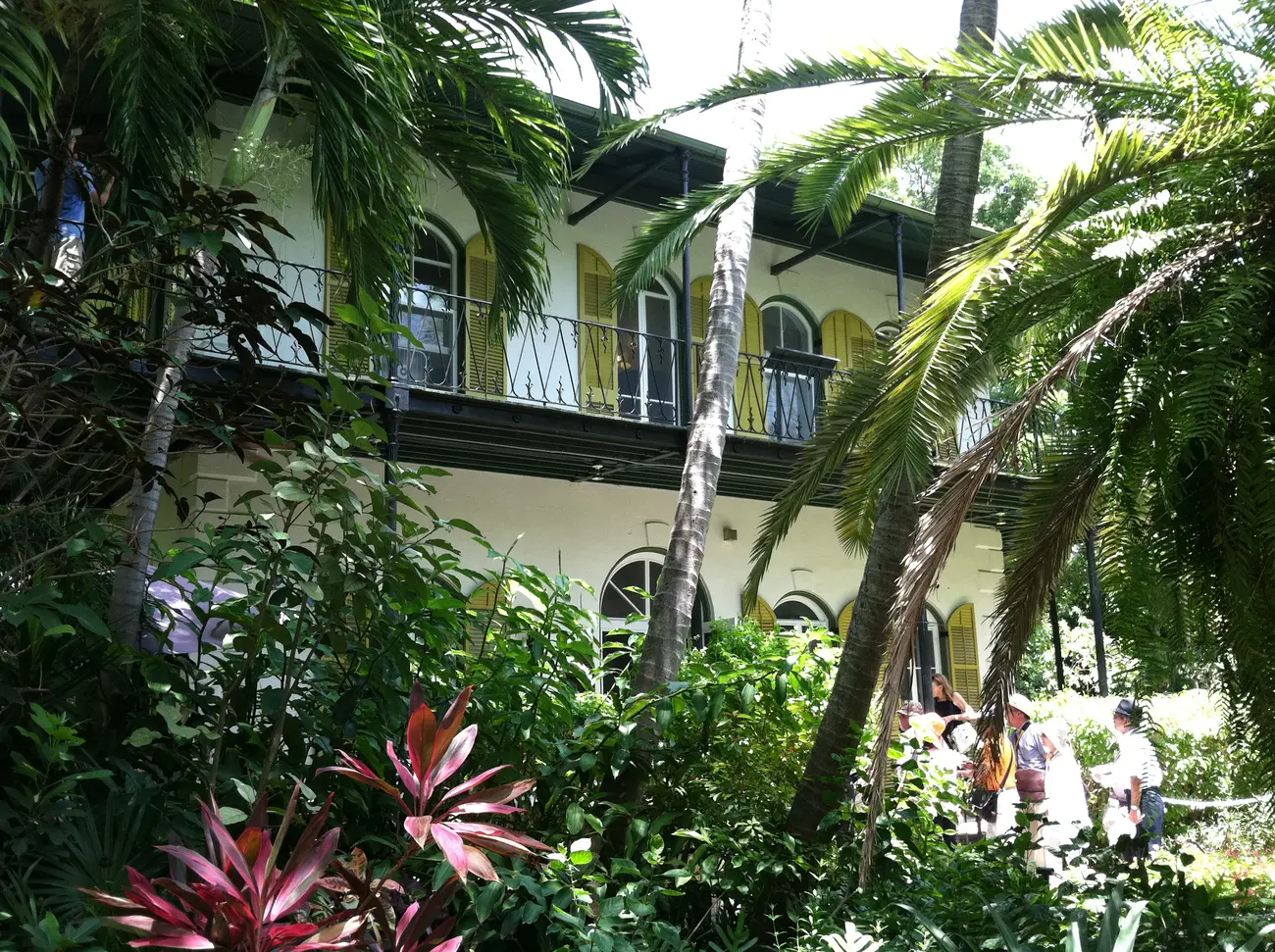
                    When Hemingway’s second wife, Pauline Pfeiffer, found the home that the couple would move in to, it was boarded up and abandoned, but she could see it’s potential. The property was on the highest point in Key West, across the street from the island’s lighthouse.

                    “They bought this home in 1931, for $8,000 in back taxes, and still today, it’s the largest residential piece of property on this island,” says Gonzales. “We’re a full acre with very lush tropical gardens. The mansion was originally built in 1851 by Asa Tift, a wealthy shipwreck and salvaging merchant.”

                    Ernest Hemingway lived in the home until 1939. He was very productive while is Key West. As early as his first visit in 1928, the writer put the finishing touches on his book A Farewell to Arms. While living in the home that is now the Hemingway Museum, the author wrote the novel To Have and Have Not, the nonfiction book Green Hills of Africa, and short stories “The Snows of Kilimanjaro” and “The Short Happy Life of Francis Macomber.”

                    The Ernest Hemingway House and Museum property is famous for its population of polydactyl, or six-toed cats. The cats at the museum today are “living history” in a sense, as they are direct descendants of Hemingway’s own cats.

                    The six-toed cats were preferred by the captains of wooden clipper ships, as the extra digit was thought to aid in the capture of rodents. “They also were believed to have mystical and magical powers,” says Gonzales. “They were believed to give ship’s captains calm seas, prevailing winds, safe passages on their journeys.”

                    Hemingway was inspired by the folklore legend to begin collecting the polydactyl cats. A photo in the dining room of the Hemingway House and Museum shows the writer’s sons Gregory and Patrick holding Snowball, the first of the family’s six-toed cats.

                    About 50 cats lived on the property while Hemingway lived there, and the same number is maintained at the museum today.

                    In 1937, while Hemingway was away covering the Spanish American War, Pauline decided to install what was the largest residential pool in south Florida. The pool cost $20,000, when the entire estate had been purchased for $8,000.

                    Hemingway was so angry about the cost of the pool that he threw a penny at Pauline, telling her that she might as well take his last cent.

                    “She picked up the penny, and imbedded it into the wet cement where it still remains today,” says Gonzales. “It’s a 1934 D copper penny and the last pocket it was in was Ernest Hemingway’s.”

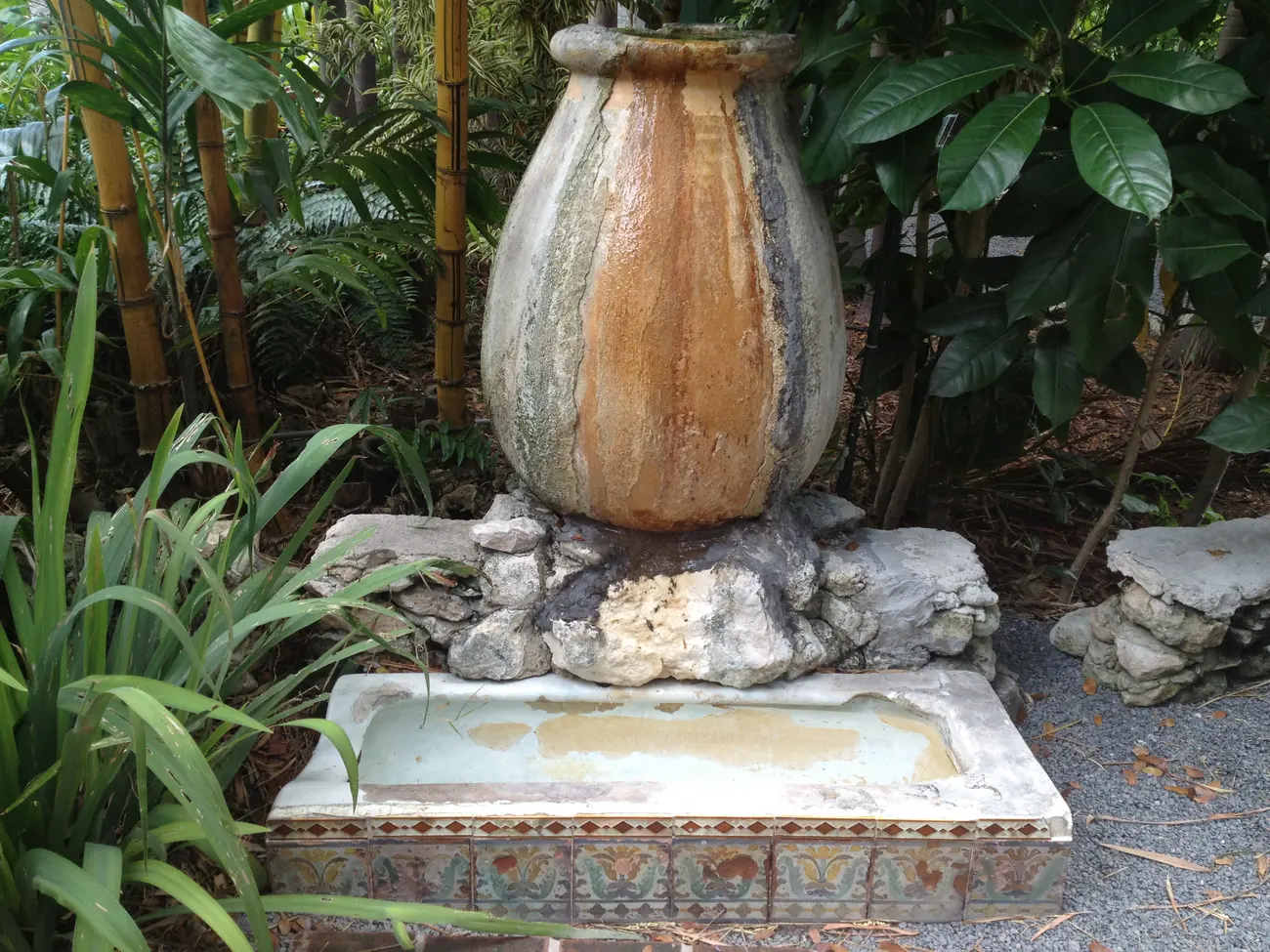
                    In addition to being appreciated for his concise and direct writing style, Hemingway was known for his fondness for drinking to excess. His favorite bar was Sloppy Joes. The urinal from the original Sloppy Joe’s Bar is in the yard at the Ernest Hemingway House and Museum.

                    After a night of drinking, Hemingway and “Sloppy Joe” Russell hand carried the urinal to Hemingway’s home. They placed it next to Pauline’s pool, where it still serves as the water bowl for the family’s cats.

                    In 1939 Hemingway moved from Key West to Cuba, leaving his second wife and children behind. He received the Nobel Prize for Literature in 1954, following the publication of his novel The Old Man and the Sea. The author committed suicide in 1961 at his home in Ketchum, Idaho.

                    Dr. Ben Brotemarkle is executive director of the Florida Historical Society and host of the radio program “Florida Frontiers,” broadcast locally on 90.7 WMFE Thursday evenings at 6:30 and Sunday afternoons at 4:00, and on 89.5 WFIT Sunday mornings at 7:00. The show can be heard online at myfloridahistory.org.

                    PDF file(s)
                    Article Number
                    60
                    relevantdate

                      Many Florida towns were built around Seminole War forts and some, such as Fort Pierce, Fort Lauderdale, and Fort Myers, retain their fort names.

                      Fort Shackleford was constructed in 1855 during the Third Seminole War. Archaeologists continue to search for its exact location.

                      Archaeologist Annette Snapp is Operations Manager for the Ah-Tah-Thi-Ki Seminole Indian Museum in Clewiston, and is leading the effort to find Fort Shackleford.

                      Dr. Snapp will give a free presentation this Friday night at 7:00 for the Florida Historical Society Archaeological Institute at the Brevard Museum of History and Natural Science, 2201 Michigan Avenue in Cocoa.

                      Seminole Indians moved to Florida in the 1700s, to avoid the expanding American colonies. Runaway slaves found sanctuary here with the Seminole. White settlers also began coming to the area after the American Revolution to take advantage of Spanish land grants. The First Seminole War started in 1816, when General Andrew Jackson began a series of invasions into Spanish controlled Florida.

                      “At the time he is very interested in wresting Florida from Spain, and also in the movement of Indians away from the white settlers,” says Snapp.

                      By 1821, Florida was a Territory of the United States. Andrew Jackson was President in 1830 when the Indian Removal Act was passed, empowering him to arrange the relocation of the Seminole and other Native American groups to land west of the Mississippi River.

                      “There was this sense that everybody will agree to do this, but of course, it leads to the Trail of Tears,” says Snapp. “The Cherokee and other tribes are forced to walk west to Oklahoma and other areas out west. With Andrew Jackson turning his eyes on, and the Federal Government turning their eyes on Florida, it leads to the Second Seminole War.”

                      The Seminoles had been pushed onto a reservation in the central part of Florida. During the Second Seminole War, which lasted from 1835 to 1842, tensions rose between Native Americans and white settlers. The Seminole resorted to sporadic guerilla warfare to defend their land.

                      Following the Second Seminole War, the tribe had been pushed even further south. Florida is named a state in 1845.

                      The Swamp Land Act of 1850 allowed the Federal Government to give swamp land to states, who could then sell the land to settlers who agreed to drain the swamp. This legislation encouraged an influx of white settlement in Florida.

                      “Now they’ve created a huge conflict,” says Snapp. “They’re asking people to go into this area where the Seminole are living, and of course, the Seminole are unhappy about it.”

                      Sporadic guerilla warfare from the Seminole resumes throughout the state, and the Third Seminole War begins in 1855.

                      “The Federal Government feels like the only solution is to have the Native Americans, the Seminole, agree to move out west, or incite violence from the Seminole, so they have a reason to exterminate them,” says Snapp.

                      Fort Shackleford was built in 1855 on Seminole land at Big Cypress Reservation, so the U.S. Army could monitor Seminole activities more closely. By the end of the war in 1858, the fort had been destroyed and its exact location is now uncertain.

                      Four historic markers identifying the corners of Fort Shackleford were placed in 1943. The accuracy of the markers is not assured, since they were placed nearly a century after the fort’s existence. Only one of the markers remains today, and it does not specify which corner of the fort it represents. Still, the one remaining marker provides archaeologists with a starting place.

                      “There are military records that say that Fort Shackleford was built, and when it was built, and who built it,” says Snapp, “so we have at least a general idea of where they’re located.”

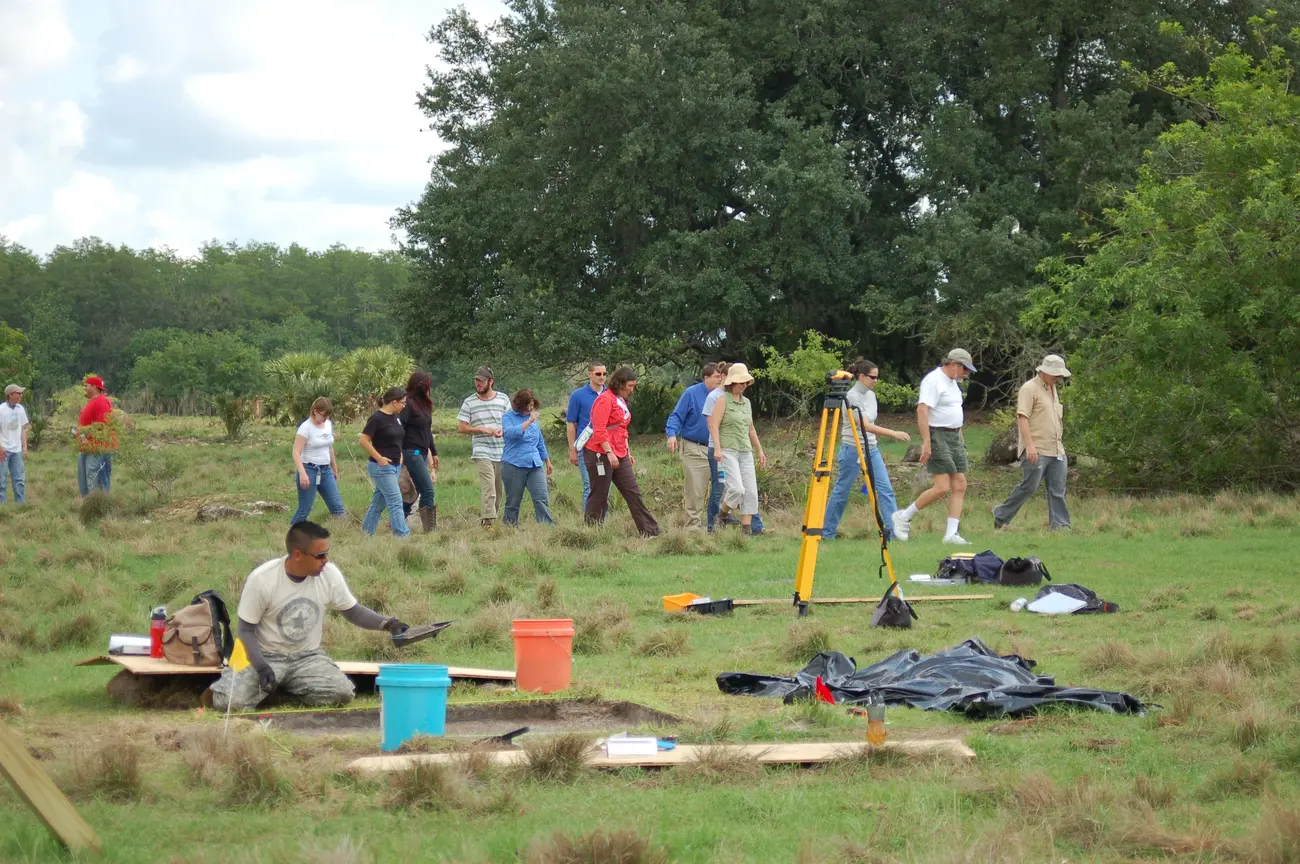
                      Archaeologists have collected 260 artifacts from various time periods on the possible site of Fort Shackleford, but none of them has definitively proven that the fort was located there. Snapp says the research will continue.

                      The Seminole Tribe of Florida remains unconquered. At the end of the Third Seminole War the Native Americans in south Florida were left alone. Today the tribe owns the entire Hard Rock franchise, including two Florida casinos and Hard Rock Cafes around the world.

                      Dr. Ben Brotemarkle is executive director of the Florida Historical Society and host of the radio program “Florida Frontiers,” broadcast locally on 90.7 WMFE Thursday evenings at 6:30 and Sunday afternoons at 4:00, and on 89.5 WFIT Sunday mornings at 7:00. The show can be heard online at myfloridahistory.org.

                      PDF file(s)