Florida Artists

Article Number
149
relevantdate

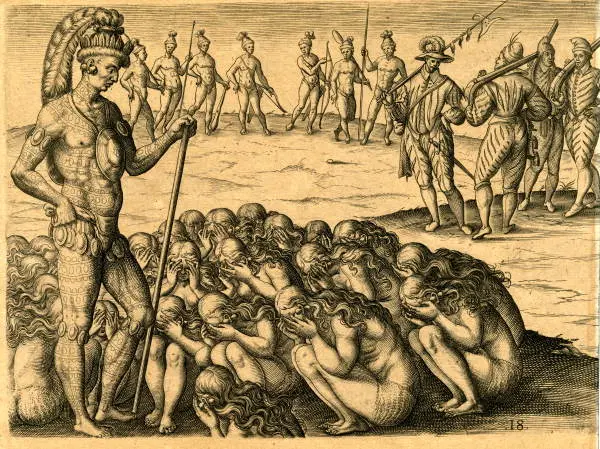
    Since they were first published in 1591, the engravings of Theodore de Bry have been the most enduring images of Florida natives at the time of European contact.

    “The de Bry engravings that were always thought to be based on Jacques le Moyne’s paintings have become the epitome of the best source for what Florida Indians looked like,” says Jerald T. Milanich, one of the most respected historical archaeologists in the state.

    For more than four centuries, historians, archaeologists, artists, and the general public have relied upon de Bry’s images to provide information about the clothing, weapons, hair styles, headdresses, jewelry, tattoos, housing, baskets, canoes, cooking methods, and traditions of Florida’s Timucua Indians.

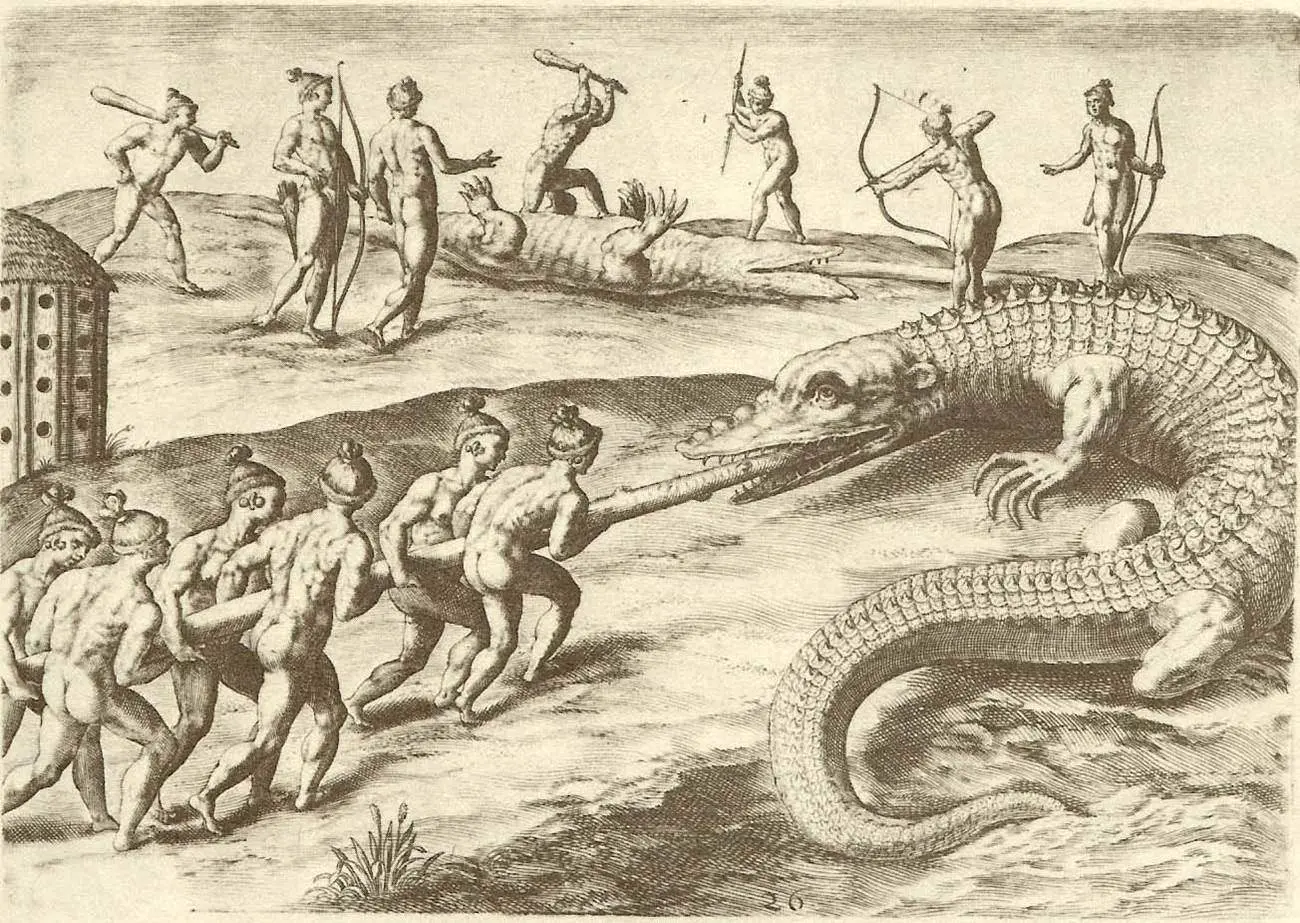
    While some of what de Bry depicts in his engravings is supported by written historical descriptions, much of the content now appears to be the product of imagination, or based upon images of non-Floridians.

    As Milanich and other modern scholars began to notice problems with the de Bry engravings, the list of discrepancies continued to grow.

    “One was that the French soldiers portrayed in these engravings had their helmets on backwards,” says Milanich. “Another thing is that some of the engravings show Timucua Indians in north Florida drinking a sacred tea called Black Drink out of nautilus shells from the Pacific Ocean. We know that they drank it out of big whelk conch shells. So something was funny, something was weird about this.”

    Another image shows Indians fighting a gigantic alligator with human-like ears and muscular arms.

    De Bry was born in what is now Belgium, in 1528. He moved his family to London in 1585, before settling in Frankfurt in 1588. De Bry was a skilled engraver, known for his detailed images. Although he published books of images depicting Florida Indians and other native people of the New World, de Bry never visited the Americas.

    “Everyone thought, including me, that although there were mistakes in these engravings, that they were based on paintings done by Frenchman Jacques La Moyne, who came to Florida in 1564 and did watercolors, probably after he returned to Europe,” says Milanich. “Those watercolors are lost, and may have never existed. Jacques le Moyne [may have] died before he did what he wanted to do. He talked with Theodore de Bry and gave him ideas.”

    Close inspection of the 42 Florida engravings created by de Bry show that he borrowed imagery from a variety of sources, including books that his company published on other native cultures. Elements found in the Florida engravings were lifted directly from illustrations of Brazilian Indians.

    “Not only did he do that for the volume he published on Florida, but he did it on volumes he published about other native peoples in the Americas,” Milanich says.

    De Bry was also inspired by the work of artist John White, who visited North Carolina and painted the Indians there. White’s paintings of the Carolinian Indians are displayed at the British Museum. White also painted a Timucua Man and a Timucua Woman, and de Bry borrowed imagery from those pieces.

    “John White never saw a Timucua man or a Timucua woman in his life, and what we know now is that he used his Carolinian Indians as models to do the Timucua Indians,” says Milanich. “He also used a French account by Jean Ribault that described the Indians as being heavily painted and the women wearing moss dresses.”

    The de Bry engravings of Timucua Indians have been used repeatedly in books about the indigenous people of Florida, and inspired museum exhibits. Artists depicting Florida Indians have been influenced by de Bry’s images when creating their own work.

    “I wrote a book about the Timucua Indians [published in 1996] and a lot of information I put in that came from those engravings,” says Milanich. “I got lucky, because I also used other historical documents.”

    Milanich says that we must now question all of the conclusions reached using the de Bry Florida Indian engravings as a source.

    “We thought we had a wonderful source, a code, a portal into the past, and suddenly things aren’t as we expected or as we thought,” says Milanich. “That often happens. Maybe someday we’ll find another source.”
    PDF file(s)
    Article Number
    77
    relevantdate

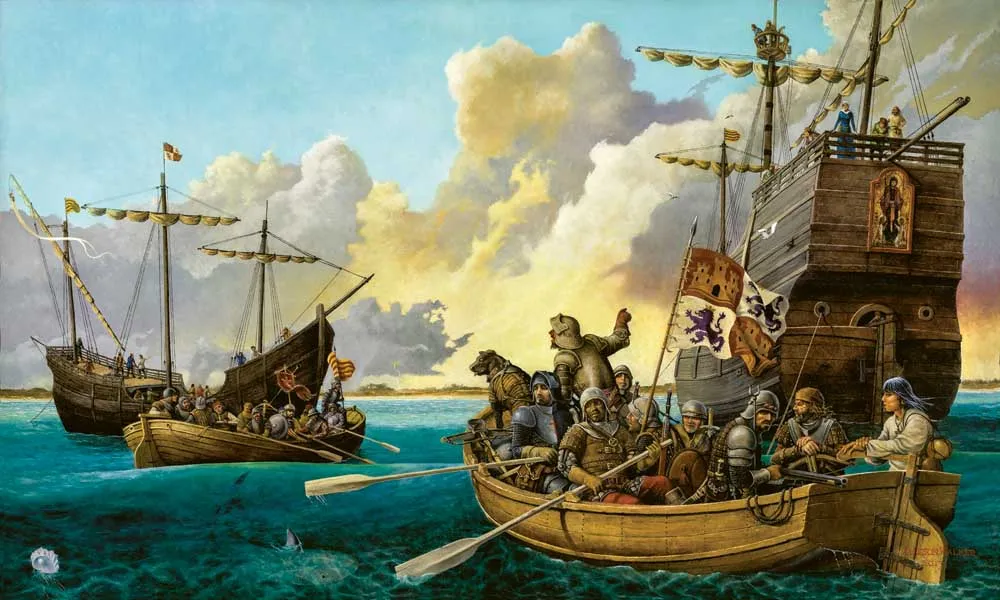
      Artist Jackson Walker has dedicated his life to preserving Florida history through large oil paintings.

      “I got to thinking about Florida, and my own family’s history, and it just kind of dawned on me, well that’s what you know, that’s where you live, that’s who you are,” says Walker.

      His 48 x 72 inch painting “They called it La Florida: The First Landing of Ponce de León in Florida, April 2, 1513” will be on display July 17 through December 11 at the Brevard Museum of History and Natural Science in Cocoa as part of the “ArtCalusa: Reflections on Representation” exhibition.

      The opening reception is this Friday evening from 6pm to 8pm. Tickets are available at www.myfloridahistory.org. Walker will be on hand to sign prints of the painting, and his book of Florida art.

      The cover of the book “Recovering Moments in Time: The Florida History Paintings of Jackson Walker” features a realistic image of Teddy Roosevelt and the Rough Riders on horseback in Tampa in 1898. The fanciful towers of the Tampa Bay hotel can be seen in the background.

      Theodore Roosevelt was the 26th president of the United States, from 1901 to 1909. Several years before that, as a member of the First United States Cavalry, also known as the Rough Riders, Roosevelt and his regiment camped in Tampa while awaiting transport to Cuba during the Spanish American War.

      Other notable people depicted in Walker’s paintings include naturalist William Bartram, Seminole Chief Osceola, writer Marjorie Kinnan Rawlings, and anthropologist Zora Neale Hurston.

      Walker is a native Floridian, born in Panama City and raised in Stuart. His varied career includes two combat tours in Viet Nam with the U.S. Army, work in graphic design and advertising, and time as a singer songwriter.

      “I wanted to try oil painting as a very young guy, and struggled with it all of my life,” says Walker. “In fits and finishes my career would steadily go forth, but I had to depend on other means until I came to Orlando.”

      When Walker and his wife Nancy moved to Orlando in 1990, he decided to try painting full time.

      “About that same time I’d reached the level that I thought I would attempt something really grand,” says Walker. “That was the beginning of the Legendary Florida series.”

      Most of Walker’s Legendary Florida series is on display at the Historic Volusia County Courthouse in DeLand. In 2004, the Museum of Florida Art purchased what was then the entire series of Jackson Walker’s Florida history paintings to display in the historic venue.

      His paintings are also on permanent display in Washington, D.C., Tallahassee, and Orlando.

      “Nobody had really approached the idea of actually producing a collection of Florida history,” Walker says. “A lot of people have done Florida history paintings in the past, but I wanted to do an entire project of nothing but recovering and portraying, in nice big works, the history of Florida, the incidents and personalities that have made the state what it is, and how it got to be what it is.”

      Some of Walker’s paintings depict well known topics from Florida history such as the capture of Chief Osceola during the Second Seminole War and the Battle of Olustee in the Civil War.

      Other works focus on lesser known stories from Florida’s past such as the activity of German submarines off the coast of Florida during World War II and the shootout between Ma Barker’s family of gangsters and federal agents.

      “The concept was to do Florida history, but I didn’t want to do the most obvious,” says Walker. “There are thousands of stories that are just slipping away, so I try to seek out some of the more interesting stories.”

      Walker conducts extensive research to make each detail of his paintings as accurate as possible. He studies descriptions in historical documents, historic images, and objects in museums.

      “I’ve tried as much as humanly possible to recover these instances and these places and times accurately and honestly,” says Walker. “I got everything I wanted out of being an artist by just turning to my Florida roots and discovering the history, and hopefully retaining some of the history that may get lost.”

      PDF file(s)
      Article Number
      74
      relevantdate

        When the Seminole Indians first appeared in Florida in the 1700s, they occupied lands where other Native Americans had lived for thousands of years. Tribes such as the Calusa, Timucua, and Apalachee lived in Florida long before European contact in the 1500s.

        While the archaeological record contains tools, pottery, and other artifacts, the visual record of pre-European contact people in Florida is very limited.

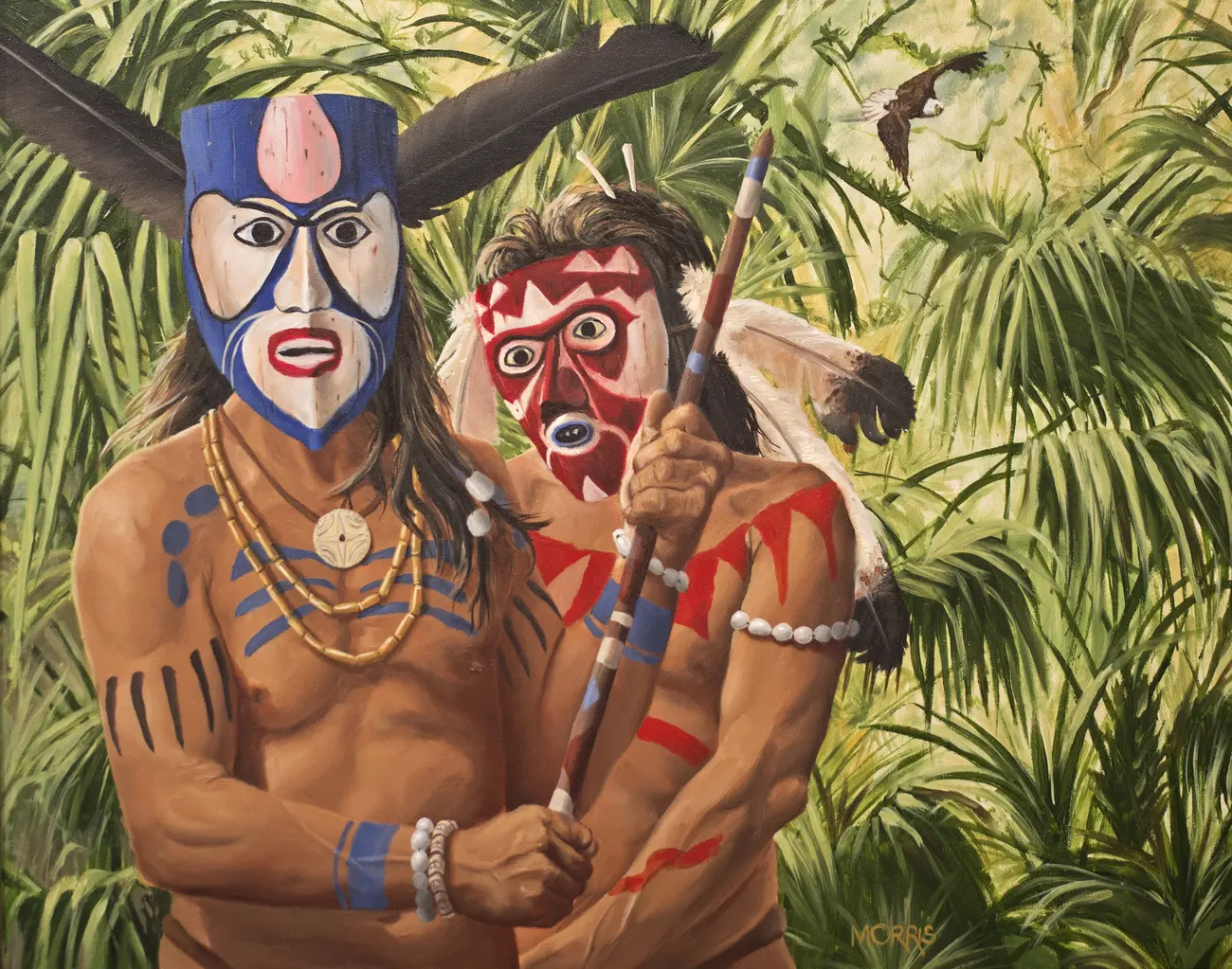
        Since 1992, artist Theodore Morris has dedicated his career to creating realistic oil paintings depicting Florida’s prehistoric and indigenous populations.

        Morris is one of a group of nine artists whose work will be shown in the exhibition “ArtCalusa: Reflections on Representation” at the Brevard Museum of History and Natural Science in Cocoa, July 17 through December 11, 2015.

        “About 1988, I started getting into Florida history,” says Morris. “I got involved with archeological digs and the archaeology community.”

        Morris was asked to create a fundraising poster depicting Florida’s native people for the Florida Anthropological Society.

        “I went to the library to get some visual reference material, and there was none,” says Morris. “There was some weird, far out things that people had drawn over the years, so I went back with the archaeologists and we pieced together what they would have looked like.”

        With experience as both a commercial artist and painter, Morris used descriptions from reliable historical documents together with artifacts discovered by archaeologists to create realistic representations of Florida’s first people.

        “I love history and I love art, and it kind of all just melded together,” Morris says.

        Before Morris started painting depictions of Florida’s indigenous peoples in consultation with archaeologists, images of prehistoric and early tribes were either non-existent, notoriously inaccurate, or so fanciful that they had no real educational value.

        Morris does extensive research to ensure that his images are realistic, going as far as participating in archaeological excavations.

        “Well, that was the number one priority, to make them as historically accurate as possible,” says Morris. “When I first got into it, of course, I didn’t know that much about them either. I knew about Seminoles, but not the early tribes, so it was a learning process for me.”

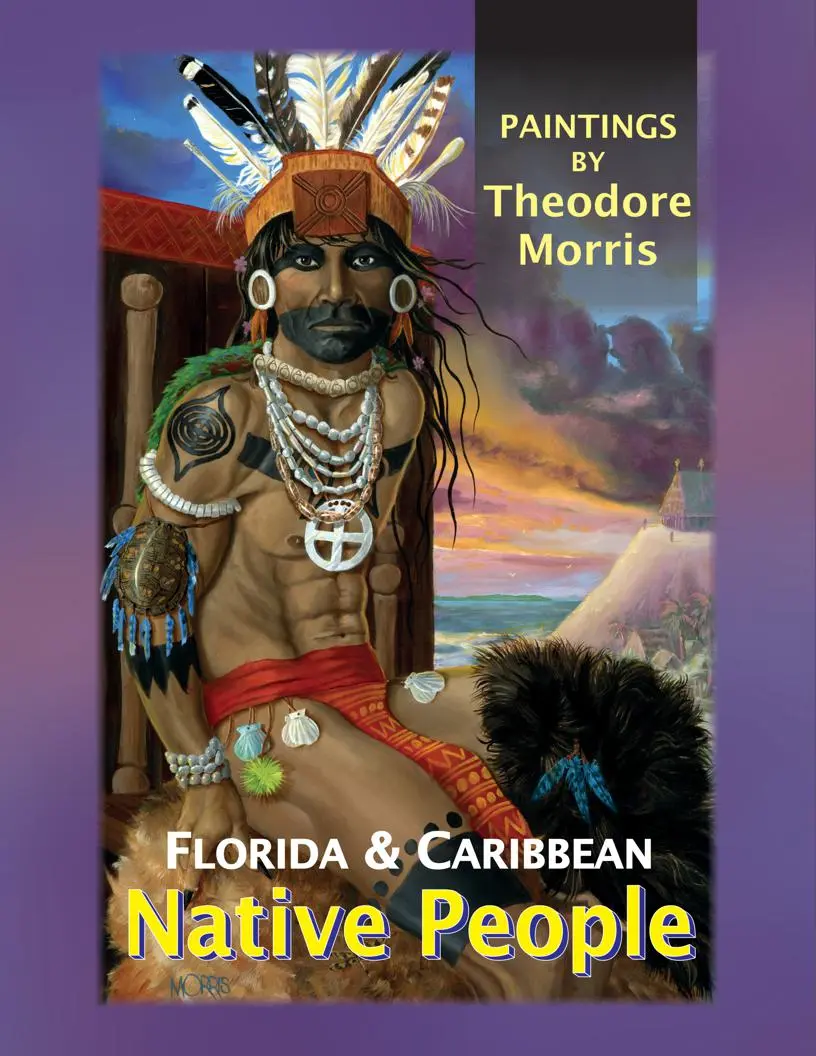
        In addition to being shown in exhibitions throughout the state, Morris’s work has been assembled in the book “Florida and Caribbean Native People: Paintings by Theodore Morris.” Each chapter of the book focuses on different tribes, with Morris’s colorful paintings introduced by leading Florida archaeologists such as Keith Ashley, Bonnie McEwan, Brent R. Weisman, and Ryan J. Wheeler.

        “From feedback I get from the archaeologists, they love to have their work put in context,” says Morris. “They’ll find a piece here and another piece over there, and to see them actually on an Indian (in a painting) makes it a little more fulfilling for them in a way, so they really like the idea.”

        Archaeologists and anthropologists are scientists, but they embrace Morris’s artistic efforts to document Florida’s indigenous people.

        “Ted’s artwork gives us a glimpse into the past that we don’t have records of,” says archaeologist Rachel Wentz.

        “Through his research and his meticulous attention to detail, we’re able to see what Florida’s early natives might have looked like, some of their activities in life, really get a visual idea of what their life was like, prior to (European) contact. Of course we have no record of that. All we have is the LeMoyne engravings from the time of contact, before then all we know is what we can discover through the archaeological record.”

        Morris’s oil paintings range from lifelike portraits of specific individuals to scenes of everyday life, with Native Floridians using tools and wearing body ornamentation that archaeologists can verify as being realistic depictions.

        Six of Morris’s paintings will be part of the exhibition “ArtCalusa: Reflections on Representation,” including “Cacique Carlos,” which is the cover image for the book “Florida and Caribbean Native People.”

        An opening reception for the exhibition will be held Friday, July 17, from 6pm to 8pm at the Brevard Museum of History and Natural Science, 2201 Michigan Avenue, Cocoa, featuring wine and cheese, live music, and some of the participating artists. Tickets are $25 and are available online at myfloridahistory.org, or by calling 321-690-1971 ext. 205.

        PDF file(s)
        Article Number
        39
        relevantdate

          Florida’s Highwaymen artists have been recognized with numerous exhibitions in major museums, several books, and a television documentary.

          Even with this widespread notoriety, amazing stories about pennies on the dollar sales of Highwaymen paintings still surface.

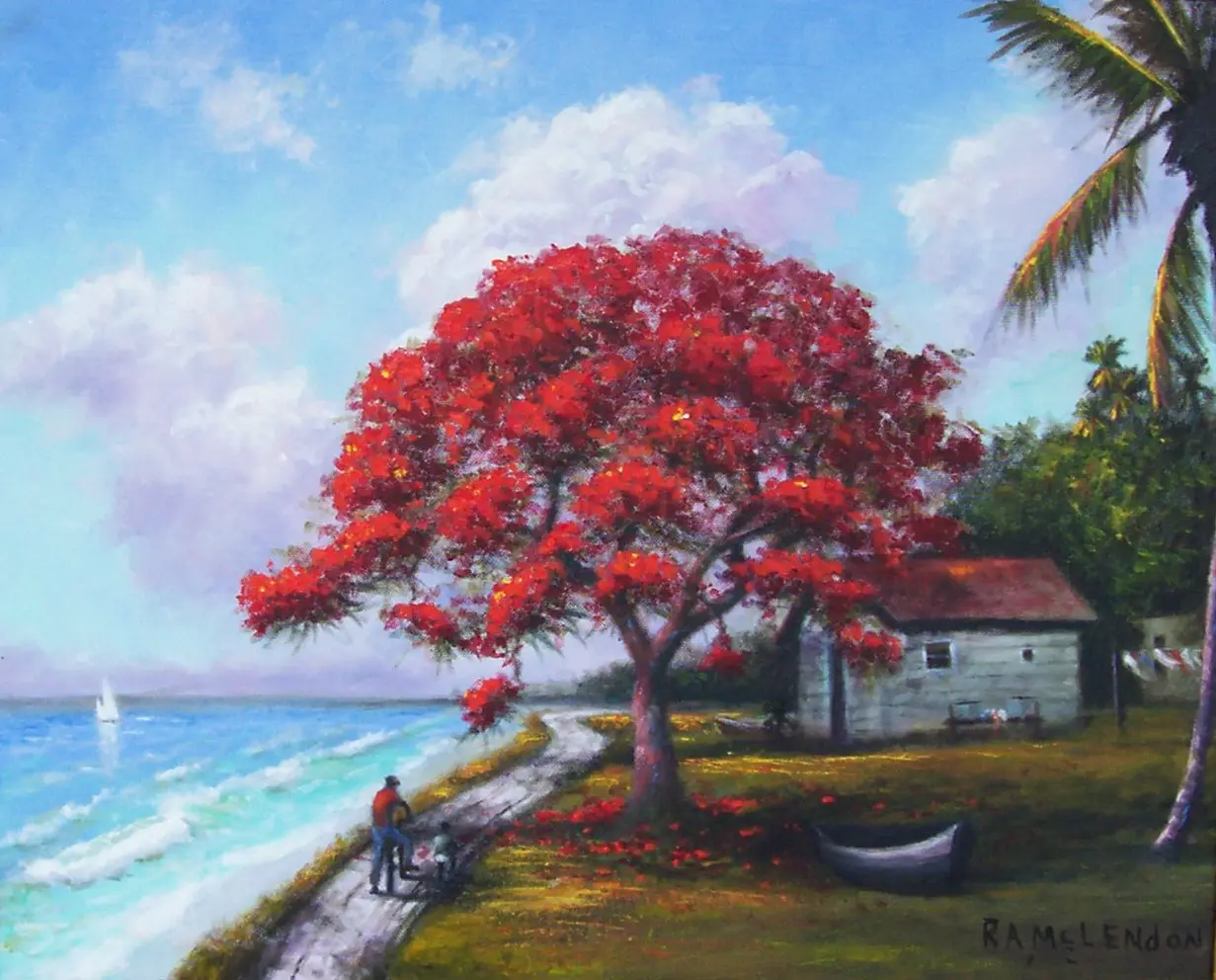
          Someone’s sister-in-law buys a Highwaymen painting of a bright red Poinciana tree at a garage sale for $25. The work is worth $2,500.

          Someone who doesn’t know what they have sells a large Highwaymen beach scene worth $3,500 to a friend-of-a-friend for the cost of the frame alone.

          For those who know what they are looking for, great Florida paintings by Highwaymen artists are occasionally found being sold at their original 1950s prices.

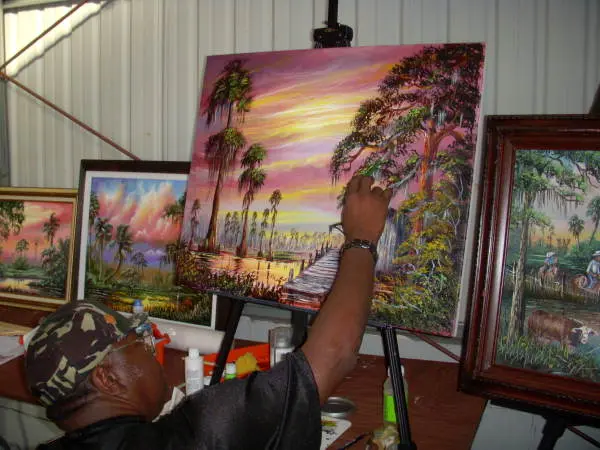
          The Highwaymen artists are a group of largely self-taught African American painters known for their colorful Florida landscapes. The first Highwaymen artist, Alfred Hair, was inspired by white landscape artist A.E. “Bean” Backus, who had a meticulous, detail oriented painting style. Hair also painted scenes of the natural Florida, but developed a rapid style of painting that allowed him to create beautiful works very quickly.

          Hair shared his painting techniques with Harold Newton, who in turn, taught other African American artists.

          Backus was able to sell his paintings in galleries, but in the racially segregated Florida of the 1950s and ‘60s, the Highwaymen had to develop creative marketing strategies.

          “I was the salesman for the whole group,” says Al Black. “I would load all the paintings up in the car and take off in the mornings, and if they give me 50 paintings I would sell 50 paintings.”

          Starting from Fort Pierce, Black would drive south to Key West and north to Alabama, making many stops in between. He would sell the Highwaymen art to banks, offices, and along the side of the road.

          The Highwaymen artists produced many works of art for Black to sell, because the more they produced, the more they earned. Sometimes the paintings would still be wet when he loaded them into his car. Repairing damaged work was how Black eventually became a Highwaymen artist himself.

          “I would be out on the road and I learned to paint by fixing all of the different artist’s paintings when I messed one up,” says Black.

          The Highwaymen artists are known for their idyllic depictions of the natural Florida prior to development and urban sprawl. Their paintings capture marshlands, river scenes, beaches, sunrises and sunsets, Spanish moss hanging from cypress trees, brightly colored Poinciana trees, and Florida’s indigenous wildlife.

          Black says that the Highwaymen paintings preserve Florida history. “The way Florida used to look, it don’t look that way anymore. We all captured it on canvas.”

          Mary Ann Carroll has the distinction of being the only female Highwaymen artist. “I never really thought about it as me being a woman and they being men,” Carroll says. “I just thought of us as artists making a living for ourselves.”

          The Highwaymen artists never thought of themselves as an organized group, Carroll says. While each of the Highwaymen had the same goals and desires, they worked independently. “It’s like a bunch of people in an orange grove picking fruit,” says Carroll. “But everybody’s picking his own fruit. We were associated by our gift.”

          The name “Highwaymen” was given to the painters by art dealer Jim Fitch in 1995, in an article he wrote for the magazine “Antiques and Art around Florida.” After Fitch coined the Highwaymen name, books about the artists soon followed. In 2001, Gary Monroe wrote “The Highwaymen: Florida’s African American Landscape Painters.”

          In 2004, a group of 26 Highwaymen artists were inducted into the Florida Artists Hall of Fame.

          Original Highwaymen artist Roy McLendon was surprised to see so many artists being recognized. “A lot of the people I didn’t even know,” McLendon says. He believes that the popularity of Highwaymen paintings led to imitation. “Pictures that would sell for $35 was selling for $3,500 and $4,500 for the same painting. Now everyone wanted to be a Highwaymen.”

          The cost of a painting is not what makes it significant.

          The story of the Highwaymen artists is one of creative people making economic opportunities for themselves in a difficult time of racial segregation in Florida.

          Dr. Ben Brotemarkle is executive director of the Florida Historical Society and host of the radio program “Florida Frontiers,” broadcast locally on 90.7 WMFE Thursday evenings at 6:30 and Sunday afternoons at 4:00, and on 89.5 WFIT Sunday mornings at 7:00. The show can be heard online at myfloridahistory.org.

          PDF file(s)
          Article Number
          33
          relevantdate

            When most people think of Florida’s natural environment, an explosion of color comes to mind. We imagine multiple shades of green in a Florida swamp, bright red Poinciana trees, and the turquoise waters of the Gulf Coast. We picture the oranges, purples, pinks, and blues of the Florida sky.

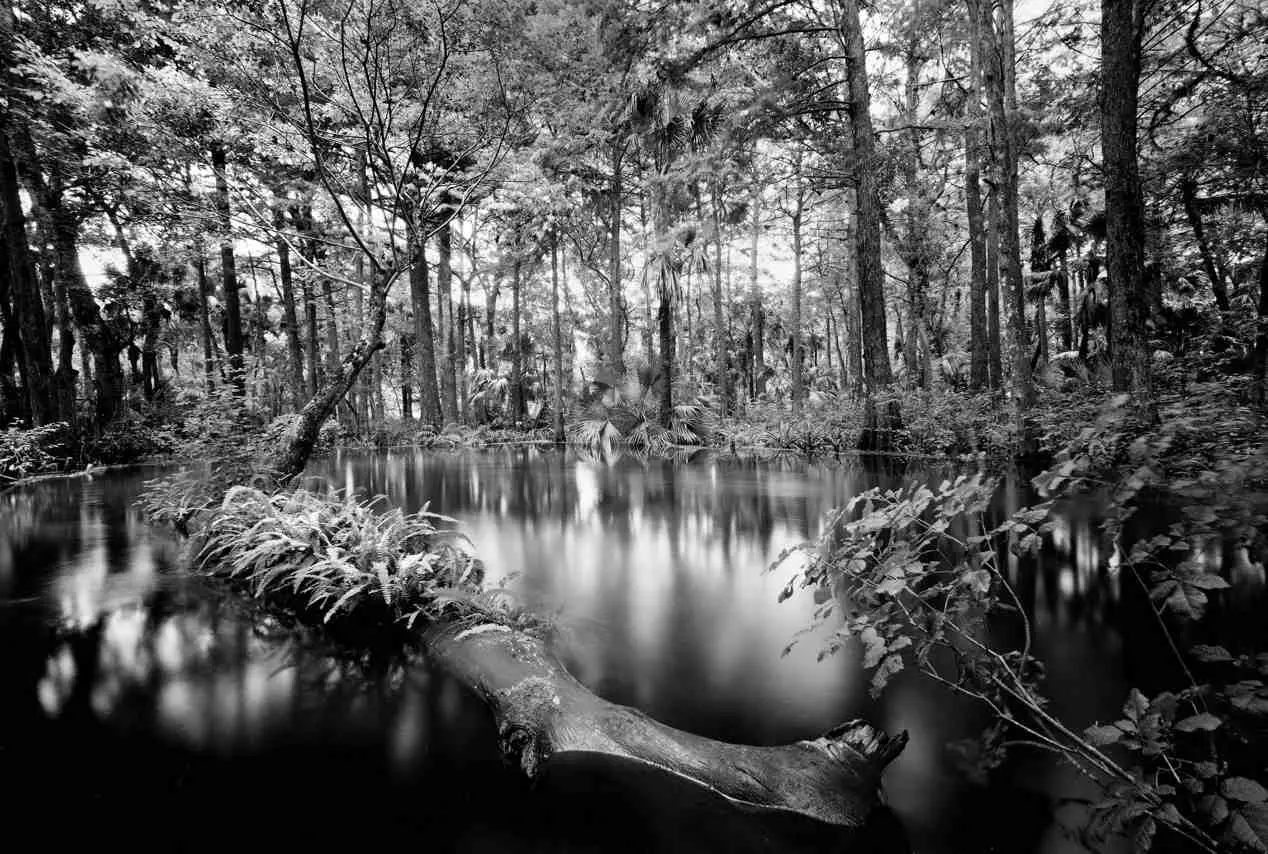
            The black and white photographs of Clyde Butcher allow us to look at the natural Florida in a different way.

            “The main reason to do black and white is because the colors are so vibrant you can’t see the image,” Butcher says. “Black and white shows the oneness of nature. Without the whole system, nature doesn’t work, and I think the black and white brings a reflection of that in the work so you can actually see the landscape. You don’t just see the color.”

            Butcher’s work has been compared to that of photographer Ansel Adams, best known for his black and white images of the American West. Like Adams, Butcher mostly uses a large format camera. Some of his images are as large as 6 feet by 9 feet.

            “When you’re in nature you’re scanning, and you’re looking around, and you’re putting this whole scene of nature together in your mind,” Butcher says. “That’s the same feeling I want you to get looking at a photograph, is being there.”

            Capturing his amazingly detailed images of Florida’s natural landscape sometimes requires that Butcher wait hours or even days for the right conditions. He’s known to stand chest high in water or lay on the ground for long periods of time to get the photograph he wants.

            Much of Butcher’s work has a three-dimensional quality. Clouds, for example, often seem to be floating right out of the photograph toward the viewer. “I’ve been working with a wide-angle lens since 1960, so I’ve learned to be able to create these spaces,” Butcher says.

            Many of Butcher’s photographs contain empty spaces that seem to invite the viewer in, to participate in the natural scene depicted. While some of his images are of coastal and island settings, most are focused on the Everglades. “For some reason you call it a swamp, I guess there’s some designation, but it’s actually more of a river,” Butcher says. “It’s a unique place. People don’t know what they have here. It’s gorgeous.”

            Butcher’s photographs do not include people. His images seem to capture a time in Florida before humans arrived to build highways and homes.

            “One of the main reasons I don’t put people in the pictures is because if someone is there, they’re taking your space,” Butcher says, adding that people’s clothing and hairstyles could “date” his photographs and he wants the images to exist outside of a particular historical period.

            Butcher goes beyond preserving Florida’s natural environment in his photographs. He is an active environmentalist who brings attention to the need for conservation with his work. Butcher has created exhibits specifically to benefit the Florida Department of Environmental Protection, the state’s “Save Our Rivers” program, the South Florida Water Management District, and a variety of environmental groups.

            In 1998, Butcher was inducted into the Florida Artists Hall of Fame.

            Butcher’s Big Cypress Gallery is located in the heart of the Everglades, between Naples and Miami on the Tamiami Trail. His gallery and studio is in the middle of a National Park that protects the wild Florida.

            From the Big Cypress Gallery, trained guides lead visitors on “Swamp Walks” through the water and trails of the Everglades, exposing them to cypress trees, alligators, exotic birds, and rare wildlife. Butcher and the guides encourage people on the walk to remain silent for five minutes, to become absorbed in the unique natural surroundings.

            “People are shocked that Florida is still here. They think about Disneyworld and Orlando and Miami, and they think it’s gone,” Butcher says. “Florida’s still here, it’s just a little harder to get to.”

            Butcher’s beautiful photographs make the natural environment of Florida accessible to everyone.

            The Foosaner Art Museum, 1463 Highland Avenue, Melbourne, has photographs of Clyde Butcher in their permanent collection. The museum gift store has a new 2015 calendar of Butcher’s images.

            Dr. Ben Brotemarkle is executive director of the Florida Historical Society and host of the radio program “Florida Frontiers,” broadcast locally on 90.7 WMFE Thursday evenings at 6:30 and Sunday afternoons at 4:00, and on 89.5 WFIT Sunday mornings at 7:00. The show can be heard online at myfloridahistory.org.

            PDF file(s)
            Article Number
            24
            relevantdate

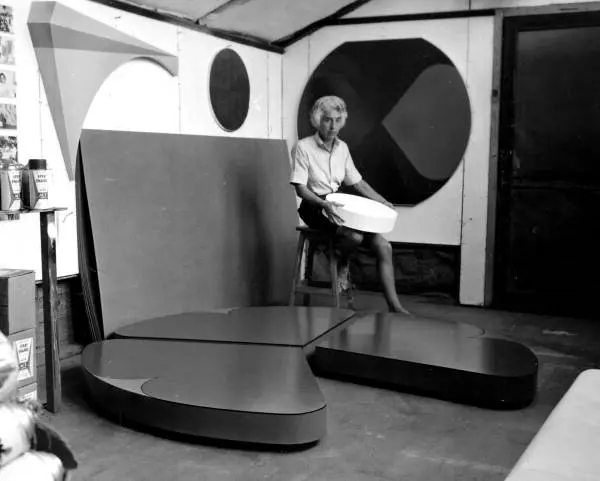
              Doris Leeper was a visionary artist and environmentalist. She was instrumental in the creation of the Canaveral National Seashore, established the Atlantic Center for the Arts in New Smyrna, and was a celebrated sculptor and painter.

              A native of Charlotte, North Carolina, Leeper was born in 1929. She graduated from Duke University in 1951 with a degree in art history. After a decade working as a commercial artist, Leeper focused on her own original pieces.

              Best known for her large-scale, site specific modern sculpture, Leeper quickly gained international recognition. More than 100 of her pieces are displayed by museums, corporations, and private collectors.

              The Doris Leeper sculpture that has probably been seen by the most people is “Steel Quilt,” permanently on display at the Orlando International Airport.

              Her paintings and sculptures have been displayed at the National Museum of Art in Washington, D.C., the John and Mable Ringling Museum of Art in Sarasota, Tennessee’s Hunter Museum, and the Wadsworth Anthenaeum in Hartford, Connecticut.


              Doris Leeper’s great success as an artist was sometimes overshadowed by the role she played in the creation of the Canaveral National Seashore, and her establishment of the Atlantic Center for the Arts. In a 1995 interview, Leeper said, “If I had my druthers, I’d rather be thought of as an artist than someone who came up with a grand idea.”

              Leeper’s ideas were very grand.

              In 1961, Doris Leeper moved to Eldora on the Indian River Lagoon. She became very active in Florida’s environmental movement, fighting to preserve our natural resources. Leeper’s efforts helped lead to Congress declaring the 58,000-acre Canaveral National Seashore an environmentally protected area in 1975.

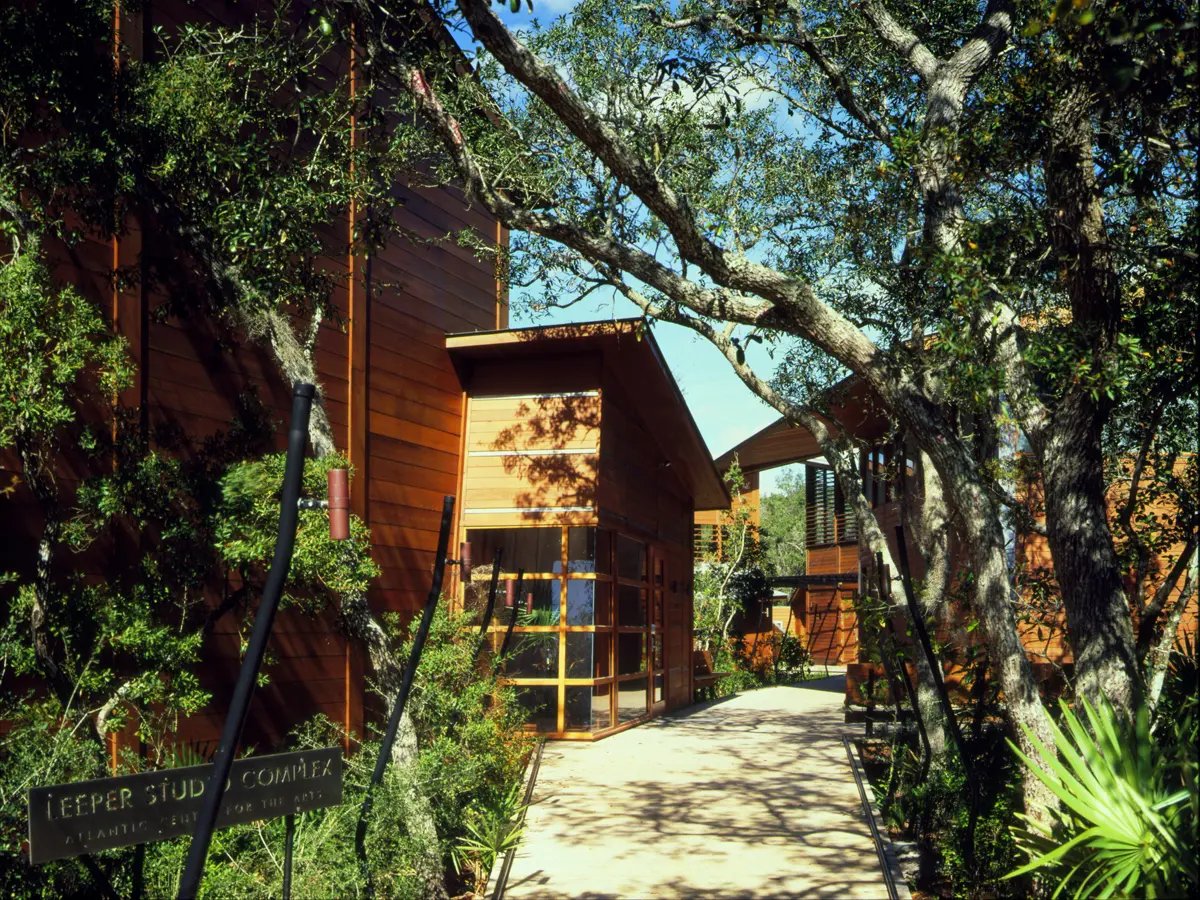
              Tucked away on 67 acres of pine and palmetto forest just outside of New Smyrna, is the Atlantic Center for the Arts. Since 1982, the center has brought together diverse groups of composers, writers, playwrights, choreographers, and visual artists to work among the trees overlooking the tidal estuary Turnbull Bay.


              When Doris Leeper founded the Atlantic Center for the Arts, she made sure that the buildings would not disrupt the natural setting of the site. She confined the facility to 10 acres, and approved a design that blended in with the environment. The wooden studios, galleries, workspace, performance areas, and artist residences are connected with boardwalks winding through the forest.

              “The model for the Atlantic Center in spirit was my place down at Canaveral National Seashore,” Leeper explained. “We said if we could arrange to get some waterfront somewhere, and keep the natural environment, and do everything we could not to disturb the environment, the wonderful sense that I had at my place there could be transferred to the Center, and in fact, that’s what happened.”

              The Master Artist-in-Residence Program at the Atlantic Center for the Arts brings in groups of accomplished artists to mentor and work with selected mid-career artists in their field. The multi-week residency program often results in fascinating collaborations. For example, poets may write verses to accompany an original musical composition that dancers perform to.

              Encouraging multi-disciplinary collaborations was of particular interest to Doris Leeper when she founded the Atlantic Center for the Arts. She was in North Carolina participating in a sculpture residency when inspiration struck.


              “I noticed that around the city some wonderful things were going on in dance, in theater, in visual arts, and so forth,” Leeper said, “but generally speaking they weren’t collaborating certainly, and they hardly knew of each other’s existence. It seemed to me that if all those things could happen in one place, everybody’s creative energy could be shared.”

              For more than three decades, the Atlantic Center for the Arts has hosted a distinguished list of master artists who have worked and collaborated there. They include playwright Edward Albee, composer John Corigliano, United States poet laureate Howard Nemerov, choreographer Trisha Brown, photographer William Wegman, sculptor Duane Hanson, novelist Bebe Moore Campbell, and poet Sonia Sanchez, to name a few.

              Doris Leeper died in 2000, one year after being inducted into the Florida Artists Hall of Fame. Leeper’s creative vision and passion for protecting Florida’s natural environment live on today in her art, the Canaveral National Seashore, and the Atlantic Center for the Arts.


              Dr. Ben Brotemarkle is executive director of the Florida Historical Society and host of the radio program “Florida Frontiers,” broadcast locally on 90.7 WMFE Thursday evenings at 6:30 and Sunday afternoons at 4:00, and on 89.5 WFIT Sunday mornings at 7:00. The show can be heard online at myfloridahistory.org.

              PDF file(s)