Article Number
37
relevantdate

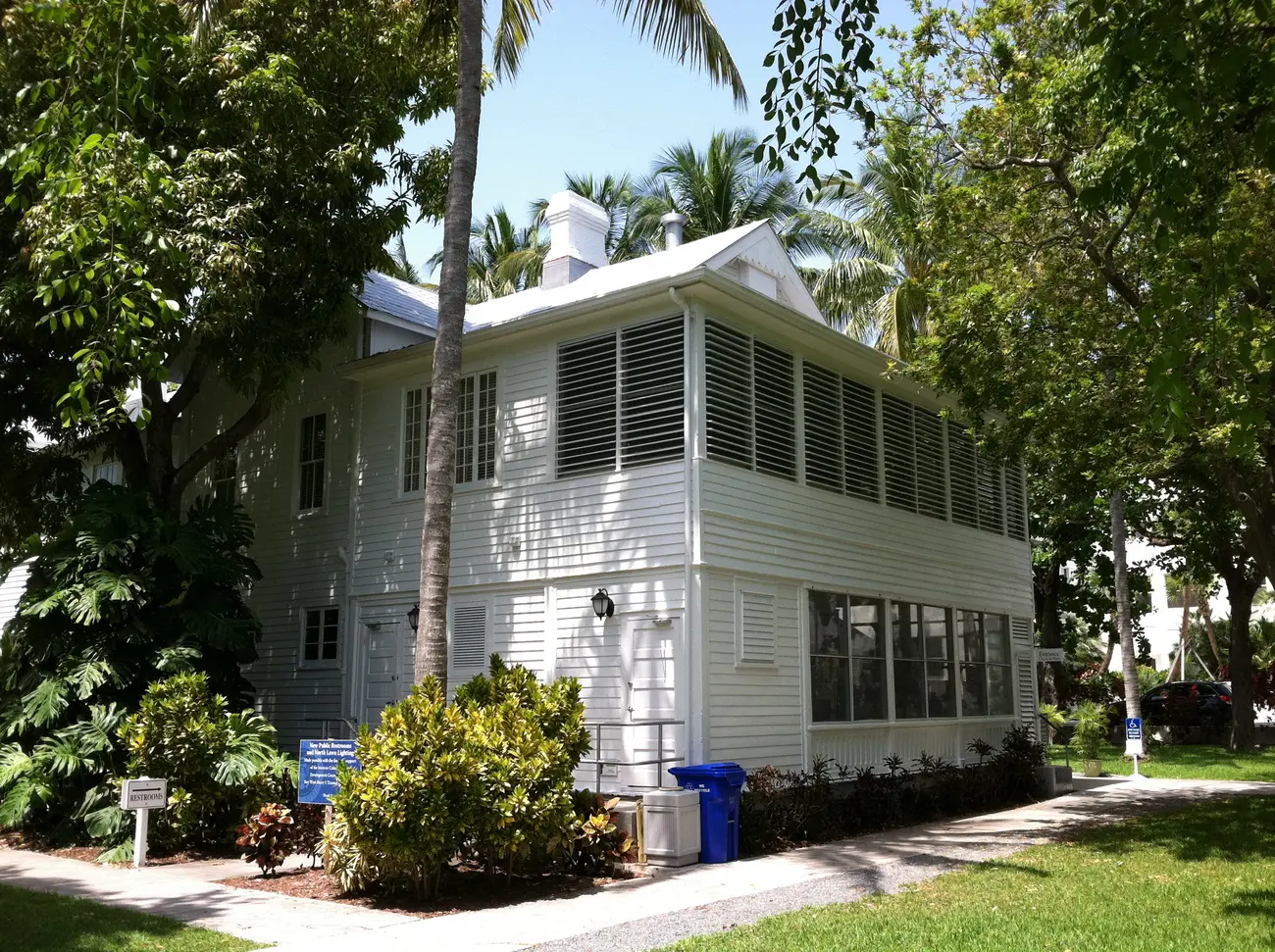
    Some of the world’s most powerful leaders have made important decisions while staying in a relatively modest residence in Key West, Florida.

    Seven Presidents of the United States have stayed at the Harry S. Truman Little White House. The home bears Truman’s name because he was the one who most fully utilized the facility while in office, spending nearly six months of his presidency in his second home.

    “It’s somewhat unique,” says Robert Wolz, executive director of the Harry S. Truman Little White House Museum. “The only location quite similar would be Camp David,” the presidential retreat in Frederick County, Maryland.

    Truman’s presidency saw the end of World War II with the use of atomic weapons on Japan, the founding of the United Nations, the Marshall Plan to rebuild Europe, the start of the Cold War with the Soviet Union, and the racial integration of the military and federal agencies.

    The Little White House was more than just a vacation retreat for President Truman. While working in Key West, he signed documents that would advance civil rights, help lead to the creation of Israel, and result in the firing of General Douglas McArthur.

    “They were literally running the country from Key West, Florida,” says Wolz. “He actually was enacting legislation from this site. It all reads ‘The White House, U.S. Naval Station, Key West, Florida.’ So, Harry Truman is our first president to realize that where the president is, there the White House is.”

    The home was originally constructed in 1890, as a Navy Officer’s residence.

    The first president to stay at the house was William Howard Taft, in 1912. “Taft came via Flagler’s railroad and then sailed from Key West to Panama to see the building of the canal,” says Wolz. “He was very instrumental in the building of the Panama Canal, making eight trips here as Secretary of War, and then as President of the United States.”

    In addition to Taft and Truman, U.S. Presidents Franklin Delano Roosevelt, Dwight Eisenhower, John F. Kennedy, James E. Carter, and William Jefferson Clinton have stayed at the Little White House.

    Key West is closer to Cuba than to most of Florida. John F. Kennedy spent time at the Little White House during a crucial period in U.S. history, when tensions with Cuba were at their height.

    Kennedy first came to the Little White House in March 1961, just 23 days before the U.S. led invasion of Cuba known as the Bay of Pigs. “Russian missiles were discovered in Cuba, and Key West became an armed camp overnight,” Wolz says. “Tourism died, and even after the crisis passed, tourists did not return.” In November 1962, Kennedy visited Key West again, to demonstrate to potential tourists that it was safe to return to the island.

    When the U.S. Navy switched from diesel submarines to nuclear submarines in 1974, the Naval Base at Key West was closed. The new nuclear subs were too large for Key West harbor. A private developer purchased the property following the base closure, and it sat unused and deteriorating for twelve years.

    The house came under state ownership in 1987, thanks to the efforts of then Governor Bob Graham.

    Since 1990, the Harry S. Truman Little White House has been open 365 days a year, offering guided tours. Details such as the magazines on coffee tables, the prints on walls, and glasses behind the bar, make walking through the Little White House like stepping back in time to 1949. Almost all of the articles in the home are genuine artifacts from the Truman presidency.

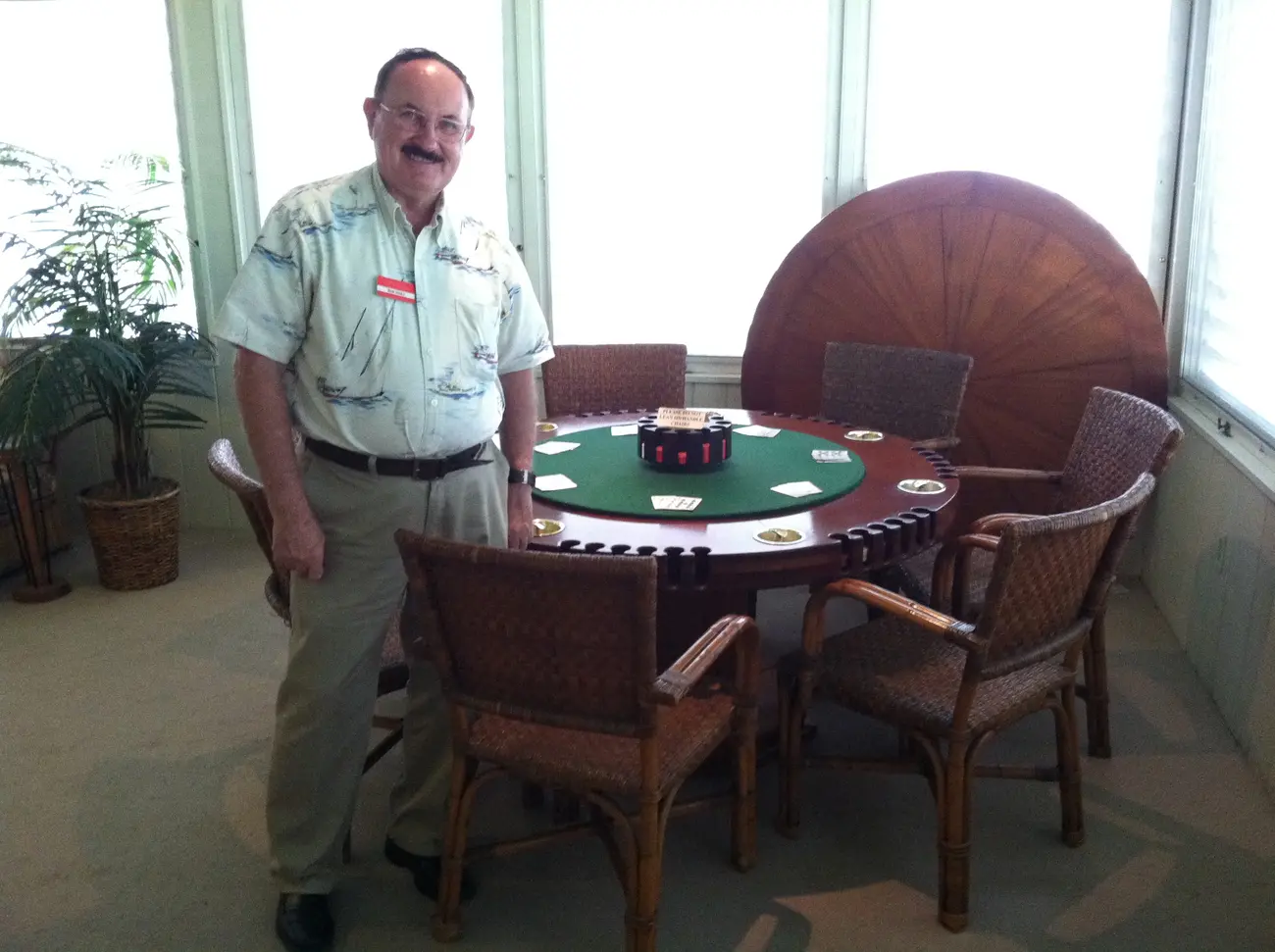
    “Probably the most iconic items would be the president’s poker table that was made as a gift for him from the Navy cabinet shop, and also the president’s piano and presidential desk where he ran the country,” Wolz says. “These are important things that people seek out when they’re touring the house.”

    The house itself is an authentic American artifact.

    “Visitors, especially our international visitors, are always surprised at how homey and ordinary it is,” says Wolz. “It is not glitzy. It’s certainly not Washington, and it’s certainly not Versailles or any of the palaces that the rest of the world expects from their leadership.”

    Dr. Ben Brotemarkle is executive director of the Florida Historical Society and host of the radio program “Florida Frontiers,” broadcast locally on 90.7 WMFE Thursday evenings at 6:30 and Sunday afternoons at 4:00, and on 89.5 WFIT Sunday mornings at 7:00. The show can be heard online at myfloridahistory.org.
    PDF file(s)
    Article Number
    36
    relevantdate

      Two venerable institutions that celebrate the past are facing a brighter future together.

      Today begins a new era for both the Florida Historical Society and the Brevard Museum of History and Natural Science as the oldest cultural organization in the state takes ownership of an outstanding local museum.

      The facility is now also the home of the Florida Historical Society Archaeological Institute.

      “I’ve been connected with the Florida Historical Society for almost twenty years now, and this is the most exciting event I’ve seen happen,” says FHS President Leonard Lempel. “This museum is a tremendous new edition to the Florida Historical Society. I’m just real excited about all the opportunities it presents.”

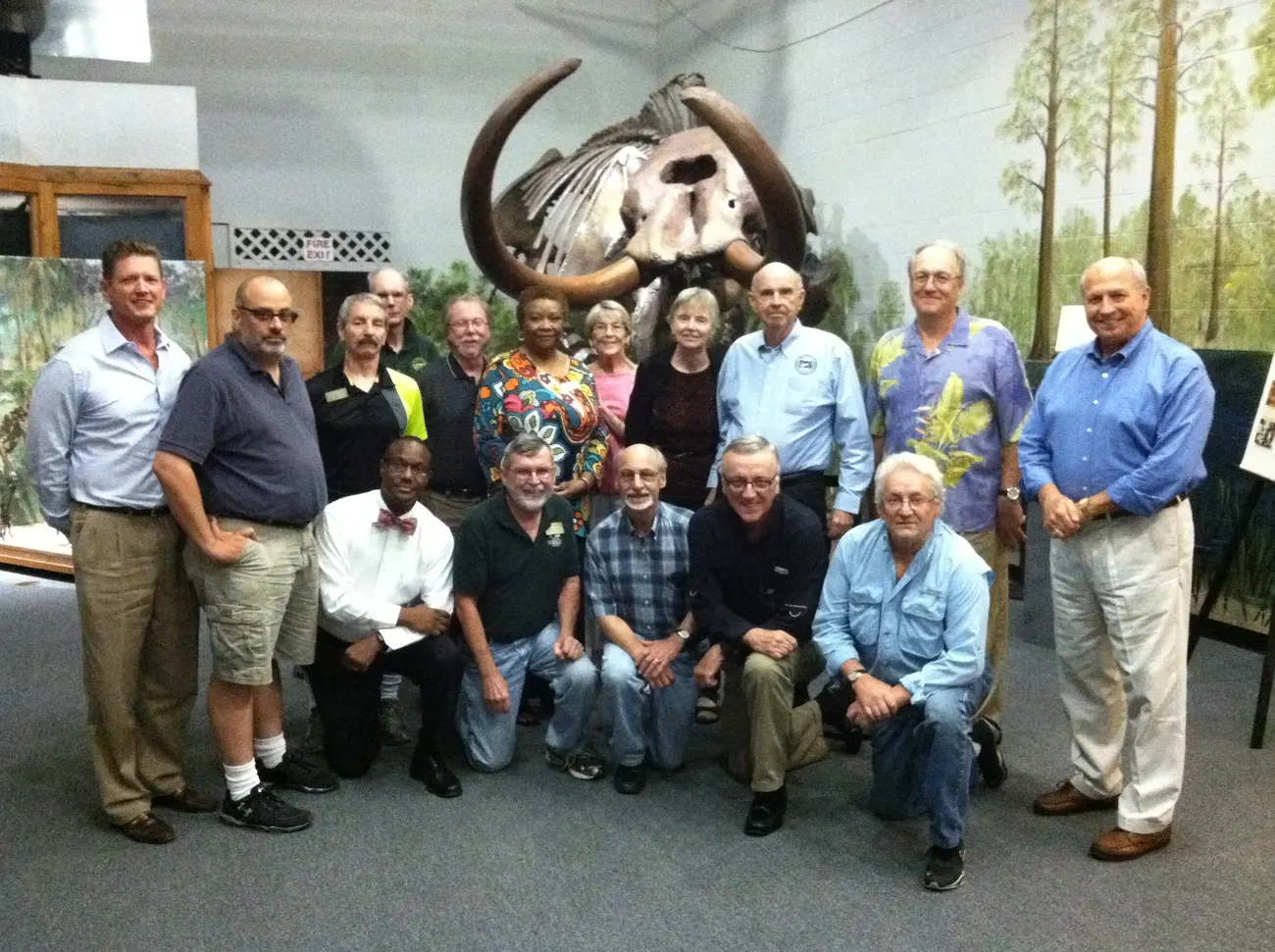
      The Brevard Museum of History and Natural Science was established in 1969. The nearly 15,000 square foot facility sits on a 20-acre nature preserve with walking trails through three Florida ecosystems. The museum is adjacent to Eastern Florida State College and the University of Central Florida Cocoa campus.

      The change in ownership from Brevard Museum, Inc. to the Florida Historical Society was amicable and even welcomed. With a passionate and emotionally invested Museum Guild already in place, the addition of Florida Historical Society personnel and resources will allow the museum to become even better than it already is.

      “There certainly is a passion,” says Lee Bailey, president of the outgoing Brevard Museum Board of Trustees. “Unfortunately it takes more than just passion. It has to have really good, solid understanding and knowing how to run a museum. I think with this in place, we’re going to see it thrive.”

      The centerpiece of the Brevard Museum of History and Natural Science is an exhibition on the amazing Windover Archaeological Dig. In 1982, an ancient pond cemetery was discovered near Titusville. Hundreds of ritualistically buried bodies were remarkably well preserved, wrapped in the oldest woven fabric found in North America. Ninety-one skulls even contained intact brain matter.

      The Windover people were between 7,000 and 8,000 years old, making them 2,000 years older than the Great Pyramids and 3,200 years older than King Tutankhamen.

      The museum also features exhibits on other native peoples, the Spanish Colonial period, pioneer culture, and has numerous archaeological artifacts.

      Many improvements were made to the Brevard Museum of History and Natural Science under the leadership of outgoing executive director Nancy Rader. She refreshed exhibits, improved the museum branding, and increased attendance. Her proudest achievement was adding a mastodon skeleton that joined the bones of a giant ground sloth and a saber tooth cat on display.

      Rader is very supportive of the changes happening at the museum. “I feel like the Brevard Museum is a real treasure and I really want the community to jump on board and support it,” Rader says.

      The museum’s mission to educate the public about local history compliments the Florida Historical Society’s statewide focus. From the prehistoric era to pioneer settlement to the launching of America’s space program, Brevard County serves as a microcosm of Florida history.

      Established in 1856, the Florida Historical Society maintains an extensive archive at the Library of Florida History in Cocoa, publishes books and periodicals, produces radio and television programs, operates the Florida Historical Society Archaeological Institute, and manages the Historic Rossetter House Museum in Eau Gallie. An Annual Meeting and Symposium is held in a different Florida city each May, and the organization participates in festivals, events, and educational outreach throughout the state.

      Bruce Piatek is the new Director of the Florida Historical Society Archaeological Institute and the Brevard Museum of History and Natural Science. Piatek has an extensive background as both a professional archaeologist and a museum administrator. He was City Archaeologist in St. Augustine where he also ran a successful museum. For 20 years, Piatek was executive director of the Florida Agricultural Museum, building it into the most popular tourist destination in Flagler County.

      “I think the Brevard Museum is great. It’s got tremendous potential,” says Piatek. “There’s been 45 years of hard work by the folks who put the museum together, got it operating, and have continued to operate it. I think it’s exciting what the Florida Historical Society has planned for coming into the museum and making it a more vibrant and viable operation.”

      Dr. Ben Brotemarkle is executive director of the Florida Historical Society and host of the radio program “Florida Frontiers,” broadcast locally on 90.7 WMFE Thursday evenings at 6:30 and Sunday afternoons at 4:00, and on 89.5 WFIT Sunday mornings at 7:00. The show can be heard online at myfloridahistory.org.
      PDF file(s)
      Tags
      Article Number
      35
      relevantdate

        Florida is known around the world as the home of major theme parks such as Disney World, Universal Orlando, Sea World, and Busch Gardens. There are smaller theme parks here as well, including Marineland, Weeki Wachee, Gatorland and Dinosaur World.

        The state tourism agency Visit Florida estimates that 94.7 million tourists came to Florida in 2013, most of them visiting at least one theme park.

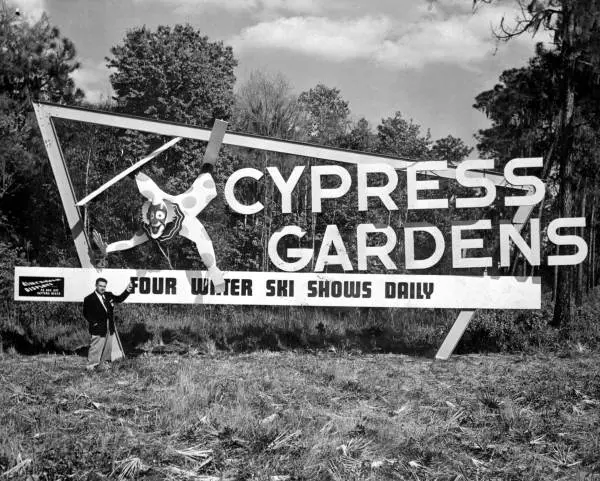
        Cypress Gardens was Florida’s first theme park. Created by entrepreneur and professional promoter Dick Pope in Winter Haven, Cypress Gardens opened on January 2, 1936, and closed on September 23, 2009.

        Dick Pope was a flamboyant and successful promoter. His marketing efforts led to Cypress Gardens appearing on the covers of hundreds of magazines and in newspaper photographs across the country. The theme park became a popular setting for commercials, television shows, and films.

        Lu Vickers is author of the book Cypress Gardens, America’s Tropical Wonderland: How Dick Pope Invented Florida.

        “He would stage events at the gardens,” Vickers says, “but sometimes he would gather his employees and say ‘I’ve called the press and told them something big is happening today. Do you have any ideas?’ He didn’t mind creating a scene to get attention.”

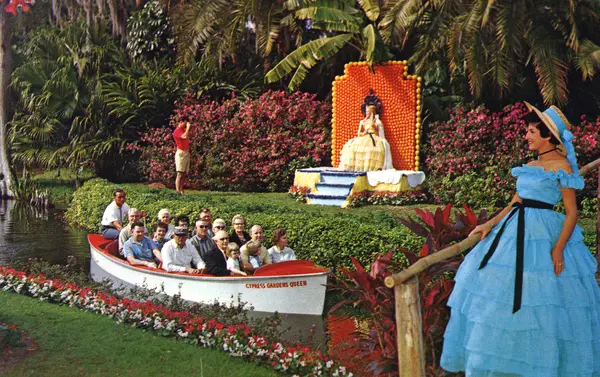
        A colorful botanical garden was the centerpiece of Cypress Gardens, but the park also featured water ski shows and boat rides. Beginning in 1940, the park became known for having Southern Belles walking the property in hoop skirts and posing for photographs.

        The tradition of Southern Belles at Cypress Gardens started as an attempt to distract visitors from seeing damage to the park’s foliage.

        “There was a really hard freeze,” Vickers says. “Julie Pope (Dick Pope’s wife) was the one who came up with the idea to dress a young lady in a Southern Belle outfit and stand her outside so that people would not notice that the flame vine had pretty much been burnt by the frost.”

        From that day forward, Southern Belles could be found at Cypress Gardens. Later they were joined by Spanish conquistadors and Native American girls.

        Celebrities including Elvis Presley, Johnny Carson, King Hussein of Jordon and many others came to Cypress Gardens. Aquatic film star Esther Williams, who made a popular series of swimming based musicals in the 1940s and ‘50s, was a frequent guest at the park. Williams promoted the venue with television specials. Her 1953 film “Easy to Love” was filmed at Cypress Gardens.

        Before the Disney corporation built its first Florida theme park in 1971, Cypress Gardens was the most popular tourist destination in the state.

        “It tied with the Grand Canyon for the number 1 attraction in the country in 1963,” Vickers says. “That’s how big it was.”

        Disney World and its affiliated theme parks owe some of their overwhelming success to Florida’s first theme park.

        While visiting Cypress Gardens prior to the construction of California’s Disneyland in 1955, Roy Disney called his brother and business partner Walt Disney from Dick Pope’s office. Roy Disney couldn’t wait to tell his brother how impressed he was with Pope’s theme park concept. People were happily paying good money to walk around a garden, stop for photos with costumed characters, ride in a boat, and watch an entertaining show or two!

        Dick Pope welcomed Disney World to Florida. “He had no problem promoting other attractions,” Vickers says. “He felt that the more people who came to Florida, the more likely they were to come to his place, too.”

        Unfortunately for Pope and Cypress Gardens, it didn’t work out that way.

        With the opening of Disney World and other large theme parks, revenues at Cypress Gardens began to decline. Beginning in the early 1980s, a series of new owners took control of the park, including the corporations that owned Sea World and Busch Gardens.

        In 2009, Cypress Gardens closed. Two years later, LEGOLAND Florida opened on the site. LEGOLAND features rides, shows, and a water park primarily aimed at children 12 and under. Miniature cities are constructed using the popular Lego building blocks.

        The original botanical gardens of Cypress Gardens are intact at the heart of the park. Even the iconic Southern Belles remain, although they are now made of Legos.

        Dr. Ben Brotemarkle is executive director of the Florida Historical Society and host of the radio program “Florida Frontiers,” broadcast locally on 90.7 WMFE Thursday evenings at 6:30 and Sunday afternoons at 4:00, and on 89.5 WFIT Sunday mornings at 7:00. The show can be heard online at myfloridahistory.org.
        PDF file(s)
        Tags
        Article Number
        34
        relevantdate

          One of the first Florida novels ever written remained unpublished for more than 150 years. For nearly five decades, the hand written manuscript was preserved but forgotten in an archive at Rollins College.

          Wenxian Zhang is head of Archives and Special Collections at Rollins College in Winter Park. While doing an inventory of the Florida Collection in 2004, Zhang came across a hand written manuscript by the unpublished author Cyrus Parkhurst Condit.

          “The manuscript was a gift to Rollins from Frederick Dau, author of the 1934 book Florida Old and New,” says Zhang. Dau donated the Condit manuscript and many other items to Rollins in 1955.

          When Zhang rediscovered the Condit manuscript, he shared it with Maurice O’Sullivan, Professor of Literature at Rollins and a recognized authority on Florida literature. “I brought it to his attention, he being a literary expert,” Zhang says. “We feel that we found something significant.”

          O’Sullivan instantly recognized the importance of the find. Written in 1855, the book was one of only a dozen novels set in Florida, which had been named a state just ten years before.

          “Probably the most significant element of the book is that it’s the first novel that I would call a domestic novel about Florida,” says O’Sullivan. Unlike most other novels about Florida, this was not an idealized vision of the state written from afar, but the work of a man who had actually visited here, hunting, fishing, and participating in the daily lives of residents.

          Little is known about Condit, except that he came from a wealthy New Jersey family. “He was apparently 25-years-old when he visited Florida in 1855,” O’Sullivan says. “At the end of that year he got married, had two children, and then died at 31.”

          Condit never had the opportunity to finish revising his novel or get it published.

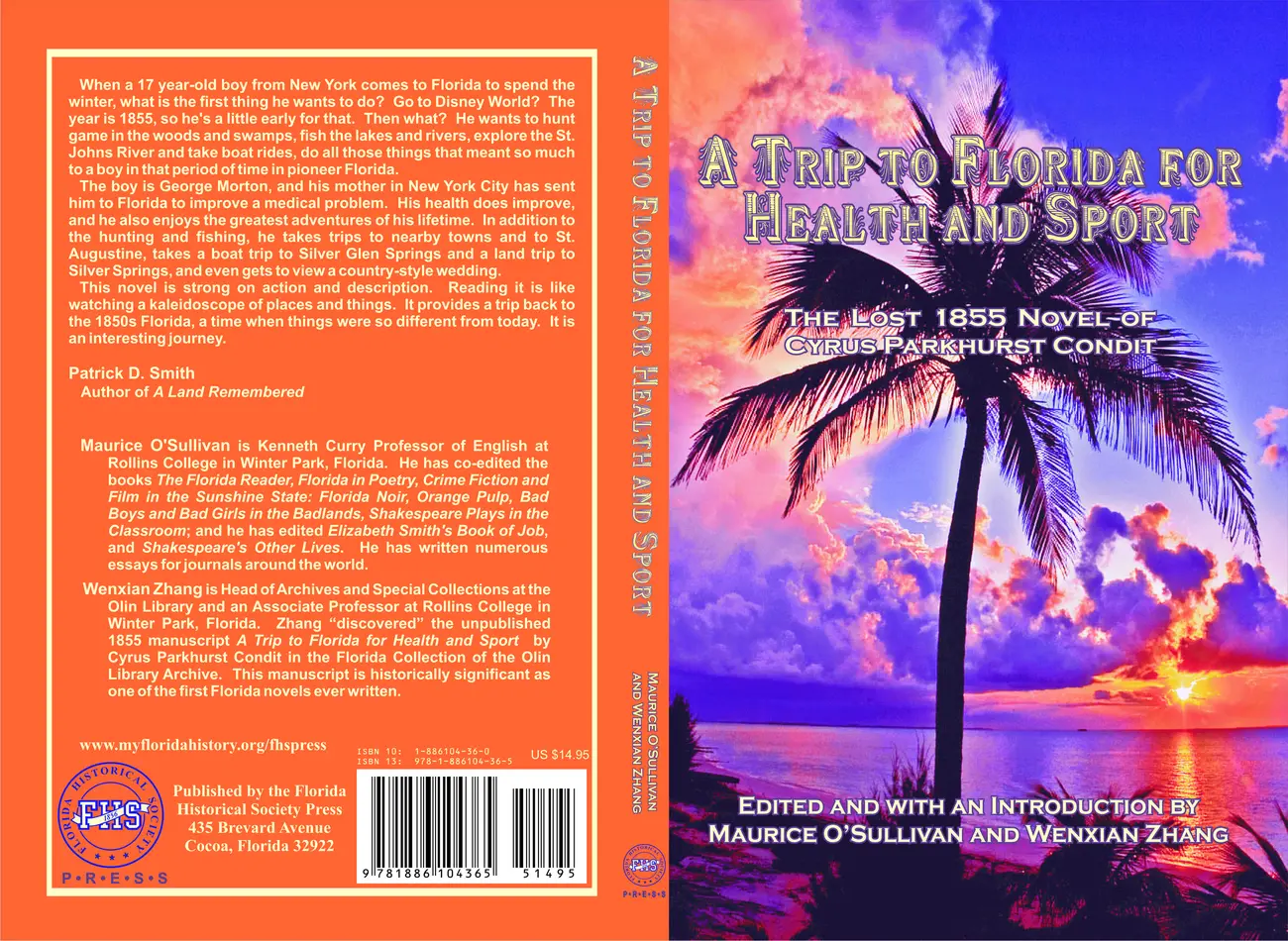
          O’Sullivan and Zhang have turned the hand written manuscript into the book A Trip to Florida for Health and Sport: The Lost 1855 Novel of Cyrus Parkhurst Condit, providing an introduction and afterword.

          With the help of student assistants, O’Sullivan and Zhang scanned the hand written manuscript into an electronic format, transcribed the text, and carefully edited the work. “That’s one of the great advantages to working at an academic institution,” says Zhang. “You have eager students who are willing to help you.”

          A Trip to Florida for Health and Sport: The Lost Novel of Cyrus Parkhurst Condit is a coming of age story that contains detailed descriptions of everyday life in Florida in the years prior to the Civil War.

          “17-year-old George Morton comes to Florida suffering from ill health and psychological problems and emotional problems because of his father’s death,” O’Sullivan says. “He recovers by entering into nature.”

          During his trip, George Morton travels around north and central Florida hunting and fishing. He visits a lumber camp, talks with a survivor of the Seminole Indian War, goes to a wedding, and learns about the importance of Florida’s cattle industry.

          By the time George leaves Florida, he is a healthy and confident young man.

          Marjorie Kinnan Rawling’s 1938 novel The Yearling is one of the most popular Florida novels ever written. In the book a teenage boy learns to hunt, listens to hunting stories, visits Silver Glen Springs and other central Florida towns, builds a fence, and takes a fawn as a pet.

          A Trip to Florida for Health and Sport was written more than 80 years before The Yearling, and the plot similarities are striking.

          It is possible that Rawlings had access to Condit’s manuscript through historian A.J. Hanna at Rollins College, who was good friends with both Rawlings and Frederick Dau.

          “I suspect, however, that the similarity really has more to do with the fact that life was pretty simple in the 1850s, was pretty simple even in the 1930s,” O’Sullivan says. “Most of what happened (in both novels) was probably the average, everyday life of folks until World War II, until the enormous growth of Florida began changing our lives entirely.”

          Thanks to O’Sullivan and Zhang, A Trip to Florida for Health and Sport: The Lost 1855 Novel of Cyrus Parkhurst Condit joins the pantheon of important Florida literature.

          Dr. Ben Brotemarkle is executive director of the Florida Historical Society and host of the radio program “Florida Frontiers,” broadcast locally on 90.7 WMFE Thursday evenings at 6:30 and Sunday afternoons at 4:00, and on 89.5 WFIT Sunday mornings at 7:00. The show can be heard online at myfloridahistory.org.
          PDF file(s)
          Article Number
          33
          relevantdate

            When most people think of Florida’s natural environment, an explosion of color comes to mind. We imagine multiple shades of green in a Florida swamp, bright red Poinciana trees, and the turquoise waters of the Gulf Coast. We picture the oranges, purples, pinks, and blues of the Florida sky.

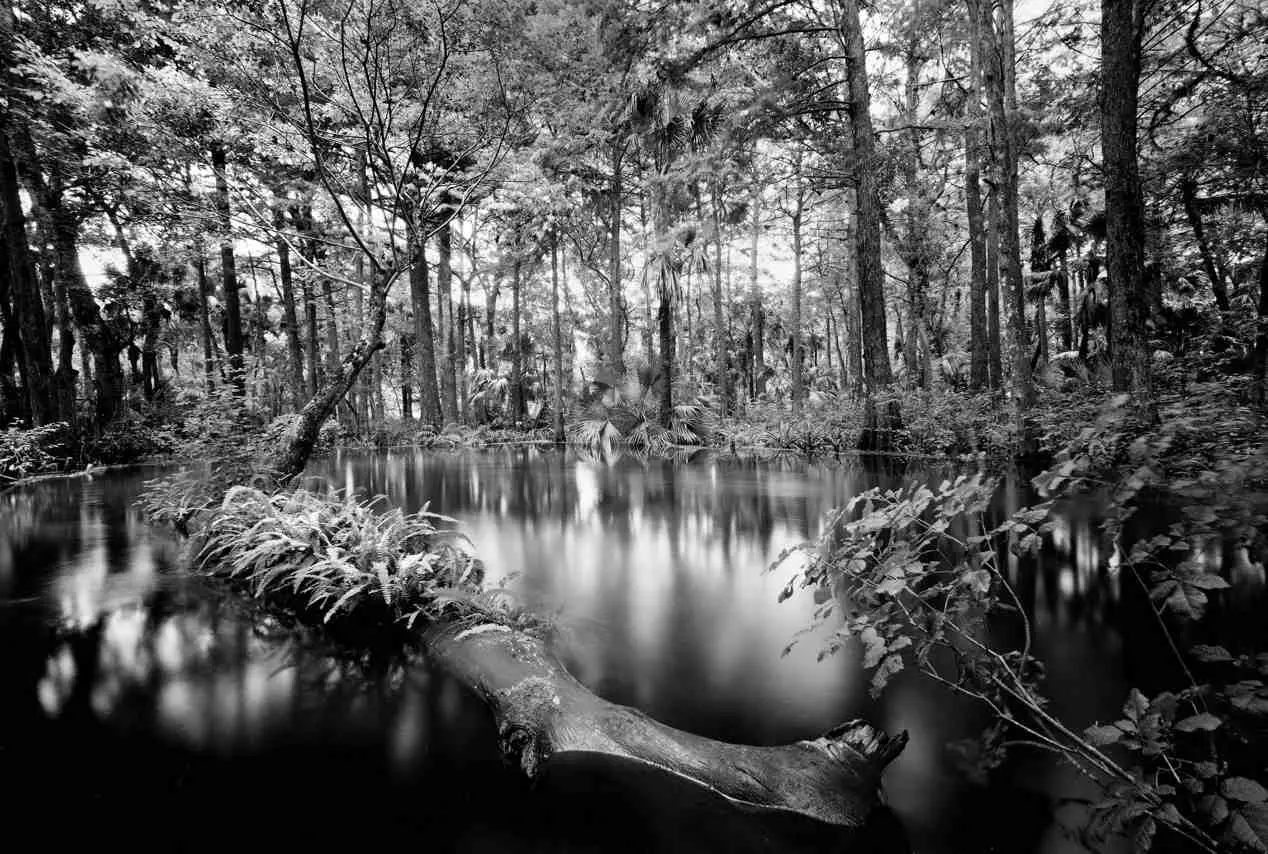
            The black and white photographs of Clyde Butcher allow us to look at the natural Florida in a different way.

            “The main reason to do black and white is because the colors are so vibrant you can’t see the image,” Butcher says. “Black and white shows the oneness of nature. Without the whole system, nature doesn’t work, and I think the black and white brings a reflection of that in the work so you can actually see the landscape. You don’t just see the color.”

            Butcher’s work has been compared to that of photographer Ansel Adams, best known for his black and white images of the American West. Like Adams, Butcher mostly uses a large format camera. Some of his images are as large as 6 feet by 9 feet.

            “When you’re in nature you’re scanning, and you’re looking around, and you’re putting this whole scene of nature together in your mind,” Butcher says. “That’s the same feeling I want you to get looking at a photograph, is being there.”

            Capturing his amazingly detailed images of Florida’s natural landscape sometimes requires that Butcher wait hours or even days for the right conditions. He’s known to stand chest high in water or lay on the ground for long periods of time to get the photograph he wants.

            Much of Butcher’s work has a three-dimensional quality. Clouds, for example, often seem to be floating right out of the photograph toward the viewer. “I’ve been working with a wide-angle lens since 1960, so I’ve learned to be able to create these spaces,” Butcher says.

            Many of Butcher’s photographs contain empty spaces that seem to invite the viewer in, to participate in the natural scene depicted. While some of his images are of coastal and island settings, most are focused on the Everglades. “For some reason you call it a swamp, I guess there’s some designation, but it’s actually more of a river,” Butcher says. “It’s a unique place. People don’t know what they have here. It’s gorgeous.”

            Butcher’s photographs do not include people. His images seem to capture a time in Florida before humans arrived to build highways and homes.

            “One of the main reasons I don’t put people in the pictures is because if someone is there, they’re taking your space,” Butcher says, adding that people’s clothing and hairstyles could “date” his photographs and he wants the images to exist outside of a particular historical period.

            Butcher goes beyond preserving Florida’s natural environment in his photographs. He is an active environmentalist who brings attention to the need for conservation with his work. Butcher has created exhibits specifically to benefit the Florida Department of Environmental Protection, the state’s “Save Our Rivers” program, the South Florida Water Management District, and a variety of environmental groups.

            In 1998, Butcher was inducted into the Florida Artists Hall of Fame.

            Butcher’s Big Cypress Gallery is located in the heart of the Everglades, between Naples and Miami on the Tamiami Trail. His gallery and studio is in the middle of a National Park that protects the wild Florida.

            From the Big Cypress Gallery, trained guides lead visitors on “Swamp Walks” through the water and trails of the Everglades, exposing them to cypress trees, alligators, exotic birds, and rare wildlife. Butcher and the guides encourage people on the walk to remain silent for five minutes, to become absorbed in the unique natural surroundings.

            “People are shocked that Florida is still here. They think about Disneyworld and Orlando and Miami, and they think it’s gone,” Butcher says. “Florida’s still here, it’s just a little harder to get to.”

            Butcher’s beautiful photographs make the natural environment of Florida accessible to everyone.

            The Foosaner Art Museum, 1463 Highland Avenue, Melbourne, has photographs of Clyde Butcher in their permanent collection. The museum gift store has a new 2015 calendar of Butcher’s images.

            Dr. Ben Brotemarkle is executive director of the Florida Historical Society and host of the radio program “Florida Frontiers,” broadcast locally on 90.7 WMFE Thursday evenings at 6:30 and Sunday afternoons at 4:00, and on 89.5 WFIT Sunday mornings at 7:00. The show can be heard online at myfloridahistory.org.
            PDF file(s)
            Article Number
            32
            relevantdate

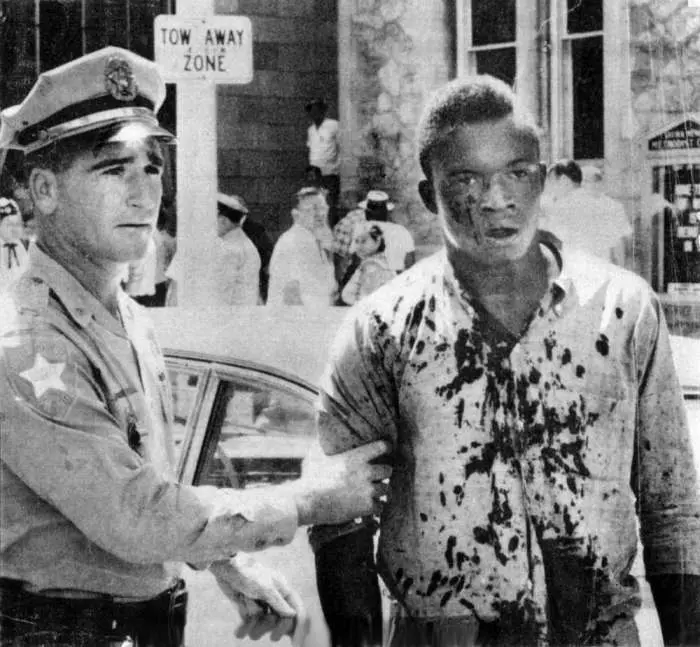
              More than 200 white people wielding baseball bats and ax handles chased African Americans through the streets of downtown Jacksonville, trying to beat them into submission.

              It was August 27, 1960, a day that became known as “Ax Handle Saturday.”

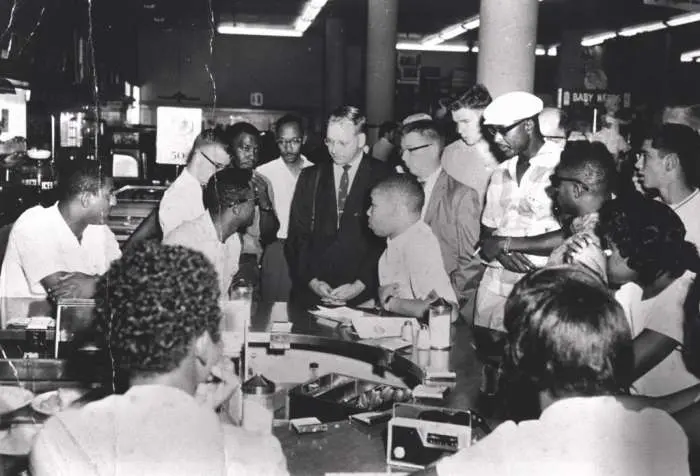
              The violent attack was in response to peaceful lunch counter demonstrations organized by the Jacksonville Youth Council of the National Association for the Advancement of Colored People (NAACP).

              The attack began with white people spitting on the protestors and yelling racial slurs at them. When the young demonstrators held their resolve, they were beaten with wooden handles that had not yet had metal ax heads attached.

              While the violence was first aimed at the lunch counter demonstrators, it quickly escalated to include any African American in sight of the white mob. Police stood idly by watching the beatings until members of a black street gang called “The Boomerangs” attempted to protect those being attacked. At that point police night sticks joined the baseball bats and ax handles.

              Bloodied and battered victims of the vicious beatings fled to a nearby church where they sought refuge and comfort from prayer and song. Eventually the white mob dispersed.

              Sixteen-year-old Rodney L. Hurst was president of the Jacksonville Youth Council, leading sit-ins at “whites only” lunch counters in Woolworth’s and W.J. Grant Department Store to protest racial segregation.

              Hurst has written about his experiences in the award-winning book “It was Never about a Hot Dog and a Coke.”

              History teacher Rutledge Pearson inspired Hurst to become involved in the civil rights movement at a very early age. Hurst says that Pearson was an innovative teacher who facilitated interactive classes. “As we talked about American history and as he gave us his insights, he would tell us ‘freedom is not free, and if you’re not part of the solution, you’re part of the problem.’ He would encourage us to join the Youth Council NAACP, which we did.”

              Today, Rutledge H. Pearson Elementary School in Jacksonville bears the name of the teacher who influenced many young people to become leaders in the African American community.

              In 1959, the year before Ax Handle Saturday, Nathan B. Forrest High School opened in Jacksonville, celebrating the memory of the first Grand Dragon of the Ku Klux Klan. As of July 1, 2014, the name has been changed to Westside High School.

              The violence of Ax Handle Saturday did not occur in a vacuum. Racial segregation and overt racism had been building tension in Jacksonville for decades. In his book, Hurst places his personal story as a young activist into the larger historical context of the civil rights movement. “Jacksonville was a mess, not unlike a lot of other southern cities,” Hurst says.

              It is believed that the Ku Klux Klan organized the violence of Ax Handle Saturday. “The intent was to scare, intimidate, and bring physical harm,” Hurst says. “Many times you could not draw a line between the Klan and law enforcement, because law enforcement were at least accomplices to a lot of the things the Klan did.”

              While the events of Ax Handle Saturday were documented in Life Magazine and newspapers from major cities across the country, reporters from the Jacksonville Times-Union and the Jacksonville Journal were not allowed to cover the story.

              Some people in the city are now more willing to explore its painful past.

              In 2010, the University of North Florida opened the exhibition “Fifty Years Later: Revisiting Ax Handle Saturday in Jacksonville, Florida.” The photography exhibit begins with an image of four ax handles against a stark white background. The viewer is challenged to think about what it would feel like to be attacked with one of those solid pieces of wood. Historic photos from Hurst’s book are displayed.

              “What’s exciting about the exhibit for me is that it’s on a university campus, with a lot of young people, a lot of inquiring minds,” Hurst says. “If a university does nothing else, it should develop independent thinkers.”

              Since 1960, great strides have been made in the fight for racial equality. As contemporary headlines too often remind us, there is still a long way to go.

              Dr. Ben Brotemarkle is executive director of the Florida Historical Society and host of the radio program “Florida Frontiers,” broadcast locally on 90.7 WMFE Thursday evenings at 6:30 and Sunday afternoons at 4:00, and on 89.5 WFIT Sunday mornings at 7:00. The show can be heard online at myfloridahistory.org

              PDF file(s)
              Tags
              Article Number
              31
              relevantdate

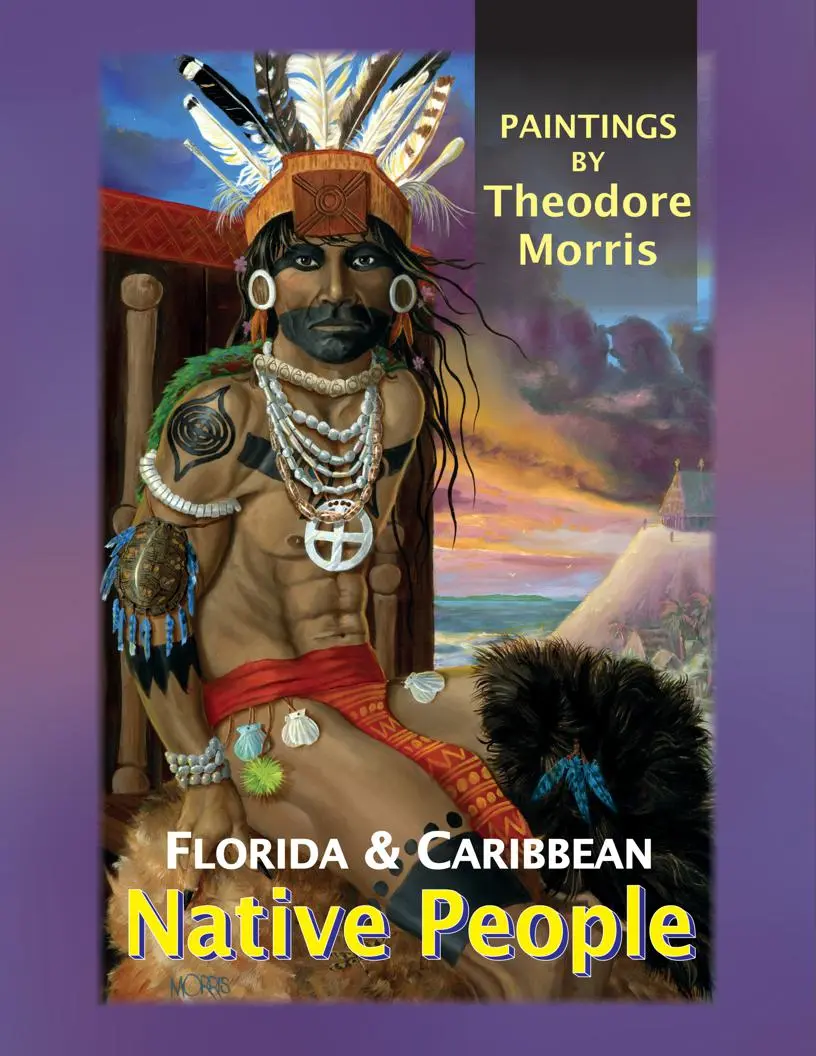
                When Juan Ponce de León “discovered” Florida in 1513, native people had been living here for more than 10,000 years.

                The native population had complex societies, elaborate systems of trade, and their own ancient religions. They had villages with large ceremonial centers surrounded by buildings built on shell mounds. Villages throughout this land had council houses built of wood and thatch that could hold more than 1,000 people.

                At the time of European contact, there were a dozen tribes in “La Florida” with their own distinctive cultures.

                While many of Florida’s tribes were sophisticated hunters and fishermen, the Apalachee in the Panhandle were accomplished farmers. They grew corn, beans, pumpkins, and other crops. The Apalachee food storage system was so effective that when the Spanish came to that region, they found enough food to feed hundreds of people and horses for many months.

                The Timucua people formed a confederation of more than 40 powerful chiefdoms. The Timucua territory stretched from the east coast of north Florida far down into central Florida. When Ponce de León first set foot on this land, 200,000 Timucua lived here. They had the Bear Clan, the Quail Clan, the White Deer Clan, and many others. The children belonged to their mother’s clan and had to marry outside of their own clan, which united the society and promoted peace.

                It was the Ais people that Ponce first encountered as he made stops along the Florida coast in 1513.

                Ais villages could be found throughout what is now Brevard County. Their territory began north of today’s Titusville and continued down the east coast all the way into present-day Martin County. When a small group of Ponce’s men came ashore, the Ais gave them a greeting that let them know they were not welcome.

                The people living around what is now the Tampa Bay area were known as Tocobaga. They were skilled fishermen and hunters. The Tocobaga did some farming as well, creating a tool for digging called the adz by tying a shell to a curved branch.

                The Calusa Indians in southwest Florida had a powerful chief who lived at what we call Mound Key. This great chief demanded tribute from the leaders of other tribes, including the Mayaimi, Tequesta, and Jaega in south Florida, and perhaps even the Ais on the central east coast.

                The Calusa territory encompassed most of southwest Florida, from present-day Charlotte Harbor to the Florida Keys. They built a canal system on the island of Mound Key where they had temples and other important buildings. Like many other people of this land, the Calusa depended heavily on fish and shell fish for their existence, but developed a trade system with inland people.

                Frank Hamilton Cushing’s archaeological excavations at Key Marco in 1896 demonstrate that the Calusa were creative people, making colorful masks for use in their religious ceremonies and carving unique works of art.

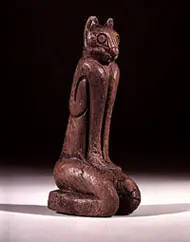
                One of the most intriguing Calusa artifacts is a mysterious six-inch wooden carving of a kneeling feline figure known as the Key Marco Cat.

                It was the Calusa who put a stop to Ponce de León’s exploits in Florida. When Ponce came back to Florida in 1521 with the intention of establishing a permanent colony here, the Calusa attacked the Spanish crew. Ponce was wounded and taken to Cuba where he died.

                Ponce’s death did not stop the Spanish, or the French and British who followed.

                Over the next century and beyond Europeans worked to change Florida’s native cultures by making them abandon their ancient religions and accept Christianity. They enslaved and killed native Floridians by the thousands. Finally, the unfamiliar diseases the Europeans brought to the “New World” proved to be too much for the indigenous people to fight.

                In the centuries following European contact, the great native societies of Florida collapsed and the people disappeared. Those last remaining were probably absorbed into other Native American groups such as the Seminoles, who arrived in Florida from the north in the 1700s.

                When Ponce de León came here in 1513, it was the beginning of an exciting new era in Western culture, but the beginning of the end for Florida’s indigenous societies.

                Dr. Ben Brotemarkle is executive director of the Florida Historical Society and host of the radio program “Florida Frontiers,” broadcast locally on 90.7 WMFE Thursday evenings at 6:30 and Sunday afternoons at 4:00, and on 89.5 WFIT Sunday mornings at 7:00. The show can be heard online at myfloridahistory.org.
                PDF file(s)
                Article Number
                30
                relevantdate

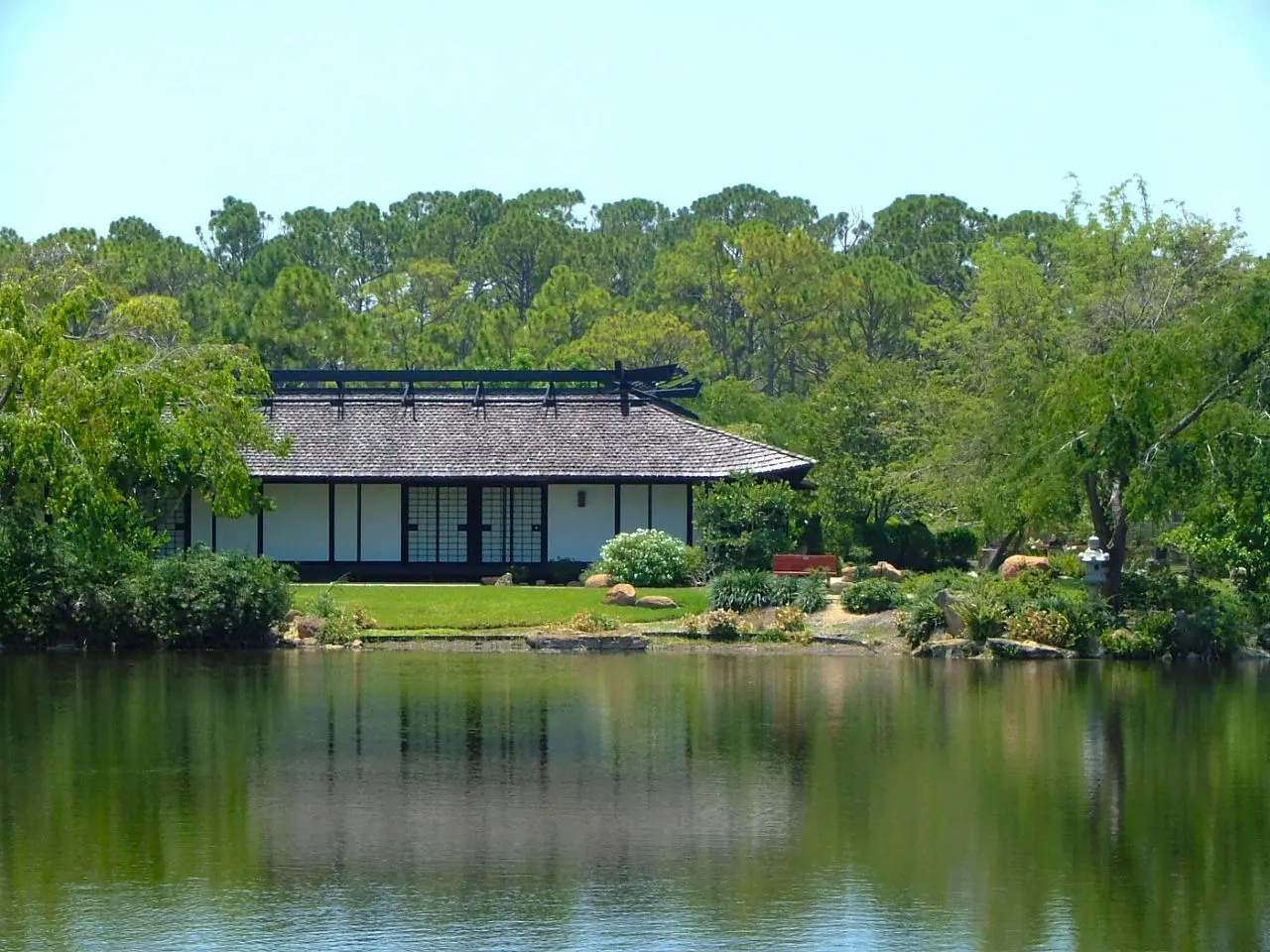
                  Nestled within the hustle and bustle of urban south Florida is a serene and contemplative place that evokes rural Japan.

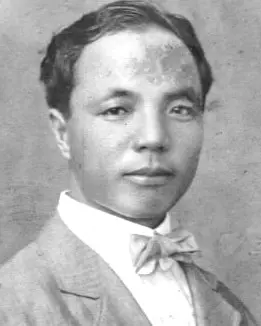
                  The Morikami Museum and Japanese Gardens in Delray Beach was a gift to Floridians from successful farmer George Morikami, who emigrated here in 1906 as a member of the Yamato agricultural community.

                  “The Japanese heritage of Palm Beach County is something that is really little known and little understood,” says Tom Gregerson. After 35 years as senior curator at the Morikami Museum and Japanese Gardens, Gregerson retired in 2013. “It’s a surprise for our visitors to find that there was once a colony of Japanese living in this area.”

                  Jo Sakai, a recent graduate of the business school at New York University, came to Florida in 1903 with plans to create a series of Japanese agricultural communities. State leaders were excited by Sakai’s proposal, and took him to potential development sites.

                  Henry Flagler’s Model Land Company was encouraging settlement along the rapidly expanding Florida East Coast Railway. The railway could provide shipping for produce. A piece of land in present-day Boca Raton with access to the railway seemed like a good spot for Sakai to begin a farming community.

                  Sakai called the community Yamato, an ancient name for Japan.

                  George Morikami was 19 years old when he emigrated to the Yamato community from Miyazu, Japan in 1906. He was originally an indentured laborer, working to pay off his passage to America. Like the other Yamato colonists, Morikami grew and sold fruits and vegetables, including tomatoes and pineapples.

                  After three years at Yamato, Morikami spent a year in Brevard County to attend school and learn to speak English, while also working as a farm laborer.

                  Morikami returned to Yamato, where he and the other farmers were successful for about 20 years. By the late 1920s, a failing economy was taking its toll and most of the Yamato colonists relocated to other parts of the country, or went back to Japan.

                  Eventually, Morikami was the last remaining farmer from the Yamato community.

                  During World War II, the U.S. government seized Morikami’s land to create an Army Air Corps training base where the Boca Raton Airport and Florida Atlantic University are now located. Near the end of the war, Morikami relocated his farm to Delray Beach, where he continued working for nearly 30 years.

                  In the early 1970s, Morikami began what was a surprisingly difficult effort to give his land away. With the growth occurring in south Florida since that time, reluctance to accept a gift of prime real estate is almost unimaginable today. After the City of Delray Beach declined Morikami’s generous donation of nearly 200 acres, Palm Beach County eventually accepted.

                  What was once rural farmland is now surrounded by urban growth and expensive housing developments.

                  “He wanted to give his property away to be used in a manner to benefit the people of his adopted country, the United States,” says Gregerson. “He felt he was afforded many opportunities here and he wanted to thank the people of his adopted country for those opportunities.”

                  Morikami was granted United States citizenship in 1967.

                  The Morikami Museum and Japanese Gardens opened in 1977, two years after George Morikami’s death at the age of 89.

                  Winding paths on the property take the visitor through six Japanese gardens representing various historical periods. The museum features rotating exhibits of both traditional and contemporary Japanese art and artifacts. A critically acclaimed restaurant serves Pan-Asian cuisine.

                  Special events are held throughout the year, including Taiko drum performances, Sushi and Stroll Summer Walks, and the Oshogatsu New Year Celebration. The Lantern Festival in the Spirit of Oberon, held in the fall, honors ancestors with music, storytelling, luminaries, and fireworks.

                  The Hatsume Fair, held in the spring, is the venue’s largest annual event featuring three performance stages, craft and food vendors, children’s activities, and demonstrations of Japanese culture.

                  Many people enjoy visiting most when the main attractions are the peaceful natural surroundings and quiet museum displays.

                  While experiencing the serenity of the Morikami Museum and Japanese Gardens, the visitor can reflect upon the amazing cultural contributions made by diverse immigrants seeking the American Dream in Florida.

                  Dr. Ben Brotemarkle is executive director of the Florida Historical Society and host of the radio program “Florida Frontiers,” broadcast locally on 90.7 WMFE Thursday evenings at 6:30 and Sunday afternoons at 4:00, and on 89.5 WFIT Sunday mornings at 7:00. The show can be heard online at myfloridahistory.org.
                  PDF file(s)
                  Article Number
                  29
                  relevantdate

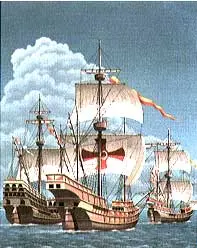
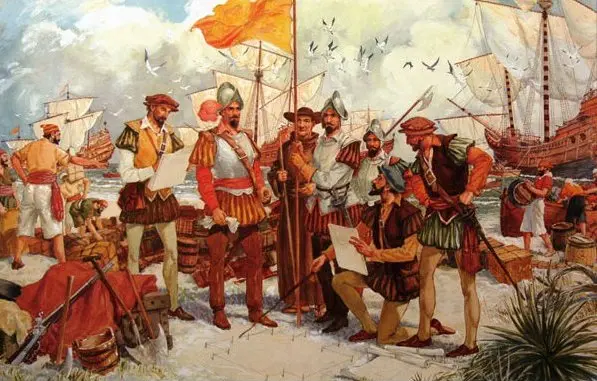
                    A fleet of ships carrying 1,500 colonists sailed into what is now Pensacola Bay on August 15, 1559. The men, women, and children aboard the ships were led by Spanish conquistador Don Tristan de Luna.

                    De Luna’s plan was to establish the first permanent European colony in North America. He called the settlement site Ochuse, La Florida. We call it Pensacola, Florida. The colony at Ochuse was to be the first in a series of settlements that would spread west along the gulf coast and north into the heart of the continent, securing the territory for Spain.

                    Before the colonists could finish unloading their ships, a violent hurricane struck, sinking the fleet.

                    Although the colonists persevered for two years in difficult circumstances, de Luna was forced to abandon his attempted settlement in 1561. The colonists were dispersed to Mexico, Cuba, and Spain.

                    Today, de Luna’s misfortune is providing amazing research opportunities for professional archaeologists and students at the University of West Florida. The Emanuel Point Shipwreck Site was discovered at the bottom of Pensacola Bay in 1992, revealing two ships from de Luna’s doomed colonization attempt.

                    Every summer, the University of West Florida conducts a field school at the Emanuel Point Shipwreck Site, allowing students to dive in teams, searching for lost artifacts in the murky water.

                    “Both ships are very well preserved. They are both buried to various degrees,” says UWF faculty member Gregory Cook. “A variety of items have been found on both of them, from armaments, to supplies, faunal remains, animal remains, plant remains.”

                    Among the most exciting items to be excavated from the de Luna ships are stone cannon balls, copper arrow tips to be used with a crossbow, and a small wooden carving in the shape of a Spanish galleon.

                    “We’re continually surveying and searching for other vessels in the fleet,” Cook says. “It’s really pretty unprecedented to have two vessels and possibly as many as four or five in the bay from a single fleet.”

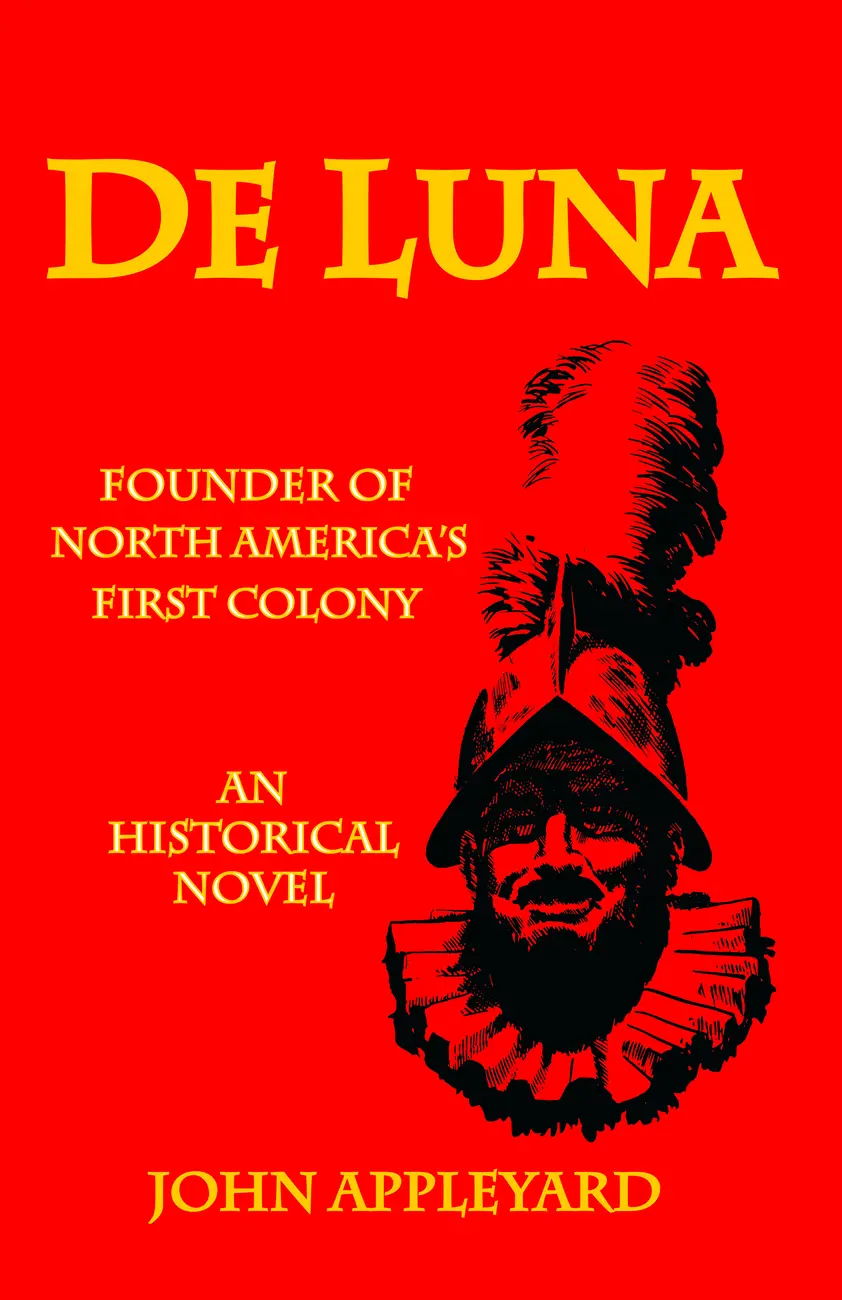
                    The discovery of the Emanuel Point Shipwreck Site confirmed conclusions drawn by Pensacola author John Appleyard in his 1977 historical novel “De Luna: Founder of North America’s First Colony.”

                    Appleyard carefully studied all of the available documentation of de Luna’s expedition, and determined the correct location of de Luna’s landing site. Two other popular theories placing the settlement attempt at different locations were shown to be incorrect by the archaeological discoveries in Pensacola Bay.

                    Like any writer of good historical fiction, Appleyard logically fills any gaps in demonstrable fact with reasonable supposition and a slight bit of artistic license. A new paperback edition of his novel was published by the Florida Historical Society Press for the 450th anniversary of de Luna’s attempted colony.

                    In addition to being a writer, Appleyard was one of the first successful proponents of cultural and heritage tourism in Florida, helping to organize the Fiesta of Five Flags.

                    “De Luna was a historical figure that had largely been lost in the pages of history,” says Appleyard. “In 1949, a group of local businessmen came together recognizing that Pensacola needed something of a magnet for tourism. Someone suggested that a Fiesta, an annual celebration be held, and that de Luna become the magnet at the center of it.”

                    Since 1950, the Fiesta of Five Flags has been held every year in Pensacola. A series of events recognizes de Luna’s attempted colony and the Spanish, French, British, Confederate, and American flags that have flown over Florida.

                    St. Augustine, established by Pedro Menendez de Aviles in 1565, is recognized as the oldest continuous European settlement in North America. Had de Luna been able to create a permanent colony at Pensacola six years earlier and expand northward and westward as he had planned, American history may have been quite different.

                    The power of a hurricane should never be underestimated.

                    Dr. Ben Brotemarkle is executive director of the Florida Historical Society and host of the radio program “Florida Frontiers,” broadcast locally on 90.7 WMFE Thursday evenings at 6:30 and Sunday afternoons at 4:00, and on 89.5 WFIT Sunday mornings at 7:00. The show can be heard online at myfloridahistory.org.
                    PDF file(s)
                    Article Number
                    28
                    relevantdate

                      Some unfortunate people suffer from the misconception that Florida history is boring.

                      Other uninformed people don’t think that Florida has much significant history at all.

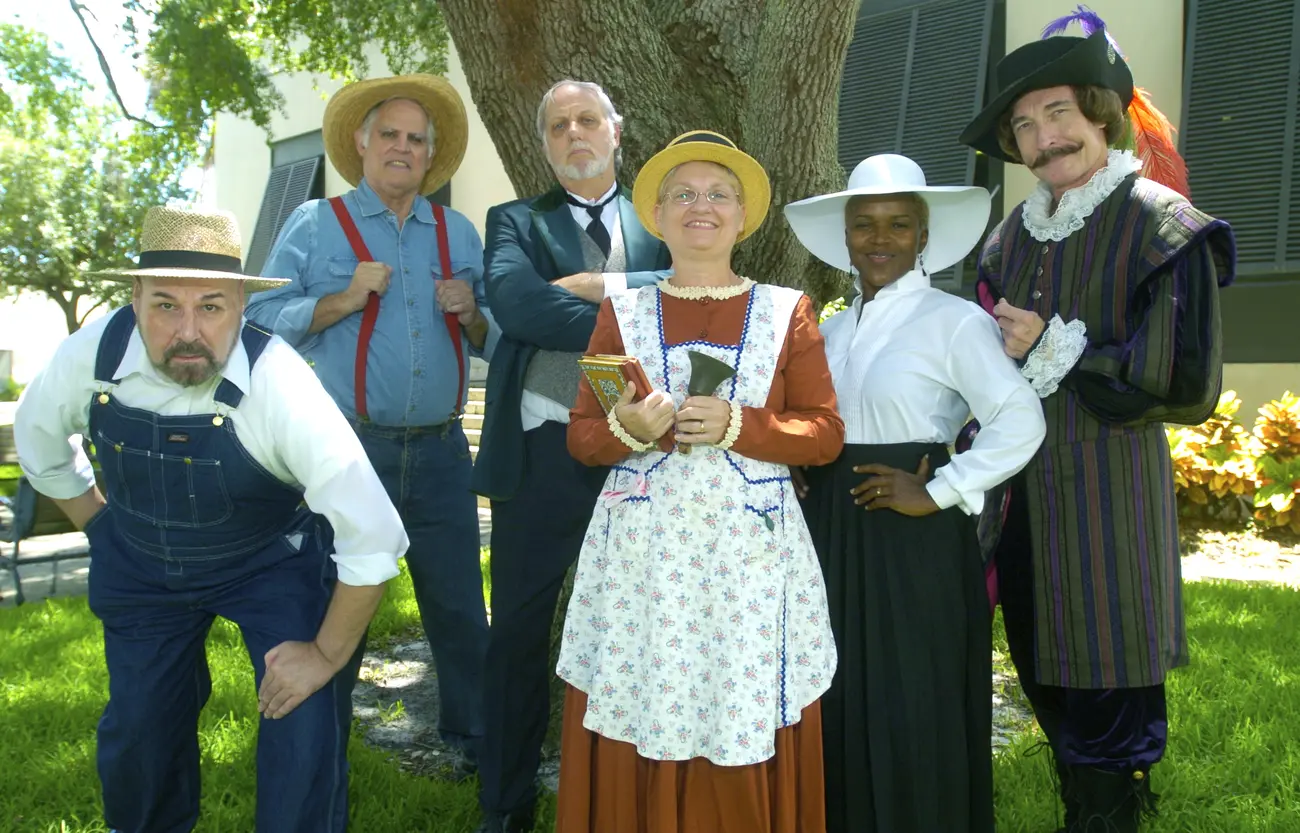
                      None of these people has ever attended a Brevard Theatrical Ensemble presentation of “Mosquitos, Alligators, and Determination,” now in its all-new seventh edition. If they had, they would know that Florida history is exciting, entertaining, diverse, and important.

                      “Lady” Gail Ryan, who earned her honorific title from the Dade County Commission for work on Miami Renaissance Fairs, is founder and director of the Brevard Theatrical Ensemble. Under Ryan’s enthusiastic and creative leadership, the group has been performing for more than twenty five years.

                      The original production of “Mosquitos, Alligators, and Determination” focused on Florida’s pioneer “Cracker” culture. Ryan admits that prior to doing research to create that presentation, she was sometimes embarrassed to admit that she was a “Cracker” herself. She came to understand that the term identifies an intrepid group of people who overcame many obstacles to settle the untamed, wild Florida.

                      “I’m very proud I’m a Floridian now,” Ryan says. “I was a pioneer in a sense. I wasn’t here in the 1800s, but I was born in 1929.”

                      Ryan has more energy and drive than many people half her age. Rather than stage the same version of “Mosquitos, Alligators, and Determination” every year, she completely changes the stories presented, offering a new set of vignettes from Florida history in each production.

                      Past productions have featured depictions of well-known figures from Florida’s past such as Ponce de León, Henry Flagler, Harriett Beecher Stowe, Marjorie Kinnan Rawlings, and Zora Neale Hurston. Much less well-known “everyday people” who have had a significant impact on our history have also been recognized.

                      “You can’t have a civilization or a state without the average man,” Ryan says. “This time we tell stories more about the average people than anyone else.”

                      The seventh edition of “Mosquitos, Alligators, and Determination” features tales from throughout Florida, from the Panhandle to Key West and many points in between.

                      The new program opens with the “discovery” of Florida in 1513. The “Key West Wreckers,” who made fortunes salvaging shipwrecks are discussed. The story of the lost city of St. Joseph, known as “the wickedest city in America” is presented. The legend of Jacob Summerlin, “King of the Crackers” is explained, as are the challenges faced by pioneer teachers in the state.

                      Also explored in the latest version of “Mosquitos, Alligators and Determination” is the 1888 Yellow Fever outbreak in Jacksonville, which significantly reduced the population of the city.

                      An unexpected hurricane devastated Okeechobee in 1928. Many people sought refuge from flooding after their homes were washed away. Those who climbed trees to escape the water encountered thousands of snakes that were doing the same.

                      Magazine editor Edward W. Bok created a garden and bird sanctuary with a carillon bell tower in the 1920s. Bok Tower Gardens became one of Florida’s most popular tourist destinations long before Disney arrived.

                      During World War II, Nazi submarines patrolled Florida’s coastline. Florida residents had direct encounters with German soldiers.

                      These and other stories are presented in the latest version of “Mosquitos, Alligators, and Determination,” along with Florida songs.

                      “Lady” Gail Ryan and her troupe of performers understand that learning about Florida history can promote a sense of community for both longtime residents and newcomers to the state.


                      “I want people to know that even though they might be from someplace else, it makes no difference. They’re now Floridian and we want them to be dedicated to Florida,” Ryan says.

                      If you know someone who thinks that Florida history is boring or insignificant, bring them to a performance of “Mosquitos, Alligators, and Determination.” They will be entertained and enlightened.

                      “Mosquitos, Alligators and Determination” will be presented at the Library of Florida History, 435 Brevard Avenue, Cocoa, Friday, August 15 at 7:30 pm, Saturday, August 16, at 2:30 pm, and Sunday, August 17, at 2:30 pm. Admission is $15, and reservations are available at www.myfloridahistory.org. Reservations are strongly suggested, as these performances are “sold out” every year.

                      Dr. Ben Brotemarkle is executive director of the Florida Historical Society and host of the radio program “Florida Frontiers,” broadcast locally on 90.7 WMFE Thursday evenings at 6:30 and Sunday afternoons at 4:00, and on 89.5 WFIT Sunday mornings at 7:00. The show can be heard online at myfloridahistory.org.
                      PDF file(s)