Article Number
17
relevantdate

    Florida Today 17
    Florida Frontiers “The John H. Sams Homestead”
    Ben Brotemarkle


    Life in Eau Gallie just wasn’t working out for John H. Sams and his family.

    Sams and his wife Sarah had followed other family members from South Carolina to Eau Gallie, establishing their own homestead in 1875.

    The 36 year-old Sams built a cabin for his wife and five children near the home of his cousins in the LaRoche family. For three years, Sams tried to establish a successful orange grove, but failed. He had no better luck with other crops he attempted to grow. In 1878, Sams decided to move his family to Merritt Island, because “it looked more like South Carolina.”

    Sams didn’t just pack up his family’s belongings to make the move north. He packed up the entire house itself.

    In November 1878, Sams dismantled his three-room cabin piece by piece, placed the sections of his home on a raft, and floated it up the Indian River to Merritt Island.

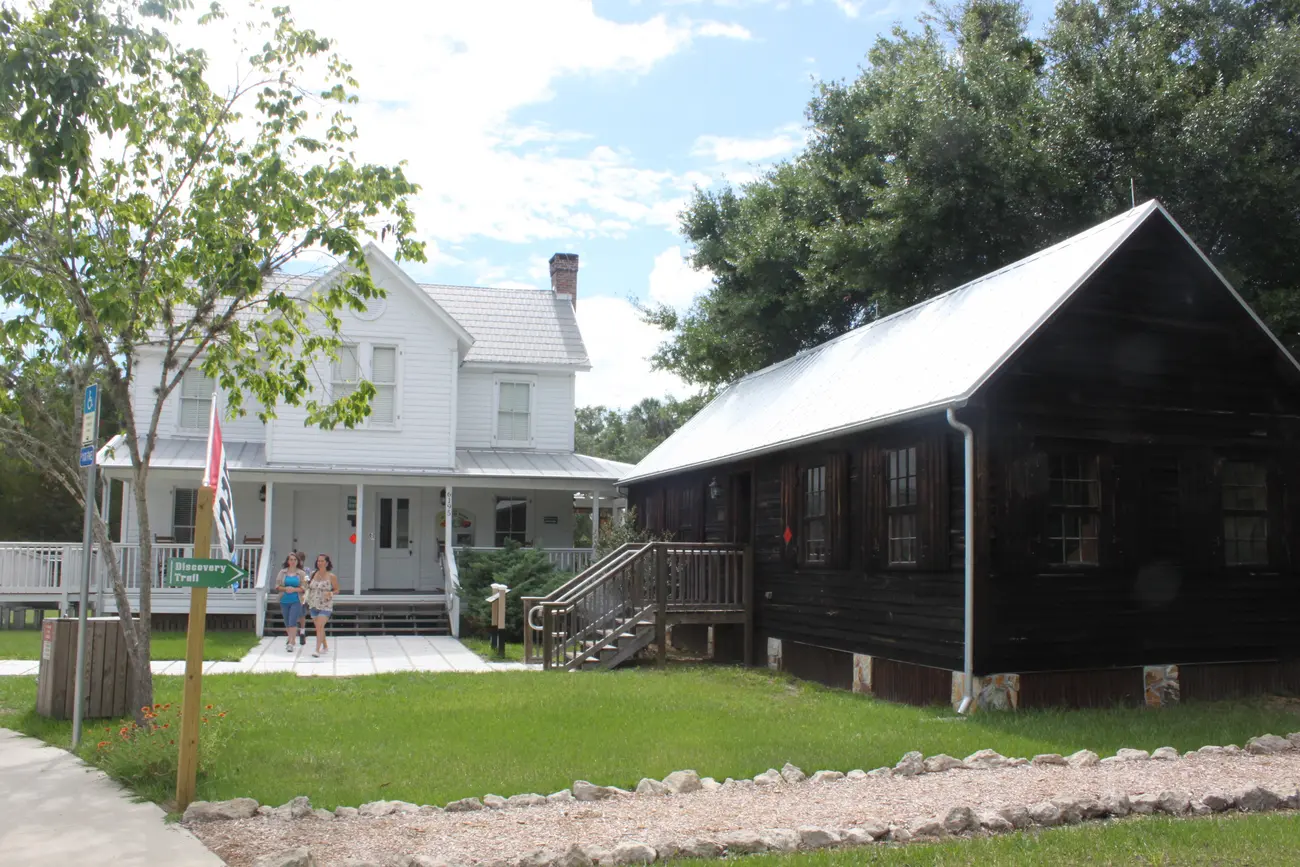
    Today, the 1875 Sams Family Cabin serves as an education center in the 950-acre Pine Island Conservation Area, owned jointly by the Environmentally Endangered Lands (EEL) program and the St. Johns River Water Management District. Visit the property and you can still see the Roman numerals that Sams placed on sections of his cabin to help with reassembly.

    Part of the education center features displays about the original inhabitants of the area. Archaeologists have found evidence of prehistoric human habitation on the property from about 5,000 BC to 2,500 AD. Ice Age fossils discovered on the property demonstrate that mammoths, mastodons, giant tortoises, and other large prehistoric animals lived and died there long before the Sams family arrived.

    John H. Sams was a much more successful farmer on his new Merritt Island property. He and his LaRoche cousins thrived with their citrus, sugar cane, and pineapple crops. The family shared their prosperity with the community, which they named Courtenay after the mayor of Charleston, South Carolina.

    The Sams family helped to establish St. Luke’s Episcopal Church in Courtenay, a congregation that remains active today. Before the original church was built, services were held in the Sams cabin.

    In 1880, John H. Sams was named the first Superintendent of Schools in Brevard County, adding to his stature in the community. Sams served as superintendent until 1920, while managing his agricultural business at the same time.

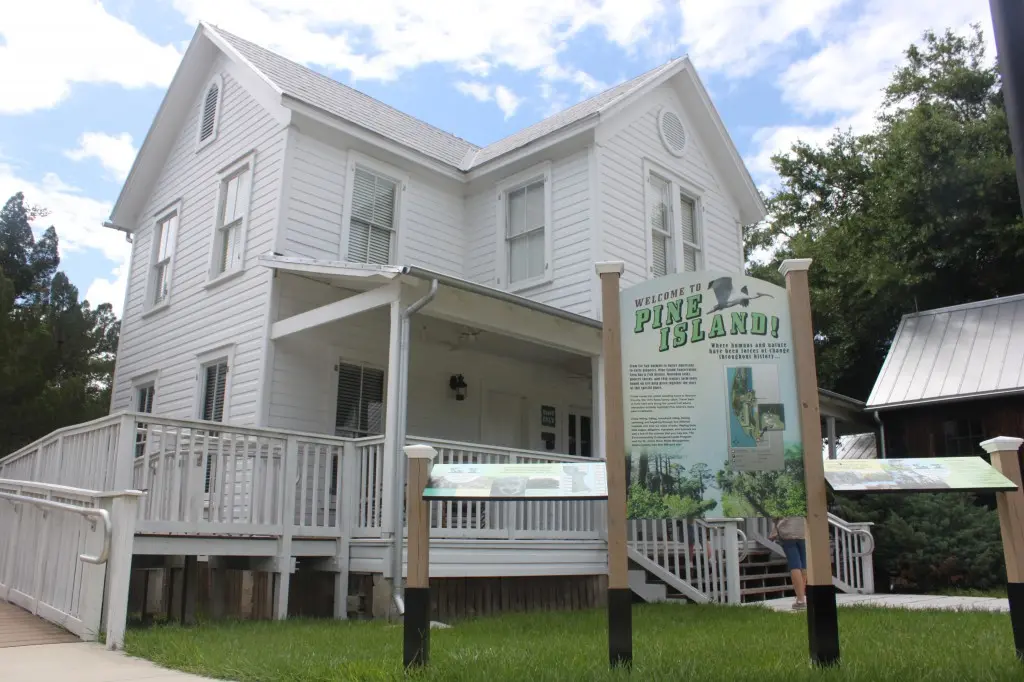
    By 1888, Sams position in the community and his expanding family prompted him to build a new, two-story home. Perhaps because he had gone to so much effort bringing his cabin to Merritt Island from Eau Gallie, he constructed his new house directly adjacent to the original family home on the property.

    The 1888 Sams family home has a wraparound porch, an office on the first floor where Sams kept track of his business interests and superintendent duties, a family room with a fireplace, three bedrooms upstairs, and a metal roof.

    John H. Sams died in 1923 at the age of 84. Members of the Sams family lived on their Merritt Island property continuously from 1878 until 1996, when the land was purchased by the EEL program.

    Today, visitors to the Sams Homestead at 6195 North Tropical Trail can enjoy learning about local history through the exhibits in the Sams Cabin Education Center and the 1888 Sams House. The 1875 cabin is the oldest standing home in Brevard County.

    A roughly circular concrete path behind the cabin features outdoor exhibits that take visitors on a walk through time, from prehistory to the present. Trails winding throughout the property are available for hikers, cyclists, and nature lovers.

    Earlier this month, teenager Ben Sams constructed and installed campfire benches and a bike rack at his great-great-grandfather’s homestead as part of his Eagle Scout project.

    Life in Brevard County worked out well for the Sams family after all.

    For more information on the John H. Sams Homestead and other local historic buildings, visit the Florida Preservation Blog by Lesa Lorusso at www.myfloridahistory.org.

    Dr. Ben Brotemarkle is executive director of the Florida Historical Society and host of the radio program “Florida Frontiers,” broadcast locally on 90.7 WMFE Thursday evenings at 6:30 and Sunday afternoons at 4:00, and on 89.5 WFIT Sunday mornings at 7:00. The show can be heard online at myfloridahistory.org.
    PDF file(s)
    Article Number
    16
    relevantdate

      Florida Today 16
      Florida Frontiers “Jules André Smith and the Maitland Art Center”
      Ben Brotemarkle


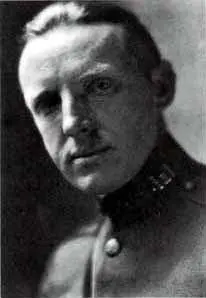
      Artist, architect, writer, and World War I veteran Jules André Smith intended to move from Stony Creek, Connecticut to Miami, Florida, to enjoy a peaceful retirement. As he traveled through Central Florida in 1932, Smith saw a beautiful sunset on Lake Sybelia in Maitland and decided he needed to go no further.

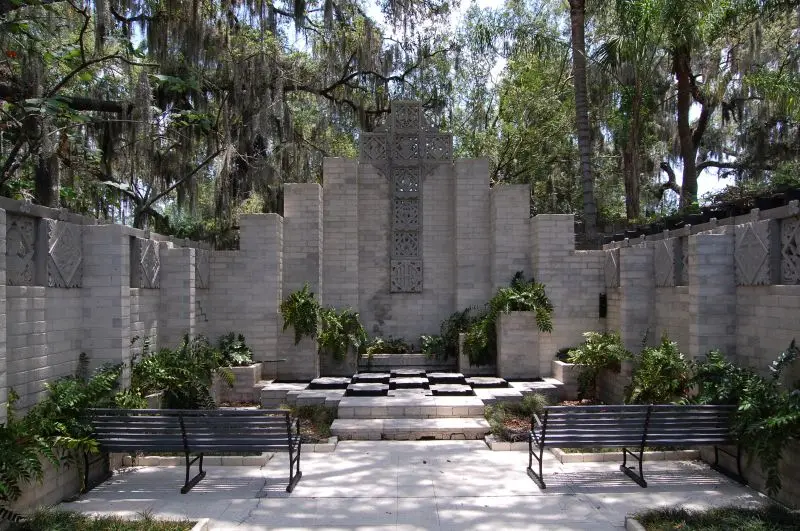
      By 1937, Smith had designed and built an artist’s colony called the Maitland Research Studio, which included one of only three art galleries in the state of Florida. An example of Fantasy Architecture, the design of the compound included a unique juxtaposition of Mayan and Christian imagery.

      Today, Smith’s whimsical buildings are known as the Maitland Art Center.

      In 1880, Jules André Smith was born in Hong Kong to American parents. His father was the captain of a naval ship. When Smith was four years old, his father died at sea, and he and his mother moved to Germany. A few years later the family relocated to New York and eventually settled in Connecticut.

      Smith’s first love was art. His mother did not consider this a serious way for her son to make a living, so he earned both a bachelor’s degree and a master’s degree in architecture from Cornell University. Smith never stopped creating drawings, engravings, and etchings. His art ranges in style from the realistic to the abstract, which might explain the functional yet fanciful architectural elements incorporated into the Maitland Art Center.

      After college, Smith received a fellowship to study art in Europe. He was the first of eight artists selected by the U.S. government to go to France in 1918, to record military activities through his drawings and sketches. After World War I, Smith published one hundred of his drawings in a book called “In France with the American Expeditionary Forces.”

      Smith designed the Distinguished Service Cross that is still awarded today.

      In 1924, Smith lost a leg as the result of an ignored injury he received during officer training seven years earlier.

      While living in Connecticut after the war, Smith designed theater sets for the Parish Players. His experience as a set designer led Smith to write and illustrate a book called “The Scenewright” in 1926. By the early 1930s, Smith had grown tired of the cold northern winters.

      In Maitland, Smith became friends with Broadway actress Annie Russell, a professor of theater arts at nearby Rollins College. Smith designed sets and costumes for theatrical productions at the college. Russell introduced Smith to Mary Curtis Bok, who would later become Mrs. Efram Zimbalist, Sr.

      Smith and Bok shared a passion for the controversial “modern art” that was developing in the early twentieth century. Bok offered to build Smith a laboratory studio where he could experiment with art. Smith envisioned an artists’ compound where he could invite prominent American artists to live and work.

      The compound Smith designed consists of art studios, living quarters, and a gallery.  For twenty-two years the compound was the winter residence of well-known artists such as Ralston Crawford, David Burlick, Ernest Roth, Milton Avery, Arnold Blanch, Doris Lee, and Harold McIntosh.

      Across the street from his compound, Smith built an unusual courtyard, garden, and roofless chapel.

      A curious blend of Mayan and Christian imagery can be found throughout the complex maze of courtyards and hidden gardens connecting the twenty-two buildings of Smith’s artists’ colony. A stone carving of an Mayan warrior can be found on the opposite wall from a relief sculpture of the Holy Family.

      An eclectic group of artists lived and worked at the compound every year from 1937 until Smith’s death in 1959. The buildings were dormant for ten years after that and in danger of being demolished. In 1969 the property was purchased by the city of Maitland, and in 1971 the compound was reopened as the Maitland Art Center.

      In 1982, the Maitland Art Center was placed on both the State and National Register of Historic Places.

      Today the Maitland Art Center keeps Smith’s dream of promoting contemporary American art alive by offering art classes and workshops, providing work space for resident artists, and presenting exhibitions in the gallery.

      The sunsets on Lake Sybelia are still beautiful.

      Dr. Ben Brotemarkle is executive director of the Florida Historical Society and host of the radio program “Florida Frontiers.”  The show can be also heard online at myfloridahistory.org.

      PDF file(s)
      Article Number
      15
      relevantdate

        Today, it takes about three hours to get from St. Augustine to Tallahassee, heading north on I-95 then west on I-10. To get to Pensacola, you just stay on I-10 for about another three hours.

        The fact that Tallahassee is located approximately half way between St. Augustine and Pensacola is why it is our state capital.

        Looking at a map of our state, it would seem logical for the capital to be in Orlando, or some other centrally located city. While it takes only three hours to get from Pensacola to Tallahassee, the drive from Miami to the state capital is almost seven hours.

        If you are leaving Key West for Tallahassee, plan on a full day of travel lasting just under ten hours. In the same amount of time it takes to drive from Key West to the state capital, you could drive from Tallahassee to Houston, Texas.

        According to the 2010 United States census, the most populous area of Florida is now Miami-Dade County, with 2,496,435 people. Florida’s least populated area is Liberty County, with just 8,365 people. Liberty County is adjacent to Leon County, home of Tallahassee.

        When Florida became a territory of the United States in 1821, the population distribution was much different.

        In 1821, Miami did not exist, and only a few Bahamian families had accepted Spanish land grants along the Miami River and Biscayne Bay. Key West was privately owned by a man named Juan Pablo Salas.

        Under Spanish rule prior to 1821, Florida was divided into two regions on either side of the Apalachicola River. The capital of East Florida was St. Augustine, and the capital of West Florida was Pensacola. Most settlers lived in the northern portion of Florida, with Seminole Indians scattered throughout the peninsula.

        The Legislative Council of the new Florida Territory first met on July 22, 1822 in Pensacola. The members of the council from St. Augustine had no interstate highways to help them navigate Florida’s undeveloped terrain. It took the delegates fifty-nine days traveling by water to reach the meeting site.

        The second Legislative Council session was held in St. Augustine and it wasn’t much easier for the members from Pensacola to reach their destination. The journey took them twenty eight days.

        It was decided that in the future, the meetings should be held at a location approximately half-way between St. Augustine and Pensacola. The abandoned Apalachee Indian settlement of Tallahassee was selected.

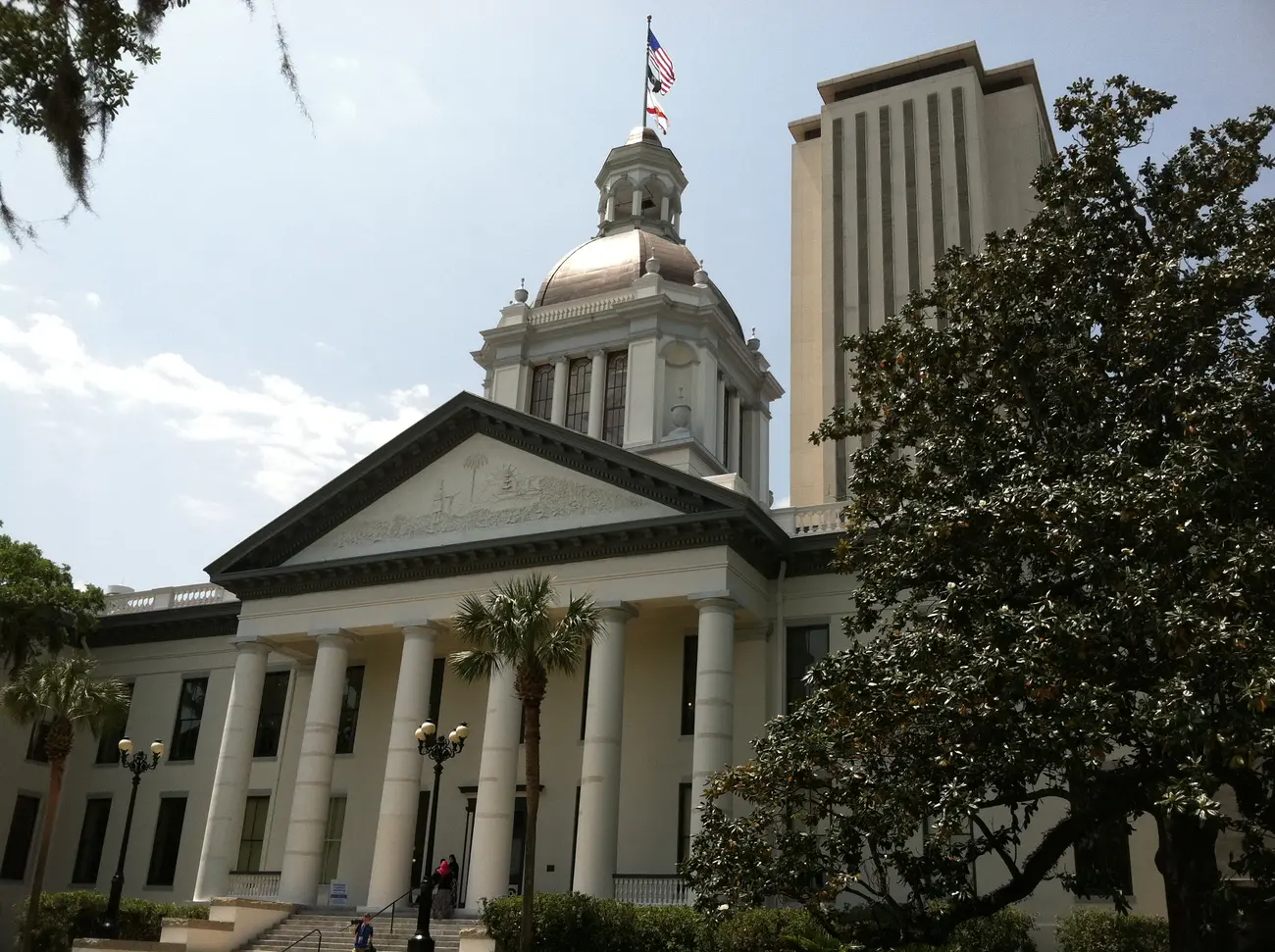
        The Florida Territory’s first Capitol Building in Tallahassee was a simple log cabin. Just in time to coincide with Florida being named a state in 1845, a new brick Capitol was completed. That structure is still at the center of the Historic State Capitol Building.

        Many alterations and additions have been made to what is often called “The Old Capitol.” In 1902, architect Frank Milburn added the classical style dome. In 1923, Henry Klutho added two new sections and a marble interior. In 1936, a north wing was added as a chamber for the House of Representatives and in 1947, a south wing was added to the building to serve the Senate.

        Throughout most of the twentieth century, the Florida Legislature discussed the possibility of moving the capital from Tallahassee to a more central location to better serve the state’s steadily growing and geographically diverse population.

        In 1967, serious consideration was given to moving the state capital to Orlando. This inspired opponents of the move to spearhead the construction of an expansive new Capitol Complex in Tallahassee. In the mid-1970s, construction began on the Capitol Complex that includes a twenty-two story executive office building.

        With construction of the new Capitol buildings, Florida Governor Reubin O’D. Askew and House Speaker Donald Tucker wanted the Old Capitol to be demolished. Secretary of State Bruce Smathers led the effort to save the Old Capitol Building, resulting in a restoration of the structure to its 1902 appearance.

        The building opened to the public in 1982 as the Florida Historic Capitol Museum. Exhibits, photographs, artifacts, and multi-media displays document the history of Florida government from the territorial period to the present.

        Seeing the museum is worth the drive.

        Dr. Ben Brotemarkle is executive director of the Florida Historical Society and host of the radio program “Florida Frontiers."  The show can also be heard online at myfloridahistory.org.

        PDF file(s)
        Article Number
        14
        relevantdate

          Florida seceded from the Union on January 10, 1861. We were the third state to do so, behind South Carolina and Mississippi. As a founding partner in the Confederate States of America, Florida helped to catapult the nation into a divisive and bloody Civil War.

          When Florida seceded, the island outpost of Key West remained under Union control throughout the war.

          Florida was readmitted into the United States of America on July 25, 1868.

          More than a century later, Floridians from Key West would lead their own secession effort that was much more productive, successful—and humorous.

          On April 18, 1982, the United States Border Patrol established a roadblock on U.S. Highway 1, just south of Florida City. The only access point by land from the Florida Keys to the mainland was closed, and people leaving the Keys were treated as though they were exiting a foreign country.

          The U.S. Border Patrol claimed that the roadblock was established to stop “illegal” immigrants from entering the mainland United States from the Florida Keys. Every car leaving the Keys was checked thoroughly by the Border Patrol, including unlikely hiding places such as glove compartments and under seats.

          The seventeen mile traffic jams that accompanied the roadblock had an immediate negative impact on tourism in the Florida Keys. Reservations were cancelled, hotels stood empty, and local attractions had no customers.

          Community leaders from Key West filed an injunction against the U.S. Border Patrol roadblock in Federal Court in Miami. The court ruled that the roadblock could continue.

          As Key West Mayor Dennis Wardlow left the courthouse, he was greeted by press from around the world. When asked what would happen next, the mayor said, “Tomorrow at noon, the Florida Keys will secede from the Union!”

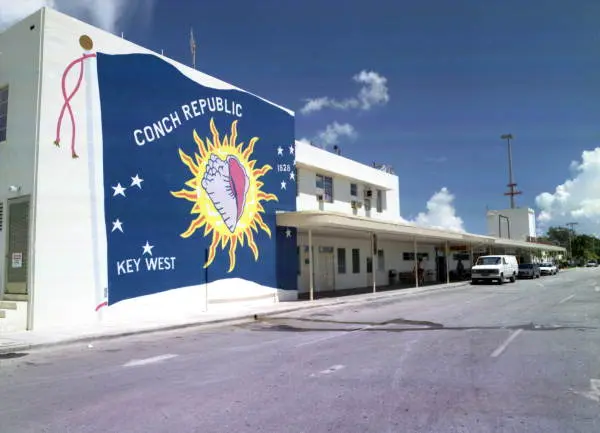
          The press, and Federal agents, flooded Key West the next day. As promised, at noon on April 23, 1982, Mayor Wardlow read a Proclamation of Secession, declaring that Key West would now be a sovereign nation known as the Conch Republic.

          Having changed his title from Mayor of Key West to Prime Minister of the Conch Republic, Dennis Wardlow followed his mock secession with a declaration of war on the United States. The “war” started and ended with loaves of stale Cuban bread being broken over the head of a man dressed in a U.S. Navy uniform.

          After one minute of rebellion, Prime Minister Wardlow surrendered to Union forces at the Navy Base in Key West. He immediately demanded one billion dollars in foreign aid and war relief “to rebuild our nation after the long Federal siege.”

          With their highly publicized mock secession and fake war against the United States, the residents of Key West successfully used humor to bring attention to a serious issue affecting the local economy.

          Following widespread reports of the establishment of the Conch Republic, the U.S. Border Patrol roadblock was quickly and unceremoniously removed.

          Today, the Conch Republic continues to issue its own passport. The republic has its own flag with the motto “We Seceded Where Others Failed.” In April each year, Key West residents and visitors celebrate the independence of the Conch Republic.

          The 32nd Anniversary Conch Republic Independence Celebration includes a raising of the official Conch Republic flag, a parade, a Drag Race on Duval Street (high heels, not cars), and numerous other excuses to party through the end of the month.

          For more information on the history and culture of Key West read the books “Key West on the Edge: Inventing the Conch Republic” by Robert Kerstein, and “Key West: History of an Island of Dreams” by Maureen Ogle.

          Dr. Ben Brotemarkle is executive director of the Florida Historical Society and host of the radio program “Florida Frontiers.” The show can be heard online at myfloridahistory.org.

          PDF file(s)
          Article Number
          13
          relevantdate

            In his play “Romeo and Juliet,” William Shakespeare wrote: “What’s in a name? That which we call a rose by any other name would smell as sweet.”

            Juliet’s argument was that it doesn’t really matter what people, places, or things are called; it’s what they are that is important.

            Pioneers living in Central Florida in 1845 would disagree. When Florida became a state that year, the name Mosquito County was changed to Orange County. Although there were more mosquitos in the area than oranges, residents and politicians felt that the new name was much more attractive.

            In 1842, a Georgia man named Aaron Jernigan established a very successful farm in the area. The small community took the name Jernigan in honor of the prosperous family.

            The first post office in Jernigan opened in 1850. Seven years later, the name of the community was changed to Orlando.  In 1875, the twenty-nine residents of Orlando incorporated their municipality.

            How did Orlando get its name? There are several interesting theories.

            Many Florida towns, including Orlando, were built around forts constructed in the 1830s during the Seminole Indian Wars. The United States government strategically placed these forts about a day’s walk apart to protect groups of marching soldiers from attacks at night.

            Orlando grew around the site of Fort Gatlin. Other Florida towns such as Fort Pierce, Fort Lauderdale, and Fort Myers retain their Seminole Indian War fort names.

            For many years it was popularly accepted that the city of Orlando was named after a soldier named Orlando Reeves, who was allegedly killed by Seminole Indians in 1835. It was believed that Reeves gave his life protecting other soldiers against an attack as they camped outside Fort Gatlin.

            While generally agreeing with this account of how Orlando was named, a newspaper story from 1884 identifies the name of the soldier who gave his life for his comrades as Orlando Jennings.

            Interestingly, neither an Orlando Reeves nor an Orlando Jennings are on the War Department roster listing the names of the 1,466 soldiers killed during the Seminole Indian Wars.

            Adding to the confusion is the fact that a wealthy plantation owner named Orlando J. Rees lived near Fort Gatlin in the 1830s and was nicknamed “Colonel” Rees, although he never served in the military. A letter Rees wrote in 1837 states that he had trouble with the Seminole Indians who “stole” some of his 110 slaves. The 1840 census indicates that Rees no longer operated his huge cattle ranch and farm in Central Florida.

            Was “Colonel” Orlando J. Rees incorrectly identified as the “soldier” Orlando Reeves? Does the middle initial in Rees’s name stand for “Jennings,” adding further confusion? Does the fact that Rees had trouble with the Seminoles indicate that he may have been killed by them? Did Rees simply move away prior to the 1840 census, or was his plantation abandoned following his death?

            Historians are still trying to answer these questions.

            Another popular legend of how Orlando got its name centers around a man named “Mr. Orlando” who died near the site of Fort Gatlin while taking an ox caravan to Tampa. He was supposedly buried at the spot where he died. People would say “There lies Orlando” and the name stuck.

            The accuracy of this story has been doubted as well, which brings us back to playwright and poet William Shakespeare.

            A judge from South Carolina named J.G. Speer, moved to Florida in 1854, and helped to organize Orange County. In 1856, he was responsible for having the county seat moved from Enterprise to Orlando. Some people believe that Speer named Orlando after the character in Shakespeare’s comedy “As You Like It” because he was a fan of the bard.

            This theory about how Orlando got its name is based on circumstantial evidence, but another fact adds to its plausibility. Orlando’s lover in “As You Like It” is named Rosalind. The main street heading north through the heart of the city of Orlando is also named Rosalind.

            Perhaps the man who wrote “What’s in a name?” provided Orlando with one.

            Dr. Ben Brotemarkle is executive director of the Florida Historical Society and host of the radio program “Florida Frontiers." The show can be heard online at myfloridahistory.org.

            PDF file(s)
            Article Number
            12
            relevantdate

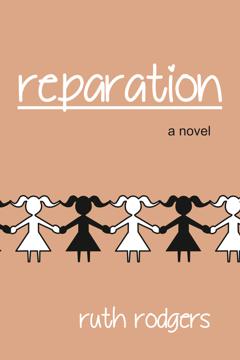
              As innocent four-year-old girls in the late 1940s, Katie, who is white, and Delia, an African-American, become best friends despite societal pressures against them. In 1960, when the girls are 16, Kate abandons her childhood friend when she is needed most. In 2006, Kate is working to earn Delia’s forgiveness as danger surrounds the women’s reunion.


              That’s the premise of the new novel “Reparation” by Titusville author Ruth Rodgers. Although the exciting and suspenseful book is not based on specific actual events, it does reflect reality in Florida from the 1940s to the present.

              Ruth Rodgers is a native Floridian, raised on a farm in Madison County. She grew up in rural north Florida in the 1950s and ‘60s, when schools, theaters, restaurants, and other public accommodations were racially segregated. Rodgers says that black families and white families worked side by side in the tobacco fields, but that’s where the interaction ended.

              “We worked with black people, but we never socialized with them,” Rodgers says. “It was very much frowned upon.”

              The novel “Reparation” is written from the first-person perspective of Kate as she flashes back through her childhood relationship with Delia. The reader sees Kate’s convictions about racial equality strengthen over time. Rodgers is the same age as her main character Kate, and shares other traits with her. Both believed in racial equality, but were not outspoken about their views in the 1960s.

              “They were not popular views at that time,” Rodgers says. “I think, looking back, a lot of liberal Southerners feel a sense of guilt that we didn’t do more, that we kept our views to ourselves, and that we let culture dictate to us how to behave.”

              The novel “Reparation” has a warning label on the cover informing readers that the offensive and racially charged “n-word” appears in the book. Use of the word is particularly jarring to modern readers when it comes from four-year-old Katie near the beginning of the story. While presented in an historically accurate context, its use may be too shocking for sensitive readers.

              “She wouldn’t have had any other word to use,” Rodgers explains. “This was the word that her parents used, her grandparents used, her neighbors used, everybody around her used. It was very common in the area in which I grew up. To her it’s just a descriptive term. It’s not a derogatory term, because she has no other word to replace it with.”

              “Reparation” was being prepared for publication just as discussions about race relations in Florida and the nation were reigniting. As design of the book was nearing completion in 2013, President Obama spoke about frustration over the verdict in the Trayvon Martin case; the Supreme Court weakened the Voting Rights Act, and celebrity chef Paula Deen’s career was damaged by her admitted use of the “n-word.” Speakers at the fiftieth anniversary of the March on Washington encouraged people to be diligent about protecting the legacy of the Civil Rights movement of the 1960s.

              Rodgers says that a need exists for continued discussion about the history of race relations in Florida and the nation. She believes that her novel “Reparation” can serve as a catalyst for such conversations. “We’ve come a long way since the 1940s,” Rodgers says, “but we still have a long way to go.”

              The story of Katie and Delia demonstrates that racism and bigotry are learned behaviors that can be overcome, even when they are instilled in children at a very young age and supported by prevailing societal attitudes.

              Beyond providing a particular perspective on racial attitudes in Florida and how they evolved in the last half of the twentieth century, this novel also offers a well written and suspenseful story.

              Relevant Videos
              PDF file(s)
              Article Number
              11
              relevantdate

                In 1876, businessman Henry A. DeLand left his home in Fairport, New York, to visit his sister and brother-in-law in east central Florida. DeLand’s relatives, Mr. and Mrs. O.P. Terry, had created a rural homestead in west Volusia County.

                Henry DeLand left New York on a train to Jacksonville. From there he took a steamboat down the St. Johns River to Enterprise. A horse and buggy carried him the rest of the way to the Terry’s isolated home. DeLand was so impressed with the beauty and climate of the area that he decided to start a town there.

                Using the fortune he had accumulated from manufacturing baking soda in New York, DeLand purchased large tracks of land near the Terry homestead. The area was called Persimmon Hollow, but when the scattered settlers heard about DeLand’s plans to establish a town, they voted to name it after him. To entice others to settle in his new town, DeLand made a generous offer.

                Henry DeLand told people that if they moved to his town and decided that they were unhappy there, he would buy back the land that he sold to them.

                Families started moving to the town of DeLand, most growing citrus or other crops. Henry DeLand nicknamed his town “The Athens of Florida,” and worked to foster cultural, religious, and educational opportunities for residents.

                The town prospered quickly. DeLand built a public school that also served as the meeting hall for churches, until each denomination could build their own houses of worship. He brought in entertainers and sponsored special events. In 1883, a college called the DeLand Academy was established.

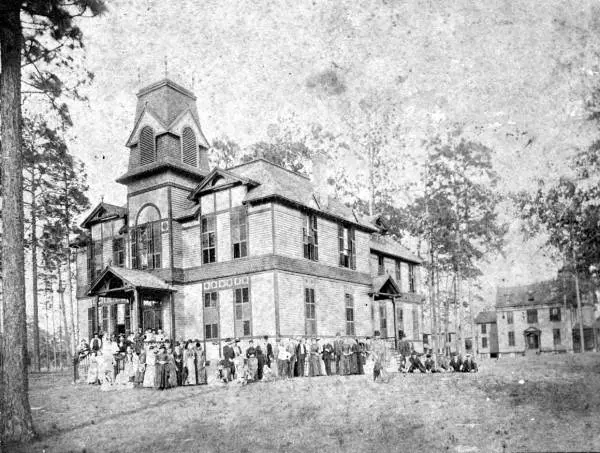
                One of DeLand’s friends who also contributed greatly to the development of the town was the famous hat manufacturer John B. Stetson. By 1889, Stetson had contributed so much time and money to the development of the DeLand Academy that the name of the institution was changed to Stetson University.

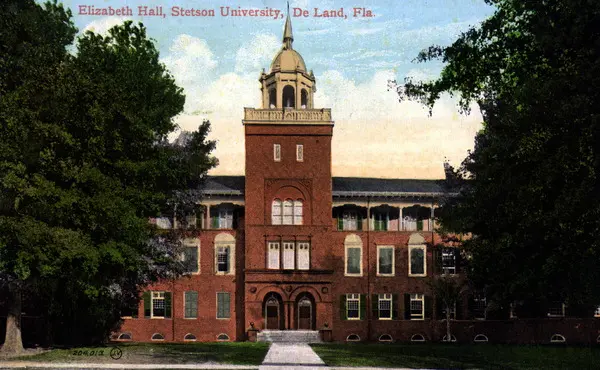
                Stetson University’s DeLand Hall was the first building constructed on the campus and is the oldest building in Florida continuously used for higher education. Elizabeth Hall, the focal point of the school, was named after Stetson’s wife.

                In 1886, A.G. Hamlin bought property from Henry A. DeLand that was located across the street from the college campus. Hamlin was DeLand’s first attorney and developer of the Hamlin orange. The seedless, smooth-skinned Hamlin orange is still popular for both juice and eating.

                Today, Hamlin’s former home is the DeLand House Museum and the headquarters of the West Volusia County Historical Society.

                A fire burned much of downtown DeLand in 1886. The fire started in Wilcox’s Salon and destroyed the 100 block of Woodland Boulevard on both sides. Following the blaze, the town passed an ordinance that allowed only brick buildings to be constructed in the commercial district. Many wooden homes that survived the fire still stand in DeLand.

                The town quickly rebounded from the devastating fire and life returned to normal. The people who DeLand had encouraged to settle in his town remained happy.

                Then came the Big Freeze of 1894-95.

                Twice during that unusually cold winter, temperatures in Central Florida fell as low as 11 degrees, killing nearly all of the area’s orange crops. Farmers living in DeLand were left with no produce to sell, and were no longer content.

                To his credit, Henry DeLand kept his promises. By the time he died in 1908, DeLand had bought back all of the land he had sold from any settlers who did not want to remain in the area. DeLand lost his fortune, as well as his large home in Fairport, New York.

                The Henry A. DeLand House in Fairport, also known as the Green Lantern Inn, is now a catering hall listed on the National Register of Historic Places.

                The DeLand House Museum is located at 137 W. Michigan Avenue in DeLand, Florida. Tours are available Tuesday through Saturday from noon to 3:00 pm.

                Dr. Ben Brotemarkle is executive director of the Florida Historical Society and host of the radio program “Florida Frontiers,” broadcast locally on 90.7 WMFE Thursday evenings at 6:30 and Sunday afternoons at 4:00, and on 89.5 WFIT Sunday mornings at 7:00. The show can be heard online at myfloridahistory.org.
                PDF file(s)
                Article Number
                10
                relevantdate

                  Spring has always been thought of as a period of renewal and rebirth. The season also has long been associated with revelry and excess. In the spring, ancient Greeks worshiped Dionysus, the god of wine. At the same time of year the Romans venerated Bacchus, their god of wine. Other pre-Christian pagan fertility rites evolved into contemporary May Day celebrations.

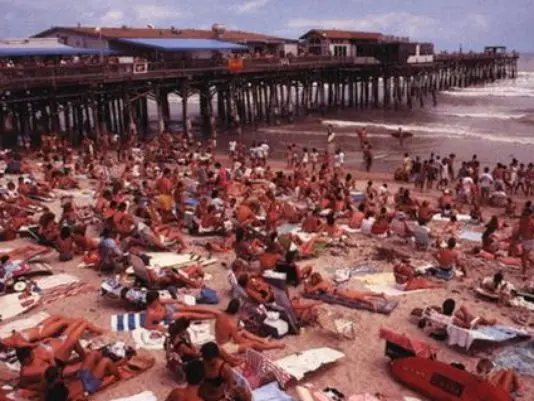
                  Since the mid-twentieth century, students in their late teens and early twenties have celebrated the ritual of Spring Break as a modern day Dionysian festival or Bacchanal, and the most popular setting for their pilgrimage has traditionally been Florida.

                  Historically, three of the top five Spring Break destinations in the United States are in Florida. Fort Lauderdale, Daytona Beach, and Panama City Beach make the list along with Lake Havana City, Arizona and South Padre Island, Texas.

                  In recent decades, Cocoa Beach, Fort Myers, and Tampa-St. Petersburg have also become very popular sites for Spring Break activities.

                  Spring Break as we know it today was created in Fort Lauderdale. As early as the mid-1930s, college swim teams gathered in Fort Lauderdale to use the first Olympic-sized pool in Florida, the Casino Pool. When the participating swimmers weren’t training at the pool they were partying on the beach, and a tradition was born. After World War II, other college students caught on to how much fun the swimmers were having in Fort Lauderdale and started joining them there for Spring Break.

                  The 1958 Glendon Swarthout novel “Where the Boys Are,” the 1960 film adaptation of the book, and the Connie Francis theme song for the film solidified Fort Lauderdale as the Spring Break mecca for students across the country.

                  In “Where the Boys Are,” one of four girls vacationing in Fort Lauderdale gives in to the temptation of premarital sex with a college boy she is attracted to. She is then abandoned by the boy, raped by another, and suffers a nervous breakdown. Despite the severely moral message of the story, what most young people saw in the film were “cool” teenagers having lots of fun at the beach. Attendance at Spring Break in Fort Lauderdale doubled to more than 50,000 and continued growing in subsequent years.

                  Spring Break in Fort Lauderdale became so popular, that the city became wary of the annual influx of more than 250,000 students who were ready to party, many of them irresponsibly. By 1985, the city was passing laws to restrict Spring Break activities, and the focal point of the festivities moved north to Daytona Beach.

                  During the 1980s and into the 1990s, Daytona Beach attracted as many as 350,000 students for Spring Break, while attendance in Fort Lauderdale dropped to around 20,000. In the early 1980s, MTV began televising concerts from Daytona’s historic coquina band shell on the beach, constructed in 1936 as a WPA project. Concerts by the City Band of Daytona and the Daytona Junior Orchestra were replaced with performances by Cheap Trick, Heart, and the Red Hot Chili Peppers. By 1986, the popular “Music Television” network was broadcasting all of their programs from Daytona during Spring Break.

                  Like Fort Lauderdale before it, local officials in Daytona eventually decided that the income generated by Spring Break was not equal to the problems caused by underage drinking and property damage incurred each year. By the turn of the century, the exile of MTV and other restrictive rules sent students flocking to Panama City Beach.

                  With more than 500,000 students coming to Panama City Beach each year for Spring Break, the city welcomes the annual boost to their economy, at least for now.

                  The Florida Historical Society is holding their 2014 Annual Meeting and Symposium in the birthplace of Spring Break, Fort Lauderdale, May 22-24, at the Hyatt Regency Pier Sixty-Six. The classic film “Where the Boys Are” will be shown at the conference. More information is available at myfloridahistory.org/annualmeeting.

                  Dr. Ben Brotemarkle is executive director of the Florida Historical Society and host of the radio program “Florida Frontiers.”  The show can also be heard online at myfloridahistory.org.
                  PDF file(s)
                  Article Number
                  9
                  relevantdate

                    This is not the first column about Florida history and culture to appear in Florida Today. Many longtime residents of east central Florida remember fondly the articles of Weona Cleveland. For more than forty years, Weona Cleveland has written about the people, places, events, and even the plants that make our area unique and have brought us to where we are today.

                    Weona Cleveland’s articles first appeared in the Melbourne Times in the 1970s, and later in this newspaper. Her reflections on local history as told through the eyes of everyday people earned her a dedicated following of readers.

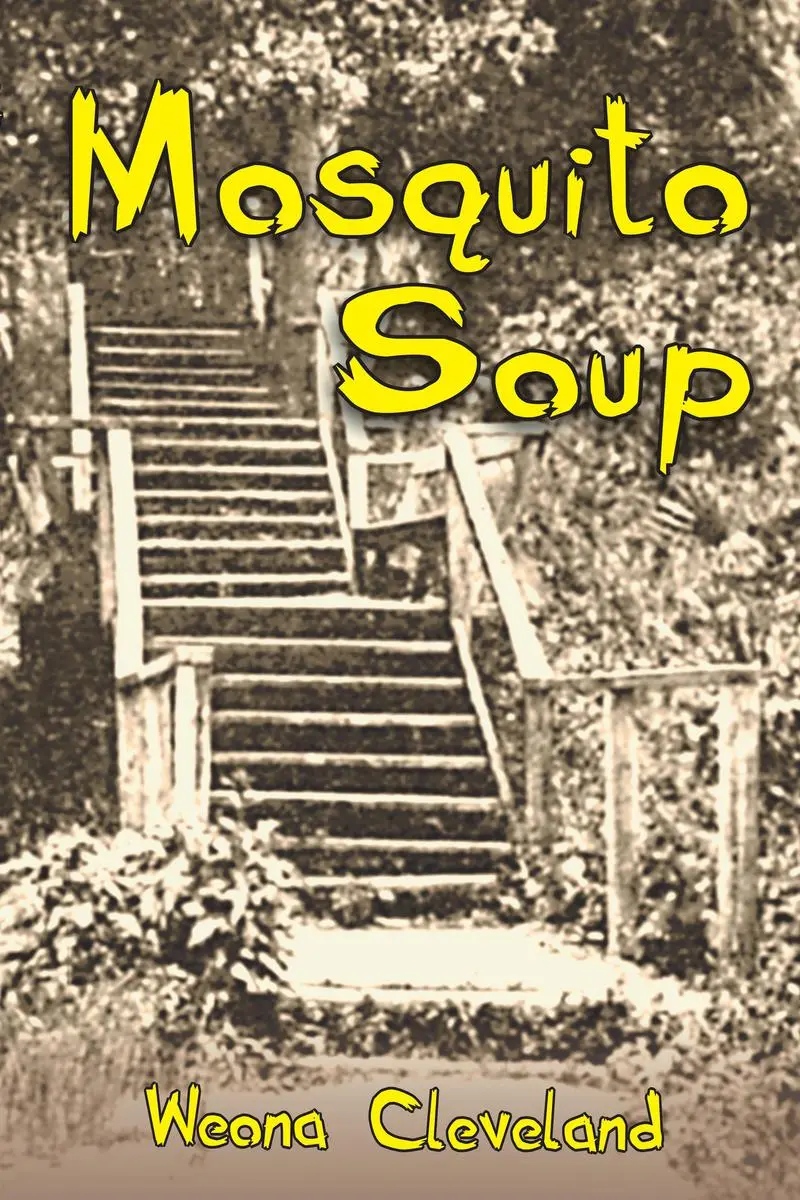
                    Some of Weona Cleveland’s best newspaper articles from the past three decades are collected in the new bookMosquito Soup, published by the Florida Historical Society Press. Publication of the book was made possible by the Kellsberger Fund of the South Brevard Historical Society.

                    Weona Cleveland will be signing copies of her new book Mosquito Soup, Saturday, March 29, from 2:00 pm to 4:00 pm, at the Historic Rossetter House Museum and Gardens, 1320 Highland Avenue, in Eau Gallie.

                    Like most Floridians, Weona Cleveland came here from somewhere else. Born in 1925, she moved to Melbourne, Florida, from Atlanta, Georgia, in 1961. The following decade she started writing for local newspapers. Her previous books and booklets include Melbourne: A Century of Memories (1980), Crossroad Towns Remembered: A Look Back at Brevard and Indian River Pioneer Communities (1994), and A Historical Tour of Melbourne (1999).

                    In addition to her numerous articles and other writing projects, Cleveland researched and wrote the text for most of the historical markers located throughout Melbourne and Eau Gallie. She says that her proudest personal accomplishment is the walking tours of old Eau Gallie and Melbourne that she gave for many years.

                    In 2006, the Brevard County Commissioners named Cleveland the first Honorary Brevard County Historian. In 2009, Cleveland received the Julius Montgomery Pioneer Award from Florida Technical Institute for her research on the local African American community. In 2011, the South Brevard Historical Society recognized her accomplishments with an Honorary Lifetime Membership.

                    The book Mosquito Soup is a collection of Cleveland’s articles about pioneer life in Brevard, Osceola, Orange, and Indian River counties, including stories from Haulover Canal, Cape Canaveral, Bovine, and Rockledge. She takes the reader to cemeteries and individual graves that provide clues to the history of Merritt Island. We hear personal accounts of the 1919 fire that destroyed downtown Melbourne. We meet people like Archie Phillip, who began working as a gardener for Carrie and Ella Rossetter in 1966, and later became their chauffeur. We learn about a tragic airplane wreck in the waters off of Melbourne Beach in 1928, which draws comparisons to the Challenger disaster fifty-eight years later. There are hundreds of other fascinating stories in the book.

                    Although she is in her eighty-ninth year, the new book Mosquito Soup is not the final achievement of Weona Cleveland’s long and distinguished career. Even in retirement Cleveland continues to write about the local history and culture that she loves. She still frequently writes articles for the Indian River Journal, published by the Brevard County Historical Commission.

                    In the most recent edition of the Indian River Journal, Weona Cleveland writes about traditional folk remedies passed down for generations in Melbourne’s African American community. By interviewing longtime residents, Cleveland discovered that if someone stepped on a nail; bacon fat was placed on the foot because it “drew the poison out.” She discovered that cobwebs were used as makeshift bandages to help speed the healing of cuts. To reduce a fever, castor bean leaves were put on the head.

                    The work of Weona Cleveland continues to inform and enlighten readers.

                    Dr. Ben Brotemarkle is executive director of the Florida Historical Society and host of the radio program “Florida Frontiers." The show can also be heard online at myfloridahistory.org

                    PDF file(s)
                    Article Number
                    8
                    relevantdate

                      Five hundred and one years ago, Juan Ponce de León set sail from Puerto Rico in search of undiscovered land, slaves, and gold. His fleet of three ships included the Santiago, the San Cristóbal, and the Santa María de la Consolación.

                      The ships reached the northern end of the Bahamas by March 27, 1513, which was Easter Sunday. Ponce and his crew sailed for another few days until they sighted land on April 2. Because it was the Easter season, which the Spanish called the “Festival of Flowers,” and because of the beautiful landscape, Ponce named the land he saw “La Florida”—the land of flowers. The next day, on April 3, 1513, Ponce came ashore to claim this land for Spain.

                      But where was he? Where, exactly, did Ponce come ashore? That is the question explored in the original courtroom drama “Ponce de León Landed HERE!!” The production can be seen online at myfloridahistory.org/ponce.

                      For centuries, scholars, historians, students, and others have been arguing about where, exactly, Ponce de León landed on Florida’s east coast in 1513, when he gave our state its name.

                      We know that Juan Ponce de León was born in Spain in 1474 to a noble family, where he became an experienced soldier. He joined Christopher Columbus on his second expedition to the New World in 1493. In 1504, Ponce successfully enslaved the native population of Hispaniola, and was named Governor.

                      A few years later, Ponce was named Governor of the neighboring island of Puerto Rico. It was from there that Ponce set sail for Florida. King Ferdinand II signed a contract with Ponce in 1512, granting him permission to search for “the islands of Benimy.” The contract included instructions for how Ponce was to distribute any gold and slaves that he acquired, and declared that he would be Governor for Life of any lands he discovered. Ponce assembled a crew of two hundred people that included women and free people of African descent, and sailed toward Florida.

                      Ponce’s first contact with the native population of Florida set in motion a process that would destroy the lives of people who had lived here for thousands of years. These people had developed sophisticated cultures that would not survive the continued European contact to follow.

                      When Ponce came to Florida, it changed the course of world history. Not only did he give this land the same name we use for it today, Ponce’s “discovery” of the Gulf Stream would lead to the first European colonization of what would become the United States, long before Jamestown was established and long before the Pilgrims landed at Plymouth Rock.

                      With the approach of the milestone 500th anniversary year of Ponce’s first voyage to Florida, residents of several areas along Florida’s east coast voiced enthusiastic claims that their town was where Ponce de León first made landfall when he gave our state its name in 1513. Each claimant could point to various interpretations of the available facts to support their position.

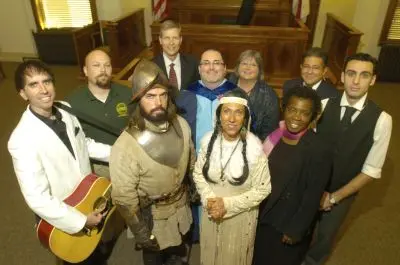
                      The Florida Historical Society staged the original courtroom drama “Ponce de León Landed HERE!!” to present the available information in an entertaining way. The performance that can be seen online was recorded at the Historic Volusia County Courthouse on January 12, 2013. An audience in Tallahassee watched the proceedings in DeLand “live” as they were projected on a screen at the Museum of Florida History.

                      In the production, actual lawyers and judges present different arguments supporting the St. Augustine area, Ponce Inlet, Melbourne Beach, and Jupiter Inlet as the most likely landing place of Ponce and his crew.

                      The jury hears testimony from early Florida archaeologist Clarence B. Moore, who laments that there is no physical evidence to support any of the claims. The Ais Queen testifies that she was there when Ponce came ashore, but cannot help us identify the spot where it happened because the landscape has been altered beyond her recognition. Then the jury hears from Ponce himself.

                      The claims about where, exactly, Ponce landed in 1513 are inconclusive and open to debate. Thanks to “Ponce de León Landed HERE!!” you can view the evidence and decide for yourself.

                      For more information watch the courtroom drama “Ponce de León Landed HERE!!” at myfloridahistory.org/ponce and read the book The Voyages of Ponce de León: Scholarly Perspectives by James Cusick and Sherry Johnson.

                      Dr. Ben Brotemarkle is executive director of the Florida Historical Society and host of the radio program “Florida Frontiers."  The show can also be heard online at myfloridahistory.org.