Article Number
87
relevantdate

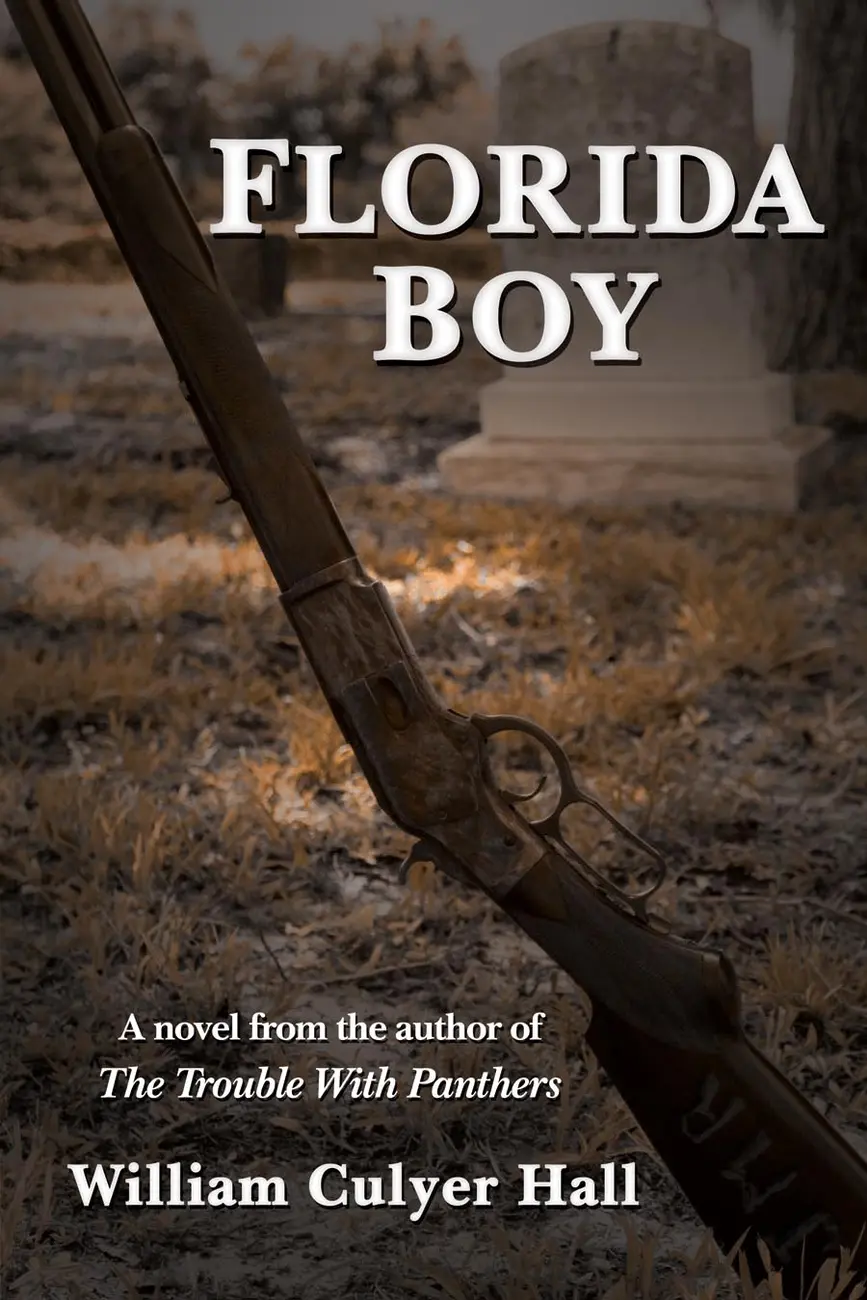
    Local author William Culyer Hall is known for his dark but engaging stories about rural life in Florida. His new novel “Florida Boy” continues that tradition.

    “Florida Boy” is a prequel to Hall’s 2010 novel “The Trouble With Panthers,” winner of the Florida Book Award for Best Popular Fiction and the Patrick D. Smith Award for Best Novel.

    Both books focus on the fictional Rawlerson family, pioneers in Florida’s cattle industry.

    Hall was inspired and influenced by Brevard County author Patrick D. Smith, author of the beloved Florida pioneer saga “A Land Remembered,” the story of the fictional MacIvey family. Before his death on January 26, 2014, Smith helped Hall with his work.

    “The first book that I wrote, Pat was gracious enough to read the manuscript for me,” Hall says. “He told me it wasn’t that good, but he said ‘I see promise.’ I rewrote it, gave it back to him, and he loved it, and wound up getting it published.”

    That first book, “September’s Fawn,” is a tragic story set in a north Florida swamp and nearby Cross City.

    Hall’s second novel, “The Trouble With Panthers,” introduces the Rawlerson family in the early twenty-first century. After raising cattle on the same land for a century, the family is divided about how to move forward as property values rise. The conflict forces the sale of the property.

    “The principal character in that story was 18-year-old Bodie Rawlerson, and of course he didn’t like what had happened,” says Hall. “He wanted to raise cattle like his father and his father before him. It turned out to be a tragedy as has happened with a lot of real families in central Florida.”

    The death of elderly family patriarch July Rawlerson sets the stage for the end of an era in “The Trouble With Panthers.” That same character is born in “Florida Boy,” as the family first establishes their homestead in south-central Florida.

    In the late nineteenth century, James Arthur Rawlerson works for other cattlemen in Osceola County, but dreams of owning his own property. He and his wife move to the Fort Pierce area to start a family. They are still renting land, but they establish their own herd of cattle.

    “The firstborn, John Morgan Rawlerson is the protagonist in this story,” says Hall. “The story begins when he’s about 14. Even though his father will never realize the dream of owning property, John Morgan is determined that they will.”

    Since “Florida Boy” is a prequel to “The Trouble With Panthers,” it’s not giving too much away to say that John Morgan Rawlerson is successful in establishing a family homestead, despite some major obstacles.

    There are vivid descriptions in “Florida Boy” of what life was like for late nineteenth and early twentieth century pioneers in Florida, and the challenges they faced.

    Imagine living in Florida with no air conditioning, no running water except for a pitcher pump, and no electricity. The automobile was a new invention at the time that “Florida Boy” is set.

    “Times were tough and the people had to be tough or they wouldn’t make it,” says Hall. “They pretty much had to do everything for themselves. They very rarely would go into Fort Pierce to buy provisions, and only the staples. Everything else they either raised it or hunted it, and they did a lot of fishing.”

    There is a lot of death in “Florida Boy,” from disease, accidents, and the actions of other people. Hall shows that pioneer Florida in the early 1900s was every bit as wild as the Wild West.

    “I didn’t want my protagonist to come across as being a bad guy, but there were situations where he had to do things he didn’t want to do,” says Hall.

    With the birth of July Rawlerson near the end of one novel and his death in another, the topic of Hall’s next book seems clear.

    “There are plenty of historic events that will take place from the end of ‘Florida Boy’ to ‘The Trouble With Panthers’ where I could write a good story,” says Hall. “July lived a long life. He was almost 94 when he died, so there’s a lot of writing there.”
    PDF file(s)
    Article Number
    86
    relevantdate

      St. Augustine is the oldest continuously occupied European settlement in what is now the United States.

      By the time Jamestown was established and the Pilgrims landed at Plymouth Rock, the people who originally founded St. Augustine were having grandchildren and great-grandchildren.

      Don Pedro Menéndez de Avilés founded the city of St. Augustine on September 8, 1565.

      Menéndez was personally motivated to come to Florida in search of his son Juan, whose ship was lost off the coast here. The Spanish Crown was anxious for Menéndez to reclaim La Florida from the French Huguenots, who had established a settlement called Fort Caroline near present day Jacksonville.

      It was almost an accident that the Spanish found out about Fort Caroline.

      “It really was the hungry stomachs at Fort Caroline that ultimately led to the Spanish finding out that the French were in Florida,” says colonial historian Susan Parker, director of the St. Augustine Historical Society.

      “These hungry soldiers left Fort Caroline, thinking they could sail back to France in this small boat that they had. They were captured off the coast of Cuba. The Cuban officials find out that there’s this French colony in La Florida and send the information back to Spain. So it’s something as simple as a growling stomach that leads to a huge international situation.”

      The Catholic Spanish believed that the Protestant French were heretics and had wrongly invaded their territory. Menéndez successfully slaughtered the French colonists, keeping alive only a handful of musicians and a few hasty converts to Catholicism.

      He never found any trace of his shipwrecked son.

      St. Augustine is the site of many “firsts” for what is now the United States.

      America’s first Christian church, first hospital, and first school were all established in St. Augustine. This country’s first city plan was developed there. The street systems found on maps from 1586 still exist today.

      “I think what’s so amazing about St. Augustine after 450 years of being an active town that people live in, is that it’s still here, and it’s still tiny,” says James Cusick, curator at the P.K. Yonge Library of Florida History.

      Many of St. Augustine’s narrow streets are a challenge for modern vehicular traffic.

      “It’s survived not as a big metropolis, but as a tiny, tiny little place for 450 years. That’s incredible,” Cusick says. “If you walk around the town today, you can get a sense, I think still, of what the Colonial Era was like here.”

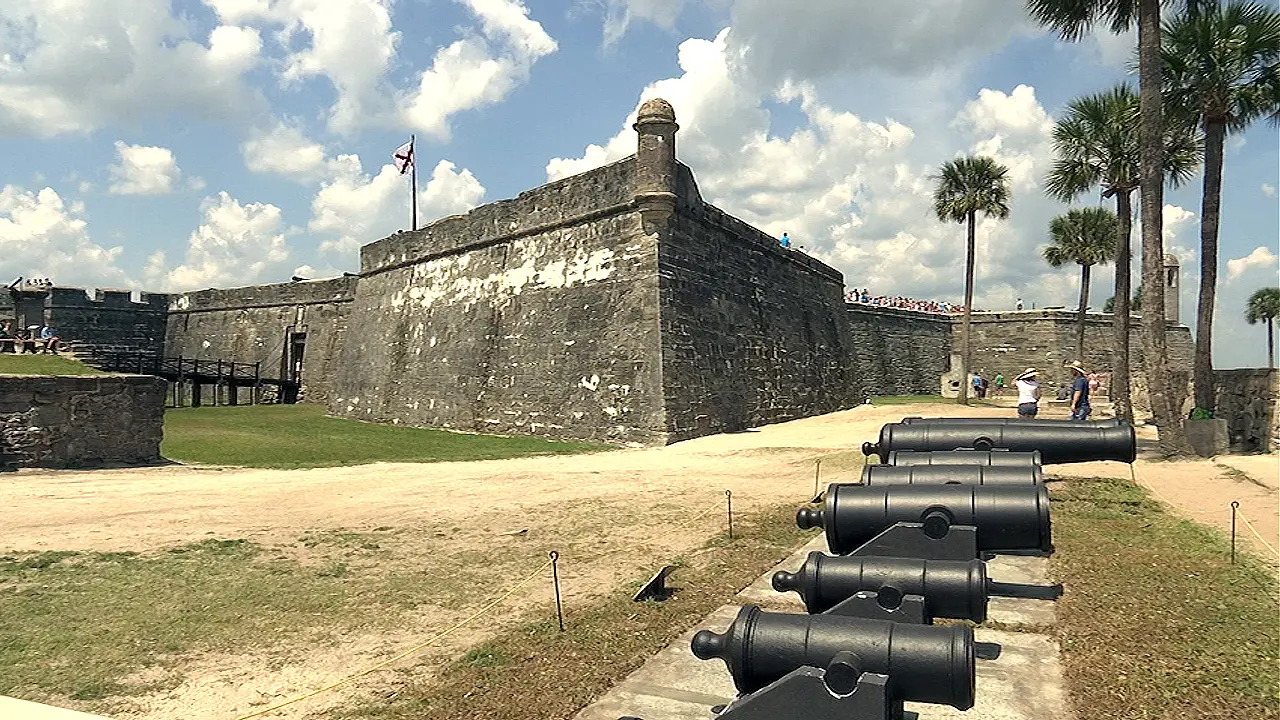
      Construction on St. Augustine’s Castillo de San Marcos began in 1672. The imposing Spanish fortress is the only one in existence on the North American mainland. The fort successfully defended the city from numerous attacks over the centuries, but was perhaps not quite as formidable as it appeared, armed with outdated weaponry.

      “I’ve wondered how many attacks were never made or even considered because of the existence of the Castillo,” says Parker. “The English, or perhaps the French, or even the Americans later on are not quite sure that they’ll be able to withstand the canon fire from the Castillo, never knowing that the canon didn’t operate very well.”

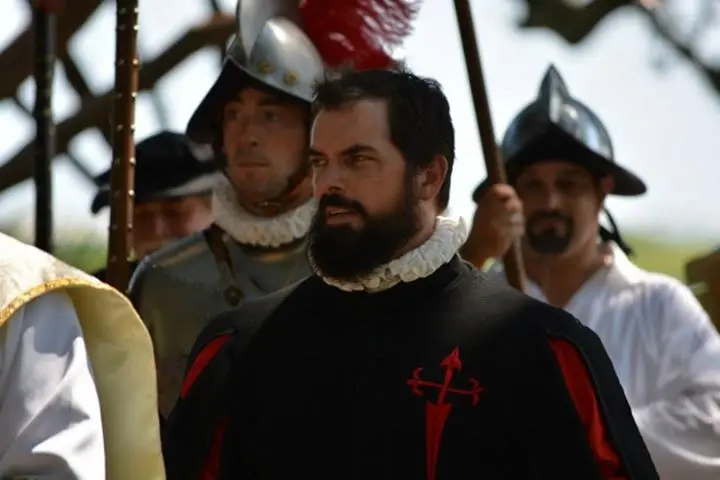
      The 450th anniversary of the founding of St. Augustine has been commemorated all year, culminating this week with concerts, art exhibitions, and a reenactment of the first landing of Menéndez. Historic reenactors from Florida Living History and the Men of Menendez, part of the Historic Florida Militia, played active roles.

      Chad Light has earned recognition as the modern embodiment of Menéndez, appearing in television commercials, a one-man theatrical presentation, on billboards, Facebook, and at special events including official anniversary celebrations sponsored by the city. He regularly portrays Menéndez at the Fountain of Youth Archaeological Park, where excavations have uncovered the original St. Augustine settlement.

      A true Renaissance Man, Light created a bronze sculpture of Menéndez, unveiled just in time for the 450th anniversary commemoration.

      “Some of us may see a fifty year benchmark in our city’s birthday more than once in our lifetime, hopefully so,” says Light. “But for us, it’s the only time it will happen as we are adults and can do something to celebrate it. The responsibility is on us, and for many of us it is a passion.”

      PDF file(s)
      Article Number
      85
      relevantdate

        Three sisters entertained Union soldiers in their St. Augustine home during the Civil War, carefully gathering information. While two sisters continued to distract the soldiers, the third, Lola Sanchez rode a horse through backwoods and marshes to relay Union plans to Confederate forces.

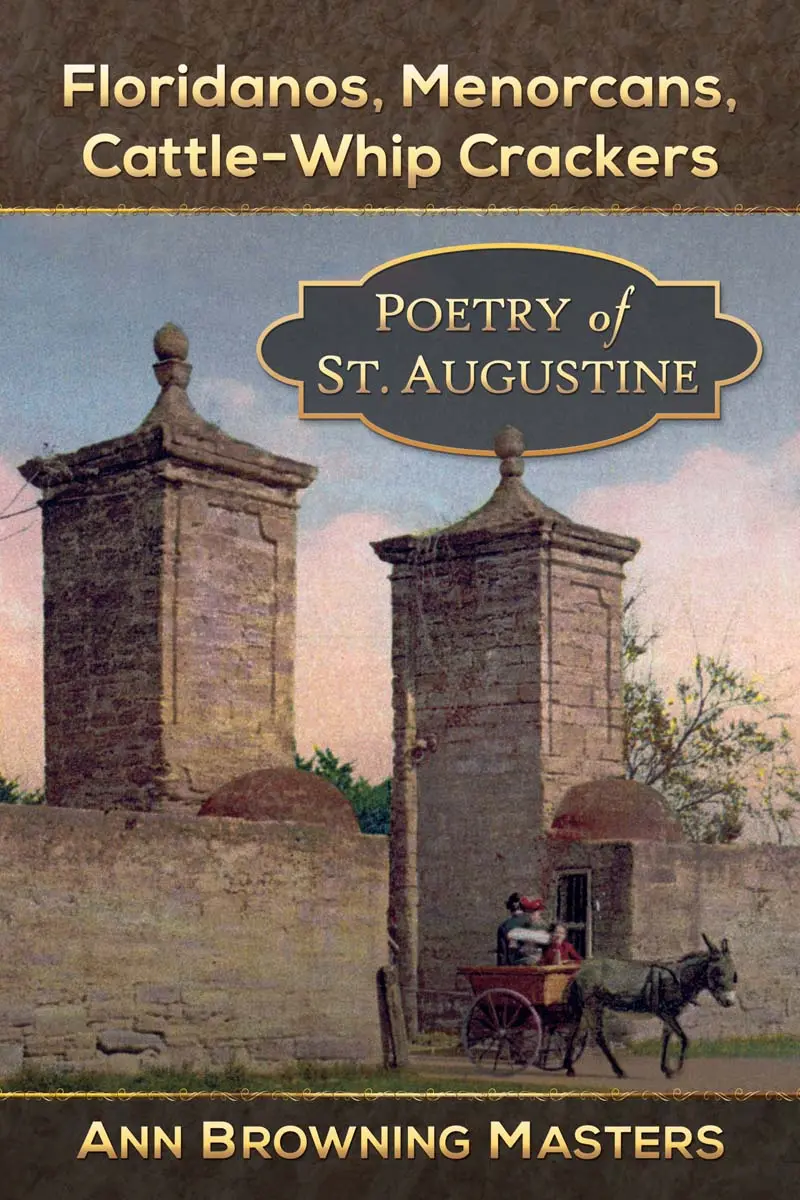
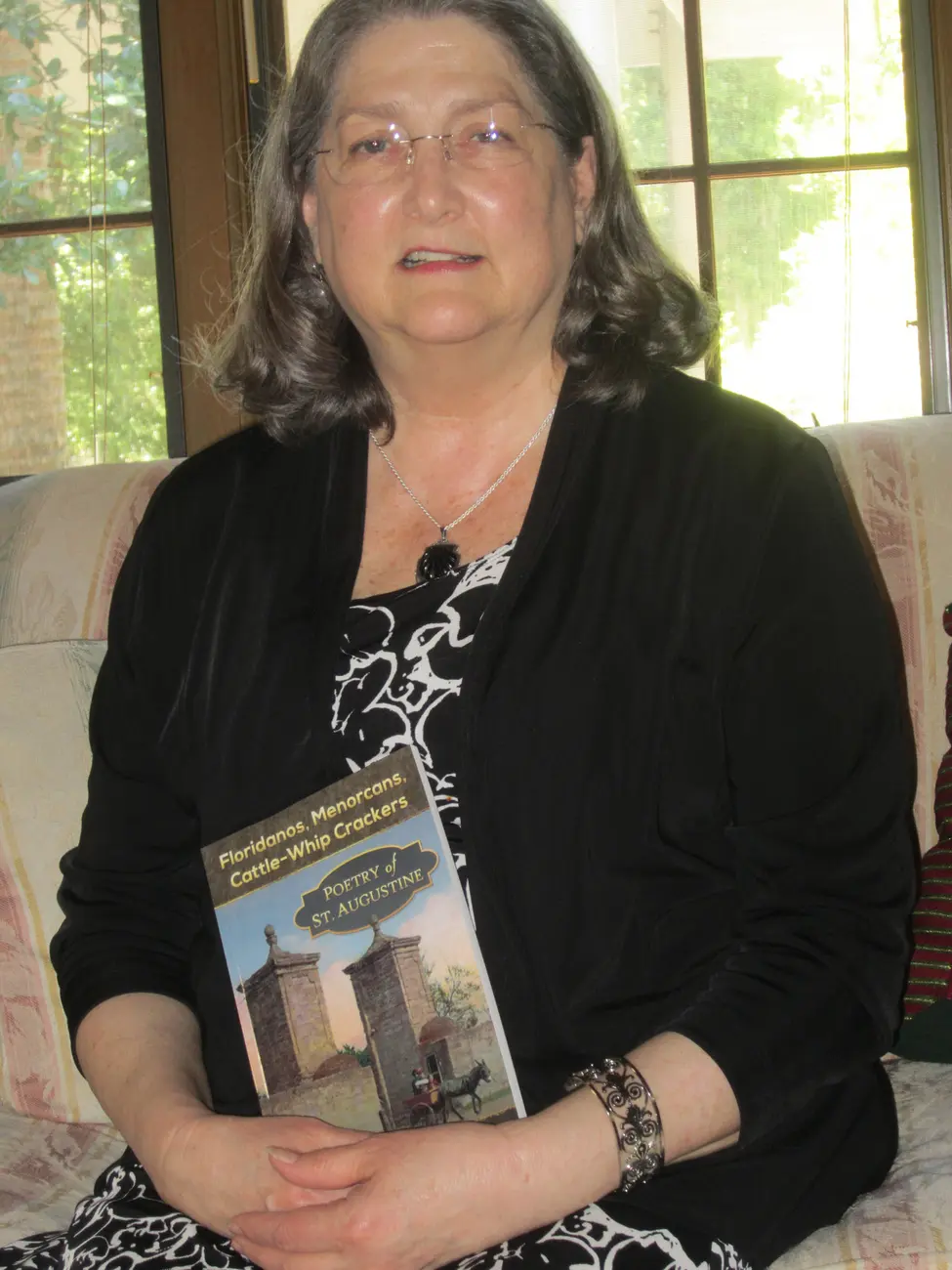
        Poet Ann Browning Masters is related to the Sanchez sisters and writes a poem from Lola’s perspective in the new book “Floridanos, Menorcans, Cattle-Whip Crackers: Poetry of St. Augustine.”

        Masters will be discussing her work Friday evening at 7:00 at the Library of Florida History, 435 Brevard Avenue, Cocoa. The presentation is free and open to the public.

        The Spanish established St. Augustine on September 8, 1565, making it the oldest continuously occupied European settlement in what would become the United States. Descendants of those Spanish settlers are called “Floridanos.”

        A twelfth generation Floridian, Masters can trace her lineage back to the early days of America’s first permanent European settlement, making her a Floridano.

        “In St. Augustine on my mother’s side, her family records that are first there in the records with the Catholic Church are in 1602, when Elena Gonzales married Diego Alvarez,” says Masters.

        “For almost a hundred years, her daughters, granddaughters continued to marry men who came to St. Augustine. They stayed there. Then in 1704, Juana Perez, one of those great-granddaughters, married Jose Sanchez. So my family line maternally, goes with the Sanchez family. My mother’s maiden name is Sanchez.”

        The First Spanish Period in Florida ended in 1763, when the British took control of the region for twenty years. During the British Period, Scotsman Andrew Turnbull brought indentured servants to Florida to settle New Smyrna. The term “Menorcan” is used to describe these people and their descendants, although not all of them were from the island of Menorca.

        “They are of Italian, Greek, and Menorcan descent,” says Masters. “Menorca is one of the Balearic Islands southeast from Barcelona (Spain) and at the time, Menorca was under control of Britain, so it made sense that a British land owner would recruit indentured servants from this Spanish, basically, island of Menorca.”

        The Turnbull Plantation failed, and the indentured servants from New Smyrna fled north to St. Augustine where they were provided sanctuary.

        “The paternal side for me is the Menorcan side,” Masters says. “In my mother’s Floridano side, they married some Menorcans. So for me, it’s a blending of those two cultures.”

        It is a popular myth in St. Augustine that hot datil peppers arrived in the area when Menorcan settlers brought them there. Extensive research and three trips to Menorca have convinced Masters that the legend is not true.

        What is a fact is that Menorcans in St. Augustine have been cooking with datil peppers for many generations, as Masters explains in her poem “The Menorcan St. Augustine Litmus Test.” In the poem, she says that if you enjoy eating the burning hot peppers and ask for more, you can be called “a good Menorcan.”

        The third group named in the title of Masters’ poetry collection, and the third part of her ancestry, is “Cattle-Whip Crackers.” The word “cracker” probably originates with the William Shakespeare play “The Life and Death of King John” where talkative Scotch-Irish people are called “crackers.” Those people eventually came to Florida as pioneers.

        “There are so many origins for the word. We can go back to the Scotch-Irish, the craic, the talk at the pub and a good time. In America, the corn crackers, that’s another derivation. In this case though, what I’m talking about are people who owned cows, had ranches. In the South we would say they ‘ran cows.’ Growing up, that was my understanding of the term, although at the same time it did have that pejorative term of a racist that it has now. But that’s another usage for that term.”

        In her book “Floridanos, Menorcans, Cattle-Whip Crackers: Poetry of St. Augustine,” Masters explores her personal heritage, but also addresses historical topics and perspectives.

        “For me, the local language, the vernacular is poetic. When I hear this speech, I hear the voices speaking narrative poetry. That’s why many of the poems are almost like monologues with characters telling their story. That’s poetry for me.”

        PDF file(s)
        Article Number
        84
        relevantdate

          The Labor Day Hurricane that struck the Florida Keys on September 2, 1935 is the most powerful storm to ever hit the United States. With wind gusts estimated up to 225 miles per hour and a storm surge bringing waves as high as 20 feet ashore; the hurricane was devastating.

          Nearly half of the 1,000 people who were on the Florida Keys when the hurricane arrived were killed. Among the dead were about half of the 300 World War I veterans working on road construction projects there for the federal government.

          “In 1935, this is the height of the Great Depression, so a number of Americans were out of work,” says Ben DiBiase, archivist at the Library of Florida History. “FDR and the federal government were trying to get a lot of people back to work. Unfortunately, these veterans were working in the Keys at the wrong time, during the height of the hurricane season.”

          Tragically, by the time a decision was made to send a train from Miami to rescue the veterans and others living in the Keys, it was too late.

          “The train left late and on its way down it had to stop at the Miami River because the drawbridge was raised to let holiday traffic through,” says Tom Knowles, author of the book Category 5: The 1935 Labor Day Hurricane. “Then it had to stop in Homestead to turn the engine around so they could back it down. The idea was to have the engine in the lead when it came back so it could use its headlight.”

          Unfortunately, the delays for the rescue train’s arrival did not stop there.

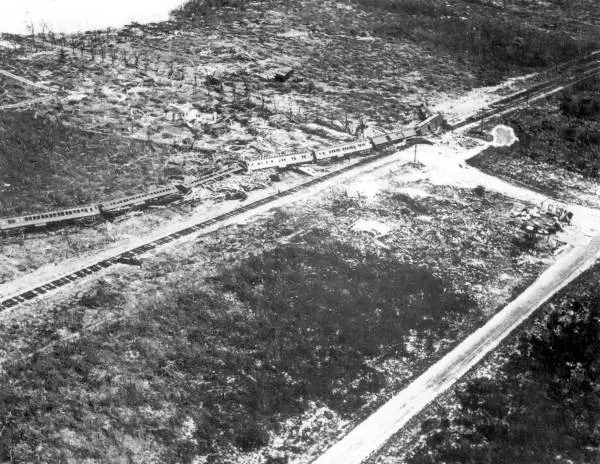
          “At Windley Key, the cab of the locomotive struck a cable that was normally hung over the railroad, but because of the hurricane had sagged down,” says Knowles. “It took about another hour to break that loose. By the time the train got down to Islamorada it was a little before 8:30, and that was when the storm surge came over.”

          The storm literally pushed the train off of its track. All cars but the engine and its tender were turned over on their sides.

          Renowned Florida writer Marjory Stoneman Douglas, best known for her classic book Everglades, River of Grass, wrote about the 1935 Labor Day storm in her book Hurricane:

          “At the veterans’ barracks the men packed up and moved out to huddle along the railway embankment, waiting for the train. They had to cover their faces because the stinging sand began to draw blood. Every once in a while one would say, ‘It’s coming. I hear it.’ It was the wind coming in faster and faster over the bent trees with the high shaking hurricane rumble that sounds exactly like the never-ending passing of a freight train.”

          The rescue train would never arrive.

          Acclaimed writer Ernest Hemingway was living in Key West when the hurricane hit, and he participated in the effort to rescue survivors of the devastating storm. In an article he wrote for the magazine “The New Masses,” Hemingway implied that the Florida Emergency Relief Administration did not act quickly enough to evacuate the veterans.

          On January 22, 1912, Henry Flagler realized his dream of completing the Overseas Railway, linking Miami to Key West. The Labor Day Hurricane of September 2, 1935 destroyed 42 miles of East Coast Railway track, and the rail link to the mainland was never rebuilt.

          People driving to the Keys today can see portions of the Overseas Railway bridges rising from the water, disconnected from the land and leading nowhere.

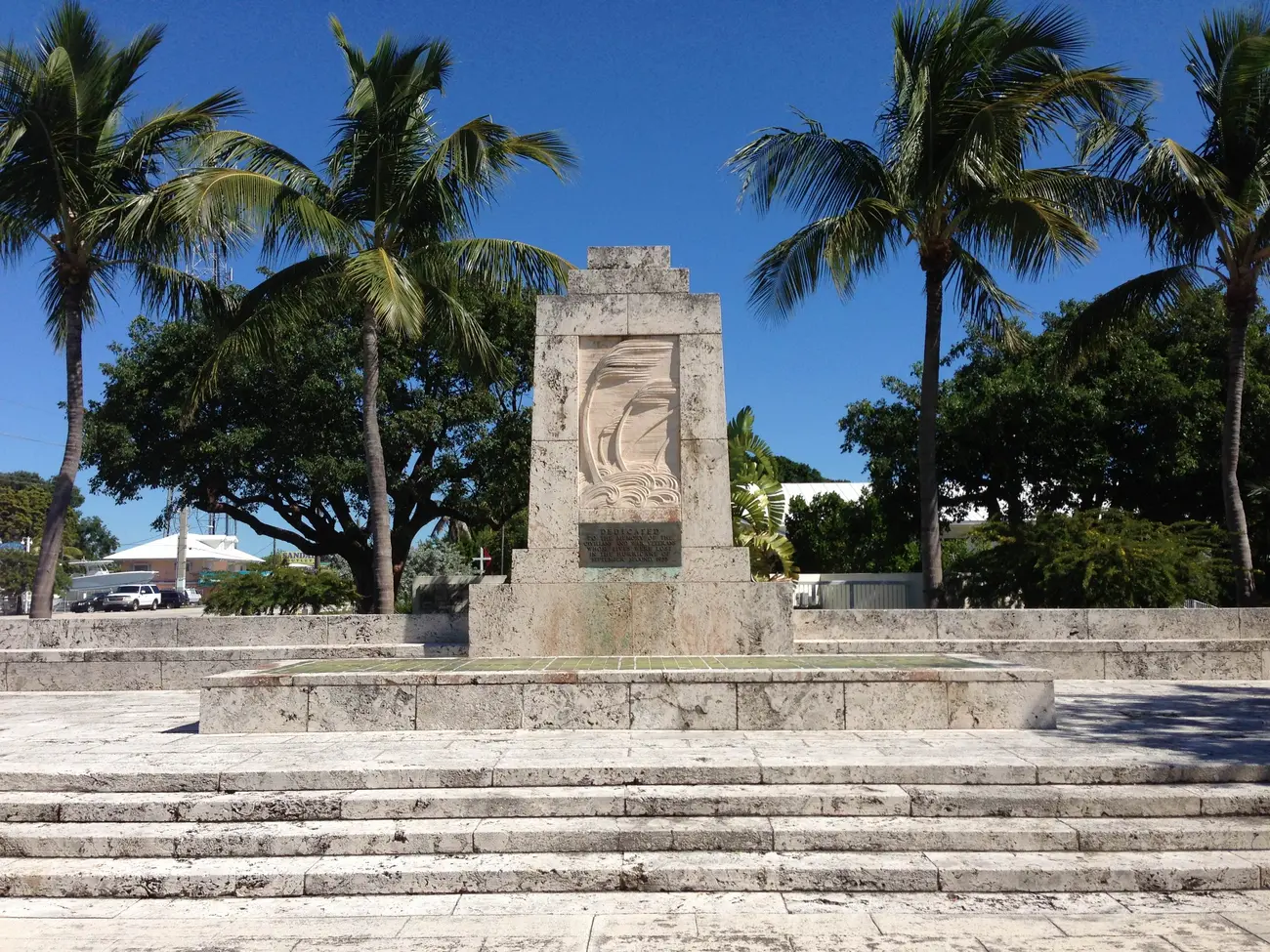
          A memorial to the people killed in the 1935 hurricane stands on Islamorada between the old state road 4A highway and U.S. 1 at mile marker 81.5.

          “Islamorada, which was a small community at that time, was completely wiped off the map,” says DiBiase. “It simply disappeared. The citizens who were living in the Upper Keys, they only numbered a few hundred, many of them lost their lives or at the very least lost everything that they owned.”

          About 1,000 people were in the Keys in 1935, and could not be successfully evacuated. Today, an estimated 80,000 people would need to leave for a similar hurricane.

          PDF file(s)
          Article Number
          83
          relevantdate

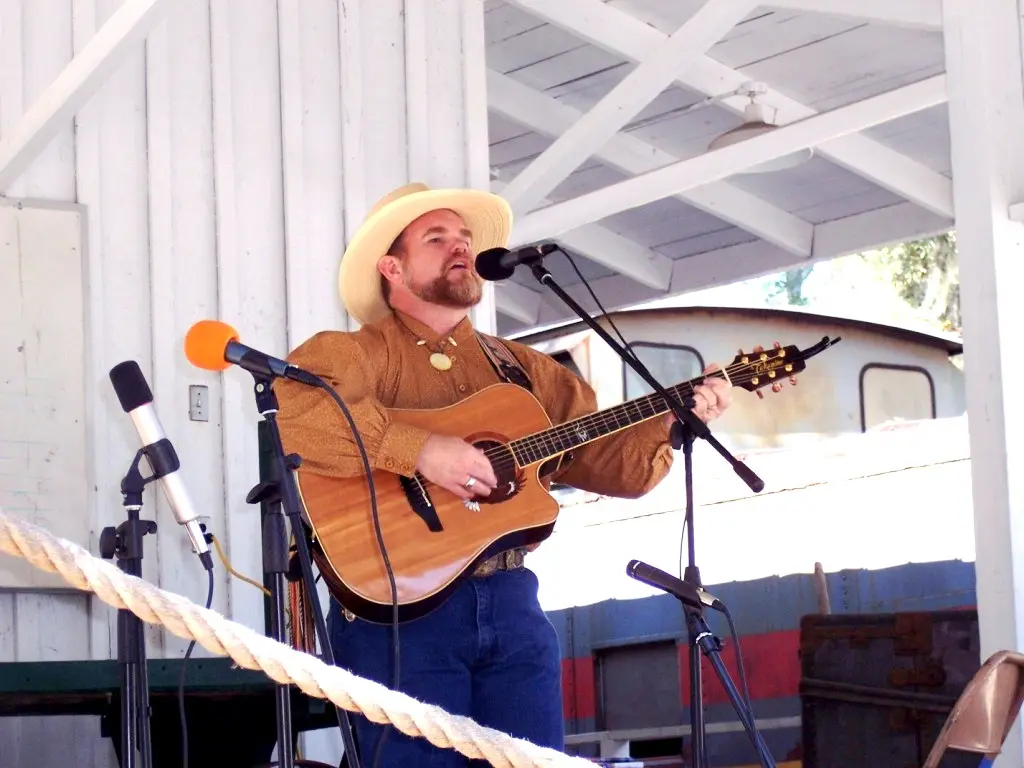
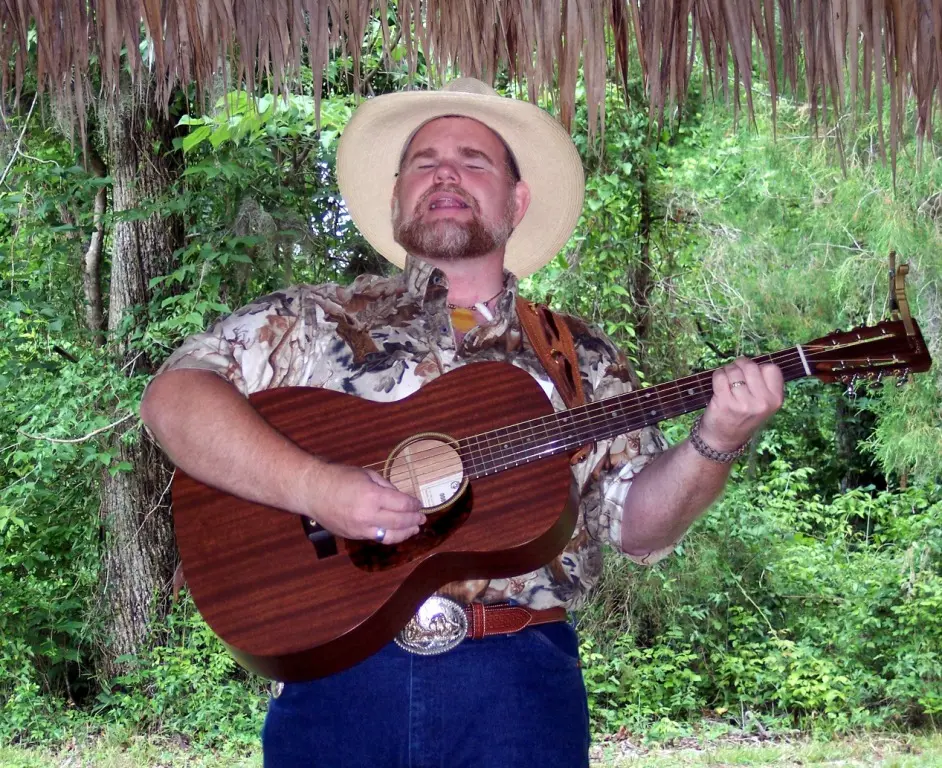
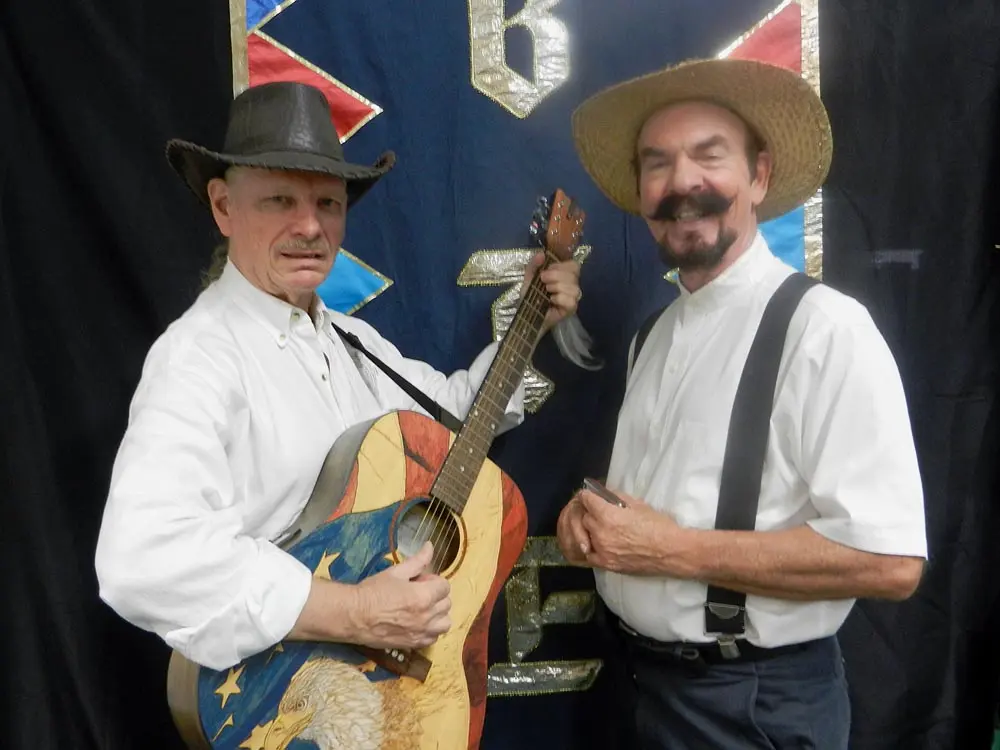
            The clear, strong, almost operatic singing of Benjamin Dehart can be heard accompanied by his skillful acoustic guitar playing at annual events such as the Florida Folk Festival in White Springs, the Fall Pioneer Jamboree in Barberville, Patrick Smith Day in Holopaw, the Cowboy Heritage Festival in Kissimmee, and the Will McLean Florida Folk Festival in Dade City.

            Dehart, known throughout Florida and beyond as “The Cracker Tenor,” sings original songs inspired by Florida history, Seminole life, cowboy culture, and a longing for a simpler time when the natural Florida was less encroached upon by urban sprawl.

            “I’m a native Floridian, I’m a second generation Floridian,” says Dehart. “If you’re born here and have some history, you’re pretty much a Cracker. I’m a tenor singer, so it was pretty easy to put the moniker together and come up with that name. I’m getting to be recognized more as ‘The Cracker Tenor’ than by my real name.”

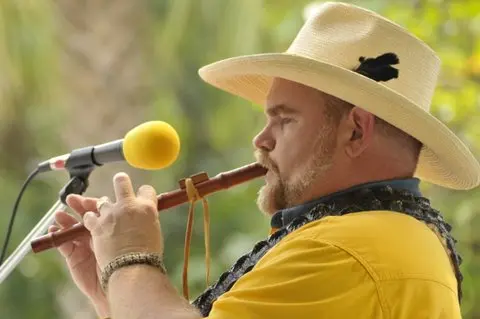
            As a boy growing up in the small farming community of Oxford, Florida, Dehart played autoharp and sang bluegrass music with his two brothers at local events. Today, Dehart plays guitar and Native American flutes, and sings with a lyrical voice.

            Dehart has recorded four CDs of his music, available on his web site at thecrackertenor.com. His second CD, “Takin’ Another Crack At It,” contains the introspective, autobiographical song “All I Really Ever Wanted to be Was a Cowboy.”

            “I was raised in a very rural and small town in Florida, and I had the opportunity to work as a Cracker,” says Dehart. “I worked with cattle. My grandfather was a cowman and a farmer, and I worked for a number of the cattle people in the area. I’ve always just been enamored and in love with the lifestyle of the cowboy and the cracker cow hunters of Florida.”

            That love of cowboy culture comes through vividly in Dehart’s music. He sings about how life’s obligations interfered with his dream of spending the rest of his life as a Florida cowman.

            “The responsible side of me made me not stay with that vocation, as much as I wanted to,” says Dehart. “I moved away from my little rural hometown and moved to a bigger city to start working for a big corporation, but my heart was always still in the saddle, so to speak. You do what you have to do to make a living, but that’s not necessarily where your heart is, and your heart will sing out.”

            Another song that is very personal to Dehart is “Papa Can You Hear,” the story of his grandfather’s request to have a bagpiper play “Amazing Grace” at his funeral.

            “My grandfather moved to the Okeechobee area and settled there,” says Dehart. “He was a unique man and a unique individual. He was an alligator hunter and a fisherman and a woodsman. He spent a lot of time in the Everglades. He was also, in the other part of his life, a Primitive Baptist preacher. He was a very eclectic man.”

            Many of Dehart’s songs on the album “Another Side of Me” focus on the indigenous people of Florida. Some of the songs in that collection are instrumentals, featuring Dehart playing Native American flute.

            “There’s more history than just the Seminole Indians,” says Dehart. “They have a wondrous culture and they have a lot of history themselves, but there’s more to do with Florida’s indigenous people that goes back thousands of years, and a lot of people don’t know that.”

            The Cracker Tenor’s primary focus is on Florida’s rich history of cowboy culture and the people who are keeping that tradition alive today. Dehart hopes that his music will help preserve the stories of Florida’s cattle families.

            “A lot of people don’t realize that the cattle industry started in Florida,” says Dehart. “The symbolism of the cowboy is something that will never die. I’m fully convinced that several hundred years from now, even if cow culture itself died out, someone could dig up a spur or a saddle or a bit, and instantly they would recognize what it was and where it came from. I think the iconic image of the cowboy is here to stay.”
             

            PDF file(s)
            Article Number
            82
            relevantdate

              The slave ship Guerrero was lost off the coast of south Florida on December 19, 1827, with 561 Africans aboard.

              Underwater archaeologists believe that the ship has been found.

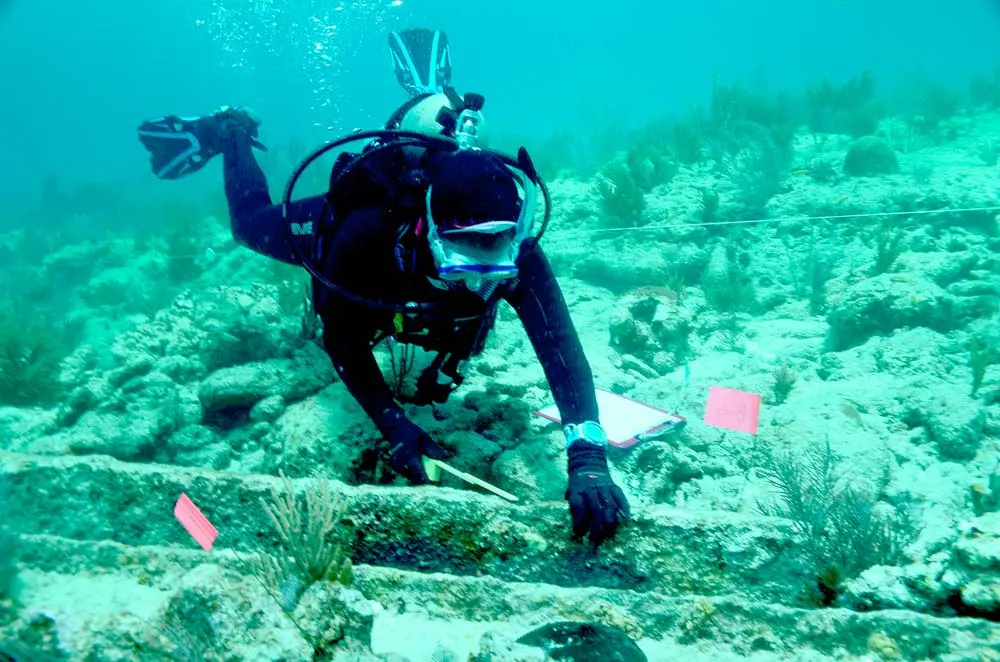
              The Diving with a Purpose Underwater Archaeology Program began in conjunction with the National Park Service and the National Association of Black Scuba Divers, to have African Americans participate in the search for the slave ship Guerrero.

              That effort was filmed for the PBS documentary series “Changing Seas” in the episode “Sunken Stories.” The program is produced by WPBT2 in Miami, and can be viewed on their web site at changingseas.tv.

              “One of the main stars of the documentary was the late Brenda Lanzendorf, who was the underwater archaeologist for the Biscayne National Park,” says Erik Denson, lead diving instructor for the Diving with a Purpose Underwater Archaeology Program. “The National Park Service has over a hundred shipwrecks in the Biscayne National Park Area. She needed help to document the shipwrecks.”

              Lanzendorf taught Denson and his group of mostly African American divers the basics of underwater archeology so they could assist in the discovery and documentation of the Guerrero.

              “They gave us the skills to do a good job and to actually understand what we were doing as far as underwater archeology is concerned,” says Denson.

              The illegal slave ship Guerrero was operated by pirates. The Guerrero was bound for Cuba with about 700 slaves aboard when the British Navy ship Nimble pursued and attacked. A storm came and both ships were shipwrecked on the reef off the coast of Key Largo.

              As a result of the shipwreck, 561 of the Africans aboard the Guerrero perished.

              Wreckers came to help get the ships off of the reef, but received an unexpected greeting.

              “The pirates actually took one of the wrecker’s ships and ended up going to Cuba with some of the remaining slaves,” Denson says. “Some of the slaves were rescued and they ended up going to Key West, and eventually made their way back to Liberia.”

              There were several possible places where the remains of the Guerrero could be located. Working with the Mel Fisher Heritage Society and the National Oceanic and Atmospheric Administration during excavations in 2010 and 2012, Denson believes they found and identified the slave ship.

              “Through historical documentation we got an idea where this battle took place and where the shipwrecks came about,” says Denson. “We had a few different sites that we wanted to explore. We did magnetometer and site scan sonar to get hits in certain areas, so we narrowed it down.”

              Positive identification of particular shipwrecks can be challenging.

              Some of the artifacts uncovered that are believed to be from the Guerrero include a cologne bottle from the early 1800s, bone china, lead shot, blue edged earthenware, metal rigging, copper fasteners, and wooden plank fragments.

              “Those key pieces of artifacts and evidence really point to that time frame,” says Denson. “We know that the Nimble lost its anchor during the battle, and we found an anchor for that type of ship, that era. So a lot of empirical evidence points to that site, that wreck.”

              The artifacts from shipwrecks are not as easy to spot as it might seem. It takes experienced divers with trained eyes to locate these objects.

              “These things have been down there for hundreds of years, and they’re covered with corral,” says Denson. “You have to look for things that don’t occur in nature, right angles and shapes that look man made.”

              Denson and his divers meticulously document shipwrecks with trilateration mapping, drawings, measurements, and photographs.

              The members of Diving with a Purpose are not treasure hunters searching for gold and other valuable objects.

              “We abide by a code of ethics,” says Denson. “These are historical sites that need to be preserved and protected. In the case of the Guerrero, there may be human remains there.”

              Since forming in 2005, Diving with a Purpose Underwater Archaeology Program has trained many underwater archaeology advocates who have become DWP instructors themselves. The organization has assisted with the search for slave shipwrecks around the world, including off the coast of Africa.

              “These ships are an important part of our history,” says Denson.

              PDF file(s)
              Article Number
              81
              relevantdate

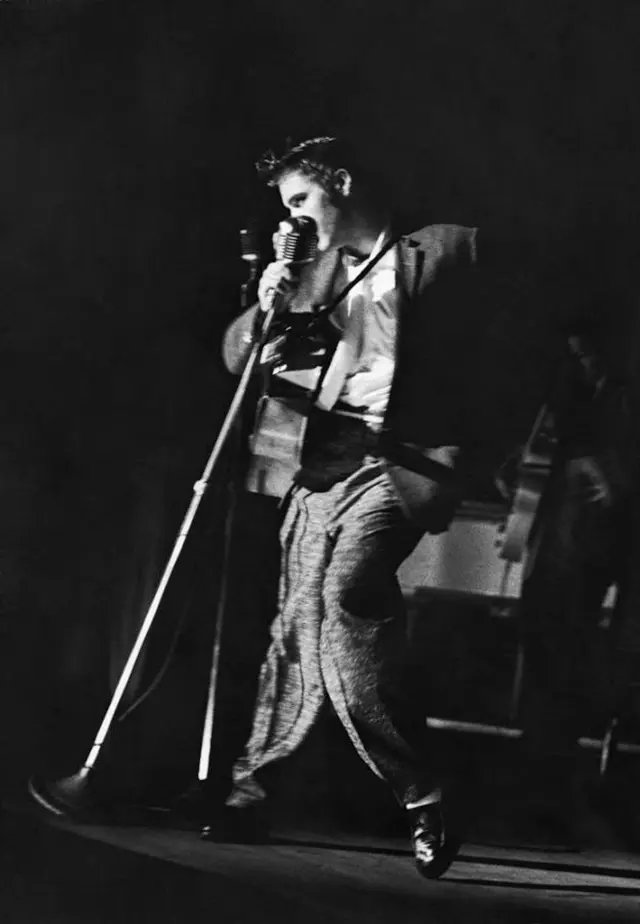
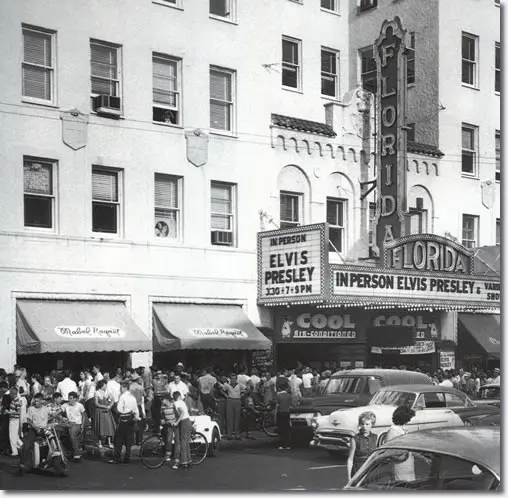
                An advertisement in the August 10, 1956 Florida Times-Union newspaper called Elvis Presley “Mr. Dynamite,” the “sensation of the nation,” and “the nation’s only atomic powered singer.”

                Presley would soon be known simply as “the king of rock ‘n’ roll.”

                During a pivotal point in Presley’s career, the future superstar did a series of performances throughout Florida. The tour came one month after his nationally televised appearance on the Steve Allen Show and one month before his first appearance before an audience of millions on the Ed Sullivan Show.

                Five months before the 1956 Florida tour, Col. Tom Parker took over management of Presley’s career. The singer had enjoyed big hits with the songs “Heartbreak Hotel” and “I Want You, I Need You, I Love You.” Just before his Florida concerts, Presley released his rock ‘n’ roll version of the Big Mama Thorton blues song “Hound Dog,” along with “Don’t Be Cruel.”

                Parker organized an exhausting tour schedule for Presley. In just 9 days Presley performed 25 shows in 7 Florida cities.

                The tour began in Miami with 7 shows at the Olympia Theater on August 3-4. The next day Presley did 2 shows at the Armory in Tampa, followed by 3 shows at the Polk Theater in Lakeland on August 6. On August 7, Presley performed 3 times at the Florida Theater in St. Petersburg, followed by 2 shows at Orlando’s Municipal Auditorium on August 8. The next day Presley was in Daytona Beach for 2 shows at the Peabody Auditorium. The tour concluded with 6 performances at Jacksonville’s Florida Theater, August 10-11.

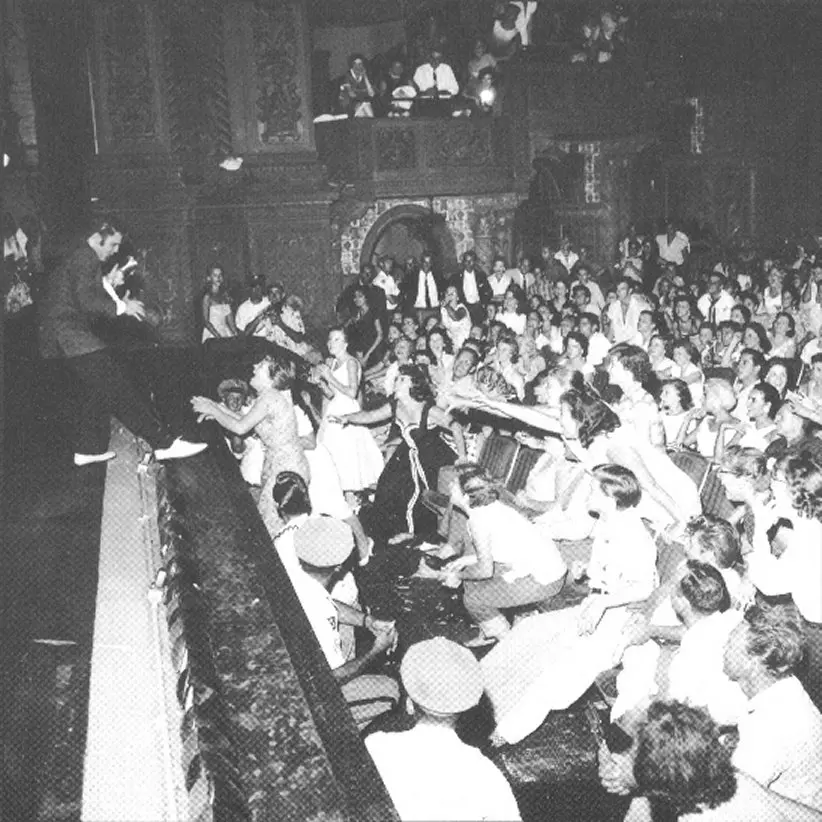
                The Tampa Sunday Tribune headline on August 12 declared, “Record 100,000 Paid tribute to Elvis in 1956 Florida Tour.” Tickets for the performances were $1.25 in advance, $1.50 at the door.

                “No matter what newspaper you looked in you would find reports of near-riotous conditions prevailing when he was appearing in that town,” wrote Paul Wilder in the Tampa Sunday Tribune. “There is nothing in Florida entertainment to compare with him, and the startling impact of Presley’s sway over Florida’s teen-agers—and many adults, too—is something unique in the state’s social, economic, and entertainment life.”

                Compared with the sexually suggestive choreography of some popular music stars today, Presley’s gyrating hips, shaking legs, and trademark sneer seem quaint.

                In 1956, many found Presley’s movements onstage to be scandalous. The singer had been nicknamed “Elvis the Pelvis.”

                “I don’t like to be called ‘Elvis the Pelvis,’ it’s one of the most childish expressions I’ve ever heard coming from an adult,” Presley told reporters backstage in Lakeland on August 6, 1956. “If they want to call me that, there’s nothing I can do about it, so I’ll just have to accept it. You got to accept the good with the bad, the bad with the good.”

                “I get in rhythm with the music and I jump around to it because I enjoy what I’m doing. I’m not trying to be vulgar. I’m not trying to sell any sex. I’m not trying to look vulgar and nasty. I just enjoy what I’m doing and I’m trying to make the best of it,” Presley said.

                Before Presley’s shows in Jacksonville, Rev. Robert Gray of Trinity Baptist Church said that Presley had “achieved a new low in spiritual degeneracy.” Presley was insulted by the accusation, telling reporters “I was raised up in a little Assembly of God Church. I have gone to church since I could walk.”

                Judge Marion Gooding threatened to have Presley arrested for “impairing the morals of minors” if he didn’t restrict his “suggestive” movements during the Jacksonville performances.

                Presley remembered the incident during his 1968 television special.

                “I was down in Florida,” Presley said. “The state police decided to come and film my show. I had to stand still, and all I could move was this little finger here.”

                Judge Gooding was apparently satisfied with Presley’s modifications. After watching the show himself, Gooding allowed his three daughters to attend.

                Presley’s whirlwind 1956 tour of Florida was covered by national press, helping to further the singer’s fame. When asked why he was becoming so popular, Presley said, “It’s all happened so fast. I don’t know what it is.”
                 

                PDF file(s)
                Article Number
                80
                relevantdate

                  Before the annual presentation of “Mosquitos, Alligators, and Determination” begins, Lady Gail Ryan engages audience members, finding out where they are from and leading them in a high spirited “sing along” of Florida songs including “Where the Orange Blossoms Grow” and “She’ll Be Comin’ Down the Shell Road.”

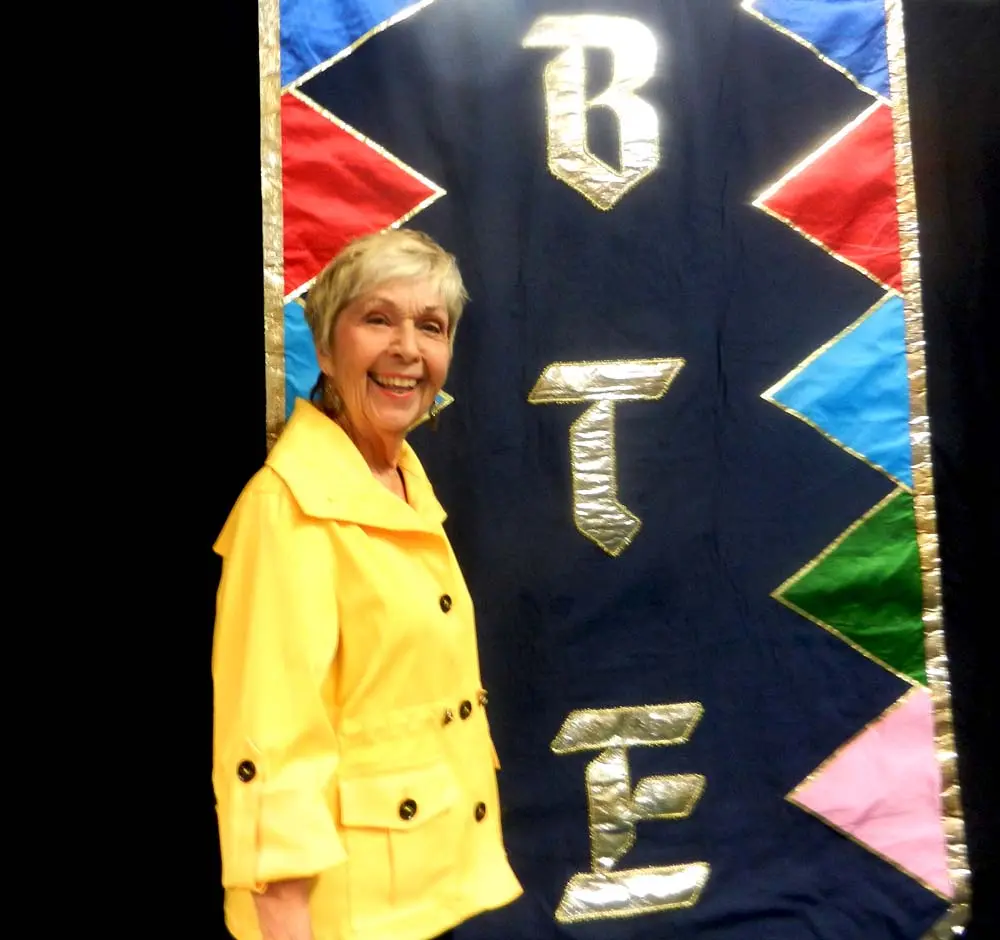
                  As founder and director of the Brevard Theatrical Ensemble, Ryan is responsible for organizing the annual presentation of “Mosquitos, Alligators, and Determination.” The production, which changes every year, features a series of vignettes portraying stories of Florida history and culture, from native society to European contact to pioneer settlement to the early space program.

                  A native Floridian born in Miami in 1929, Ryan’s energy and enthusiasm for the history and culture of our state is contagious.

                  “I was born right in the blast of the boom,” says Ryan. “I didn’t realize anything about anyone being poor because we raised our own vegetables. We lived in the sunshine. I washed my hair in the rain. We had the best time.”

                  Ryan’s parents and sister moved to Florida from Indiana, driving down in two Model “T” Fords and camping along the way. While camping just off of a shell road in Brevard County, the family was awakened by a noisy group of wild hogs. The Ryans moved on, settling in Miami.

                  “Our house was built from the lumber that (Henry) Flagler sold when he tore down the Royal Poinciana Hotel,” says Ryan. “If it hadn’t been for Flagler, we wouldn’t have lived in this marvelous house. We never had any termites because he had the original Florida pine.”

                  Although Ryan remembers her childhood in Florida fondly, she grew up with her heart set on seeing the world and singing opera. She achieved her goals, getting her education in Michigan and New York, and learning to speak Italian while studying in Europe.

                  Ryan returned to Miami, teaching there for several decades. She earned the honorific title “Lady” from the Dade County Commission for her work organizing the Miami Renaissance Fairs.

                  In the mid-1980s, Ryan moved to the Space Coast. She organized the Storytellers of Brevard, which evolved into the Brevard Theatrical Ensemble. Over the years the group has performed original productions focusing on women’s history, Native American culture, and American innovation. They have presented selected scenes from plays by Shakespeare, and an annual program of scary stories around Halloween.

                  Nine years ago, Ryan was asked to research Florida’s Cracker culture and create an original production based on the state’s pioneer settlers. The result was the first version of “Mosquitos, Alligators, and Determination.”

                  Ryan says that she was sometimes embarrassed to admit that she was a Florida Cracker herself, particularly while living in New York and Europe. She has since learned to respect the intrepid people who settled Florida, and now embraces her heritage.

                  “I began this research, and for the first time, I really became a Floridian,” Ryan says.

                  After the first couple of years focusing on pioneer culture, the program expanded to include stories from throughout Florida history. Every year different stories are performed, keeping the production constantly evolving.

                  “There are so many stories to tell,” says Rayan. “I don’t want to be bored and I do not want my cast to be bored. I want it brand new and fresh.”

                  The eighth production of “Mosquitos, Alligators, and Determination” includes stories about the Calusa people, Spanish conquistadors, and Florida pioneers. Audiences will be introduced to fascinating people such as cigar maker and citrus grower Count Odet Phillipe, writer Harriet Beecher Stowe, and aviator Jackie Cochran.

                  Ryan says that staging this production each year has given her a new appreciation for the diverse history and culture of our state.

                  “I didn’t really realize how wonderful Florida was until now,” says Ryan.

                  “Mosquitos, Alligators, and Determination VIII” will be presented at the Library of Florida History, 435 Brevard Avenue, Cocoa, Friday, August 7 at 7:30 pm. Matinee performances will be presented at 2:30 pm on Saturday, August 8; Sunday, August 9; Saturday August 15; and Sunday, August 16.

                  Admission is $15, and reservations are available at www.myfloridahistory.org, or by calling 690-1971 and pressing “7.” Reservations are strongly suggested, as these performances are “sold out” every year.

                  PDF file(s)
                  Article Number
                  79
                  relevantdate

                    In 1738, the first legally sanctioned free black settlement was established in what would become the United States.

                    El Pueblo de Gracia Real de Santa Teresa de Mose, popularly known as Fort Mose, was a community of former slaves who pledged allegiance to the King of Spain, became Catholic, and agreed to defend Spanish controlled Florida from invaders.

                    Located just north of St. Augustine, Fort Mose was the first line of defense against attack from British colonies. 

                    As part of the War of Jenkins Ear between Spain and Great Britain, General James Oglethorpe led an invading force into Spanish Florida. In the early morning of June 26, 1740, that invasion was repelled at Fort Mose.

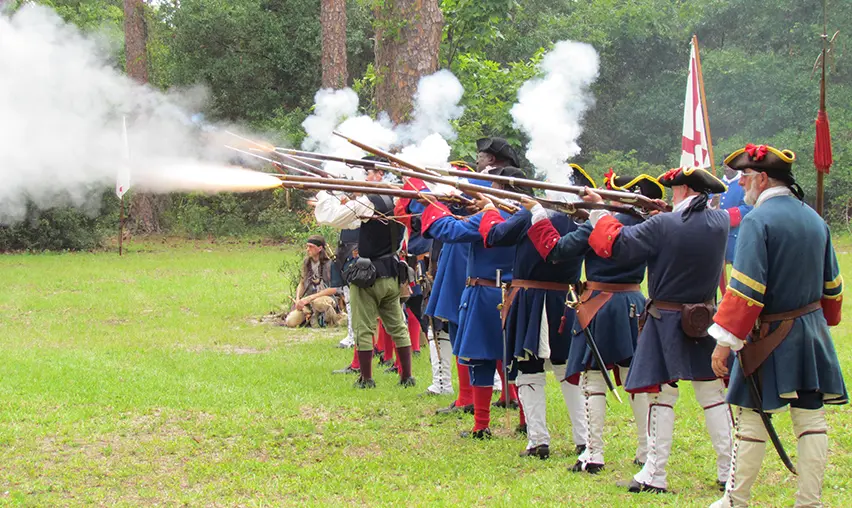
                    Since 2010, an annual reenactment of the Bloody Battle of Fort Mose has been staged at Fort Mose Historic State Park. Several groups of reenactors participate in the event, coordinated by Florida Living History, Inc.

                    “This is a reenactment of the surprise attack, in June of 1740, that the Spanish soldiers in St. Augustine, the black militia from Fort Mose, and Yamasee auxiliaries launched to recapture the Fort Mose site from British and Scottish invaders from Georgia and Carolina,” says Davis Walker, president of Florida Living History, Inc.

                    “The attack was launched just before dawn,” says Walker. “The defending forces were caught completely by surprise and basically massacred.”

                    The Bloody Battle of Fort Mose successfully ended Oglethorpe’s siege of St. Augustine, and returned control of Florida to the Spanish.

                    Fort Mose was destroyed during the battle, and it would take twelve years to rebuild the outpost.

                    Florida Living History, Inc. presents a variety of historical reenactments throughout the year, but the Bloody Battle of Fort Mose allows collaboration with other groups. British and Scottish reenactors come from Fort King George and Fort Frederica in Georgia. People portraying Spanish soldiers come from all over Florida. The Fort Mose Militia provides black soldiers, and Yamasee Indian reenactors come from Tampa and St. Augustine to participate.

                    “We’ve always thought that this would make such a unique living history event because it involves European, black, and Native American elements,” says Walker. “Happily, our friends at the Florida Park Service and here at Fort Mose encourage that very strongly, and have been working hand and hand with us to grow this event. Also, the Fort Mose Historical Society, a volunteer group that supports the park, has taken part.”

                    Andrew Batten, director of attractions at the Brevard Zoo in Melbourne, travels to St. Augustine to participate in the Bloody Battle of Mose reenactment. Batten portrays a member of the South Carolina Rangers, one of Oglethorpe’s militiamen. There were about twice as many Spanish troops at Fort Mose as there were British soldiers.

                    “You have four different (British) units within this, all doing things different ways,” says Batten. “The other problem is that you have soldiers like myself, who are trying to make a little money on the side. If I capture Spanish horses, I can sell them to the British army, and I can make much more money doing that than I can doing my job. So the South Carolinians who are here, unfortunately, were poorly led, they had poor morale, very poor discipline, so you see the results in what became known as Bloody Mose. Of the 137 British troops here, 25 got out unharmed or uncaptured or alive.”

                    Fort Mose Historic State Park, a National Historic Landmark, is where the battle reenactment takes place each year. A boardwalk takes visitors to marshlands where the original Fort Mose stood. The battle reenactment takes place on uplands adjacent to the marsh.

                    A museum at the site tells the story of America’s first free black settlement.

                    “We have a $750,000 interactive and interpretive museum where the exhibits actually respond to your movement throughout,” says Thomas Jackson, vice-president of the Fort Mose Historical Society.

                    The museum is open 9am to 5pm Thursday through Monday, and is closed Tuesday and Wednesday.

                    In addition to the Bloody Battle of Fort Mose reenactment in June, the Fort Mose Historical Society presents Living History programs during the last weekend of every month. These programs include demonstrations of food, the firing of muskets, and portrayals of historic figures.
                     

                    PDF file(s)
                    Article Number
                    78
                    relevantdate

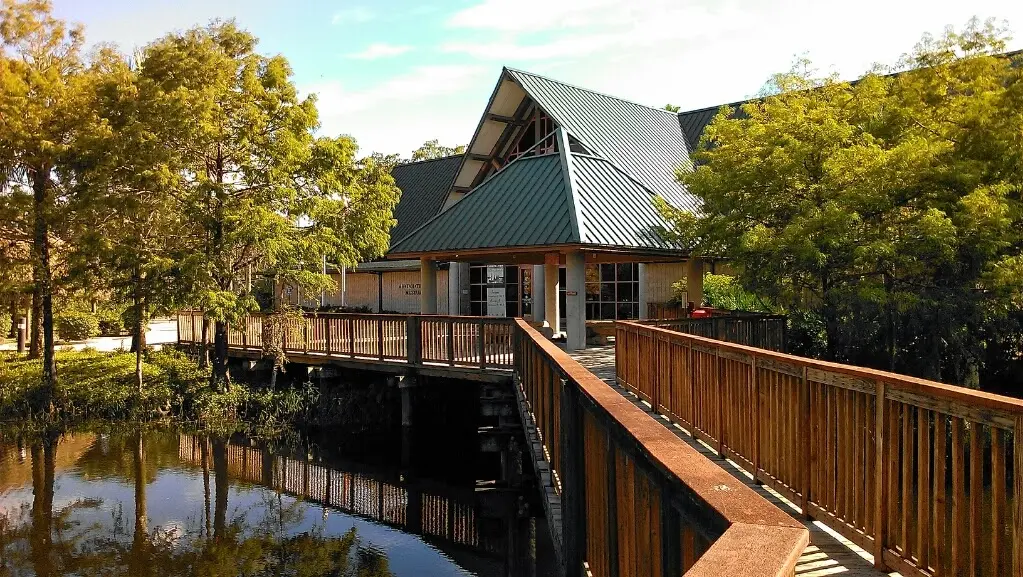
                      The traditional culture of the Seminole Tribe of Florida is preserved at the Ah-Tah-Thi-Ki Museum on the Big Cypress Reservation in south Florida, near Clewiston.

                      The state of the art museum and archival facility features permanent exhibitions and rotating gallery space, a research library, and an extensive collection of newspapers, oral histories, manuscripts, and artifacts including patchwork clothing, baskets, and dolls.

                      In the Seminole language Ah-Tah-Thi-Ki means “a place to learn” or “a place to remember.”

                      “That’s really what we hope to do here at the museum, is to educate the public but also to keep the traditions and culture alive within our own tribe,” says traditional arts coordinator Pedro Zepeda.

                      “We want this to be the source for tribal history and culture for people,” says director Anne McCudden. “We want this to be the place where people can come to get the correct information, to meet tribal members, and to really experience tribal culture one-on-one.”

                      In the 1700s, Lower Creek Indians from Georgia and Alabama migrated into Florida, blending with remnants from some of Florida’s indigenous tribes and runaway slaves. By the 1770s, this group of people became known as Seminole, which means “wild people” or “runaway.”

                      Throughout the 1800s, a series of three Seminole Wars took place, as the United States government sought to expand its territory, and recapture runaway slaves. By 1858, about 300 Seminole remained in the swamps of south Florida.

                      In the twentieth century, the Seminole capitalized on the state’s growing tourism, and remained active in citrus growing and the cattle industry. Today, the Seminole have expanded into the hotel, restaurant and gaming businesses as owners of the worldwide Hard Rock franchise.

                      “The policy of the United States was to eradicate us in the 1800s, and we’ve survived,” says outreach specialist Willie Johns. “This museum houses all the pictures and all the stories of all these people that did survive. They made a living out of nothing in this Florida wilderness. They made the Seminole Tribe what it is today.”

                      Johns travels all over the state using artifacts from the Ah-Tah-Thi-Ki Museum to introduce people to Seminole culture.

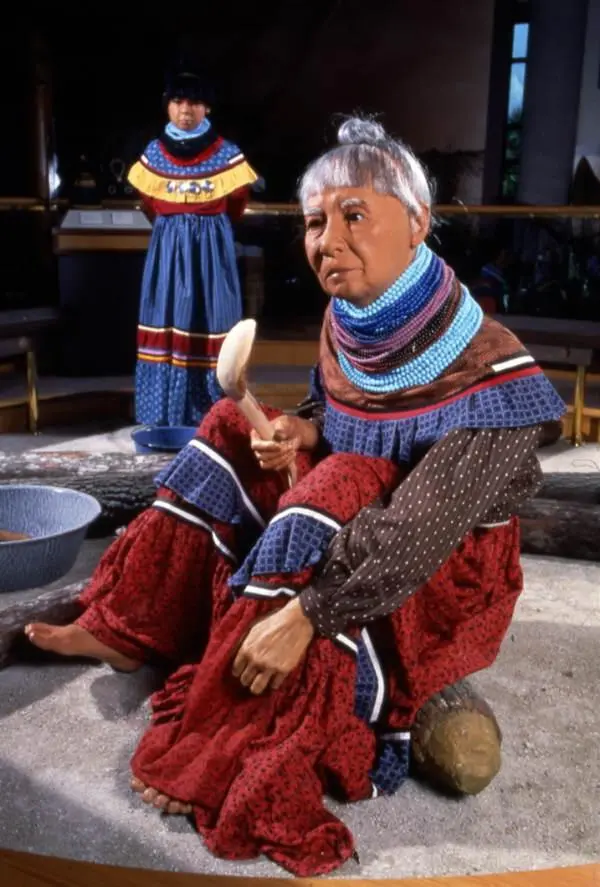
                      Throughout the Ah-Tah-Thi-Ki Museum, life sized figures are used to demonstrate traditional Seminole clothing and practices such as hunting, fishing, canoeing, and performing the Green Corn Dance. Wood carvings, jewelry, and baskets are also displayed.

                      “I really like the palmetto baskets that we have on display,” says Pedro Zepeda. “That’s something that my family used to make from saw palmetto stems. Seminole arts are usually associated with the sweet grass baskets, but that’s something that we didn’t develop until the tourist trade after the turn of the (twentieth) century. These palmetto baskets were our work baskets and our ceremonial baskets. Those are the ones that we used in our day to day lives.”

                      “We also have Osceola’s bandolier bag,” says curator of exhibits Saul Drake. “That’s incredibly powerful for Seminole tribal members to be able to see that and connect that to a very strong portion of history in the Seminole Tribe. That’s kind of a symbol of how far the Seminole Tribe has come.”

                      One of the rotating exhibitions at the museum is called “Postcards and Perceptions: Culture as Tourism.” It shows how the Seminole fueled Florida tourism in the early twentieth century.

                      “These postcards that were mass produced are representations of actual real people that lived during this time period. We have tribal members that come into the museum and say ‘oh, that’s my grandmother’ or ‘that’s my great uncle’ and it’s such a strong connection,” says Drake.

                      As with most museums, only a small portion of the Ah-Tah-Thi-Ki collection can be displayed at one time. The museum has a high-tech preservation and storage facility, and shares items with the Smithsonian Institution, the Museum of Florida History, and other organizations.

                      More than a mile of boardwalk leads from the museum to an Indian village and ceremonial center. Visitors can experience the natural Florida while learning about how the Seminole interact with the environment.

                      “Ethnobotanical signage gives you background on the plant itself, and some cultural information on how the Seminole used them in the past,” says Drake.

                      The Ah-Tah-Thi-Ki Museum lives up to its name.

                      PDF file(s)