Article Number
98
relevantdate

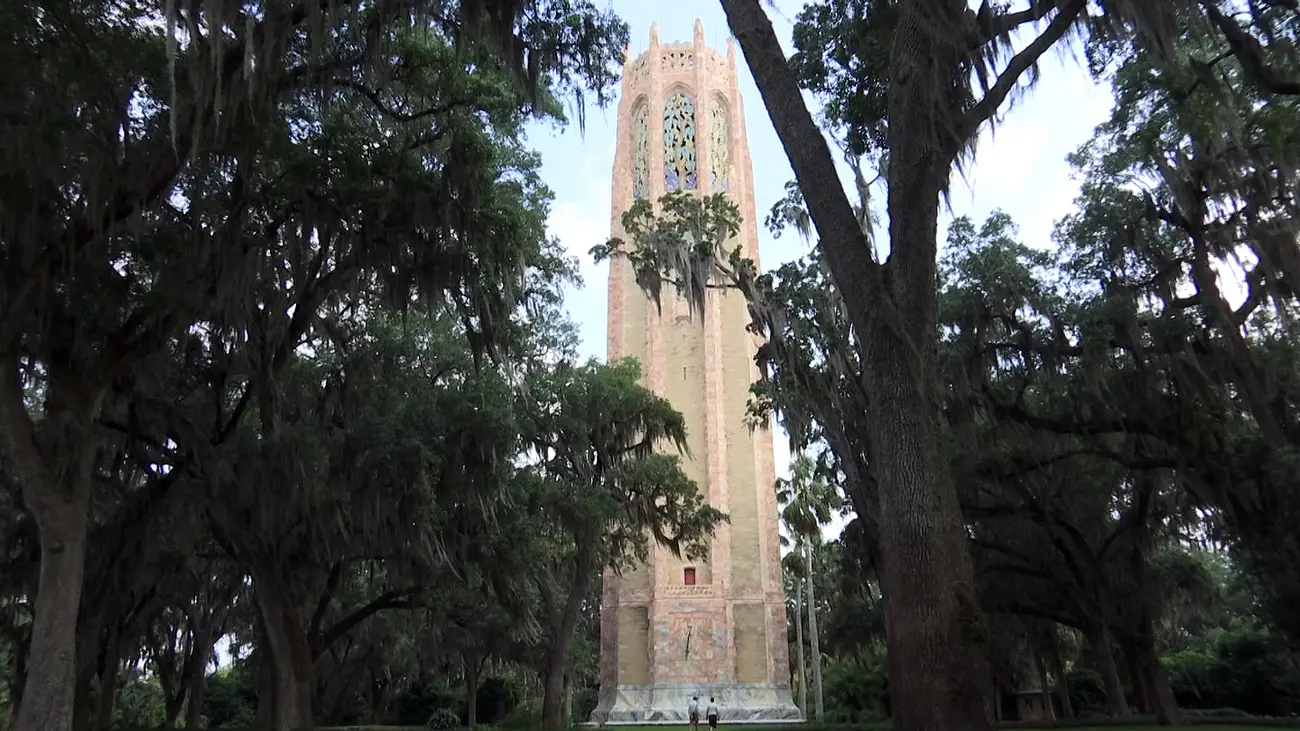
    If sea levels were to rise to the point where the coastline of Florida was submerged, our peninsular state would become a series of islands. At the heart of one of those islands, a neo-Gothic tower of coquina and marble would rise 205 feet into the sky.

    Bok Tower Gardens near Lake Wales is on one of the highest points in the state, 298 feet above sea level.

    President Calvin Coolidge presided over the dedication of the Singing Tower and its adjacent bird sanctuary and gardens on February 1, 1929. The facility was conceived and built by Edward Bok as a gift to the American people for the opportunities he had been given.

    Bok was born in 1863 in Dans Helder, Netherlands. He immigrated to the United States with his family in 1870. He grew from a boy who didn’t speak English to become a confidant of American presidents and a friend to literary figures such as Mark Twain and Rudyard Kipling. He made a fortune in publishing.

    “At 26 years old, he became editor-in-chief of The Ladies’ Home Journal magazine, which became the first magazine in the world to have over a million subscribers,” says Brian Ososky, a director at Bok Tower Gardens.

    Bok would come from Pennsylvania to spend his winters near Lake Wales. He enjoyed watching sunsets from Iron Mountain and decided to stop plans to build a housing development there by purchasing the land. He hired landscape architect Frederick Law Olmsted Jr. to transform a sand hill into a lush and thriving garden sanctuary.

    Olmsted worked with his father, who designed New York’s Central Park. He landscaped many of the most prominent landmarks in Washington D.C., and served as the first director of the National Park Service.

    It took Olmsted six years to create the Bok Tower Gardens, bringing in rich soil, developing an elaborate irrigation system, and planting acres of carefully selected trees, plants, and flowers. The pathways through the gardens all led to the Singing Tower.

    “The pathways were all specifically meant to be meandering, and you would slowly go around corners in anticipation of what you would see next,” says Ososky. “All the while you might catch a glimpse of the tower and then it would disappear behind some oaks or behind some other types of trees.”

    When the tower comes into full view, it is a spectacular sight.

    The tower is a combination of Gothic and Art Deco influences, made of coquina stone from St. Augustine and pink and gray marble from Georgia. It was designed by architect Milton B. Medary, who also created the Washington Memorial Chapel at Valley Forge, Pennsylvania, and the Justice Department Building in Washington, D.C.

    Carved into the tower is a unique combination of sacred, secular, and distinctly Floridian images. The bird, animal, and floral depictions were created by sculptor Lee Lawrie, best known for his “Atlas” statue at Rockefeller Center in New York.

    Metal worker Samuel Yellin crafted the large brass doors on the north side of the tower that depict the story of creation, as well as the wrought iron gates leading to the doors. On the south side of the tower, Yellin contributed to the sundial that features a bronze snake amid the signs of the Zodiac and Roman numerals that display the time of day. Yellin’s work can be seen on college campuses including Yale, Harvard, and Princeton, and on numerous churches including the Washington National Cathedral.

    Tilemaker J.H. Dulles Allen created the elaborate floor of the tower, and added color to the top third of the structure.

    Walking through the gardens, a visitor might hear the tower before they see it.

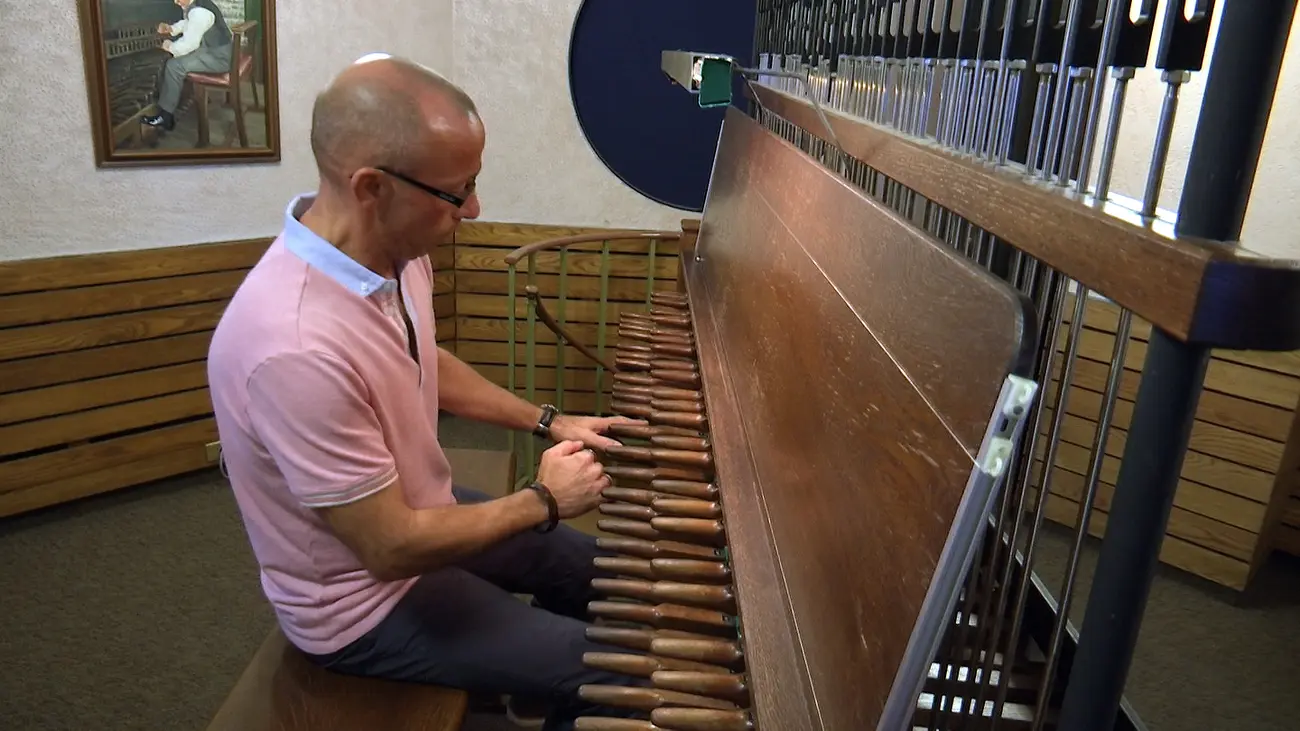
    The Singing Tower houses one of only 600 carillons in the world. It has 60 bronze bells, the largest of which weighs about 12 tons. A keyboard instrument at the top of the tower is attached to clappers which strike the bells, creating music.

    “This tower and this sanctuary is unique,” says carillonneur Geert D’hollander. “The gardens are like a natural concert hall. No traffic. Beautiful, peaceful, serene.”

    Bok’s grandmother advised him to “make you the world a bit better or more beautiful because you have lived in it.”

    He followed that advice.
    PDF file(s)
    Article Number
    97
    relevantdate

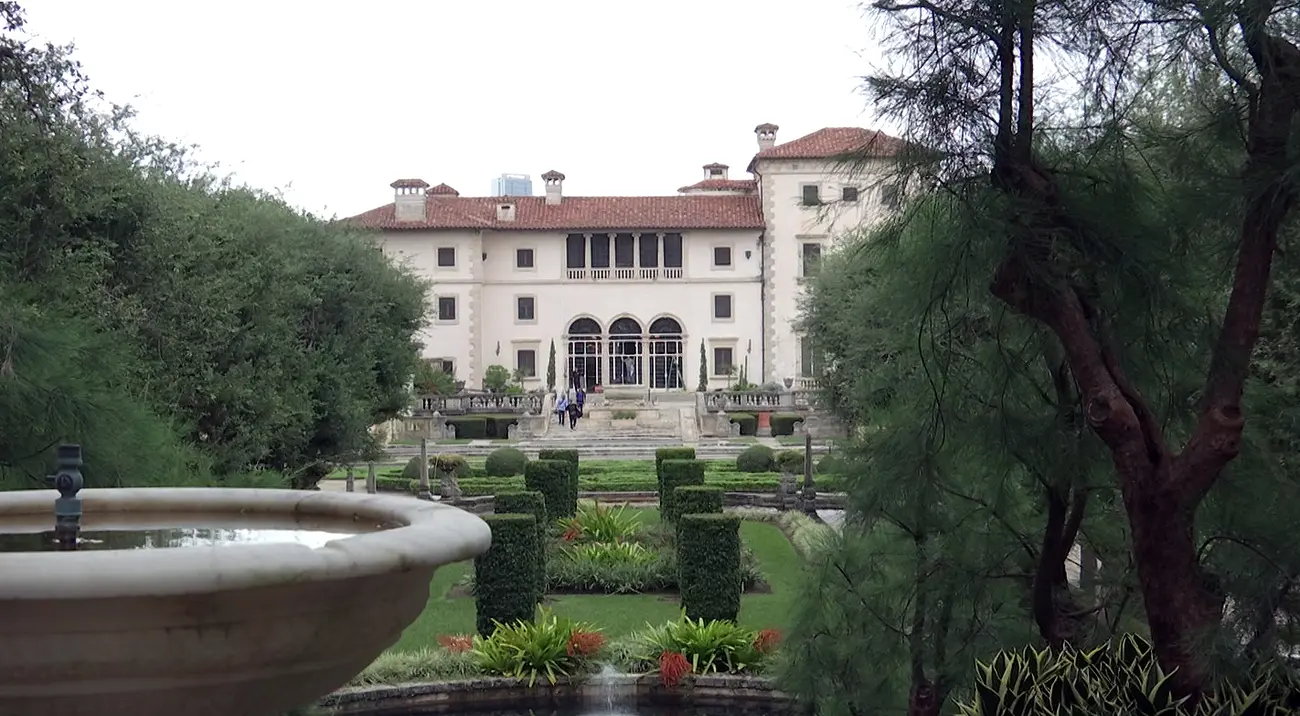
      Just blocks from the bustling urban setting of downtown Miami is an oasis of Classical beauty in a serene and idealized natural setting.

      Known today as Vizcaya Museum and Gardens, the 40 room mansion surrounded by acres of meticulously landscaped gardens was originally the home of industrialist James Deering.

      As early as the 1890s, the Deering family started wintering in St. Augustine. James Deering’s parents later moved to Coconut Grove, which would become part of Miami.

      “James Deering was what’s known as an agricultural industrialist,” says Mark Osterman, guiding programs manager at Vizcaya Museum and Gardens. “His firm created agricultural farming equipment across the United States. It became one of the largest manufacturing firms in the entire world. He was vice-president of the firm International Harvester.”

      In 1908, at the age of 49, Deering retired from the International Harvester Company and initiated plans to create a palatial estate called Vizcaya. Deering’s Gilded Age display of incredible wealth in Florida would rival the San Simeon Castle built by William Randolph Hearst in California.

      “It’s really unique,” says Osterman. “It’s Italian inspired mainly on the exterior of the home, but when you’re on the interior, especially in the central courtyard, that has Spanish influence, or what we call Mediterranean influence. The house itself is really an adaptation of European traditions brought to this subtropical climate.”

      Construction on Vizcaya began in the fall of 1913, and Deering moved into the home on Christmas Day, 1916. Deering wanted all of the latest technology available incorporated into the home, including a telephone, but he had architect F. Burrall Hoffman Jr. design a structure that appeared to be about 400 years old.

      It would take until 1921 to complete the fantastic Vizcaya Gardens.

      “The gardens were designed by Diego Suarez,” says Osterman. “He was a landscape architect who worked on the project along with Paul Chalfin, who was chief designer of the overall project. Diego Suarez was Columbian born but an Italian trained landscape architect, so the gardens themselves are deeply influenced by Italian estate gardens ranging from the 1600s to the 1800s.”

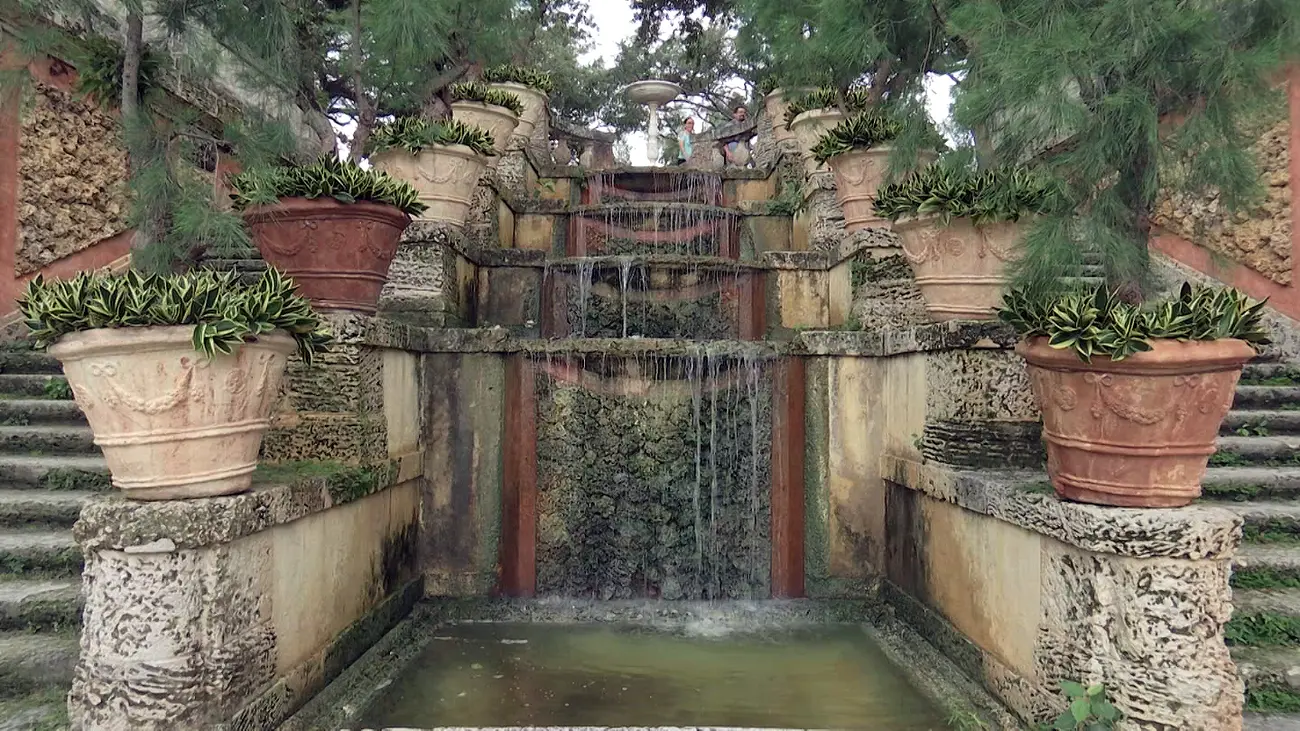
      The elaborate gardens of Vizcaya express the Classical ideals of balance, symmetry, and rational design. The meticulously manicured shrubbery, trees, plants, and flowers are augmented by man-made structures intended to add to the beauty of the natural surroundings.

      “Throughout the gardens there are a series of follies,” Osterman says. “These are sort of unexpected moments. They could be sculptural, they could be a fountain piece, but they typically service as end points or transition points within the gardens. The gardens were designed essentially as outdoor spaces or rooms.”

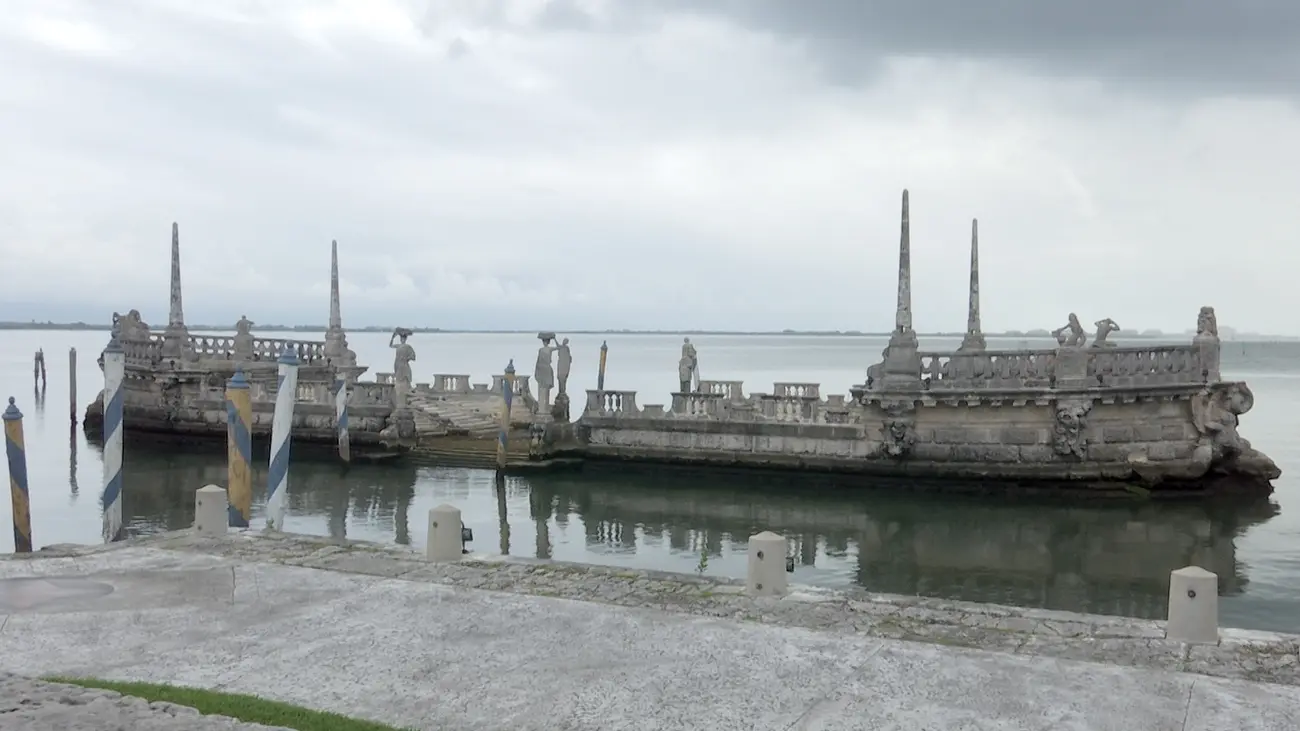
      The biggest and most unique “folly” at Vizcaya is a piece of fantasy architecture sitting in the water in front of the mansion. “The Barge” is a concrete representation of a ship designed to greet visitors arriving to the estate by boat from Biscayne Bay. Deering envisioned what would seem to be the back of his home as the front entrance, facing the water.

      “The Barge” was originally adorned with shrubbery and fountains, and had a small summer house on board. Today, the structure is the least well-preserved aspect of the estate.

      Deering’s grand attempt to control nature was challenged by nature itself on multiple occasions.

      A hurricane in 1926, and two in 1935, severely damaged the estate leading to extensive repairs of the gardens. In 1992, hurricane Andrew impacted the property, particularly the Barge. In 2005, hurricanes Katrina and Wilma further damaged the Barge and caused water intrusion into the home.

      Deering did not live to see the destruction to his carefully designed estate.

      “He was here less than ten years,” says Osterman. “He passed away during a cruise on his way back from Paris to New York in 1925, which was unfortunate, but he did enjoy his winters here staring from 1916 through 1925.”

      In 1951, Deering’s nieces, who were his heirs, sold the Vizcaya estate to Dade County and donated the interior furnishings of the house. The property opened as a museum the following year.

      Modern visitors to Vizcaya can be amazed by the excessive splendor of America’s Gilded Age in Florida and contemplate the illusion of control over our natural environment.

      PDF file(s)
      Article Number
      96
      relevantdate

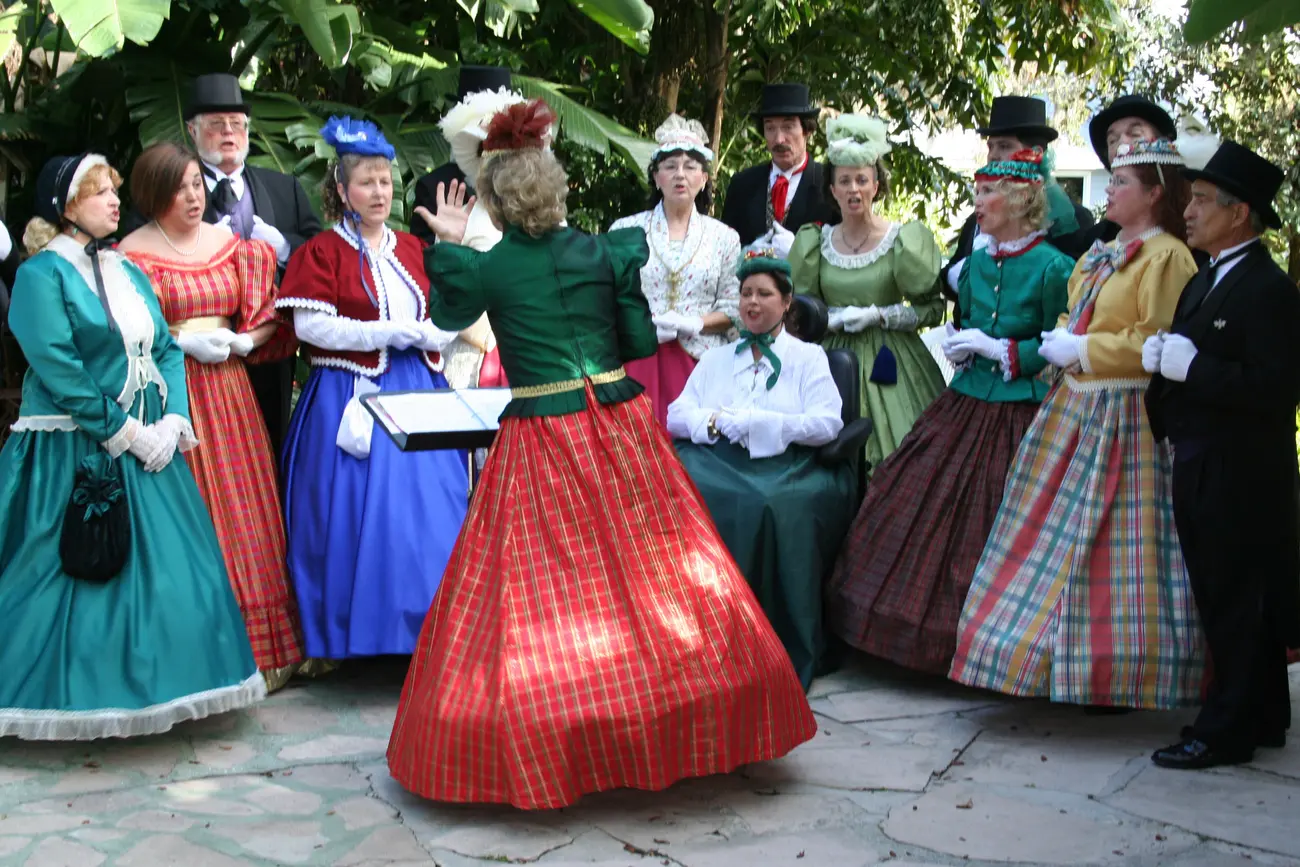
        The Historic Rossetter House Museum and Gardens in Eau Gallie is presenting a free program of Christmas music and stories, Saturday, December 5, from 5:00 pm to 6:00 pm. The Dickens Carolers, dressed in Victorian Era costumes, will perform.

        Christmas celebrations at the Rossetter House date back to the early twentieth century.

        The last resident of the Rossetter House was Caroline P. Rossetter. In 1921, at the age of 23, she took over her father’s Standard Oil Agency, becoming a successful business leader just months after women received the right to vote in this country. She was the first female Standard Oil Agent, and the longest running, operating the business for 62 years.

        During an interview conducted in 1980, Rossetter remembered her family hosting Catholic services before a church was built.

        “The first Catholic Masses in this area were held in our home,” Rossetter said. “The priest would come from DeLand. He was Father Michael Curley, who later became an Archbishop. Father Curley was very handsome. He was a tall blonde, with blue eyes, and he was extremely handsome. We small children adored him.”

        Having Catholic services held in her home made the Christmas holidays particularly special for Rossetter and her family. Young Carrie and her sister Ella were unhappy when their beloved priest moved away.

        “We came home one day, and they had brought Father Curley’s replacement, a priest from Fort Pierce,” said Rossetter. “His name was Father Gabriel. He was from Switzerland, and he was bald-headed, and he was short, and he was far from Father Curley’s appearance. We were very, very heartbroken and very disgusted, and we treated Father Gabriel very coolly for quite some time. Later on, he proved to be one of the great men of his time.”

        Eventually, Rossetter and her sister warmed to the new priest.

        “He would come up on the noon train, spend the night in our home, and go back the next afternoon on the five o’clock train,” Rossetter explained. “We had Mass in one of mother’s parlors. She’d pull out her Queen Anne table and her best Damask table cloths. That parlor had folding doors that would close. Over in the corner, the Catholics of that area made their confessions to the priest. We closed the folding doors, and we kneeled down by the Father, and we had our confessions.”

        The population of Catholics in early twentieth century Brevard County was small. Father Curley helped to establish good relationships with the larger Protestant community.

        “He was a great diplomat and did more to develop the feeling of friendship with the Protestants than any priest has done since,” Rossetter said.

        By 1914, St. Joseph’s Catholic Church was constructed in Palm Bay.

        “Early church services were attended by residents of Melbourne and Eau Gallie who arrived by horse and buggy or by boat and it is said that the primitive road conditions often kept parishioners from attending services,” according to the Historic Brevard Landmark Guide published by the Brevard County Historical Commission.

        With the construction of St. Joseph’s, Christmas services and other masses were no longer conducted at the Rossetter House.

        Today, the Rossetter House Museum and Gardens invites everyone to celebrate the holiday season with music and stories provided by the Dickens Carolers.

        The Dickens Carolers are part of the Brevard Theatrical Ensemble, which maintains a busy schedule this time of year.

        “As the holiday engulfs us, and we are subjected to a barrage of sentiment and commercialism, which are often indistinguishable from one another, simpler days seem so much more attractive, and many of us tend to look to the past,” says Lady Gail Ryan, director of the Dickens Carolers.

        “Thanks to Charles Dickens and a flood of nostalgia for the nineteenth century, the Dickens Carolers take you on a musical and storytelling adventure into some of the traditions that we now include into the celebration of Christmas, which indeed have been around since before the Middle Ages,” Ryan says.

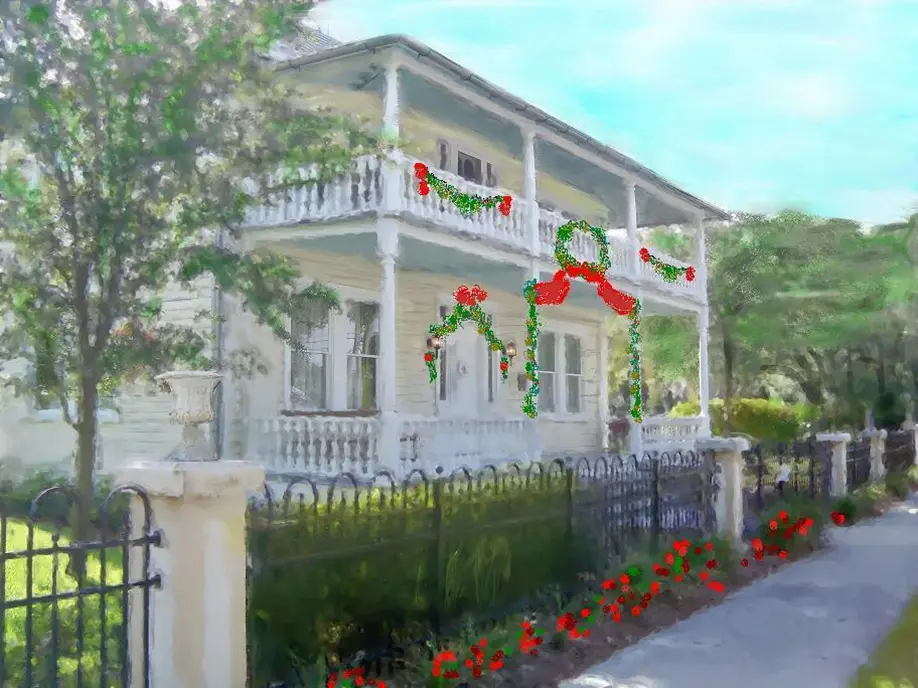
        The Florida Historical Society, which manages the Rossetter House Museum and Gardens for the Rossetter House Foundation, has decorated the home for the holidays. The Dickens Carolers performance is made possible by a grant from the Brevard Cultural Alliance.

        PDF file(s)
        Article Number
        95
        relevantdate

          Ever since 16th century Spanish explorers realized that Florida was a large peninsula, people have dreamed of finding or creating a “shortcut” linking the Atlantic Ocean to the Gulf of Mexico.

          By the early 19th century, a series of politicians and businessmen envisioned cutting a canal from one side of Florida to the other, creating a direct path for commercial boat traffic across the top of the peninsula.

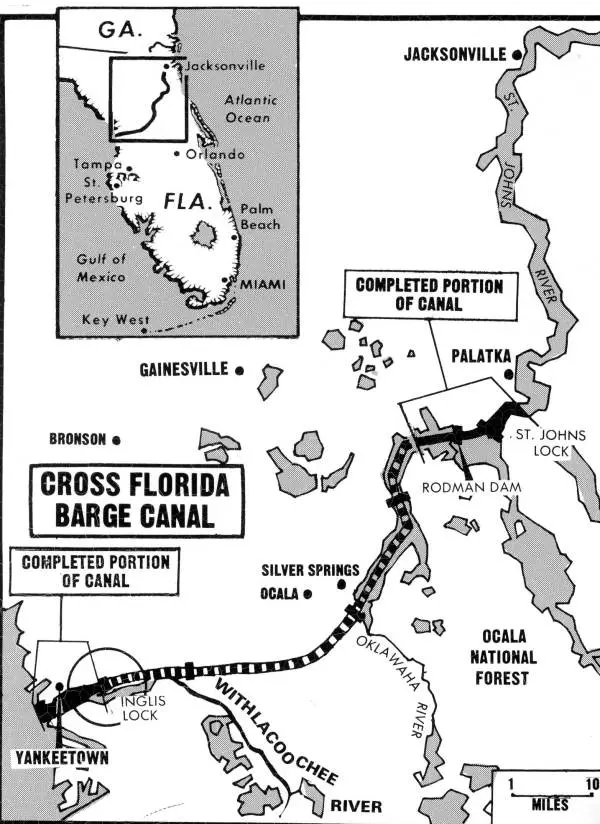
          The Cross Florida Barge Canal would save three days of travel for ships if they didn’t have to go all the way around the peninsula, and could instead cut right through the middle of the state.

          In 1935, the Army Corps of Engineers made plans for the Gulf Atlantic Ship Canal, a 30-foot deep waterway that would allow large vessels to cross the state through Ocala.

          “As a result of a threat to the aquifer, issues of salt water intrusion, there will be a turn towards creating a barge canal, only 12-feet deep,” says David Tegeder, co-author of the book “Ditch of Dreams: The Cross Florida Barge Canal and the Struggle for Florida’s Future.”

          Proponents of the Cross Florida Barge Canal planned a series of locks and dams that would allow a commercial waterway to be created from Jacksonville to Yankeetown, a community north of Tampa and west of Ocala.

          With the Great Depression of the 1930s, construction began on the Cross Florida Barge Canal as a way to stimulate the economy and provide jobs. As part of his New Deal program, President Franklin D. Roosevelt approved a five million dollar allocation of federal funds for the project.

          “In September of 1935, 6,000 men are going to descend upon Ocala, Florida, and begin this construction,” says Tegeder. “Ocala is now a boomtown. There’s rapid growth. In one week the city issues ten liquor licenses as a measure of that optimism, and prosperity begins.”

          Efforts to ensure that canal workers were being treated fairly were met with violence. In 1936, a labor organizer named George Timmerman came to Ocala to see that workers had reasonable compensation and safe working conditions.

          “He is captured, roughed up, and found in the woods crucified, tied to a tree with his lips sewn shut, as a warning that labor activism will not be tolerated on the canal,” says Steven Noll, co-author of “Ditch of Dreams.” “After that, Mr. Timmerman disappears from the historical record.”

          The African American community of Santos, about six miles south of Ocala, was decimated by the canal project.

          “It is an African American community built around both Saturday night jook joints and Sunday afternoon churches,” says Noll. “It is wiped off the map in the 1930s by the canal. The canal is never built there, but the land is taken from these people either through eminent domain or purchased for pennies on the dollar, and the town is basically destroyed.”

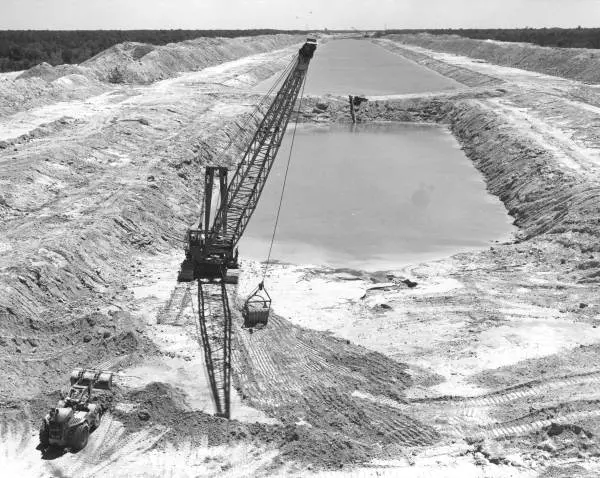
          Environmental concerns stalled completion of the canal for several decades. Federal funding allowed construction to resume in 1964, with President Lyndon Johnson presiding over the ground breaking ceremony. By this time, national defense had joined job creation as a rationale for building the Cross Florida Barge Canal.

          “The national defense angle is that the canal will provide a sheltered waterway for protection, especially for oil tankers as they traverse the waters from the oil fields of Texas and Oklahoma to the refineries of New York,” says Noll. “They will not be able to be victims to the predatory operations of enemy submarines, whoever they might be.”

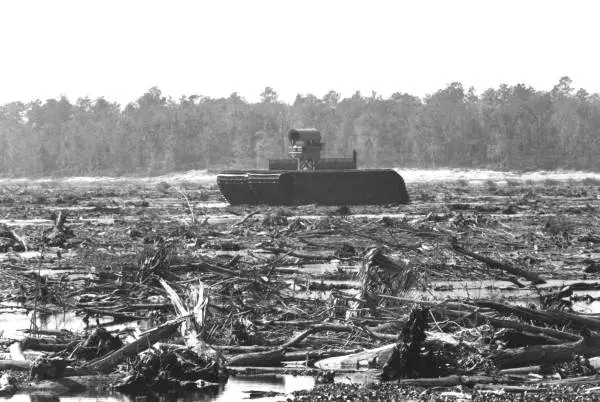
          Marjorie Harris Carr led a group of environmentalists who successfully argued that the Ocklawaha River must be preserved and construction of the canal stopped. Their arguments were fueled by the use of a gigantic, destructive machine called “the Crusher,” that decimated Florida’s natural landscape.

          “This thing could mow down six 80-foot cypress trees in one swath,” says Tegeder. “It basically cleared about an acre an hour.”

          By the time President Richard Nixon halted construction of the canal in 1971, seventy-five million dollars had been spent on the project, and it was approximately 28 percent completed.

          Today, the Marjorie Harris Carr Cross Florida Greenway provides hiking and biking trails on the remnants of the Cross Florida Barge Canal.

          PDF file(s)
          Article Number
          93
          relevantdate

            Personal attacks and name calling have a long tradition in American political campaigns. When polled, people overwhelmingly say they do not approve of such tactics, yet election results demonstrate that such negative campaigning is frequently successful.

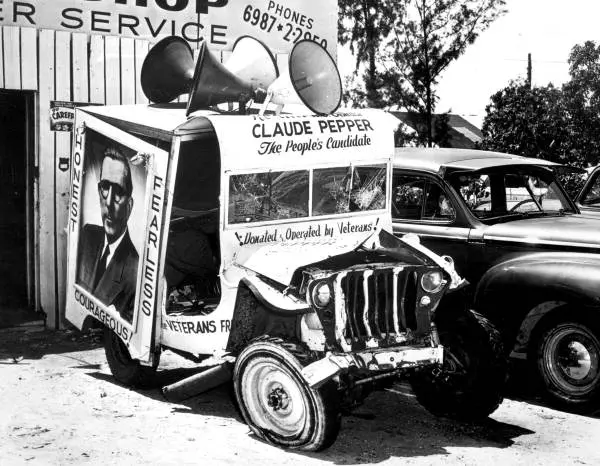
            When modern political commentators discuss the divisiveness of contemporary American politics, they often refer to Florida’s 1950 Democratic Primary as an example a particularly contentious campaign.

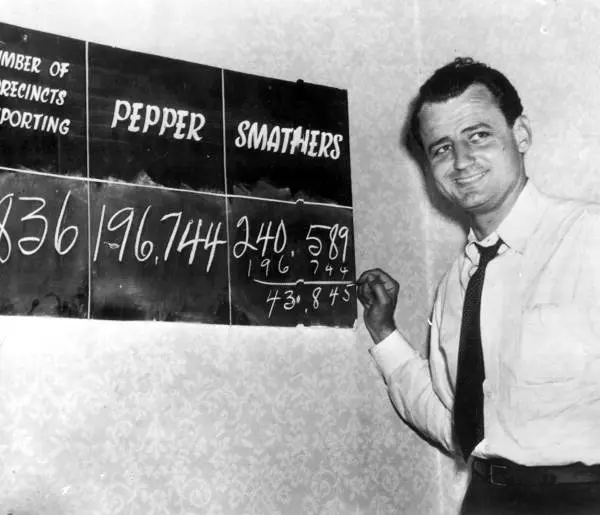
            George Smathers defeated Claude Pepper in that hard fought contest for Florida’s seat in the United States Senate.

            A cynical speech supposedly aimed at unsophisticated Florida voters was attributed to Smathers in the April 17, 1950 edition of Time magazine:

            “Are you aware that Claude Pepper is known all over Washington as a shameless extrovert? Not only that, but this man is reliably reported to practice nepotism with his sister-in-law, he has a brother who is a known homo sapiens, and he has a sister who was once a thespian in wicked New York. Worst of all, it is an established fact that Mr. Pepper, before his marriage, habitually practiced celibacy.”

            This speech has gained legendary status in political circles. It is probably the most famous speech that was never given.

            “The idea was north Florida voters weren’t very bright, and if you used big words, you could confuse them and make the opponent sound terrible, simply by saying truthful things,” says James C. Clark, author of the book “Red Pepper and Gorgeous George: Claude Pepper’s Epic Defeat in the 1950 Democratic Primary.”

            “Clearly this speech by Smathers was never given,” Clark says. “Smathers offered a $10,000 reward for anyone who could prove that the speech had been given. It’s amazing that Smathers served three terms in the Senate, he was close to Kennedy, he was close to Nixon, did a lot in Latin American affairs, and what he’s best remembered for is a speech he never gave.”

            Unfortunately, this piece of political satire is sometimes still quoted as an actual example of campaign tactics in Florida.

            Claude Pepper is today affectionately remembered as a champion of senior citizens, but in the decade leading up to the 1950 Democratic Primary, he was a controversial figure.

            “Before World War II, he was the leading advocate for a military buildup in this country,” says Clark. “He told everyone who would listen that Hitler was going to be a problem for us. For that he was mocked. People on the senate floor mocked him, called him ridiculous.”

            History proved Pepper to be correct about America’s participation in World War II, but not about our developing relationship with the Soviet Union.

            “After the war, he thought that the coming issue would be relations with Russia, but this time he guessed wrong,” says Clark. “He bet that we would have good relations with Russia, and if he championed that, he would come out with a better reputation, just as he had with Hitler. Relations with Russia did not get better, they got far worse.”

            Pepper visited Josef Stalin, and his stance on communism became a key issue in the 1950 campaign.

            President Harry S. Truman and Pepper were political adversaries, and Truman personally asked Smathers to defeat Pepper in the senate race. The campaign was contentious, even though all three men were Democrats.

            “I think if these two people were running today, George Smathers would be the Republican, and Claude Pepper would be the Democrat,” says Clark. “Back then, there was no Republican Party to speak of in Florida, and so the real election was the Democratic Primary. Whoever won the primary would get the election.”

            Clark points out that even today, there are conservative and progressive elements in both major political parties, and that primary races are where “they battle it out for the soul of their party.”

            Although he lost the senate seat he had held since 1936, Pepper went on to serve Florida in the United States House of Representatives from 1963 until his death in 1989.

            Smathers would serve in the United States Senate from 1951 to 1969. The library system at the University of Florida in Gainesville and a beach in Key West are named after him.

            Smathers is also still remembered for a speech he never gave.
             

            PDF file(s)
            Article Number
            92
            relevantdate

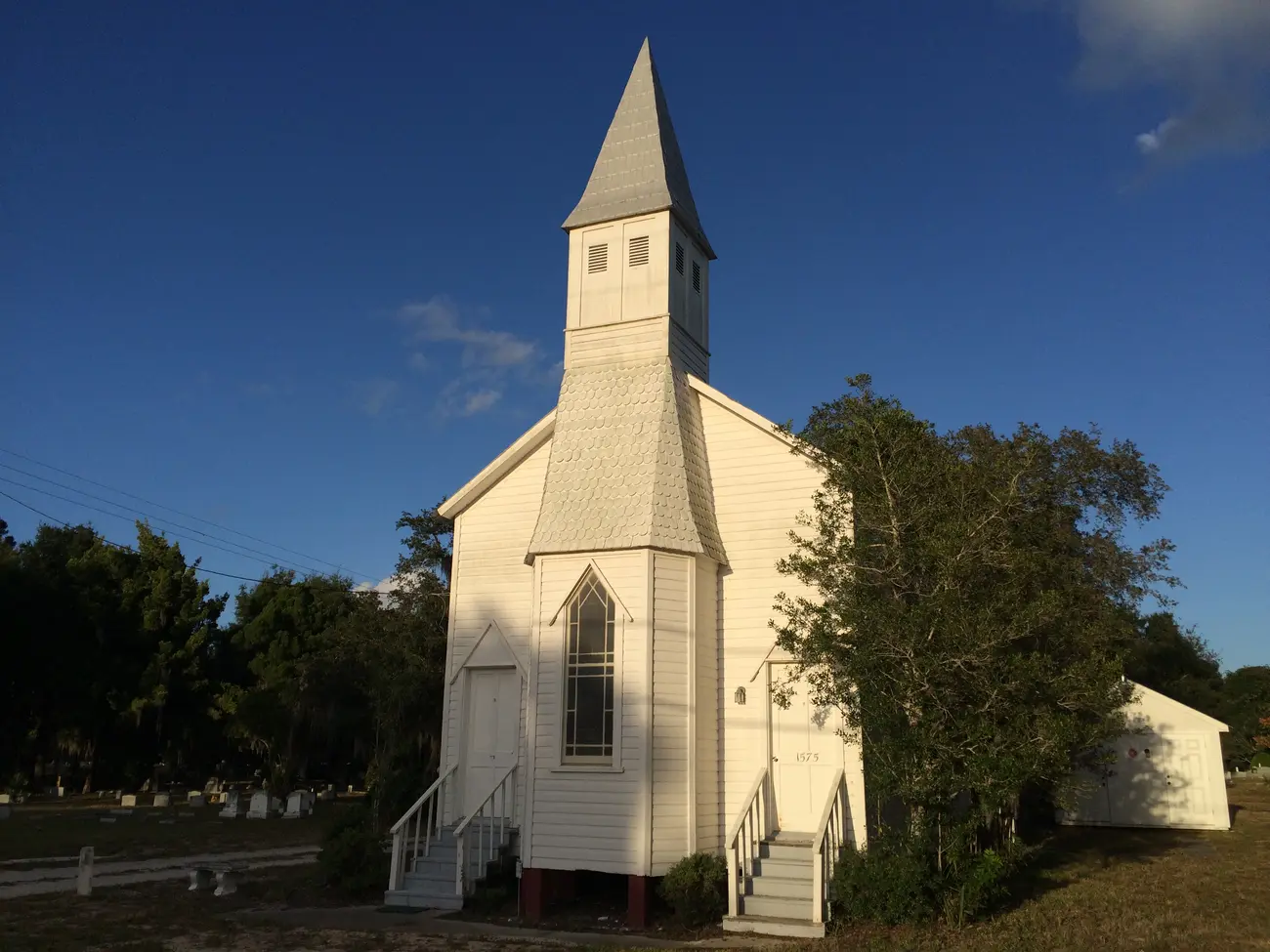
              The LaGrange community was established in the mid-1800s, between what would become Titusville and Mims. The LaGrange Church, organized in 1869, is the oldest Protestant church on the east coast of Florida, from New Smyrna to Key West.

              The original church was built in what is now the northern section of LaGrange Cemetery. A two story log church was built in 1872, at the church’s current location southwest of the cemetery.

              The quaint, Wooden Gothic style LaGrange Community Church standing today was built in 1893, with boards surrounding the first floor of the log church. A pointed steeple and stained glass windows were added.

              In addition to being a church, the building was a public meeting space, and the first public school in Brevard County.

              Walking through the LaGrange Cemetery is like taking a trip back in time. The cemetery serves as a museum of local history, particularly if Rosalind “Roz” Foster, president of the North Brevard Heritage Foundation, is your guide.

              In 1995, Foster led an effort to refurbish and preserve the LaGrange Cemetery, following the restoration of the church.

              “I saw the cemetery that was adjacent to the church, and it was in deplorable condition, overgrown, and the tombstones were lying on the ground, vandalized,” Foster says.

              She asked the Titusville Garden Club to help restore the 1881 gravesite of the town’s namesake, Col. Henry Titus, and the refurbishment of the cemetery continued from there.

              “We noticed there was a lot of history here,” says Foster. “Since 1995, it’s been a continuous effort to restore the cemetery. We work diligently to mark unmarked graves, to validate them, of course, with obituaries, so it’s a long and arduous task to do, but we’re happy to do it.”

              Foster and her team have identified more than 100 unmarked graves while cleaning and restoring existing tombstones. They have complied genealogies for many important pioneer settlers of the area who are buried in the cemetery. The team mapped the cemetery plot by plot.

              The Feaster family plot is in the oldest section of the cemetery. The oldest grave at LaGrange has a very modest marker that belongs to Andrew Feaster, who fought in the war of 1812.

              The original undertaker for the community, Andrew Froscher, is buried at LaGrange. He was a carpenter who helped to build the historic Debary Hall in Volusia County. He later used his skills to build caskets for the deceased in Brevard County, and received training in mortuary services.

              The largest marker in the LaGrange Cemetery is for the Mims family, founders of the town of Mims. Local folklore maintains that the Mims brothers were relatives of the notorious outlaw Jesse James. “That’s the story,” Foster says with a laugh. “I can’t validate that, but that’s what they say.”

              The influenza outbreak of 1918 was devastating to the John Lee Ormond family, with the father succumbing first. “He died December third, the little baby died December fifth,” says Foster. “The mother lasted long enough to care for her dying child, and she died December seventh.” The three are buried next to each other.

              The back portion of the cemetery is the African American section, which was particularly overgrown when Foster and her team started their restoration project. They replaced many missing tombstones with granite markers, an effort that continues today.

              The most recognizable names in the historic LaGrange Cemetery are found in the African American section. This is where educators and civil rights activists Harry T. and Harriette V. Moore were put to rest.

              The couple’s home in Mims was bombed on Christmas night, 1951, which was also their twenty-fifth wedding anniversary. They both died from injuries sustained in the blast, and their murders have never been solved.

              “Every December there is a memorial service here, paying respect to these wonderful people,” Foster says. “Also adjacent to them are some of the well-known pioneer black families of the area who settled this area in the 1800s. The Stricklands, the Warrens, the Cylers, the Sheldons, the Highsmiths, a lot of them are buried in this cemetery, so we also honor them.”

              There are hundreds of other stories in the LaGrange Cemetery, each one contributing to our local history.

              PDF file(s)
              Article Number
              91
              relevantdate

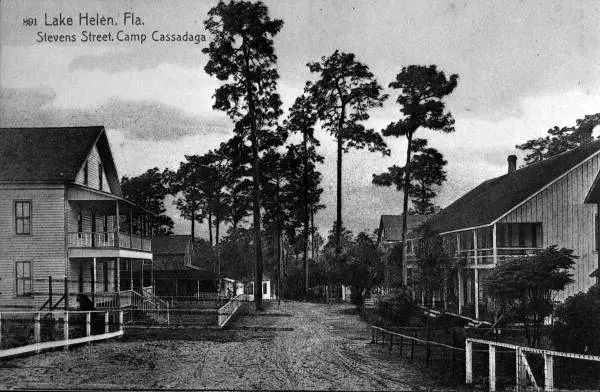
                People visit the town of Cassadaga, Florida, to communicate with the dead.

                The residents of Cassadaga are Spiritualists who believe that life continues after physical death, and that mediums can be used to communicate with those who have passed on to the Spirit World.

                The religion of Spiritualism also embraces a belief in hands-on healing.

                Spiritualism was very popular in the late nineteenth and early twentieth century. The activities of some fraudulent mediums and unqualified spiritual healers led to a distrust of Spiritualism as a whole in the 1900s.

                “Because there was a lot of fakery going on at the turn of the century, a lot of Spiritualists were shut down,” says Kristin Congdon, a professor at the University of Central Florida who contributed to the book Cassadaga: The South’s Oldest Spiritualist Community. “Now in places like Cassadaga, they monitor all of that very carefully and are very concerned about the kinds of people who do readings, who do spiritual counseling, and who address the public, so there isn’t any fakery or forgery.”

                To the dismay of the Spiritualists of Cassadaga, groups of tarot-card readers, palm readers, unapproved mediums, fortune tellers, and other psychics have established places of business directly across the street from the entrance to the village, adding to misconceptions about their religion.

                “A lot of the people who come here don’t want to tell anyone else that they come here, or that they are Spiritualists,” says Congdon. “There is fear of losing their jobs, there is fear of reprisal. Many people who come here come initially out of curiosity. They want to see what it’s all about. Some people feel standoffish about it like it’s a place for witches, or Satanism. There are stories like ‘birds don’t fly over Cassadaga,’ which of course they do. When you really start paying attention to what the religion is all about, it really isn’t so farfetched at all.”

                The certification program for mediums and healers can take four to six years to complete, and to become a minister takes an additional two to four years.

                Cassadaga hosts church services on Sundays and Wednesday nights.

                “A Spiritualist service is basically the same as an orthodox service except for a few things,” says Reverend Jim Watson. “One is that one of the basic tenets of our religion is that we believe in the Continuity of Life, so during every service that we have, there is always a demonstration of the Continuity of Life, or what we call giving messages. We also do what we call hands-on healing, which is something that you see other religions do, but we take it to a little bit more extreme.”

                The residents of Cassadaga, as certified mediums, give private readings to thousands of people every year. In the bookstore and information center across the street from the Cassadaga Hotel, visitors can schedule private readings with available mediums.

                Different mediums have different styles of giving readings. One medium in Cassadaga touches the back of a photograph and provides information about the people in it without looking at it. Another does “spirit drawings” which she then interprets. Other mediums go into trances. Some see spirits as themselves, or in symbolic forms such as a feather or a landscape. Special trumpets are used by some mediums to facilitate vocal communication with spirits.

                “People who have their readings done, they usually say they are incredibly accurate, and that there’s no way the mediums could have known that information,” says Gary Monroe, editor of Cassadaga: The South’s Oldest Spiritualist Community. “It really surprised me. It’s not just one or two people. I would say eighty-five percent of the people who have readings connect to them. They’re not general readings; they’re rather specific and detailed, which really got me thinking about powers that we all possess, and they fine-tune.”

                Cassadaga was founded in 1894 by George P. Colby, who said he was led to the property by his Native American spirit guide, Seneca. The town was originally conceived as a winter residence for Spiritualists from Lily Dale, New York.

                Recognized as the oldest religious community of its type in the southeastern United States, Cassadaga is on the National Register of Historic Places.

                PDF file(s)
                Article Number
                90
                relevantdate

                  The Windover Dig in Titusville, Florida was one of the most important archaeological discoveries in the world.

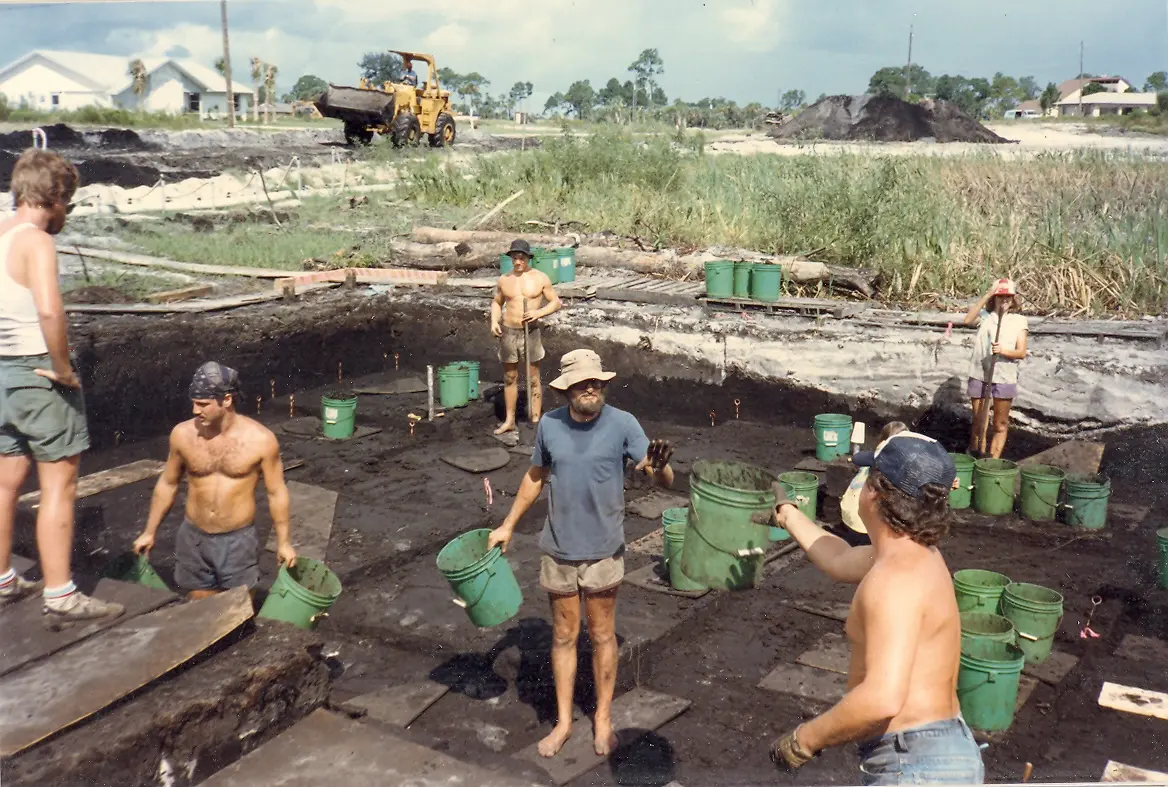
                  Nearly 200 ritualistically buried bodies were discovered, wrapped in the oldest woven cloth found in North America. The amazingly well-preserved remains were determined to be between 7,000 and 8,000 years old, making them 3,200 years older than King Tutankhamen and 2,000 years older than the Great Pyramid in Egypt.

                  The initial discovery of ancient human remains occurred in 1982, during construction of the Windover Farms housing development near the intersection of I-95 and State Road 50. Three archaeological digs were conducted between 1984 and 1986, and the fascinating results of those excavations attracted international attention.

                  The only comprehensive exhibition exploring the Windover People is at the Brevard Museum of History and Natural Science in Cocoa. The Florida Historical Society Archaeological Institute is in the process of significantly expanding and improving the educational, interactive display.

                  The Brevard Museum is presenting a “Windover Weekend” November 13 and 14. The exhibit preview Friday evening will include gourmet hors d’oeuvres, wine and beer, live music, and special guests. The exhibit opening will continue on Saturday with a panel discussion called “Windover Archaeology: The Next Generation.” Tickets for all of the activities are available now at www.myfloridahistory.org.

                  While building upon and refreshing elements of the existing Windover People exhibition, this substantive expansion includes a new, functional archaeology lab for students and visitors to have a hands-on experience, a new video about the Windover Archaeological Dig, and the unveiling of Windover Woman, an artistic interpretation by sculptor Brian Owens based on forensic reconstruction of a Windover skull. You will be able to look into the eyes of a person who lived in Florida more than 7,000 years ago.

                  “Brian Owens is making great progress on his bust of the Windover Woman, and I feel lucky to have had a few sneak peeks at his work in progress,” says Patty Meyers, director of the Brevard Museum of History and Natural Science, and the Florida Historical Society Archaeological Institute.

                  “I also recently had the opportunity to visit Florida State University and meet with Drs. Thomas and Marrinan to discuss the loan of Windover artifacts for the exhibit,” says Meyers. “We are still working out the details, but we will be able to share some amazing items with our visitors.”

                  Visitors to the Brevard Museum over the past few decades will remember that the Windover exhibit features a recreation of the archaeological dig. That portion of the exhibit has been made even more realistic, and a new recreation of an archaeology lab is being added. The lab display is modeled after the area at FSU where work is conducted on the Windover artifacts, from the style of lab table used to the linoleum flooring.

                  “For every hour an archaeologist spends in the field, approximately five or six hours are spent in the lab,” says Meyers. “With a background in human osteology, I have spent a great many hours in the lab. I am excited to be using this experience to design hands-on activities, which will allow visitors to discover how the secrets of the Windover population were revealed through osteological analysis.”

                  With only a couple of exceptions, the Windover People were ritualistically buried and placed in the same fetal position, lying on the left side. The heads were pointed west, with their faces to the north. The deceased were wrapped in what archaeologists believe is the oldest existing woven fabric in the world. Several branches were lashed together to form a tripod that held each body submerged underwater, creating a pond cemetery.

                  The anaerobic environment of the peat bog combined with a remarkably favorable Ph balance in the pond allowed for exceptionally well-preserved burials. Archaeologists discovered that ninety-one of the skulls uncovered contained intact brain matter. The stomach contents of one ancient woman indicated that her last meal consisted of fish and berries. DNA tests on these Archaic Period remains proved that the same families used the site as a burial ground for more than a century.

                  Experience “The People of Windover” as the improved and expanded exhibition opens at the Brevard Museum of History and Natural Science, 2201 Michigan Avenue, Cocoa.

                  PDF file(s)
                  Article Number
                  89
                  relevantdate

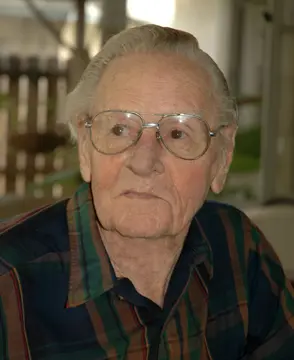
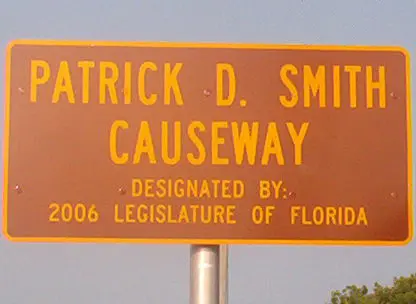
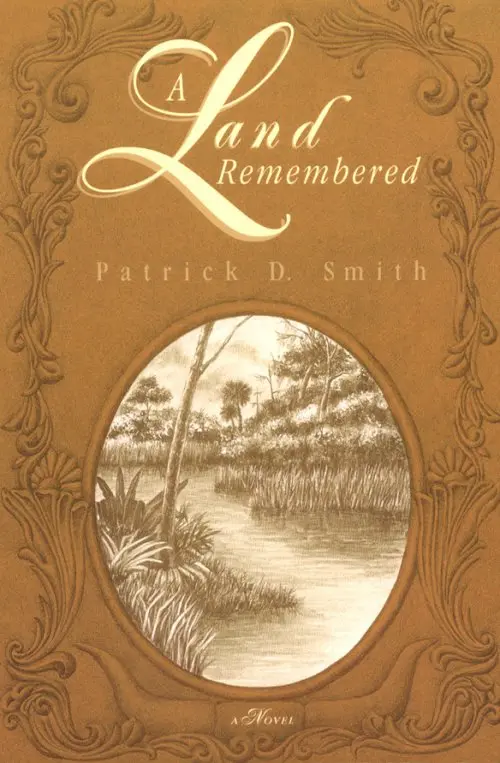
                    Patrick D. Smith’s 1984 novel “A Land Remembered” is one of the most popular books about Florida ever written.

                    The beloved Merritt Island author was born October 8, 1927, and died January 26, 2014. He would have been 88 this week.

                    Most popular novels have a year or so of commercial success, perhaps getting another boost when a paperback version comes out. Smith’s “A Land Remembered” has been a bestseller in Florida since it was first published.

                    “You know, that’s hard to understand sometimes,” said Smith. “Every year it gets more and more readers. It’s really gaining with young readers. Most of the schools in Florida now teach it. The young kids really like it, because they had no idea that Florida was ever like it’s depicted in ‘A Land Remembered.’”

                    It’s not just young readers who love “A Land Remembered.” Many lifelong Floridians say that if you are only going to read one book about the history and culture of the state, then this novel should be it.

                    The novel “A Land Remembered” follows the fictional MacIvey family for more than a century, from their arrival in Florida in 1858 through 1968. The family struggles at first to live off the land, but becomes very successful in the cattle industry. The last generation covered in the book loses connection with the land, selling it off for development.

                    “The last of the MacIveys, Sol, is the one who built all those structures and came to regret it,” said Smith. “Before he died, he gave a lot of the land to the state to be preserved forever as wildlife preserve. So, he regretted what he had done.”

                    In the novel, pioneer life is difficult for the MacIveys as they face hurricanes, freezes, and mosquitos capable of killing cattle. They have conflicts with cattle rustlers and Confederate deserters, but develop friendships with Native Americans and African Americans who are also struggling to survive in the Florida wilderness.

                    “I wanted to make that family real, to show what they really went through,” said Smith. “Not just telling readers there was a Great Freeze in 1895, but showing how that affected this family, and how they were affected by the coming of the railroads, and the birth of the cattle industry and the Civil War. Later on, how they were affected by the great land boom down in Miami in the 1920s, and that hurricane that hit Lake Okeechobee in 1928 and killed over 2,000 people. These are all things that really happened in Florida, but the really important thing to me was to show how they affected people.”

                    No one family experienced everything that the MacIveys did, but almost everything in the book did happen to one pioneer family or another.

                    “That book is not based on one family,” Smith said. “The characters are composites of different families. I’ve had at least a dozen families in this state swear to me that the book is about their family because they identify with it.”

                    “A Land Remembered” was recognized by the Florida Historical Society when it was first published, earning the Charlton Tebeau Award for Best Novel based on Florida history.

                    In 2012, Patrick Smith won the State of Florida’s Lifetime Achievement Award for Writing.

                    Smith had success with other books including “The River is Home,” “Allapattah,” and “The Beginning.” His novel “Angel City” was made into a film starring Paul Winfield, Jennifer Jason Leigh, and Ralph Waite.

                    “It’s seven novels all together,” said Smith. “Only one of them was really as popular as ‘A Land Remembered.’ That was ‘Forever Island.’ It’s been published all over the world. There’s not too many writers left in Florida who’ve been at it as long as I have. My first novel, ‘The River is Home’ was published in 1953. I’ve written a total of ten books. I know that’s not a lot of books, but you know, I did it at the same time I held down a full time job, and that makes a lot of difference.”

                    Smith was placed in the Florida Artists Hall of Fame in 1999 to commemorate his full body of work, but he will always be best remembered for “A Land Remembered.”
                     

                    PDF file(s)
                    Article Number
                    88
                    relevantdate

                      Peggy Bulger wanted to follow in Stetson Kennedy’s footsteps. In fact, Bulger wrote her doctoral dissertation about him.

                      As head of the Florida Writer’s Project for the Works Project Administration in the 1930s and ‘40s, Kennedy traveled throughout the state documenting the traditions, folktales, and folk songs of Florida’s diverse population. He recorded the oral histories of Greek sponge divers in Tarpon Springs, Latino cigar rollers in Ybor City and Key West, Seminole Indians at Big Cypress, and many others.

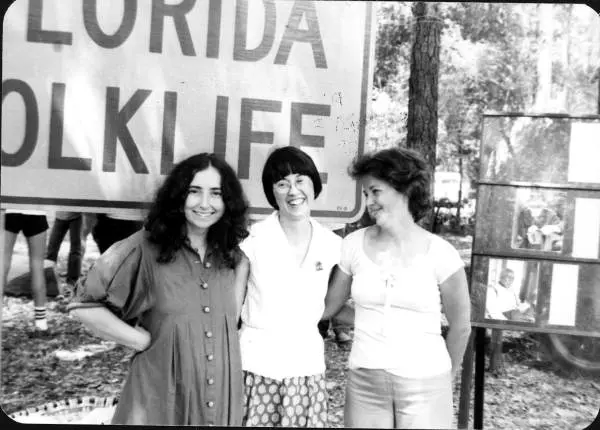
                      Bulger came to Florida in 1976, at the age of 25, to become the first Folklife Coordinator for the State of Florida under the Department of State Division of Historical Resources.

                      “I started really delving into materials that were done during the WPA,” says Bulger. “Stetson Kennedy, Zora Neale Hurston, Alan Lomax, Herbert Halpert, all of them were folklorists who had worked in Florida back in the ‘30s and ‘40s. I was 25 years old in 1976, and I thought that anyone who had lived in the 1930s and ‘40s was dead, because that was ancient history.”

                      Bulger told someone at the University of Florida archive that she wished some of the folklorists whose work she admired were still alive. She was informed that Stetson Kennedy was alive and well and living in Jacksonville.

                      “I went to see Stetson and I started interviewing him about the WPA and the work that he had done here in Florida,” Bulger says. “Over the course of the years, we became fast friends, from ’76 to when he died in 2011. He really informed the work that I did in Florida.”

                      Bulger’s position as the head of the Florida Folklife Program was originally funded by a one year grant from the National Endowment for the Arts.

                      “Bess Lomax Hawes, who is Alan Lomax’s sister, had just started working at the National Endowment for the Arts, and she had created this folkarts program,” says Bulger. “Her vision was that she wanted to place a folklorist in every state in the country to really do the kind of work that the WPA and the Federal Writer’s Project had been doing all over the country during the ‘30s. Back then, in 1976, I was just young enough and naive enough to think ‘oh, it’ll be possible to do a survey of the folkart of Florida in one year.’ I soon found out that would not be the case.”

                      Bulger was able to find other grant funding to keep her position in place so she and her staff could collect and document the culture of our state. The program continues today.

                      The Florida Folklife Collection contains manuscripts, photographs, audio and video recordings, and other materials dating from the 1930s to the present. The Florida Folklife Program documents our rich and varied traditional cultures and preserves our heritage through apprenticeship programs and educational outreach.

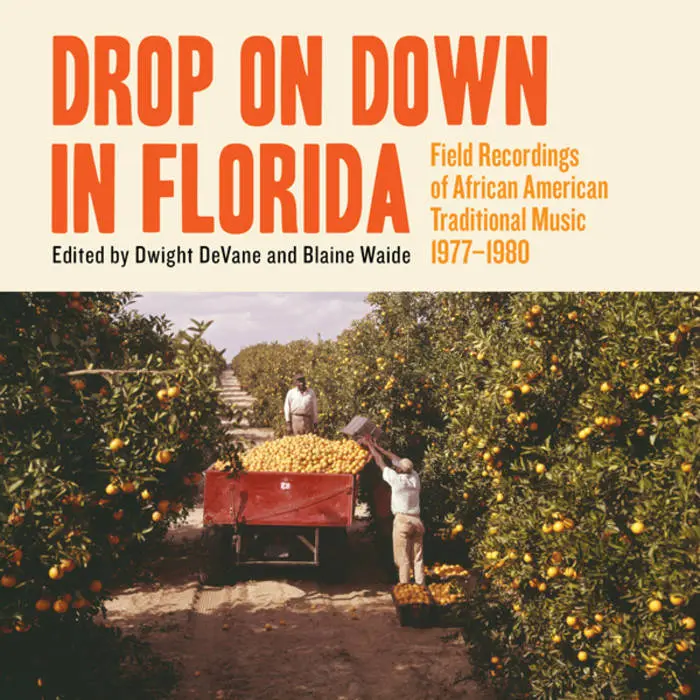
                      Some of the work that Bulger is most proud of from her time as Florida Folklife Coordinator is a project that was released as a double album in 1981, called “Drop on Down in Florida: Recordings of Traditional African American Music, 1977 to 1980.”

                      That project has now been released in digital formats with three times as much material and a 224 page book.

                      “It’s fieldwork that we did with African American sacred and secular music,” says Bulger. “There were four of us doing fieldwork all over the state.”

                      Bulger has dedicated her life to preserving tradition cultures, but is philosophical about the fact that change is inevitable.

                      “I did a documentary on the shrimping industry of Fernandina Beach where I now live,” says Bulger. “When I was doing that documentary in the 1970s, there were over a hundred shrimp boats going out every day. There’s now eight.”

                      By the time Bulger was working in the 1970s, much of what Stetson Kennedy had documented in the 1930s had changed.

                      Bulger served as director of the American Folklife Center at the Library of Congress from 1999 to 2011. She then returned to Florida, and is pleased to see the program she developed here going strong.

                      “It just does my heart so much good to see young scholars coming in and taking over the reins,” says Bulger.

                      PDF file(s)