Article Number
108
relevantdate

    Gotha, Germany, has existed since the Middle Ages. Charlemagne, who united most of Western Europe, mentioned the town in a document he signed in the year 775.

    The small community of Gotha, Florida, was officially designated on April 20, 1885. The town is located in Orange County, between Ocoee and Windermere.

    While living in Buffalo, New York in 1878, German printer Henry Hempel invented and patented a printing tool that revolutionized the way that pages were set up for printing. With new wealth earned from his invention, Hempel decided to create a German colony in Florida.

    Hempel came to Central Florida in 1879, and began purchasing land. By 1883, he had acquired 1,000 acres where he created a town plat. He named the colony after his hometown in Germany, and invited other Germans to join him there.

    To generate lumber, Hempel established a sawmill. This allowed for the construction of a general store, a post office, a school, a community hall, and other buildings in Gotha. He supplied wood shingles for some of the first homes in Altamonte Springs, Winter Park, and Maitland. His mill also provided orange crates for the local citrus industry.

    “Gotha in the 1890s was a very lively community,” says Kathleen Klare, director of the Gotha Rural Association, Inc. “It had Turner Hall where it had musical events, minstrel shows, and dance events. They taught gymnastics. They even had a bowling alley in the 1890s. Because of the background and the intellect of these German people, they were rebuilding the character of their old German culture, and they were building it in the woods of Florida.”

    At the same time that Hempel was organizing his German colony in Florida, the German Freethinkers League was founded by philosopher Ludwig Büchner.

    “Hempel was not just building a little town,” says Klare. “Hempel was a freethinker. He was looking to build a colony of people that had similar perspectives.”

    Freethinkers believed in individuality of thought, and forming one’s own opinions based upon logic, reason, and empirical data rather than authority, tradition, or religious dogma.

    “Secular points of view were what they were espousing,” says Klare.

    Horticulturalist and naturalist Dr. Henry Nehrling began purchasing land in Gotha in 1885. At first, Nehrling only visited Gotha for a few months each year.

    “At that time he was working for the Milwaukee Public Museum, and he did not officially move down to Gotha until 1902,” says Klare.

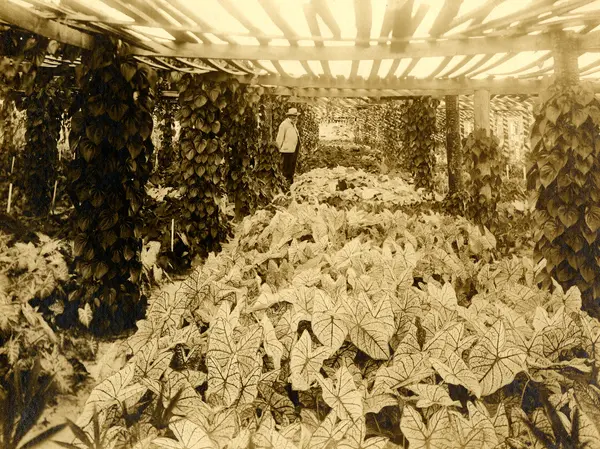
    Nehrling created Palm Cottage Gardens, a tropical garden that became a popular tourist destination in the early twentieth century. He also developed an experimental testing facility on the property, where he helped to establish Florida’s ornamental horticulture. Nehrling wrote many articles for scholarly journals and magazines, and became best known for his caladiums.

    Nehrling Gardens was placed on the National Register of Historic Sites in 2000.

    Many of the German families who first settled Gotha in the 1880s made their living in the citrus industry. When the Big Freeze of 1894-95 devastated orange crops in Florida, some of those families left the state. As the citrus industry recovered in the early twentieth century, new families moved to Gotha, but the community began to lose its distinctively German identity.

    “As the citrus industry is gradually coming back, it’s offering job opportunities,” says Klare. “What you get is migration from neighboring states like Georgia and Alabama, but you’re getting different groups of people.”

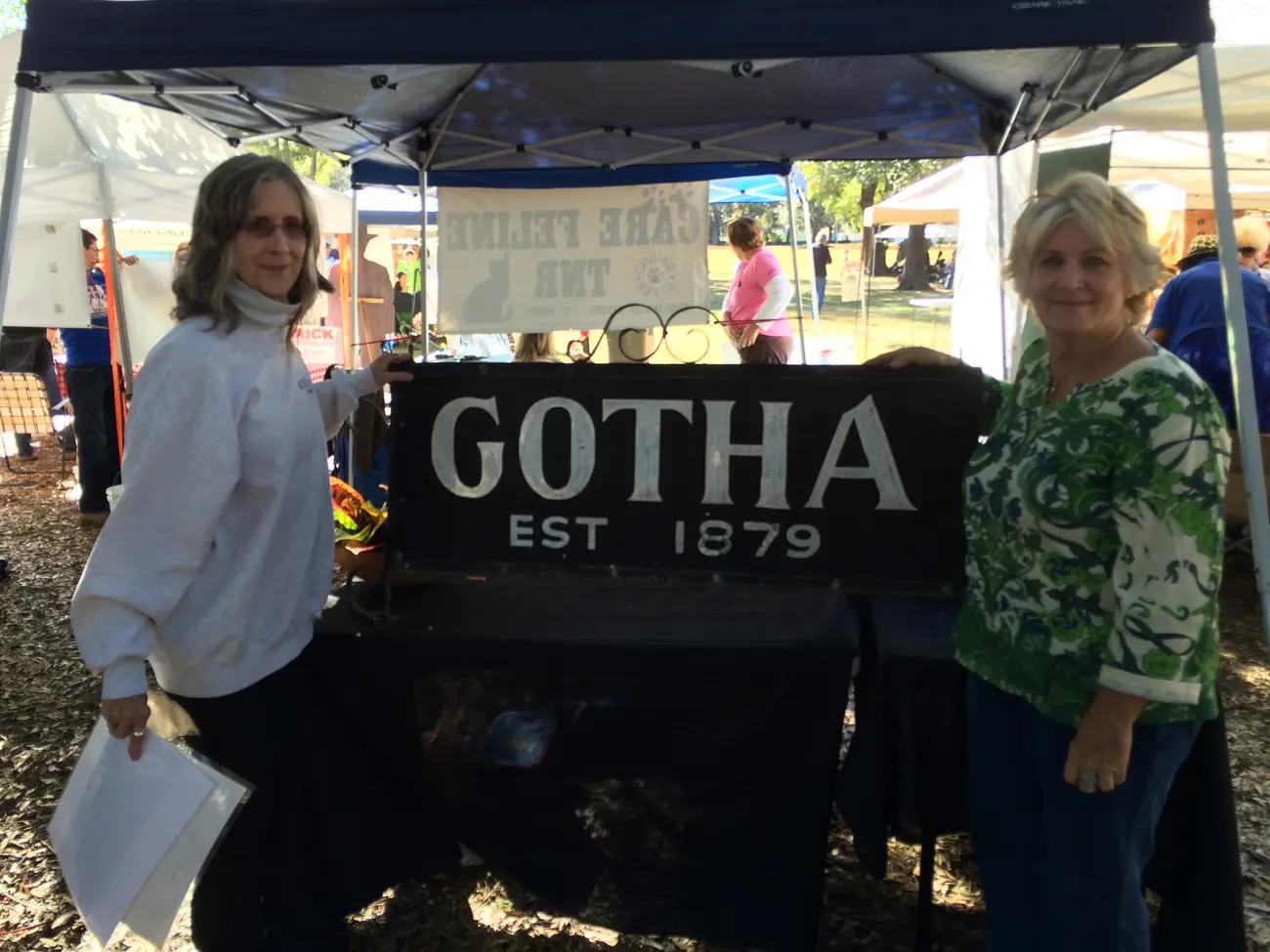
    The urban sprawl of the greater Orlando area is encroaching upon Gotha. The Gotha Rural Settlement Association, Inc. hopes to preserve the few remaining historic structures in the town.

    “We do have a few buildings,” says Klare. “We have an old Gothic church that was built in 1913, that needs an awful lot of upkeep.”

    The organization also wants to share the unique history of Gotha to help revive a sense of community in the town.

    “I grew up in the Gotha community,” says Klare. “My family came in 1911. There were always community events, picnics, dinners, and different kinds of things that the Women’s Clubs were doing. It was very active. That has died since the 1990s. There’s a group of us now that would really like to bring back a sense of community.”
     

    PDF file(s)
    Article Number
    107
    relevantdate

      In early 1965, cartoonist, filmmaker, and visionary entrepreneur Walt Disney began quietly purchasing large tracts of land in Central Florida.

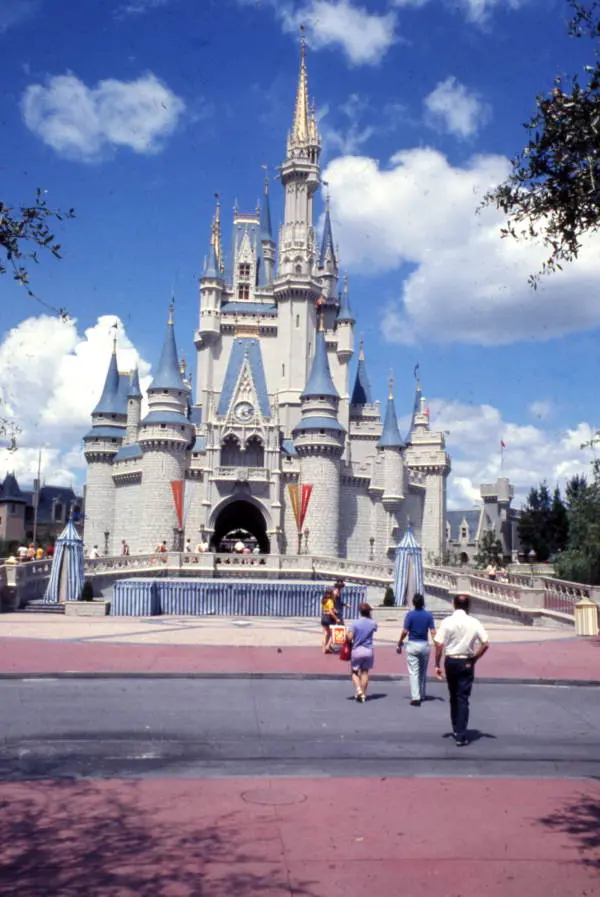
      Inspired by the success of his theme park Disneyland in Anaheim, California, Disney wanted to develop his original idea more fully by creating an expansive vacation destination on America’s east coast. Attracted by Florida’s temperate climate and already established tourist trade, Disney decided to build his new “Magic Kingdom” in the center of the state, near Orlando.

      By October 1965, Disney had acquired nearly 43 square miles of Central Florida land. Nearby residents speculated wildly that a huge industrial plant or some secret government installation was being built in their backyard.

      The following month, Disney held a press conference in Orlando announcing his plans to develop Walt Disney World. It would be a much larger version of Disneyland, and unlike the California property; Walt Disney World would have room for further expansion.

      Also explained were plans for the Experimental Prototype Community of Tomorrow, or EPCOT, a city celebrating world culture where research to benefit humankind would take place.

      Disney died in 1966, before seeing his dream for the property realized.

      The Disney Corporation continued, opening Walt Disney World in 1971. The project had a profound impact on Florida that continues today. The expansive collection of Disney owned theme parks, attractions, and hotels have made Central Florida one of the most popular tourist destinations in the world.

      Long before Disney came to Florida, the state was marketed to tourists as a place where fantasy could become reality. Disney wanted to perfect that idea of creating a new reality for visitors.

      “Florida, for a long time has represented this kind of transcendent place,” says Cher Krause Knight, author of the book Power and Paradise in Walt Disney’s World. “In the nineteenth century and into the early twentieth century, there was a lot of marketing of Florida as a restorative place where you could regain your health, regain your youth. You would live not just a longer life, but a better, happier life by coming here.”

      Disney had some personal ties to Florida. His father worked briefly in the state and his parents were married in Kissimmee, just miles from where Walt Disney World would be constructed.

      There is an apocryphal story that while Disney’s brother Roy was visiting Cypress Gardens, he was so amazed by Dick Pope’s Florida theme park that he called Walt on the telephone from an office there. Walt Disney was not yet in the theme park business, but Roy reportedly encouraged him to consider it.

      “He had been thinking about it, though,” says Knight. “We know that as early as the 1930s he had drawn up some plans and ideas. He wanted to do a small theme park on his (film studio) back lot in Burbank, but he was having difficulty with the city officials there. By the ‘40s and into the early ‘50s, he started to get really interested in other themed environments. There were some places he thought did it all wrong and others that did it closer to right, but he thought that he could perfect it.”

      Disneyland was Disney’s first theme park, built in 1955. His park in California was quickly surrounded by urban sprawl, which Disney did not like. To perfect his theme park concept in Florida, Disney made sure that he acquired enough property to insulate his fantasy world.

      “If you come to the Florida property, once you enter Disney’s property proper, it’s a bit of time before you actually start hitting any of the attractions or theme parks,” says Knight. “The highways are of different quality in terms of maintenance as soon as you get on the Disney property.”

      The Disney Corporation even created its own government in Florida called the Reedy Creek Improvement District.

      “It’s really unprecedented,” says Knight. “We don’t really see any other private corporation that’s been able to officially be endowed with those sorts of powers. They have within their rights the ability to build both their own airport, and a nuclear power plant.”

      Today, Walt Disney World is the most visited theme park on the planet, bringing more than 50,000 tourists to Central Florida every day.

      PDF file(s)
      Article Number
      106
      relevantdate

        Mother Laura Adorkor Kofi was assassinated on March 28, 1928, while giving a speech at Thompson’s Hall in Miami. Many in the audience believed that Kofi was a divine prophet sent by God to liberate African Americans and black people around the world.

        “She said that she had a revelation to liberate African American people, to take them on the right course, back to the Promised Land, Africa, and to create an independent community, a cultural, independent community,” says Vibert White, author of an essay on Kofi in the book Africa in Florida: Five Hundred Years of African Presence in the Sunshine State.

        Kofi came to America in the early 1920s from West Africa, and quickly became part of the Black Nationalist movement. She joined Marcus Garvey’s Universal Negro Improvement Association, becoming a prominent spokesperson and national field director for the organization. At the time, the UNIA was much larger and more influential than other African American support groups such as the NAACP and the Urban League.

        “Within months, she becomes the most popular figure in that group, except for Marcus Garvey,” says White. “They send her throughout the Deep South. Mississippi, Alabama, and everywhere she is going she’s attracting, five, and ten, and fifteen thousand audience members, something that had never been seen before.”

        UNIA founder Marcus Garvey was very supportive of Kofi until he was imprisoned for mail fraud in 1925.

        While Garvey was in prison, Kofi’s fame and influence grew. Enthusiastic crowds continued filling theaters and auditoriums in Florida and throughout the south to hear Kofi’s passionate speeches about the opportunities available to black people if they repatriated to Africa.

        “For many African Americans, it was their first time listening to someone from Africa,” White says. “She spoke about the greatness of Africa. She spoke about the movement from Africa to liberate the people here, and that there was a divine relationship between the Africans, the east blacks, and the western blacks, the African Americans. She spoke of pride and strength.”

        From his prison cell, Garvey attacked Kofi’s credibility and encouraged his followers to abandon her. Some members of the UNIA began creating disturbances at Kofi’s presentations, and she feared that her life was in danger at the hands of Garvey’s inner circle.

        Kofi relocated from Miami, where she felt threatened, to Jacksonville. She announced her split from the UNIA, and established the African Universal Church. As leader of this new spiritual movement, she became known as “Mother Kofi.”

        “She’s from Kumasi, she’s from the Ashanti community,” says White. “The Ashanti community in West Africa has some of the strongest religious beliefs of any people within that region. They believe that they are direct descendants from God, that the Garden of Eden is in Kumasi.”

        While still living in Kumasi, Kofi had a vision that she believed came directly from God, identifying her as a divine presence on earth. She came to believe that it was her spiritual calling to liberate black people around the world, particularly in America. Before her murder, she wrote a treatise called “Sacred Teachings and Prophesies.”

        On March 28, 1928, Mother Kofi returned to Miami to speak. Thousands gathered to hear her talk about the power of God to help Africans and black Americans. In an unusual move, she asked her bodyguards to sit down. That allowed a gunman to rush the stage and shoot Kofi in the back of the head, killing her.

        Mother Kofi became a religious martyr to her followers.

        “It took them over a month to bury her,” says White. “When they left Miami, they had a funeral in West Palm Beach. They had a funeral in St. Augustine. They had a funeral in Daytona Beach, and so on, until they ultimately got to Jacksonville to bury her.”

        Mother Kofi had identified Eli Nyombolo as her successor in the African Universal Church. He continued and expanded the AUC.

        “He was from South Africa and connected to the Zulu community,” White says. “The Zulu community was very instrumental in the development of the African National Congress, the ANC, that ultimately fought to destroy apartheid.”

        Today, people still make religious pilgrimages to Mother Kofi’s mausoleum in Jacksonville’s old City Cemetery.

        PDF file(s)
        Article Number
        105
        relevantdate

          This weekend, residents of Brevard County can celebrate and learn about the people who lived here before us.

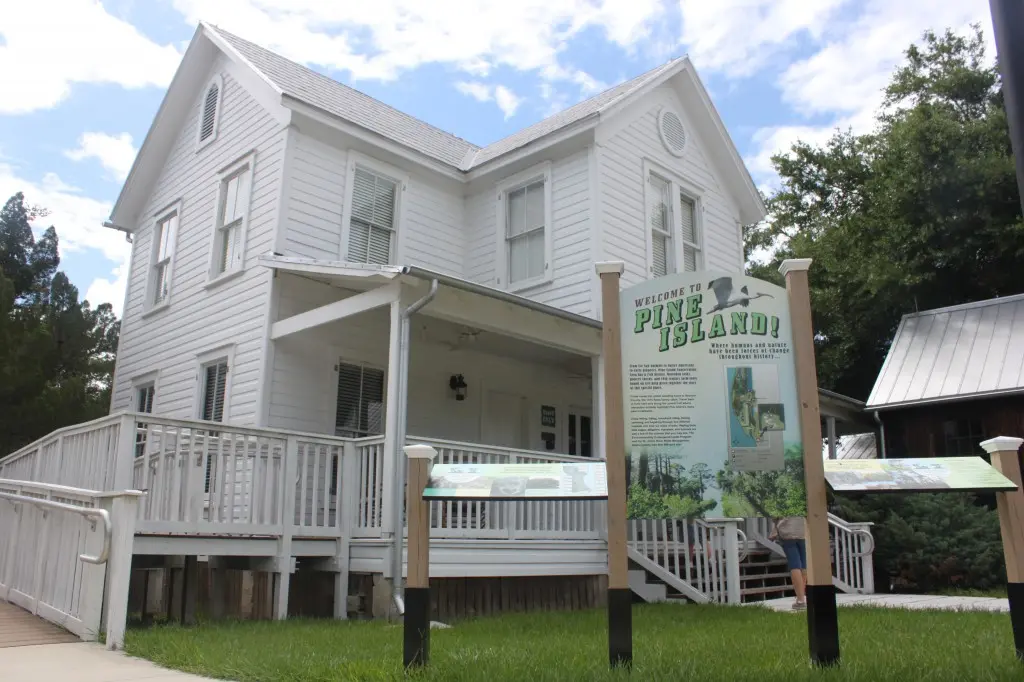
          The fifth annual Pioneer Day will be held Saturday at the Sams House in the Pine Island Conservation Area, and at St. Luke’s Episcopal Church on North Tropical Trail, Merritt Island. A shuttle will run from 10 am to 4 pm between the two locations.

          Pioneer Day is hosted by the Pine Island Preservation Society and will feature presentations about our area’s prehistoric people, craft vendors, educational displays, children’s games, music, and food.

          The Pine Island Conservation Area covers more than 900 acres and is jointly owned by the Environmentally Endangered Lands Program and the St. Johns Water Management District. Archaeological excavations of the area have uncovered fossils of creatures who lived on the property between 20 and 30 thousand years ago, including Mastodon, Mammoth, Giant Land Tortoise, and Giant Armadillo.

          “Archaeologists have found everything from fossils of the prehistoric mega fauna that used to roam Florida during the Ice Age, to evidence of human occupation by Native Americans that predate even the contact period peoples that were eventually met by people like Ponce de Leon and Menendez and other early Spanish explorers,” says Kevin Gidusko, co-chair of the Sams House Pioneer Day event.

          The archaeological evidence indicates that people inhabited what is now the Pine Island Conservation Area as long as 9,000 years ago.

          “Like a lot of places in Florida, what was found were things like lithic scatters, stone tools, and lots of shell tools,” says Gidusko. “Animal remains that had been food for these people would show that they were collecting certain types of food in abundance.”

          Between 4,000 and 5,000 years ago, people in Florida started using pottery. Styles of pottery change over time, and can indicate trade networks with people in other areas. Styles of pottery found at Pine Island include ceramic sherds of St. Johns Plain and Sand-Tempered Plain.

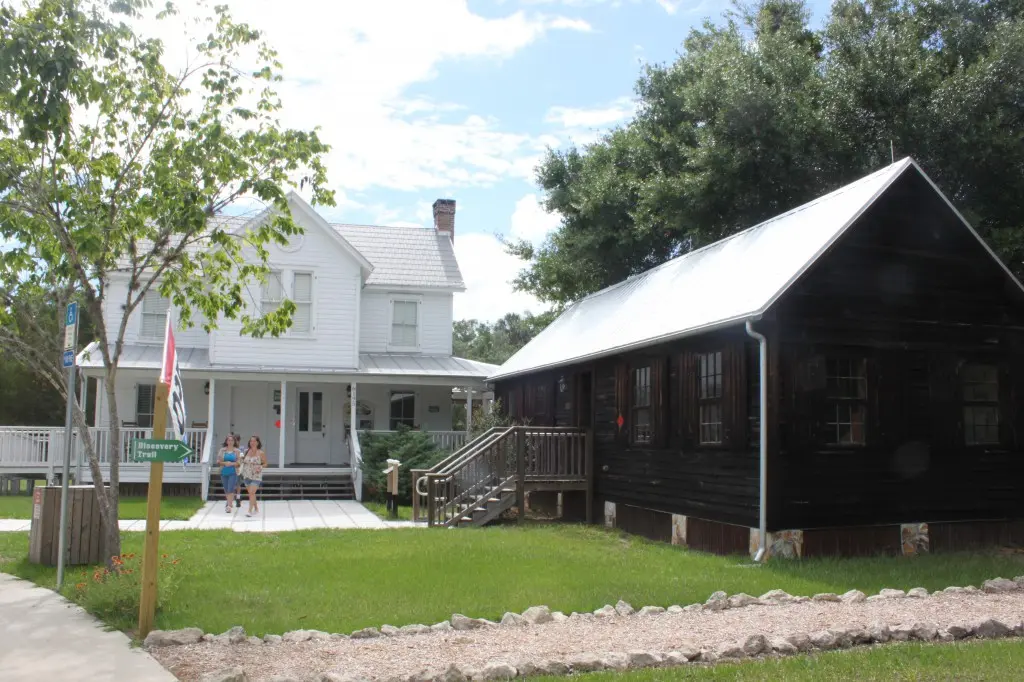
          Archaeological and historic artifacts from the site are on display in the Sams Family Cabin.

          In 1878, John H. Sams disassembled his family cabin in Eau Gallie, floated it up the St. Johns River in pieces, and put it back together on north Merritt Island. The cabin is the oldest documented home in Brevard County.

          “The EEL program that manages the Sams House has done a great job of not only encouraging stewardship of our natural resources, but also our rich cultural resources,” says Gidusko.

          After relocating to Merritt Island, Sams became a successful farmer, growing citrus, sugar cane, and pineapple crops. In 1880, he was named the first Superintendent of Schools in Brevard County, a position he held until 1920. As his stature in the community and his family grew, Sams decided to build a larger home directly adjacent to the family cabin.

          The 1888 Sams House has a wraparound porch, an office on the first floor where Sams kept track of his business interests and superintendent duties, a family room with a fireplace, three bedrooms upstairs, and a metal roof.

          “During Pioneer Day, visitors will get a short tour through the Sams House,” Gidusko says. “You’ll get to see what it was like for this pioneer family as it grew, and what they had to live and work with on a day to day basis.”

          The Sams family helped to establish St. Luke’s Episcopal Church in Courtenay, a congregation that remains active today. Before the church was built, services were held in the Sams cabin.

          “We’re partnering with St. Luke’s Episcopal Church, right down the road from Sams House,” says Gidusko. “The Sams family was instrumental in starting that congregation and getting the church going, and many of them are buried in the cemetery there.”

          Pioneer Day activities at St. Luke’s include presentations on local prehistoric people by Rachel Wentz, author of the book “Life and Death at Windover: Excavations of a 7,000 Year Old Pond Cemetery,” and Patrisha Meyers, director of the Brevard Museum of History and Natural Science and the Florida Historical Society Archaeological Institute. The church will also host their popular Fish Fry.

          “It’s a great opportunity for people to have fun and learn about our particular part of Brevard,” says Gidusko.
           

          PDF file(s)
          Article Number
          104
          relevantdate

            February is Black History Month.

            A new exhibit at the Brevard Museum of History and Natural Science in Cocoa is recognizing the accomplishments of two internationally known Floridians with strong local ties.

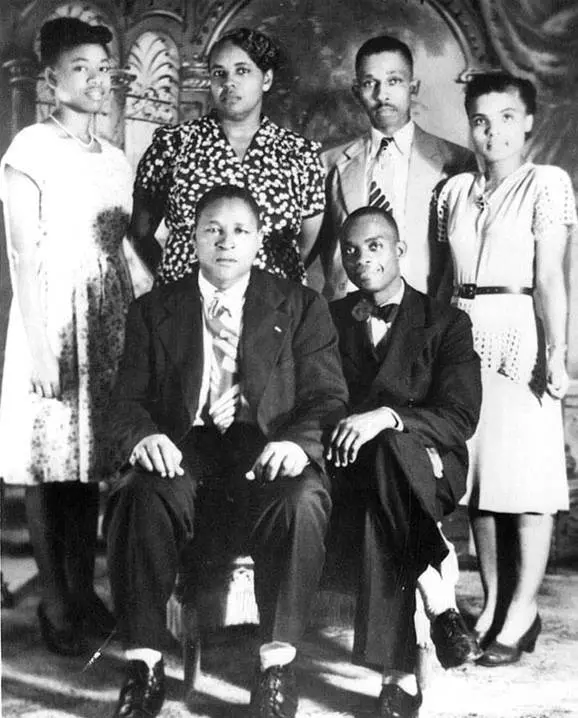
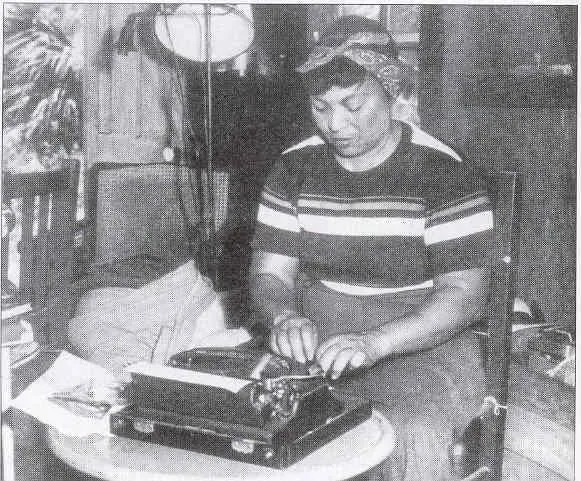
            On display are panels featuring rare photographs, letters, and information about educator, activist, and civil rights martyr Harry T. Moore; and writer, folklorist, and anthropologist Zora Neale Hurston. A video component produced by the Florida Historical Society includes commentary from scholars and oral history interviews with friends and relatives.

            On Christmas night 1951, a bomb exploded under the Mims home of Harry T. Moore. The blast was so loud it could be heard several miles away in Titusville.

            Moore died while being transported to Sanford, the closest place where a black man could be hospitalized. His wife Harriette died nine days later from injuries sustained in the blast.

            The couple celebrated their twenty-fifth wedding anniversary on the day of the explosion, and Harriette lived just long enough to see her husband buried.

            The Moore’s daughter, Juanita Evangeline Moore, died on October 26, 2015. In a video interview included in the new exhibit, Moore remembers that she was working in Washington, D.C. in 1951, and was scheduled to come home for the holidays on December 27th, aboard a train called the Silver Meteor. She did not hear the news about her family home being bombed until she arrived.

            “When I got off the train in Titusville, I knew something was very, very wrong,” Moore said. “I had not turned on radio or television, so I didn’t know a thing about it until I got off the train. I noticed that my mother and father were not in front of all my relatives to greet me and they were always there.”

            Moore was given the news by her Uncle George, who was home on leave from Korea.

            “We got into his car and got settled, and the first thing I asked was ‘Well, where’s Mom and Dad?’ No one said anything for a while, it was complete silence. Finally, Uncle George turned around and he said ‘Well, Van, I guess I’m the one who has to tell you. Your house was bombed Christmas night. Your Dad is dead and your Mother is in the hospital.’ That’s the way I found out,” said Moore.

            “I’ve never gotten over it. It was unbelievable.”

            Moore and his wife were killed 12 years before Medgar Evers, 14 years before Malcolm X, and 17 years before Martin Luther King, Jr., making them the first martyrs of the contemporary civil rights movement.

            On July 9, 1951, writer, folklorist, and anthropologist Zora Neale Hurston wrote in a letter to Florida historian Jean Parker Waterbury: “Somehow, this one spot on earth feels like home to me.  I have always intended to come back here. That is why I am doing so much to make a go of it.”

            It would be natural to assume that Hurston was writing about her adopted hometown of Eatonville, Florida. Growing up in Eatonville, the oldest incorporated municipality in the United States entirely governed by African Americans, instilled in Hurston a fierce confidence in her abilities and a unique perspective on race. Eatonville figures prominently in much of Hurston’s work, from her powerful 1928 essay How It Feels To Be Colored Me to her acclaimed 1937 novel Their Eyes Were Watching God

            Hurston, however, was not writing about Eatonville when she spoke of “the one spot on earth [that] feels like home to me” where she was “the happiest I have been in the last ten years” and where she wanted to “build a comfortable little new house” to live out the rest of her life.

            Zora Neale Hurston called Brevard County “home” for some of the most fulfilling and productive years of her life, first in 1929, and again for most of the 1950s. It was here that she wrote her most important collection of folklore, Mules and Men.

            To find out more about the lives and accomplishments of Harry T. Moore and Zora Neale Hurston, visit the Black History Month exhibit at the Brevard Museum of History and Natural Science in Cocoa. Museum hours are 10am to 5pm, Wednesday through Saturday.
             

            PDF file(s)
            Article Number
            103
            relevantdate

              Professional archaeologists, archaeology enthusiasts, and concerned citizens from throughout the state are opposing legislation currently being considered in Tallahassee.

              House Bill 803 and Senate Bill 1054 would allow anyone who purchases a $100 permit to dig for historic artifacts in state owned waterways using a trowel. After dislodging the artifacts, a person could remove them, take them home, and even sell them.

              Any context that archaeologists could provide for the artifacts and important opportunities to educate the public about our shared history could be lost.

              “To understand the past in the fullest way possible, what is significant is not a particular object that we find, it’s what we find out about that object,” says Theresa Schober, president of the Florida Anthropological Society.

              Seeing firsthand how an object is situated and documenting what other objects may be around it provides archaeologists with the contextual information they need to draw meaningful conclusions.

              “It’s from context that we can determine what people were doing, how they were behaving in the past, what their social systems were like, and we lose that information as soon as an object is taken up and ends up in private hands or it ends up somewhere where it’s disassociated with its original context,” Schober says.

              Some of Florida’s most significant archaeological discoveries have taken place in Brevard County. Artifacts and human remains discovered in Windover Pond were determined to be between 7,000 and 8,000 years old.

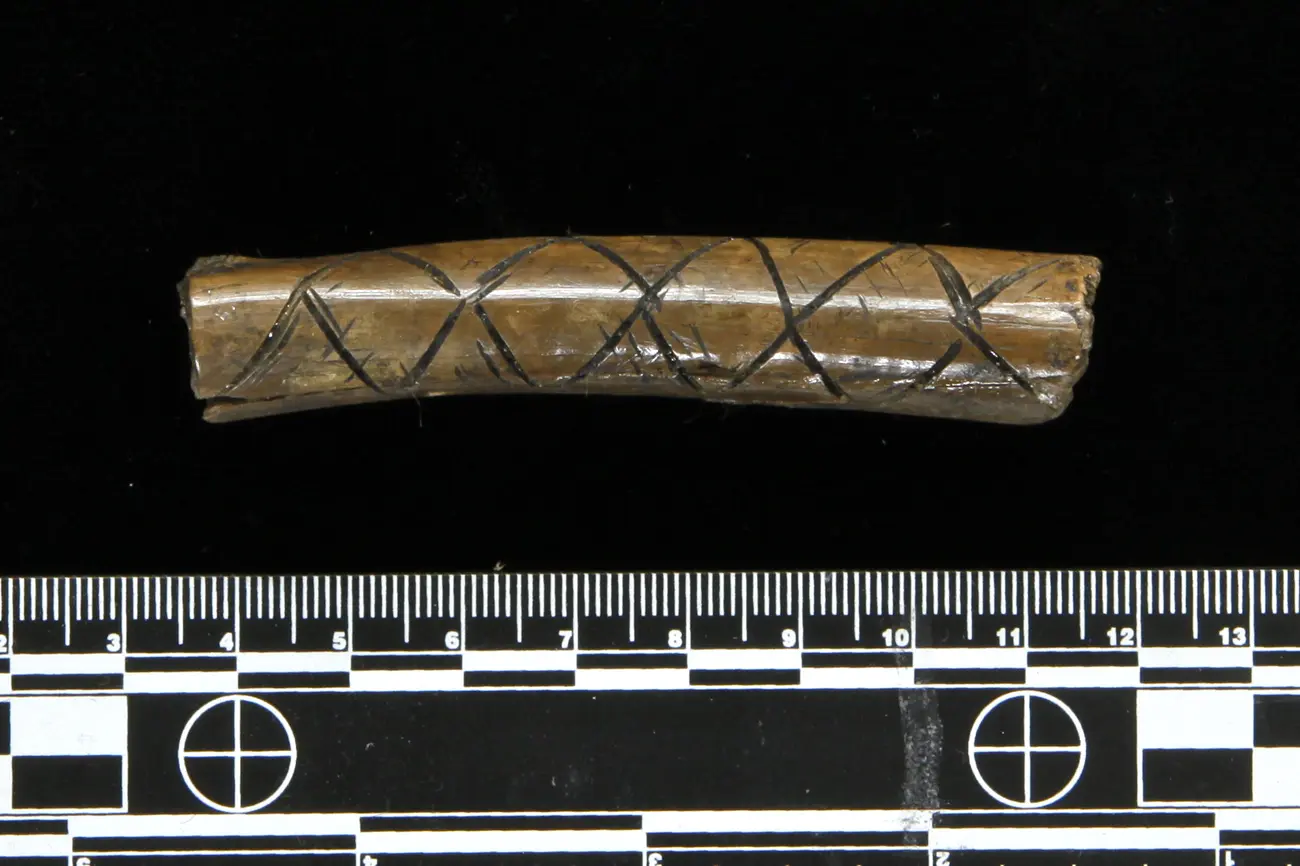
              Patrisha Meyers is director of the Florida Historical Society Archaeological Institute at the Brevard Museum of History and Natural Science. Meyers points to an artifact on display at the museum in the People of Windover exhibit.

              “This beautifully incised bird bone was only found with the burials of women,” Meyers says. “This contextual knowledge allows us to explore the question of gender roles in the past and helps us understand the differences and similarities between past populations and our own. Ultimately, anthropology is the study of our shared human experience, the study of that intangible element which makes us who and what we are today. By allowing this history, this context, to be taken by those seeking personal enrichment through ownership and sale of public artifacts, we are allowing the theft of knowledge regarding our cumulative past.”

              The idea of allowing “citizen archaeology” in Florida is not new.

              Between 1996 and 2005, the state operated a voluntary program called Isolated Finds, which allowed individuals to keep historic artifacts that they found if the objects were not part of a larger archaeological site. Individuals were supposed to report from where they removed an artifact and provide maps.

              “An untrained person might not have those discerning identification skills to be able to tell whether they’re removing something from an intact archaeological deposit or not,” says Schober. “The reports from these isolated finds were analyzed and it was determined that there was widespread non-compliance. The majority of reports were from a very small number of individuals and what came out of a later investigation in the last few years by Florida Fish and Wildlife is that some of the individuals that are taking artifacts from Florida waters illegally, knowing that they are violating the law, would use this particular program as a way to bypass that legality.”

              The proposed bills currently being considered are more aggressive than the Isolated Finds program, allowing individuals to use tools to dislodge artifacts. Archaeologists are concerned that if passed, these bills would essentially legalize treasure hunting at the expense of preserving history.

              “We certainly encourage people to get in touch with their legislators,” Schober says. “There’s nothing more meaningful than a member of someone’s district weighing in on a piece of legislation.”

              By opposing this pending legislation, the professional archaeology community is not trying to discourage public participation in the process of archaeological discovery.

              “For non-professional individuals who are truly interested in archaeology, there are a variety of opportunities to engage in supervised archaeological activities and learn about the process of archaeological investigation,” says Meyers. “The Florida Public Archaeology Network often has volunteer opportunities as well as frequent public archaeology days. The Florida Anthropological Society has 17 chapters statewide. Many of these chapters assist professional archaeologists in their work.”
               

              PDF file(s)
              Article Number
              102
              relevantdate

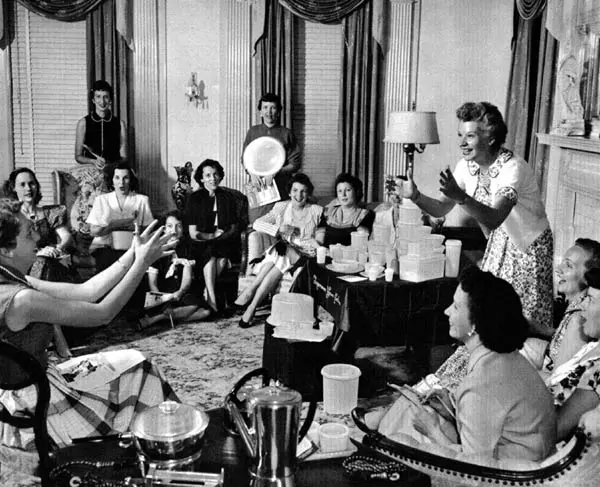
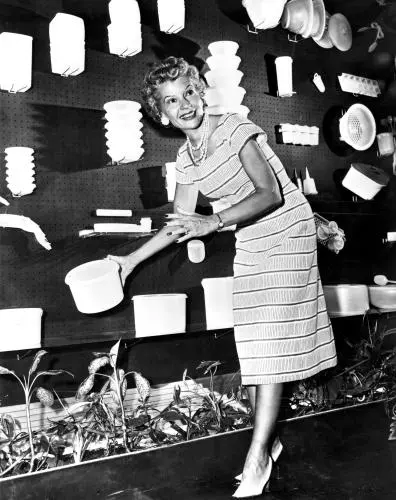
                In 1948, Earl Tupper introduced a new brand of airtight containers called Tupperware that allowed for food to be preserved and stored for longer periods of time.

                No one really cared.

                The revolutionary plastic containers with the patented “burping” seal sat on store shelves, and the company based in Leominster, Massachusetts saw little growth.

                A woman named Brownie Wise came up with a marketing strategy that involved hosting home parties to demonstrate the many uses of Tupperware in a fun setting. She would train other women to host parties themselves, providing them an opportunity to earn money based on their sales.

                Tupperware sales exploded around the country and in 1951, Wise was named vice president of marketing for the company. She spearheaded the effort to move the company headquarters to Central Florida, where it is still located today.

                “Brownie was arguably the most important American businesswoman of the twentieth century,” says Bob Kealing, author of the book Tupperware Unsealed: Brownie Wise, Earl Tupper and the Home Party Pioneers. “Brownie made it okay for women to make their own money.”

                Wise became a symbol of the idealized, all-American suburban housewife of the 1950s, but was actually empowering women. Her home party system allowed women to work on their own schedules. Wise did not consider herself to be a feminist. She said that she was just a single mother trying to make money to raise her child.

                “She gave women a road map to their own liberation in a way, getting them out of the kitchen, giving them an opportunity to make a financial contribution to their family’s well-being,” Kealing says.

                Wise’s cult of personality became as important to the success of Tupperware as the quality of the product itself. Her celebrity grew throughout most of the 1950s, and she was the first woman to appear on the cover of Business Week magazine.

                Tupperware’s Florida based operation began in 1951, in a World War II era hangar at what is now the Orlando Executive Airport. Within a year, the company relocated to a large facility in Kissimmee. Wise began hosting extravagant “jubilees” on the property to recognize the Tupperware Party hosts making the most sales.

                “Brownie Wise had this remarkable ability to communicate with her dealers and inspire them,” says Kealing. “They would compete to win her dresses and lose all kinds of weight to fit into them as prizes, because that recognition from her was so important. She had this almost mystical power and connection with her dealers.”

                Although the company no longer has a charismatic leader to equal Wise, Tupperware continues hosting “jubilee” rallies in major cities, rewarding outstanding participation in product sales.

                Despite incredible sales figures for Tupperware products in the early and mid-1950s, Earl Tupper began to resent the fact that Wise was the public face of the company.

                “Earl Tupper thought with her growing celebrity that she was taking her eye off the ball a little bit, and forgetting that his baby, Tupperware, was the real star of the show,” Kealing says. “That’s where the trouble started.”

                Tupper unceremoniously fired Wise just before he sold his company in 1958, and essentially wrote her out of the corporate history. Wise was largely forgotten until Kealing wrote her biography in 2008.

                Kealing’s book “Tupperware Unsealed: Brownie Wise, Earl Tupper and the Home Party Pioneers” is being made into a film starring academy award winning actress Sandra Bullock. This summer, an expanded and updated version of the book is being published with the title “Life of the Party.”

                Wise paved the way for other pioneering businesswomen.

                “She had the template for what most successful businesswomen do today,” says Kealing. “She was known by one name, Brownie. She was pre-Oprah Winfrey, she was pre-Martha Stewart. These days it would just be accepted that you write your own self-help book and that you’re on the cover of all sorts of magazines.”

                Wise did not graduate from high school, but went on to become a successful leader in a multi-billion dollar corporation. Perhaps her greatest legacy is the impact that she had on others.

                “She would inspire women to go out and do things that they never felt capable of doing,” Kealing says.
                 

                PDF file(s)
                Article Number
                101
                relevantdate

                  Since 1906, the city of Tarpon Springs has held a unique Epiphany celebration every January 6. Thousands of people converge in Tarpon Springs each year to participate in this religious tradition of the Greek Orthodox Church.

                  Tarpon Springs has more Greek people per capita than any other American city. Hundreds of Greek sponge divers and their families were brought to the town in the early twentieth century. While tourism has replaced sponge diving as the primary economic driver, the sponge docks remain active and the town retains a distinctly Greek character.

                  “This is like a Greek village here in America,” says Father James Rousakis, dean of St. Nicholas Cathedral in Tarpon Springs. “The people are very much in tune to their culture and their heritage. Adults that came from Greece passed it on to other generations. Even the younger generations still appreciate that.”

                  St. Nicholas Greek Orthodox Cathedral has been an integral part of the Tarpon Springs community since Greeks first came to the area. The Neo-Byzantine style cathedral was expanded in 1943, to include colorful stained glass and marble from Greece in a domed basilica.

                  The Greek Orthodox Church can trace its roots back to the earliest church established during the Roman Empire. At its height, the empire encompassed the entire Mediterranean basin including what are now Europe, Turkey, the Middle East, and North Africa. When the empire collapsed in 476, Christian centers in the East and West gradually began developing separate traditions.

                  “Up to the year 1054, there was only one church,” says Fr. Rousakis. “Finally, the church severed. The West became known as the Roman Catholic Church, and the East became known as the Eastern or Greek Orthodox Church.”

                  In the Greek Orthodox tradition, Epiphany is the commemoration of the baptism of Christ by John the Baptist in the Jordan River. In Tarpon Springs, the celebration begins with a morning of special services at St. Nicholas. A procession leaves the cathedral around noon, walking a block to the shores of Spring Bayou.

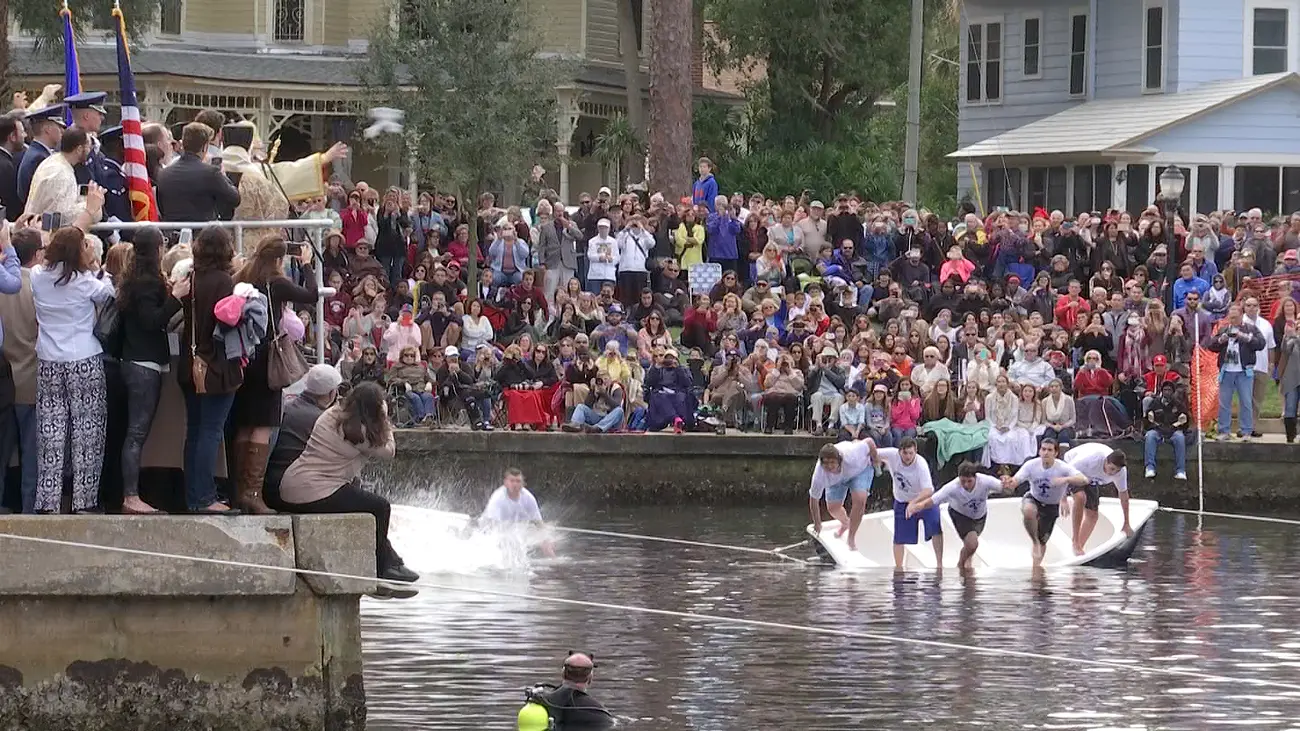
                  Thousands of spectators are already waiting for the procession to arrive. Ten small boats are tied in a semi-circle in front of a platform that extends out over the water. About 50 young men will dive from these boats, trying to retrieve a cross that will be thrown into the water.

                  “His Eminence the Archbishop will bless the young divers,” says Fr. Rousakis. “They are boys ages 16 through 18. The boys will make their way to the water and onto the small boats, the dinghies that are there. We will go onto the platform where his Eminence will do a short service and throw the cross into the bayou.”

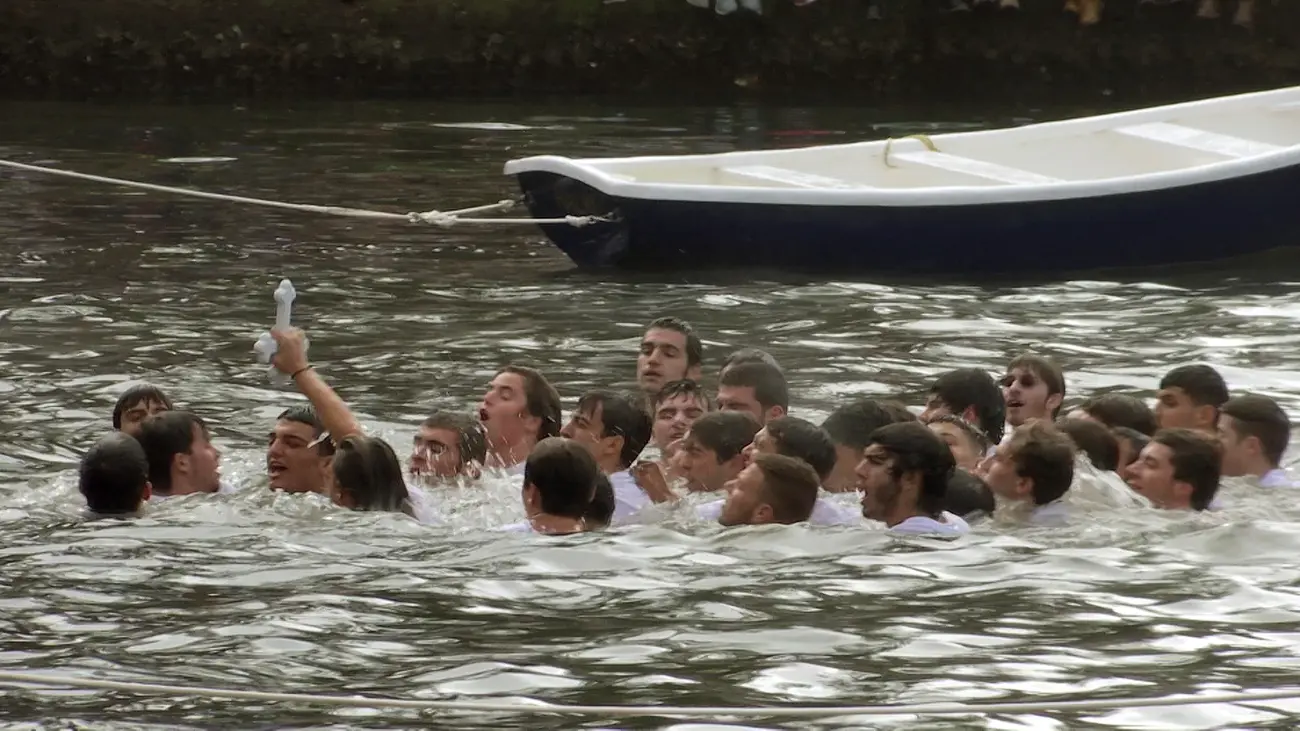
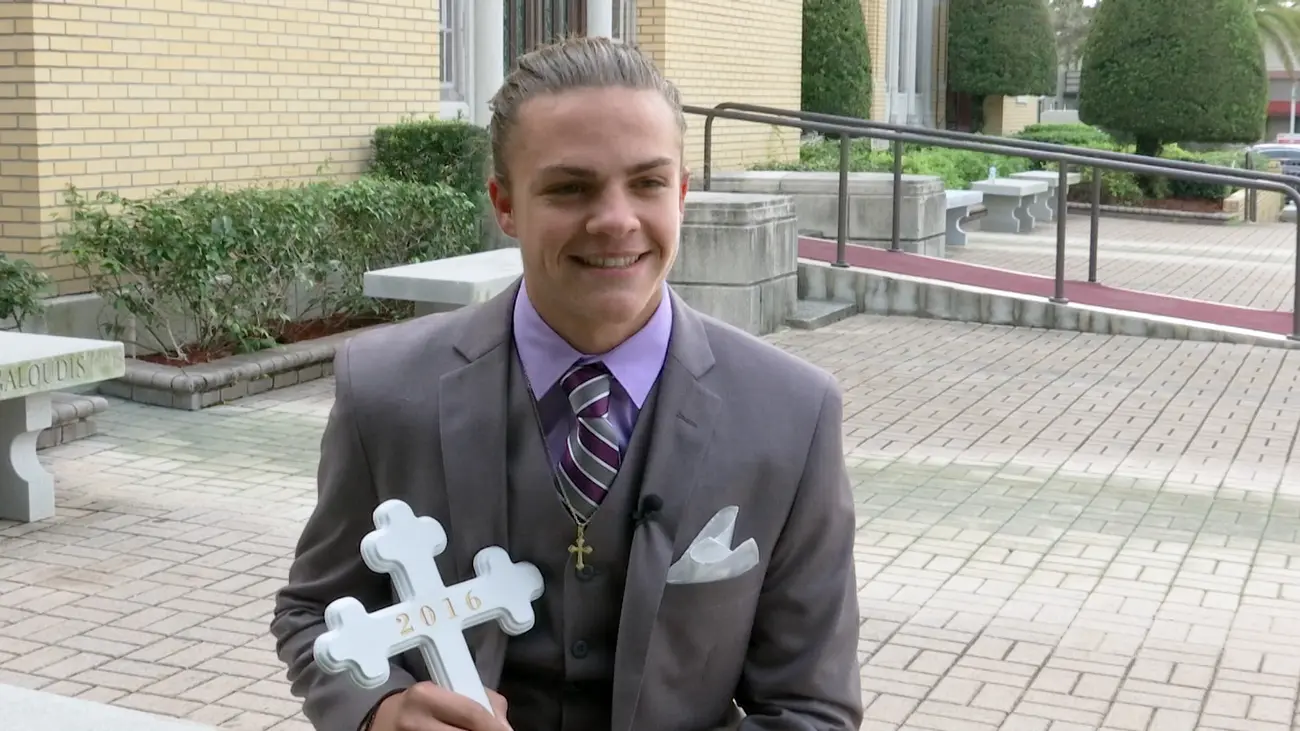
                  As the cross leaves the archbishop’s hand, the boys dive from their boats into the water, trying to retrieve it. The young man who emerges from the water with the cross will receive a special blessing for the year.

                  “There’s a gold cross placed around his neck which he will wear until he leaves this earth,” says Fr. Rousakis. “It’s a wonderful time for that young man.”

                  At the 110th Epiphany celebration last week, Anderson Combs emerged from the 62 degree water with the cross raised high above his head. It was the second year that the 17 year-old high school senior attempted to retrieve the cross.

                  “I dove because my yiayiá (grandmother) always told me to dive, she was always into it,” says Combs. “Sadly in 2013, she passed, and I felt that in her honor, I should always dive for the cross.”

                  As a member of the swim team at his high school, a lifeguard, and a scuba diver, Combs was well prepared for his attempt this year.

                  “Being able to retrieve the cross today is such an honor, in her name and for my family,” Combs says. “It’s just a great feeling.”

                  Anderson’s grandmother worked at the sponge docks, and his mother Anna Combs instilled in him a love and respect for their Greek heritage.

                  “It’s the biggest blessing we could ever have in our family,” says Anna Combs. “Other than the day he was born, this is the most wonderful day of my life, and his.”

                  PDF file(s)
                  Article Number
                  100
                  relevantdate

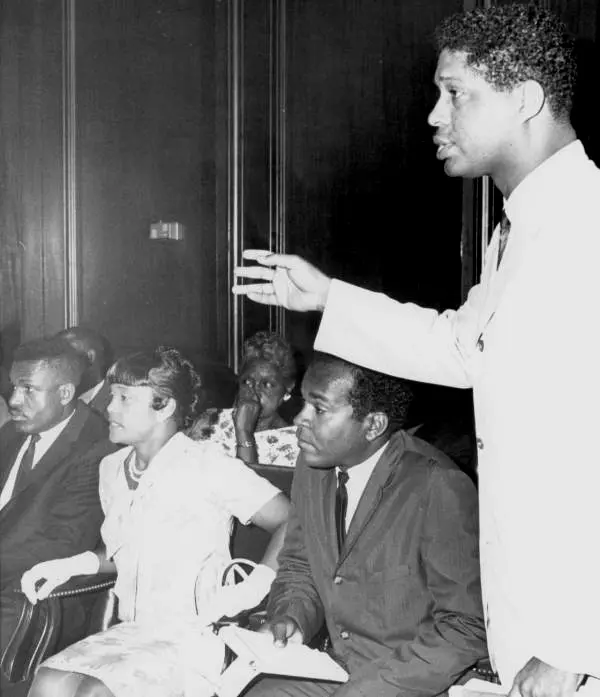
                    In the 1960s, Dr. Robert B. Hayling was a leader of the Civil Rights movement in Florida. His former dentist’s office in St. Augustine is now a museum. Dr. Hayling died on December 20, 2015, at the age of 86.

                    One of Hayling’s last public appearances was at the Florida Historical Society Annual Meeting and Symposium on May 23, 2015, where he discussed his life.

                    Hayling grew up in Tallahassee, the son of a professor at Florida A&M University. At an early age Hayling became aware of racial inequities in America.

                    “To tease my grandmother a bit, I would ask her, ‘Grandmama, if black and white people can’t get along here on earth, how they gonna get along in heaven?’ And my grandmother would scream out ‘Cleo, come get this boy! God is gonna strike him dead!’ I’m still living, but I still have that question.”

                    After graduating from Florida A&M University in 1951 with a B.A. in Biology, Hayling volunteered to serve in the U.S. Air Force during the Korean War. He was commissioned as a 2nd Lieutenant in 1952.

                    “At times I would apply for different things that it wasn’t ordinary for a black to have the audacity to approach,” Hayling said. “So I did have some rejection, and then some questioning, ‘Why are you asking for these privileges or those privileges when others of your complexion have not made a disturbance?’ If that makes me a troublemaker, I plead guilty.”

                    After completing his service, Hayling earned his doctoral degree studying dentistry at Meharry Medical College in Nashville, Tennessee. He was active in the civil rights movement there. One night, the windows of his dormitory imploded from the shock of a dynamite blast at the home of a teacher across the street.

                    In 1960, Hayling moved to St. Augustine, Florida to start his dental practice.

                    While many older African American residents were afraid of repercussions from participating in civil rights activities, Hayling was successful in recruiting younger people to the movement as advisor to the NAACP Youth Council and a local leader of the Southern Christian Leadership Conference.

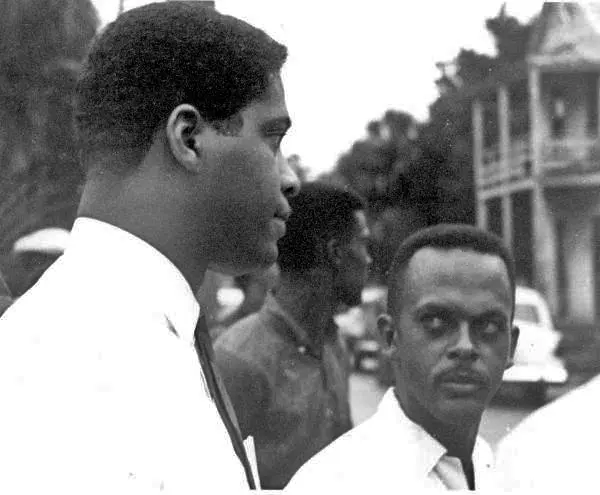
                    A large cross was erected in a field near St. Augustine in September 1963. The cross was to be burned during a rally of the Ku Klux Klan, which had attracted national leaders of the organization. Hayling and three of his friends tried to catch a glimpse of the rally.

                    “We never thought that parking on the side of U.S. 1, on the shoulder of the road, looking over into the field where the rally was being held, that we would encounter difficulty. But we looked up and there were two klansmen in the front of the car with big guns, and two klansmen in the rear of the car with big guns,” Hayling said.

                    Hayling and his friends tried to escape, but were pulled from the car.

                    “We were taken out of the car with ax handles and baseball bats across our heads, and taken to the speaker’s platform,” Hayling remembered. “We were stacked on top of each other like cord wood.”

                    The four men were beaten further and threatened with being set on fire. When word came that law enforcement authorities from outside of the area were on their way to the rally, the crowd disbanded and Hayling and his friends were released.

                    Hayling spent about two weeks in the hospital after being beaten by members of the KKK, but continued his civil rights activities. In February 1964, shots were fired into Hayling’s home, narrowly missing his pregnant wife, and killing the family dog.

                    In response to the violence aimed at his family, Hayling moved to Cocoa Beach.

                    In the summer of 1964, national attention was focused on St. Augustine as the Civil Rights Act languished in congress. Hayling returned to the city to coordinate peaceful demonstrations with Dr. Martin Luther King.

                    The images of peaceful protests in St. Augustine being answered with violence helped lead to passage of the Civil Rights Act.

                    “From my leadership training in the Air Force, I thought that I could put it into practice,” Hayling said. “I had no idea that St. Augustine would be so reticent and so hard to crack.”

                    PDF file(s)
                    Article Number
                    99
                    relevantdate

                      Every week at the end of this column, you are informed that this author is also the host of “Florida Frontiers: The Weekly Radio Magazine of the Florida Historical Society.”

                      Beginning Sunday, January 3, at 1:30 pm, “Florida Frontiers” will also be a television series broadcast on WUCF-TV Orlando, and other PBS affiliates throughout the state.

                      The first season of this television series will have ten episodes which will air monthly. Produced by the Florida Historical Society, each program will explore the same types of topics covered in this column and on the “Florida Frontiers” radio program.

                      “Wherever we go, people are very enthusiastic,” says Jon White, director of media production for the Florida Historical Society. “People are really into Florida history and culture. All over the state, people stop me and tell me they are big fans of the radio show and find it really interesting.”

                      The producers are hoping that the new television version of “Florida Frontiers” will generate the same enthusiasm and dedicated following.

                      For the past year, the “Florida Frontiers” television series has been filming at various locations around the state including Tallahassee, Key Largo, Jacksonville, Miami, Cocoa, New Smyrna, St. Augustine, Del Ray Beach, and Lake Wales.

                      “One of my favorites was Bok Tower Gardens,” says White. “I’m a lifelong Florida resident, but I’d never actually made it over there until just recently when we went to shoot. That was a beautiful place. Seeing that tower up close was really impressive, and then to be able to go into the tower was truly incredible. It’s quite a view of Lake Wales from up there.”

                      In its first season, the television series “Florida Frontiers” will cover a variety of topics.

                      One episode is called “Exploring New Worlds.” From the first permanent European settlement in what is now the United States to the launch of every manned American mission into space, Florida establishes the boundaries of the Modern Era. Interviews include colonial historian James Cusick and director of the St. Augustine Historical Society Susan Parker. Also interviewed is NASA astronaut Winston Scott. The program includes drone footage of El Galeon and historic moon landing film.

                      Another episode is titled “The People of Windover.” The Windover Dig in Titusville, Florida was one of the most important archaeological discoveries in the world, uncovering nearly 200 amazingly well preserved ritualistic burials between 7,000 and 8,000 years old. Interviews include lead archaeologist Dr. Glen Doran, archaeologist Geoffrey Thomas, Vera Walker and other people who participated in the excavation, Brevard Museum and FHSAI Director Patty Meyers, and artist Brian Owens who created the Windover Woman sculpture based on forensic reconstruction.

                      The first episode of the “Florida Frontiers” television series airing on January 3rd is “The Civil War in Florida.” Florida was the third state to secede from the Union, and played an active role in the Civil War. Interviews on location at the Battle of Olustee Reenactment include historian Sean Adams, historic reenactors Joel Fears and Mitch Morgan, and event organizer Gary Dickinson.

                      “There were reenactors, and a lot of them,” says White. “This was a really dedicated bunch of people. (The temperature) was in the high 20s when we went out to shoot. It was early, and these folks had camped overnight, so they’re really dedicated to this stuff.”

                      Also interviewed for “Florida Frontiers: The Civil War in Florida” are Keith Holland, who researched, located, and excavated the steamship Maple Leaf, sunk in the St. Johns River by a Confederate mine; and Sandy Arpen, director of the Mandarin Museum and Historical Society.

                      “It was a part of Florida history with which I was completely unfamiliar, and I don’t know if most people know about it,” White says. “It makes me realize there are probably things like this all over Florida; interesting little museums and pieces of history that people aren’t familiar with.”

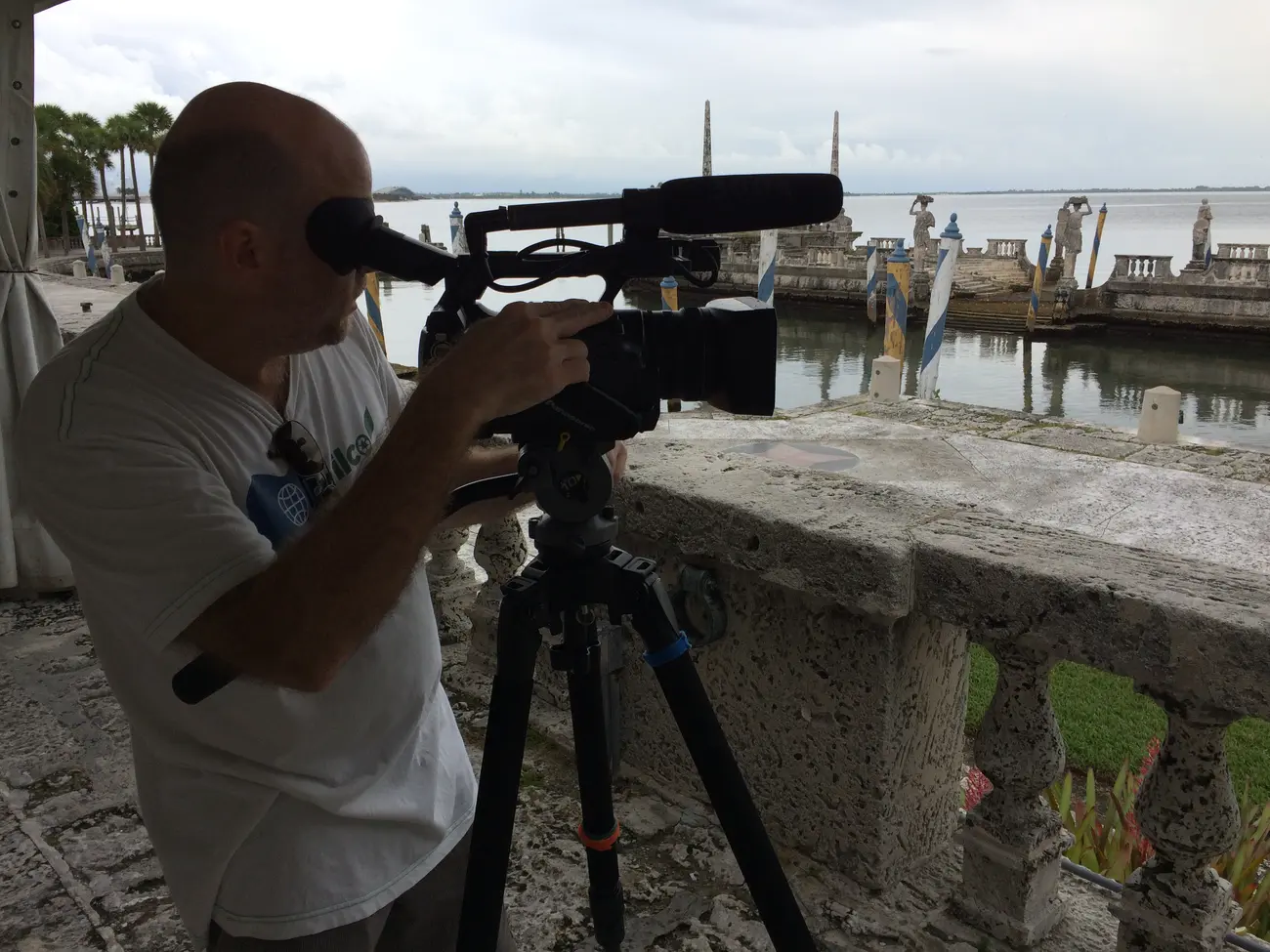
                      White is responsible for many aspects of creating the “Florida Frontiers” television series, from operating the camera and audio equipment in the field to post-production editing. The content is written and produced by this author.

                      “I’m hoping to learn more and more about Florida history and culture, along with our viewers, as we go deeper into the program,” says White.
                       

                      PDF file(s)