Florida Frontiers

A Tag for nodes that are relevant to Florida Frontiers.   For example if an artilce is about Florida Frontiers and you would like a 'View' to sorty by Tag criteria for it... us it.

Article Number
130
relevantdate

    The Florida Historical Society will host the first annual Florida Frontiers Festival on Saturday, November 12, at the Brevard Museum of History and Natural Science in Cocoa, from 9am to 5pm. Main Stage performers include Florida bluesman Ben Prestage, the Bethune-Cookman University Gospel Choir, Mariachi Nuevo Guadalajara, folk musician Bob Lusk, and singer-songwriter Chris Kahl.

    There will be selected vendors and demonstrators including Highwayman artist R.L. Lewis and folk artist Ernest Lee, food trucks, and a Children's Corridor. The Heritage Tent will feature storytellers and theatrical presentations including J.D. Sutton as naturalist William Bartram and the Brevard Theatrical Ensemble leading a Florida Folksong Sing-Along.

    Inside the museum, will be the opening of the new exhibit "Stetson Kennedy's Multicultural Florida," celebrating what would have been the folklorist and author's 100th birthday. Kennedy is best known for his classic 1942 book “Palmetto Country,” which documents the diverse cultural heritage of our state from Cracker Cowmen, to Seminole Indians, to Greek sponge divers in Tarpon Springs, to Latin cigar rollers in Ybor City, to African American turpentine industry workers, and beyond.

    Festival headliner Ben Prestage is a native Floridian, born and raised in a rural area on the edge of the Everglades.

    “It’s western Martin County, in between Okeechobee and Indiantown,” says Prestage. “It’s a fourteen mile long dirt road, seven miles east of asphalt and seven miles west of asphalt, all cattle ranches and orange groves. The biggest ranch out there is Allapattah Ranch, which I believe in the Seminole Miccosukee language means alligator.”

    Primarily a blues musician, Prestage was influenced by that music at an early age.

    “My dad was from Mississippi, and he listened to a lot of blues, so I was really into rural blues and slide guitar growing up,” says Prestage. “I heard Roy Bookbinder one time, he’s a Florida guy, and I heard him doing finger style at a concert when I was about 15 or 16. I went there by myself. None of my friends wanted to go to a blues concert. I heard him doing finger style and I really loved that, finger picking, stuff like that.”

    Around the same time, Prestage was helping a neighbor build a chicken coup, and noticed that the man had a banjo. During lunch breaks, the man showed Prestage how to play bluegrass music.

    “That got me into some old style banjo stuff, too,” says Prestage. “I always liked the old music better than any of the new stuff.”

    Prestage is best known for performing as a one-man band. If you weren’t watching him play, you would think that you were hearing a group of musicians. By himself, Prestage provides a bass line, percussion, guitar, and vocals. He credits Memphis cigar box guitar maker John Lowe with helping him to create his signature sound.

    “There’s a bunch of guys doing cigar box guitars now, but the way he made his was with one bass guitar string and three guitar strings, and it was all fretless,” says Prestage. “There’s two outputs, so the bass string goes to a bass guitar amp, and the guitar strings go to a guitar amp, so it’s in stereo when you play it.”

    Prestage developed a way of playing drums and cymbals with his feet while playing his unique guitar, filling out the sound of a band.

    “When I started it was really rough sounding, but over time I’m starting to get it together, starting to figure it out,” Prestage says with a laugh.

    The Florida Frontiers Festival is an extension of this newspaper column, the radio program Florida Frontiers which airs on public radio stations throughout the state, and the public television series Florida Frontiers which is broadcast from Key West to the Panhandle. Like the other Florida Frontiers projects, the goal of the Florida Frontiers Festival is to educate the public about our state’s rich history and diverse cultural heritage in an entertaining and accessible format.

    “There is a lot of Southern culture here, food and music that’s unique to this part of the country, as well as all the other cultures in Florida,” says Prestage.

    Information about tickets, VIP packages, and event sponsorship opportunities can be found at www.FloridaFrontiersFestival.com and 321-690-1971 ext. 205.
     

    PDF file(s)
    Article Number
    129
    relevantdate

      There were more cases of lynching per capita in Florida, between 1900 and 1930, than in any other state.

      Alabama and Mississippi had more total cases of lynching during this period, but Florida was the statistical leader based on population.

      A 1993 study indicates that between 1882 and 1930, one out of every 1,250 African Americans in Florida was lynched. A black person was almost twice as likely to be lynched in Florida as Georgia, and seven times more likely in Florida than in North Carolina.

      The last known lynching in Brevard County happened in the summer of 1926. It was the third lynching of a black man in the area in two months. The victim’s name was James Clark, and a photograph of his lynching was made into a postcard.

      An article about the murder appeared in the Tuesday, July 13, 1926 edition of the Cocoa Tribune newspaper.

      “It is said that the negro had been arrested Sunday for an attempted attack on a white girl of Eau Gallie, and that he was on his way, about 7:00 o’clock that evening, with the chief of police to Titusville for safe keeping, when the officer was over-powered by masked men,” the article states. “The man was whisked away, the body being found the next morning.”

      There was no attempt to find out who had murdered Clark before he could be tried for his alleged crime in a court of law. The article states only that it was determined that Clark was, in fact, dead.

      “A coroner’s jury was empaneled Monday morning to view the remains of a negro man, who was found three miles north of Eau Gallie Monday morning,” the Cocoa Tribune printed. “The jury’s findings were that the man, James Clark, came to his death by being hanged from a tree and riddled with bullets.”

      On January 15, 1989, the Orlando Sentinel revisited what was then a 63-year-old case. At that time, there were still people alive who had information about the lynching.

      A.T. Rossetter was a municipal judge in Eau Gallie for 25 years before the town merged with Melbourne in 1969. He was 18 when the Clark lynching took place.

      “Back in those days, the sheriff’s office and those people never cared much about it, the hanging,” Rossetter told the Sentinel. “They never investigated it. I didn’t believe anybody could be that cruel.”

      On July 11, 1926, Clark was working as the chauffeur of a traveling salesman who was staying at a hotel in Eau Gallie. The 10-year-old daughter of the hotel owner was allegedly raped by Clark, who was arrested for the crime. A “black preacher” was said to have witnessed the attack on the girl.

      “Rape was a lot worse crime back then,” said W. Lansing Gleason, who had been mayor of Eau Gallie from 1929 to 1942. He was 89-years-old when interviewed by the Sentinel. “The thinking was, anybody that did anything like that ought to be hanged.”

      Word quickly spread that a lynching was planned, so Clark was to be moved to Titusville to await trial. Rossetter was standing in front of the pool hall, across the street from the alley leading to the jail.

      “I saw the chief of police come out of the alley in the car, and the colored man was in the car,” Rossetter said.

      Ten men ran out of the pool hall and jumped into two cars, chasing the police car. Half an hour later, the sheriff returned to town without his prisoner.

      “He said he was held up, and they took his gun away from him and they took the colored man away from him, so he just came on back to town,” said Rossetter. “Of course, the next day he had his gun back on.”

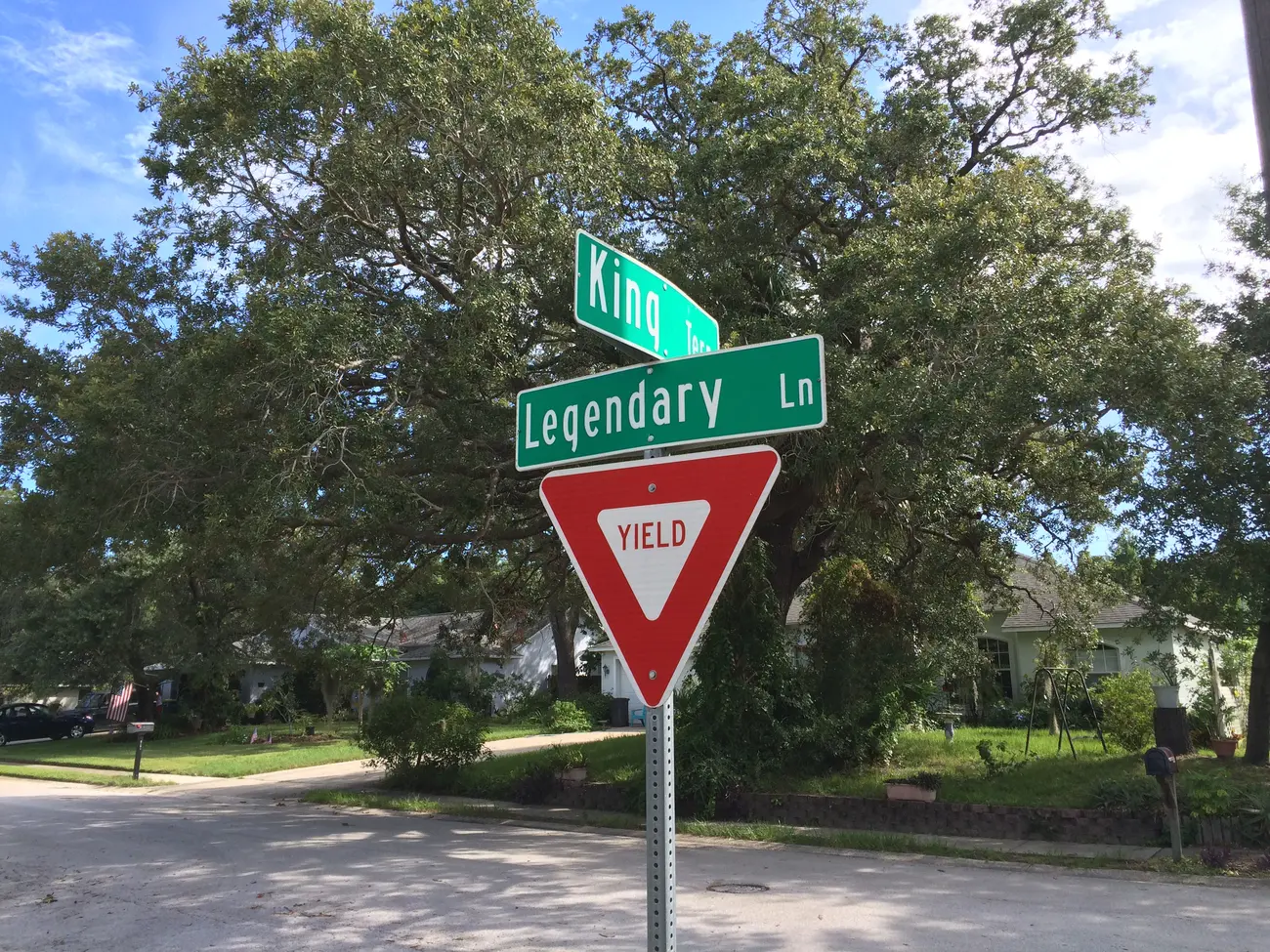
      The site of the lynching, near Parkway Drive and U.S. 1, was named Lynching Tree Drive until 1980, when the name was changed to Legendary Lane. The tree is long gone.

      Former Brevard County Commissioner Joe Wickham was a teenager in 1926. “They were mean, some of those guys in those days,” Wickham told the Sentinel. “They just took the law into their own hands. It was sad. Very sad.”

      PDF file(s)
      Article Number
      128
      relevantdate

        On August 15, 1559, Spanish conquistador Don Tristan de Luna sailed into what is now Pensacola Bay, leading a fleet of twelve ships with 1,500 colonists on board. Their effort to establish a permanent settlement was thwarted by a violent hurricane, which devastated the fleet.

        One of the shipwrecks was discovered by underwater archaeologists in 1992, and another in 2006, but until recently, the terrestrial site of the attempted Luna settlement remained a mystery.

        “We’re fortunate that we have a letter that Luna wrote after the hurricane, to the King of Spain, describing the storm,” says Greg Cook, assistant professor of maritime archaeology at the University of West Florida. “He said that it raged for twenty-four hours, it hit during the night, with great loss of ships and lives and property, and we know that many of their supplies were destroyed.”

        The Emmanuel Point I and Emmanuel Point II shipwrecks continue to provide archaeologists and archaeology students the opportunity to discover artifacts such as stone cannon balls, copper arrow tips to be used with crossbows, ceramics including olive jars, and the bones of livestock, rats, and pet cats.

        “What I really like and get excited about are the items that have a personal touch, that tell something about the story,” says John Bratten, chair of the UWF anthropology department. “This is a wooden spoon, it’s probably made out of olive wood, but this would have been a sailor’s personal spoon that he would have carried with him and that he would use to eat. They didn’t have forks. They probably had a knife and a spoon, and that’s what they did.”

        Bratten also points out the clear impression of a fingerprint left in a brick more than 450 years ago. The brick was aboard one of Luna’s sunken ships.

        While the Luna shipwrecks have yielded fascinating artifacts for decades, it wasn’t until last fall that the exact location of the oldest multi-year European settlement in the United States was discovered in a Pensacola neighborhood.

        Former UWF archaeology student Tom Garner was driving through the neighborhood when he saw a cleared lot where a house had been torn down. For 30 years, Garner made a practice of investigating such sites, just to see if any artifacts might have been uncovered.

        This time, Garner’s curiosity was rewarded.

        “The initial artifact that I found was an olive jar, a fragment, the neck from an olive jar,” says Garner. “These are large, ceramic storage jars for food. They’re very common, one of the most common artifacts on Spanish colonial sites. I understood that that could potentially be Luna, we’re in a spot close to the shipwrecks, but olive jars go as late as maybe 1800 or so, so it wasn’t necessarily Luna. I contacted the University of West Florida archaeology department, and they came and confirmed what it was.”

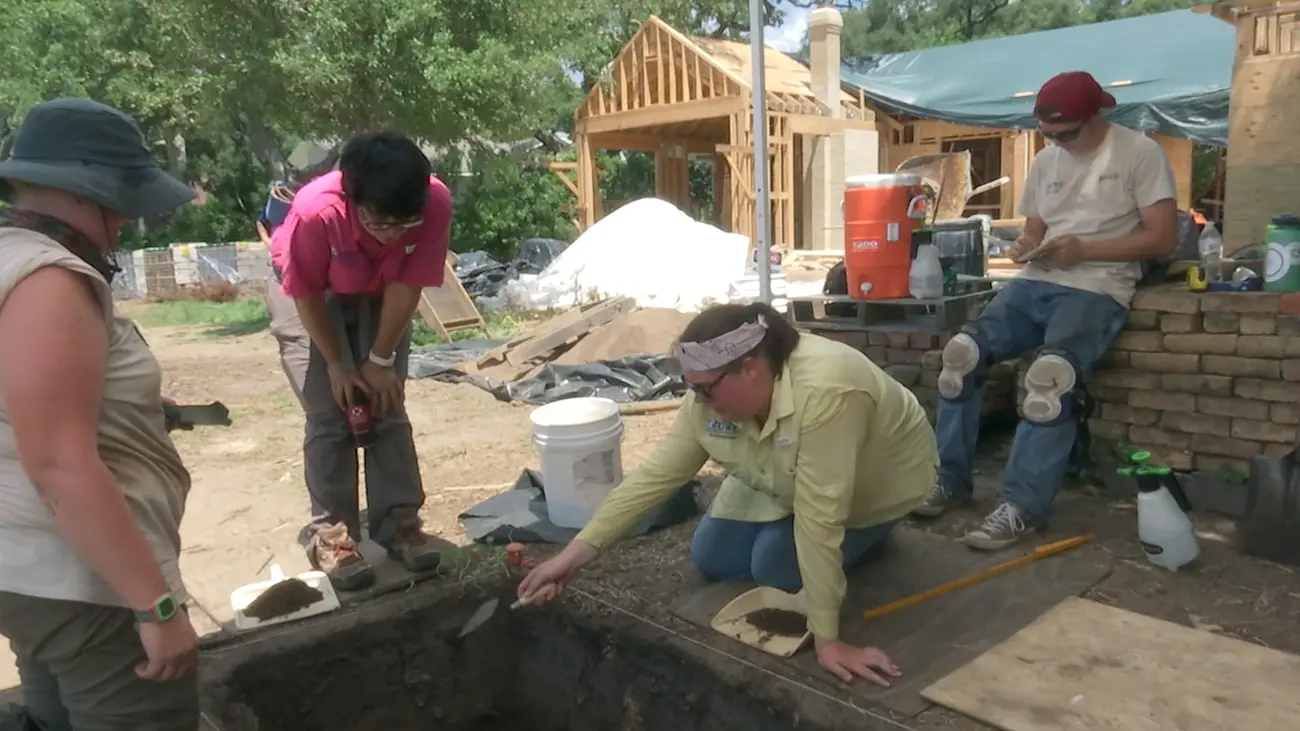
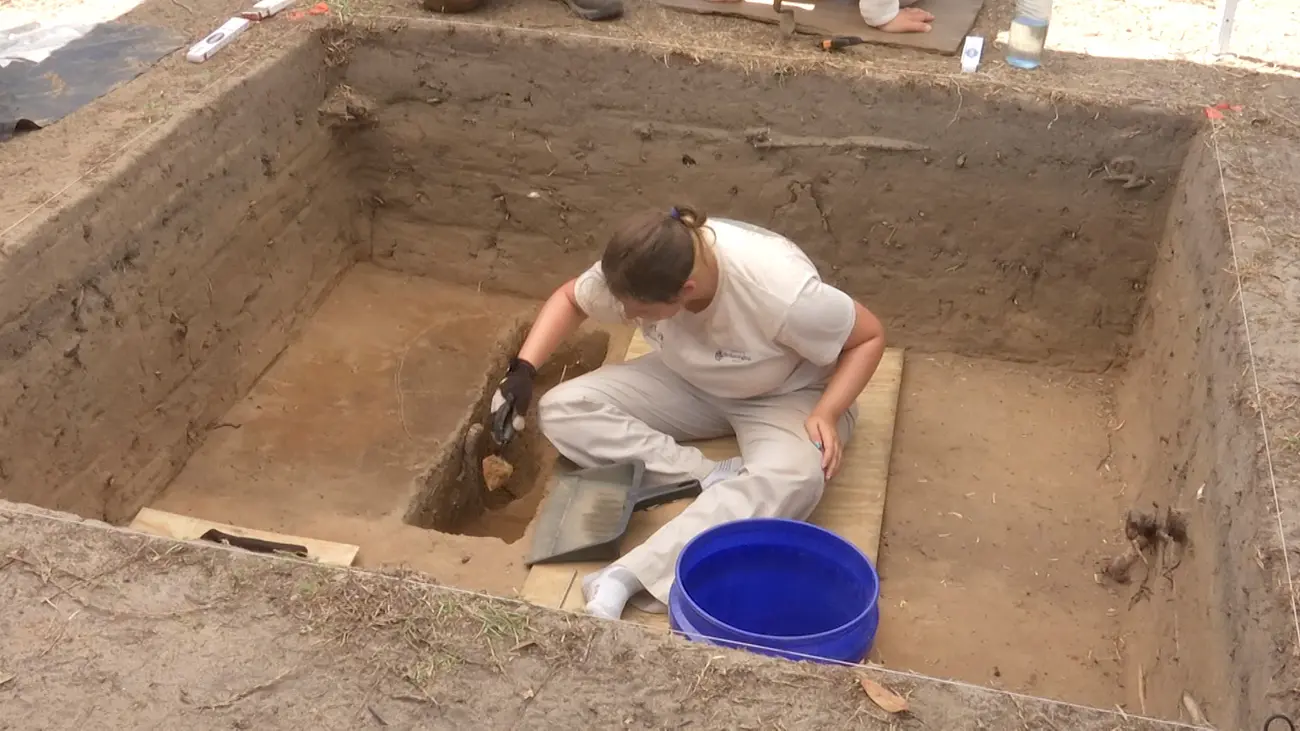
        This summer, professional archaeologists and archaeology students have been working at selected sites throughout the Pensacola neighborhood, excavating artifacts from the Luna settlement.

        “We’ve found lots of broken pots,” says Elizabeth Benchley, director of the UWF archaeology institute. “What we hope to be able to find, are areas where different groups of colonists lived together, after the hurricane.” Among the colonists were single soldiers, families, and Aztec Indians from Mexico. “We haven’t found the boundaries of the site yet. We’re still trying to find the edges of where these artifacts are distributed.”

        After the 1559 hurricane, life was very difficult for the Luna colonists. The settlement was abandoned in 1561.

        “We’re hoping that as we do archaeology here, we can actually see the trash pits, which may give us some evidence as to how they survived,” says UWF associate anthropology professor John Worth.

        The exact location of the Luna settlement is being protected for now, but the archaeology work is difficult to miss if you drive through the neighborhood. Carefully dug trenches are apparent in the yards of residential properties.

        “Tristan de Luna is this mythical figure in Pensacola,” says neighborhood liaison Tom Garner. “People are thrilled to be part of this project. The response has been tremendous. There’s some bragging going on these days about living in the oldest neighborhood in the United States.”
         

        PDF file(s)
        Article Number
        127
        relevantdate

          The land that the Spanish called La Florida encompassed the entire region that is now the southeastern United States. While several conquistadors had visited Florida prior to 1539, none were more intrepid explorers than Hernando de Soto.

          “De Soto is an interesting character,” says Ben DiBiase, director of educational resources for the Florida Historical Society and archivist at the Library of Florida History in Cocoa. “He gained some notoriety serving with Pizarro in the Central and South American campaigns. He had spent some time in Peru, and became known for his somewhat brutal tactics when dealing with the native populations. He traveled back to Spain in the mid-1530s, and was given permission and a governorship to conquer the lands of what they then referred to as La Florida.”

          Inspired by previous expeditions to Florida, including those by Juan Ponce de León and Pánfilo Narváez, de Soto prepared to establish a colony as his predecessors had failed to do. He recruited 620 volunteers to accompany him on a four year mission to search for gold and establish a settlement. Also aboard de Soto’s fleet of nine ships were 500 animals, including horses, cows, and pigs.

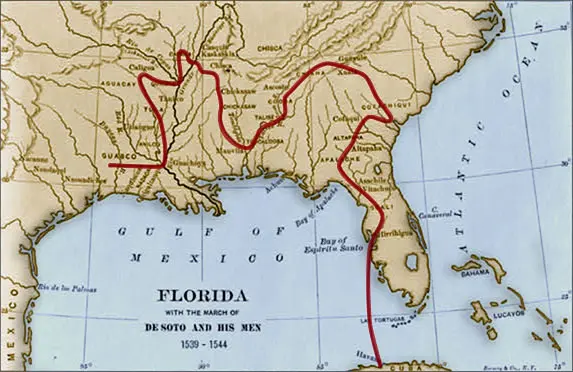
          “In May of 1539, they landed somewhere near present day Tampa Bay, maybe a little further south, scholars disagree about the exact location, but what’s different from other expeditions is that they immediately started heading into the interior of Florida,” says DiBiase. “In fact, they actually headed north. There’s an archaeological site that was discovered in the 1980s, near present day Tallahassee, that confirms an encampment that they date back to the de Soto expedition.”

          De Soto and his men traveled through present day Alabama and Georgia, as far north as Tennessee, across the Mississippi River, into Arkansas, and down into Texas. They were the first Europeans to encounter many of the native people of North America.

          Three years into his four year expedition, de Soto contracted a fatal fever, without finding gold or establishing a colony.

          “He died in May of 1542,” says DiBiase. “His burial plot is somewhere on the western edge of the Mississippi River. The few survivors, which at that time numbered somewhere between 300 and 350, decided to abandon the expedition and headed back down the Mississippi River, eventually making it to a Spanish colony in Mexico.”

          There are four early written accounts of de Soto’s travels in La Florida. The first, published in 1557, was written by a member of the expedition known only as “the Gentleman of Elvas.” Luys Hernández de Biedma was with the expedition and wrote a report for the King of Spain that was filed in 1544, but not published until 1851. Gonzalo Fernández de Oviedo y Valdés, who died in 1557, wrote a history of the expedition based upon the lost diary of de Soto’s secretary, Rodrigo Ranjel.

          The fourth narrative describing the de Soto expedition was written by Garcilaso de la Vega. Published in 1605, the English translation of the title is “The Florida of the Inca.”

          “De la Vega, known later in his life as El Inca or ‘the Inca,’ was culturally unique,” says DiBiase. “He was the son of a Spanish captain and an Incan princess. So he was descended from these noble families from both the European culture and the native Amerindian culture in present day Peru.”

          El Inca” based his narrative on oral history interviews conducted with an expedition survivor in Peru, and his research of historical documents in Spain. While the account does contain some historical inaccuracies, it is noteworthy for the author’s unique perspective on the interactions between the Spanish and the native people of North America.

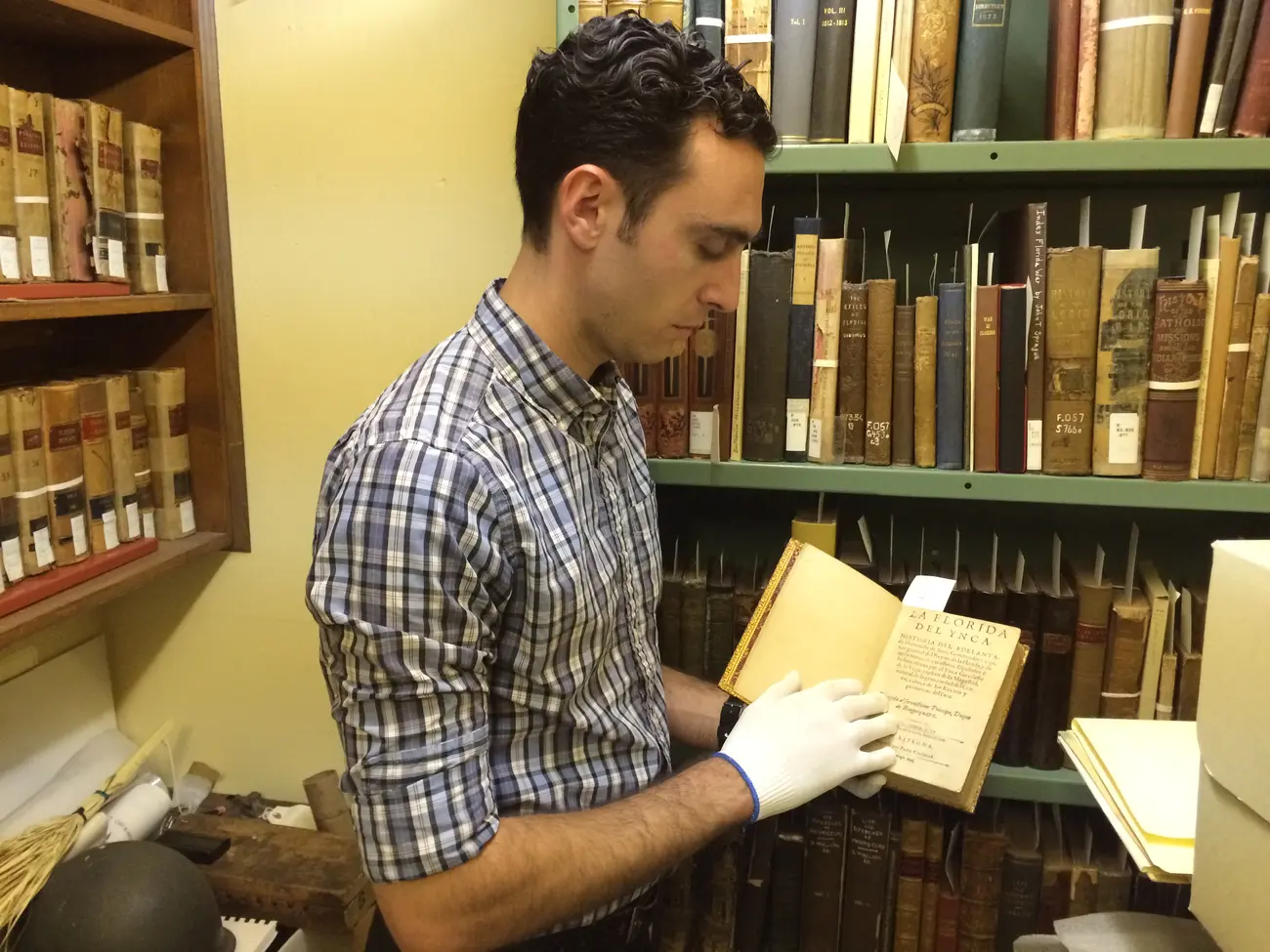
          The Library of Florida History archive contains an original, Spanish language, first edition copy of the 1605 book, carefully stored in a walk-in safe.

          “When the Florida Historical Society reincorporated in 1905, and they formed a research library, the first donation to the library was this book, ‘La Florida del Ynca,’ and it was owned by non-other than Henry Flagler, the railroad magnate who was famous for building the Florida East Coast Railroad and developing Florida’s infrastructure,” says DiBiase. “This was his personal copy that he donated to the Florida Historical Society over a century ago.”

          PDF file(s)
          Article Number
          126
          relevantdate

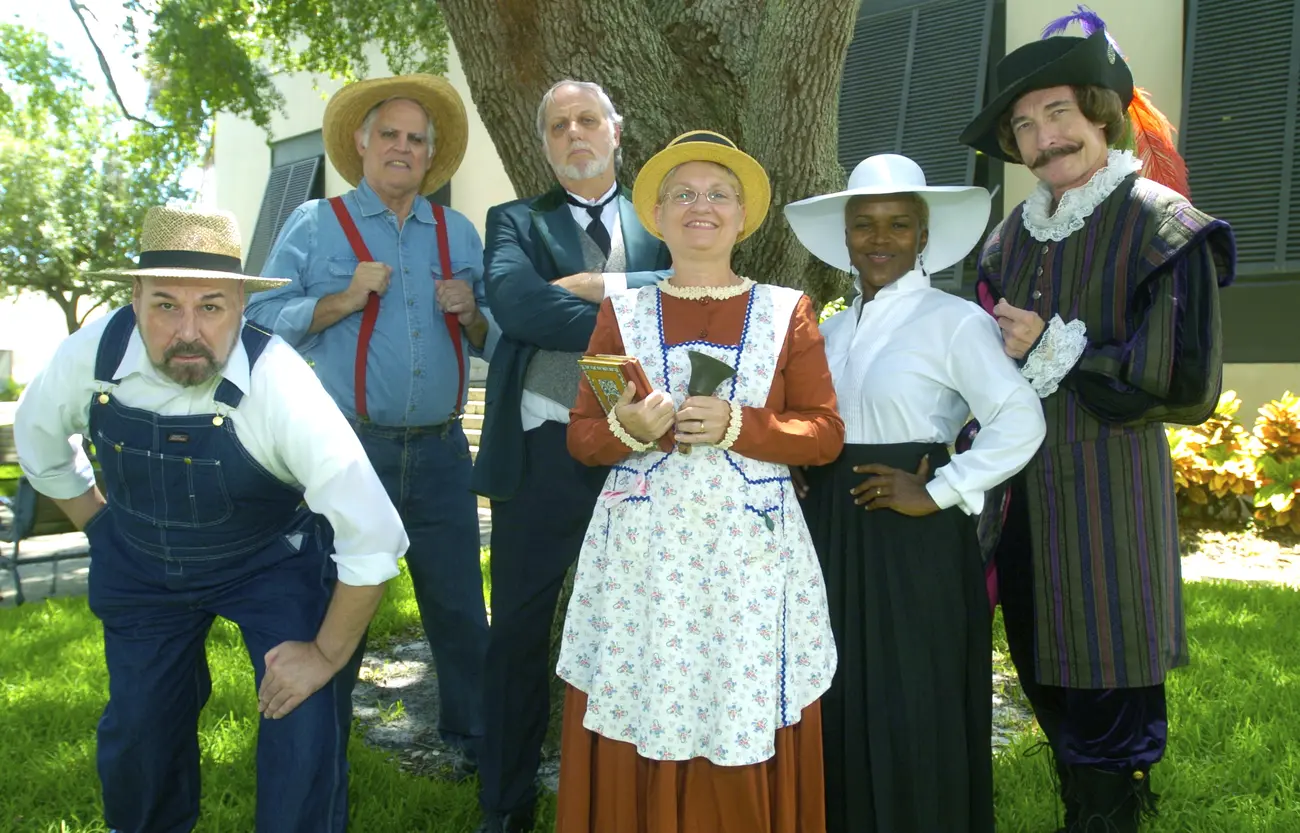
            Each year the Brevard Theatrical Ensemble presents a new production of “Mosquitoes, Alligators, and Determination” looking at different aspects of Florida history and culture.

            The ninth, all new version of the program will be presented at the Library of Florida History, 435 Brevard Avenue, Cocoa, with performances Friday at 7:30 pm, Saturday at 2:30 pm and Sunday at 2:30 pm, this weekend and next. Tickets are available at a discount online at www.myfloridahistory.org, or by calling 321-690-1971, ext. 205.

            “We’re a storytelling group and we do themed shows, and somebody said, ‘we live here in Florida, it’s a great place, but there’s all this history that people don’t know about,’” says Mike Mellen, who has been with the Brevard Theatrical Ensemble for 20 years, and has performed in all nine productions of “Mosquitoes, Alligators, and Determination.”

            Past productions have focused on Cracker culture, explorers and discoveries, and our state’s natural environment, among other topics.

            “This year we’re doing ‘Disasters,’ because a lot of Florida’s history has been shaped by disasters,” says Mellen. “Hurricanes are the obvious one, but there’s been fires, there’s been famine, there’s been plagues that have shaped Florida’s history, so it’s about the disasters and how we recover from them.”

            Mellen’s portion of the program looks at two hurricanes, one that devastated the Luna settlement in 1559, and another that sunk a fleet of twelve Spanish ships full of treasure in the 1700s.

            “I’m actually personifying Guabancex, the Taino goddess also known as ‘she who’s wrath and fury destroys everything,’” says Lizzy Seal, a member of the Brevard Theatrical Ensemble for 14 years, who has also performed in “Mosquitoes, Alligators, and Determination” from the beginning. “It was the Taino’s belief that it was her that brought about the hurricanes. Hurricanes were a phenomenon created by her.”

            Doris Gonzalez has performed with BTE since 1998. In the past she has portrayed Ruth Bryan Owens, daughter of William Jennings Bryan and the first female senator from Florida, among other roles.

            “There’s so much to Florida history as we’re all finding out,” says Gonzalez. “I’m a transplant, so doing all this has made me more aware of where Florida has been and where it’s going.”

            The goal is to make Florida history accessible.

            “We make it more personal so that when we tell the story it’s not just a history lesson, it’s fun, as it should be,” says Gonzalez. “We give it an approach where you’re entertained, but you’re also learning something, but you’re not being force fed.”

            For the new production of “Mosquitoes, Alligators, and Determination” Gonzalez is telling the story of Dr. John Perry Wall, the first American doctor to make the connection between Yellow Fever and mosquitoes. When his wife and daughter died from an outbreak of the disease in 1871, Wall was motivated to find the cause.

            “He started putting observations together and he finally realized that the normal little treetop mosquito was the one that brought disease,” says Gonzalez. “Yellow Fever and mosquitos were there in the summer, and when the first frost came, they were gone. Nobody believed him; they thought his theory was just bunk, until Dr. Walter Reed, with the backing of the Army, in 1900, finally put everything together. Reed gets the credit for having solved the mystery, but Dr. Wall actually got there first, some 30 years earlier.”

            Each production of “Mosquitoes, Alligators, and Determination” has important messages relevant to contemporary Floridians.

            The ninth production of the program celebrates how overcoming disasters makes us stronger.

            Travis O’Bier has been with BTE since 2009. This year he’s doing a story about the Jacksonville fire of 1901.

            “The main theme of this story is like basically what happens in today’s world,” says O’Bier. “We have a lot of tragedies going on, but we don’t let the tragedies overcome us. We rebuild, we regroup.”

            Lady Gail Ryan is the founder and director of the Brevard Theatrical Ensemble and the driving force behind “Mosquitoes, Alligators, and Determination.” A native Floridian, Ryan hopes that the program will help audience members feel more connected to our state.

            “We’re responsible for our environment,” says Ryan. “We’re responsible for what we do and what we do to Florida.”

            PDF file(s)
            Article Number
            125
            relevantdate

              Former Florida Senator Bob Graham co-chaired the congressional inquiry into possible links between the Saudi Arabian government and the 9/11 terrorist attacks, and since 2002 he has wanted the commission’s full report released. Twenty-eight pages had been removed from the document and labeled “classified.”

              On July 15, the missing “28 pages” were finally made public.

              The newly released document states that, “While in the United States, some of the September 11 hijackers were in contact with, and received support or assistance from, individuals who may be connected to the Saudi Government.”

              The report says that the congressional commission was presented with information “indicating that Saudi Government officials in the United States may have other ties to al-Qa’ida and other terrorist groups.”

              The commission adds the caveat that much of the information presented as part of the inquiry “remains speculative and yet to be independently verified.”

              As co-chair of the commission, Graham was frustrated that their full report was not initially released.

              Graham tried to share information about the terrorist attacks with the public, but was sometimes prevented from doing so.

              As a senator and member of the CIA External Advisory Board, Graham had to submit anything he wrote about the agency for approval before publishing. He had two non-fiction books partially dealing with 9/11 significantly edited by the CIA.

              Graham’s political experience clearly informs his suspense novel, “Keys to the Kingdom.”

              “The reason I wrote the novel was because I felt that there was some important unanswered questions coming out of 9/11. One of those was ‘what was the full extent of Saudi Arabia in assisting the 19 hijackers?’ Number two, ‘why would Saudi Arabia have turned against its strongest ally to assist what was our and their great enemy, Osama bin Laden?’ And third, ‘why has the United States gone to such lengths to cover it up?’ I’ve tried in non-fiction to tell those stories, and been frustrated by censorship, and so I decided I would tell the story as a novel, where the standards of censorship are lower, since you’re not representing this to be the truth. But in fact, forty percent or more of this novel is truth.”

              Following two successful terms as governor of Florida, Graham spent 18 years in the United States Senate. He served 10 years on the Senate Intelligence Committee, both before and after the terrorist attacks of September 11, 2001. Graham was one of the voices raised in opposition to the subsequent war in Iraq, which he says was one of his proudest moments as a senator.

              “I wasn’t proud at the outcome, because I was fairly convinced that it was not going to be a good outcome because we had been led into this war by false information,” says Graham, referring to the unsubstantiated claim that Iraqi leader Saddam Hussein possessed weapons of mass destruction.

              “The people who gave us that information knew, or should have known, that it was false,” Graham says.

              Senator Graham has often been called “the hardest working man in politics.”

              Graham’s 38 years of public service included two terms as Governor of Florida from 1979 to 1987, and he represented Florida in the United States Senate from 1987 to 2005.

              He famously spent more than 400 days working other people’s jobs, including days as a journalist, a fisherman, a construction worker, a truck driver, a barber, and in many other occupations.

              Graham started his tradition of “work days” in 1974, while he was serving in the Florida Senate. His willingness to experience the lives of other people, if only for a day, helped to make Graham a very popular politician. He left office as governor with an 83% approval rating.

              Since leaving the U.S. Senate in 2005, Graham’s primary focus has been on developing the Bob Graham Center for Public Service at the University of Florida in Gainesville.

              Graham learned about public service at a very early age. His father, Ernest R. Graham, was a cattleman who also served in elected office, inspiring his son’s political aspirations.

              “He was very influential is an extremely positive way,” says Graham. “He had high values and he honored public service, and I tried to be faithful to his principles.”

              PDF file(s)
              Article Number
              124
              relevantdate

                Citrus is as much a part of Florida’s image as sunshine, beaches, and theme parks. Like most Florida residents, citrus trees are transplants from somewhere else.

                “Many people don’t realize that citrus is not indigenous to our state,” says Patrisha Meyers, director of the Brevard Museum of History and Natural Science. “Citrus plants were actually brought here by the Spanish in the 1500s.”

                Christopher Columbus first brought citrus to the New World in 1493, and Ponce de León was a member of his crew. When Ponce “discovered” Florida in 1513, he was probably one of the first to plant orange trees here. Later sixteenth century Spanish explorers did the same.

                Grapefruit didn’t arrive in Florida until about 300 years later. The French Count Odet Philippe planted the first grapefruit grove in Florida near Tampa, in 1823. Around the same time, Florida pioneers began establishing orange groves along the St. Johns River.

                Florida’s citrus industry began to thrive in the late 1800s. Following the Civil War, Florida produced about one million boxes of fruit annually. With the coming of the railroad in the 1880s, fruit could be effectively shipped out of state. By 1893, more than five million boxes of Florida citrus was shipped to eager consumers in northern states.

                Then the Big Freeze of 1894-95 happened. Temperatures in Central Florida fell as low as 11 degrees, killing nearly all of the citrus trees in the region. Many farmers whose crops were devastated left the state. Production levels in 1895 dropped to just 147 thousand boxes.

                In the early twentieth century the citrus industry recovered and by 1910, production levels had returned to where they were before the Big Freeze. By 1915, the state produced fifteen million boxes of citrus. Output was at 100 million boxes by 1950, and in 1971, Florida produced more than 200 million boxes of citrus for the first time. Today, only Brazil produces more citrus than Florida.

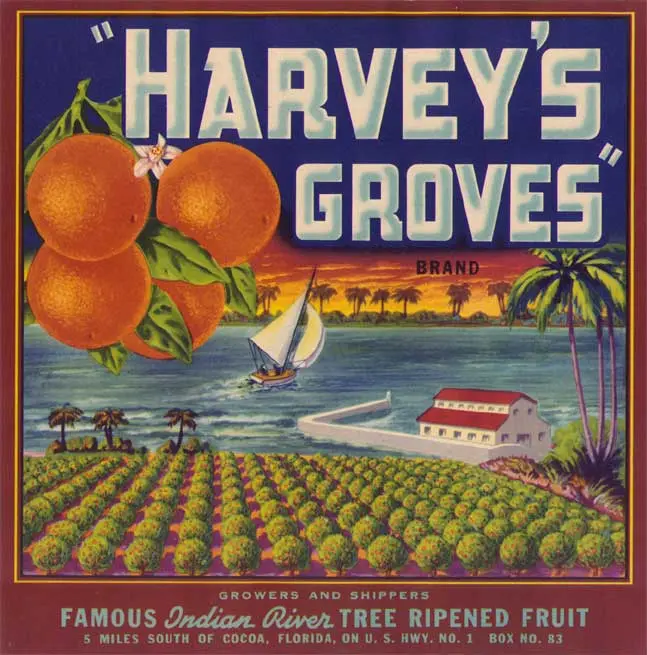
                As Florida’s citrus industry thrived in the twentieth century, the state’s different citrus growers developed unique labels for their shipping crates. Many of these colorful and detailed labels can be appreciated as works of art.

                On Friday, July 22, the Brevard Museum of History and Natural Science will open the Florida Citrus Label Exhibit with a wine and cheese reception from 6 pm to 8 pm. Tickets are $30 per person, and are available online at myfloridahistory.org. The museum is located at 2201 Michigan Avenue in Cocoa.

                “The labels are all beautiful and I’d like to encourage our visitors to pick out a favorite,” says Meyers. “I finally settled on the Moccasin Brand label. It is a simple label with a worn beaded moccasin in earthy colors set off by a red circle on a dark blue background. It’s my favorite because it takes me back to my childhood home, which is on land that was originally an experimental citrus grove. This brand really drew me back into warm summer days traipsing around Martin County, wearing old moccasins my grandmother gave me, and eating hybrid tangerines from our yard.”

                The Florida Citrus Label Exhibit was curated by the Museum of Florida History in Tallahassee, and includes labels from around the state. Some of the brands represented include Caboose from Crescent City, Imperial from Lakeland, Miss Florida from Wauchula, Red Warrior from Umatilla, and White Owl from Howey.

                In conjunction with the Florida Citrus Label Exhibit opening, the Brevard Museum of History and Natural Science will unveil their refreshed and updated Brevard County Citrus Exhibit.

                “This refresh was made possible by partnerships with local citrus growers, families who have been in the industry for generations,” says Meyers. “I can’t thank the Harvey, Sullivan, Crisafulli, and Parish families enough for their time. I had the privilege of scanning some really great photos of the early citrus industry here in Brevard from these families. Prints of these scans will be on display, as well as some beautiful citrus memorabilia on loan from the Sullivan family. I’m also excited about partnering with the Field Manor museum to incorporate some of their items into the new exhibit.”

                These citrus exhibits will be nostalgic for longtime residents and informative for more recent transplants to Florida.

                PDF file(s)
                Article Number
                123
                relevantdate

                  The statewide headquarters of the Florida Historical Society is in Cocoa, but the organization hosts their Annual Meeting and Symposium in a different Florida city each year. In recent years the event has been held in Orlando, St. Augustine, Fort Lauderdale, Tampa, Jacksonville, and Pensacola.

                  In 2013, to commemorate the 500th anniversary of the naming of our state, the Florida Historical Society hosted their annual meeting aboard a cruise ship that sailed out of Port Canaveral. The return voyage from the Bahamas followed Ponce de León’s path of discovery, sailing up the east coast of Florida.

                  “That cruise was the most popular conference we’ve ever had,” says Tracy Moore, president of the Florida Historical Society. “We’ve been around since 1856, so that’s really saying something. People enjoyed it so much they began asking us right away when we were going to do a conference cruise again.”

                  The answer is here. The Florida Historical Society will hold their next Annual Meeting and Symposium aboard the Carnival Sensation cruise ship, May 18-22, 2017.

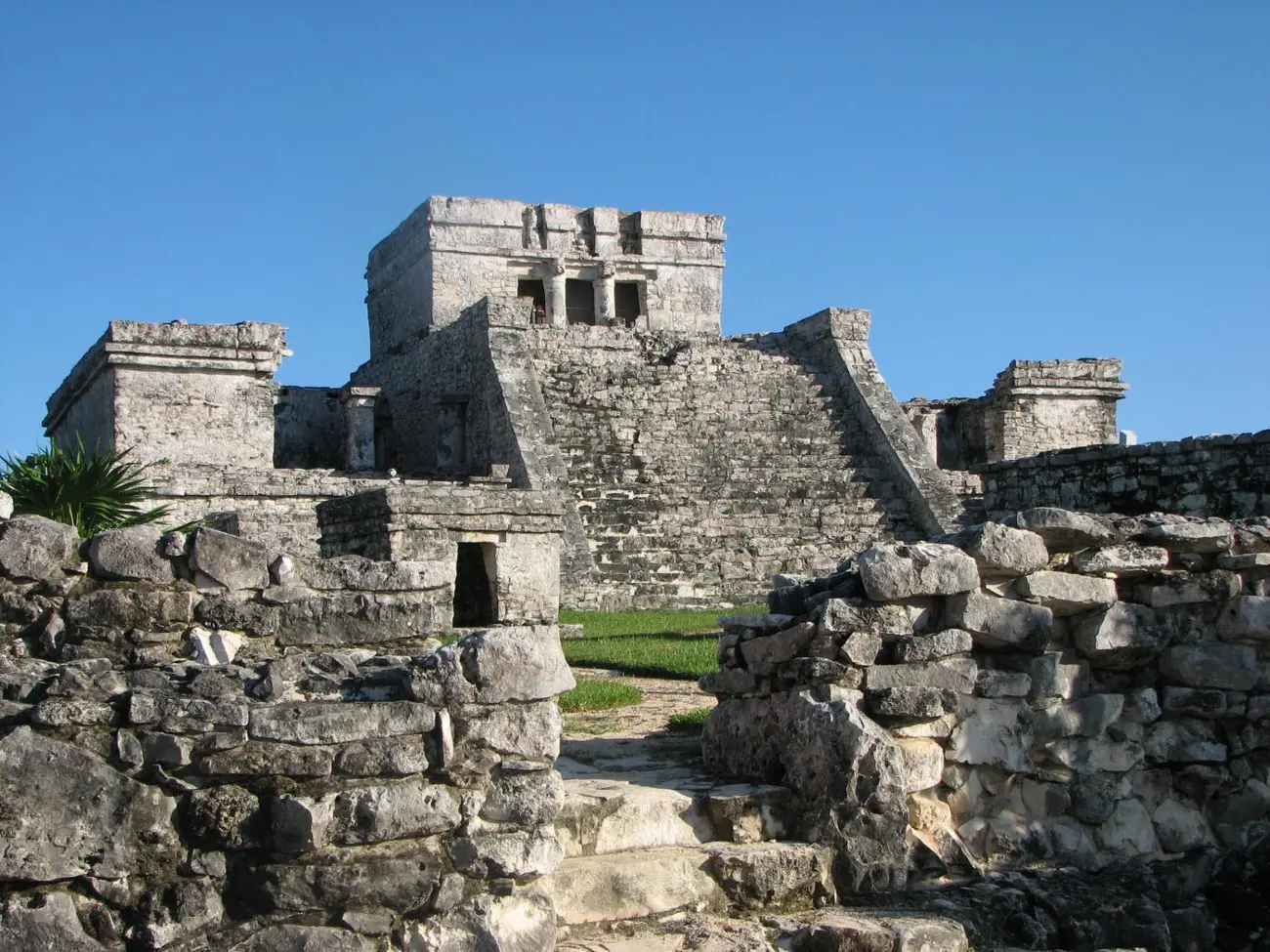
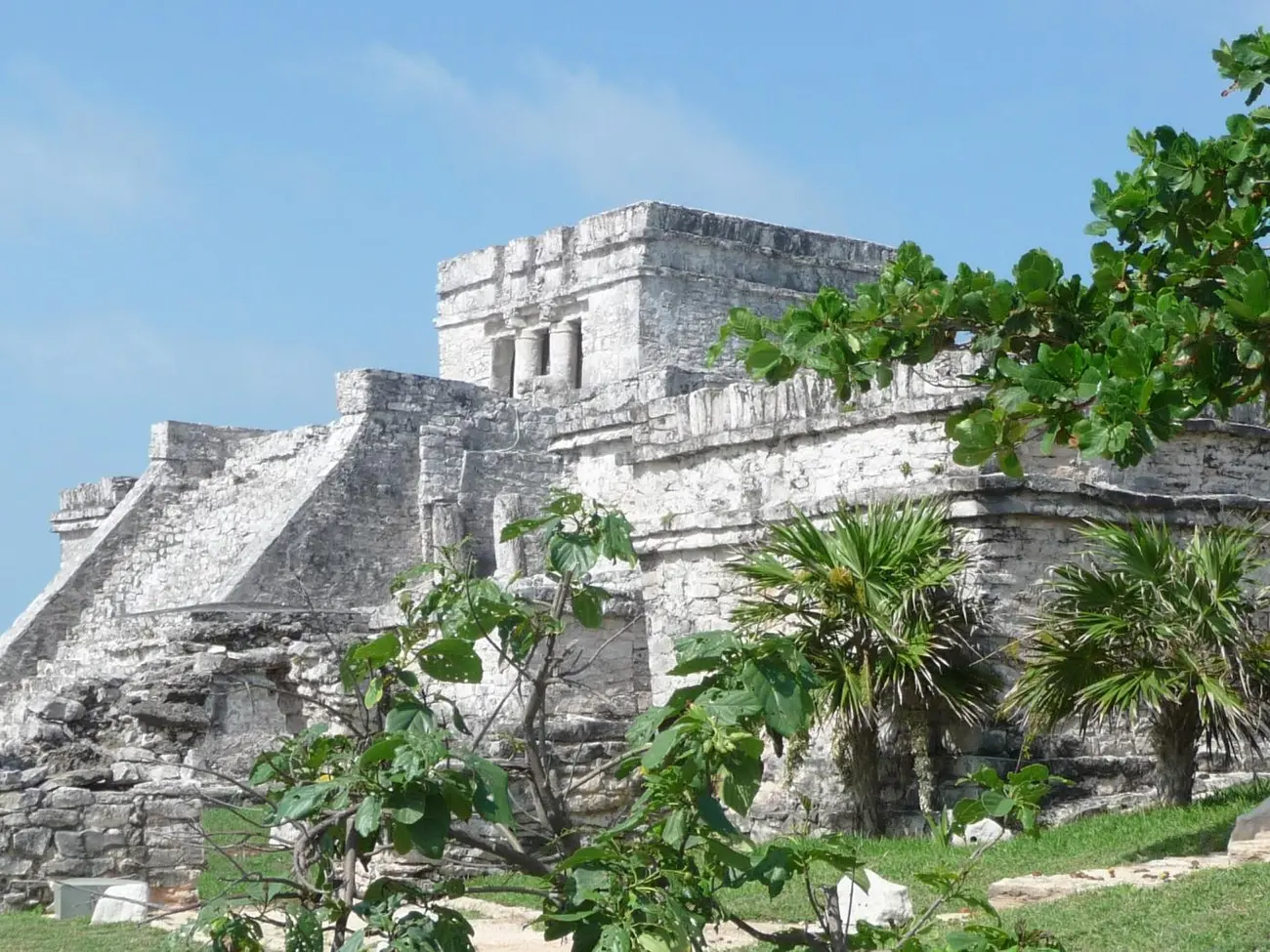
                  “We’ll be leaving out of Miami, and spending a day in Key West taking tours of historic sites and museums such as the Harry S. Truman Little White House, writer Ernest Hemingway’s House, and other exciting places,” says Moore. “From there we’ll travel to Cozumel, where we’ll take a tour to the breathtaking Mayan ruins at Tulum. This ancient city sits high on a cliff overlooking the ocean. It’s really spectacular.”

                  The theme for the conference is “Islands in the Stream: Exploring History and Archaeology in Key West and Cozumel.”

                  “While we’ll be on a cruise ship and having a lot of fun, all of the scholarly elements of our annual meeting that people expect from the Florida Historical Society will remain intact,” says Ben DiBiase, FHS director of educational resources. “In addition to the historic tours on land, we will have fascinating paper presentations and round table discussions on a wide variety of Florida history topics while on board ship.”

                  One of the keynote speakers for the conference will be Robert Kerstein, author of the book “Key West on the Edge: Inventing the Conch Republic.”

                  “Dr. Kerstein’s book is a thoroughly researched study of this unique town that we’ll be visiting,” says DiBiase. “It follows the development of Key West from an isolated outpost of people who salvaged shipwrecks, to an important military installation, to the tourist mecca it is today.”

                  Another keynote speaker for the conference will be Sandra Starr, senior researcher emerita from the Smithsonian Institution. She will be giving a presentation called “Maya Mariners, the Yucatan, and Florida: A Researcher’s Tale of Seduction into the Cross-Gulf Travel Theory.”

                  There has been speculation for decades that the ancient Maya may have used boats to cross the Gulf of Mexico to visit Florida. Some have argued that evidence of this contact can be found in the language, pottery, and earthen mounds of some of Florida’s indigenous people.

                  “The possible connection between the ancient Mayan people and the indigenous people of Florida is a fascinating topic for discussion, and Sandra Starr will help us to explore those possibilities before we tour one of the most impressive Mayan cities,” says DiBiase.

                  The Florida Historical Society Archaeological Institute is based at the Brevard Museum of History and Natural Science in Cocoa, and archaeology has been a primary focus of FHS for more than a century.

                  To participate in the Florida Historical Society Annual Meeting and Symposium cruise, you must register through the FHS website at myfloridahistory.org, or call 321-690-1971 ext. 205. A $50 per person deposit will hold a cabin for the conference.

                  The cost of the event varies based on what kind of cabin a participant wants, but all registrations include the cruise, meals, the featured tours at Key West and Cozumel, symposium registration, taxes, fees, and port charges. Inside cabins start at $699.99 per person, double occupancy.

                  “Last time that we did a conference cruise, we filled all of our allotted cabins quickly,” says Moore, who also owns Robinson Cruise Planners in Cocoa. “We suggest that you contact the Florida Historical Society right away to reserve your cabin so you don’t miss this once in a lifetime event.”

                  PDF file(s)
                  Article Number
                  122
                  relevantdate

                    Frank Thomas writes and performs songs about the history, people, and places of Florida. Songs such as “Old Cracker Cowman,” “The Flatwoods of Home,” and “Spanish Gold” have earned him a loyal following. In 2013, Thomas was inducted into the Florida Artists Hall of Fame.

                    Thomas’s Florida roots run deep.

                    “The Thomas side of the family came into Florida in 1820,” says Thomas. “He married a girl who was born in St. Augustine in 18 and 5, and her parents was well established there, they’d been there about 20 years, so I’m thinking it had to be late 1780s or early 1790s.”

                    Members of the Thomas family experienced a lot of Florida history.

                    “Longevity seems to run in my family,” says Thomas. “My daddy was born in 18 and 82. Now he grew up in a whole different era. Now think about that. I was born in (19)43. He was 61 when I was born. His daddy died at a fairly early age. A one-eyed mule kicked him in the head. That’s what killed him. My great-granddaddy, who I sing about in the song ‘The Flatwoods of Home,’ fought in the Great War of Northern Aggression and fought in the Seminole Indian Wars.”

                    Thomas grew up in Middleburg, Florida, in a musical family who played gospel music. His first performing experiences were in church. His early musical influences also included performers on radio broadcasts of the Grand Ole Opry, including Hank Williams, Lefty Frizzell, and Webb Pierce.

                    “Some of the old time country stuff really fascinated me,” says Thomas. “We didn’t have electricity (until the 1950s) but we had a battery operated radio. My momma would listen to these old soap operas in the daytime. My daddy made her save that battery for Saturday nights so we could listen to the Grand Ole Opry, and that’s where I first started getting influenced.”

                    After serving seven years in the Army in the 1960s, Thomas began touring with nationally known gospel, country, and bluegrass bands as a guitarist and singer. He played with groups including the Taylor Brothers, the Webb Family, and the Arkansas Travelers.

                    “I made my way back to Florida in the late (19)70s, and I met Will McLean,” says Thomas. “Will was a big inspiration for me. He encouraged me to write songs about Florida. He said ‘You know, you write all these love songs and cheatin’ songs, you don’t do much of that. Write about what you know.’ He used to tell me that it would take all of us doing all we can to tell Florida’s story. There’s so much history in the state of Florida.”

                    Thomas joined other folk musicians such as Gamble Rogers, Paul Champion, and Bobby Drawdy in their efforts to preserve Florida stories in song.

                    “A song seems to stay with people,” says Thomas. “It focuses on their mind and they don’t forget it. I think that’s why, with the kids in schools, they need to be teaching more Florida history through music.”

                    Thomas has gained a reputation for strongly encouraging other performers to write songs about Florida history and culture.

                    “Sometimes I will give assignments to somebody, ‘go write a song about this or about that’ and the main reason for that was ‘Cousin’ Thelma Boltin,” says Thomas.

                    Boltin was director of the Florida Folk Festival at the Stephen Foster Folk Culture Center in White Springs from 1954 to 1965, and continued performing as a storyteller at the annual event until 1986.

                    “She hemmed me up one time backstage, got to putting her finger in my face,” says Thomas. “She was an old school teacher, retired. She scared me good.”

                    Boltin told Thomas about the FBI attempt to capture the infamous Barker gang at their Florida hideout in Ocklawaha. The resulting shootout resulted in the deaths of family matriarch Ma Barker and her son Fred.

                    “She said, ‘now you go write a song about that and you have it for me the next time I see you,’” says Thomas. “She did that to a lot of people. I try to carry that tradition on.”

                    Thomas performs regularly at the Florida Folk Festival each Memorial Day weekend, and at venues throughout the state.

                    PDF file(s)
                    Article Number
                    121
                    relevantdate

                      A powerful hurricane can be terrifying. The darkened skies, howling winds, and pelting rain can be harrowing.

                      The hurricane of 1928 was particularly devastating to residents of south Florida.

                      “When you talk about Florida, you have to talk about hurricanes,” says Eliot Kleinberg, author of the book “Black Cloud: The Deadly Hurricane of 1928.”

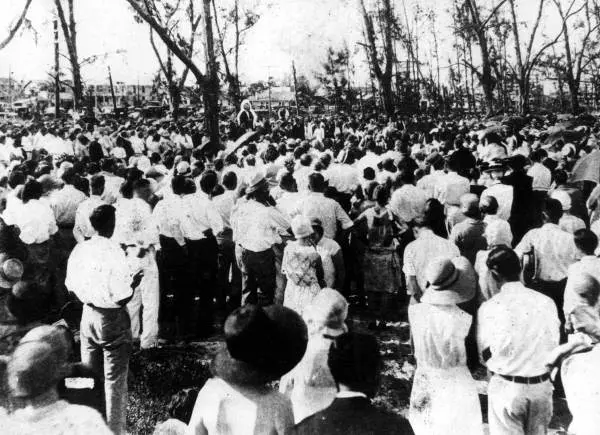
                      Kleinberg first heard about the hurricane of 1928 while working as a reporter for the Palm Beach Post. “In 1988, for the sixtieth anniversary of the storm, I was sent out to Belle Glade to cover a commemorative event. The more I talked to these people, I said, how is it possible that this profound hurricane happened and most of the world doesn’t know anything about it?”

                      The 1928 hurricane played a pivotal role in Zora Neale Hurston’s 1937 novel “Their Eyes Were Watching God.” The storm leads to tragedy for the novel’s protagonist, Janie Crawford, while she and her lover Tea Cake are living as migrant workers in the Everglades.

                      “People have no idea that the hurricane in Zora’s book was a real hurricane,” says Kleinberg. “She takes some literary license with the hurricane. She gives it 200 mile per hour winds and she describes a gigantic tidal wave, which isn’t exactly how it happened. It was more like a slow and steady rise, but in talking about the hurricane and its effect on black people, the migrant workers in the glades, she was spot on.”

                      Today, meteorologists armed with satellite imagery track every movement of a hurricane for weeks before landfall, providing multiple models of possible paths a storm might take. In 1928, storm forecasting was not as sophisticated.

                      “As remarkable as it is to imagine now, back then hurricanes would travel through the ocean for days before anyone knew they existed,” says Kleinberg. “In the case of this storm, a ship in the eastern Caribbean came across it, and telegraphed about the storm.”

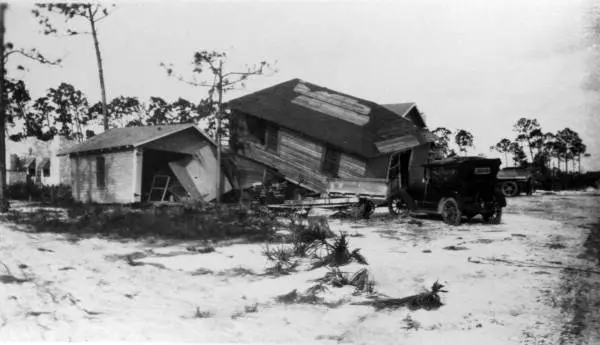
                      The hurricane tore through the Caribbean islands, killing as many as 2,000 people in Puerto Rico alone. The night before the hurricane struck Florida, weather officials were saying that the storm was not going to hit the state. It made landfall near West Palm Beach on September 16.

                      Even if good information had been available, it might not have made a difference.

                      “To say that they knew or didn’t hear the hurricane warning presumes that they had a radio, which in 1928, a lot of people didn’t, and there certainly wasn’t any television,” says Kleinberg. “A newspaper is only as good as its deadline, which is 12 to 15 hours. Even if they knew, where could they go?”

                      The people living in isolated little towns around Lake Okeechobee had very few options as the lake swelled and flooded the surrounding area. A person would not want to head east, into the storm, and roads heading west and north were difficult to travel in good weather conditions.

                      “This presumes you had a car, which in 1928 wasn’t a given,” says Kleinberg. “They really, literally, had nowhere to run.”

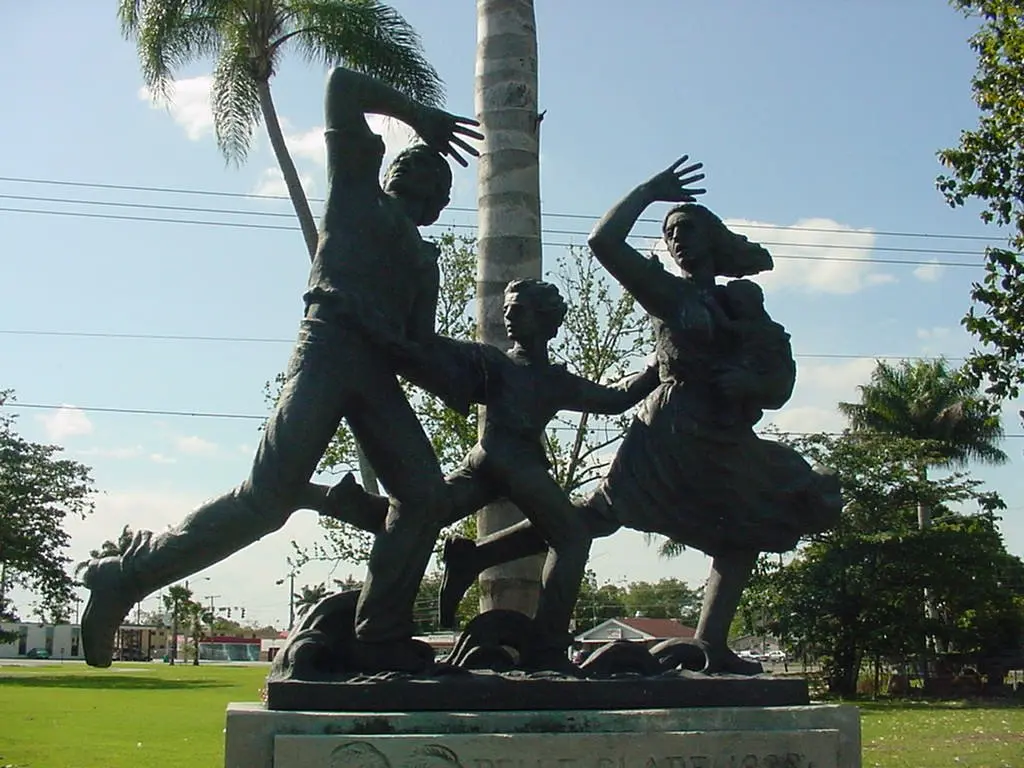
                      An estimated 2,500 Floridians were killed by the 1928 hurricane, and a disproportionate number of those people were African American. After the storm, white victims and black victims were treated very differently. For health reasons, all of the bodies had to be quickly placed into mass graves.

                      “They took all of the white victims and they put them in a mass grave in the City Cemetery in West Palm Beach, let family members try to identify them, tag them, but 674 black victims were literally just dumped in a hole,” says Kleinberg. Black families were not given the same consideration, and many don’t know if their relatives were dumped in the mass grave or not. “The other great tragedy is that for the next 60 years, the grave was unmarked.”

                      The nearly 700 black victims of the hurricane were forgotten, as a road was rerouted over part of the unmarked mass grave at what is now the corner of Tamarind Avenue and 25th Street, about two miles northwest of downtown West Palm Beach.

                      “If this hurricane had smashed a black tie affair in Palm Beach, they’d still be talking about it,” says Kleinberg.

                      PDF file(s)