Florida Frontiers

A Tag for nodes that are relevant to Florida Frontiers.   For example if an artilce is about Florida Frontiers and you would like a 'View' to sorty by Tag criteria for it... us it.

Article Number
140
relevantdate

    Tradition holds that the first Thanksgiving was celebrated in 1621, as English Pilgrims at Plymouth Plantation in Massachusetts shared a bountiful harvest with their Native American neighbors.

    The first Thanksgiving celebration in North America actually took place in Florida.

    Fifty-five years before the Pilgrims landed at Plymouth Rock, colonists in St. Augustine shared a feast of thanksgiving with Native Americans.

    “Not until 42 years later would English Jamestown be founded,” says eminent Florida historian Michael Gannon. “Not until 56 years later would the Pilgrims in Massachusetts observe their famous Thanksgiving. St. Augustine’s settlers celebrated the nation’s first Thanksgiving over a half century earlier, on September 8, 1565. Following a religious service, the Spaniards shared a communal meal with the local native tribe.”

    Hosting the first Thanksgiving celebration in what would become the United States is one of many “firsts” for the oldest continuously occupied European settlement in America, founded 451 years ago.

    “When the Spaniards founded St. Augustine, they proceeded to found our nation’s first city government, first school, first hospital, first city plan, first Parrish church, and first mission to the native populations,” Gannon says.

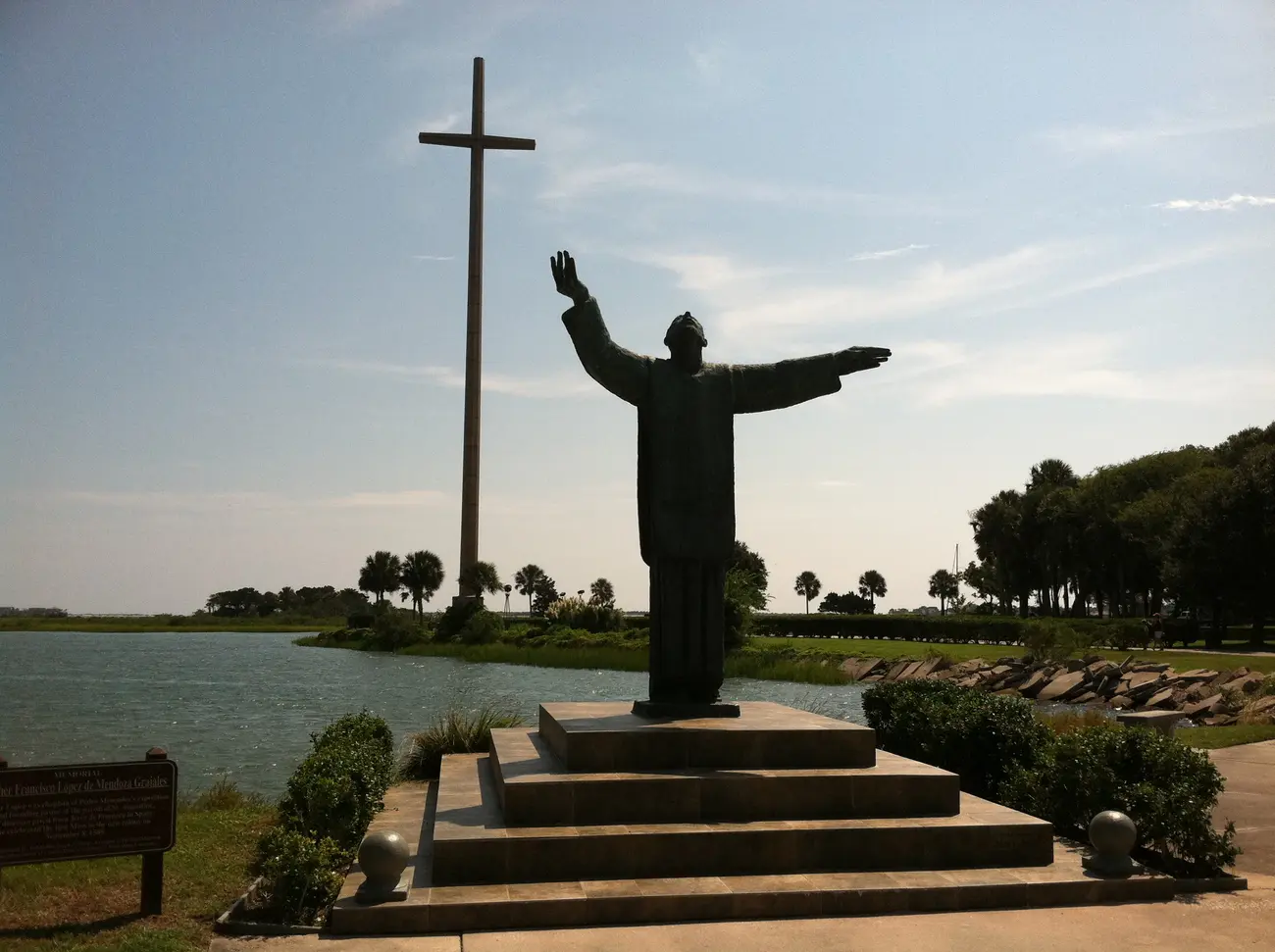
    In 1965, Gannon was a priest and historian in St. Augustine, leading several projects to help celebrate the 400th anniversary of the founding of the city. He oversaw the erection of the Great Cross on the site of the first religious service and thanksgiving feast in North America. At 208 feet tall, the stainless steel structure is the largest freestanding cross in the Western Hemisphere.

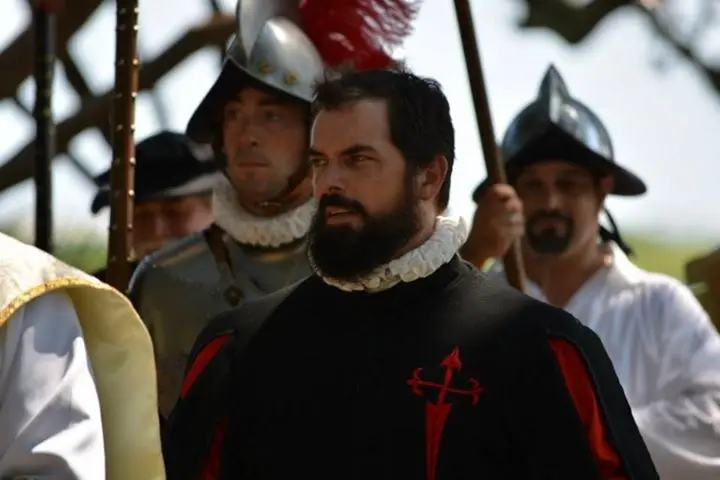
    “It was decided to build a cross, because that was central to the original ceremony, where Father Francisco López, the fleet chaplain, soon to be first pastor of the first Parrish, came ashore ahead of Pedro Menéndez de Avilés, the leader of the founding expedition, and then went forward to meet Menéndez holding a cross,” says Gannon. “Menéndez came on land, knelt and kissed the cross.”

    Every year, the September 8, 1565 landing of Menéndez and the Catholic Mass that followed is reenacted in St. Augustine with dignitaries from around the world in attendance. For many years the role of Menéndez has been played by Chad Light.

    Today, visitors to the first permanent European settlement in North America can see a statue of Father Francisco López in front of the Great Cross. The statue is placed on the approximate site where Father López held the first Catholic Mass in the city, which was attended by Native Americans. Following the service, the European settlers and the native people shared a Thanksgiving meal.

    The statue of Father López is carved out of indigenous coquina stone, a sedimentary rock comprised of compressed shells. The rough surface of the coquina symbolizes the difficult journey the Spanish endured on their voyage to Florida.

    “That statue was erected in the 1950s. It was executed by a distinguished Yugoslav sculptor, Ivan Meštrović,” says Gannon. “But it was placed in a copse of trees where it did not stand out against a dark background. The plan that the architects in 1965 came forward with was to move it to a site on open ground where the figure of Father López, with his arms in the air, would stand out against the sky. And now, at long last, the statue has been moved to that space. You can see the dramatic difference in the figure of Father López as he’s seen completely and clearly now against the sky, and directly in front of the Great Cross, which stands behind him.”

    The Spanish had only just arrived in St. Augustine when their Thanksgiving dinner was served, and they did not have the benefit of having raised crops for a year as the English Pilgrims did more than half a century later.

    The Spanish had to do the best they could with leftovers from their long voyage.

    “The menu was a stew of salted pork and garbanzo beans, accompanied with ship’s bread and red wine,” says Gannon.

    While Floridians should proudly proclaim ownership of the first Thanksgiving celebration held in what would become the United States, we may want to retain the traditional menu of turkey, stuffing, vegetables, and cranberry sauce.
    PDF file(s)
    Article Number
    139
    relevantdate

      The Chicago Cubs won the 2016 World Series Championship. The Cubs came back from a 3-1 game deficit to play a full series of 7 games. The final game required an extra tenth inning for the Cubs to defeat the Cleveland Indians in a dramatic 8-7 finish, following a rain delay. The win ended a 108-year drought for the Cubs, the longest in Major League Baseball history.

      The 1906 Cubs won a record setting 116 of 154 games played that season. The team was the first to play in three consecutive World Series Championships, and the first to win twice in a row, in 1907 and 1908.

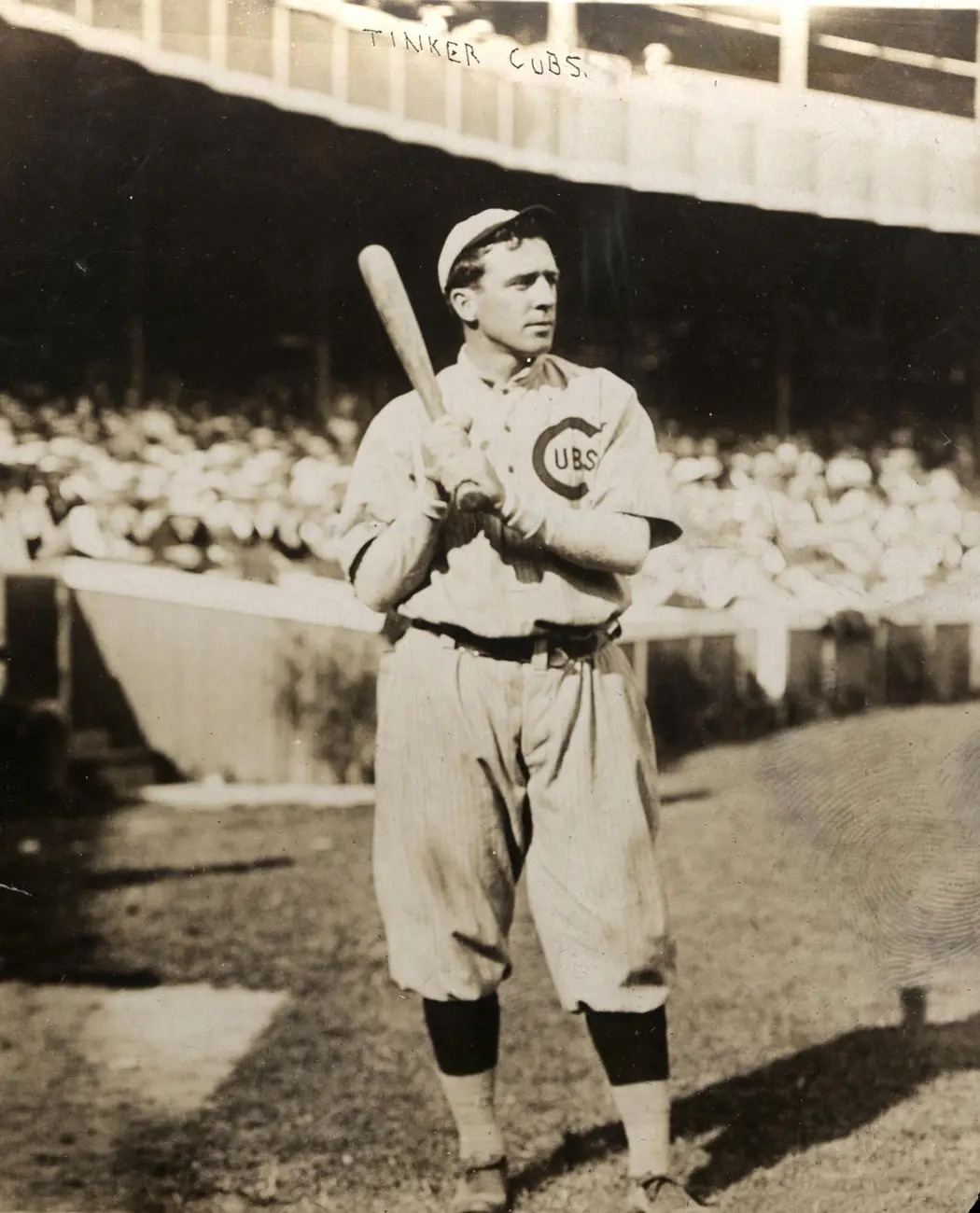
      The last time that the Cubs won the World Series, in 1908, Joe Tinker was an important player on the team. Tinker has strong ties to Central Florida, and played a key role in the development of the Orlando area.

      From 1902-1912, Cubs shortstop Joe Tinker, second baseman Johnny Evers, and first baseman Frank Chance perfected a double play combination that helped to defeat opposing teams. The 1910 poem “Baseball’s Sad Lexicon” by Franklin Pierce Adams is written from the perspective of a New York Giants fan.

      These are the saddest possible words:
      “Tinker to Evers to Chance.”
      Trio of bear cubs, and fleeter than birds,
      Tinker and Evers and Chance.
      Ruthlessly pricking our gonfalon bubble,
      Making a Giant hit into a double—
      Words that are heavy with nothing but trouble:
      “Tinker to Evers to Chance.”

      The three teammates were elected into the National Baseball Hall of Fame in 1946.

      Tinker played for the Cubs from 1902-1913. After one season with the Cincinnati Reds, Tinker returned to the Cubs as a player and manager until 1916. After leaving the Cubs, Tinker was part owner and manager of a minor league team, the Columbus Senators.

      Tinker’s wife had persistent health problems, and they decided to move to Orlando in 1920. Tinker became owner and manager of the Orlando Tigers.

      “The Tigers were the second incarnation of Orlando’s initial baseball franchise,” says Michael Perkins, executive director of the Orange County Regional History Center. “They were the Caps in 1919 and ’20, then the Tigers in 1921, and then the Bulldogs in until 1924. All of the teams played Class C baseball in the Florida State League. The Tigers won the League under Tinker’s management in 1921.”

      Using wealth he had acquired from a successful career in professional baseball, Tinker started a real estate company, buying and selling land in Orange County and Seminole County. Tinker profited greatly from the Florida Land Boom of the 1920s. His offices were in the Tinker Building at 16 and 17 West Pine St. in Orlando, which is listed on the National Register of Historic Places.

      “The Tinker Building cost Tinker $90,000 to build in 1925, an enormous sum for the time,” says Perkins. “It held his real estate offices for about two years before Florida’s economic collapse of 1927 caused the local real estate market to bust.”

      Orlando’s Tinker Field, named after Joe Tinker, is adjacent to the Citrus Bowl. Tinker Field has served as the Spring Training home of the Brooklyn Dodgers, Cincinnati Reds, Washington Senators, and Minnesota Twins. It was also the original home field of the Orlando Rays. While not as iconic as the Cubs home at Wrigley Field in North Chicago, Orlando’s Tinker Field is listed on the National Register of Historic Places.

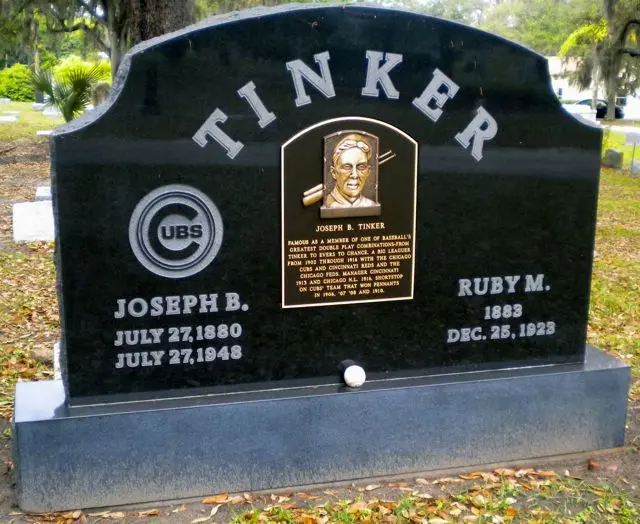
      On Christmas Day, 1923, Tinker’s wife Ruby committed suicide following an apparent nervous breakdown. In 1926, he was remarried to Mary Ross Eddington of Orlando.

      “By 1930, he had lost his considerable fortune and actually went on a ten week theatrical tour of the country with a small troupe that included his old team mate, Johnny Evers,” says Perkins. “He spent the rest of his life in and around baseball, and helped convince the Cincinnati Reds and Washington Senators to hold their Spring Training games in Orlando.”

      Tinker died of complications from diabetes in Orange Memorial Hospital on July 27, 1948, his 68th birthday. He is buried in Orlando’s historic Greenwood Cemetery.

      It’s been 108 years since the Chicago Cubs last won the World Series Championship, when Tinker played for the team.

      PDF file(s)
      Article Number
      138
      relevantdate

        Today, residents of Florida may be the ones to decide rather the next President of the United States is Hillary Rodham Clinton or Donald J. Trump.

        Florida is one of a handful of “swing states” that helps to determine the outcome of our presidential elections. In recent decades, Florida’s 29 Electoral College votes have gone to both Democratic and Republican candidates, making the difference between victory and defeat for both political parties in national races for president.

        As important as Florida has become to our presidential election process, there has never been a president, or even a vice-president, from Florida.

        “Florida is the largest state in the Union to have never had a president,” said James C. Clark, author of the book Presidents in Florida: How the Presidents Have Shaped Florida and How Florida Has Influenced the Presidents. “Not only have we not ever had a president or a vice-president, we’ve never even had a nominee.”

        Florida was a Spanish colony from 1565 to 1763. During the American Revolution, Florida was under British control and remained loyal to the king, while colonies to the north sought independence. By the time George Washington was sworn in as the first President of the United States in 1789, Florida was again under Spanish control.

        In 1821, future president Andrew Jackson oversaw Florida’s transition from a Spanish colony to a United States Territory.

        “Andrew Jackson comes mainly to fight Indians, and then becomes the Territorial Governor briefly, after Florida was acquired by the United States,” said Clark. “Future president Zachary Taylor comes to fight Indians in the Seminole Wars. Then Teddy Roosevelt comes on his way to Cuba [in 1898, to fight in the Spanish-American War]. So, in a way, three people have their presidential careers launched in Florida, even though none of them are from Florida.”

        Chester A. Arthur was the first sitting president to come to Florida. In the 1880s, he enjoyed fishing at Reedy Creek. Eighty years later, Walt Disney would buy that property to create his Florida theme parks.

        In the twentieth century, all U.S. presidents come to Florida, and some make the state their second home while in office.

        Harry S. Truman spent so much time in his Key West home that it became known as “The Little White House.” John F. Kennedy wrote his book Profiles in Courage and his presidential inaugural address from his family home in Palm Beach. The Bush family, which includes two U.S. presidents, has vacationed regularly in Florida since George H.W. Bush was a child.

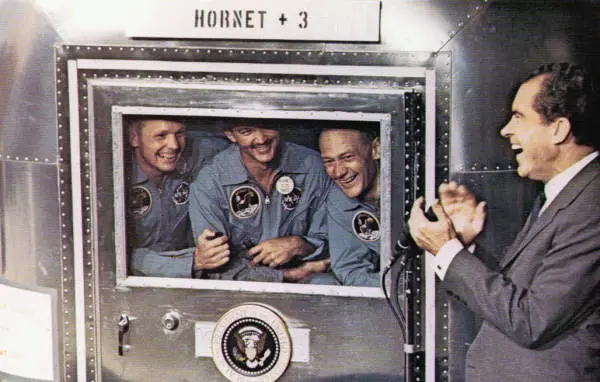
        Senator George Smathers was a prominent figure in Florida and national politics. Early in the presidency of Richard M. Nixon, rumors circulated that he might appoint Smathers as attorney general. Smathers was waiting on a call from Nixon, expecting a job offer.

        When the call from Nixon came, it was not what Smathers had hoped.

        “When Nixon called, he asked if he would sell him his home in Key Biscayne,” said Clark. “Smathers said ‘yes’ and it became the Key Biscayne White House. Richard Nixon was there the weekend that the Watergate burglary took place.”

        The burglary of the Democratic National Committee office at the Watergate building in Washington, D.C. led to the resignation of Nixon as president. It was during a press conference from the Contemporary Hotel at Walt Disney World that Nixon gave his infamous “I am not a crook” speech on November 18, 1973, at the height of the Watergate scandal.

        As terrorists attacked the Twin Towers in New York City on September 11, 2001, President George W. Bush was reading to elementary school students in Sarasota, Florida.

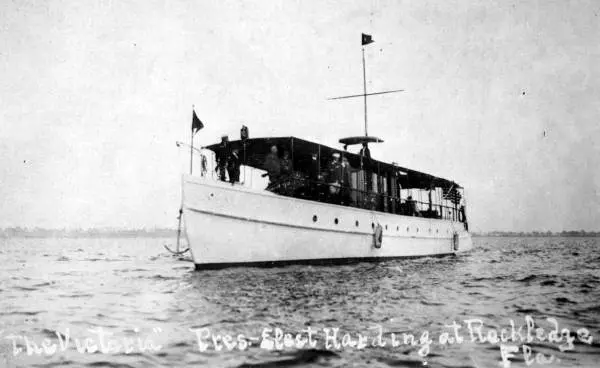
        Before becoming president in 1921, Warren G. Harding was a frequent visitor to Brevard County. Less than a month before being sworn in, Harding’s yacht Victoria was stuck for two days as he attempted to sail past Titusville on the way to Merritt Island.

        “At one point, Harding got bored on the boat,” said Clark. “He rode ashore, took a taxi cab for a ride around, just to see what was happening, came back to the dock in Titusville, bought some mullet, and took it back to the ship for dinner. Can you imagine that happening today?”

        PDF file(s)
        Article Number
        137
        relevantdate

          William Bartram fought alligators, befriended Seminoles, and meticulously documented the flora and fauna of eighteenth century Florida.

          His book “Travels through North and South Carolina, East and West Florida, the Cherokee Country, the Extensive Territories of the Muscogulges, or Creek Confederacy, and the Country of the Chactaws, Containing an Account of the Soil and Natural Productions of Those Regions, Together with Observations on the Manners of the Indians,” known today as “Bartram’s Travels,” is a classic work of Florida literature.

          William Bartram was a naturalist, botanist, artist, and explorer who followed in the footsteps of his father, John Bartram.

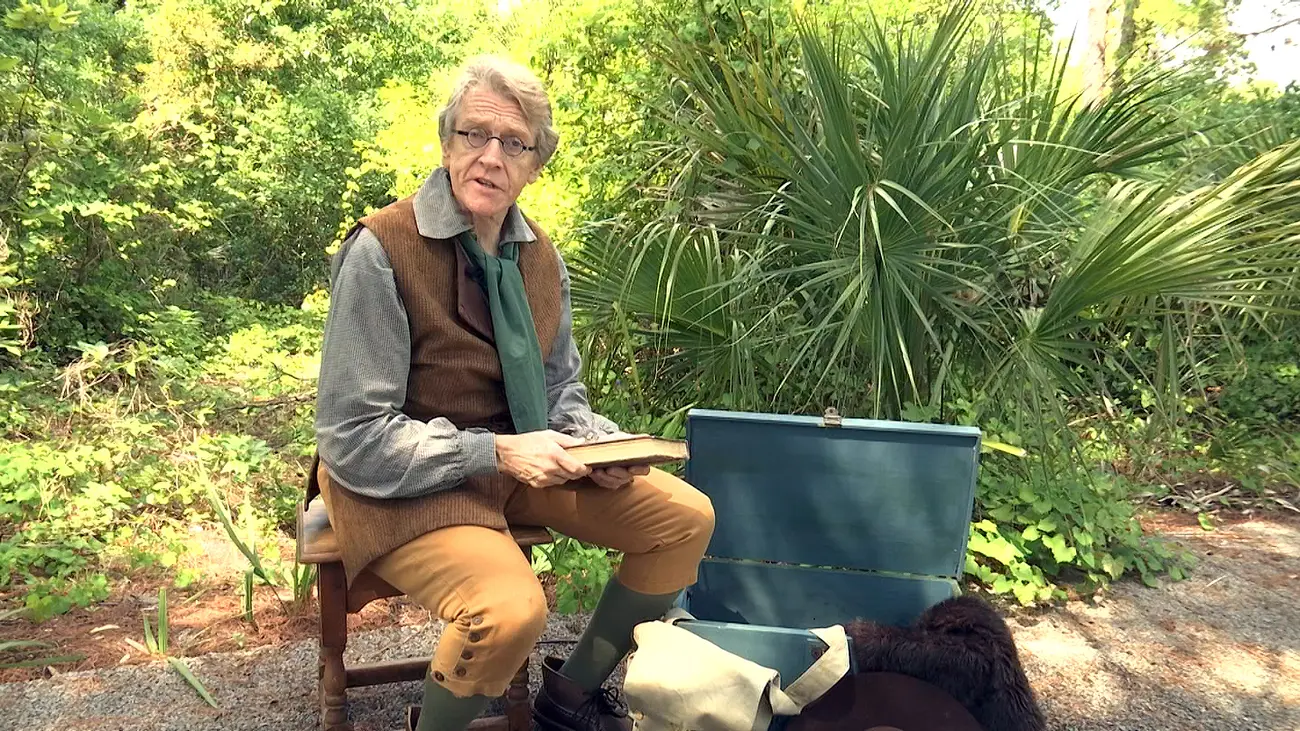
          “Without his father’s influence, William would have never gotten interested in botany,” says J.D. Sutton, actor and author of the one-man play “William Bartram: Puc Puggy’s Travels in Florida.”

          “Following the French and Indian War when Spain ceded Florida to England, John Bartram had been named botanist to the King of England. He charged John to explore the Florida territory to see what might be there, what the potentials were in the country,” says Sutton.

          In 1765, the 14 year old William Bartram joined his father on an expedition up the St. Johns River. William was so taken with Florida that he attempted to establish himself as a farmer at Fort Picolata, but the effort failed. He returned to Florida in 1774 as part of a four year trek through what is now the southeastern United States, documenting the plants, animals, and inhabitants of the region.

          Bartram sailed to Amelia Island and toured Indian mounds. He took the Intracoastal Waterway to the St. Johns River, exploring the area that would become Jacksonville. He traveled up and down the St. Johns River and visited what are now Micanopy, the Paynes Prairie Preserve State Park, Astor, and Blue Spring. Later in 1774, he traveled the Suwannee River.

          While collecting seeds and meticulously documenting Florida’s natural environment, Bartram interacted with Seminole Indians. He found the native population to be very friendly and welcoming. The Seminoles gave Bartram the nickname “Puc Puggy,” which means “flower hunter.”

          “I think it was kind of a put down which he didn’t quite get,” says Sutton. “He was just honored to be named ‘the flower hunter’ by the chief, and given permission to explore the territory around Tuscawilla for collecting medicinal herbs and plants, and writing about them and identifying them, and sending them on to England and to his father’s garden in Philadelphia.”

          Part of what makes Bartram’s “Travels” such a useful resource and engaging work today are its detailed drawings. Bartram was a skilled artist.

          “He was a brilliant illustrator,” says Sutton. “His drawing of the franklinia tree that they found on the Altamaha River is probably his best known. But he did pages and pages of illustrations which were then hand-colored and sent to his patron in London. They’re still there in the British Museum.”

          When Bartram’s “Travels” was first published in 1791, it was not universally praised. Some critics found the writing style overly Romantic. Some doubted the authenticity of Bartram’s accounts of his fighting with snakes and alligators, and his relations with the Seminoles. The Florida that Bartram described seemed so exotic to some readers that they compared his book to the fantasy “Gulliver’s Travels” by Jonathan Swift.

          Bartram’s “Travels” is admired and respected by modern audiences.

          “It’s a great time capsule of what Florida was like in the mid-1700s,” says Sutton.

          “He talks about flocks of the Carolina parakeet so numerous they block the sun. We don’t have that anymore, because they’re extinct, but we’ve got that visual image of what it was like. He describes gopher tortoises, which they hadn’t seen before, that are so big that a man could stand on top of them. They’re wonderful images, and that’s what makes Bartram fun.”

          J.D. Sutton will perform his one-man show “William Bartram: Puc Puggy’s Travels in Florida” at the Brevard Museum of History and Natural Science in Cocoa, Saturday, November 12, at 10am, as part of the Florida Frontiers Festival. Advance tickets to the festival are $10 for adults and $5 for children. Admission also includes musical performances, visual artists, vendors, demonstrators, food trucks, children’s activities, and access to the museum.

          PDF file(s)
          Article Number
          136
          relevantdate

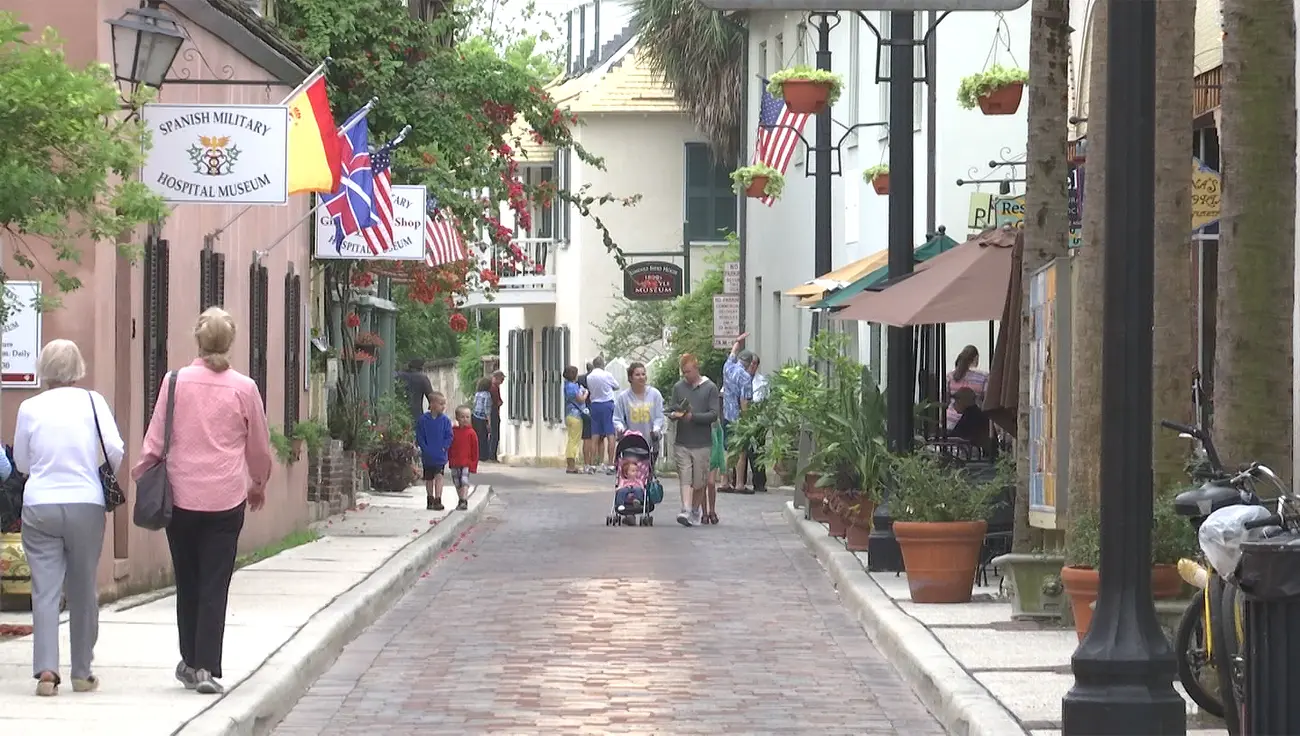
            Aviles Street in St. Augustine is the oldest street in the United States. Many of the Spanish colonial buildings that line the narrow brick street now serve as museums or businesses catering to tourists.

            On March 2, 1800, at about 5pm, two men had an altercation on Aviles Street that resulted in one of the men’s death.

            “I’ve been researching criminal court cases from the colonial period for a while,” says James G. Cusick, curator of the P.K. Yonge Library of Florida History at the University of Florida. “I’ve looked at slanders, I’ve looked at a child abuse case, I’ve looked at a number of murders, and this one was very interesting to me.”

            It was a Sunday afternoon and the shops on Aviles Street were closed. Several young apprentices were hanging out together, including free black teenager Jorge Fish and slave Marcelino Sánchez from the tailor shop, and their friend Juan Seguí, a slave from the bakery a few doors down. A slave named Benjamin was also part of the group.

            As the young men were talking, a slave named Juan Carlos, who was trained as a cobbler, nodded to the group as he walked past.

            “Benjamin broke off from the group, took off his shoes, and threw them up against the door of the tailor shop, took off his hat and threw it through the open window, took off after Juan Carlos, grabbed the hat off of Juan Carlos’s head, and got into a fight with him,” says Cusick.

            Several women tried to break up the fight, including a 60 year-old slave named Amelia, a free black woman named Frances who sold pastries at a shop on Aviles Street, and Reyna, a free black woman about 30 years old.

            The fight continued as Benjamin chased Juan Carlos into the courtyard of the Leonardi House, the home of a wealthy Italian family. Benjamin proceeded to overpower and brutally beat Juan Carlos. A free black merchant named José Bonam tried unsuccessfully to break up the fight.

            As a crowd gathered, Benjamin eventually turned to walk away from the fight. The bloodied and beaten Juan Carols pulled a knife and fatally stabbed Benjamin twice in the back.

            A soldier arrived and arrested Juan Carlos.

            Juan Carlos was put on trial, but the process was not what we would expect today. Most people are familiar with procedural courtroom dramas like the television series “Law and Order” that reflect how our modern justice system works. A murder is followed by a police investigation, an arrest, and a trial.

            “The way court proceedings worked in the Spanish colonial period was almost more like a police investigation than a trial,” says Cusick. “There was no court room, there was no judge, there was no witness stand. Everything was done by deposition. Unlike modern lawyers, these men had no idea what was going to come up in testimony. They were learning things as they went along.”

            At first glance, this killing could have been seen as a case of self-defense, since Juan Carlos was attacked by Benjamin, but as testimony was gathered, some evidence indicated that this may have been a premeditated murder.

            Juan Carlos believed that Benjamin was having an affair with his wife, Maria Agustina. Benjamin left his shoes and hat behind at Juan Carlos’s home. Juan Carlos slashed the shoes and hat with a knife in front of Benjamin’s friends, saying that the same would happen to their owner.

            Despite possible mitigating circumstances, Juan Carlos was found guilty of the murder of Benjamin.

            The verdict came with a harsh sentence. Juan Carlos was to be lashed 200 times. If he survived that, he would spend 10 years doing hard labor. In an unusual theatrical twist, Juan Carlos would endure his lashing at various points along Aviles Street, to ensure the biggest possible audience.

            The Haitian Revolution was occurring in 1800, and there was concern about a similar slave revolt in the United States. “I can’t think of any other reason that the punishment would have been delivered in this way,” Cusick says.

            Today, visitors to St. Augustine can walk down Aviles Street where some of the buildings associated with this case still stand.

            PDF file(s)
            Article Number
            135
            relevantdate

              The importance of Florida in early American history is often overlooked.

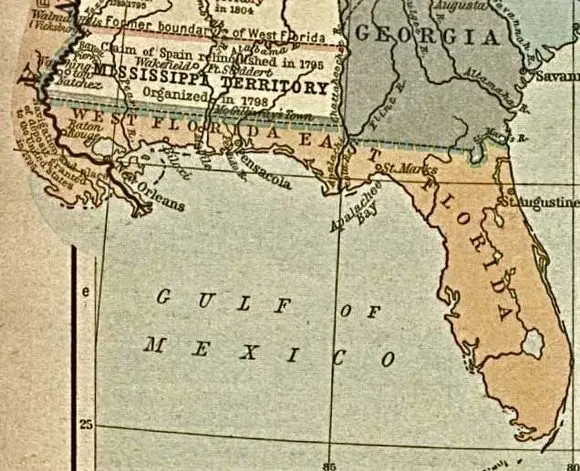
              The so-called “thirteen original colonies” that would lead to the creation of the United States exclude the fourteenth and fifteenth colonies of East Florida and West Florida.

              St. Augustine, Florida was an active city for more than four decades before the English established a settlement at Jamestown, Virginia in 1607.

              The Spanish gave Florida its name in 1513, and established the first continuously occupied European settlement in what would become the United States in 1565. After two centuries under Spanish occupation, the British took control of Florida in 1763.

              The British separated the area into East Florida, with its capital in St. Augustine, and West Florida, with its capital in Pensacola. Under British rule, East Florida consisted of what is the modern boundary of the state, east of the Apalachicola River. West Florida included the modern Panhandle of Florida, as well as parts of what are now Louisiana, Mississippi, and Alabama.

              Roger Smith focused his doctoral studies at the University of Florida on the topic of Florida in the American Revolution.

              “On August 11, 1776, when news of the Declaration of Independence became known in St. Augustine, they became so incensed that they made effigies of John Hancock and Samuel Adams and hung them in the trees in St. Augustine Plaza and set them on fire,” Smith says. “This colony was adamantly loyal when the war broke out.”

              At the start of the American Revolution in 1776, East Florida and West Florida were the only two southern colonies that remained loyal to King George III. This was a problem for the British, as the southern colonies in North America supplied food, clothing, and other supplies to their sugar plantations in the Caribbean.

              “We always look at the American Revolution from an American perspective, with thirteen colonies from New Hampshire down to Georgia,” says Smith. “When you look at the war from a British perspective, you realize that we’re not talking about thirteen colonies, we’re talking about thirty-three colonies that they had to be concerned with, from Nova Scotia down to Grenada. Half of those colonies, sixteen of them, were in the Caribbean.”

              During the American Revolution, approximately sixty percent of the British military was stationed in the Caribbean, to protect sugar production. In the eighteenth century, sugar was as important to the global economy as oil is today.

              The Floridas were located right between the British sugar plantations in the Caribbean, and the northern colonial revolt. The British launched attacks on the American rebellion from both St. Augustine in East Florida, and Pensacola in West Florida.

              St. Augustine was particularly important to the British, as it had the only stone fortresses south of the Chesapeake Bay. The British had repeatedly attacked the Castillo de San Marcos when it was under Spanish control, and realized the strength of its coquina walls.

              “They saw East and West Florida as barriers to sedition from rolling out into the Caribbean, and then launching pads for regaining the American south,” Smith says.

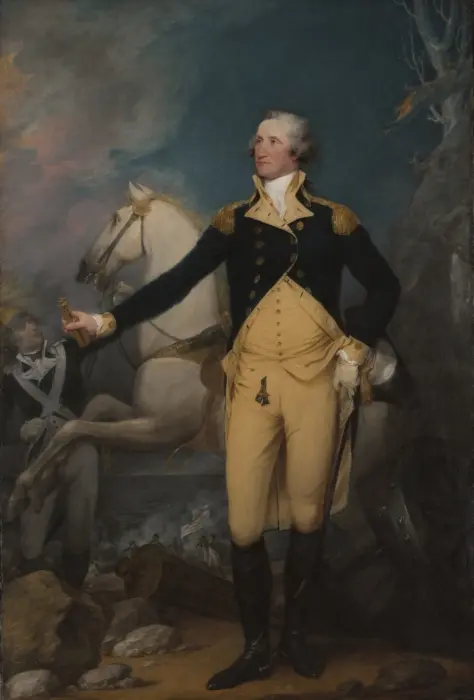
              Although the importance of Florida in the American Revolution is usually ignored in history books, George Washington was well aware of the area’s strategic significance. Washington wrote more than eighty letters about the Florida colonies to the Continental Congress and his generals, and he authorized five separate invasions of East Florida between 1776 and 1780.

              During a series of battles from 1779 to 1781, Spain was able to recapture West Florida from the British. When the American Revolution ended in 1783, England returned East Florida to the Spanish to keep control of Gibraltar.

              Florida would become a United States Territory in 1821, and was named a state in 1845. During the Civil War, Florida seceded from the Union, which is probably why its role in the American Revolution has been minimized.

              It wasn’t until the 1880s that doctoral degrees in History were available in the United States, and early American historians tended to write from a northern perspective. “They took the opportunity to get their own little bit of vengeance on the south, and they basically wrote the southern colonies out of the first five years of the American Revolution,” Smith says.

              PDF file(s)
              Article Number
              134
              relevantdate

                Some of the most interesting and controversial architectural ruins in Florida are in New Smyrna Beach.

                In 1767, Scottish physician Andrew Turnbull established the colony of New Smyrnea, south of St. Augustine. Today, the town is known as New Smyrna Beach. Turnbull created his settlement during Florida’s British period which lasted twenty years, from 1763 to 1783.

                Dot Moore spent more than 30 years working with professional archaeologists and historians, uncovering historic sites and artifacts in New Smyrna.

                “Dr. Andrew Turnbull, along with a partner, William Duncan, received large land grants from the British government in 1766,” Moore says. “Turnbull himself was appointed plantation manager of these, and he had all the responsibilities of recruiting people, hiring people, buying slaves, providing whatever resources that were needed to establish the Smyrnea settlement, as it was called by the British.”

                Turnbull arranged to bring Greek, Minorcan, and Italian settlers to New Smyrna in 1767. He envisioned a colony that would grow cotton and other crops, to trade with Great Britain. The ships carrying the settlers were plagued with rough weather and sickness, and 148 of the 1,403 people aboard died before the ships reached Florida.

                Traditionally, Turnbull is remembered as a harsh and tyrannical administrator, but Moore says that more recent scholarship is providing a more balanced perspective of him.

                “Recent documentation found in Dundee, Scotland archives include Turnbull’s letters to Sir William Duncan, his partner, and throw a new light on the care he took with some of his indentured colonists,” says Moore. “Lots of ledger sheets include the equipment and supplies that he bought for these people. He faced many problems here, including political intrigue from the governor in St. Augustine, and the Revolutionary War. There was a lot of sickness and drought, which caused death and failure of crops.”

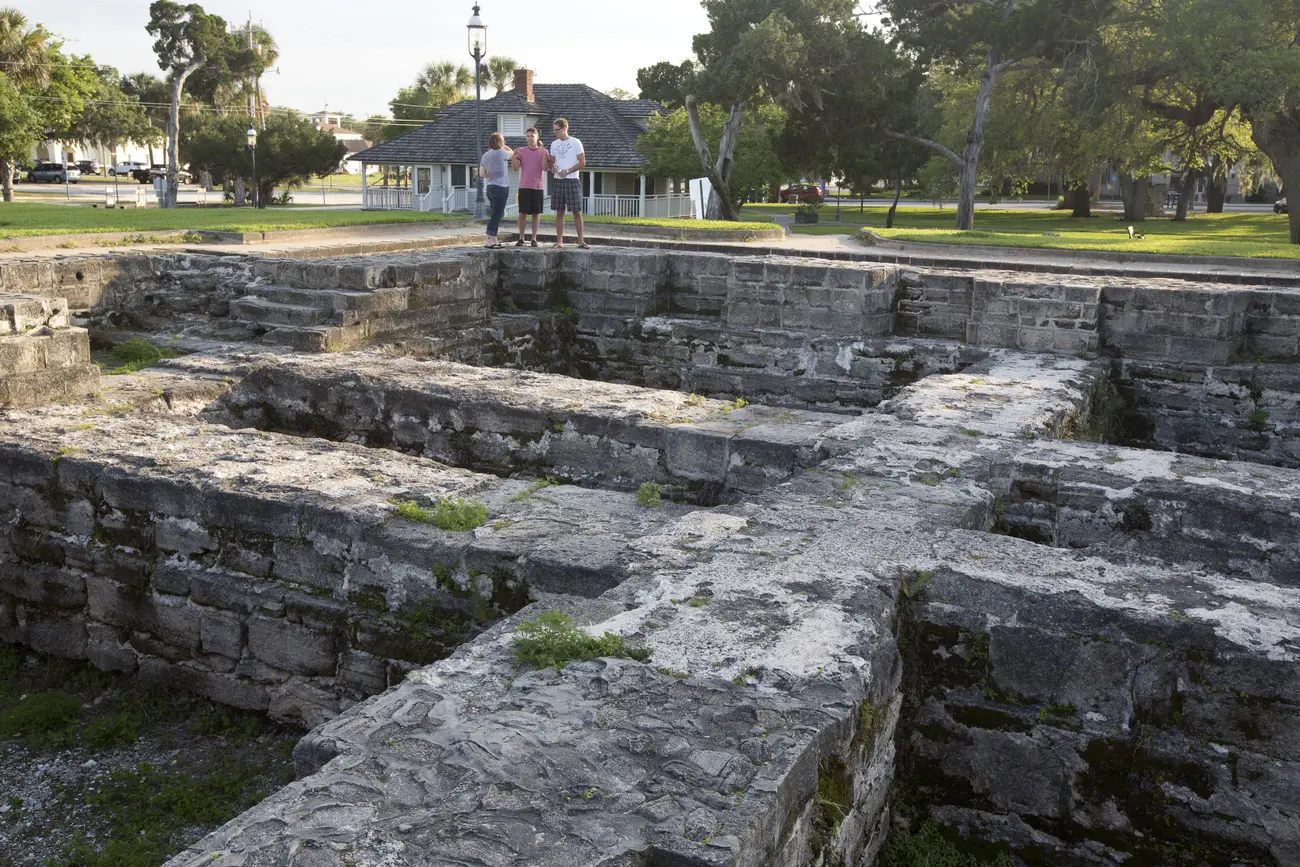
                The Old Fort Ruins are located in downtown New Smyrna Beach. What can be seen today looks like a series of stone walls with no roof. While the site is called the Old Fort Ruins, no one is really sure what this structure was.

                “We think based on some documentation in a letter that Turnbull wrote to Sir William Duncan, that it was the beginning of a mansion house for Duncan,” says Moore. “This was on Duncan’s 20,000 acres, Turnbull’s was a little bit north of here.”

                While it is generally accepted that the structure was built as part of Turnbull’s Smyrnea settlement, there have been many theories over the years regarding the Old Fort Ruins.

                “Some believe it was an English fort, some believe it was a Spanish fort. Some believe that it was not associated with Turnbull, it was maybe built by Ambrose Hull who was the next landowner after Turnbull left in 1777. Ambrose Hull came in 1801, and does record building a large stone house on a mound. This area is part of a prehistoric Indian midden dating to the St. Johns II period, from about 500 AD to 1565 AD. But we’re not 100 percent sure of any theories, even the fact that it could be Turnbull’s manor house.”

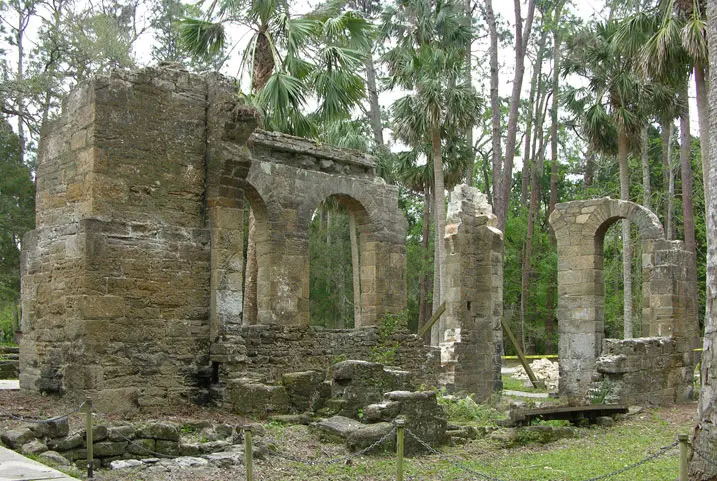
                The Sugar Mill Ruins are located a few miles from downtown New Smyrna, in another public park. Destroyed in 1835 during the Second Seminole War, the remaining rounded arches and coquina walls of the building have led to some creative, but not historically accurate, speculation.

                “That structure was built by a man named William Kimball for wealthy New York investors,” says Moore. “Their hope was to make a fortune, of course, by processing sugar cane into sugar. The factory was built about 1830, but it was destroyed by the end of 1835. It was never rebuilt as a sugar factory.”

                Unsupported speculation has linked the two sets of ruins in New Smyrna Beach, with some people believing that the downtown ruins were a Spanish fort, and the Sugar Mill Ruins a Catholic mission.

                “There’s even a tale of some people insisting that a tunnel was built underground from this area downtown, all the way out to the sugar mill, which is not quite plausible given the water table here,” says Moore.

                Both the Old Fort Ruins and the Sugar Mill Ruins continue to inspire modern imaginations.

                PDF file(s)
                Article Number
                133
                relevantdate

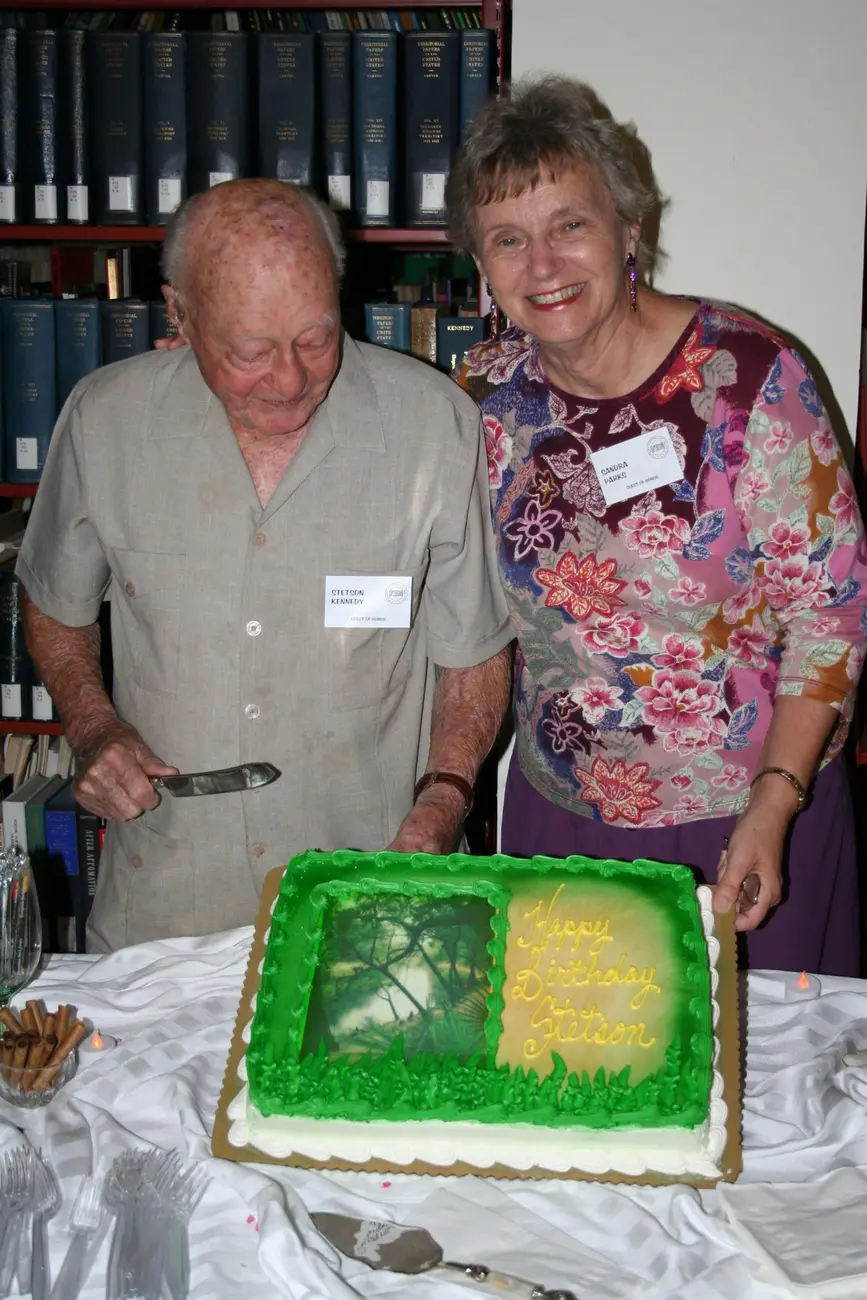
                  Folklorist, author, and activist Stetson Kennedy was born on October 5, 1916. Had he not died in 2011, Kennedy would have been 100 years old this week.

                  From 1937 to 1942, Kennedy traveled throughout Florida recording the oral histories, folktales, and work songs of the state’s diverse population. He spoke with Cracker cowmen, Seminole Indians, Greek sponge divers, Latin cigar rollers, African American turpentine still workers, and many others.

                  This work resulted in Kennedy’s book “Palmetto Country,” originally published in 1942.

                  The new exhibition “Stetson Kennedy’s Multicultural Florida” will open at the Brevard Museum of History and Natural Science in Cocoa on November 12, in conjunction with the Florida Frontiers Festival. The exhibition will commemorate Kennedy’s documentation of our state’s diverse cultural heritage.

                  The exhibition will also include personal items such as Kennedy’s typewriter, hats, and the handwritten lyrics to the Woody Guthrie song “Stetson Kennedy.” An interview filmed with Kennedy in 2008 will be part of a video display.

                  Kennedy worked for the Works Project Administration’s Florida Writers Project as head of the unit on folklore, oral history, and socio-ethnic studies.

                  “Well, it was the Great Depression, for one thing, and I didn’t have a job along with tens of millions of other Americans,” Kennedy told me in 2008. “At the same time, President [Franklin Delano] Roosevelt had organized something called the Federal Writers Project, and I thought this would be an opportunity for a twenty-one-year-old to start a writing career, so I signed up for the Florida Writers Project.”

                  The young Kennedy became the supervisor of writer, folklorist, and anthropologist Zora Neale Hurston, who had already published her most famous novel, “Their Eyes Were Watching God.”

                  “She was not an easy one to boss, I can tell you,” Kennedy said. “She fortunately worked out of her home in Eatonville, and I was in Jacksonville, so it was like that. But everything she sent in was a real jewel.”

                  Peggy Bulger is author of the book “Stetson Kennedy: Applied Folklore and Cultural Advocacy,” which will be released in early November. Bulger came to Florida in 1976, to become the first Florida Folklife Coordinator for the Florida Department of State Division of Historical Resources.

                  “I started really delving into materials that were done during the WPA,” says Bulger. “Stetson Kennedy, Zora Neale Hurston, Alan Lomax, Herbert Halpert, all of them were folklorists who had worked in Florida back in the ‘30s and ‘40s. I was 25-years-old in 1976, and I thought that anyone who had lived in the 1930s and ‘40s was dead, because that was ancient history.”

                  Bulger was shocked and pleased to discover that Stetson Kennedy was alive and well and living in Jacksonville.

                  “I went to see Stetson and I started interviewing him about the WPA and the work that he had done here in Florida,” Bulger says. “Over the course of the years, we became fast friends, from ’76 to when he died in 2011. He really informed the work that I did in Florida.”

                  Bulger served as director of the American Folklife Center at the Library of Congress from 1999 to 2011.

                  In addition to being a folklorist and author, Kennedy was a social activist. In the 1940s he risked his life by infiltrating the Ku Klux Klan and exposing their secrets. Using the name John Perkins, Kennedy was able to gather information that helped lead to the incarceration of a number of domestic terrorists. He wrote about his experiences in the 1954 book “I Rode with the Klan,” which was later republished as “The Klan Unmasked.”

                  “When I went overseas some years later, I thought I’d get away from my nightmares, you know, of being caught,” Kennedy said. “But in Paris, it was raining frequently, and the traffic cops wore white rubber raincoats with capes and hoods, and their hand signals were very much like the Klan signals, so I kept on having nightmares.”

                  Kennedy continued working until his death in 2011, at the age of 94. His last book, “The Florida Slave,” was published posthumously.

                  Although he did not live to see his 100th birthday, Kennedy’s legacy lives on in his books, and the inspiration he provides to those following in his footsteps.

                  PDF file(s)
                  Article Number
                  132
                  relevantdate

                    Moses Barber had simply had enough of his cattle going missing. He believed that David Mizell and his friends were periodically stealing from his herd. His rage reached a point where Barber publically declared that if Mizell set foot on his property again, he would be shot.

                    On February 21, 1870, David Mizell became the first casualty of the Barber-Mizell Family Feud. He was shot and killed on Barber property near Holopaw, Florida, in Osceola County.

                    Moses Barber first settled in North Florida in the 1830s. As the Seminoles were pushed to the south, Barber expanded his cattle operation into Central Florida. Some members of the Barber family built homes on the south end of the cattle run, near Fort Christmas. By the time the Civil War began in 1860, Barber was a prominent and successful cattleman.

                    During the Civil War, Florida was the primary supplier of beef to the Confederate Army, and the Barber family had one of the largest cattle businesses in the state. Once the war was over, some of Barber’s fellow cowmen were taking part in the Reconstruction government, which he saw as a betrayal.

                    David Mizell, who had fought for the Confederate Army, was named sheriff and tax collector of Orange County after the war. Moses Barber refused to pay what he believed were unfair taxes to the U.S. government. Mizell responded by taking some of Barber’s cattle to compensate for the unpaid debt. Tensions between the Barber family and the Mizell family escalated during the late 1860s, with other cattle families taking one side of the argument or the other.

                    Moses Barber believed that Mizell family friend George Bass had stolen some of his cattle, and confronted him about it. The Mizells controlled the sheriff’s office and the courts, so Barber and members of his family were charged with “false imprisonment” for holding Bass against his will. After decades of lawlessness on Florida’s frontier, Mizells charged Barbers with a series of crimes including arson, polygamy, and tax evasion. At the heart of the dispute was control over Florida’s cattle industry.

                    David Mizell ignored Moses Barber’s warning to stay off his land. Mizell, his son Will, and his brother Morgan ventured onto Barber property. As they crossed Bull Creek on their horses, shots were fired from behind some bushes, and David Mizell was killed.

                    As he lay dying, David Mizell asked that his death not be avenged. His brother John had other plans.

                    John Randolf Mizell, David’s brother, was the first judge of Orange County. Despite his position, Judge Mizell wanted swift justice for the men he was convinced were behind his brother’s death. Within weeks, Moses Barber’s son Isaac was shot and killed, allegedly while trying to escape arrest and Moses Jr. was drowned by vigilantes. Barber family friends William Yates and Lyell Padgett were shot and killed as fleeing suspects.

                    William Bronson, a family friend of the Mizells, was reportedly shot by Burrell Yates, a friend and relative of the Barbers. Allegedly, Yates was trying to prevent Bronson from burning evidence that would incriminate the Mizells and their associates in the wrongful deaths of the Barbers.

                    According to Barber family history, a total of thirteen Barber men were killed by the Mizell family during the Barber-Mizell Family Feud of 1870, but this claim cannot be verified by public records.

                    No one is sure what happened to Moses Barber during and after the feud. Some records indicate that he died in 1870, while others have him alive and living in Texas in 1877.

                    Remnants of this colorful chapter of Florida history remain today. The Mizell family homestead is located in what is now Harry P. Leu Botanical Garden in Winter Park. The oldest grave in the small family cemetery there belongs to David Mizell. The Yates family homestead, originally located on Taylor Creek, has been relocated to Fort Christmas Historic Park. Needham Yates and William Yates were both killed in the Barber-Mizell Family Feud. The rural Volusia County town of Barberville was founded by James D. Barber, a descendent of Moses Barber.

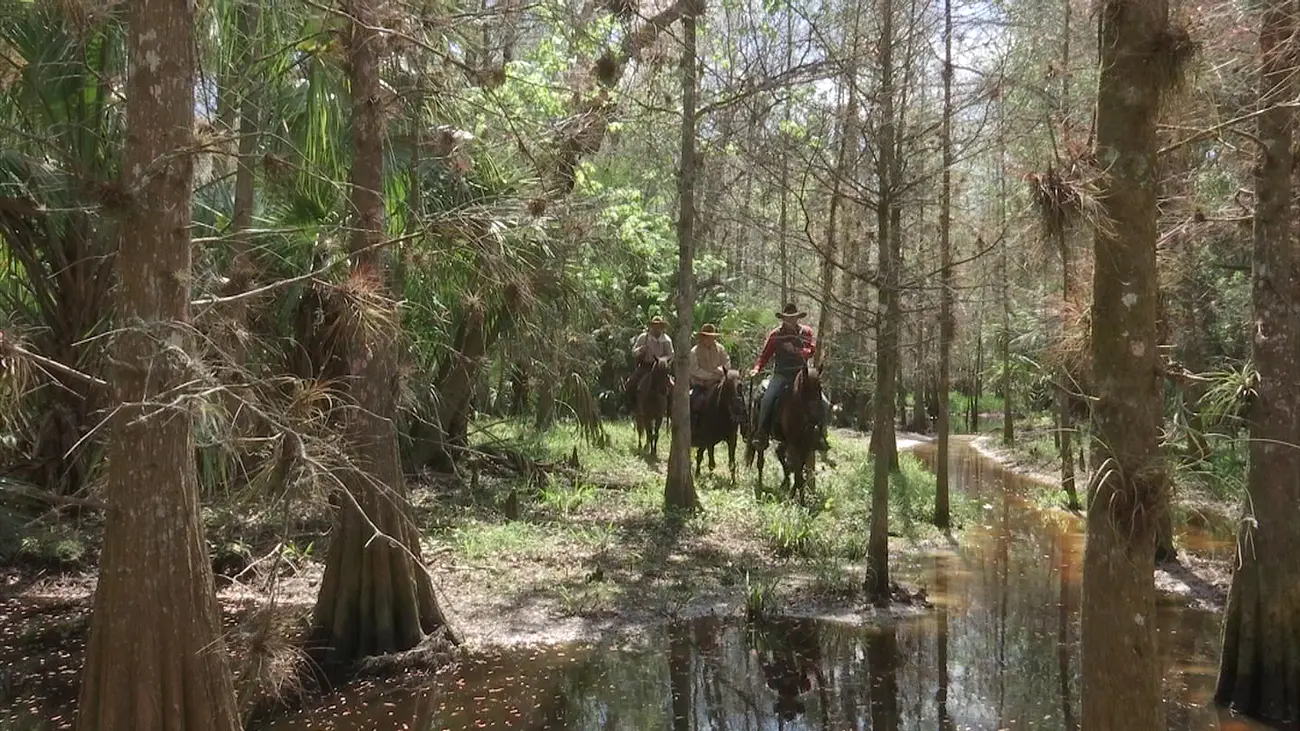
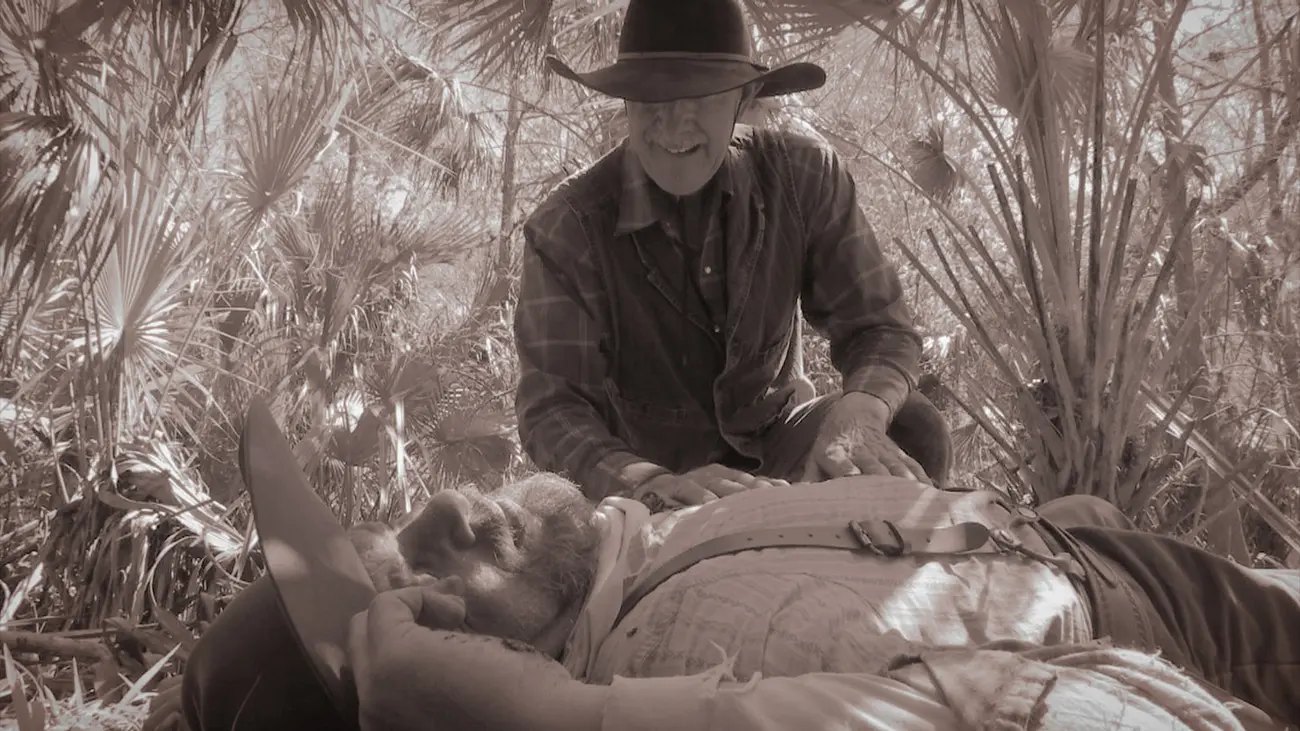
                    The Barber-Mizell Family Feud will be featured on the television series “Florida Frontiers,” airing locally on WUCF-TV, Sunday, October 2, at 11am.

                    PDF file(s)
                    Article Number
                    131
                    relevantdate

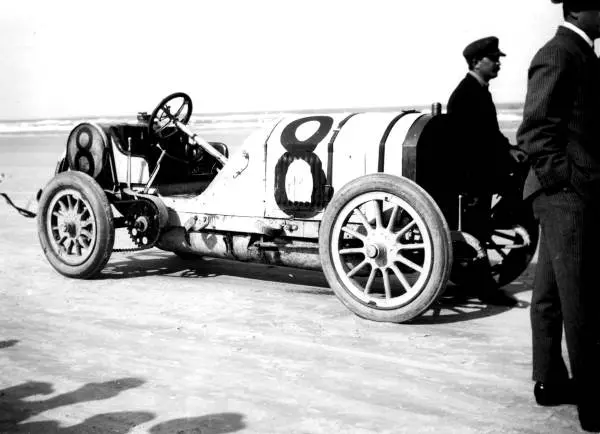
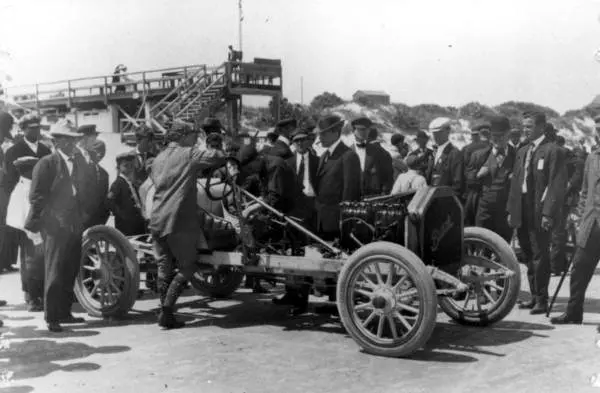
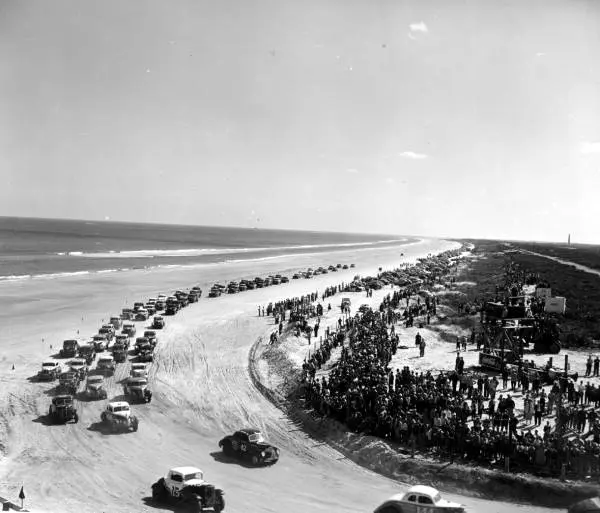
                      Daytona is known around the world as a focal point of auto racing, with several important annual competitions held at Daytona International Speedway. The history of racing in the area goes back to the early twentieth century, when auto races were held on the firm sands of Daytona Beach and Ormond Beach.

                      When racing competitions started on the beach in 1903, cars were a luxury item that only very wealthy people could afford.

                      “The automobile had been around, but the problem was, it was just a play toy for the rich,” says Daytona historian Leonard Lempel. “It’s really not until 1913, 1914, when Henry Ford invented the long assembly line, the price of the automobile dropped dramatically, and by the 1920s, it was the car of the middle class. In 1903, when racing started here on the beach, wealthy northerners came down and stayed at Ormond Hotel. They took their cars out on the beach, and started racing.”

                      Ransom E. Olds, founder of Oldsmobile and the REO Motor Car Company, and Alexander Winston, founder of the Winston Motor Car Company, organized racing on the adjacent beaches at Ormond and Daytona. Racing quickly grew from an amusing pastime for the rich, to a popular sport enjoyed by people from every economic background. People came from around the world to race on the hard packed sand.

                      “There were two periods of racing between 1903 and 1958,” says Eric Breitenbach, director and producer of the documentary “Hoppin’ Rattlesnakes: Oral Histories of Beach Racing in Volusia County, 1903-1958.” “There were the speed trials that started in 1903, those were fascinating. The beach was very wide and long, it was 500 feet wide at that time and 27 miles long, and it was completely flat. So it was possible to race a car at a high rate of speed on that beach.”

                      There was a rivalry between British and American drivers in the first several decades of the twentieth century. The final land speed record set in Daytona was 276.82 miles per hour by British racer Sir Malcolm Campbell in 1935. That same year, the speed trials moved from the beaches of Daytona and Ormond to the salt flats of Bonneville, Utah. Campbell broke his own record there, becoming the first person to drive over 300 miles per hour.

                      “The second part of the history was the stock car racing, which included oval racing, a version of the speed trial, the measured mile speed trial, and even things like barrel racing,” says Breitenbach. “Then of course NASCAR formed as part of that stock car era.”

                      Bill France, Sr. founded the National Association for Stock Car Auto Racing in 1948, in Daytona.

                      Stock car racing continued on the beach until 1958. In 1959, NASCAR races moved to the newly constructed Daytona International Speedway, where the Daytona 500 has been held ever since.

                      Preston Root is known as “The Voice of NASCAR” for Motor Racing Network Radio, and participated in the making of the documentary film “Hoppin’ Rattlesnakes: Oral Histories of Beach Racing in Volusia County, 1903-1958.”

                      “I think the name of our movie ‘Hoppin’ Rattlesnakes’ is really one of the most interesting stories about all of beach racing in the (19)30s until the ‘50s,” says Root. “Florida was an unsettled state. This is very early on in our tourism history , and where this track was, and where tens of thousands of people assembled to see stock cars race on the beach, and part on A-1A, is unsettled Florida. There’s actually rattlesnakes living in the dunes. Longtime Floridians know there’s still plenty of rattlesnakes in Florida. They haven’t been at the beach in a while, but fans actually had to get past rattlesnakes in the dunes to get into the race track. The promoters at the time weren’t beyond warning people to not sneak into the track through the sand dunes where the rattlesnakes were. These signs that said ‘warning, rattlesnakes in dunes’ kept people from sneaking into the track and they’d have to buy their ticket and sit in the grandstands.”

                      The documentary film “Hoppin’ Rattlesnakes: Oral Histories of Beach Racing in Volusia County, 1903-1958” can be seen at the Halifax Historical Museum in Daytona.

                      PDF file(s)