Florida Musicians

Article Number
153
relevantdate

    There is a road in downtown Orlando called Division Street. It has traditionally been the dividing line between the predominately white community to the east, and the African American community to the west.

    As downtown Orlando was established in the late 1800s, a separate but parallel black community emerged. By the early twentieth century, the Parramore neighborhood included several blocks of prosperous black owned businesses including a tailor shop, a theater, and attorney’s offices. There were African American physicians, dentists, photographers, and other professional people. Churches were integral to the community.

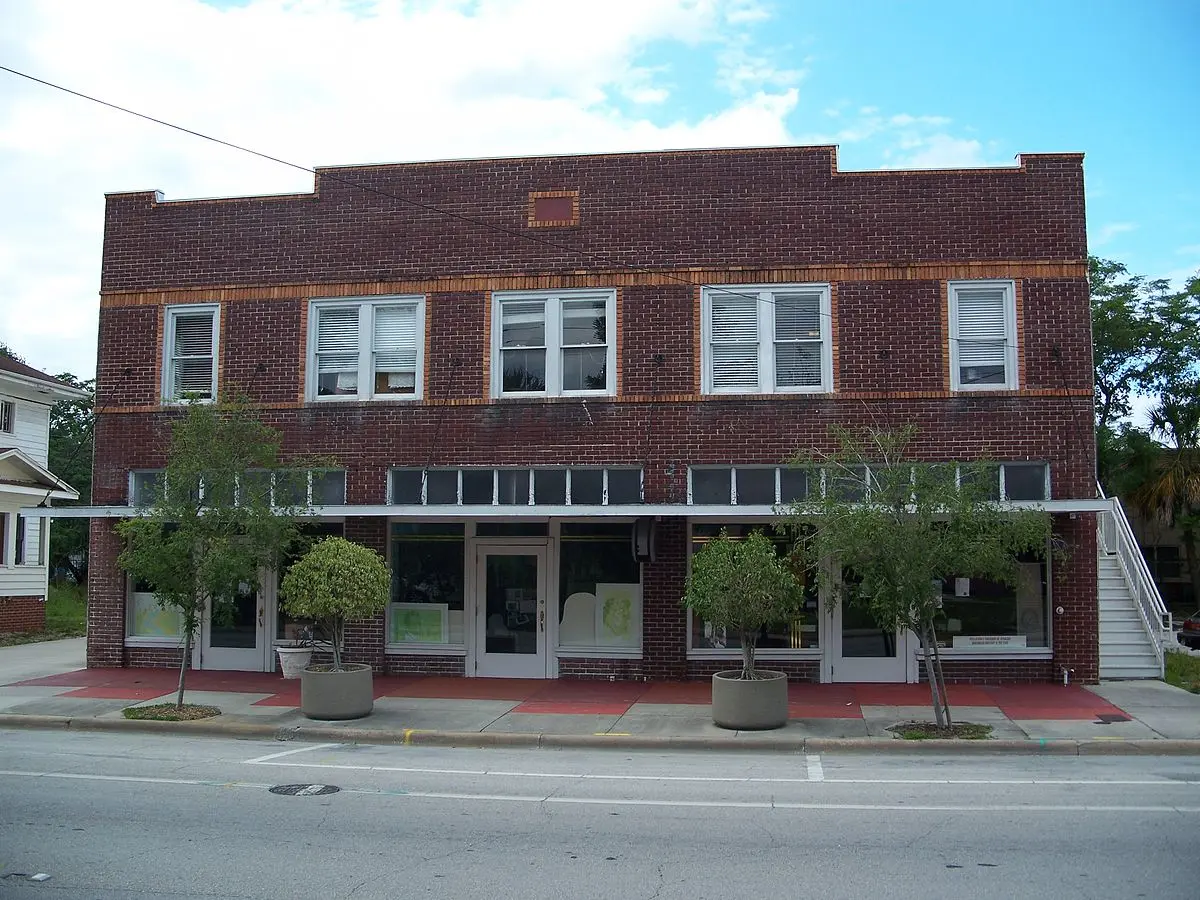
    In 1929, a prominent black physician named William Monroe Wells opened the Wells’Built Hotel on South Street.

    “He came here in 1917 from Fort Gaines, Georgia, and records show that by 1921 he was listed in city directories as a physician and owner of a ‘notions’ store, and by 1926 he obtained a permit from the City of Orlando to build a hotel,” says former Florida State Senator Geraldine F. Thompson, founder of the Association to Preserve African American Society, History, and Tradition (PAST, Inc.) “During that time, when African Americans visited the Central Florida area, they did not have lodging available to them at any of the major hotels in the area because of segregation.”

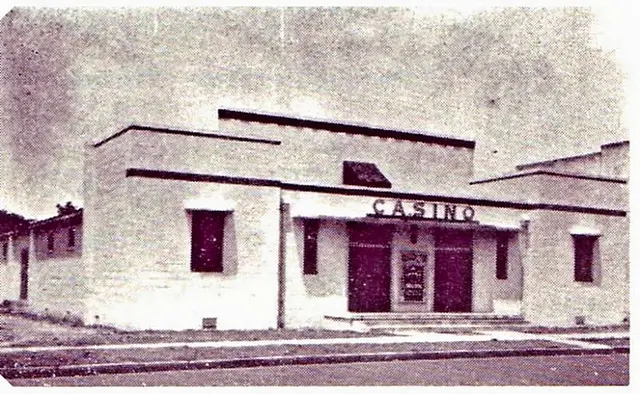
    Directly next door to the Wells’Built Hotel, Dr. Wells built the South Street Casino. This was not a gambling establishment, but a community center. There was a basketball court inside, and people held graduations, wedding receptions, and other gatherings at the venue.

    Today, the Amway Center on South Street hosts popular musical acts. In the mid-twentieth century, it was the much smaller South Street Casino that brought well known African American performers to the area. Musicians including Erskine Hawkins, Cab Calloway, Ella Fitzgerald, Louis Armstrong, Ray Charles, B.B. King, and many others would perform at the South Street Casino and stay next door at the Wells’Built Hotel.

    Legendary drummer David “Panama” Francis played in the South Street Casino many times. Francis was born in Miami in 1918, and was playing in nightclubs by age 13. Shortly after arriving in New York in 1938, Francis played with Lucky Millinder’s Orchestra for six years at the Savoy Ballroom in Harlem. He played and recorded with many great artists of the day, including Duke Ellington, John Lee Hooker, James Brown, Buddy Holly, the Four Seasons, and the Platters.

    Before his death in 2001, Francis remembered playing in the South Street Casino.

    “I played there about twice a year,” Francis said. “The old timers remember the band that used to come up from Miami, George Kelley’s band. That place was so hot. Until, I mean the perspiration was all down in my shoe. I could hear when I walked, I’d hear the squish, squish, squish of the water that was in there ‘cause, you know, there was no air conditioning or nothing like that. And it’d be packed.”

    The South Street Casino had a creative marketing strategy to entice people to attend the Saturday night dances there.

    “Back then, you know, there was no radio and TV and all that, so what happened—if the dance would, say, start at nine o’clock, they’d let all of the people in [earlier] for free to listen to the band, and you’d play about half an hour of music,” said Francis. “All of the good dancers would be standing around—who, you know, were the critics. If they gave the nod that, you know, that the band is all right, they’d let all of the people out—and then they had to pay to come in and hear the band. So that’s how they used to do. A lot of times they would get on a truck and ballyhoo.”

    In the second half of the twentieth century, the Parramore neighborhood entered a period of economic and social decline. The South Street Casino burned down in 1987, and the Wells’Built Hotel was abandoned and threatened with demolition.

    In 2001, the building was refurbished by the Association to Preserve African American Society, History and Tradition, and transformed into the Wells’Built Museum of African American History and Culture. The museum is part of a larger effort to improve and revitalize the Parramore neighborhood.

    PDF file(s)
    Article Number
    122
    relevantdate

      Frank Thomas writes and performs songs about the history, people, and places of Florida. Songs such as “Old Cracker Cowman,” “The Flatwoods of Home,” and “Spanish Gold” have earned him a loyal following. In 2013, Thomas was inducted into the Florida Artists Hall of Fame.

      Thomas’s Florida roots run deep.

      “The Thomas side of the family came into Florida in 1820,” says Thomas. “He married a girl who was born in St. Augustine in 18 and 5, and her parents was well established there, they’d been there about 20 years, so I’m thinking it had to be late 1780s or early 1790s.”

      Members of the Thomas family experienced a lot of Florida history.

      “Longevity seems to run in my family,” says Thomas. “My daddy was born in 18 and 82. Now he grew up in a whole different era. Now think about that. I was born in (19)43. He was 61 when I was born. His daddy died at a fairly early age. A one-eyed mule kicked him in the head. That’s what killed him. My great-granddaddy, who I sing about in the song ‘The Flatwoods of Home,’ fought in the Great War of Northern Aggression and fought in the Seminole Indian Wars.”

      Thomas grew up in Middleburg, Florida, in a musical family who played gospel music. His first performing experiences were in church. His early musical influences also included performers on radio broadcasts of the Grand Ole Opry, including Hank Williams, Lefty Frizzell, and Webb Pierce.

      “Some of the old time country stuff really fascinated me,” says Thomas. “We didn’t have electricity (until the 1950s) but we had a battery operated radio. My momma would listen to these old soap operas in the daytime. My daddy made her save that battery for Saturday nights so we could listen to the Grand Ole Opry, and that’s where I first started getting influenced.”

      After serving seven years in the Army in the 1960s, Thomas began touring with nationally known gospel, country, and bluegrass bands as a guitarist and singer. He played with groups including the Taylor Brothers, the Webb Family, and the Arkansas Travelers.

      “I made my way back to Florida in the late (19)70s, and I met Will McLean,” says Thomas. “Will was a big inspiration for me. He encouraged me to write songs about Florida. He said ‘You know, you write all these love songs and cheatin’ songs, you don’t do much of that. Write about what you know.’ He used to tell me that it would take all of us doing all we can to tell Florida’s story. There’s so much history in the state of Florida.”

      Thomas joined other folk musicians such as Gamble Rogers, Paul Champion, and Bobby Drawdy in their efforts to preserve Florida stories in song.

      “A song seems to stay with people,” says Thomas. “It focuses on their mind and they don’t forget it. I think that’s why, with the kids in schools, they need to be teaching more Florida history through music.”

      Thomas has gained a reputation for strongly encouraging other performers to write songs about Florida history and culture.

      “Sometimes I will give assignments to somebody, ‘go write a song about this or about that’ and the main reason for that was ‘Cousin’ Thelma Boltin,” says Thomas.

      Boltin was director of the Florida Folk Festival at the Stephen Foster Folk Culture Center in White Springs from 1954 to 1965, and continued performing as a storyteller at the annual event until 1986.

      “She hemmed me up one time backstage, got to putting her finger in my face,” says Thomas. “She was an old school teacher, retired. She scared me good.”

      Boltin told Thomas about the FBI attempt to capture the infamous Barker gang at their Florida hideout in Ocklawaha. The resulting shootout resulted in the deaths of family matriarch Ma Barker and her son Fred.

      “She said, ‘now you go write a song about that and you have it for me the next time I see you,’” says Thomas. “She did that to a lot of people. I try to carry that tradition on.”

      Thomas performs regularly at the Florida Folk Festival each Memorial Day weekend, and at venues throughout the state.

      PDF file(s)