Florida Frontiers

A Tag for nodes that are relevant to Florida Frontiers.   For example if an artilce is about Florida Frontiers and you would like a 'View' to sorty by Tag criteria for it... us it.

Article Number
120
relevantdate

    Florida has a diverse wealth of geological resources.

    People have enjoyed the sands of Florida’s beaches for more than 12,000 years. Prehistoric people in Florida used chert to make weapons and tools. Later indigenous people used clay to create bowls and storage containers.

    Coquina rock provided a practical building material for Spanish colonists. The Castillo de San Marcos in St. Augustine was originally constructed in 1672 using coquina and the fort remains undefeated in battle.

    The Seminole Indians and runaway slaves sought refuge among the stalactites and stalagmites in the caverns of north Florida.

    As early as the late 1800s, automobile races were held on the firm sands of Ormond Beach and Daytona Beach.

    Phosphate, used as fertilizer and in some explosives, was discovered in abundant quantities in the late nineteenth century. By the early twentieth century, phosphate mining was a major industry in Florida. Today, Florida provides about 80 percent of the phosphate used in the United States, and about 25 percent of the phosphate used around the world.

    It took tens of millions of years for Florida’s geological resources to develop. Millions of years ago, North America looked much different than it does today, because Florida was completely submerged.

    “During the early part of the Cenozoic Period which was about 65 million years ago, Florida was for the first 10 to 15 to 20 million years of that, completely underwater, and the limestone deposits which are underneath our feet here were being deposited at that time,” says Harley Means, assistant state geologist and co-author of the book “Roadside Geology of Florida.”

    A prehistoric version of what is now called the Gulf Stream helped to keep Florida under water for millions of years.

    “It kept all of the sediments that were being shed off of the Appalachian mountains, things like clays and silica sands, it kept them shunted away from the carbonate deposit that was going on in Florida,” says Means. “Florida’s limestones from that time period are very pure with respect to calcium carbonate. They’re 99 percent pure and that makes them sought after for numerous industries that would look to exploit them.”

    Over millions of years, deposits did start to accumulate to create the Florida we know today. At different points in time, Florida would have appeared to be a series of islands, as sea levels fluctuated and our coastline shifted. At other points in time our state was twice as wide as it is now.

    “Over the past 2.6 million years, during a period we call the Pleistocene Epoch, sea levels have fluctuated greatly,” says Means. “They were between 60 and 100 feet higher than they are today, and at some point, probably at multiple points, it was as low as 350 to 400 feet lower than it currently is today. So, the broader part of Florida, which we call the Florida Platform, is actually about twice as large as what the currently exposed, above sea level portion is today. So when the first Floridians came to Florida, they had a lot wider area to roam.”

    Fossil evidence shows that land animals have inhabited Florida for 30 million years. The remains of mastodon, giant sloth, sabre tooth tigers, and armadillos the size of small cars have been discovered. Skeletons of Ice Age creatures can be seen at the Brevard Museum of History and Natural Science in Cocoa.

    In the past, sea levels have risen to the point where only the highest portions of the Florida peninsula were exposed. Means says that Floridians today need to be aware that the same conditions are in Florida’s future.

    “Sea level and climate change is inevitable,” says Means. “Sea levels have fluctuated all through geologic time, so too have climates. Really, the only debate is what is the extent of the impact of human activity on climate change. Unfortunately, we as Floridians live in a state that has very little topography. Many of us like to live right on the coast, so the first people that are going to be impacted by sea level rise, are going to be Floridians. We need to be thinking about this. I can’t tell you when, but I can tell you it is coming.”
    PDF file(s)
    Article Number
    119
    relevantdate

      As World War II began in 1939, the population of Florida was less than two million people. The population of the state grew exponentially each decade after World War II, and military installations constructed during that conflict were a major factor in that growth.

      Daniel Hutchinson is Assistant Professor of History at Belmont Abbey College in North Carolina. His doctoral dissertation at Florida State University was “Military Bases and the Transformation of the Rural South During World War II.”

      “During the Great Depression, tourism to Florida really took a very big hit, and with the coming of World War II, many Florida communities that relied on tourism saw military bases as a way to recover,” says Hutchinson. “Hotels, resorts, tourist destinations of all kinds sent letters to the War Department saying ‘turn our hotel into a troop training facility, or a troop recreational facility, or a convalescent hospital,’ and the War Department took up these offers.”

      World War II provided Florida with unprecedented economic growth and revived areas that had been crippled during the Great Depression. Defense contracts led to construction jobs, and then other civilian employment opportunities after military facilities were built. Rural landowners often benefited financially from the construction of military installations through government purchase of their property.

      The impact of military facilities coming to an area was not always positive. Sometimes entire communities were lost. The impact on African American neighborhoods was usually negative.

      “African American communities became prized targets to build military bases, because they were the cheapest lands that were available,” says Hutchinson. “Because African Americans didn’t have any real political strength in terms of resisting this, they often found themselves wiped off the map.”

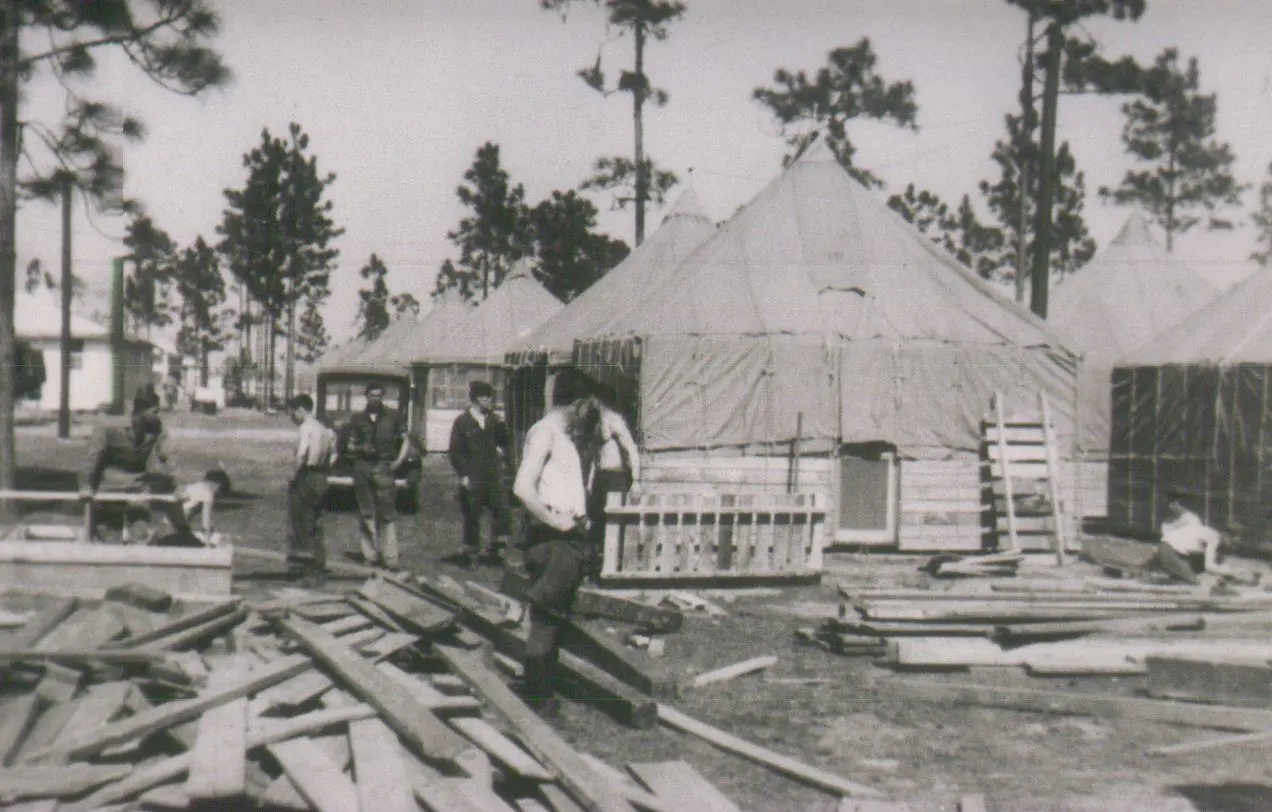
      Stark, Florida is located about 50 miles southwest of Jacksonville. Today, Stark is best known as the home of Florida State Prison. In 1940, Starke was a small, rural community of about 1,400 people. Life in Starke changed radically when the town was chosen as the site of Camp Blanding.

      During World War II, Camp Blanding became Florida’s fourth largest city.

      “There was a call for construction workers to come build the camp,” says Hutchinson. “Suddenly Starke was deluged with people. Some 32,000 migrants arrived to the community looking for a job. This is still the Great Depression, so the opportunity for a government job at a government pay scale was incredibly attractive.”

      People came from as far away as the Midwest seeking construction jobs at Camp Blanding.

      “It was in some ways both a benefit and a thorn in the side of Starke,” says Hutchinson. “Starke benefitted tremendously economically from the arrival of these soldiers, but Starke had a difficult time with its limited infrastructure, processing and dealing with thousands of new people.”

      Other Florida communities were significantly impacted by the expansion of existing military installations.

      “Pensacola, for example, was a community with a long standing military presence, but World War II really heightened the demand for labor there,” says Hutchinson. “The Pensacola Naval Air Station hired 15,000 civilian workers to run its facilities. You have thousands of Floridians leaving the fields and going to work in the cities near these military bases.”

      During World War II Florida’s population exploded. Key West had 13,000 residents in 1940 and 45,000 by war’s end five years later. The population of Miami almost doubled to more than 325,000. After the war the population of the United States increased by 15 percent, and the population of Florida expanded by 46 percent.

      “One of the lasting impacts these military bases have is it brings in millions of non-Floridians to the state for the first time, who see Florida’s beaches, Florida’s climate, and many of the soldiers that are stationed in Florida during the war are going to come back to Florida after the war as permanent residents,” says Hutchinson.

      Building World War II bases also gave Florida the experience needed to bring additional federal jobs and federal infrastructure to the state.

      “It’s hard to imagine that without these military bases that Florida would have been as successful in drawing things like NASA and the Space Coast into existence,” says Hutchinson. “Both of those were big government, big military projects, and there’s a connection there.”

      PDF file(s)
      Article Number
      118
      relevantdate

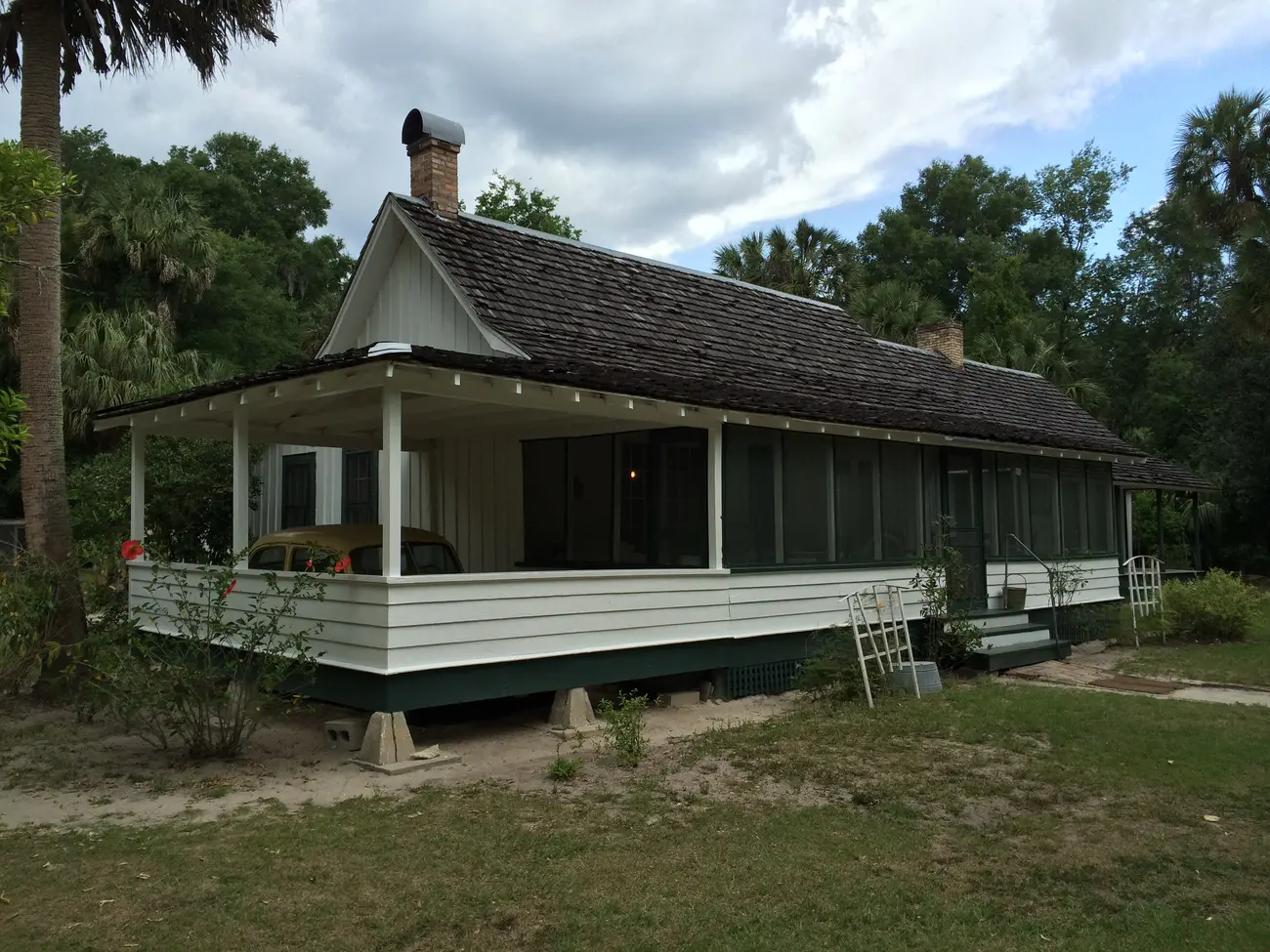
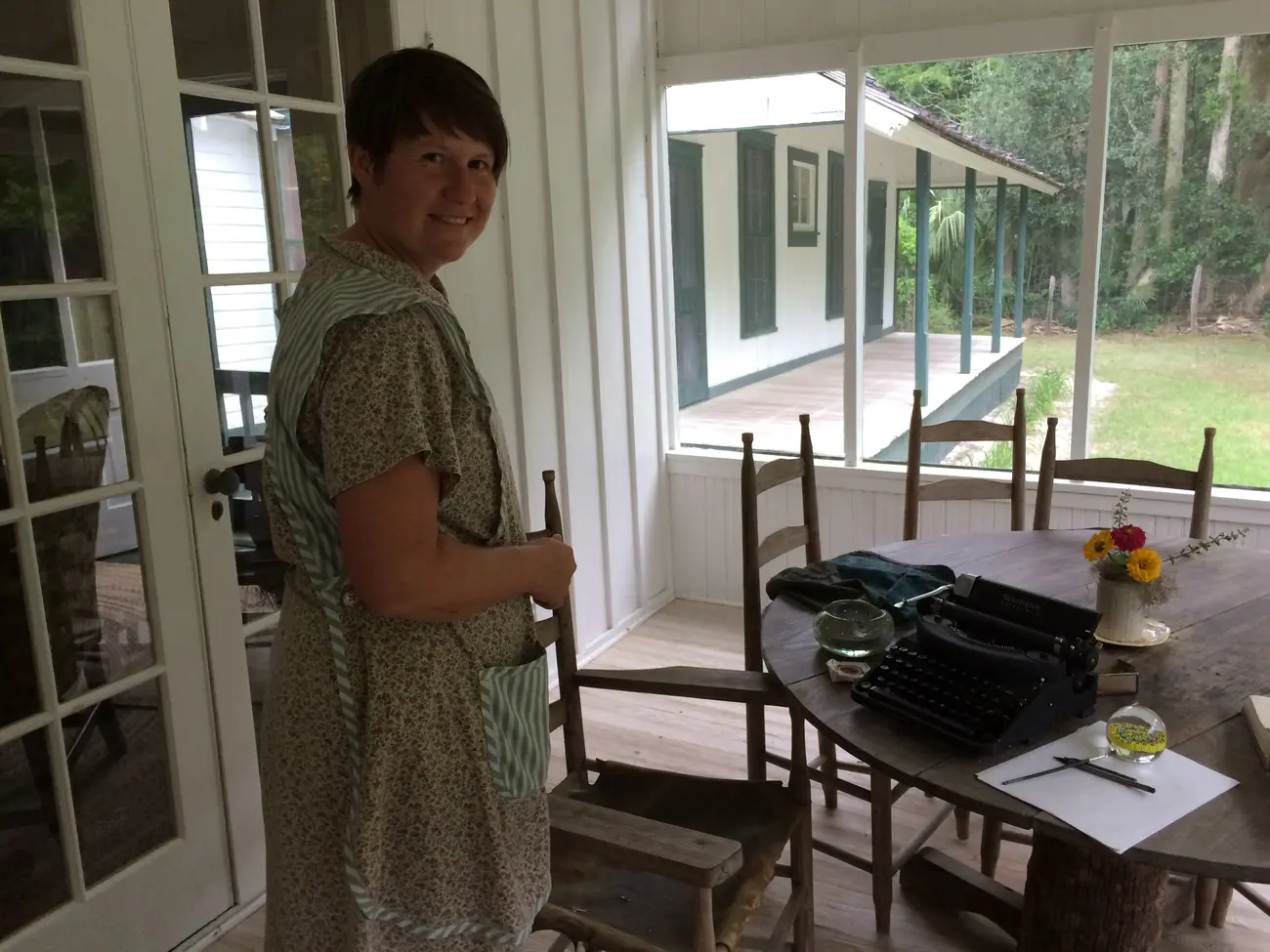
        A visit to the Marjorie Kinnan Rawlings Historic State Park in the rural community of Cross Creek is like a trip back in time to the 1930s. The home there is furnished just as Rawlings had it when she was writing her Pulitzer Prize winning novel “The Yearling,” her autobiography “Cross Creek,” and other works depicting the lives of Florida Crackers.

        Rawlings’s typewriter and notes sit on a table on the front porch, along with her ashtray and a pack of Lucky Strikes cigarettes, as if the writer has just gotten up to get a glass of iced tea from the kitchen.

        Each room of the house contains furniture and personal items that belonged to Rawlings or are very similar to what the beloved Florida writer owned.

        “She always described it as a rambling farmhouse,” says Carrie Todd, Park Ranger at Marjorie Kinnan Rawlings Historic State Park. “Maybe a little shabby chic is the way to talk about it. It’s white with green lattice on the bottom. It’s 3,000 square feet, four bedrooms, two bathrooms, so it’s large, but it doesn’t seem large. It seems just sort of rambling when you’re trying to go through it.”

        Although famous for her stories about rural life in Florida, Marjorie Kinnan Rawlings was not a native. She was born in Washington, D.C., and attended college at the University of Wisconsin Madison, graduating in 1918. She lived in Louisville, Kentucky and Rochester, New York before moving to Florida with her husband Charles Rawlings in 1928.

        The couple planned to support themselves with the orange trees on their property, allowing them to write in a beautiful, serene, rural setting.

        “They were both writers,” says Todd. “They both were going to write novels and they thought it was going to be an easy time to make money with that citrus crop.”

        Growing citrus was a lot more work than the couple had anticipated. Charles Rawlings grew tired of life in the country, and the two were divorced. Marjorie Kinnan Rawlings felt a connection to her Florida land, and stayed there to write.

        “Marjorie walked through the rusty old gate and immediately fell in love,” Todd says. “The book ‘Cross Creek’ she often describes as a love story to a place. But Charles Rawlings had a completely different idea about what this was going to be. He thought he was going to be a gentleman farmer. Where Marjorie saw rustic charm, he saw the lack of paint, and the lack of screens, and the lack of electricity, and the lack of running water. He hadn’t been as successful as a writer, so when Marjorie hit it big, he maybe was a little jealous.”

        Rawlings first attempted to write Gothic romance novels, but could not interest publishers in her work. Literary editor Maxwell Perkins was fascinated with Rawlings’s letters and stories about her life in rural Florida, and encouraged her to write a novel about that.

        “Maxwell Perkins knew that Marjorie was onto something, that she had this really great talent” says Todd. “He got her to take the notes and the little bits she had been writing down ever since she first stepped into Florida, and turn it into a book. ‘The Yearling’ particularly, but she has eight novels and 26 short stories about Florida, so she had a lot of material to work with.”

        Rawlings’s most popular book, “The Yearling,” won the Pulitzer Prize for literature in 1939, and was made into a very successful film starring Gregory Peck and Jane Wyman in 1946. Her 1942 autobiography “Cross Creek” was adapted for a 1983 film starring Mary Steenburgen.

        Not everyone was pleased with Rawlings’s work. Zelma Cason, a Cross Creek resident who was described by Rawlings in unflattering terms, sued the writer for invasion of privacy, eventually winning one dollar in damages.

        In 1941, Rawlings married Norton Baskin, living in both the St. Augustine area and Cross Creek.

        “He operated the Castle Warden Hotel, it’s now the Ripley’s Believe It or Not Museum,” says Todd. “She did live in St. Augustine with him most of the time, but came back to Cross Creek to write. She could only write here. This was really her place of inspiration.”

        PDF file(s)
        Article Number
        117
        relevantdate

          About 1,000 years ago, agricultural communities were established in what would become the Southeastern and Midwestern United States, and what is called the Mississippian culture flourished.

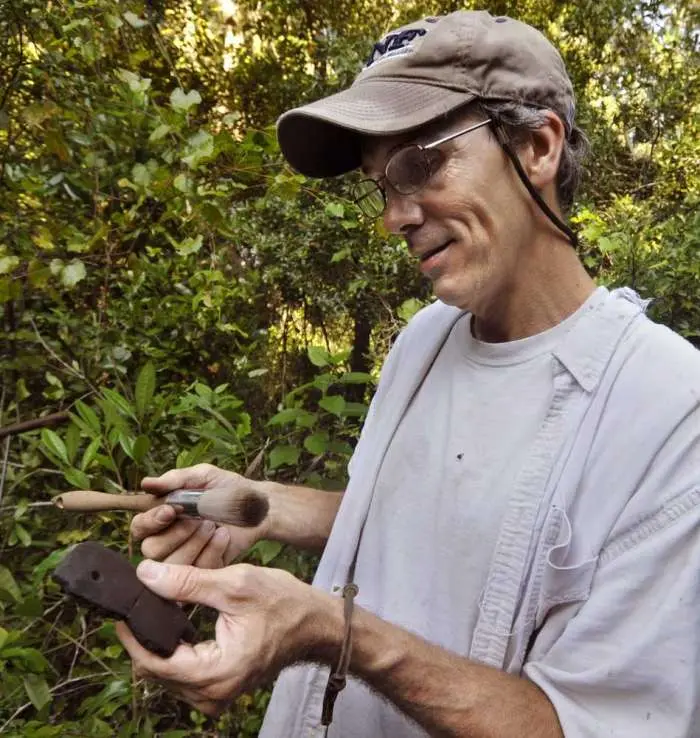
          Keith Ashley is an archaeologist and research coordinator at the University of North Florida in Jacksonville. Ashley’s research is demonstrating a link between Native Floridians and the thriving Mississippian culture.

          “Mississippian World is a term that we’ve kind of superimposed as archaeologists,” says Ashley. “Basically these were Chieftain level groups, meaning that they had institutionalized inequality. They had chiefs who controlled more than one village. They were involved in intensive maize agriculture. They were involved in these far flung trade and exchange networks, and they had these large mound complexes with platform mounds that probably were the platforms for chiefly residence.”

          On maps of the Mississippian World, peninsular Florida is excluded. New archaeological evidence uncovered by Ashley demonstrates that Native Americans living in Northeast Florida were part of an extensive trade network that extended to present day St. Louis.

          “The Mississippian World’s delineating groups were intensive maize agriculturalists, and the groups here weren’t,” says Ashley. “But they were clearly involved in interaction networks and trade with them.”

          In addition to growing maize, or corn, the Mississippian cultures were known for their construction of platform mounds, on which they would build houses, towns, temples, and burial buildings. The largest chiefdom of the Mississippian World was at a ceremonial complex at Cahokia, located near present day Collinsville, Illinois, across the Mississippi River from St. Louis, Missouri.

          “Cahokia probably sprang up about 1000 AD, and then by about 1250 it’s in decline and by 1300 it’s gone,” says Ashley. “In its wake, what you see are a lot of other rival chiefdoms that sprout up. You see these chiefdoms rise and fall throughout the area. Sometimes they group together, other times they just break down, so it’s a really dynamic landscape.”

          Ashley says that the St. Johns culture of Northeast Florida roughly coincides with the Mississippian World. The St. Johns Period begins about 500 AD, and continues until European contact, 1,000 years later.

          “They’re fishers, collectors, hunters,” says Ashley. “The people in Northeastern Florida really gravitate to the Mississippian interaction network and become part of it. I think they have a resource that people in the landlocked areas of Alabama, Georgia, and Missouri want, and that’s shell.”

          In the late 1800s and early 1900s, Clarence B. Moore documented some significant archaeological sites in Florida. Moore did much of his work in the Jacksonville area, excavating the Grant Mound and the Shields Mound, where he uncovered some spectacular artifacts. Some of the artifacts were made with copper, mica, galena, and other minerals common in the Mississippian World, but not Florida.

          Ashley believes that these artifacts, including a pair of copper ear decorations found by Moore at the Grant Mound, help to prove contact between Florida natives and other Native Americans who were very distant geographically.

          “These small little ear pieces maybe a couple of inches in size, look like a face,” says Ashley. “They would have had a long nose pultruding from them. So far, we’ve only found seven complete pairs of those in copper in the entire United States, and all of them, we believe, are manufactured at Cahokia.”

          Ashley has expanded on the information gathered by Moore in Jacksonville, discovering distinctive pottery and other artifacts that further support the idea of Native Floridians interacting with distant neighbors to the north.

          “We found a small little point called a Cahokia Point near Shields Mound,” Ashley says. “We had archaeologists from Cahokia look at it, and they told us that, yes, this is a Cahokia point, and it looked like any point that they would find at Cahokia.”

          In between the St. Johns culture Indians and the Mississippian Indians, was a pocket of hunter gatherers who also had contact with Northeast Florida residents about 1,000 years ago.

          Chemical analysis of distinctive pottery found near Jacksonville shows that some comes from central Georgia, while the design was also used adopted by Native Floridians.

          “Maybe female potters, who learn how to make Okmulgee pottery, marry into St. Johns communities in Jacksonville, and they bring their native pottery technology with them.”

          PDF file(s)
          Article Number
          116
          relevantdate

            The statewide headquarters of the Florida Historical Society is in Cocoa, but the organization hosts their Annual Meeting and Symposium in a different Florida city each year. In recent years the event has been held in St. Augustine, Fort Lauderdale, Tampa, Jacksonville, and Pensacola.

            In 2013, to commemorate the 500th anniversary of the naming of our state, the Florida Historical Society hosted their annual meeting aboard a cruise ship that sailed out of Port Canaveral. The return voyage from the Bahamas followed Ponce de León’s path of discovery, sailing up the east coast of Florida.

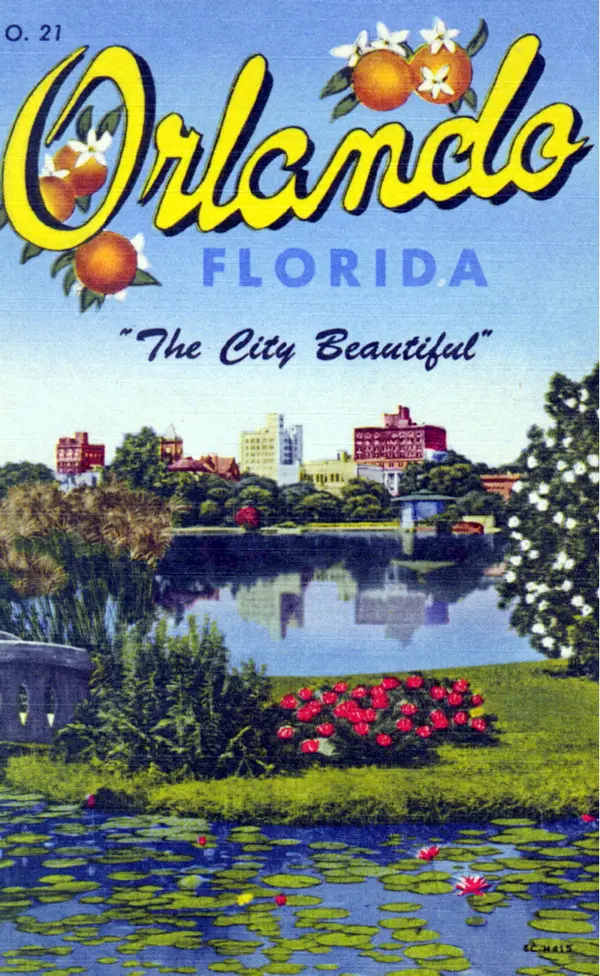
            This year’s conference will be held at the Embassy Suites by Hilton in downtown Orlando, May 19-21. Hotel and event registration is online at myfloridahistory.org and the public is welcome to attend.

            The theme for the 2016 conference is “Citrus to Tourism to Tech: Visions of Paradise?”

            “It really encapsulates the diverse and ever changing history of the Central Florida region,” says Ben DiBiase, Director of Educational Resources for the Florida Historical Society. “This year we have over 60 presenters that will be giving talks and roundtable discussions, and topics are as varied as Florida history.”

            From Thursday morning, May 19, through Saturday morning, May 21, multiple concurrent presentation sessions will be held at the Embassy Suites hotel. The session topics include Paleoindians in Florida, Colonial Florida, Florida’s Territorial Governors, Frontier Florida, Digital Methods for Interpreting Florida History, and many more.

            “The major thrust of our annual meetings is the academic presentations, but outside of that, it’s a place for history enthusiasts, historians, students, and the general public to congregate, to talk, discuss, network, and really enjoy all things Florida history,” says DiBiase.

            Each afternoon of the annual conference, attendees visit local historic sites and museums.

            This year’s afternoon excursions include a “behind the scenes” tour of the Orange County Regional History Center, a Walking Tour of Historic Downtown Orlando including the Wells’Built Museum of African American History and Culture, and a bus and boat tour of Winter Park including the Albin Polasek Museum and Sculpture Gardens and Hannibal Square Heritage Center. The conference will end with a picnic at Fort Christmas Historical Park in east Orange County.

            “Despite the popular notion that historians just like to stay inside and read books, we actually like to get out when we visit different areas and allow our attendees to get a full historical view of what the areas we’re visiting are really like,” says DiBiase.

            The conference begins with an Opening Plenary Session. The featured speaker will be author and journalist Joy Wallace Dickinson, discussing “Mysteries of Orlando’s Past, B.D. (Before Disney).” Wallace’s books include “Orlando: City of Dreams,” “Remembering Orlando,” and “Historic Photos of Orlando.”

            Roderick Waldon, principal of Orlando’s historically black Jones High School, will accept a donation of the book “Crossing Division Street: An Oral History of the African American Community in Orlando” from the Florida Historical Society Press, with free copies to be given to each graduating senior.

            The annual awards luncheon on Thursday recognizes outstanding books, articles, and other work in Florida history. Awards include the Charlton Tebeau Award for best general interest book on a Florida history topic, and the Patrick D. Smith Award for the best book of fiction based on Florida history.

            Thursday evening, May 19, a reception will be held at the Orange County Regional History Center to recognize and celebrate the career of José Fernández, retiring dean of the College of Arts and Humanities at the University of Central Florida. Fernández served on the Florida Historical Society board of directors for twenty years and was a past president.

            On Friday evening, May 20, the Jillian Prescott Memorial Lecturer at the annual banquet dinner will be author, historic preservation advocate, and broadcast journalist Bob Kealing, presenting “Uncovering Orlando’s Pre-Disney Visionaries.”

            Kealing’s book “Tupperware Unsealed: Brownie Wise, Earl Tupper, and the Home Party Pioneers” is being made into a film starring Sandra Bullock. His other books include “Kerouac in Florida: Where the Road Ends,” and “Calling Me Home: Gram Parsons and the Roots of Country Rock.”

            About 200 people attend the Florida Historical Society Annual Meeting and Symposium each year.

            PDF file(s)
            Article Number
            115
            relevantdate

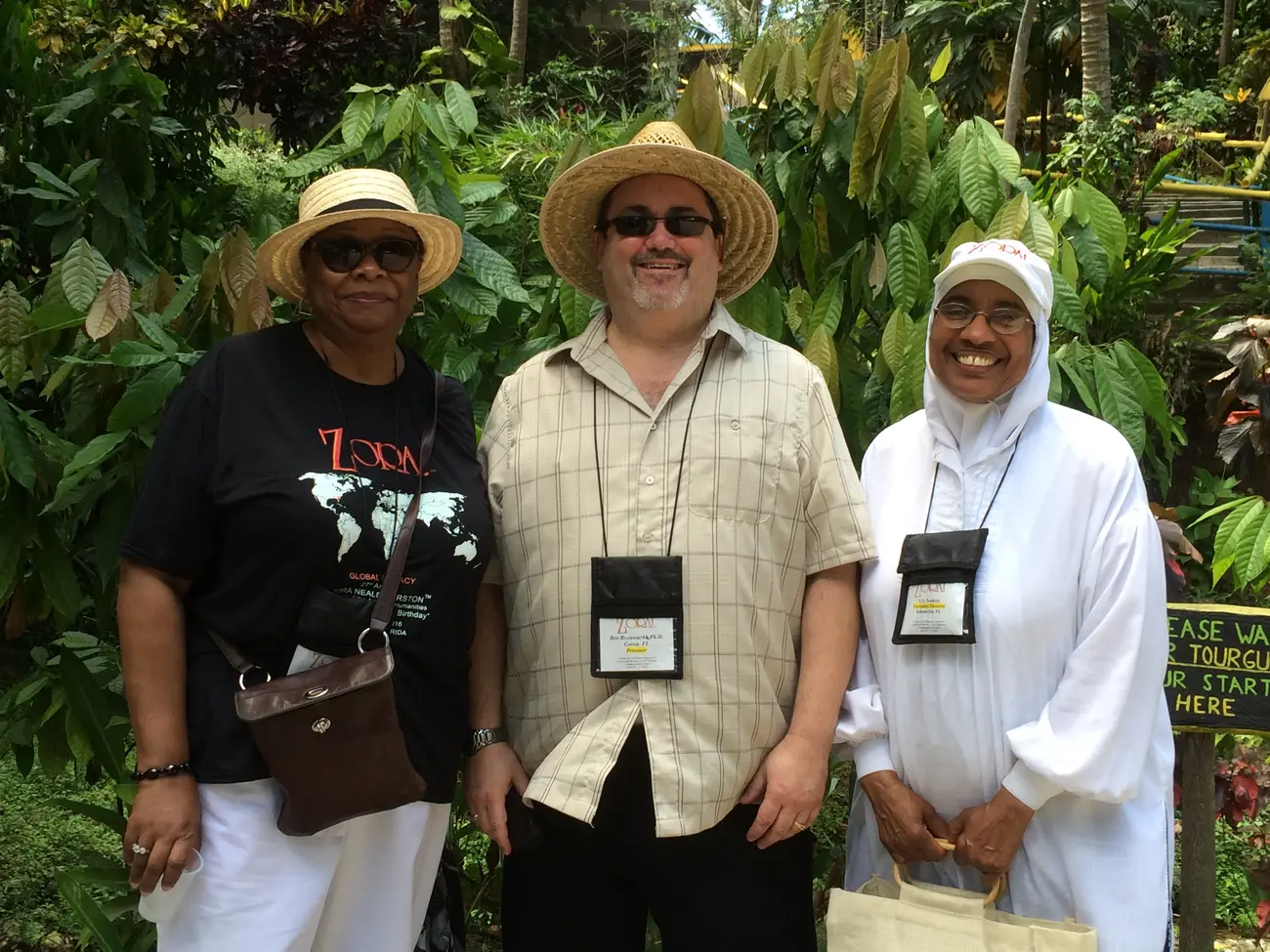
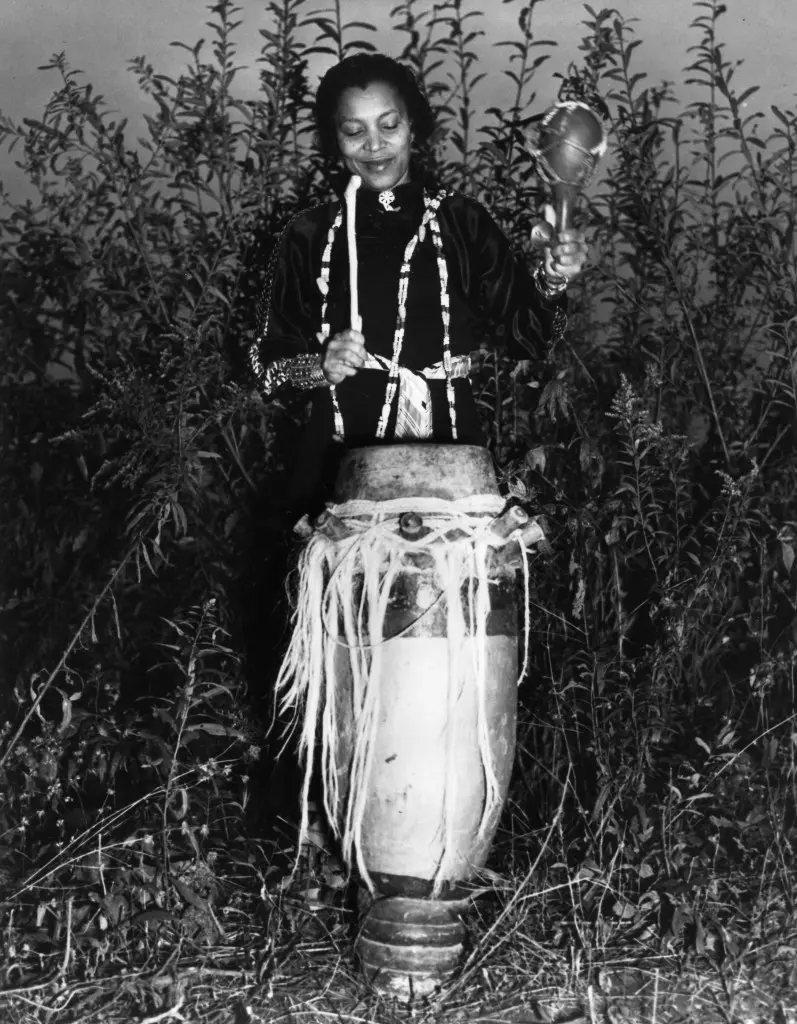
              Last week, a conference called “Tracing the Caribbean Footprints of Zora Neale Hurston: A 125th Birthday Commemorative Cruise” was held aboard the cruise ship Freedom of the Seas, with private tours in Haiti and Jamaica.

              The conference cruise was sponsored by the Association to Preserve the Eatonville Community. That organization is dedicated to the preservation of the oldest incorporated African American municipality in the United States and the memory of its most famous resident, writer, folklorist, and anthropologist Zora Neale Hurston.

              Hurston visited Haiti in 1936, where she immersed herself in the local culture, including the practice and documentation of the religion of Voodoo.

              She claimed to have taken a seven week break from her anthropological work to write her most famous novel, Their Eyes Were Watching God.

              “I believe she did write the novel in seven weeks,” said Ruthe Sheffey, professor emerita at Morgan State University and founder of the Zora Neale Hurston Society. Sheffey explained that Hurston had just ended a personal relationship that could have inspired the fictional story of Janie and Tea Cake.

              In 1937, Hurston traveled to Jamaica, where she continued her collection of folklore and folksongs, and the documentation of Caribbean lifeways.

              Another result of Hurston’s travels in the Caribbean was perhaps her most dramatic non-fiction work, Tell My Horse: Voodoo and Life in Haiti and Jamaica. In the book, Hurston describes the ancient African religion of Voodoo, documenting its many gods, rituals, and songs of worship.

              “Zora was not a tourist with a camera taking pictures,” said Carl-Henry François, who emigrated from Haiti in 1983, and has taught engineering at the University of Central Florida. “She was part of what she was describing. She knows the hymns that they would sing, the position of each person in that hierarchy of the Voodoo gods and worshipers. She knows exactly the names of them.”

              Hurston did more than document the Voodoo religion. She immersed herself in the rituals and practices of the belief system.

              “What amazed me was her engagement,” said Marie-José François, a medical doctor who emigrated from Haiti with her husband, and is president of the Association to Preserve the Eatonville Community.

              “When I say engagement, it’s not somebody sitting there translating for her. She was a witness. She saw stuff to put it down on paper. (Hurston believed that) to tell the story you have to live the story. She was really part of it. I know about Voodoo, but not to the extent that Zora described.”

              Much of Voodoo focuses on the medicinal properties of herbs and plants that can be used to both help and to harm people. Hurston spends a chapter of Tell My Horse documenting the creation of Zombies. She describes the use of potions to make a person appear to be dead, erasing their personality. The person becomes the “living dead,” easily manipulated and controlled.

              “In Voodoo is like we have both hands,” says Marie-José François. “One is to cure, one hand to kill. Is like the knife of the pharmacist. You can overdose, or keep the right dose. That’s why when you look at Voodoo, people have to be very careful. We have good stuff in Voodoo, like when you talk about the medicinal plants, that’s the good part.”

              Voodoo came to the Caribbean when Africans were brought there by Europeans as slave labor. By 1804, people of African descent took control of Haiti from their oppressors, establishing the oldest black republic outside of Africa. The Voodoo religion became an important part of the Haitian identity.

              As Haitians and other people of African descent made their way to Florida, some of them brought their ancient religious beliefs with them.

              Stetson Kennedy was Zora Neale Hurston’s supervisor when she worked for the Works Progress Administration’s Florida Writers’ Project. In his 1942 book Palmetto Country, Kennedy documented the practice of Voodoo in Key West, Miami, Jacksonville, and Tallahassee.

              “Everywhere that you have populations coming from the west coast of Africa, whether they’re in Brazil, they have Macumba, in Cuba they have Santeria, and even in the Dominican Republic and Puerto Rico, anywhere that you have any population that came from Africa, they have these practices,” says Carl-Henry François.

              PDF file(s)
              Article Number
              114
              relevantdate

                The American Civil War divided the country between the industrialized northern states and the agricultural southern states that depended upon slave labor to support their economy.

                Disagreement over the issue of whether or not individual states had the right to decide if slavery should be legal within their borders led to the War Between the States.

                Florida was the third state to secede from the Union, in January 1861, behind only South Carolina and Mississippi. As the largest supplier of beef and salt to the Confederate army, Florida played a vital role in the Civil War.

                For those interested in learning more about this conflict, the Rossetter House Museum and Gardens in Eau Gallie is hosting “Civil War Living History Day” on Saturday, April 16, from 10 am to 4 pm. Admission is $2.00 for adults, with no charge for students.

                Representatives from the Sons of Union Veterans of the Civil War will have an encampment on the northern lawn of the Rossetter House, while members of the Confederate Sons Association will be based on the south lawn.

                “We are the Indian River Camp 47, of the Confederate Sons Association based in Brevard County,” says Commander Tom Mills. “We have two types of members. Compatriots, male members with proven genealogy documentation link to his Civil War ancestor. Legionnaires are male and female members whom have a love of history and Civil War history in particular.”

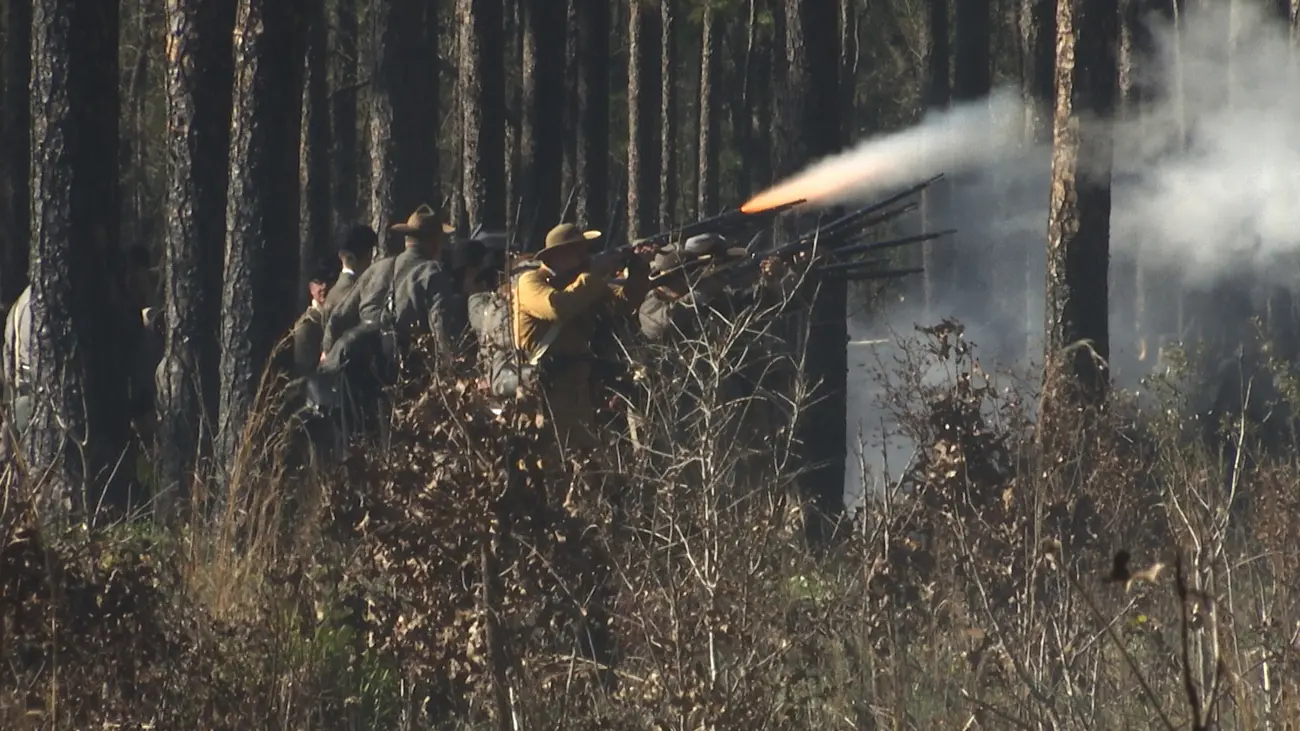
                At the Civil War Living History Day, CSA members will be dressed in period attire. Civil War style tents will show what camp life was like for soldiers. Tables will be set up with displays of authentic CSA muskets, swords, and related equipment and clothing. Soldiers will march and fire their weapons.

                “Ladies table displays focus on the importance of a lady’s role and life experiences thrust upon them during the War Between the States and the support and struggles they endured maintaining the homeland in the absence of their husbands, sons, and family structure,” says Mills.

                “At least two camps of the Sons of Union Veterans of the Civil War will be participating in the Civil War Living History Day,” says Captain Jim Ward.

                Lucius L. Mitchell Camp 4, SUVCW is based in St. Cloud, but covers a six-county area. A small rural town until well after the Civil War, St. Cloud experienced significant growth after being designated as a retirement community for Union veterans of the Civil War.

                Camp 7 of the SUVCW will be coming from Pembroke Pines to participate in this Saturday’s event at the Rossetter House Museum.

                “Displays will range from authentic muskets and rifles, tents, uniforms, other artifacts or replicas, and writing from or about the time,” says Ward. “Members will be available for discussion and demonstration, and to help answer questions.”

                Remnants of the divisiveness of the Civil War can still be seen today.

                Debates continue over whether or not battle flags from a vanquished rebel army should be displayed on government owned flagpoles. Some communities are beginning to look more critically at Confederate monuments and statues on public property. Discussions about race relations continue.

                Descendants of both Confederate and Union soldiers agree that we must continue to learn from our difficult past.

                “We live in the fast lane where too many people, and young people in particular, have not been taught first by their families and foremost by our schools, all of this nation’s struggles, conflicts, and battles,” says Mills. “The focus should be on people’s heritage, factual history accounts, and not try to change one’s history because it was not pretty or in one’s perception, not correct.”

                Mills adds that events like the Civil War Living History Day are an excellent way for people of all ages to learn about our shared past, and Ward agrees.

                “People benefit from learning about and better understanding the Civil War because parts of those experiences inform our current experience,” says Ward. “For example, the phenomenon of the ‘wide awakes’ appears similar to the ‘99%’ activities not long ago. Another benefit, perhaps better understood as an obligation, is to remember the individuals comprising the large number of American casualties in this effort to bring us from antebellum times to today.”
                 

                PDF file(s)
                Article Number
                113
                relevantdate

                  The Apalachee tribe lived in Florida’s Panhandle, and by the 1500s they had developed a sophisticated culture with farming villages and ceremonial centers. Anhaica, the Apalachee capital, was located near present day Tallahassee.

                  The Apalachee were part of an extensive trade network that extended north to the Great Lakes and west to present day Oklahoma. The Florida tribe would trade shells, shark’s teeth, and smoked fish for copper, mica, and other minerals not found in their native land.

                  “They were known by Indian tribes in south Florida and elsewhere as rich and powerful, and a lot of it had to do with the location here in the red hills of Tallahassee,” says Karin Stanford, program supervisor at Mission San Luis Living History Museum.

                  “The soil is extremely good for growing food. So you had a group of Indians who didn’t have to travel with the game, who could remain in place, and have enough food. In later years when the Spanish were here, they basically kept St. Augustine alive. They were the breadbasket for La Florida. They were also fierce warriors, and they were known for that, too.”

                  The first contact that the Apalachee had with Europeans came on July 15, 1528, when Spanish conquistador Pánfilo Narváez and his men attempted to overpower the Florida natives. That attack was successfully repelled.

                  In 1539, Hernando de Soto and his men landed on the Gulf Coast of Florida and traveled through the center of the state, looking for gold and killing any natives they encountered along the way. Hearing that the Apalachee might have gold, the expedition traveled west to Anhaica.

                  This time, the Spanish were able to capture the Apalachee capital.

                  The tribe had developed such an effective method of preserving food that they were able to feed de Soto’s 600 men and 220 horses for 5 months. In the spring of 1540, the Spanish moved on, continuing their search for gold in present day Georgia.

                  In 1633, two friars established the first Catholic missions in Apalachee territory, and Spanish soldiers soon followed. The Apalachee people became citizens of Spain by accepting Christianity.

                  By 1656, Mission San Luis was established at the seat of Apalachee power, solidifying a religious, military, and economic alliance. In the final decades of the 1600s, Spanish families joined the settlement of 1,400 Apalachee at Mission San Luis.

                  A Franciscan church and a defensive fort were built to serve both the native and Spanish occupants of San Luis de Talimali. The most impressive structure in the town was the Apalachee Council House.
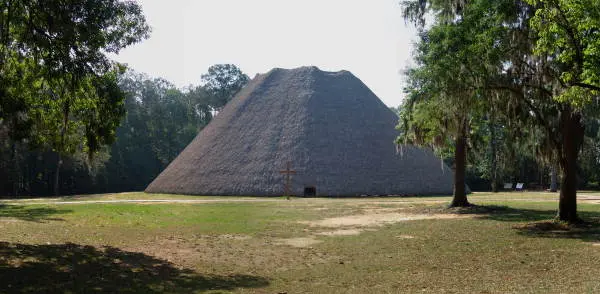
                  A reconstruction of the council house is part of the Mission San Luis Living History Museum in Tallahassee.

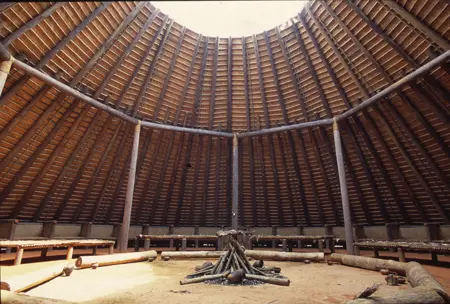
                  The Apalachee Council House is a large, round building with a thatched, sloped roof that touches the ground. Sleeping alcoves surrounding the central space allowed the Apalachee Chief to entertain visitors traveling from great distances. An oculus in the ceiling illuminates the interior of the structure. Thousands of people could gather inside.

                  San Luis de Talimali was named the western capital of Spanish Florida from 1656 to 1704, until the residents decided to burn their settlement to the ground.

                  By 1702, England and Spain were at war. The English began destroying Catholic missions in Florida as a way of undermining Spanish control. With English forces approaching San Luis de Talimali, the Spanish and the Apalachee evacuated the women and children from their shared settlement.

                  “They knew the end was near,” says Stanford. “In the spring of 1704, the records show that for the first time in thousands of years, the Apalachee did not plant corn. They knew that they could be here to sew it, but not to reap.”

                  On July 1, 1704, the Spanish and their Apalachee allies burned down Mission San Luis, to keep it from being captured by the English.

                  Some of the Apalachee fled to St. Augustine with the Spanish. Others surrendered to the British. Another group traveled west to Pensacola, continued to French controlled Mobile, eventually settling in Louisiana.

                  The dispersed Apalachee were lost to history until the 1990s, when records uncovered in Rapides Parish, Louisiana, identified a small group of people there as descendants of Apalachee from Florida’s Mission San Luis.
                   

                  PDF file(s)
                  Article Number
                  112
                  relevantdate

                    Historical Archaeologist Kathleen Deagan led a series of excavations that identified the original encampment of Pedro Menéndez de Avilés from 1565.

                    From that encampment, the city of St. Augustine was established as the oldest continuously occupied European settlement in what is now the United States.

                    “We began that project in the 1970s, thinking we were going to be studying an Indian village,” says Deagan, Distinguished Research Curator and Professor Emerita from the University of Florida.

                    “Over the years as our sample became larger, we realized ‘wait a minute. This isn’t like anything we’ve ever seen in a Native American town.’ Square buildings made with nails. We found a barrel well made of white Spanish oak filled with mid-16th century Spanish artifacts. We realized that this must be the Menéndez encampment.”

                    For more than 40 years, Deagan led annual excavations in St. Augustine, in what is now the Fountain of Youth Archaeological Park, and at the adjacent Mission Nombre de Dios.

                    Identifying the starting point of America’s oldest continuously occupied city would seem to be the crowning achievement of any archaeologist’s career. It is not her four decades of work in the heart of St. Augustine, though, that Deagan identifies as her most significant accomplishment.

                    Deagan believes that her most important work was the excavation of Gracia Real de Santa Teresa de Mosé, better known as Fort Mose.

                    Established in 1738 by Manuel Montiano, Governor of Spanish Colonial Florida, Fort Mose was the first free black settlement to be legally established in what would become the United States. The community was located just north of St. Augustine.

                    “I first learned about Fort Mose when I was a student at the University of Florida in the early 1970s,” Deagan says. “One of my professors, Charles Fairbanks, was very interested in learning more about Fort Mose, and I was a student on one of the digs he brought over here to St. Augustine to try and locate it.”

                    Deagan built on the work of Fairbanks, leading her own excavations at the Fort Mose site in the mid-1980s. She was able to conclusively identify the location of the fort on an island in the middle of a wet, marshy area.

                    “For archaeologists it was a matter of putting on your high boots, and slogging through the mud,” says Deagan. “Once you’re on the actual site itself, which is a small marsh island, its high ground. We learned that the site actually has been occupied by people for hundreds and hundreds of years. There was a prehistoric Timucua Indian site there, and then very briefly there was an Apalachee Mission after 1704, and then Fort Mose. Once you’re on the site its normal excavation, digging through shell and dirt and tree roots.”

                    Deagan and her team uncovered the moat that surrounded the architectural structure of Fort Mose. They then discovered key artifacts associated with soldiers including uniform buttons, tobacco pipes, and lots of rum bottles. They also found items associated with family life in the community, such as thimbles, pins, and pottery for cooking and eating.

                    The population of the community at Fort Mose consisted primarily of former slaves who had escaped from British colonies to the north into Spanish controlled Florida. The Spanish government encouraged this immigration of British slaves by granting them freedom in exchange for their conversion to Catholicism and a pledge to defend St. Augustine from British invasion.

                    The community of Fort Mose was short lived. When the British took control of Florida from Spain in 1763, Fort Mose was abandoned.

                    “All of the people of Mose went to Cuba,” says Deagan. “The records of their lives have been uncovered in Cuba by Jane Landers, who is learning their fate. There might even be some descendants today.”

                    The archaeology at Fort Mose has expanded our understanding of history.

                    PDF file(s)
                    Article Number
                    111
                    relevantdate

                      The possibility of Florida producing its first U.S. president in the current political season is suspended along with the campaigns of Marco Rubio and Jeb Bush.

                      Florida is one of a handful of “swing states” that helps to determine the outcome of our presidential elections. In recent decades, Florida’s 29 Electoral College votes have gone to both Democratic and Republican candidates, making the difference between victory and defeat for both political parties in national races for president.

                      As important as Florida has become to our presidential election process, there has never been a president, or even a vice-president, from Florida.

                      “Florida is the largest state in the Union to have never had a president,” says James C. Clark, author of the book Presidents in Florida: How the Presidents Have Shaped Florida and How Florida Has Influenced the Presidents. “Not only have we not ever had a president or a vice-president, we’ve never even had a nominee.”

                      Florida was a Spanish colony from 1565 to 1763. During the American Revolution, Florida was under British control and remained loyal to the king, while colonies to the north sought independence. By the time George Washington was sworn in as the first President of the United States in 1789, Florida was again under Spanish control.

                      In 1821, future president Andrew Jackson oversaw Florida’s transition from a Spanish colony to a United States Territory.

                      “Andrew Jackson comes mainly to fight Indians, and then becomes the Territorial Governor briefly, after Florida was acquired by the United States,” says Clark. “Future president Zachary Taylor comes to fight Indians in the Seminole Wars. Then Teddy Roosevelt comes on his way to Cuba [in 1898, to fight in the Spanish-American War]. So, in a way, three people have their presidential careers launched in Florida, even though none of them are from Florida.”

                      Chester A. Arthur was the first sitting president to come to Florida. In the 1880s, he enjoyed fishing at Reedy Creek. Eighty years later, Walt Disney would buy that property to create his Florida theme parks.

                      In the twentieth century, all U.S. presidents come to Florida, and some make the state their second home while in office.

                      Harry S. Truman spent so much time in his Key West home that it became known as “The Little White House.” John F. Kennedy wrote his book Profiles in Courage and his presidential inaugural address from his family home in Palm Beach. The Bush family, which includes two U.S. presidents, has vacationed regularly in Florida since George H.W. Bush was a child.

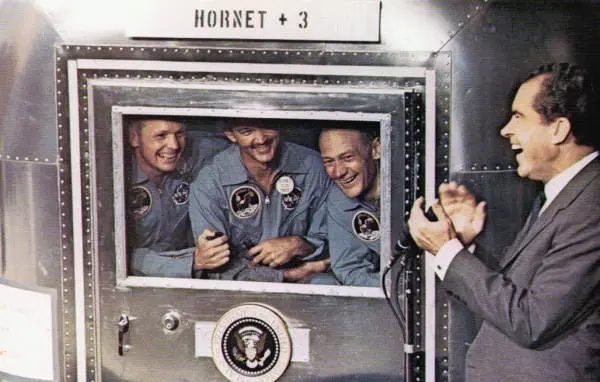
                      Senator George Smathers was a prominent figure in Florida and national politics. Early in the presidency of Richard M. Nixon, rumors circulated that he might appoint Smathers as attorney general. Smathers was waiting on a call from Nixon, expecting a job offer.

                      When the call from Nixon came, it was not what Smathers had hoped.

                      “When Nixon called, he asked if he would sell him his home in Key Biscayne,” says Clark. “Smathers said ‘yes’ and it became the Key Biscayne White House. Richard Nixon was there the weekend that the Watergate burglary took place.”

                      The burglary of the Democratic National Committee office at the Watergate building in Washington, D.C. led to the resignation of Nixon as president. It was during a press conference from the Contemporary Hotel at Walt Disney World that Nixon gave his infamous “I am not a crook” speech on November 18, 1973, at the height of the Watergate scandal.

                      As terrorists attacked the Twin Towers in New York City on September 11, 2001, President George W. Bush was reading to elementary school students in Sarasota, Florida.

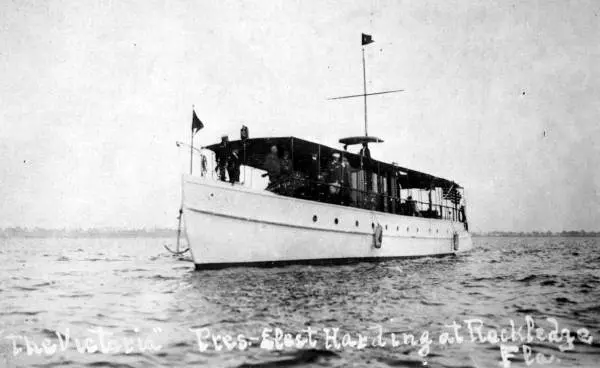
                      Before becoming president in 1921, Warren G. Harding was a frequent visitor to Brevard County. Less than a month before being sworn in, Harding’s yacht Victoria was stuck for two days as he attempted to sail past Titusville on the way to Merritt Island.

                      “At one point, Harding got bored on the boat,” says Clark. “He rode ashore, took a taxi cab for a ride around, just to see what was happening, came back to the dock in Titusville, bought some mullet, and took it back to the ship for dinner. Can you imagine that happening today?”

                      PDF file(s)