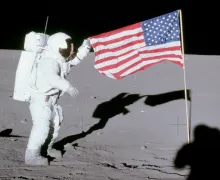
Apollo 12 lands on the Moon. After taking off from Kennedy Space Center, Florida on November 14, 1969 Apollo 12 completed its roughly 500,000 mile journey and landed near the site of Surveyor 3. This marks the only time that humans have reunited with a probe that was sent to land on another world
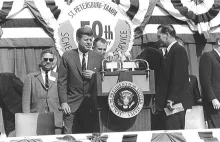
President John F. Kennedy lands aboard Air Force One in South Florida. Later that day Kennedy was scheduled to take a motorcade trip through Miami and then give a speech before the Inter-American Press Association.
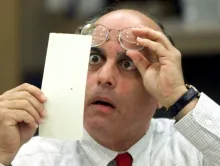
Election officials in Miami-Dade County, Florida vote to conduct a full manual recount of presidential ballots cast in the county.
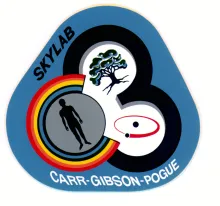
Skylab 4 is launched from Cape Canaveral, Florida. The third and last manned mission to the United States’ first space station launched from the Kennedy Space Center launch complex at 2pm on November 16 and docked with the space station a few minutes before 10pm that night. During the nearly 84 day mission the crew of Skylab 4 performed four EVAs and also captured the first film shot from space of the birth of a solar flare.
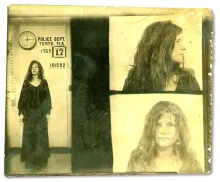
Janis Joplin is arrested in Tampa Florida and charged with using “vulgar and obscene language." The arrest resulted from an altercation Joplin had with police who were ordering people in the audience to sit down. Police ordered Joplin to instruct the crowd to sit down but she refused, cursing at the officers. She was arrested in her dressing room and was released on bond soon after. All charges were subsequently dropped.
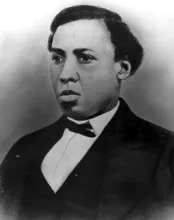
Johnathan C. Gibbs becomes the first African-American Secretary of State. Gibbs, originally a carpenter by trade, attended Dartmouth College and then went through the seminary at Princeton University. As a Presbyterian minister he moved to Florida in 1865 to organize churches and schools for newly freed African Americans. He was appointed Secretary of State on November 6, 1868 and served until January 17, 1873. He then served as Superintendent of Public Instruction until his death on August 14, 1874.
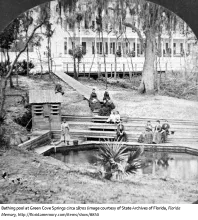
Clay County, Florida’s 37th county, was created on this date by carving out part of Duval County in northeast Florida. Named after American statesman, U.S. Senator from Kentucky and Secretary of State under President John Quincy Adams, Henry Clay, the county seat is Green Cove Springs. Considered part of the greater Jacksonville Metropolitan area, Clay County was a popular tourist destination for northern tourists during the latter half of the 19th century. People particularly enjoyed the therapeutic warm springs which abound in Clay County.
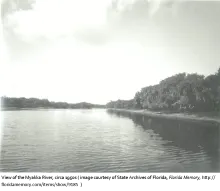
Confederate soldiers attacked Union troops from the U.S.S. Rosalie who were encamped near the mouth of the Myakka River. The Rosalie turned its guns on the Rebel forces and the Federal troops withdrew to the ship. Proceeding further up the river, the Rosalie encountered Confederate forces who fired at them from the riverbanks. Union gunboats were on the hunt for blockade runners and salt works.
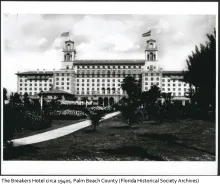
The current structure known as the Breakers Hotel in Palm Beach opened its doors on this date. Originally opened in 1896 and named The Palm Beach Inn, the hotel was part of oil and railroad tycoon Henry Flagler’s East Coast Hotel system which offered places to stay for those traveling on Flagler’s East Coast Railroad. The wooden structure burned down in 1903, but was soon rebuilt. Named the Breakers due to its close proximity to the Atlantic Ocean, it burned again in 1925 and was finally rebuilt using concrete instead of wood.
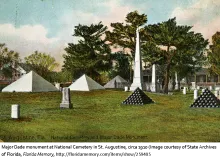
Major General Francis L. Dade’s column of 110 U.S. troops was ambushed by a group of Seminole Indian warriors resulting in the loss of all but a few U.S. soldiers. The federal troops were traveling from Fort Brooke in present day Tampa to Fort King near present day Ocala on a reinforce and resupply mission. For months prior tensions were high between the Seminoles and the federal government as forced Indian removal initiatives ramped up. The troops were caught completely by surprise in the open prairie which resulted in an overwhelming victory for the Seminoles.