1961 – Alan Shepard became the second person and the first American in space on this date, lifting off from Cape Canaveral during the Freedom 7 mission aboard a Mercury Redstone rocket. The suborbital flight lasted only 15 minutes and traveled a downrange distance of 263.1 nautical miles. Shepard splashed down safely in the Atlantic near the Bahamas and was airlifted to an awaiting aircraft carrier.

Where were you on this historic day? 
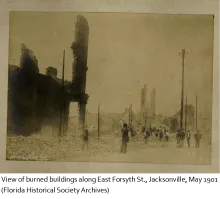
1901 – A boiler explosion at a candle factory in Jacksonville spread to a nearby mattress factory on this date. The fire was initially underestimated and within hours it had spread across the city resulting in one of worst disasters in Florida history. Known as the “Great Fire of 1901,” the blaze destroyed over 2,000 buildings and left 10,000 people homeless in the span of about 8 hours. Some reports claimed that the flames could be seen from as far north as Savannah. Amazing only 7 deaths were reported at the time. 

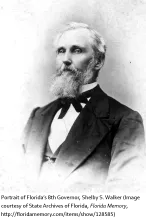
1815 – David Shelby Walker, Florida’s 8th governor was born on this date in Russelville Kentucky. He moved to Leon County in 1837 and was elected to the first State Legislature in 1845 as a Senator, serving again in 1848 in the House. Later, Walker served as the mayor of Tallahassee and also the Register of Public Lands. He was a Florida Supreme Court Justice before being elected Governor in 1865. Walker was a circuit court judge until his death in 1891. He is buried in the Saint John’s Episcopal Church Cemetery in Tallahassee.    

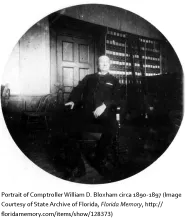
1890 – William D. Bloxham was appointed State Comptroller on this date. Bloxham served as Florida’s governor from 1881-1885, then again from 1897-1901. He was born on a plantation in Leon County on July 9th, 1835 (only the second native governor at the time) and became interested in politics at a young age. He was elected to the Florida House of Representatives in 1861, also serving in the Confederacy during the American Civil War. Bloxham also served briefly as Secretary of State in 1880, and U.S. Surveyor General for Florida from 1885-1889. Bloxham died in 1911 in Tallahassee.

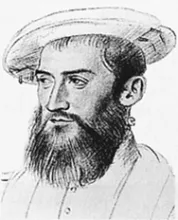
1562 –Two small French ships with 140 Huguenots led by Jean Ribaut landed in Florida on this date. Using the instructions from Verrazano's voyage of North America, Jean Ribaut reached the coast of Florida near St. Augustine. He sailed northward to the mouth of a wide river the Spaniards called "The St. Johns", but which Ribaut renamed "the River of May." On the banks of the St. Johns River, Ribaut erected a stone marker with the French Coat of arms announcing France's claim to Florida. The group traveled north to what is today South Carolina and built fort Charlesfort.

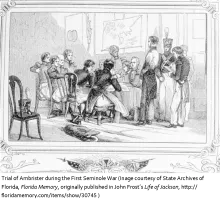
1818 – Robert Ambrister and Alexander Arbuthnot were hanged by American soldiers led by then General Andrew Jackson at St. Marks on this date. The two British citizens were tried and sentenced in a military court for espionage and aiding the enemy during the First Seminole War. Jackson’s intention was to blame the Seminole War on outside foreign agitators such as Ambrister and Arbuthnot in order to justify U.S. military intervention into Spanish Florida. The incident gained international attention and Jackson’s actions in Florida were under close scrutiny.

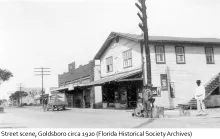
1911 –The legislature passed the Sanford Charter Bill, and the town of Goldsboro in Seminole County was dissolved. Historical Goldsboro was founded in 1891 as the second all African American town in the State of Florida, Historic Eatonville being the first. Registered voters in what had been the village of Goldsboro met on Dec. 1, 1891, at a store opened by William Clark in 1886. The year after incorporation, the first community school was opened, a post office was established and Zion Methodist became the first church.

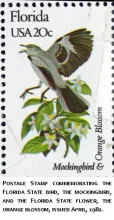
1909 –The Florida House of Representatives approves the orange blossom (citrus sinensis)as the official State Flower of Florida. La Florida, Spanish for “land of flowers”, was named by Ponce de Leon in 1513. When it came to declaring an official state flower, the Land of Flowers had many, many choices. There was much support for the camellia and much support for the gardenia, but the native orange blossom's fragrance and widespread appeal won the honor.

1911 –The legislature passed the Sanford Charter Bill, and the town of Goldsboro in Seminole County was dissolved. Historical Goldsboro was founded in 1891 as the second all African American town in the State of Florida, Historic Eatonville being the first. Registered voters in what had been the village of Goldsboro met on Dec. 1, 1891, at a store opened by William Clark in 1886. The year after incorporation, the first community school was opened, a post office was established and Zion Methodist became the first church.