Peggy Bulger

Article Number
133
relevantdate

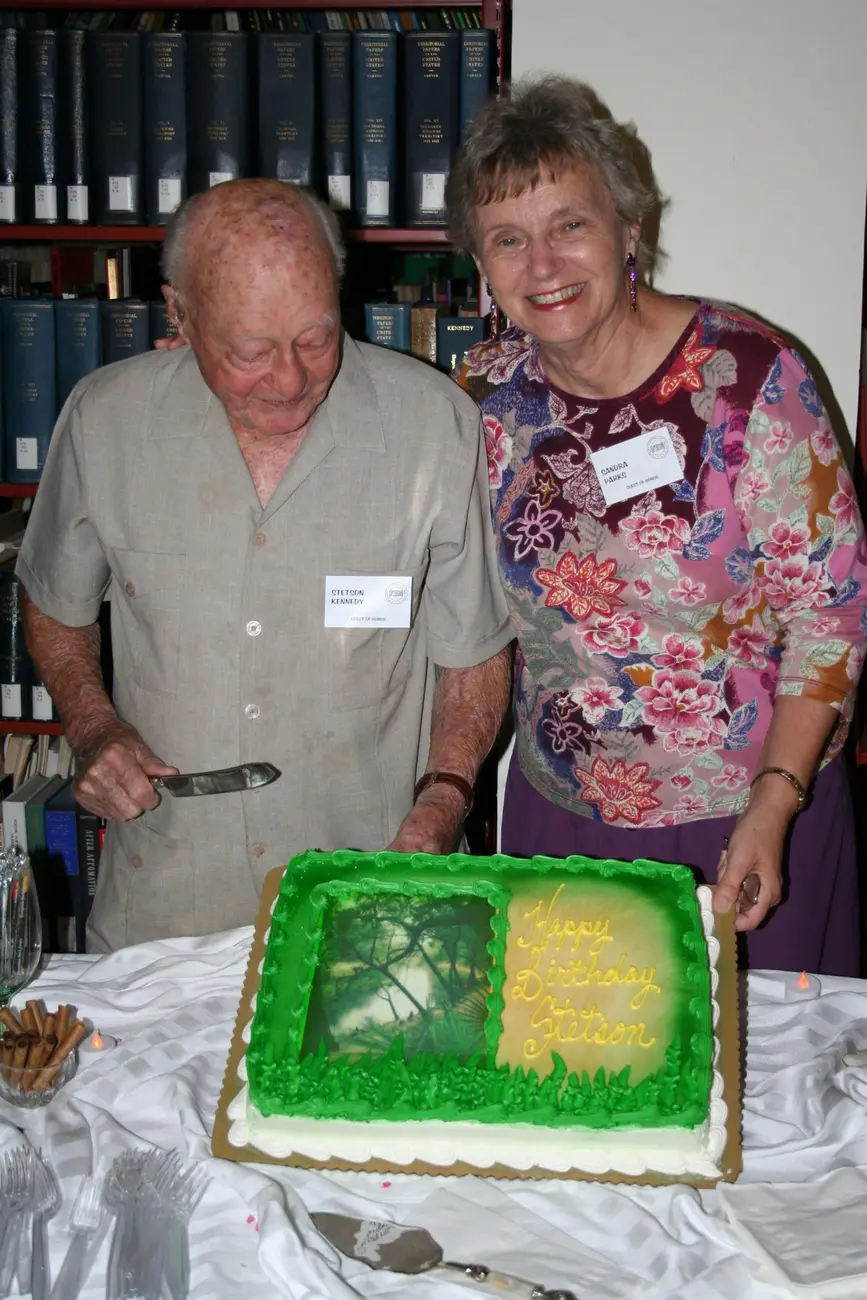
    Folklorist, author, and activist Stetson Kennedy was born on October 5, 1916. Had he not died in 2011, Kennedy would have been 100 years old this week.

    From 1937 to 1942, Kennedy traveled throughout Florida recording the oral histories, folktales, and work songs of the state’s diverse population. He spoke with Cracker cowmen, Seminole Indians, Greek sponge divers, Latin cigar rollers, African American turpentine still workers, and many others.

    This work resulted in Kennedy’s book “Palmetto Country,” originally published in 1942.

    The new exhibition “Stetson Kennedy’s Multicultural Florida” will open at the Brevard Museum of History and Natural Science in Cocoa on November 12, in conjunction with the Florida Frontiers Festival. The exhibition will commemorate Kennedy’s documentation of our state’s diverse cultural heritage.

    The exhibition will also include personal items such as Kennedy’s typewriter, hats, and the handwritten lyrics to the Woody Guthrie song “Stetson Kennedy.” An interview filmed with Kennedy in 2008 will be part of a video display.

    Kennedy worked for the Works Project Administration’s Florida Writers Project as head of the unit on folklore, oral history, and socio-ethnic studies.

    “Well, it was the Great Depression, for one thing, and I didn’t have a job along with tens of millions of other Americans,” Kennedy told me in 2008. “At the same time, President [Franklin Delano] Roosevelt had organized something called the Federal Writers Project, and I thought this would be an opportunity for a twenty-one-year-old to start a writing career, so I signed up for the Florida Writers Project.”

    The young Kennedy became the supervisor of writer, folklorist, and anthropologist Zora Neale Hurston, who had already published her most famous novel, “Their Eyes Were Watching God.”

    “She was not an easy one to boss, I can tell you,” Kennedy said. “She fortunately worked out of her home in Eatonville, and I was in Jacksonville, so it was like that. But everything she sent in was a real jewel.”

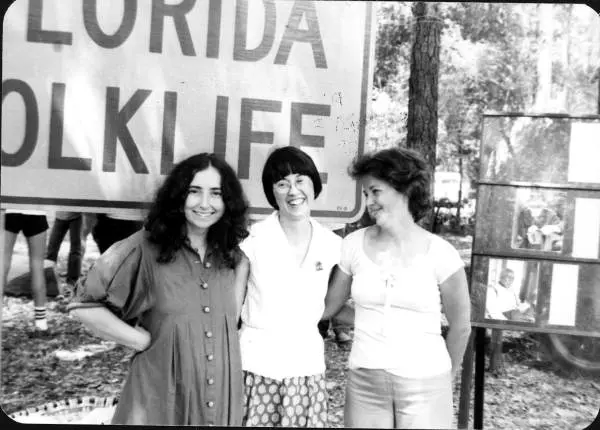
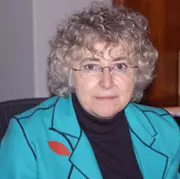
    Peggy Bulger is author of the book “Stetson Kennedy: Applied Folklore and Cultural Advocacy,” which will be released in early November. Bulger came to Florida in 1976, to become the first Florida Folklife Coordinator for the Florida Department of State Division of Historical Resources.

    “I started really delving into materials that were done during the WPA,” says Bulger. “Stetson Kennedy, Zora Neale Hurston, Alan Lomax, Herbert Halpert, all of them were folklorists who had worked in Florida back in the ‘30s and ‘40s. I was 25-years-old in 1976, and I thought that anyone who had lived in the 1930s and ‘40s was dead, because that was ancient history.”

    Bulger was shocked and pleased to discover that Stetson Kennedy was alive and well and living in Jacksonville.

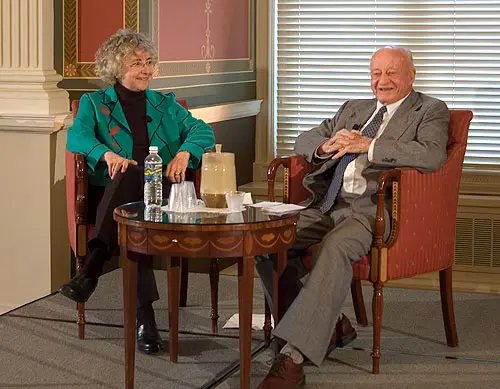
    “I went to see Stetson and I started interviewing him about the WPA and the work that he had done here in Florida,” Bulger says. “Over the course of the years, we became fast friends, from ’76 to when he died in 2011. He really informed the work that I did in Florida.”

    Bulger served as director of the American Folklife Center at the Library of Congress from 1999 to 2011.

    In addition to being a folklorist and author, Kennedy was a social activist. In the 1940s he risked his life by infiltrating the Ku Klux Klan and exposing their secrets. Using the name John Perkins, Kennedy was able to gather information that helped lead to the incarceration of a number of domestic terrorists. He wrote about his experiences in the 1954 book “I Rode with the Klan,” which was later republished as “The Klan Unmasked.”

    “When I went overseas some years later, I thought I’d get away from my nightmares, you know, of being caught,” Kennedy said. “But in Paris, it was raining frequently, and the traffic cops wore white rubber raincoats with capes and hoods, and their hand signals were very much like the Klan signals, so I kept on having nightmares.”

    Kennedy continued working until his death in 2011, at the age of 94. His last book, “The Florida Slave,” was published posthumously.

    Although he did not live to see his 100th birthday, Kennedy’s legacy lives on in his books, and the inspiration he provides to those following in his footsteps.
    PDF file(s)
    Article Number
    88
    relevantdate

      Peggy Bulger wanted to follow in Stetson Kennedy’s footsteps. In fact, Bulger wrote her doctoral dissertation about him.

      As head of the Florida Writer’s Project for the Works Project Administration in the 1930s and ‘40s, Kennedy traveled throughout the state documenting the traditions, folktales, and folk songs of Florida’s diverse population. He recorded the oral histories of Greek sponge divers in Tarpon Springs, Latino cigar rollers in Ybor City and Key West, Seminole Indians at Big Cypress, and many others.

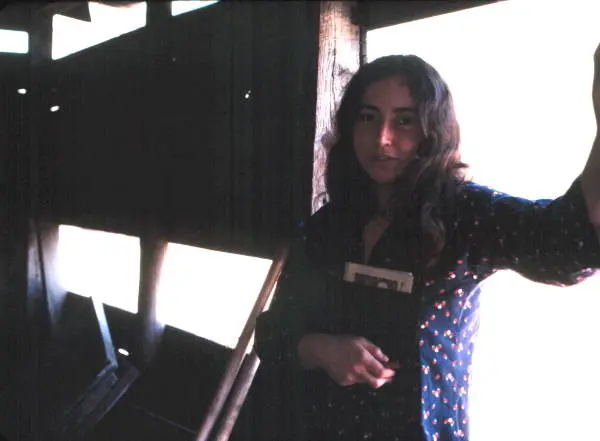
      Bulger came to Florida in 1976, at the age of 25, to become the first Folklife Coordinator for the State of Florida under the Department of State Division of Historical Resources.

      “I started really delving into materials that were done during the WPA,” says Bulger. “Stetson Kennedy, Zora Neale Hurston, Alan Lomax, Herbert Halpert, all of them were folklorists who had worked in Florida back in the ‘30s and ‘40s. I was 25 years old in 1976, and I thought that anyone who had lived in the 1930s and ‘40s was dead, because that was ancient history.”

      Bulger told someone at the University of Florida archive that she wished some of the folklorists whose work she admired were still alive. She was informed that Stetson Kennedy was alive and well and living in Jacksonville.

      “I went to see Stetson and I started interviewing him about the WPA and the work that he had done here in Florida,” Bulger says. “Over the course of the years, we became fast friends, from ’76 to when he died in 2011. He really informed the work that I did in Florida.”

      Bulger’s position as the head of the Florida Folklife Program was originally funded by a one year grant from the National Endowment for the Arts.

      “Bess Lomax Hawes, who is Alan Lomax’s sister, had just started working at the National Endowment for the Arts, and she had created this folkarts program,” says Bulger. “Her vision was that she wanted to place a folklorist in every state in the country to really do the kind of work that the WPA and the Federal Writer’s Project had been doing all over the country during the ‘30s. Back then, in 1976, I was just young enough and naive enough to think ‘oh, it’ll be possible to do a survey of the folkart of Florida in one year.’ I soon found out that would not be the case.”

      Bulger was able to find other grant funding to keep her position in place so she and her staff could collect and document the culture of our state. The program continues today.

      The Florida Folklife Collection contains manuscripts, photographs, audio and video recordings, and other materials dating from the 1930s to the present. The Florida Folklife Program documents our rich and varied traditional cultures and preserves our heritage through apprenticeship programs and educational outreach.

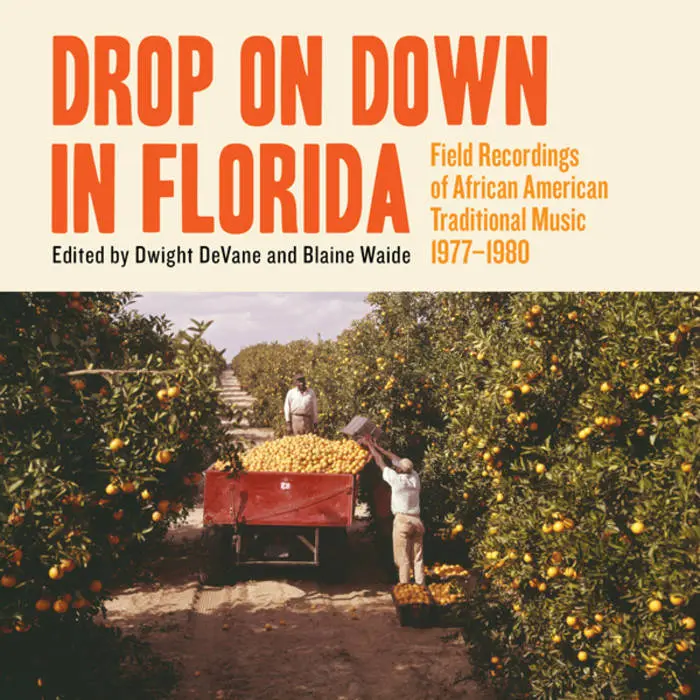
      Some of the work that Bulger is most proud of from her time as Florida Folklife Coordinator is a project that was released as a double album in 1981, called “Drop on Down in Florida: Recordings of Traditional African American Music, 1977 to 1980.”

      That project has now been released in digital formats with three times as much material and a 224 page book.

      “It’s fieldwork that we did with African American sacred and secular music,” says Bulger. “There were four of us doing fieldwork all over the state.”

      Bulger has dedicated her life to preserving tradition cultures, but is philosophical about the fact that change is inevitable.

      “I did a documentary on the shrimping industry of Fernandina Beach where I now live,” says Bulger. “When I was doing that documentary in the 1970s, there were over a hundred shrimp boats going out every day. There’s now eight.”

      By the time Bulger was working in the 1970s, much of what Stetson Kennedy had documented in the 1930s had changed.

      Bulger served as director of the American Folklife Center at the Library of Congress from 1999 to 2011. She then returned to Florida, and is pleased to see the program she developed here going strong.

      “It just does my heart so much good to see young scholars coming in and taking over the reins,” says Bulger.

      PDF file(s)