American Revolution

Episode Number
19
Program Date
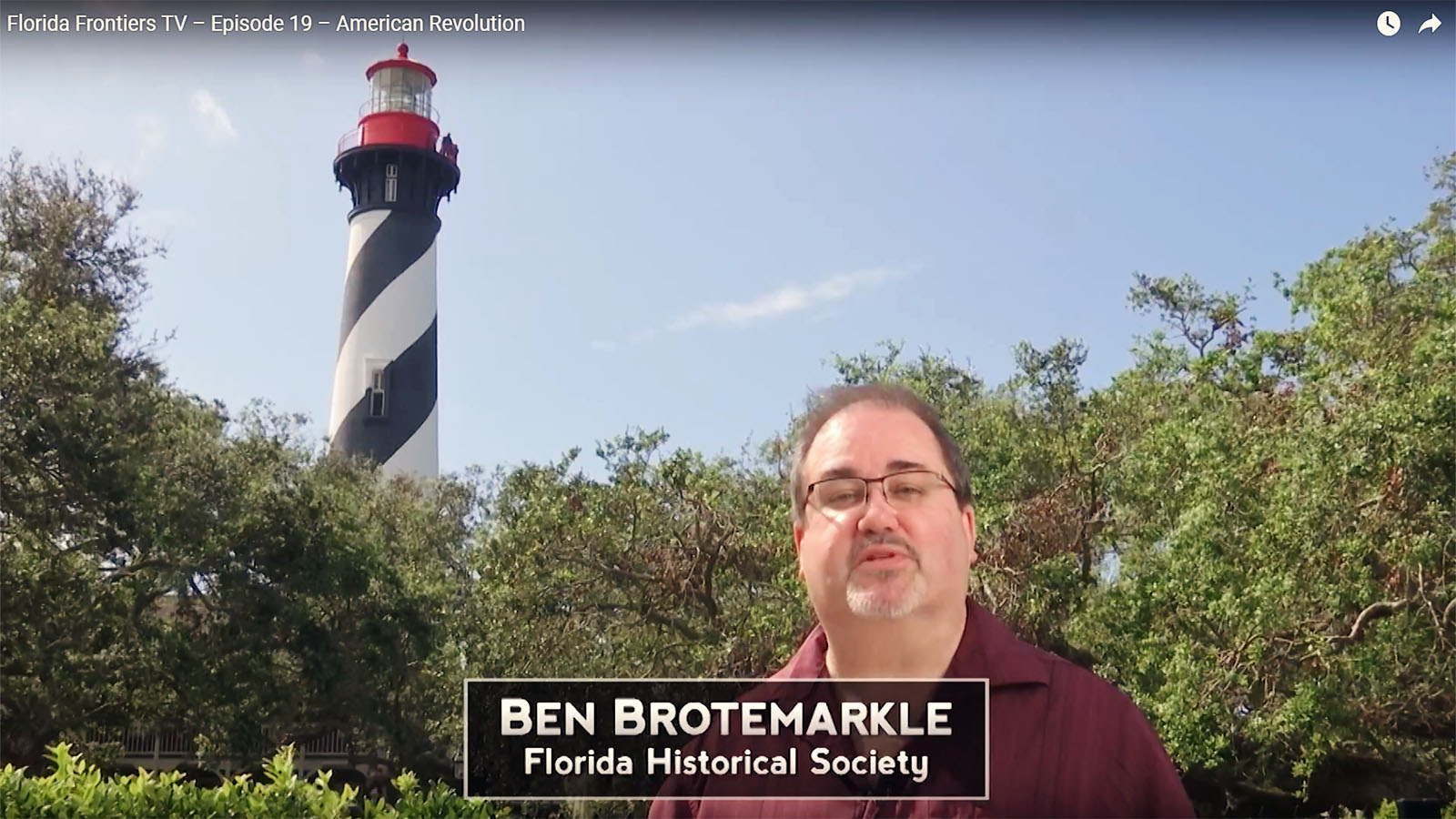
  • St. Augustine Light House, Dr. Ben Brotemarkle

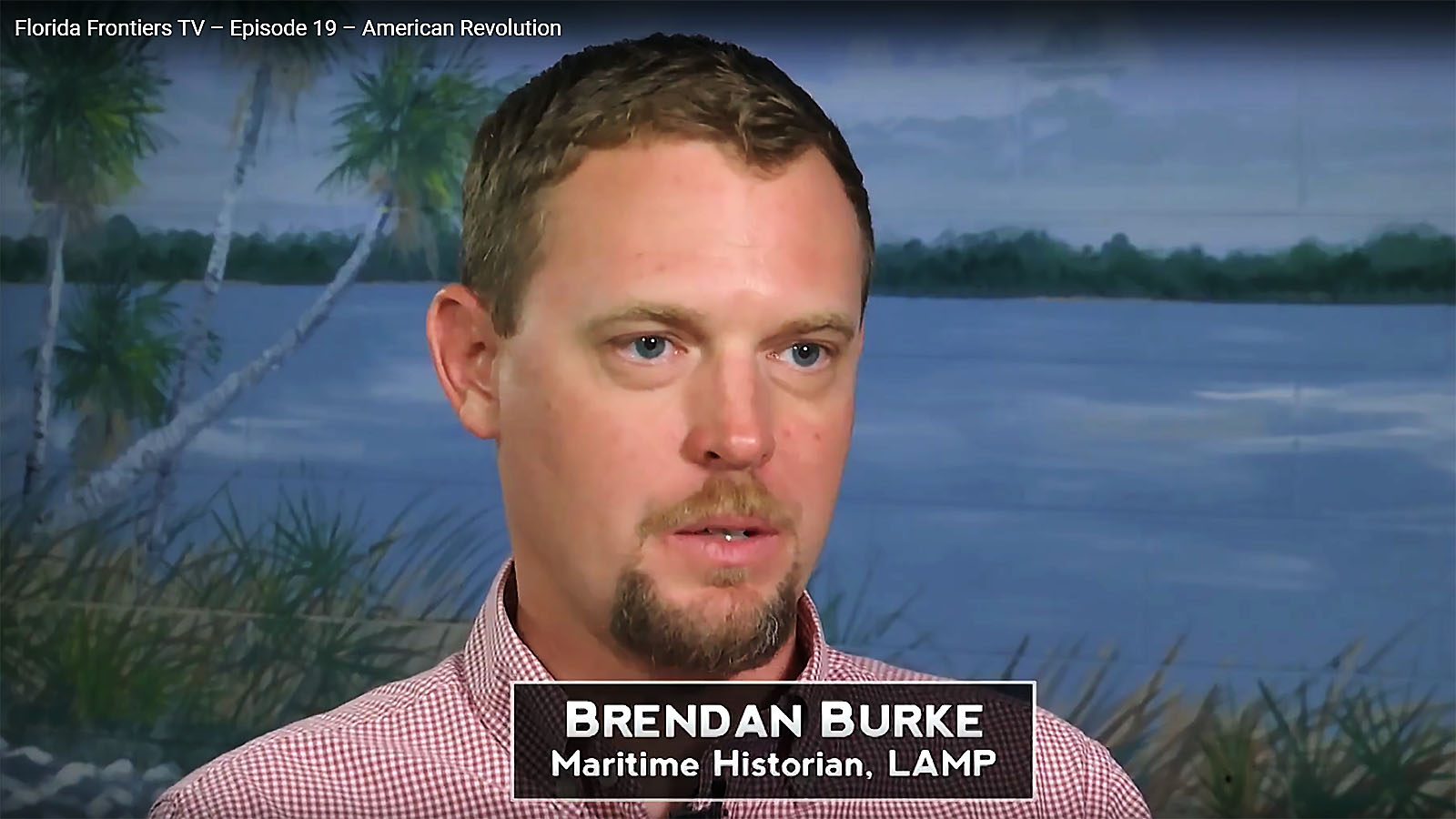
  • Brendan Burke, Maritime Historian, LAMP

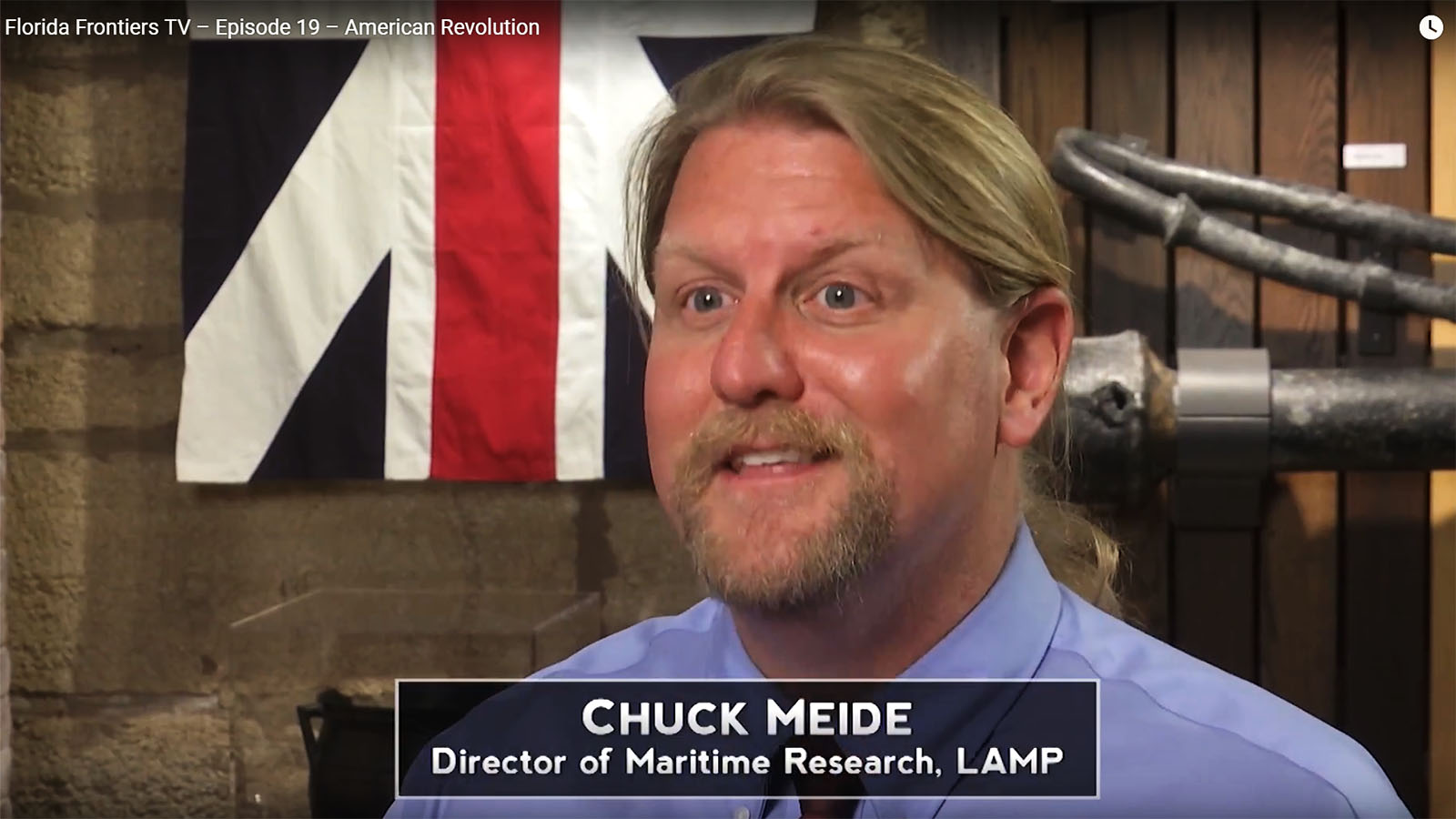
  • Chuck Meidie, Director Maritime Research LAMP

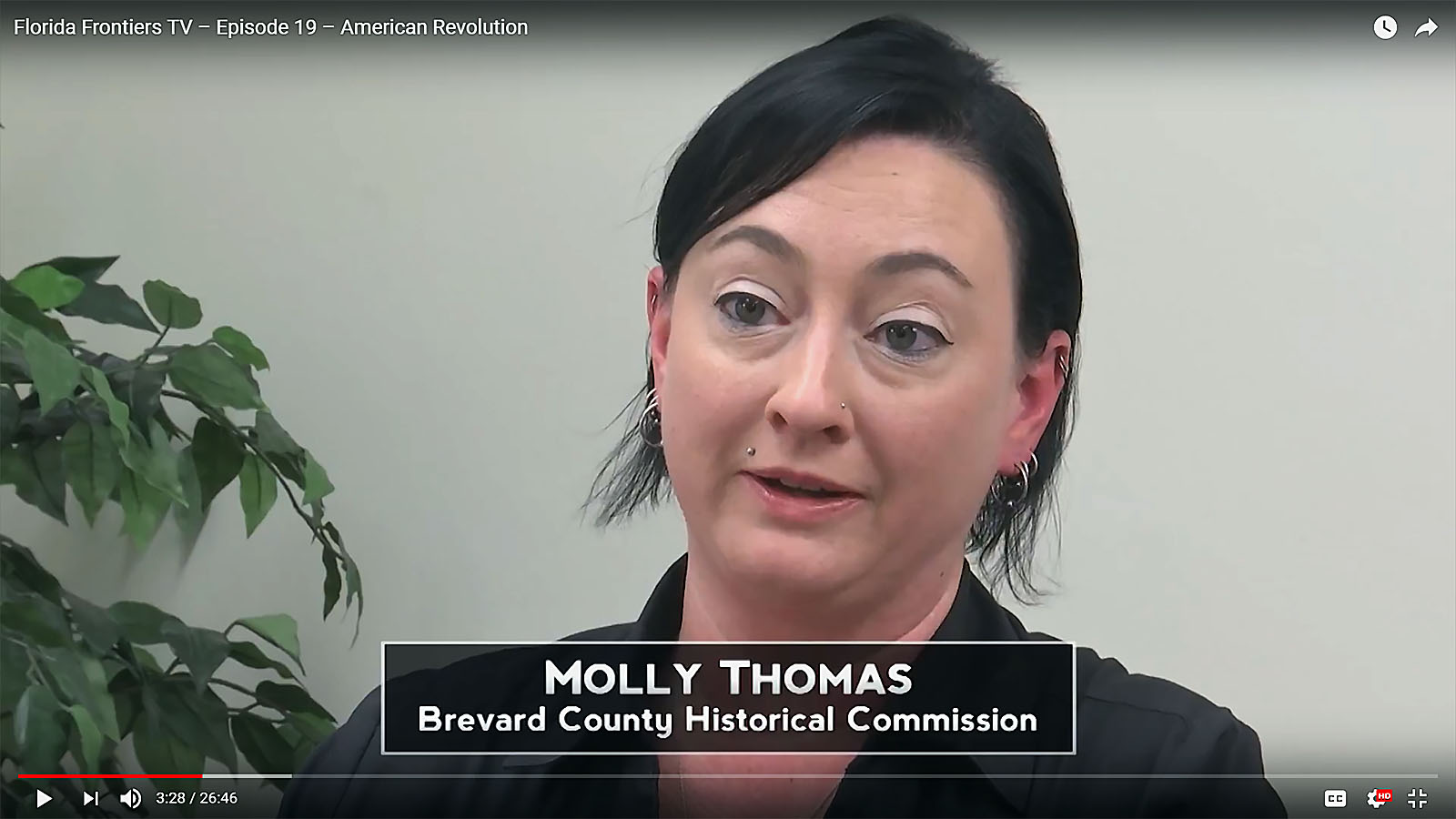
  • Molly Thomas, Brevard County Historical Commision

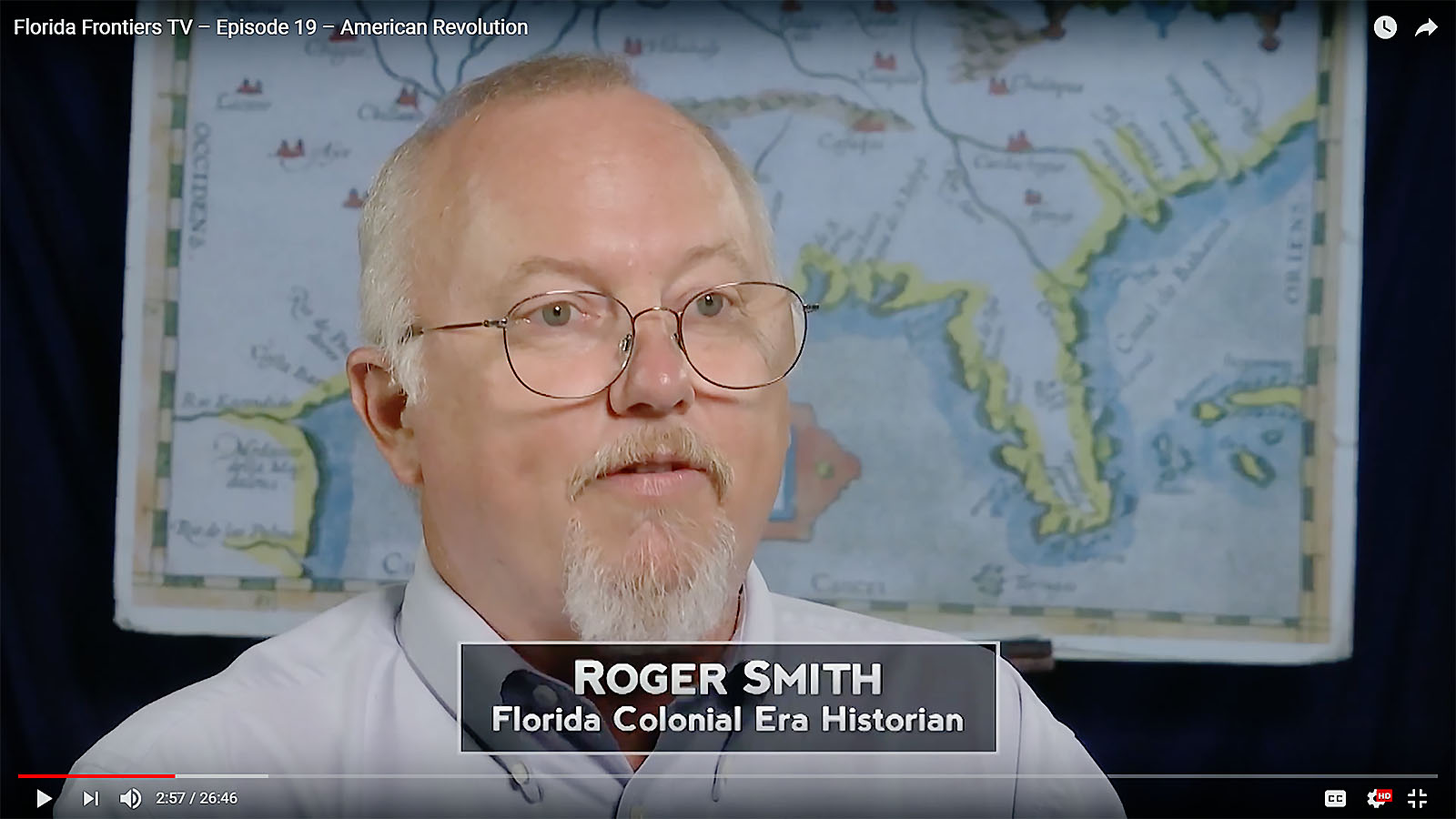
  • Rogher Smith, Colonial Era Historian

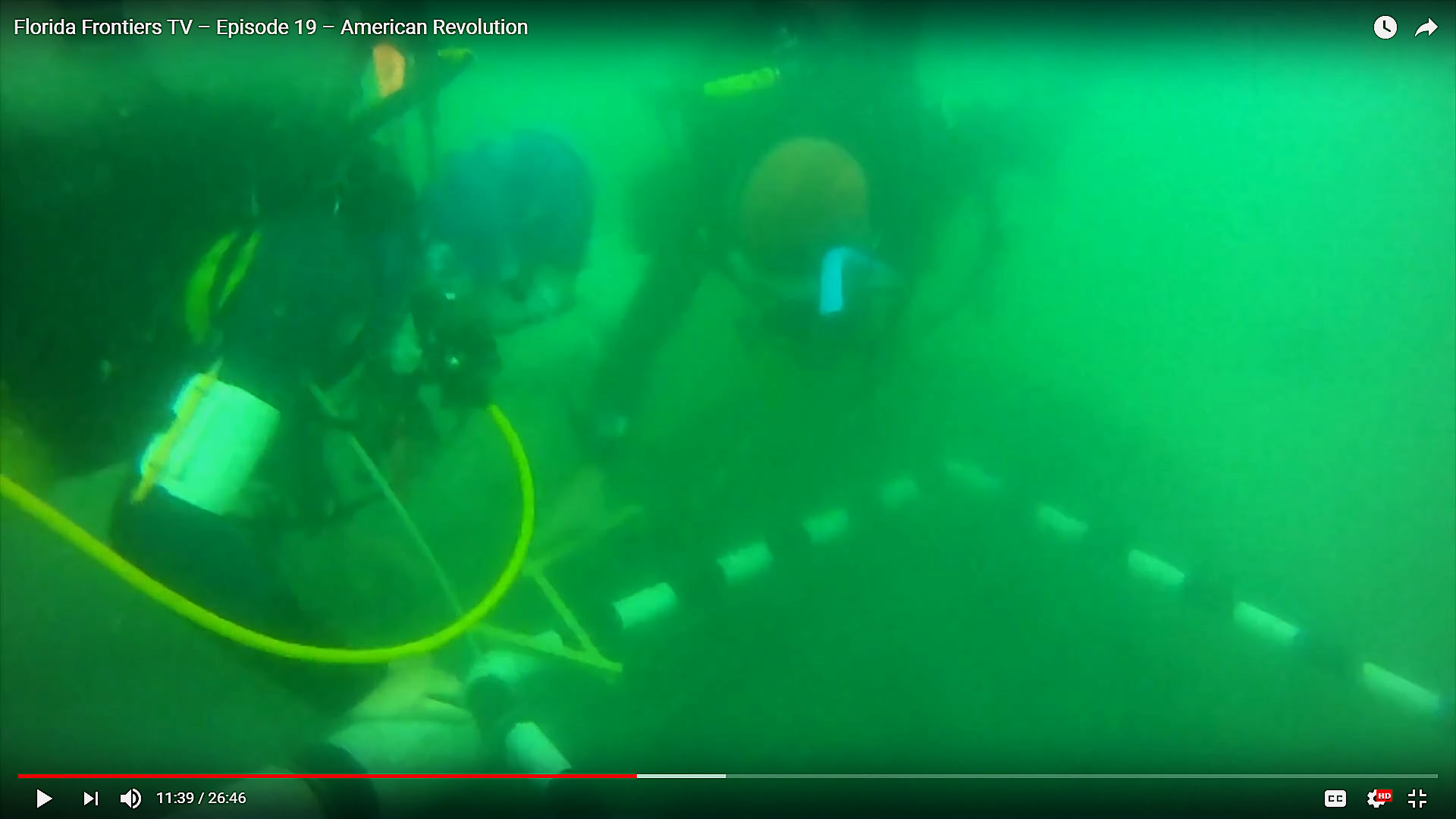
  • Ship wreck

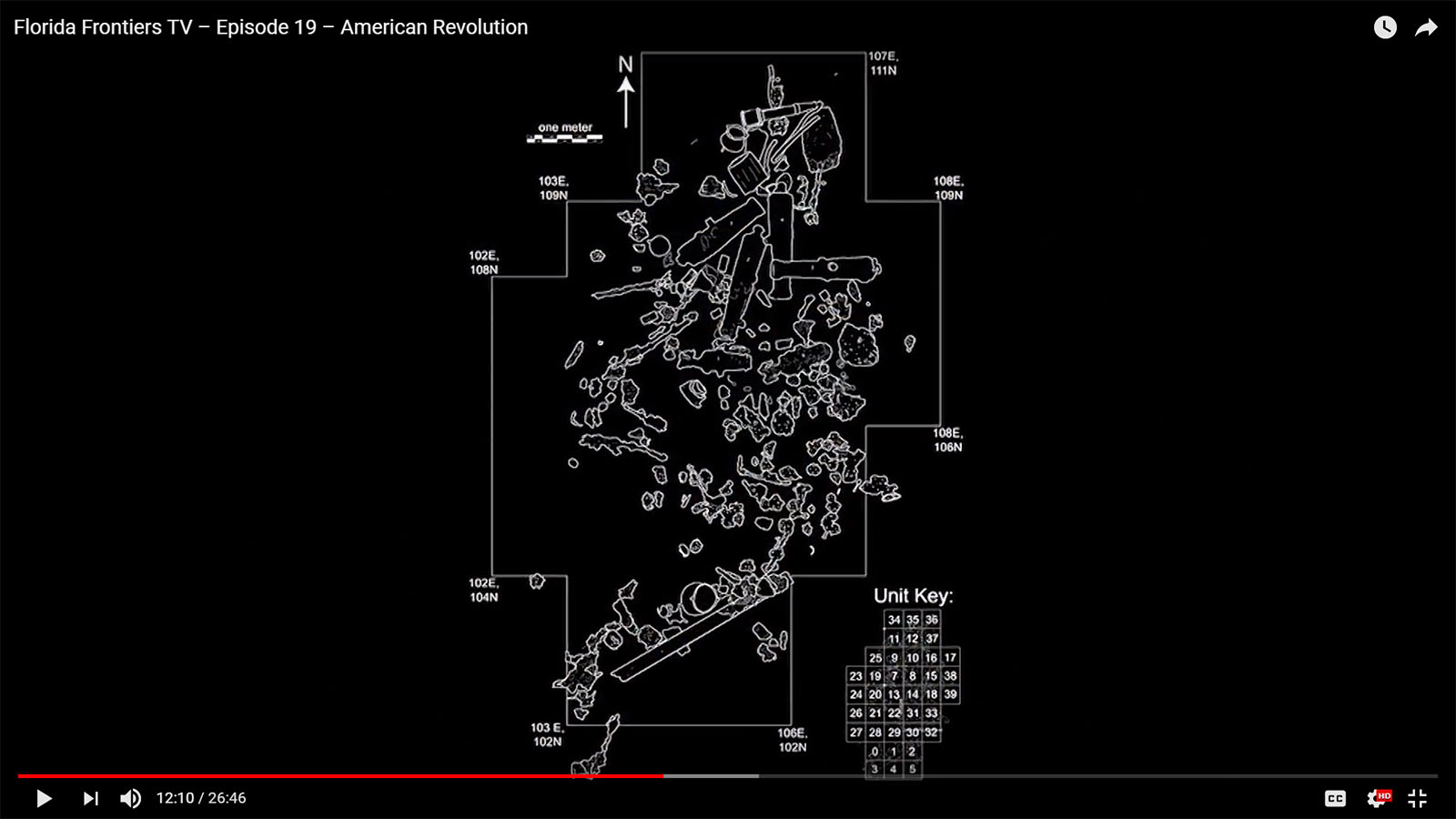
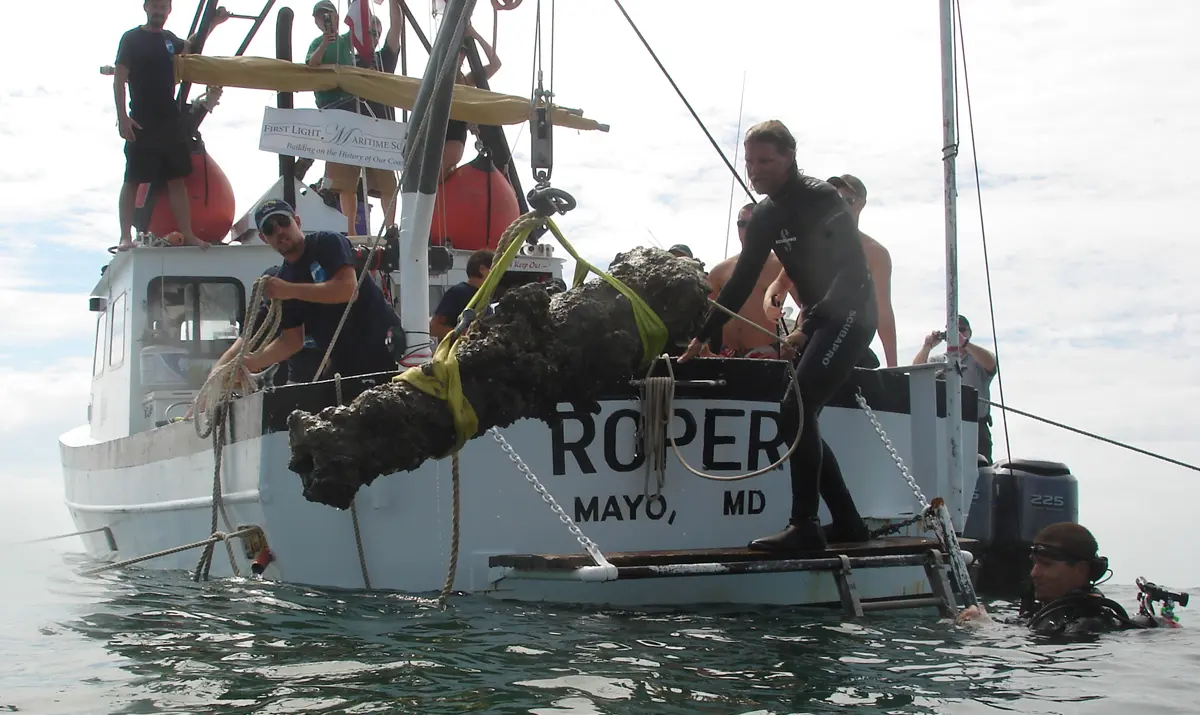
  • Divers excavate ship wreck

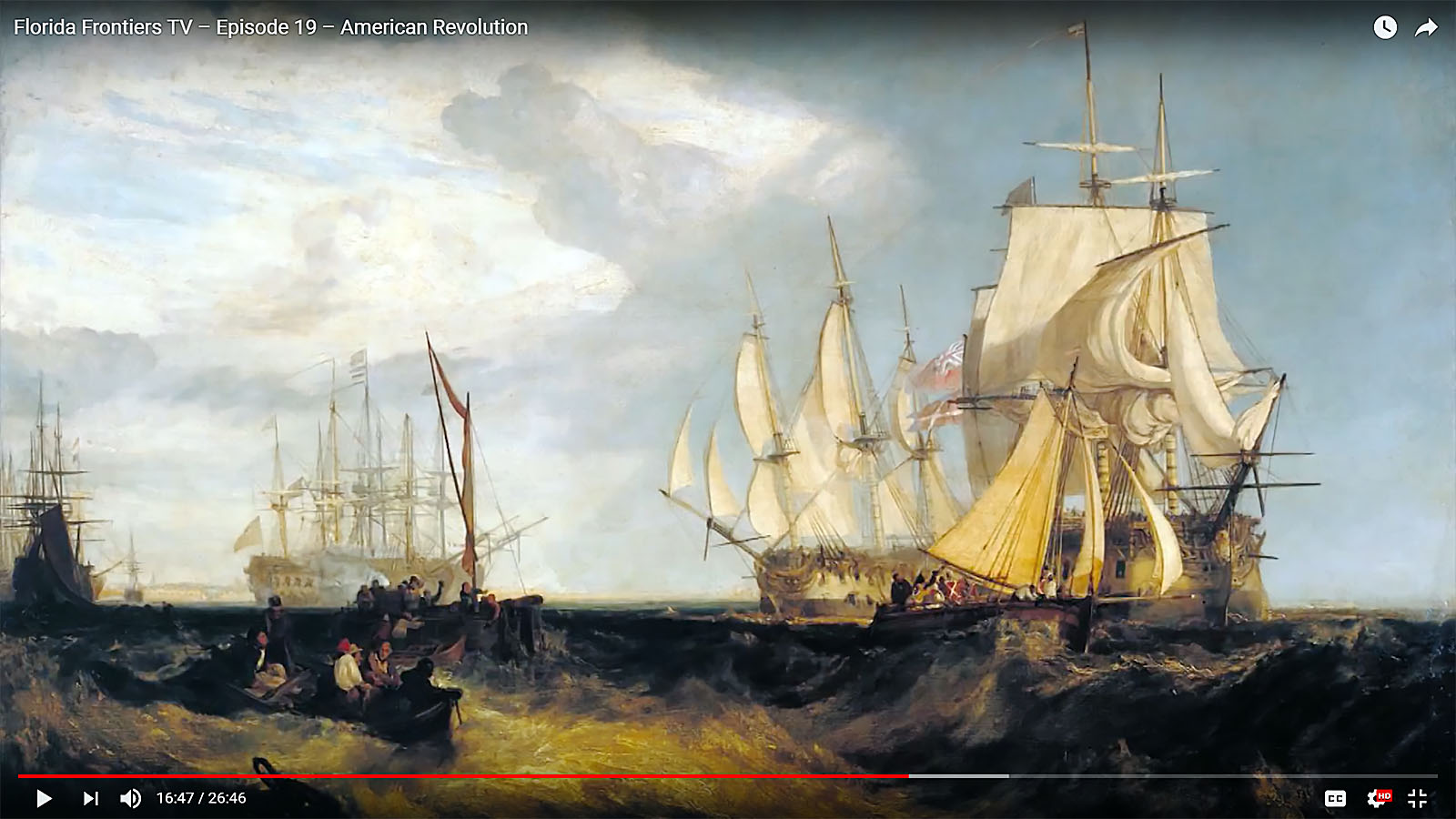
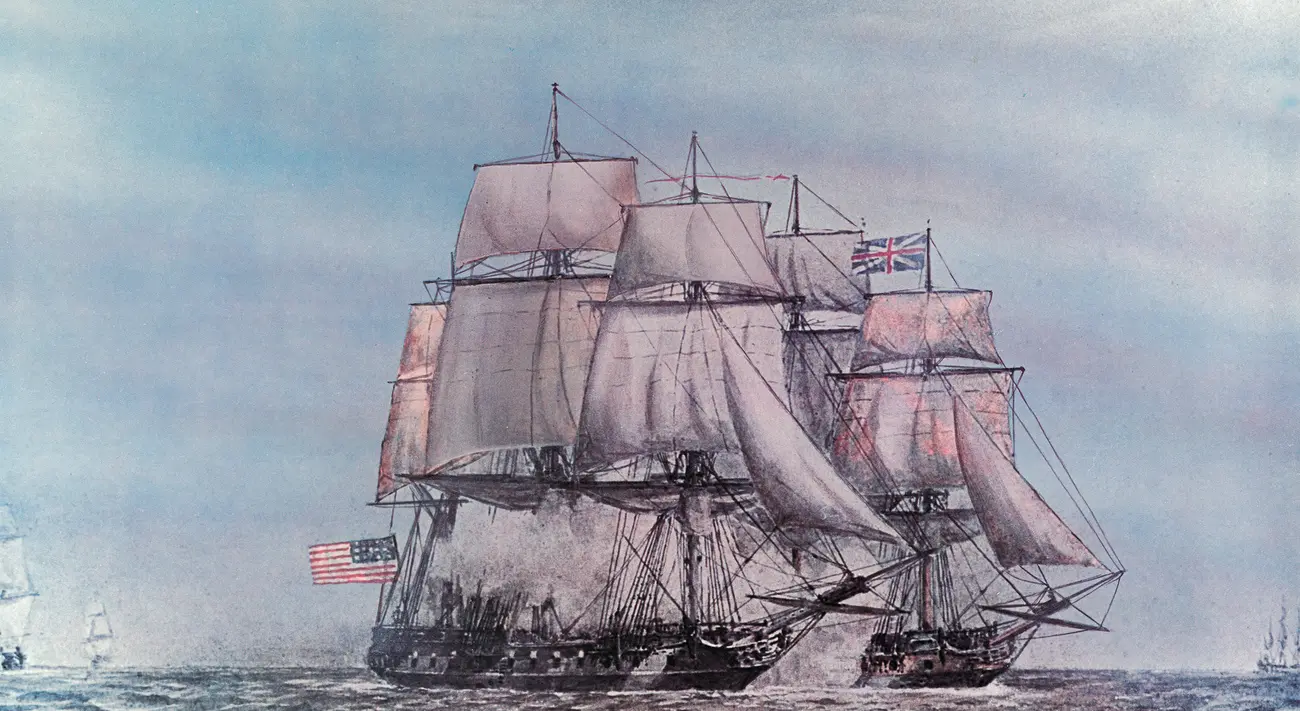
  • Painting - sailing ships

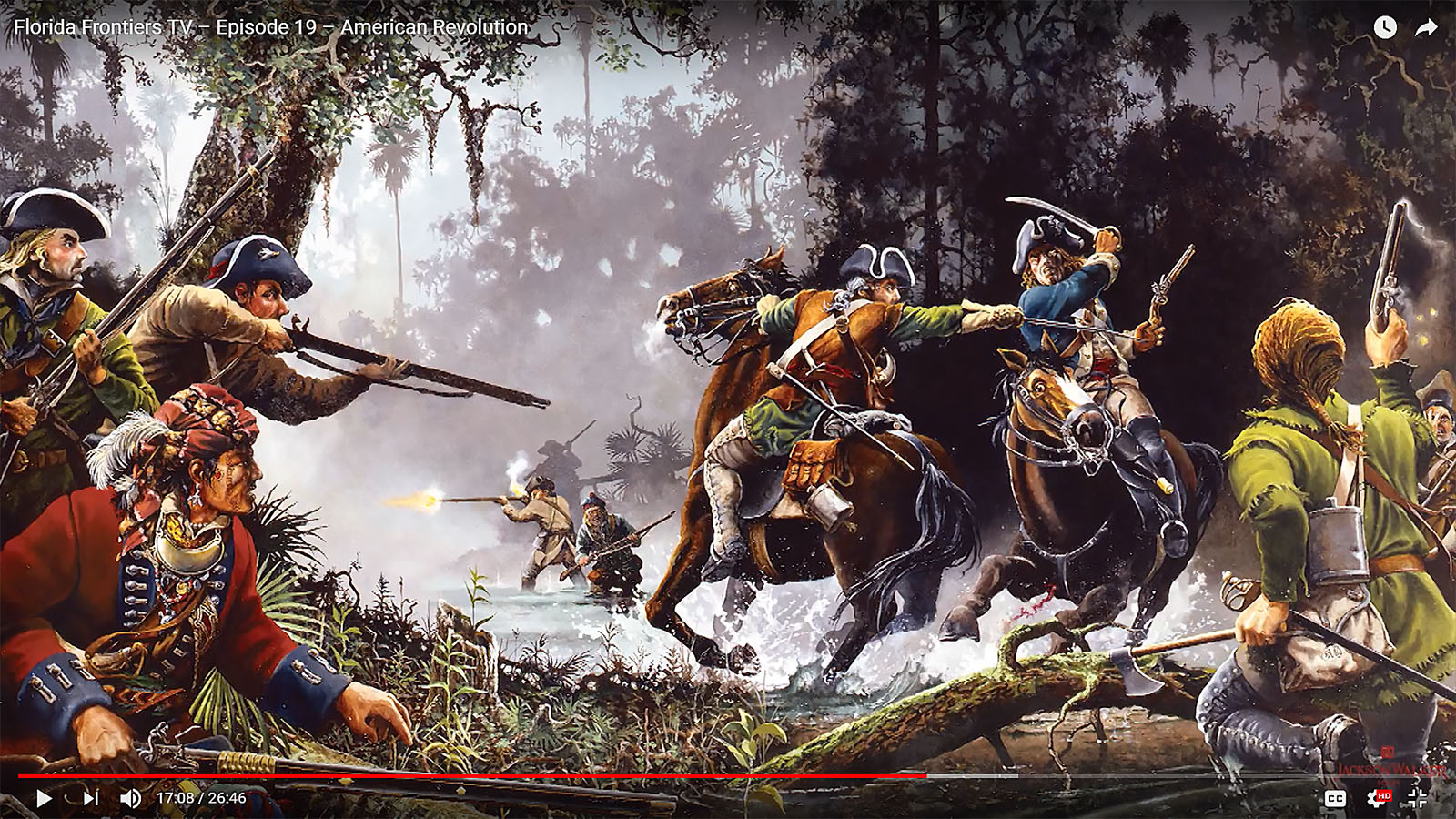
  • Painting - land battle


    The Spanish ruled Florida for two centuries before the British took control in 1763. The important role that Florida played in the American Revolution is often overlooked.


    FHS thanks our Supporters

    Article Number
    184
    relevantdate

      The British controlled Florida from 1763 to 1783, encompassing the entire American Revolution. Florida remained loyal to England and King George III throughout the conflict.

      The last naval battle of the American Revolution took place off of Cape Canaveral on March 10, 1783. Two American ships, the Alliance and the Duc de Lauzun, were on a mission to bring 72,000 Spanish silver dollars from Cuba to the American colonies to pay the Continental soldiers.

      The American ships were intercepted by three British ships, the Alarm, the Sybil, and the Tobago at Cape Canaveral.

      “I think in my article I refer to it as a two-ship treasure fleet on a secret mission to secure funding to pay the American soldiers that had been pretty much languishing for almost two years without pay in upstate New York and other places throughout the colonies,” says Brevard County Historical Commissioner Molly Thomas, who has written a series of three articles about the battle for the most recent issues of the Indian River Journal.

      As the American ships carrying much needed funds for the Continental Army met with the British ships determined to stop them, one ship from each side took the lead in battle.

      “Basically, you had two ships sailing north, and you had three ships sailing south,” says Thomas. “The ships heading north were the Americans, and the three sailing south were the British. Only the Alliance and the Sybil really engaged. The other two (British ships) the Tobago and the Alarm kind of lingered back a little bit, and didn’t get involved in the fight. The Duc de Lauzun just did its best to stay out of it because it couldn’t keep up with any of them.”

      The HMS Sybil was under the command of James Vashon, and the USS Alliance was under the command of John Barry.

      Vashon had received intelligence that the Duc de Lauzun was carrying money from Cuba. It was also the weaker of the two American ships, having removed most of her cannons and ammunition to lighten the load, to try to be faster.

      “The Sybil started to go after the Duc,” says Thomas.

      Barry saw an opportunity to position the Alliance between the Sybil and the Duc de Lauzun.

      “So that’s when the actual fight started.”

      Robert Morris of the Continental Congress was the mastermind of the secret plan to bring Spanish money from Cuba to fund the American Revolution. His plan led to the last naval battle of the war.

      “He was the chief financier for a lot of things to do with the military and he was also what they called the Agent of Marine, which is basically like the Secretary of the Navy now,” says Thomas. “He was a self-made shipping mogul, so he had a lot of connections both in buying and selling ships. He actually purchased the Duc de Lauzun himself, and he also had a lot of access just in networking with people in other ports. So he was able to coordinate them going down to Havana to secure this money from a French financier.”

      Ironically, the Treaty of Paris was signed more than a month before the last naval battle of the American Revolution occurred. No one in the Americas knew that the war was over, because word had not yet arrived from Europe. That knowledge may not have stopped the secret mission to Cuba, because America really needed the money.

      “The Battle of Yorktown had already happened,” says Thomas. “Everything had stopped for the most part as far as hostilities went, but they wouldn’t disband the army. Despite all the many letters that George Washington had written, they refused to disband it because they didn’t actually believe that they were going to come to any terms. So, for that two year window after Yorktown and then this battle, the soldiers were not paid. They didn’t have the money to pay them.”

      The Americans won the last naval battle of the American Revolution, and the mission to bring funds back from Cuba was successful.

      Following the war, Florida would return to Spanish control in 1783, until becoming a United States Territory in 1821. Florida became a state in 1845.

      PDF file(s)
      Article Number
      170
      relevantdate

        Every Fourth of July, Floridians celebrate Independence Day with cookouts, hometown parades, and of course, fireworks as America’s victory over the British in the American Revolution is commemorated.

        Not all American colonists supported the war, though. Many remained dedicated to King George III and England. As the American Revolution progressed, these Loyalists became refugees and were forced to flee the colonies.

        From 1763 to 1783, Florida remained under British control; so many Loyalists came here from the American colonies to the north.

        On December 17, 1782, as the end of the American Revolution approached, 16 ships left Charleston, South Carolina bound for the Loyalist port of St. Augustine, Florida. The ships carried hundreds of people, civilian as well as military.

        Just before the ships could make port in St. Augustine, all 16 were lost on December 31, 1782.

        Chuck Meide, director of the Lighthouse Archaeological Maritime Program (LAMP), was determined to find the Loyalist ships that were lost off the coast of St. Augustine in a violent New Year’s Eve storm.

        “The first step is really to try to look at the old historic maps and figure out how the landscape has changed,” Meide says, adding that the St. Augustine inlet “was very notorious for being dangerous for ships and for changing a lot. Every time a storm would come, the channels would shift around. That’s why we have so many shipwrecks, because of the shoals.”

        Today, modern engineering keeps the inlet in place, but historic maps show how the location of the inlet has shifted over time. Meide determined that in the late 1700s, the inlet was about 3 miles south of its present location. That’s where he decided to look for the Loyalist shipwrecks.

        Meide and his team used high-tech equipment such as a magnetometer to search for objects made of metal, and a side-scan sonar that produces an acoustic image of the ocean floor.

        “Basically, it’s like we’re mowing the lawn,” Meide says. “We’re going back and forth and covering an area that we feel is high probability to find shipwreck sites, and it works.”

        When the equipment indicated that a shipwreck might be located at a particular spot, it was time for Meide to go diving. He says the conditions were difficult to work in because it was “black as midnight down there” and communication with the other archaeologists was impossible. “Imagine if you were doing archaeology on land, gagged and blindfolded.”

        Meide was working alone in the dark water when he made the first discovery of the expedition. The magnetometer had indicated the presence of metal, so Meide was working with a ten foot pipe jetting water to clear away sand. At first he didn’t feel anything unusual. After a few times sinking the pipe “to the hilt,” Meide hit something hard.

        In quick succession, Meide uncovered ballast stones that were common in colonial era sailing ships, an unidentifiable man-made iron object, and a wooden plank.

        “Now my heart’s beating pretty fast,” Meide says. “The next thing I found really sealed the deal. It was another large, concreted object. It was round, it was hollow. I felt a rim and could feel inside and I realized we had a big cooking pot or a cauldron. I even felt one of the three legs on the bottom. So that suggested colonial shipwreck.”

        That first series of discoveries was in August 2009, and the excavation has continued every summer since.

        Subsequent discoveries helped to confirm that the shipwreck was from the colonial period, from the late 1800s, and more specifically that it was carrying British Loyalists. Meide’s team uncovered lead shot, buckles, buttons, a wine glass base, and other objects.

        Perhaps the most definitive artifact found was a canon marked with the year 1780.

        When the American Revolution ended in 1783, the British period was over and Florida once again became property of the Spanish. Florida became an American Territory in 1821, and was named a state in 1845.

        As citizens of the United States, Floridians would celebrate Independence Day until 1861, when the state seceded from the Union. After Florida became part of the United States again in 1868, Fourth of July celebrations resumed and continue today.

        PDF file(s)
        Article Number
        135
        relevantdate

          The importance of Florida in early American history is often overlooked.

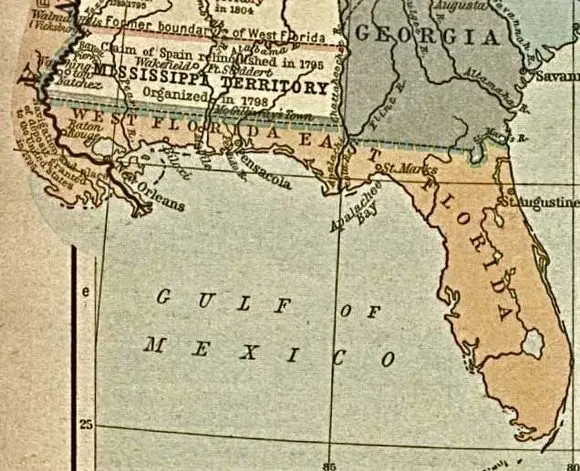
          The so-called “thirteen original colonies” that would lead to the creation of the United States exclude the fourteenth and fifteenth colonies of East Florida and West Florida.

          St. Augustine, Florida was an active city for more than four decades before the English established a settlement at Jamestown, Virginia in 1607.

          The Spanish gave Florida its name in 1513, and established the first continuously occupied European settlement in what would become the United States in 1565. After two centuries under Spanish occupation, the British took control of Florida in 1763.

          The British separated the area into East Florida, with its capital in St. Augustine, and West Florida, with its capital in Pensacola. Under British rule, East Florida consisted of what is the modern boundary of the state, east of the Apalachicola River. West Florida included the modern Panhandle of Florida, as well as parts of what are now Louisiana, Mississippi, and Alabama.

          Roger Smith focused his doctoral studies at the University of Florida on the topic of Florida in the American Revolution.

          “On August 11, 1776, when news of the Declaration of Independence became known in St. Augustine, they became so incensed that they made effigies of John Hancock and Samuel Adams and hung them in the trees in St. Augustine Plaza and set them on fire,” Smith says. “This colony was adamantly loyal when the war broke out.”

          At the start of the American Revolution in 1776, East Florida and West Florida were the only two southern colonies that remained loyal to King George III. This was a problem for the British, as the southern colonies in North America supplied food, clothing, and other supplies to their sugar plantations in the Caribbean.

          “We always look at the American Revolution from an American perspective, with thirteen colonies from New Hampshire down to Georgia,” says Smith. “When you look at the war from a British perspective, you realize that we’re not talking about thirteen colonies, we’re talking about thirty-three colonies that they had to be concerned with, from Nova Scotia down to Grenada. Half of those colonies, sixteen of them, were in the Caribbean.”

          During the American Revolution, approximately sixty percent of the British military was stationed in the Caribbean, to protect sugar production. In the eighteenth century, sugar was as important to the global economy as oil is today.

          The Floridas were located right between the British sugar plantations in the Caribbean, and the northern colonial revolt. The British launched attacks on the American rebellion from both St. Augustine in East Florida, and Pensacola in West Florida.

          St. Augustine was particularly important to the British, as it had the only stone fortresses south of the Chesapeake Bay. The British had repeatedly attacked the Castillo de San Marcos when it was under Spanish control, and realized the strength of its coquina walls.

          “They saw East and West Florida as barriers to sedition from rolling out into the Caribbean, and then launching pads for regaining the American south,” Smith says.

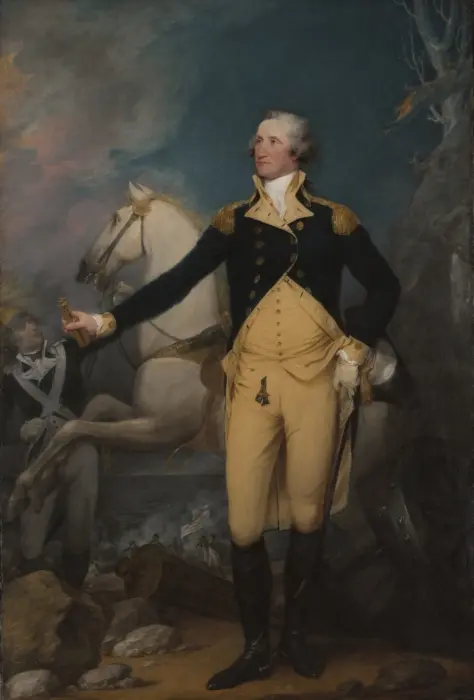
          Although the importance of Florida in the American Revolution is usually ignored in history books, George Washington was well aware of the area’s strategic significance. Washington wrote more than eighty letters about the Florida colonies to the Continental Congress and his generals, and he authorized five separate invasions of East Florida between 1776 and 1780.

          During a series of battles from 1779 to 1781, Spain was able to recapture West Florida from the British. When the American Revolution ended in 1783, England returned East Florida to the Spanish to keep control of Gibraltar.

          Florida would become a United States Territory in 1821, and was named a state in 1845. During the Civil War, Florida seceded from the Union, which is probably why its role in the American Revolution has been minimized.

          It wasn’t until the 1880s that doctoral degrees in History were available in the United States, and early American historians tended to write from a northern perspective. “They took the opportunity to get their own little bit of vengeance on the south, and they basically wrote the southern colonies out of the first five years of the American Revolution,” Smith says.

          PDF file(s)
          Article Number
          23
          relevantdate

            Every Fourth of July, Floridians celebrate Independence Day with cookouts, hometown parades, and of course, fireworks as America’s victory over the British in the American Revolution is commemorated.

            Not all American colonists supported the war, though. Many remained dedicated to King George III and England. As the American Revolution progressed, these Loyalists became refugees and were forced to flee the colonies.

            From 1763 to 1783, Florida remained under British control; so many Loyalists came here from the American colonies to the north.

            On December 17, 1782, as the end of the American Revolution approached, 16 ships left Charleston, South Carolina bound for the Loyalist port of St. Augustine, Florida. The ships carried hundreds of people, civilian as well as military.

            Just before the ships could make port in St. Augustine, all 16 were lost on December 31, 1782.

            Chuck Meide, director of the Lighthouse Archaeological Maritime Program (LAMP), was determined to find the Loyalist ships that were lost off the coast of St. Augustine in a violent New Year’s Eve storm.

            “The first step is really to try to look at the old historic maps and figure out how the landscape has changed,” Meide says, adding that the St. Augustine inlet “was very notorious for being dangerous for ships and for changing a lot. Every time a storm would come, the channels would shift around. That’s why we have so many shipwrecks, because of the shoals.”

            Today, modern engineering keeps the inlet in place, but historic maps show how the location of the inlet has shifted over time. Meide determined that in the late 1700s, the inlet was about 3 miles south of its present location. That’s where he decided to look for the Loyalist shipwrecks.

            Meide and his team used high-tech equipment such as a magnetometer to search for objects made of metal, and a side-scan sonar that produces an acoustic image of the ocean floor.

            “Basically, it’s like we’re mowing the lawn,” Meide says. “We’re going back and forth and covering an area that we feel is high probability to find shipwreck sites, and it works.”

            When the equipment indicated that a shipwreck might be located at a particular spot, it was time for Chuck Meide to go diving. He says the conditions were difficult to work in because it was “black as midnight down there” and communication with the other archaeologists was impossible. “Imagine if you were doing archaeology on land, gagged and blindfolded.”

            Chuck Meide was working alone in the dark water when he made the first discovery of the expedition. The magnetometer had indicated the presence of metal, so Meide was working with a ten foot pipe jetting water to clear away sand. At first he didn’t feel anything unusual. After a few times sinking the pipe “to the hilt,” Meide hit something hard.

            In quick succession, Meide uncovered ballast stones that were common in colonial era sailing ships, an unidentifiable man-made iron object, and a wooden plank.

            “Now my heart’s beating pretty fast,” Meide says. “The next thing I found really sealed the deal. It was another large, concreted object. It was round, it was hollow. I felt a rim and could feel inside and I realized we had a big cooking pot or a cauldron. I even felt one of the three legs on the bottom. So that suggested colonial shipwreck.”

            That first series of discoveries was in August 2009, and the excavation has continued every summer since.

            Subsequent discoveries helped to confirm that the shipwreck was from the colonial period, from the late 1800s, and more specifically that it was carrying British Loyalists. Meide’s team uncovered lead shot, buckles, buttons, a wine glass base, and other objects.

            Perhaps the most definitive artifact found was a canon marked with the year 1780.

            When the American Revolution ended in 1783, the British period was over and Florida once again became property of the Spanish. Florida became an American Territory in 1821, and was named a state in 1845.

            As citizens of the United States, Floridians would celebrate Independence Day until 1861, when the state seceded from the Union. After Florida became part of the United States again in 1868, Fourth of July celebrations resumed and continue today.

            Dr. Ben Brotemarkle is executive director of the Florida Historical Society and host of the radio program “Florida Frontiers,” broadcast locally on 90.7 WMFE Thursday evenings at 6:30 and Sunday afternoons at 4:00, and on 89.5 WFIT Sunday mornings at 7:00. The show can be heard online at myfloridahistory.org.

            Photo caption info: Underwater archaeologist Chuck Meide excavates a 1780 canon from a British Loyalist shipwreck off the coast of St. Augustine.
            PDF file(s)