Florida Frontiers

A Tag for nodes that are relevant to Florida Frontiers.   For example if an artilce is about Florida Frontiers and you would like a 'View' to sorty by Tag criteria for it... us it.

Article Number
170
relevantdate

    Every Fourth of July, Floridians celebrate Independence Day with cookouts, hometown parades, and of course, fireworks as America’s victory over the British in the American Revolution is commemorated.

    Not all American colonists supported the war, though. Many remained dedicated to King George III and England. As the American Revolution progressed, these Loyalists became refugees and were forced to flee the colonies.

    From 1763 to 1783, Florida remained under British control; so many Loyalists came here from the American colonies to the north.

    On December 17, 1782, as the end of the American Revolution approached, 16 ships left Charleston, South Carolina bound for the Loyalist port of St. Augustine, Florida. The ships carried hundreds of people, civilian as well as military.

    Just before the ships could make port in St. Augustine, all 16 were lost on December 31, 1782.

    Chuck Meide, director of the Lighthouse Archaeological Maritime Program (LAMP), was determined to find the Loyalist ships that were lost off the coast of St. Augustine in a violent New Year’s Eve storm.

    “The first step is really to try to look at the old historic maps and figure out how the landscape has changed,” Meide says, adding that the St. Augustine inlet “was very notorious for being dangerous for ships and for changing a lot. Every time a storm would come, the channels would shift around. That’s why we have so many shipwrecks, because of the shoals.”

    Today, modern engineering keeps the inlet in place, but historic maps show how the location of the inlet has shifted over time. Meide determined that in the late 1700s, the inlet was about 3 miles south of its present location. That’s where he decided to look for the Loyalist shipwrecks.

    Meide and his team used high-tech equipment such as a magnetometer to search for objects made of metal, and a side-scan sonar that produces an acoustic image of the ocean floor.

    “Basically, it’s like we’re mowing the lawn,” Meide says. “We’re going back and forth and covering an area that we feel is high probability to find shipwreck sites, and it works.”

    When the equipment indicated that a shipwreck might be located at a particular spot, it was time for Meide to go diving. He says the conditions were difficult to work in because it was “black as midnight down there” and communication with the other archaeologists was impossible. “Imagine if you were doing archaeology on land, gagged and blindfolded.”

    Meide was working alone in the dark water when he made the first discovery of the expedition. The magnetometer had indicated the presence of metal, so Meide was working with a ten foot pipe jetting water to clear away sand. At first he didn’t feel anything unusual. After a few times sinking the pipe “to the hilt,” Meide hit something hard.

    In quick succession, Meide uncovered ballast stones that were common in colonial era sailing ships, an unidentifiable man-made iron object, and a wooden plank.

    “Now my heart’s beating pretty fast,” Meide says. “The next thing I found really sealed the deal. It was another large, concreted object. It was round, it was hollow. I felt a rim and could feel inside and I realized we had a big cooking pot or a cauldron. I even felt one of the three legs on the bottom. So that suggested colonial shipwreck.”

    That first series of discoveries was in August 2009, and the excavation has continued every summer since.

    Subsequent discoveries helped to confirm that the shipwreck was from the colonial period, from the late 1800s, and more specifically that it was carrying British Loyalists. Meide’s team uncovered lead shot, buckles, buttons, a wine glass base, and other objects.

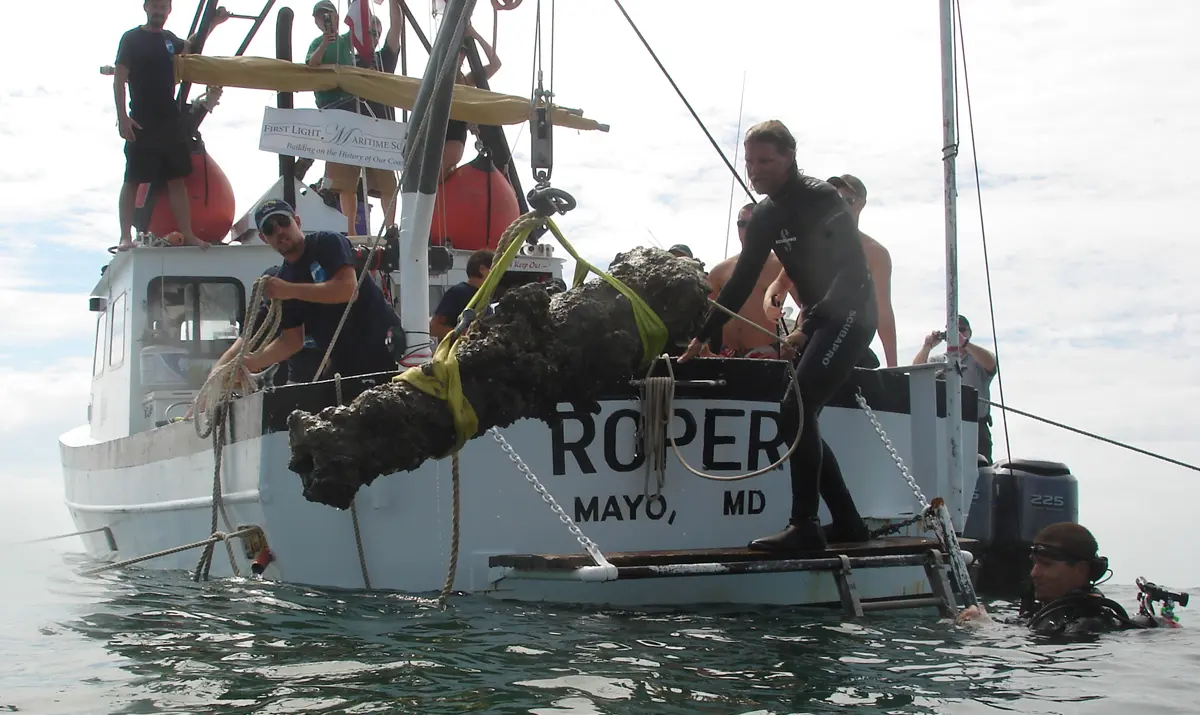
    Perhaps the most definitive artifact found was a canon marked with the year 1780.

    When the American Revolution ended in 1783, the British period was over and Florida once again became property of the Spanish. Florida became an American Territory in 1821, and was named a state in 1845.

    As citizens of the United States, Floridians would celebrate Independence Day until 1861, when the state seceded from the Union. After Florida became part of the United States again in 1868, Fourth of July celebrations resumed and continue today.
    PDF file(s)
    Article Number
    169
    relevantdate

      The Cross-Gulf Travel Theory proposes the idea that the ancient Maya came to southwest Florida when devastating droughts occurred on the Yucatán Peninsula of Mexico as early as the ninth century, and that they ended up around Lake Okeechobee.

      The Maya may have believed that they were following their god to Florida.

      Images of the Oculate Being can be traced in ancient cultures from South America to Mexico. Different cultures separated by distance and time develop a very similar deity who is usually pictured flying, has what art historians call “goggle eyes,” and is associated with agriculture, particularly the growing of corn.

      Sandra Starr, former senior researcher at the Smithsonian Institution National Museum of the American Indian, is the first to recognize that the different ancient deities of South and Central America all share the same mythology.

      “It’s always a surprise to see that the large maize corn cultures all created a deity for what kept them alive, the corn and maize,” says Starr. “Even though the cultures were sometimes thousands of miles away, they envisioned this man as a separate person, but with the same legend. That’s the astounding part.”

      While the deities appear in different forms and with different names, Starr has identified visual cues that indicate that the deities share the same story.

      “Most profoundly, that he appeared out of nowhere and he went away, saying he would return,” says Starr. “So there are many things that are alike. But as you can assume, the creative people in each of these cultures were either untrained or had very little to do with each other, so they used the materials that were nearest to them. Some were all stone; some were ceramic, some were almost impossible to work with. They still expressed this deity. So, of course, it took different shapes.”

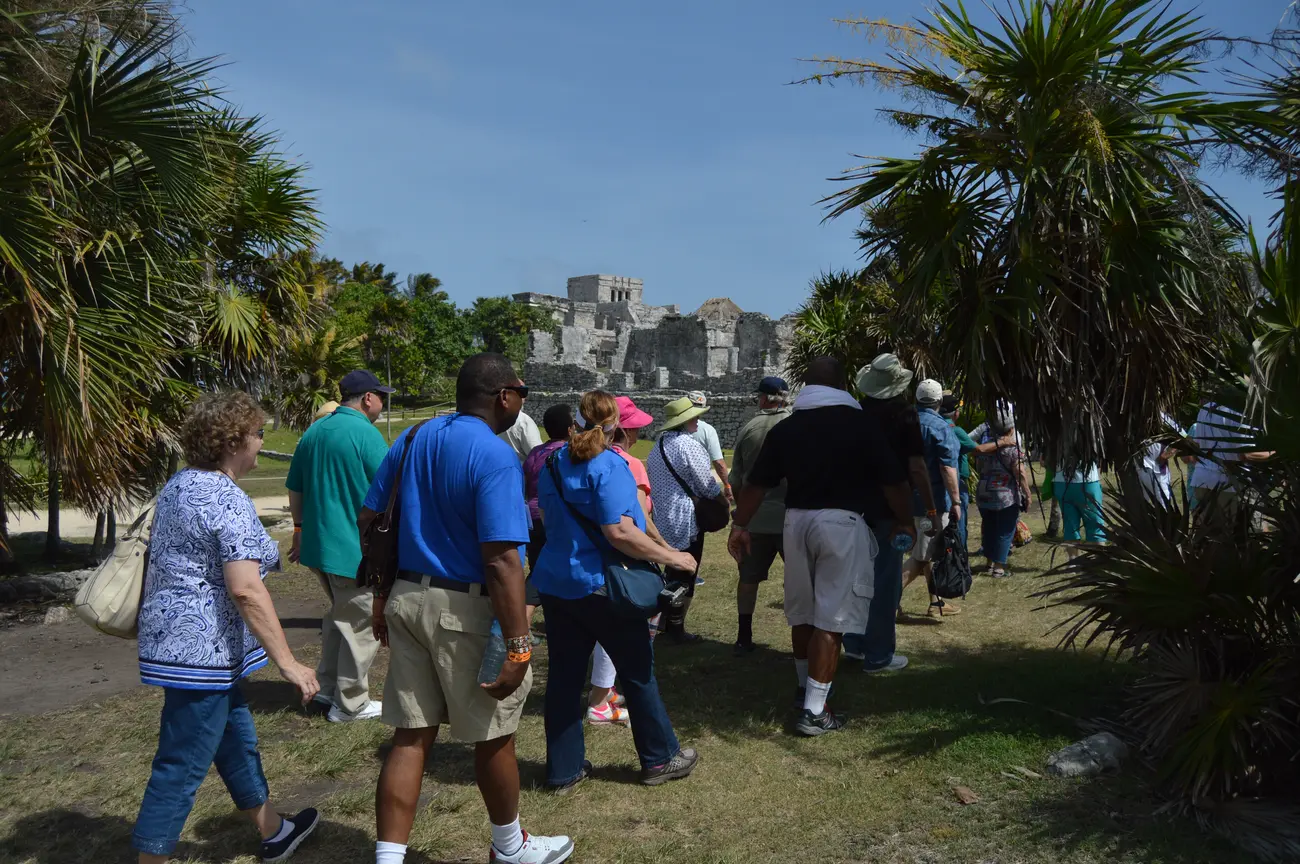
      The ancient Maya on the Yucatán Peninsula of Mexico had sophisticated cities at places such as Chichén Itzá and Tulum, where they built stone temples that endure today. The Maya would make pilgrimages to these temples.

      “You go to the temples you have built, a pyramid-like thing in most cases, to the deity of corn and maize,” Starr says. “In every case, when you follow the pilgrimage lines, and you already understand that the deity made a statement that he would return, and you are at the end of the road there in the Yucatán, and the drought was killing you all, you would, if you hypothesize yourself in the situation, you would want to find him.”

      The plausibility of the Cross-Gulf Travel Theory is supported by the fact that the ancient Maya were accomplished mariners, known for constructing very large canoes.

      “These were sailing vessels that could seat 25,” says Starr. “They were 8 or 9 feet across, and heavy duty, and had different bow and stern than the other types of pointed canoes. I think because of their mathematical genius, their ability to have orientation from the stars, these were ideal mariners.”

      The Gulf currents could have brought the Maya to southwest Florida, and they may have ended up near Lake Okeechobee.

      Starr hypothesizes that when severe drought may have driven people off the coast of the Yucatán and into the Gulf of Mexico, they would have brought gifts, and materials they would need when they reached land.

      The Maya would have brought maize to grow, and archaeologist William Sears, who died in 1996, found a rare abundance of maize corn pollen at the Fort Center Archaeological Site near Lake Okeechobee. The site also contains a crescent shaped mound most closely associated with the Maya.

      The crested caracara bird was important to Mayan royalty. The bird is found in South and Central America, but is not common in Florida.

      “When you start to map where those birds are, I was astonished and thrilled to find that there was a whole section in the center of Florida, around Lake Okeechobee, where there are some of these crested caracaras,” says Starr. “They don’t fly much; they wouldn’t have migrated, so how did they get there?”

      While the Cross-Gulf Travel Theory is not yet generally accepted as fact among anthropologists, evidence supporting the idea continues to be accumulated.

      PDF file(s)
      Article Number
      168
      relevantdate

        The Apollo 11 spacecraft launched from Cape Canaveral on July 16, 1969. Four days later, humans walked on the surface of the moon for the first time.

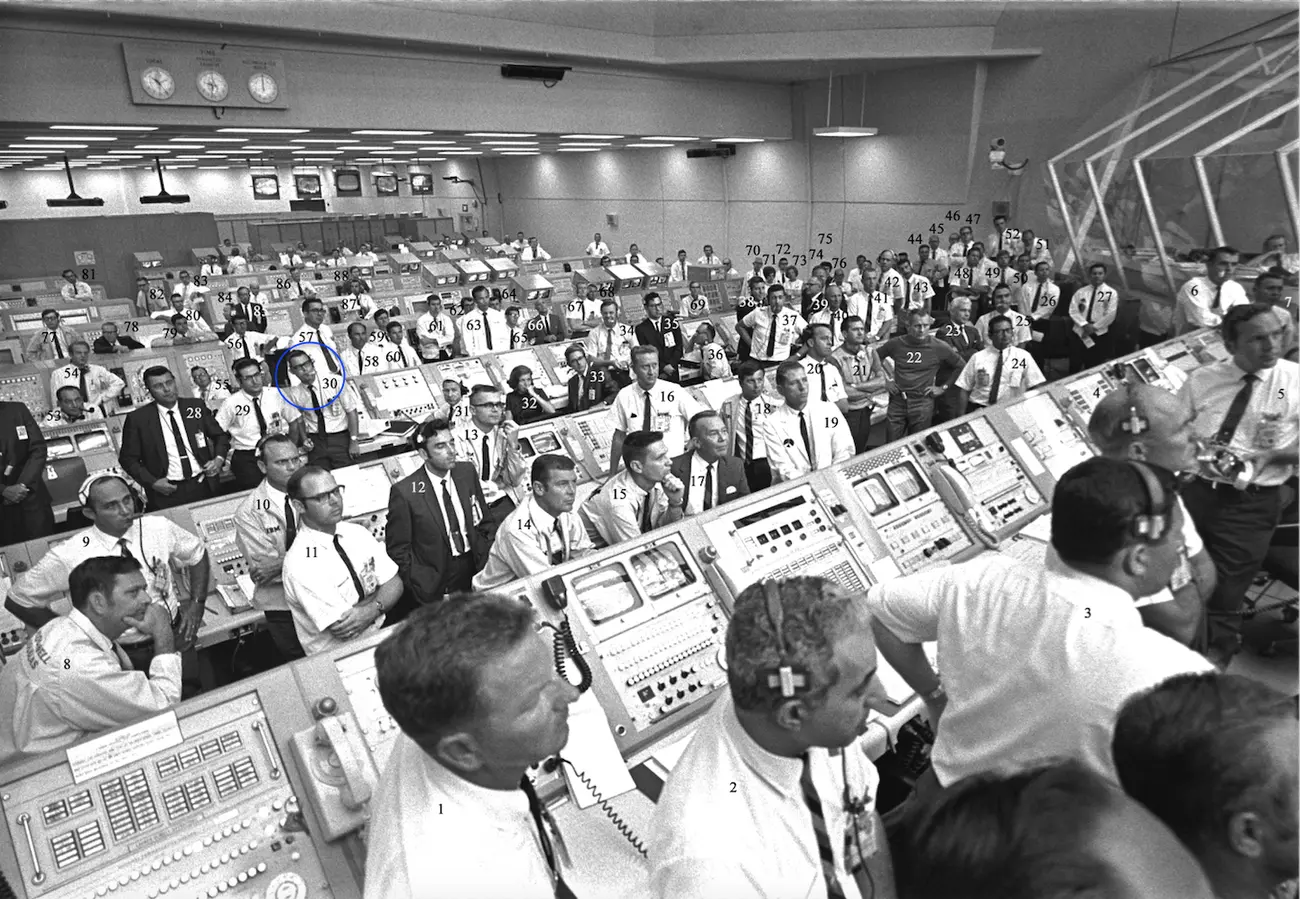
        A team of thousands was required to make that lunar mission a success. Dr. Al Koller was a member of that team, working in the Firing Room.

        “I served as the remote eyes for the top management of NASA and the stage contractors for the operations at the launch pad three miles away,” says Koller. “We did that using sixty-one video cameras, all black and white, mounted on the pad service and at all key levels of the 363 foot-tall launch tower. My job was to direct the camera crew by selecting the right cameras to keep track of the key technical work underway and to provide the best possible video views of any troubleshooting taking place.”

        Koller was still in high school when his family moved to Titusville in 1958. He started working in the aerospace industry at the age of 17, when he had the opportunity to work with rocket pioneer Wernher von Braun.

        “My father was involved in aviation and space from the early days, and when we moved to Florida I was in my senior year of high school, and they had a science fair,” says Koller. “I placed well in that, and out of that came a job with the Army Ballistic Missile Agency, which was the group that had a launch center here, essentially for von Braun’s rocket team.”

        The next year, the rocket operation was transferred to NASA, and Koller along with it. After returning from college, Koller worked his way up from being a NASA technician to being a staff engineer. His 32 year career with NASA included work on both the Apollo and the Space Shuttle programs.

        “I got to lead the group that wrote and published the environmental impact statement for the space shuttle at the cape,” says Koller. “We’re launching rockets from the middle of a wildlife refuge, one of the country’s largest and most diverse. I worked with a lot of really talented people.”

        Prior to his retirement in 2013, Koller led the creation of SpaceTEC, the National Science Foundation’s Center for Aerospace Technical Education.

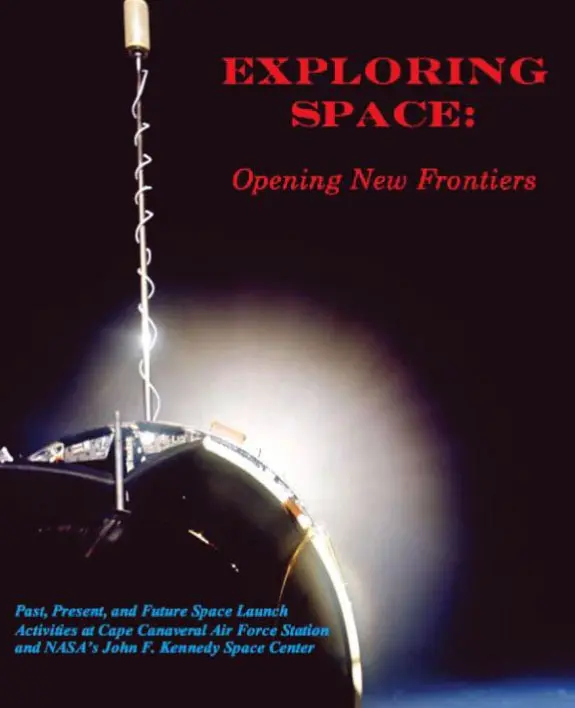
        Koller is author of the new book “Exploring Space: Opening New Frontiers,” available from amazon.com. The book explores the past, present, and future space launch activities at Cape Canaveral Air Force Station and NASA’s John F. Kennedy Space Center.

        “Coming out of World War II, we were able to bring with us the remnants of the German rocket team,” says Koller. “They came to us rather than go to the Russians, and we immediately became involved in a space race with the Russians, post war. By 1948-49, our government was looking for where it would launch from. They were already launching rockets in White Sands, New Mexico, for example. They had a base in Texas, and they were looking for how you would launch big rockets.”

        Cape Canaveral, Florida was selected as the launch site for America’s space program.

        “In our area was the Banana River Naval Air Station, so we already had land here, government land with infrastructure in place,” says Koller. “Because we’re on the east coast of Florida, we now have launch over water for a vast area. We can go downrange for thousands of miles and not overfly land. We’re on the outside of the spaceship Earth, moving at a thousand miles an hour, so if you launch from Florida, close to the equator, and you launch to the east, you already have a thousand miles an hour of orbital velocity to work from.”

        Today, independent commercial companies are partnering with the government more than ever before to move America’s space program forward.

        “What they won’t do or can’t do, the government will, and what the government doesn’t have to do, they will do for us,” says Koller. “It’s a much broader program, and I think it’s about to really blossom. People like you and I will have the chance to go into space if we want to do it. All you need to have is a lot of money. It’s coming.”

        PDF file(s)
        Article Number
        167
        relevantdate

          When Juan Ponce de León sailed into the mouth of the Miami River in 1513, he encountered a large Tequesta Indian village.

          Pedro Menéndez de Avilés attempted to convert the Tequesta to Christianity, establishing a short lived mission at the village in 1567. Another failed mission was established there in 1743. The Spanish could not persuade the Tequesta to abandon their ancient belief system.

          The native people of Florida were almost completely wiped out by unfamiliar diseases brought by the Europeans.

          “With weakened tribes, the Spanish borders of Florida were fully breached by the English who instigated Creek raids as far south as Key West, enslaving thousands of Indians for the plantations of the Carolinas and Georgia,” says archaeologist Robert S. Carr. “By 1763, when the Spanish ceded Florida to England, the Tequesta and the Keys Indians had migrated to Cuba and become extinct as a culture. The last of the Tequesta moved to villages outside of Havana.”

          In the late nineteenth and early twentieth centuries, the banks at the mouth of the Miami River were found to be covered with remnants of the Tequesta culture, including extensive shell middens, black earth middens, and at least four burial mounds.

          In the 1940s, archaeologist John M. Goggin gave the name “Glades culture” to the archeological remains found in Dade County. In the 1970s, the Granada site was excavated on one side of the mouth of the Miami River, uncovering evidence of year-round habitation by the Tequesta Indians and their ancestors.

          Today, the only Tequesta site at the mouth of the Miami River that has not been destroyed by development is the Miami Circle located at Brickell Point, across from the Granada site.

          In 1998, Robert S. Carr was conducting a routine salvage excavation of the Brickell Point site in advance of the construction of two high rise apartment buildings. Other apartment buildings from 1950 were torn down to make room for the new construction. Carr and his team uncovered Glades culture artifacts of shell, stone, bone, and pottery.

          In January 1999, the announced discovery of the Miami Circle sparked imaginations around the world.

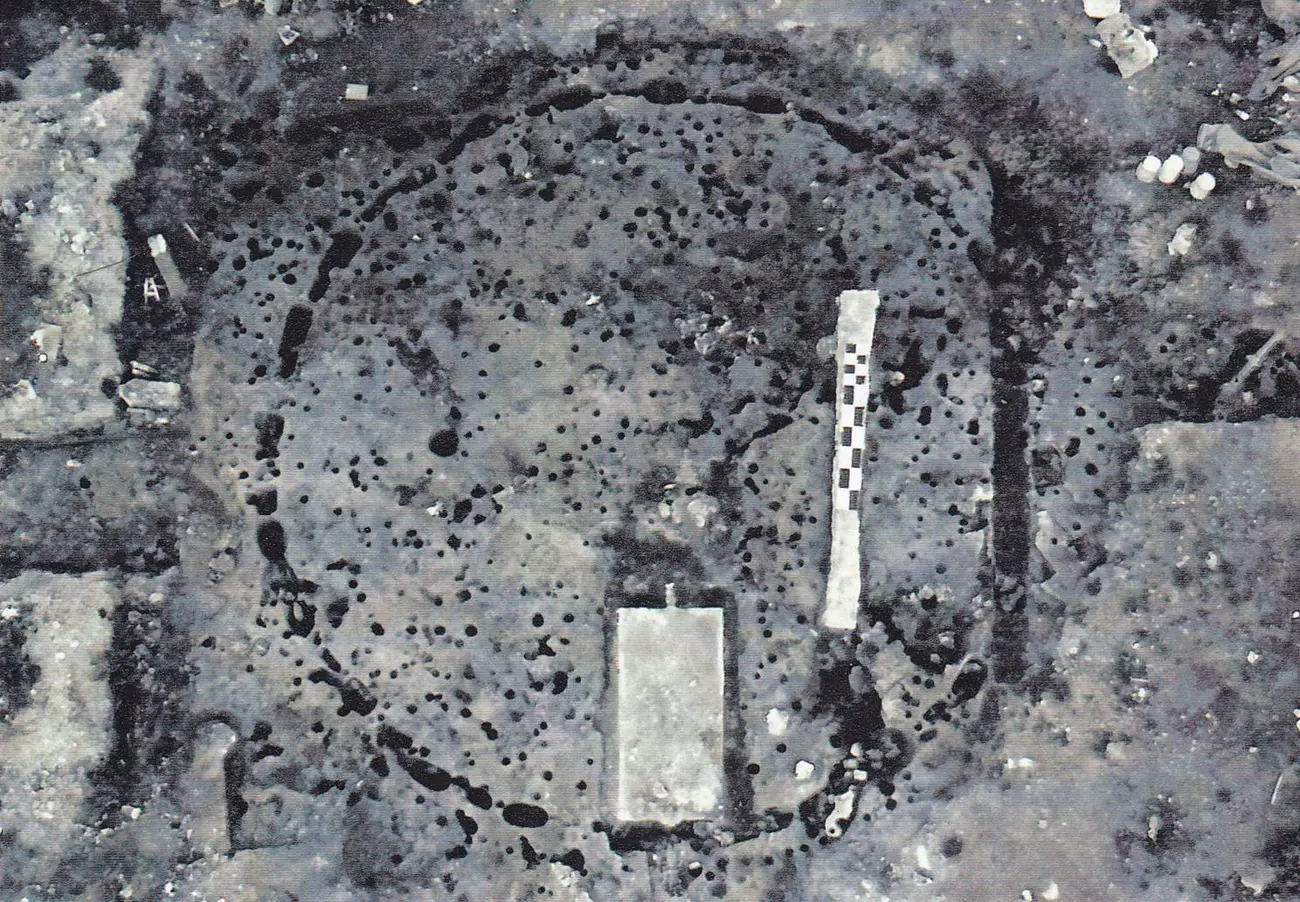
          At the Brickell Point site, archaeologists uncovered a circle, about 28 feet across, defined by a series of postholes carved into the limestone bedrock. Carr said that the Miami Circle “may be of national significance as it is believed to be the only cut-in-rock prehistoric structural footprint ever found in eastern North America.”

          Public speculation about what structure had been built on top of the Miami Circle was rampant, ranging from a Tequesta Indian Council House to an astronomical observatory constructed by transplanted Mayan people.

          While there were undoubtedly prehistoric artifacts discovered at the Brickell Point site, not everyone is convinced that the Miami Circle was one of them.

          “They don’t like me a lot in Miami,” says archaeologist Jerald T. Milanich, author of the book Handfuls of History: Stories about Florida’s Past.

          When Milanich first saw the Miami Circle, he was surprised that a rectangular septic tank was inside of it.

          “I think at that point, the research question should have been, how did that septic tank get there?” says Milanich. “Did it go with the apartments that were built in the 1940s? Did it go with one of the earlier Brickell houses that were there? Was there perhaps, a circular structure of some kind built over that septic tank?”

          Milanich found an early twentieth century postcard of Brickell Point that shows a round structure that may be over the septic tank.

          “I think what needs to be done still, to this day, is more research there, to try to answer the question of when that septic tank was put in, and what it was attached to,” says Milanich. “Clearly, that’s not a very popular idea, especially to people in Miami who worked so hard to get the government to buy the land and preserve the site.”

          The Miami Circle is now protected as public land.

          “All that’s left of this huge, complex archaeological site is that little bit that’s now preserved in the Miami Circle park area,” says Milanich. “I think that’s a good thing for the public, and certainly for our understanding of the past.”

          PDF file(s)
          Article Number
          166
          relevantdate

            Today, parking in downtown Cocoa can be at a premium when services or special events are held at St. Mark’s Episcopal Church.

            When the church was first built in 1886, many in the congregation would arrive by water, mooring their boats on the banks of the Indian River. It’s just a few steps from the river’s edge to the front door of the church. Others would walk to church from homes along the river.

            The first meeting of what would become St. Mark’s Episcopal Church was held on June 2, 1878. The Right Reverend John Freeman Young, Bishop of Florida, and Dr. William H. Carter of Holy Cross Church of Sanford, gathered the founding members of the church at the home of A.L. Hatch in Rockledge. Dr. Carter later moved to Tallahassee, but services continued to be held by various priests.

            The church was originally called St. Michael’s, in recognition of St. Michael the Archangel.

            In 1884, Mrs. Lucy Boardman, a frequent visitor to Cocoa and Melbourne from her winter residence in Sanford, donated funds to Bishop Young for the construction of Episcopal churches near the Indian River. Mrs. Sarah O. Delannoy donated the land where St. Mark’s sits today.

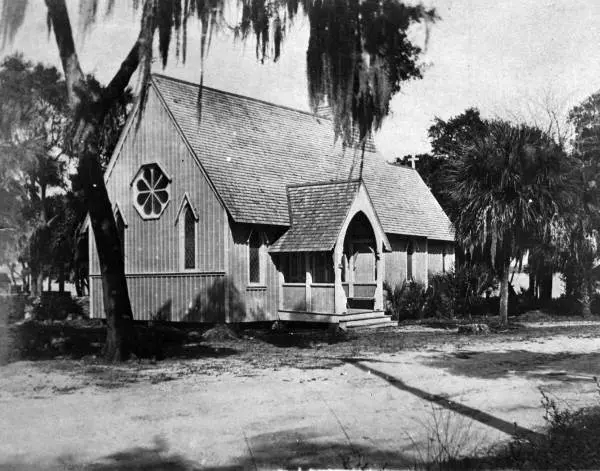
            According to an historic marker erected by the Brevard County Historical Commission in 2010, Gabriel Gingras designed the board and batten Carpenter Gothic church. Early Cocoa residents William Booth and William Hindle designed and installed the church’s woodwork.

            Dr. S.B. Carpenter, Rector of Holy Cross Church of Sanford, visited Cocoa once per month to oversee construction of the church. Although it was not quite finished, the first service was held in the new church on Christmas Eve, 1886.

            The church’s tower bell, called “Michael,” was cast in New York in 1888.

            In 1890, the name of the church was changed from St. Michael’s to St. Mark’s, in recognition of support provided by St. Mark’s Church in West Orange, New Jersey.

            Although St. Mark’s has undergone significant additions and renovations over the years, most of the original interior woodwork and stained glass remains intact.

            Many of the beautiful stained glass windows in St. Mark’s are dedicated to early founders of the church. For example, one panel is dedicated in memory of Arch Deacon William H. Gresson, who was born August 1846 and died June 1921.

            Another window was created in memory of Emma J. Hardee, who was born October 6, 1847, and died May 16, 1915; and Florence H. Gingras, born May 16, 1870, and died November 6, 1913.

            Sarepta E. Hartman, born May 9, 1839, and died December 9, 1924, is also remembered with a stained glass window. Another is dedicated to Cora M. Cook, born 1858, and died 1915.

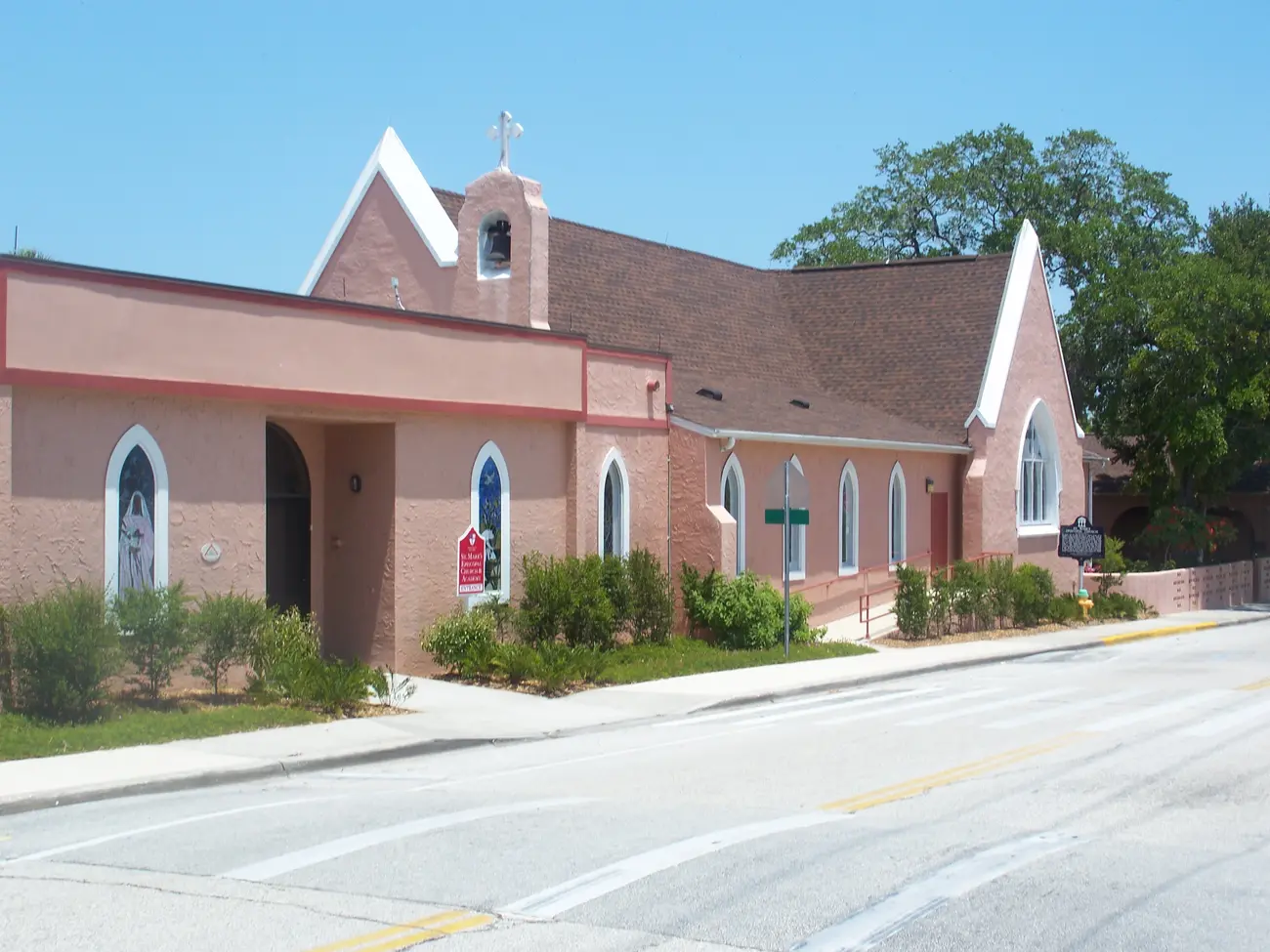
            When St. Mark’s was renovated in 1925, great care was taken to maintain the integrity of the original structure of the church. Stucco was added to the exterior, giving the building a Mediterranean style very popular at the time. Where additional woodwork was added to the interior, it closely matched the original.

            With the addition of its first Rector, the Reverend William Loftin Hargrave, St. Mark’s was raised to “parish” status in 1938. Reverend Hargrave was later named Suffragan Bishop of the Diocese of South Florida and Bishop of Southwest Florida.

            In February 1942, the Emma Cecilia Thursby Memorial Fellowship Hall was completed, providing space for community gatherings. Thursby was a popular opera singer in America and Europe in the late 1800s and a professor of music at the Institute of Musical Art, now the Julliard School, in the early 1900s. Thursby and her sister wintered in Cocoa.

            St. Mark’s Parish Day School, known today as St. Mark’s Episcopal Academy, was established in 1956. Since then, education has been a primary focus of the church.

            The most recent renovations to St. Mark’s Episcopal Church were in 1994, when the worship area was expanded to its present capacity, and in 2012, when pews modeled after the originals were installed.

            While fewer people walk to church or moor their sailboats nearby as they did in 1886, the full parking spaces around St. Mark’s each week indicate that the church is as vital a part of the Cocoa community as ever.

            PDF file(s)
            Article Number
            165
            relevantdate

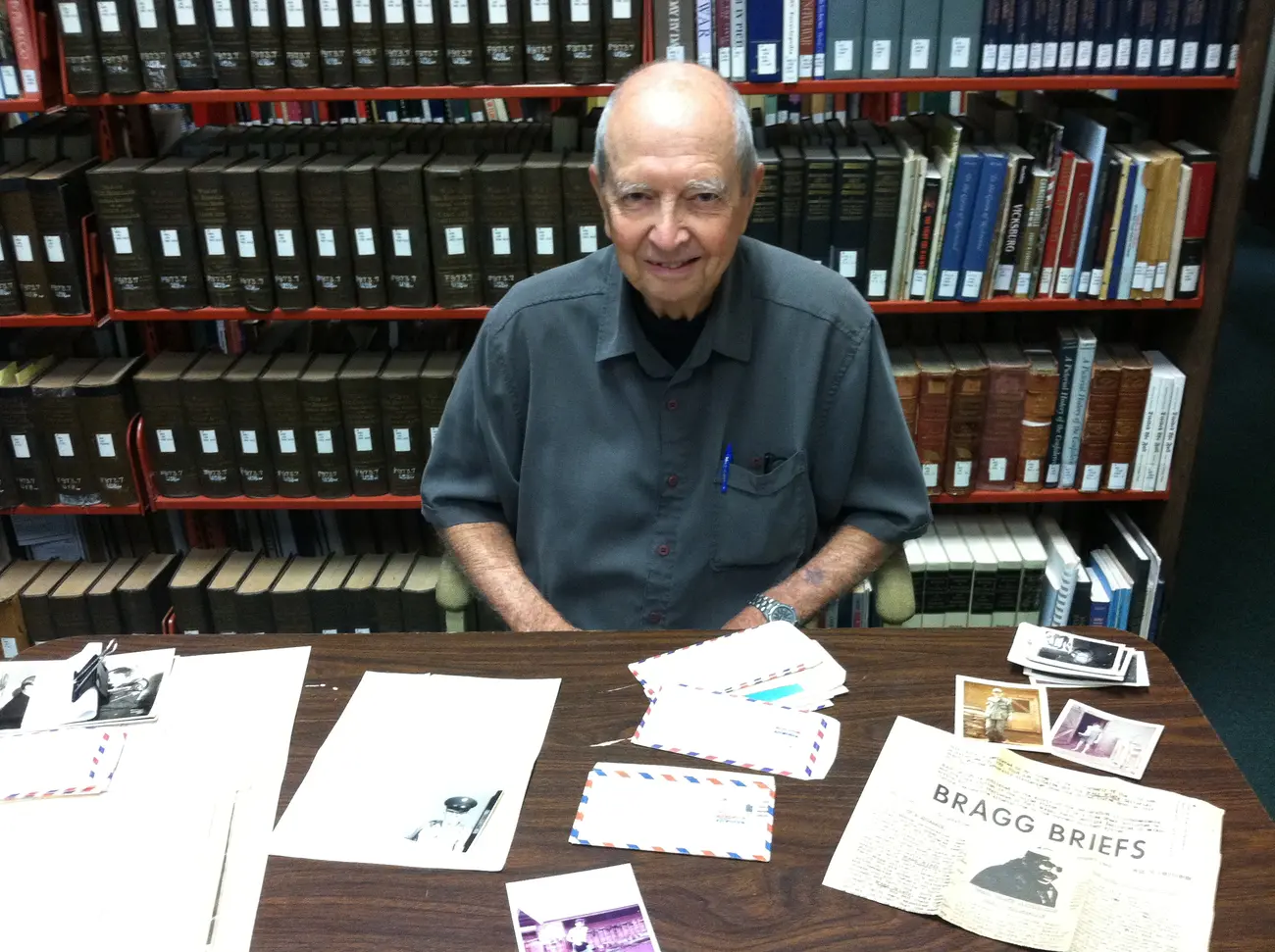
              American war veterans and the conflicts they participated in are well represented in the archive at the Library of Florida History in Cocoa.

              The Joseph Marshall Papers detail the activities of a Loyalist regiment in St. Augustine during the American Revolution of the 1770s and ‘80s.

              The archive houses the East Florida Constitution, created as a result of the United States invasion of Spanish East Florida in 1812, during the Patriot War.

              There are dozens of letters and journals from the Seminole Wars of the 1800s, including the journal of Jacob Mott, a U.S. Army Surgeon stationed in Florida.

              Numerous Civil War documents from the 1860s include letters from Confederate General Robert E. Lee, and future Florida governor Francis P. Fleming.

              The library’s collection of World War I memorabilia includes the Frank Rumfield Photograph Collection with images from Chapman Field in Miami.

              Documentation of World War II features newspapers, original War Bonds posters, and the Irv Rubin Collection of wartime correspondence. Rubin and his family were the first Jewish business owners in Cocoa, with two sons and a daughter serving America during the war.

              The archive safeguards stories of Korean War veteran, Medal of Honor recipient, and Cocoa resident Emory Bennett.

              The archive is trying to expand one particular collection of veteran and war related materials.

              “We have very little, actually, that deals with the Vietnam War period,” says Ben DiBiase, Director of Educational Resources for the Florida Historical Society and archivist at the Library of Florida History.

              “We’re looking for any kind of documentation from someone who served in the armed forces during the Vietnam War era, or anyone who may have lived in Florida during that period, to help chronicle or help us to understand what that period was like in Florida history,” says DiBiase.

              The effort to establish a Vietnam War Era Archive at the Library of Florida History was initiated by Florida Historical Society volunteer Bill Arbogast of Cocoa. Arbogast spent 24 years on active duty in the U.S. Army and served two tours of duty in Vietnam.

              “We established the archive in 2013, which was the 50th anniversary of the onset of what we now know as the Vietnam War era,” says Arbogast. “1963 is what’s officially recognized by the Veterans Administration as the start of that era.”

              Arbogast saw a significant amount of material from World War II being donated to the archive by veterans of that conflict, and thought that the time had come for Vietnam War era veterans to be encouraged do the same.

              “We’ve got a lot of Vietnam veterans who are reaching the age where they would want their memorabilia, their documentary evidence to be archived in such a way that it would be available to future researchers,” says Arbogast.

              The Library of Florida History is not equipped to house artifacts such as flags, insignia, or other display items. What is needed are documentary materials such as records of military service, photographs, and letters that soldiers exchanged with their families.

              While documenting the experiences of Vietnam veterans is essential to the archive, it is hoped that a complete picture of the time period will be created.

              “We’re looking for anyone who was impacted by the Vietnam War in one way or another,” says Arbogast. “We’re also interested in those people who looked at the war as a negative experience and participated in demonstrations against the war. Those things are important, I think, to recognize the controversy that war created among the people of this nation.”

              Arbogast and DiBiase have created a simple process for veterans and others to submit material to the Vietnam War Era archive. A basic submission form is online at myfloridahistory.org/vietnamarchive.

              “Even copies of original documents would be acceptable for this particular collection,” says DiBiase. “It’s really the information that we’re hoping to capture.”

              Arbogast is hopeful that people will respond to the call for submissions to the archive.

              “It will let us put the war in the emotional context that it created in this country. The opposition to it, the fervor of patriotism that was associated with it, the tumultuous experience that individuals had, separated from their families, separated from their loved ones.”

              PDF file(s)
              Article Number
              164
              relevantdate

                Brevard County is home to an impressive list of important archaeological excavations including a unique prehistoric pond cemetery, numerous Indian mounds, paleontological sites, colonial era shipwrecks, and pioneer homesteads.

                Since 1953, members of the Indian River Anthropological Society have been participating in the discovery, excavation, and recording of archaeological sites in Brevard County.

                “Operating primarily in Brevard County, we have, over the years, also provided services in Volusia, Seminole, Orange, Osceola, and Indian River Counties,” says Bob Gross of the Indian River Anthropological Society. “IRAS provides, at no cost to the Brevard County government and its municipalities, many tasks required by statute under the provisions of the National Historic Preservation Act of 1966, as amended, and as directed by local statute and Brevard’s Comprehensive Plan to the Brevard County Historical Commission.”

                The Indian River Anthropological Society has been a chapter of the statewide Florida Anthropological Society since 1956.

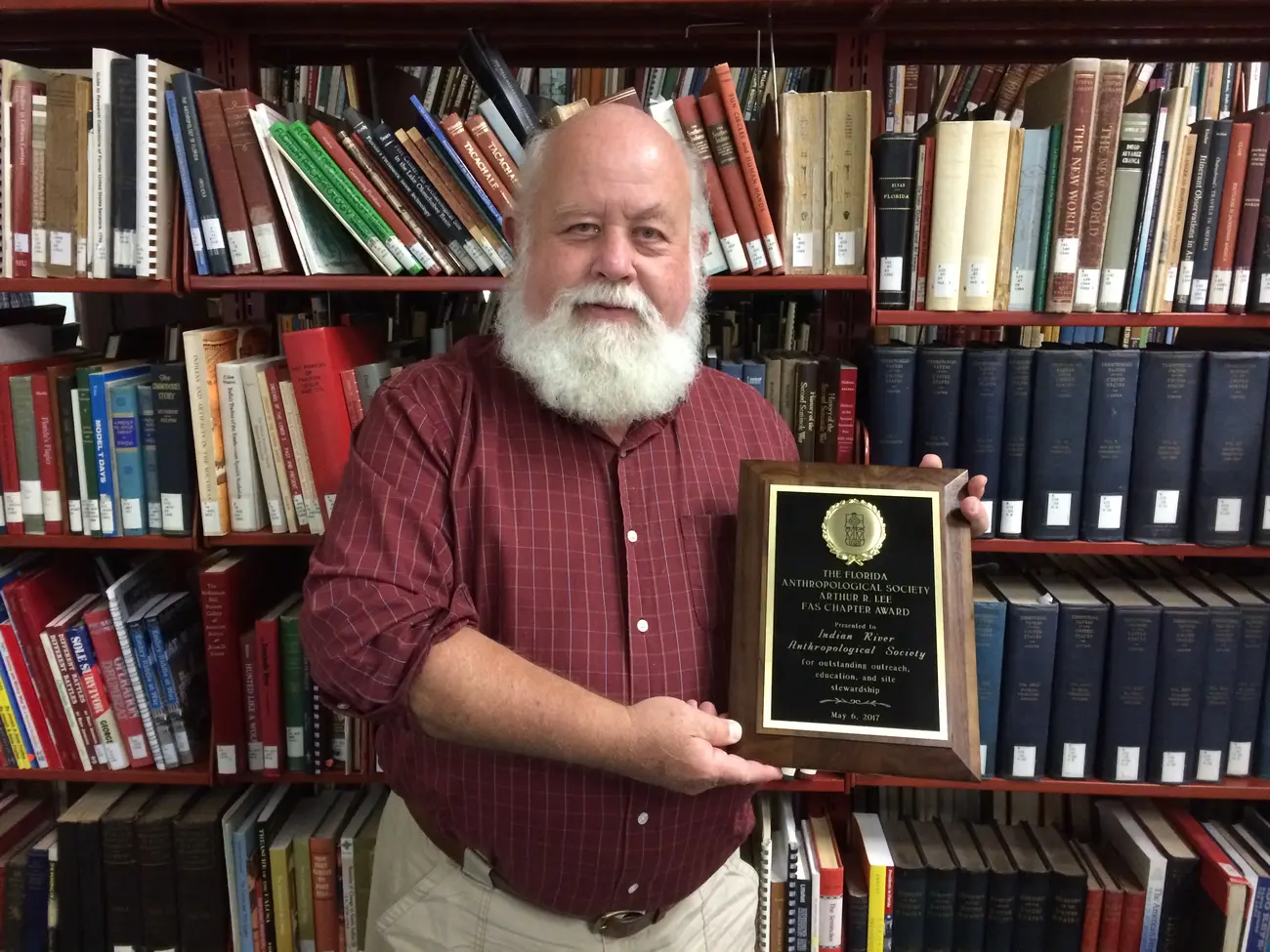
                At the FAS Annual Meeting on Saturday, May 6, in Jacksonville, IRAS was presented with the Arthur R. Lee FAS Chapter Award for outstanding outreach, education, and site stewardship.

                “Members of the IRAS were gratified to learn that their years of devotion to the study of Florida’s, and particularly Brevard County’s anthropological and archaeological resources through investigation, documentation, preservation, and education has been recognized at the highest levels,” Gross says.

                Thirty-five years ago, one of the most significant archaeological discoveries in the world was made in Brevard County. During construction of the Windover Farms subdivision in Titusville, an ancient pond cemetery was discovered. The site contained 168 intact human burials, carefully positioned and wrapped in the oldest woven cloth found in North America.

                The human remains uncovered at the Windover site were between 7,000 and 8,000 years old, making them 3,200 years older than King Tutankhamen and 2,000 years older than the Great Pyramids of Egypt.

                The anaerobic environment and ph balance of the pond allowed for remarkable preservation of the remains. Ninety-one of the skulls contained intact brain matter.

                Members of the Indian River Anthropological Society participated as volunteers at the Windover Dig. Vera Zimmerman of IRAS wrote identification numbers on bone fragments, and conducted tours of the site for the public.

                “I was just extremely lucky to be living here when that find was made, because it was a once in a lifetime opportunity to work on a dig like that,” Zimmerman says. “We had people coming in from all over the world. They had a conference here. It was just outstanding. It told them things that they didn’t know about the Archaic Period. They still believed before that people were living a pretty nomadic lifestyle, following game. The Windover Dig showed they were living a fairly settled village life.”

                The origins of IRAS go back to 1951, when sixteen Spanish silver coins were found on Playalinda Beach. Local archaeologist E.Y. “Dick” Guernsey was consulted, and a group of interested residents were inspired to form an archaeology club. The members were mostly newcomers to the area, brought here by the recently constructed Patrick Air Force Base and the long range missile proving ground at Cape Canaveral.

                As construction rapidly increased in Brevard County to accommodate the population explosion accompanying the burgeoning space program, a growing number of Indian mounds and other historic sites were being uncovered.

                By 1953, the Indian River Anthropological Society was meeting monthly under the direction of Dr. Guernsey. He led the group to become a chapter of the Florida Anthropological Society, as described on the front page of the Melbourne Times on April 10, 1956:

                “A chapter of the Florida Anthropological Society has been organized in Brevard County, and persons interested in digging up bones and other objects of the long dead past may soon be invited to join…They are planning to map part of the east Coast and locate ancient Indian mounds which will be explored in a scientific manner.”

                The award-winning Indian River Anthropological Society continues its work today.

                PDF file(s)
                Article Number
                163
                relevantdate

                  Funeral services were held for Florida historian Michael Gannon on Saturday, May 6, at St. Augustine’s Church in Gainesville. He died on Monday, April 10, at the age of 89.

                  Dr. Gannon was author or editor of 10 books, including “The Cross in the Sand” from 1965. It that book, Gannon demonstrated how the “real” first Thanksgiving happened in St. Augustine in 1565, decades before the pilgrims landed at Plymouth Rock.

                  A longtime professor of history at the University of Florida in Gainesville, Dr. Gannon taught several generations of Florida historians who are working in the state today.

                  Gannon was formerly a Catholic priest, and was working in St. Augustine in the early 1960s, as the town was preparing to commemorate the 400th anniversary of the founding of America’s oldest continuously occupied city.

                  Gannon remembered his work on the 400th anniversary as St. Augustine was preparing to commemorate their 450th anniversary in 2015.

                  “At the old mission where the first Parrish Mass was celebrated on September 8, 1565, it was decided to build a cross,” Gannon said. The cross was to be built on the site where Don Pedro Menéndez de Avilés first landed to settle St. Augustine, and where Father Francisco López observed the city’s first Catholic Mass.

                  “Ultimately it was constructed of stainless steel and rose to a height of 208 feet. I think it’s very impressive. It can be seen 14 miles out to sea. It has become a symbol of the first mission to the North American Natives and the first Parrish established by Europeans in this country,” said Gannon.

                  Also part of St. Augustine’s 400th anniversary celebration in 1965 was the expansion and redecorating of the cathedral church, the construction of a contemporary church called The Prince of Peace, and a bridge linking the new church with the historic mission grounds.

                  Spain controlled Florida for nearly three centuries, establishing an extensive system of Catholic missions throughout the region.

                  “Everywhere Spain moved politically and economically and militarily, the church moved, too,” said Gannon.

                  “The church was always a partner of Spanish expansion. The church was on the forefront. If you want to select any part of the Spanish cultural presence in Florida and the rest of North America, you would have to say that the church was in advance of all other institutions.”

                  The Florida Chamber of Commerce arranged a meeting between Gannon and President John F. Kennedy as St. Augustine was preparing for its 400th anniversary celebration.

                  On November 22, 1963, President Kennedy was shot and killed as his motorcade drove through Dallas, Texas.

                  Kennedy spent the week before his death in Florida.

                  After a short stay at his family’s winter residence in Palm Beach, Kennedy toured the NASA facilities at Cape Canaveral before visiting Tampa and Miami.

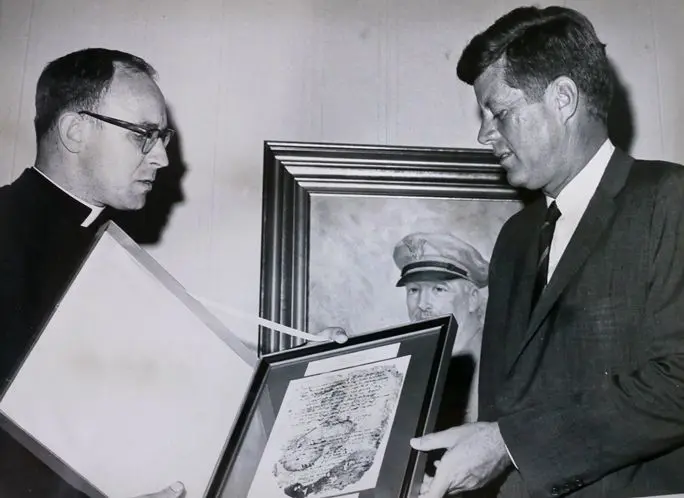
                  On his last day in Florida, President Kennedy met with Florida historian and Catholic priest Michael Gannon. As the first and only Catholic American president, Kennedy was particularly interested in Gannon’s area of expertise, Catholicism in Spanish Colonial Florida.

                  “It was hoped by the Chamber of Commerce and by the city fathers in St. Augustine, that the president would agree to come down earlier rather than later,” said Gannon.

                  “It was uncertain if he would be elected to a second term, so they wanted him to come while president and to build up interest in the city that would help generate tourist traffic for the 400th year.”

                  It was arranged for Gannon to meet the president at the MacDill Air Force Base Officer’s Club.

                  “I brought him a photographic copy of the oldest written record of American origin, which was a Parrish Register of Matrimonial Sacrament, a marriage between two Spaniards, a man and a woman, here in the city of St. Augustine, dated 1594,” said Gannon.

                  “He seemed to be very grateful to receive the gift of the photographic copy that was beautifully framed.”

                  President Kennedy was intrigued by Gannon’s stories about the oldest continuously occupied European city in what would become the United States.

                  “As he left he said ‘I’ll keep in touch.’” Gannon said, pausing to recall the moment. “But four days later he was dead.”

                  Gannon became one of Florida’s most respected historians.

                  PDF file(s)
                  Article Number
                  162
                  relevantdate

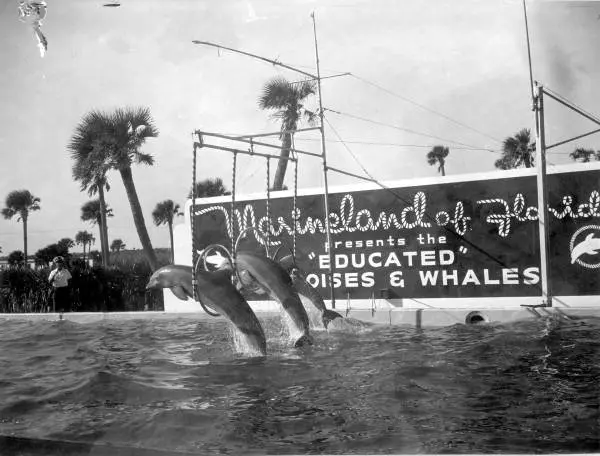
                    More than three decades before SeaWorld opened in Orlando in 1973, Marineland of Florida was a major tourist attraction, hosting as many as 900,000 visitors annually.

                    Located between St. Augustine and Daytona Beach, Marineland started out as Marine Studios. Business partners W. Douglas Burden, Sherman Pratt, Cornelius Vanderbilt Whitney, and Ilya Tolstoy (grandson of Leo Tolstoy) envisioned a venue for filming underwater sequences for movies, but quickly realized the potential of the facility as a tourist destination.

                    “Marineland illustrated the connection between nature and spectacle,” says Florida historian Gary Mormino, author of the book Land of Sunshine, State of Dreams: A Social History of Modern Florida. “They originally conceived as Marine Studios as a motion picture facility for studying and filming sea specimens in an enclosed, oceanlike environment. But when the partners discovered that the blue bottlenose dolphins (also called porpoises) could be trained to perform tricks above water, the oceanarium became primarily a tourist attraction. The public oohed and aahed over leaping dolphins, a porpoise pulling a poodle on a surfboard, and sea lions barking at clowns.”

                    When Marineland opened on June 28, 1938, more than 20,000 visitors attended. Tourists weren’t the only people attracted to the new theme park.

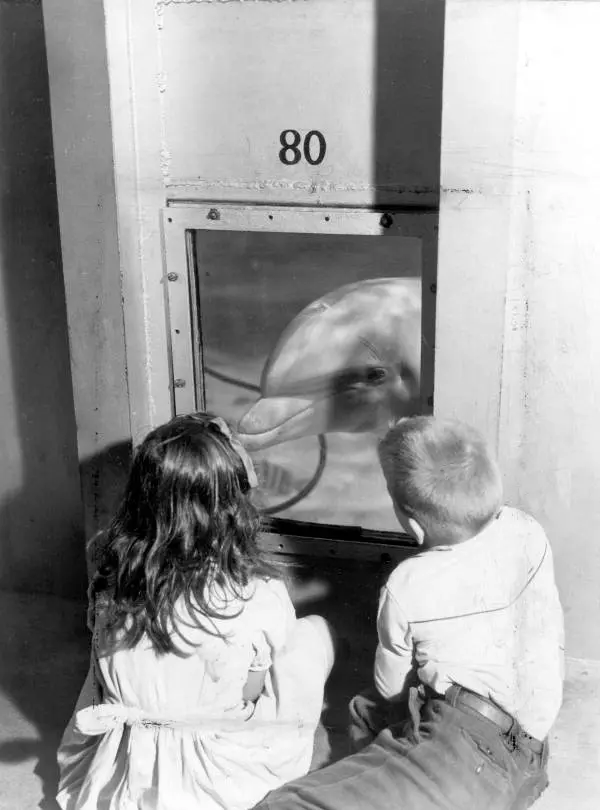
                    “I was born in 1940,” says Flagler County historian Sisco Deen. “It closed during the (second world) war, but when it opened up in ‘46, after the war, I visited there as a child. I lived with my aunt and uncle and when they told me they were taking me to Marineland, I thought it was like the Marines in the service. But I really enjoyed it. It had two tanks. It was developed for a film studio but then people would come and look because they had the creatures of the deep in their natural, or pretty natural, habitat. You could observe them through little portholes in the side of the tanks. And so the tourists start coming.”

                    Marineland had literary connections that helped add to its popularity. The grandson of Leo Tolstoy, author of War and Peace and Anna Karenina was one of the park’s founders. Beloved Florida writer Marjorie Kinnan Rawlings was married to Norton Baskin, who managed the Dolphin Restaurant and Moby Dick Lounge at Marineland. Renowned authors Ernest Hemingway and John Dos Passos also visited the bar at the park.

                    The original goal of using the facility as a place to shoot movies was realized. Portions of the 1954 film Creature from the Black Lagoon and the 1955 sequel Revenge of the Creature were filmed at Marineland. In the sequel, the captured creature is put on display at Marineland, and trained with a cattle prod.

                    For several decades, Marineland was one of Florida’s most popular tourist attractions, along with Silver Springs, Cypress Gardens, and Weeki Wachee.

                    “Marineland attracted huge crowds, in part because of the novelty of ‘spectacular nature,’ in part because of its location on A1A between St. Augustine and Daytona Beach, perfectly situated to snag Miami bound travelers,” says Mormino.

                    When Walt Disney World opened on October 1, 1971, it had a positive impact on Marineland, significantly boosting annual attendance. When SeaWorld opened a couple of years later, the impact on Marineland was devastating. SeaWorld was in direct competition with Marineland.

                    The University of Florida established the Whitney Marine Laboratory adjacent to Marineland in 1974.

                    In the mid-1980s, original owner Cornelius Vanderbilt Whitney sold Marineland to a group of investors, beginning a series of resales of the park to new owners. Throughout the 1980s and 1990s, the park entered a state of disrepair. Eventually a not-for-profit corporation was established to keep Marineland going.

                    During a two year renovation beginning in 2004, the two original oceanarium tanks from 1938 were demolished. Lifelong Flagler County resident Ray Mercer visited the park as a young man when it first opened.

                    “It was very exciting for me to see the life in the water through the portholes,” Mercer says. “I went every chance I got.”

                    Today, the park still exists as Marineland Dolphin Adventure, a “hands-on” educational facility operated since 2011 by the Georgia Aquarium. Much of the former Marineland property is now owned by Flagler County and protected as the River to the Sea Preserve.

                    PDF file(s)
                    Article Number
                    161
                    relevantdate

                      The phrase “historic preservation” describes a wide range of activities.

                      The term is most often used in relation to the restoration and maintenance of historic homes and buildings, but it can also be applied when discussing the conservation and storage of old photographs, the recording and sharing of oral histories, or the collection and documentation of artifacts from archaeological sites.

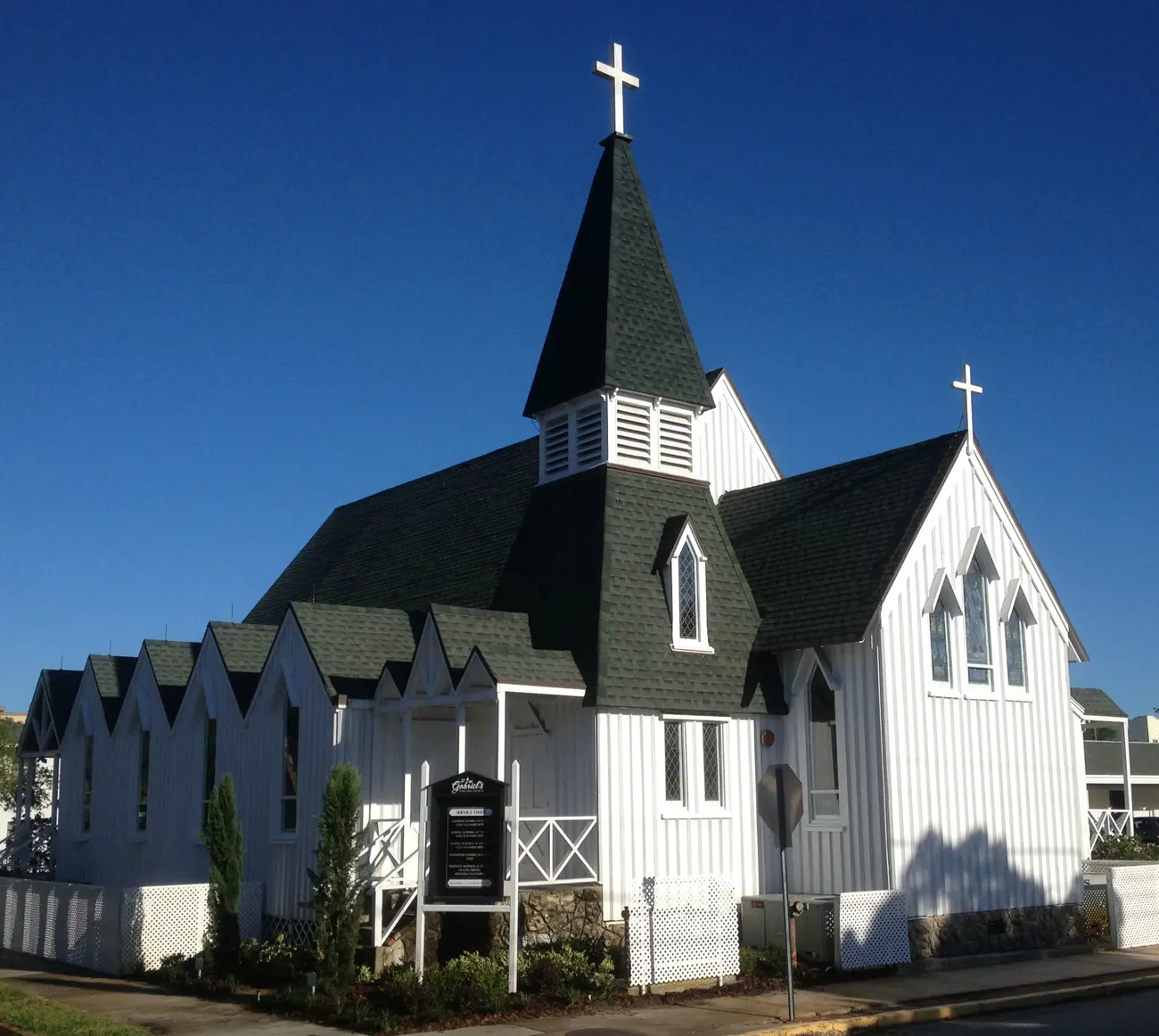
                      All of these topics and more will be presented during “The Many Faces of Preservation Conference,” to be held Friday, April 28, through Sunday, April 30, at St. Gabriel’s Episcopal Church in Titusville. Registration information is available at 321-626-5224 or www.pritchardhouse.com.

                      “Preservation has many faces,” says historic preservationist and conference organizer Roz Foster. “Preserving structures for adaptive reuse, revitalization of downtowns, but also many other elements of preservation such as genealogy, oral histories, the preservation of textiles, documents, papers, photographs. Also the strategies of taking care of making sure that you’re restoring a historic structure properly and maintaining it properly.”

                      The three day conference will provide valuable information for both professionals and lay people including owners of historic structures, historic house and small museum staff, architectural review boards, realtors, city planners, architects, and others interested in historic preservation.

                      The keynote speaker on Saturday afternoon is architect Kenneth Smith of Jacksonville.

                      “Ken is an historic preservation architect,” says Foster. “His firm is retained by Flagler College, but he has also restored lighthouses in Georgia and on the coast of Florida, and many of the historic structures in a lot of the larger towns like downtown Jacksonville, Pensacola, and St. Augustine. He’s very knowledgeable.”

                      On Saturday, exhibitors at the conference will include Past Perfect Museum Software, Gaylord Archival Supplies, Austin Home Restorations, SPS Restorations, and local not-for-profit organizations.

                      The venue for the conference, St. Gabriel’s Episcopal Church, was built in 1887 as St. John’s. The following year, three memorial stained glass windows were donated to the church by the mother of Titusville resident James Pritchard. Since the largest window depicted St. Gabriel, the name of the church was changed. The Carpenter Gothic style church was listed on the National Register of Historic Places in 1972.

                      The presentations and restoration workshops at “The Many Faces of Preservation Conference” will cover everything from selecting the correct paint colors for an historic home, to the proper installation of windows, to disaster planning for historic structures. The conference also includes ancillary events each day.

                      “Friday night we have a Downtown Wine Stroll sponsored by the Titusville Historic Preservation Board,” Foster says. “We’re going to begin at the Pritchard House, and we’re going to some of the structures that have been rehabilitated for adaptive reuse in the downtown historic district. We’ll come back to the Pritchard House, have a tour to take a look at restoration of this beautiful building, and then have a wine and cheese reception here.”

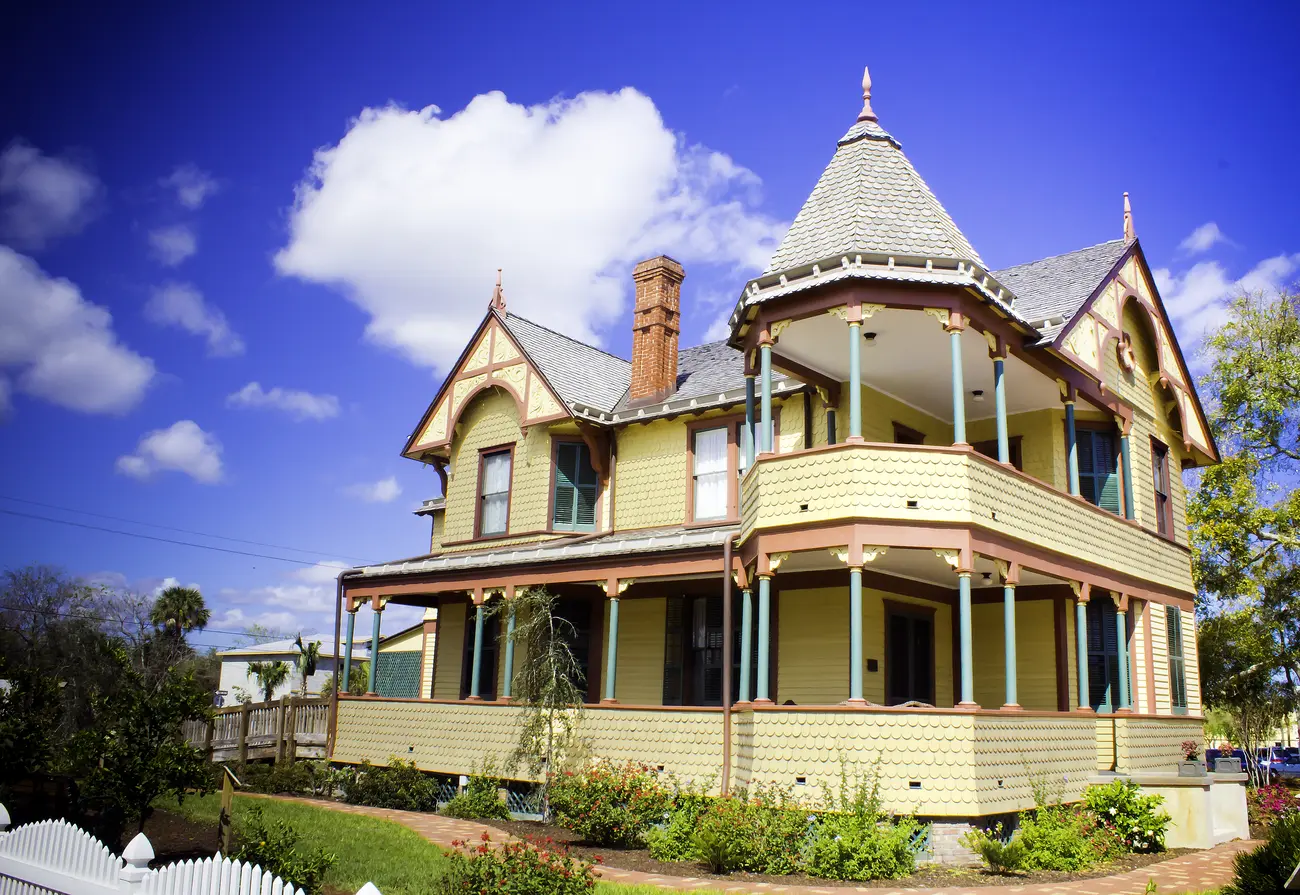
                      The Pritchard House was built in 1891 by Captain James Pritchard, an active businessman in Titusville who owned a hardware store, established the Indian River State Bank, and built the city’s first electric light plant. His Queen Anne style home was listed on the National Register of Historic Places in 1990.

                      The historic Pritchard House will also be the site of a Garden Party on Saturday evening. “There will be food, wine, and sangria,” says Foster. “This gives the general public a chance to mingle with the presenters. You may have a question that you would like answered about your own restoration project, or your papers, or looking up documents, or about available resources.”

                      The wide range of presenters at the conference includes Wayne Carter of the DeLand Florida Main Street Program, Elaine Williams of the Indian River Anthropological Society, Ben DiBiase of the Florida Historical Society, Michael Boonstra of the Brevard County Historical Commission, Suellen Askew of the Murfreesboro North Carolina Historical Association, Scott Sidler of Austin Home Restorations, Bradley Parrish of the City of Titusville, Joanne Peck of Historic Shed, Sarah Smith of the Foosaner Art Museum, Ruth Akright of Classic Property Resources in Virginia Beach, and Roz Foster of the North Brevard Heritage Foundation.

                      “Historic preservation” can give character to downtowns and neighborhoods. It can also protect images, objects, and individual stories for future generations.

                      PDF file(s)