Florida Frontiers

A Tag for nodes that are relevant to Florida Frontiers.   For example if an artilce is about Florida Frontiers and you would like a 'View' to sorty by Tag criteria for it... us it.

Article Number
49
relevantdate

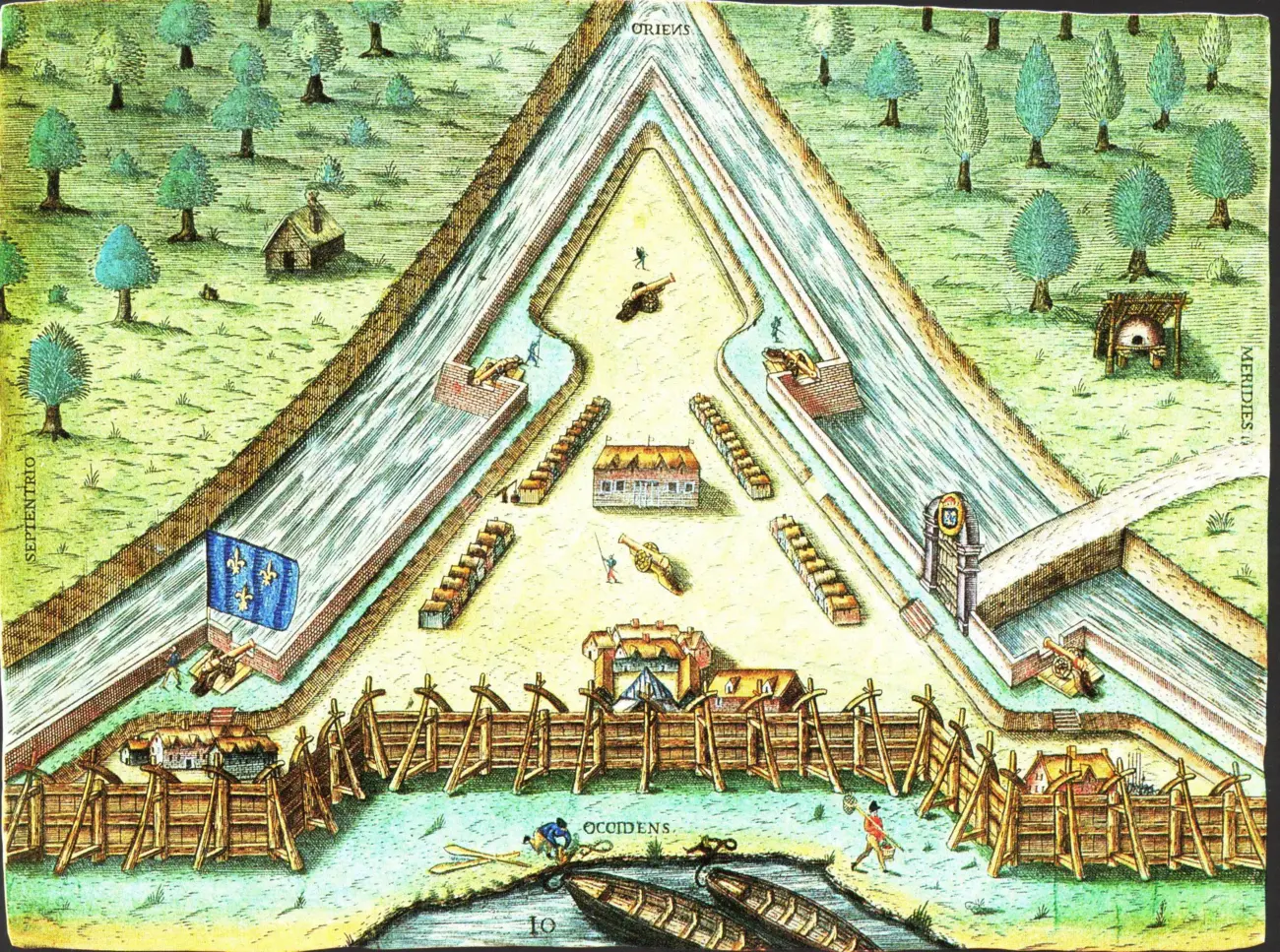
    2014 marked the 450th anniversary of the French in Florida, recognizing the establishment of Fort Caroline in 1564.

    2015 marks the 450th anniversary of the Spanish establishment of St. Augustine, the first permanent European settlement in North America.

    The Spanish sent Pedro Menéndez de Avilés to Florida to wipe out the French Huguenots, and reclaim the land for Spain. Menéndez attacked Fort Caroline, killing everyone except the women and children, a group of musicians, and a few French soldiers who claimed to be Catholic. A hurricane helped the Spanish cause by sinking a fleet of French ships led by Jean Ribault.

    Chuck Meide, director of the Lighthouse Archaeological Maritime Program, spent the summer of 2014 searching for the lost fleet of Jean Ribault off the coast of Florida between Daytona Beach and Cape Canaveral, and will continue those efforts in the summer of 2015.

    “I’m a Jacksonville native,” says Meide. “I grew up hearing the stories about Ribault and the French at Fort Caroline, and Menéndez and the Spanish in St. Augustine. It’s our national origin story. It’s how the first settlement here in the present-day United States happened. So it’s very exciting that we’re in a position to find these ships.”

    Menéndez and his men arrived near the Timucuan village of Saloy on September 8, 1565, where they established St. Augustine. Ribault had arrived with a fleet of seven supply ships just days prior to restock Fort Caroline, near present-day Jacksonville. Ribault decided to launch a preemptive strike against the Spanish and his four largest ships set sail for St. Augustine on September 10.

    Before Ribault’s ships could even attempt to navigate the dangerous inlet at St. Augustine, an unexpected hurricane forced the ships further south, where they wrecked off the coast between Daytona Beach and Cape Canaveral.

    “Those ships are out there,” Meide says. “Menéndez wrote a letter to the King (Philip II of Spain) giving at least a description of the locations of La Trinité and the other three French wrecks. We also have a clue from an archaeological site known as the Armstrong Site that was found by relic hunters in 1970 and ’71.”

    Meide says the relic hunters found French coins, iron spikes, tools, and other shipwrecked material.

    “The archaeologists from the National Park Service who followed up with excavations in the 1990s agreed with the relic hunters that this appears to be the survivor camps of the 1565 shipwrecks. It seems to me the logical place to search for the shipwrecks is near where the survivors were.”


    During the same hurricane that sunk Ribault’s fleet, Menéndez and his men spent two days marching from St. Augustine to Fort Caroline. After capturing the French enclave, the Spanish executed 145 shipwreck survivors, including Jean Ribault. Before being put to death, the French were given the opportunity to renounce their Protestant faith and accept Catholicism. All but a few refused.

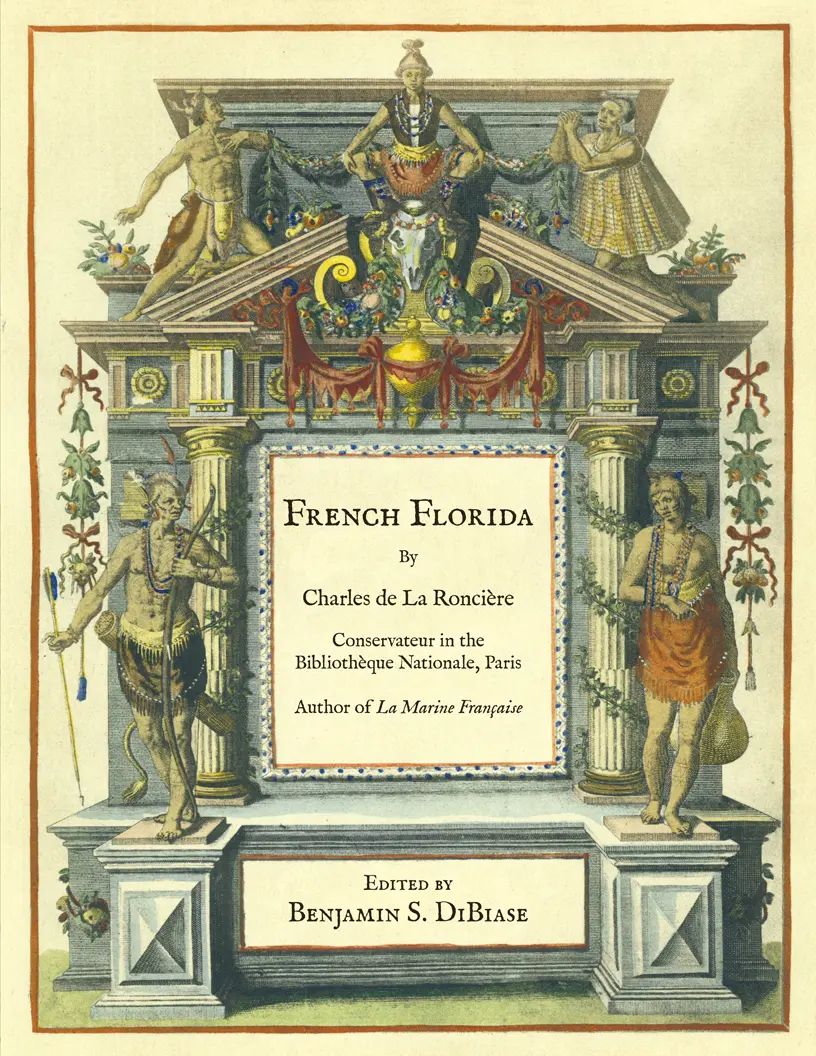
    Original sixteenth century French and Spanish documents describing the establishment and destruction of Fort Caroline are few, and good English translations of those documents are rare. The Florida Historical Society Press has published the first English translation of French Florida: A Narrative Based on the Earliest Accounts of the French Presence in Florida by Charles de La Roncière.

    “In this book he included a few word-for-word translations of those original documents, and that’s what’s really important,” says Benjamin S. DiBiase, editor of the book. “There are very few of these documents that have been translated in their entirety into English, for English speaking scholars to utilize.”

    The book French Florida was originally prepared for publication in the late 1920s, but was never printed. After traveling around the state with the Florida Historical Society for about 70 years, the manuscript sat on the shelves at the Library of Florida History in Cocoa for another 17 years until it was rediscovered by DiBiase.

    “With a keen eye we can parse out a lot of details from this narrative, and from the contemporary Spanish narratives of the attack on Fort Caroline and the establishment of St. Augustine, and through these sources get a little closer to what happened.”

    Milestone anniversaries provide inspiration to reexamine these stories.

    Dr. Ben Brotemarkle is executive director of the Florida Historical Society and host of the radio program “Florida Frontiers,” broadcast locally on 90.7 WMFE Thursday evenings at 6:30 and Sunday afternoons at 4:00, and on 89.5 WFIT Sunday mornings at 7:00. The show can be heard online at myfloridahistory.org.
    PDF file(s)
    Article Number
    48
    relevantdate

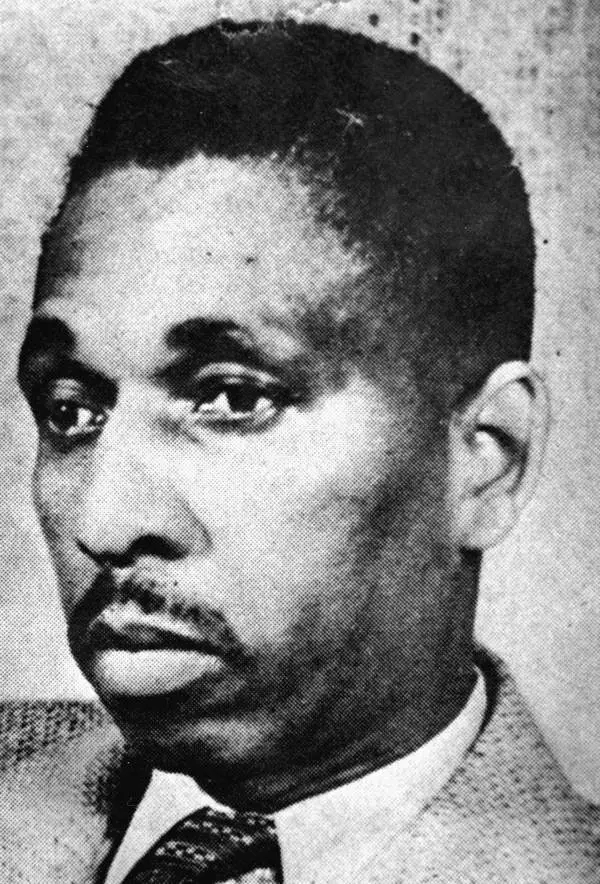
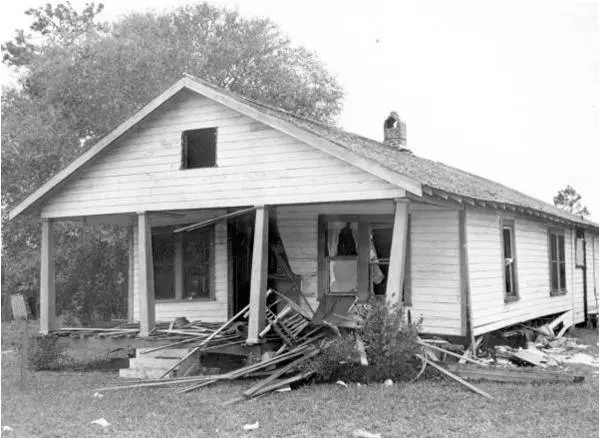
      On Christmas night 1951, a bomb exploded under the Mims home of educator and civil rights activist Harry T. Moore. The blast was so loud it could be heard several miles away in Titusville.

      Moore died while being transported to Sanford, the closest place where a black man could be hospitalized. His wife Harriette died nine days later from injuries sustained in the blast.

      The couple celebrated their twenty-fifth wedding anniversary on the day of the explosion, and Harriette lived just long enough to see her husband buried.

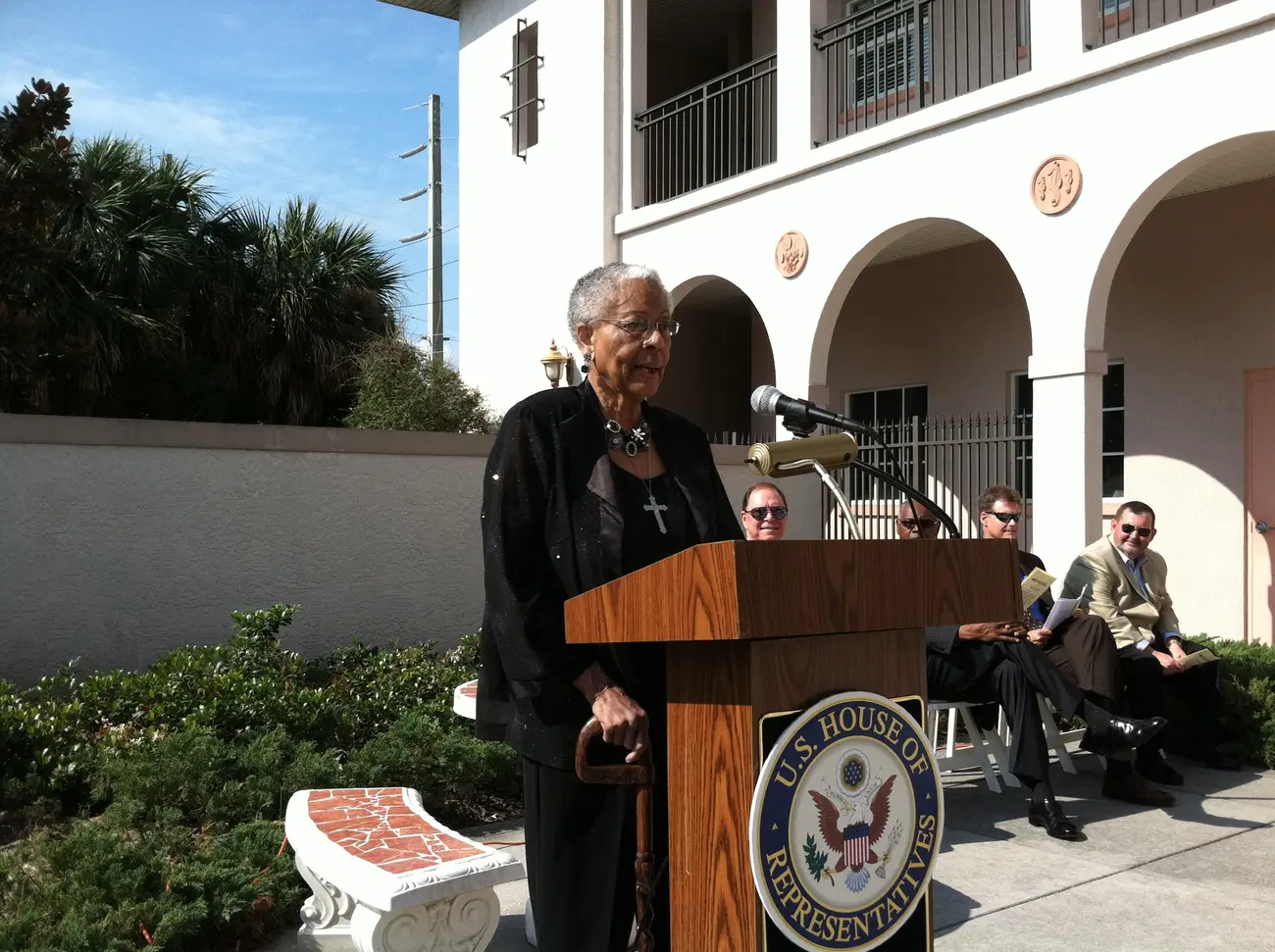
      The Moore’s only surviving daughter, Juanita Evangeline Moore, was working in Washington, D.C. in 1951, and was scheduled to come home for the holidays on December 27th, aboard a train called the Silver Meteor. She did not hear the news about her family home being bombed until she arrived.

      “When I got off the train in Titusville, I knew something was very, very wrong,” Moore says. “I had not turned on radio or television, so I didn’t know a thing about it until I got off the train. I noticed that my mother and father were not in front of all my relatives to greet me and they were always there.”

      Moore was given the news by her Uncle George, who was home on leave from Korea.

      “We got into his car and got settled, and the first thing I asked was ‘Well, where’s Mom and Dad?’ No one said anything for a while, it was complete silence. Finally, Uncle George turned around and he said ‘Well, Van, I guess I’m the one who has to tell you. Your house was bombed Christmas night. Your Dad is dead and your Mother is in the hospital.’ That’s the way I found out,” says Moore.

      “I’ve never gotten over it. It was unbelievable.”

      Moore insisted on being taken to her parent’s home. The blast had done extensive damage. She saw a huge hole in the floor of her parent’s room, into which their broken bed had collapsed. Wooden beams had fallen from the ceiling. Shards of broken glass covered the bed in the room she shared with her sister, Peaches.

      Harry T. Moore was born November 18, 1905, in Houston, Florida, located in Suwannee County. At age 19, Moore graduated with a high school diploma from Florida Memorial College where he was a straight-A student, except for a B+ in French. Other students called him “Doc” because he did so well in all his classes.

      Moore moved to Mims in 1925 after being offered a job to teach fourth grade at the “colored school” in Cocoa. He met Harriette Vida Sims. They married and had two daughters. Moore, his wife, and both of their daughters graduated from Bethune-Cookman College in Daytona.

      As a ninth grade teacher and principal at Titusville Negro School, Moore instilled in his students a sense of pride and a solid work ethic. A popular and skilled educator, Moore was fired for attempting to equalize pay for African American teachers in Brevard County.

      Moore led a highly successful effort to expand black voter registration throughout the state, dramatically increased membership in the Florida branch of the NAACP, worked for equal justice for African Americans, and actively sought punishment for those who committed crimes against them.

      “I do remember a lot of NAACP work with my Dad from the time I was able to understand what was going on,” says Juanita Evangeline Moore. “I helped him a lot with his mailing lists. We had a one-hand operated ditto machine. He usually typed out the stencil and he ran off whatever material he wanted to send out.”

      Although the murders of Harry T. and Harriette V. Moore have never been solved, it is believed that members of the Ku Klux Klan from Apopka and Orlando planted the bomb on Christmas night.

      Moore and his wife were killed 12 years before Medgar Evers, 14 years before Malcolm X, and 17 years before Martin Luther King, Jr., making them the first martyrs of the contemporary civil rights movement.

      A replica of the Moore home has been built next to the Harry T. and Harriette V. Moore Cultural Complex in Mims, which contains a civil rights museum.

      Dr. Ben Brotemarkle is executive director of the Florida Historical Society and host of the radio program “Florida Frontiers,” broadcast locally on 90.7 WMFE Thursday evenings at 6:30 and Sunday afternoons at 4:00, and on 89.5 WFIT Sunday mornings at 7:00. The show can be heard online at myfloridahistory.org.
      PDF file(s)
      Article Number
      47
      relevantdate

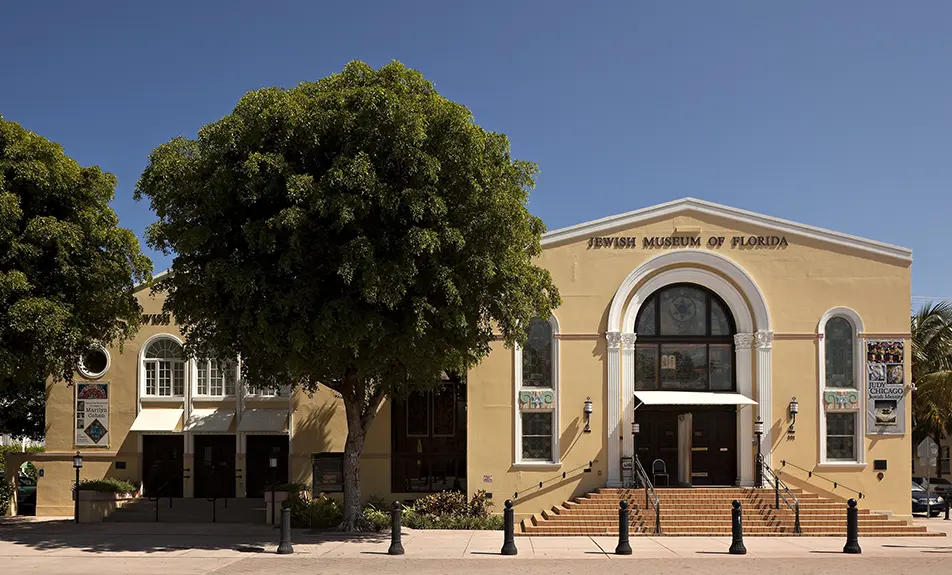
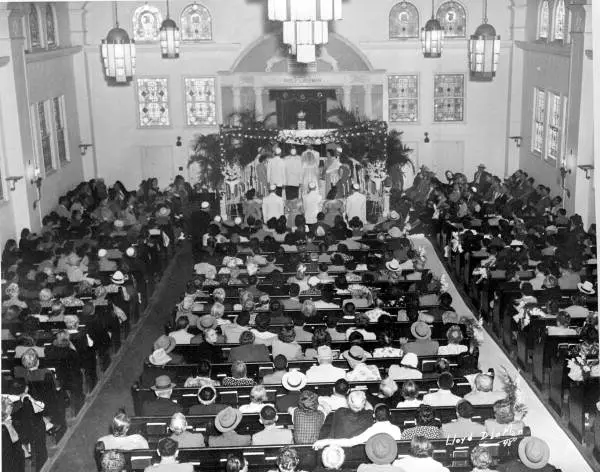
        The Jewish Museum of Florida is housed in two adjacent Art Deco buildings that originally served as the first synagogue and Jewish school in Miami Beach.

        The Congregation Beth Jacob opened in 1929. A larger synagogue was constructed next door in 1936, and the original building served the Jewish community in other ways.

        By 1995, the synagogue had moved back into the smaller building, and the Jewish Museum of Florida occupied the larger space. In 2005, the synagogue dissolved, and the museum expanded into that building.

        The museum restored both Congregation Beth Jacob buildings, saving them from demolition.

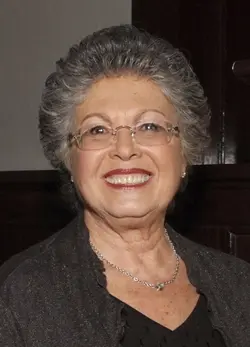
        Long before the Jewish Museum of Florida came into existence, founding executive director Marcia Jo Zerivitz began a quest to collect and document Jewish history throughout the state.

        After moving here in 1960, Zerivitz was shocked to discover almost no documentation of Jewish history in Florida.

        “I actually started a fabulous personal adventure that I think has benefited the entire state, not just the Jewish community, but the totally multi-ethnic community that we have,” says Zerivitz.

        “The story that we are telling is of the immigrant experience. I think that some people tend to forget that all of us are from immigrant stock of some generation. Someone came from another place, to America, and to Florida.”

        Zerivitz traveled the entire state organizing teams of volunteers in thirteen Jewish communities, including those in Pensacola, Tallahassee, Jacksonville, Orlando, Tampa, Miami, and Key West.

        Since very little documentation of Jewish history existed, Zerivitz learned how to conduct interviews from renowned oral historian Samuel Proctor at the University of Florida.

        For nearly a decade, Zerivitz and her teams of volunteers collected stories, photographs, and artifacts.

        Professional designers were brought in to help create a touring exhibition called “Mosaic: Jewish Life in Florida.” After opening at the Historical Museum of South Florida in Miami in October, 1990, the exhibit traveled to other venues including the Flagler Museum in St. Augustine, the Museum of Florida History in Tallahassee, and the T.T. Wentworth Museum in Pensacola.

        The “Mosaic” exhibition is at the heart of the Jewish Museum of Florida, but the collection continues to expand as more information and artifacts are discovered.

        It is believed that Jewish people first came to Florida with the Spanish in the 1500s. Conversos were Jews who publically converted to Christianity under the threat of the Spanish Inquisition, but probably continued practicing their religion in secret. Spanish records list people with typically Jewish names among the first settlers of St. Augustine.

        Historians believe that Pedro Menendez Marqués, third Spanish governor of Florida from 1577 to 1589, may have been a Converso.

        Jewish people could not legally live in Florida until 1763, when the British took control of the region. That is when Alexander Solomons, Joseph de Palascios, and Samuel Israel immigrated to Pensacola, becoming the first documented Jewish people in Florida. Other families followed.

        The first known Jewish child to be born in Florida was Virginia Myers, in 1822, in Pensacola.

        During the Second Seminole Indian War in 1833, Fort Myers was named for quartermaster and Jewish West Point graduate Abraham Myers. The city built around that fort retains his name.

        When Florida became a state in 1845, David Levy Yulee became the first Jew known to serve in the United States Senate. More than 250 mayors of Florida cities have been Jewish.

        The Dzialynski family of Jacksonville is believed to be the oldest Jewish family that has continuously lived in Florida. George Dzialynski is the first Jewish boy known to be born in Florida, in 1857. The Jewish Museum of Florida proudly displays his watch.

        “On the back it has a raised relief of Moses holding the Ten Commandments. It’s a beautiful artifact,” says Zerivitz. “The numerals, the hours are in Hebrew Yiddish letters. He was so proud of his Jewish heritage that he carried this watch his whole life. It also speaks loudly to the fact that Jews were here that early.”

        The Jewish population of Florida exploded in the twentieth century, bringing many influential people to the state.

        There are over 100,000 items in the collection at the Jewish Museum of Florida, and many stories to go with each of them.

        Dr. Ben Brotemarkle is executive director of the Florida Historical Society and host of the radio program “Florida Frontiers,” broadcast locally on 90.7 WMFE Thursday evenings at 6:30 and Sunday afternoons at 4:00, and on 89.5 WFIT Sunday mornings at 7:00. The show can be heard online at myfloridahistory.org.
        PDF file(s)
        Article Number
        46
        relevantdate

          Last Friday’s test flight of the Orion capsule takes America one step closer to reestablishing manned missions into space. 

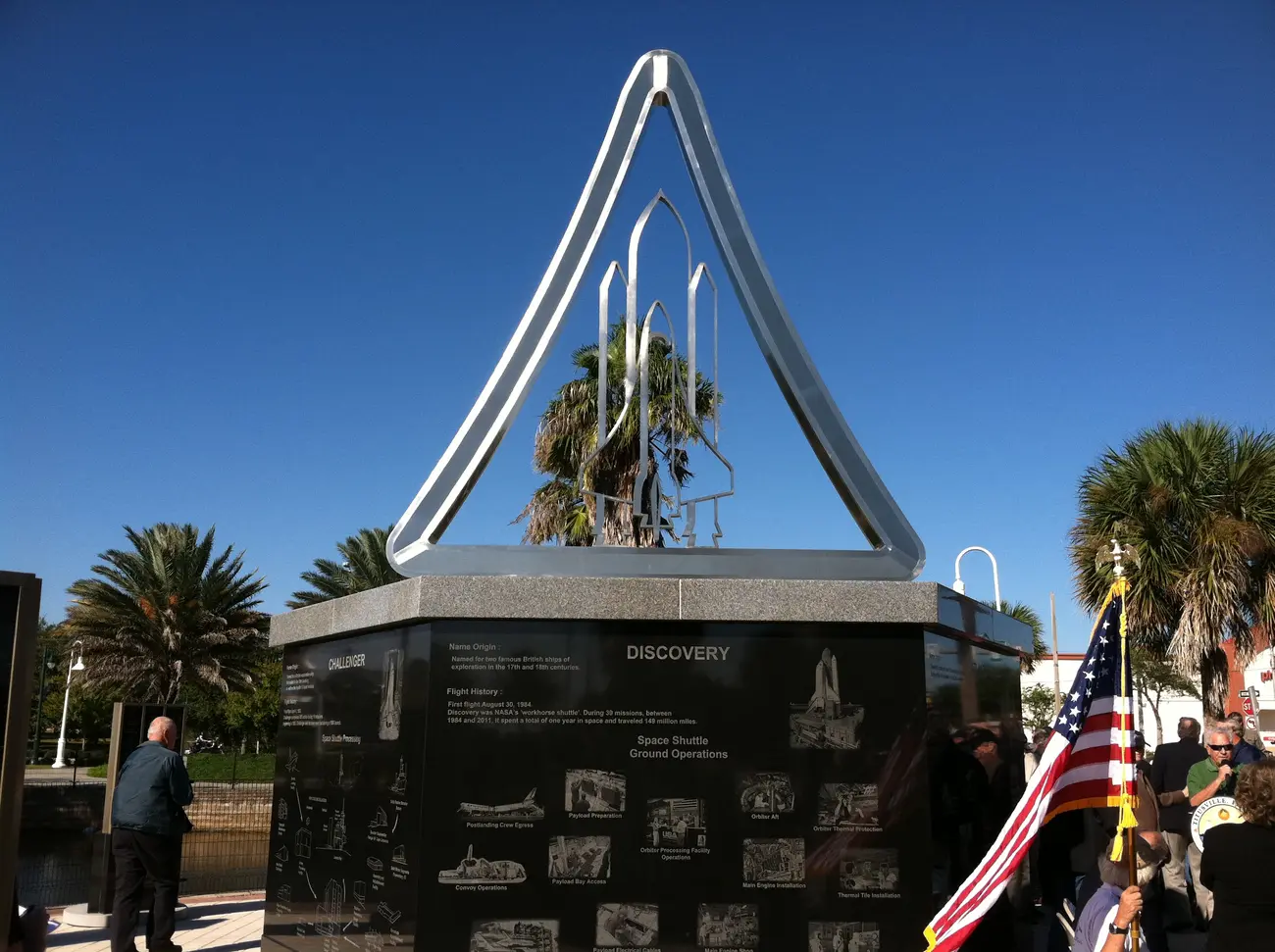
          A new monument at Space View Park in Titusville provides the opportunity to reflect upon this country’s last manned space program.

          The Columbia was launched for the first time on April 12, 1981, beginning NASA’s 30 year space shuttle program.

          Planning for the shuttle program began in 1972, but it was the launch of Columbia nine years later that made the program a reality.

          By coincidence, the launch occurred on the twentieth anniversary of the world’s first manned space flight by cosmonaut Yuri Gagarin.

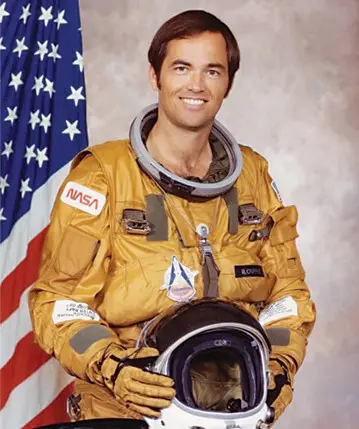
          The first shuttle had a two-person crew. Experienced astronaut John Young was joined by rookie astronaut Robert Crippen.

          “It was an exciting time,” says Crippen. “It was one of the highlights of my life to be able to fly with John Young, one of my heroes, and the mission came off better, I think, than either John or I could have imagined.”

          Crippen flew a total of four shuttle missions. He was commander of the first five-person crew that included Sally Ride, the first American woman in space, and the first seven-person crew. Crippen says that each mission was exciting, including his flight to repair the Maximum Mission Satellite. That first launch, though, was particularly special.

          “They’re all unique in their own way,” says Crippen. “STS-1, of course, being the first flight of a vehicle that had never been flown before, even unmanned, has to stand out forever.”

          During the 30 years and 135 missions of the shuttle program, two flights ended in disaster. Challenger exploded 73 seconds after liftoff on January 28, 1986, and Columbia was lost about 16 minutes before it was expected to touchdown on February 1, 2003. Crippen commanded missions on both of those shuttles.

          “Both the Columbia and the Challenger were very dear to me,” Crippen says. “They were both great ships. There was some good friends on both of those flights that we lost, so it was heart breaking, obviously.”

          The U.S. Space Walk of Fame in Titusville led efforts to create a large monument to the shuttle program. The $350,000 structure joins other monuments to NASA programs in Space View Park. Six black granite panels are engraved with images and text describing the shuttle program. An 8-ton steel outline of the shuttle on top of the panels points toward the sky.

          “It’s great,” says Crippen. “The monument is to honor not the shuttle, per se, but the men and women that worked on it, that were part of making it such a success.”

          The names of thousands of space workers are etched on pylons throughout Space View Park. Every American manned mission into space has been launched from the Kennedy Space Center, and Space View Park has provided spectators a front row seat for each of them.

          Although NASA is still conducting unmanned launches and commercial space flights are happening, America’s space program is in a transitional phase.

          The shuttle program ended with the launch of Atlantis on July 8, 2011.

          “In my opinion, the program could have gone on,” Crippen says. “After we lost Columbia, it was doubtful that it would be continued. However, I didn’t expect to see it cancelled and not have a way of putting astronauts into space from the United States. Having to depend upon Russia is rather heart breaking to me, and I’ll be glad when we get a capability to put our people back up there again ourselves.”

          In addition to serving as an astronaut on four shuttle missions, Crippen was Deputy Director of Shuttle Operations at the Kennedy Space Center and Director of the Shuttle Program at NASA Headquarters in Washington, D.C.

          “I’m a proponent for going back to the moon,” says Crippen. “We only did a few camping trips up there and we really didn’t explore it and exploit it. It would give us the experience necessary to go on to Mars. We should go to Mars someday. I don’t think I’m going to live to see it, but eventually we will get there.”

          The successful test flight of the Orion capsule gets us one step closer to Mars and beyond.

          Dr. Ben Brotemarkle is executive director of the Florida Historical Society and host of the radio program “Florida Frontiers,” broadcast locally on 90.7 WMFE Thursday evenings at 6:30 and Sunday afternoons at 4:00, and on 89.5 WFIT Sunday mornings at 7:00. The show can be heard online at myfloridahistory.org.
          PDF file(s)
          Article Number
          45
          relevantdate

            Christmas 1837 was not particularly festive for a group of U.S. Army soldiers marching through what is now east Orange County. Instead of celebrating with their families, the soldiers built a fort on the St. Johns River.

            A replica of Fort Christmas is located in the rural community of Christmas, about ten miles west of Titusville.

            Even before Florida became a Territory of the United States in 1821, the government had shown interest in acquiring the land from Spain. The fact that runaway slaves sought refuge among the Seminole Indians provided an excuse for the U.S. to invade Spanish controlled Florida.

            Beginning in the 1700s, the Seminoles, an offshoot of the Creek Indians, fled colonial expansion to the north, settling in Florida. As pioneer settlers began moving into the Florida Territory, their presence created conflicts with the Seminole Indians who were already here.

            The Seminole Indian Wars were a series of three prolonged conflicts. The most important of these was the Second Seminole Indian War, which lasted from 1835 to 1842.

            Many Florida towns grew around forts that were constructed during the Second Seminole Indian War. For example, Orlando was built around Fort Gatlin, Sanford around Fort Mellon, and Tampa around Fort Brooke.

            Some Florida cities retain their Seminole War fort names, including Fort Pierce, Fort Lauderdale, and Fort Myers.

            The U.S. Army plan was to build a series of forts in Florida, about a day’s walk apart, so the soldiers could march from one to another during the day, and have someplace safe to stay at night and store their provisions.

            “They were on a winter campaign in December of 1837,” says Vickie Prewett, Recreation Specialist at Fort Christmas Historic Park. “They arrived at a place about a mile north of here on December 25th and started building a fort. They named it Fort Christmas because they started it on Christmas Day.”

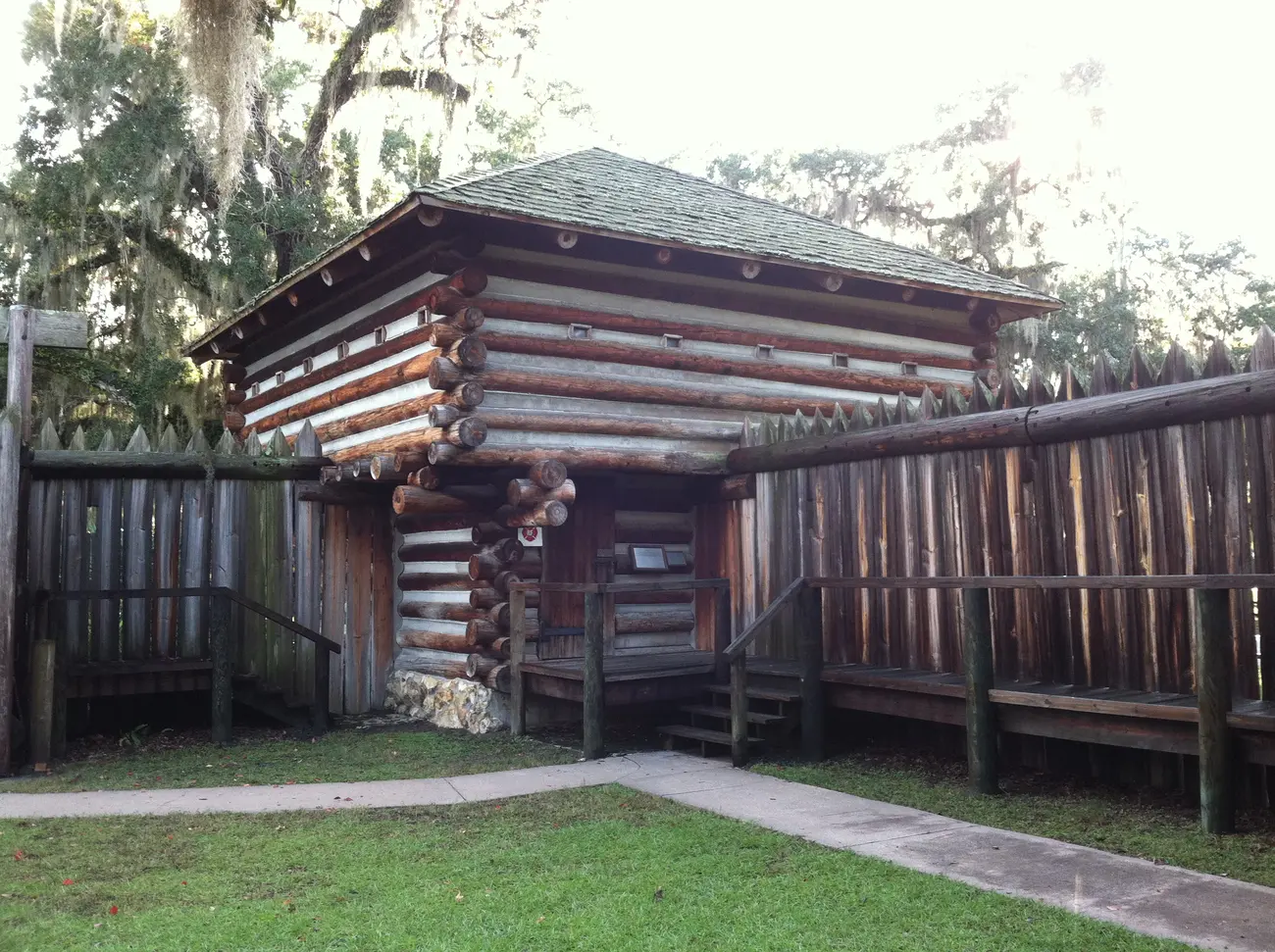
            Fort Christmas is a typical Seminole Indian War fort, made of tall pine pickets. The fort is 80 linear square feet, with two block houses that are 20 square feet each, with a storehouse and a powder magazine within the walls of the fort.

            The replica of Fort Christmas serves as a museum with exhibits focusing on the Second Seminole War and pioneer life in Florida.

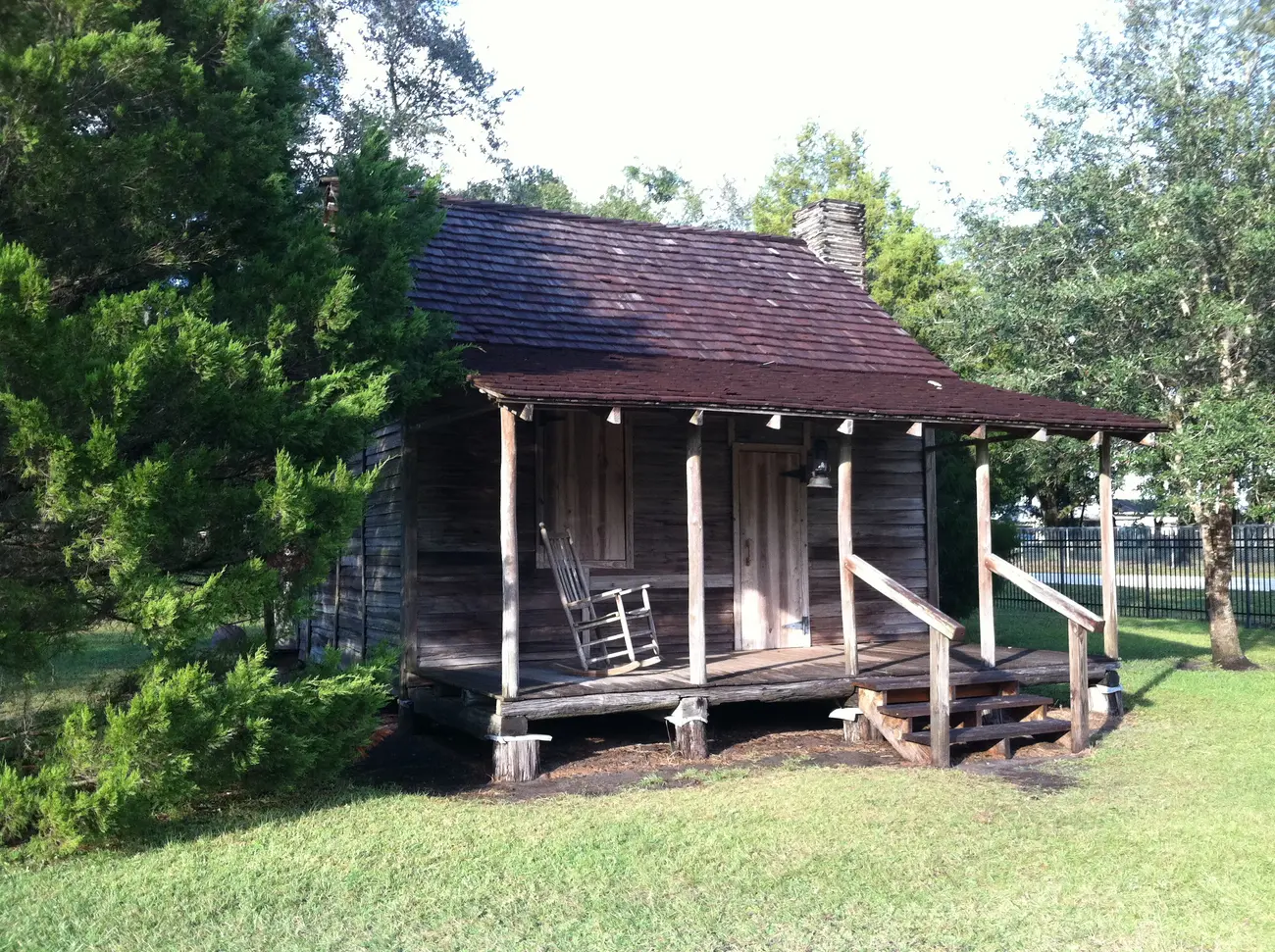
            Fort Christmas Historic Park also includes two cow camps, the Union Christmas School, and several historic Cracker houses that were relocated to the property from their original locations.

            “We try to make the homes look like someone was living there and had just stepped out for the day,” says Prewett. “We’ve got a textile exhibit, a post office exhibit, a cattle ranching exhibit, and a hunting, fishing, and trapping exhibit.”

            The Cracker houses on display belonged to families with familiar names from Florida’s pioneer days, such as Simmons, Wheeler, Bass, and Yates.

            “You see these names repeated in rural communities all throughout the state of Florida,” Prewett says.

            Several groups of students visit Fort Christmas Historic Park each week to experience a variety of educational programs.

            “My favorite program is Children’s Chores,” says Recreation Specialist Joseph Adams, “where they make and taste butter, wash clothes, snap beans, feed the chickens, and pump water. A lot of the students have chores, but the idea of the kind of chores and daily activities children had to do in the past is quite fascinating to them and very different.”

            Fort Christmas Historic Park hosts a Bluegrass Music Festival in March, but their largest annual event is Cracker Christmas, held the first full weekend in December.

            “We have about 150 to 175 crafters, people who make hand-made crafts to sell,” says Adams. “We have demonstrations of pioneer skills. The syrup making is a big thing people come back for every year. Soap making, wood carving, weaving, spinning, blacksmithing, we do about 50 to 60 different demonstrations. We also have a Confederate camp.”

            Local not-for-profit organizations provide food for Cracker Christmas, including barbeque, ‘gator bites, and beef on a stick.

            The U.S. government’s aggressive attempts to remove the Seminole tribe from Florida ultimately failed. Fort Christmas Historic Park is a living reminder of a difficult transitional period in Florida history.

            What: 37th Annual Cracker Christmas
            When: Saturday, December 6 and Sunday, December 7, 10:00 am to 4:00 pm
            Where: Fort Christmas Historic Park, 1300 Fort Christmas Road, off of SR 50

            Dr. Ben Brotemarkle is executive director of the Florida Historical Society and host of the radio program “Florida Frontiers,” broadcast locally on 90.7 WMFE Thursday evenings at 6:30 and Sunday afternoons at 4:00, and on 89.5 WFIT Sunday mornings at 7:00. The show can be heard online at myfloridahistory.org.
            PDF file(s)
            Article Number
            44
            relevantdate

              Tradition holds that the first Thanksgiving was celebrated in 1621, as English Pilgrims at Plymouth Plantation in Massachusetts shared a bountiful harvest with their Native American neighbors.

              The first Thanksgiving celebration in North America actually took place in Florida.

              Fifty-five years before the Pilgrims landed at Plymouth Rock, colonists in St. Augustine shared a feast of thanksgiving with Native Americans.

              “Not until 42 years later would English Jamestown be founded,” says eminent Florida historian Michael Gannon. “Not until 56 years later would the Pilgrims in Massachusetts observe their famous Thanksgiving. St. Augustine’s settlers celebrated the nation’s first Thanksgiving over a half century earlier, on September 8, 1565. Following a religious service, the Spaniards shared a communal meal with the local native tribe.”

              Hosting the first Thanksgiving celebration in what would become the United States is one of many “firsts” for the oldest continuously occupied European settlement in America.

              “When the Spaniards founded St. Augustine nearly 450 years ago, they proceeded to found our nation’s first city government, first school, first hospital, first city plan, first Parrish church, and first mission to the native populations,” Gannon says.

              In 1965, Gannon was a priest and historian in St. Augustine, leading several projects to help celebrate the 400th anniversary of the founding of the city. He oversaw the erection of the Great Cross on the site of the first religious service and thanksgiving feast in North America. At 208 feet tall, the stainless steel structure is the largest freestanding cross in the Western Hemisphere.

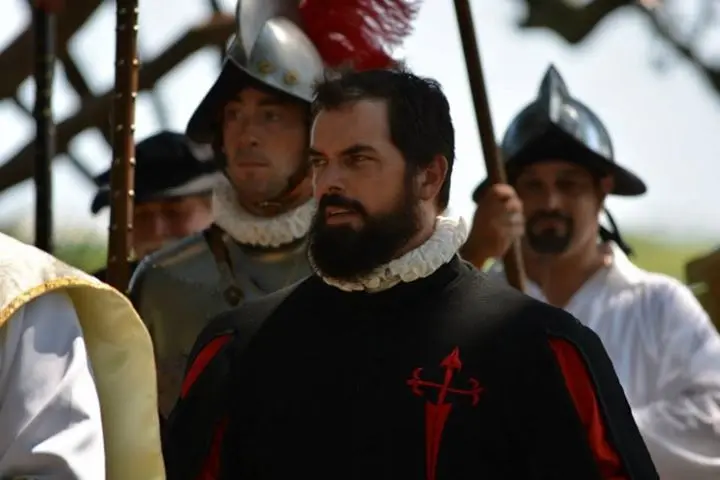
              “It was decided to build a cross, because that was central to the original ceremony, where Father Francisco López, the fleet chaplain, soon to be first pastor of the first Parrish, came ashore ahead of Pedro Menéndez de Avilés, the leader of the founding expedition, and then went forward to meet Menéndez holding a cross,” says Gannon. “Menéndez came on land, knelt and kissed the cross.”

              Every year, the September 8, 1565 landing of Menéndez and the Catholic Mass that followed is reenacted in St. Augustine with dignitaries from around the world in attendance. For many years the role of Menéndez has been played by Chad Light.

              Today, visitors to the first permanent European settlement in North America can see a statue of Father Francisco López in front of the Great Cross. The statue is placed on the approximate site where Father López held the first Catholic Mass in the city, which was attended by Native Americans. Following the service, the European settlers and the native people shared a Thanksgiving meal.

              The statue of Father López is carved out of indigenous coquina stone, a sedimentary rock comprised of compressed shells. The rough surface of the coquina symbolizes the difficult journey the Spanish endured on their voyage to Florida.

              “That statue was erected in the 1950s. It was executed by a distinguished Yugoslav sculptor, Ivan Meštrović,” says Gannon. “But it was placed in a copse of trees where it did not stand out against a dark background. The plan that the architects in 1965 came forward with was to move it to a site on open ground where the figure of Father López, with his arms in the air, would stand out against the sky. And now, at long last, the statue has been moved to that space. You can see the dramatic difference in the figure of Father López as he’s seen completely and clearly now against the sky, and directly in front of the Great Cross, which stands behind him.”

              The Spanish had only just arrived in St. Augustine when their Thanksgiving dinner was served, and they did not have the benefit of having raised crops for a year as the English Pilgrims did more than half a century later.

              The Spanish had to do the best they could with leftovers from their long voyage.

              “The menu was a stew of salted pork and garbanzo beans, accompanied with ship’s bread and red wine,” says Gannon.

              While Floridians should proudly proclaim ownership of the first Thanksgiving celebration held in what would become the United States, we may want to retain the traditional menu of turkey, stuffing, vegetables, and cranberry sauce.

              Dr. Ben Brotemarkle is executive director of the Florida Historical Society and host of the radio program “Florida Frontiers,” broadcast locally on 90.7 WMFE Thursday evenings at 6:30 and Sunday afternoons at 4:00, and on 89.5 WFIT Sunday mornings at 7:00. The show can be heard online at myfloridahistory.org.
              PDF file(s)
              Article Number
              43
              relevantdate

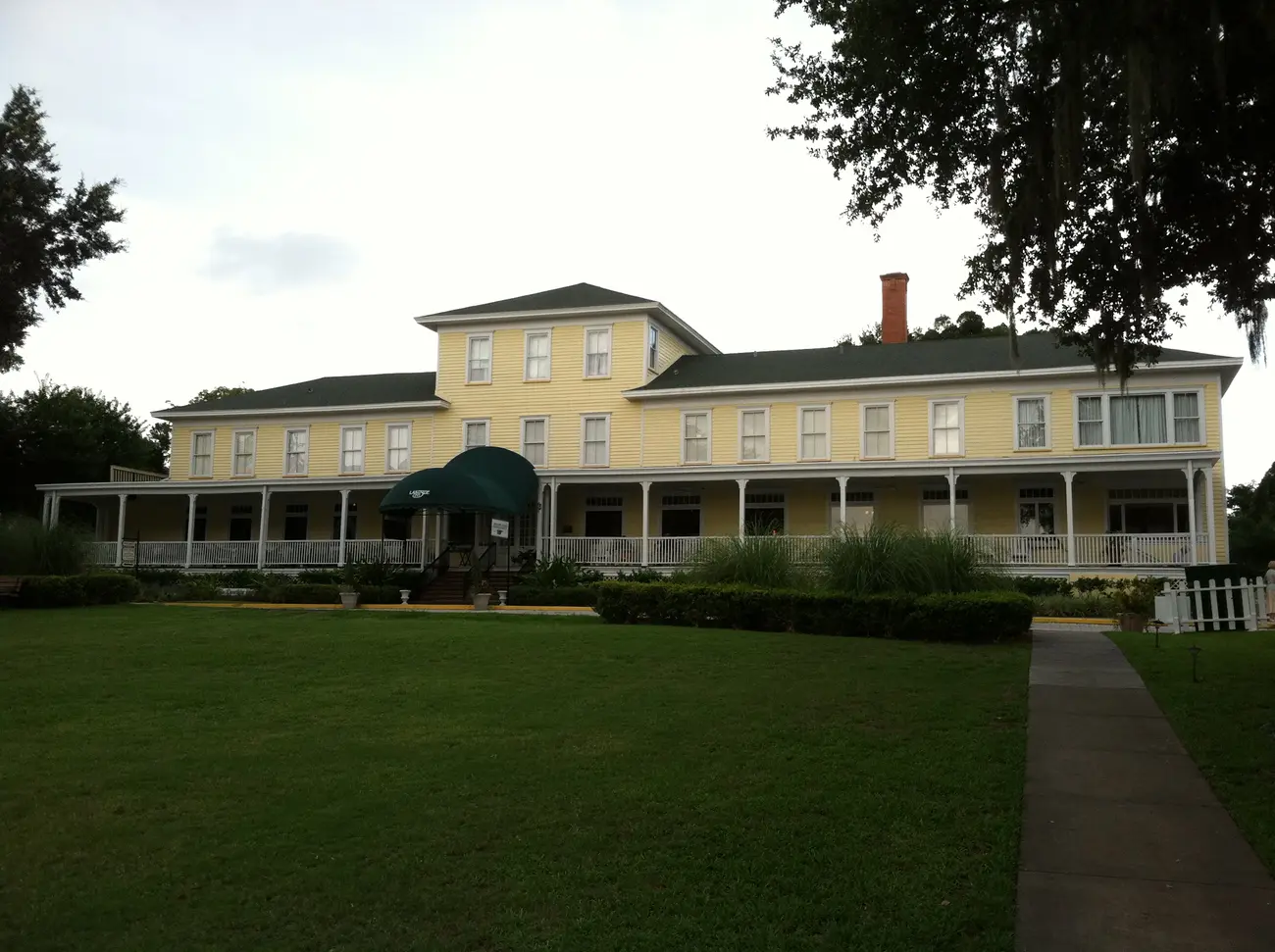
                Visitors to Mount Dora’s Lakeside Inn relax in rocking chairs on the hotel’s 200 foot long veranda, enjoying warm Florida breezes.

                People have been doing this since 1883.

                “This hotel had been solidly operating for almost 20 years before Walt Disney was even born,” says Lakeside Inn’s current owner, Jim Gunderson.

                Originally called the Alexander House, Lakeside Inn was built by Civil War veteran James Alexander and his business partners John Donnelly and John MacDonald. At the start of Florida’s tourism industry in the late 1800s and early 1900s, many hotels and inns were built throughout the state, but Lakeside Inn is one of just a few that have survived from that era.

                At first, it wasn’t easy for tourists to get to the hotel.

                “The typical way for northerners to come down would be either by train or ship to Jacksonville,” says Gunderson. “Then by lake steamer down the St. Johns River, eventually making their way through the Harris Chain of Lakes, through the Dora Canal, and here into Lake Dora. The trip from New York would take approximately a week, so they were a hearty group of tourists back in the day.”

                By 1887, a railroad depot was constructed next to the hotel, bringing northern tourists within walking distance of the inn’s front door. This shortened travel time from New York to Mount Dora by several days.

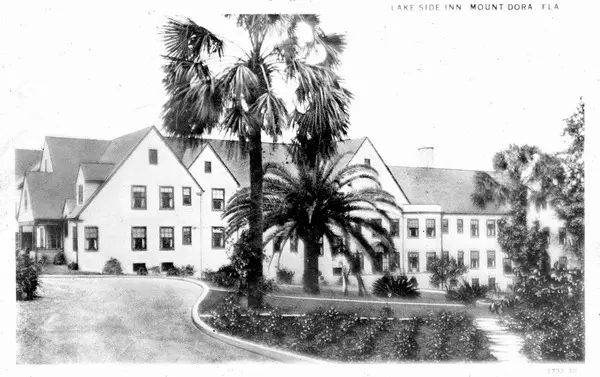
                In 1893, Alexander, Donnelly, and MacDonald sold the Alexander House to Emma Boone, who changed the name of the inn to Lake House. In 1903, Boone married George Thayer, and together they greatly expanded the facility into the group of buildings now known as Lakeside Inn.

                Mr. and Mrs. Thayer doubled the size of the inn’s main building. They built the Gate House and the Sunset Cottage, adding larger rooms and suites. Under the Thayer’s management, the hotel thrived. During this period, the hotel was only open in the winter months, typically from December to April.

                “For a number of years, the New York Chautauqua set up a winter experience down in the Mount Dora area,” says Gunderson. “In the month of March it brought in literally thousands of guests that would come down for a couple of weeks of education, knowledge building, and lectures. So things were hopping in this part of Florida tourism wise.”

                The Edgerton family owned Lakeside Inn from 1924 to 1980. The hotel continued to be successful even as nearby competitors went out of business, burned down, or were torn down to make way for new development.

                “As the coasts of Florida started to open up following the ‘Roaring 20s,’ it pulled a lot of tourism away from this area, but the inn continued to do well because people still had a love of Mount Dora,” Gunderson says.

                President Calvin Coolidge was one of the people who enjoyed extended stays at Lakeside Inn. Following the end of his presidency in 1929, Coolidge and his wife spent a month at the hotel.

                “It allowed Coolidge to just simply sit back in a rocking chair on the veranda as people do today, and just enjoy warm weather and perhaps meditative thought on life,” says Gunderson. “This was a very good place for him to be and he wrote very fondly of it in his memoirs and diaries.”

                Photographs of Lakeside Inn through the decades are displayed on the lobby walls. Today, the hotel looks much as it did in the early twentieth century.

                Maintaining an historic property is an ongoing effort that is never completely finished. Most days Gunderson’s wife Alexandra can be found working in the gardens around the grounds while he oversees various renovations. Both of the Gundersons are dedicated to restoring and maintaining the historic Lakeside Inn.

                Lakeside Inn is the anchor of Mount Dora’s historic district which has many buildings from the early twentieth century now functioning as restaurants, bars, and specialty stores.

                While the state of Florida is mostly flat, the gently rolling hills around Lakeside Inn are 184 feet above sea level, technically qualifying the town as a “mount.” Visitors who walk around the property of Lakeside Inn can boast that they have “climbed” Mount Dora.

                Dr. Ben Brotemarkle is executive director of the Florida Historical Society and host of the radio program “Florida Frontiers,” broadcast locally on 90.7 WMFE Thursday evenings at 6:30 and Sunday afternoons at 4:00, and on 89.5 WFIT Sunday mornings at 7:00. The show can be heard online at myfloridahistory.org.
                PDF file(s)
                Article Number
                42
                relevantdate

                  American war veterans and the conflicts they participated in are well represented in the archive at the Library of Florida History in Cocoa.

                  The Joseph Marshall Papers detail the activities of a Loyalist regiment in St. Augustine during the American Revolution of the 1770s and ‘80s.

                  The archive houses the East Florida Constitution, created as a result of the United States invasion of Spanish East Florida in 1812, during the Patriot War.

                  There are dozens of letters and journals from the Seminole Wars of the 1800s, including the journal of Jacob Mott, a U.S. Army Surgeon stationed in Florida.

                  Numerous Civil War documents from the 1860s include letters from Confederate General Robert E. Lee, and future Florida governor Francis P. Fleming.

                  The library’s collection of World War I memorabilia includes the Frank Rumfield Photograph Collection with images from Chapman Field in Miami.

                  Documentation of World War II features newspapers, original War Bonds posters, and the Irv Rubin Collection of wartime correspondence. Rubin and his family were the first Jewish business owners in Cocoa, with two sons and a daughter serving America during the war.

                  The archive safeguards stories of Korean War veteran, Medal of Honor recipient, and Cocoa resident Emory Bennett.

                  The archive is trying to expand one particular collection of veteran and war related materials.

                  “We have very little, actually, that deals with the Vietnam War period,” says Ben DiBiase, Director of Educational Resources for the Florida Historical Society and archivist at the Library of Florida History.

                  “We’re looking for any kind of documentation from someone who served in the armed forces during the Vietnam War era, or anyone who may have lived in Florida during that period, to help chronicle or help us to understand what that period was like in Florida history,” says DiBiase.

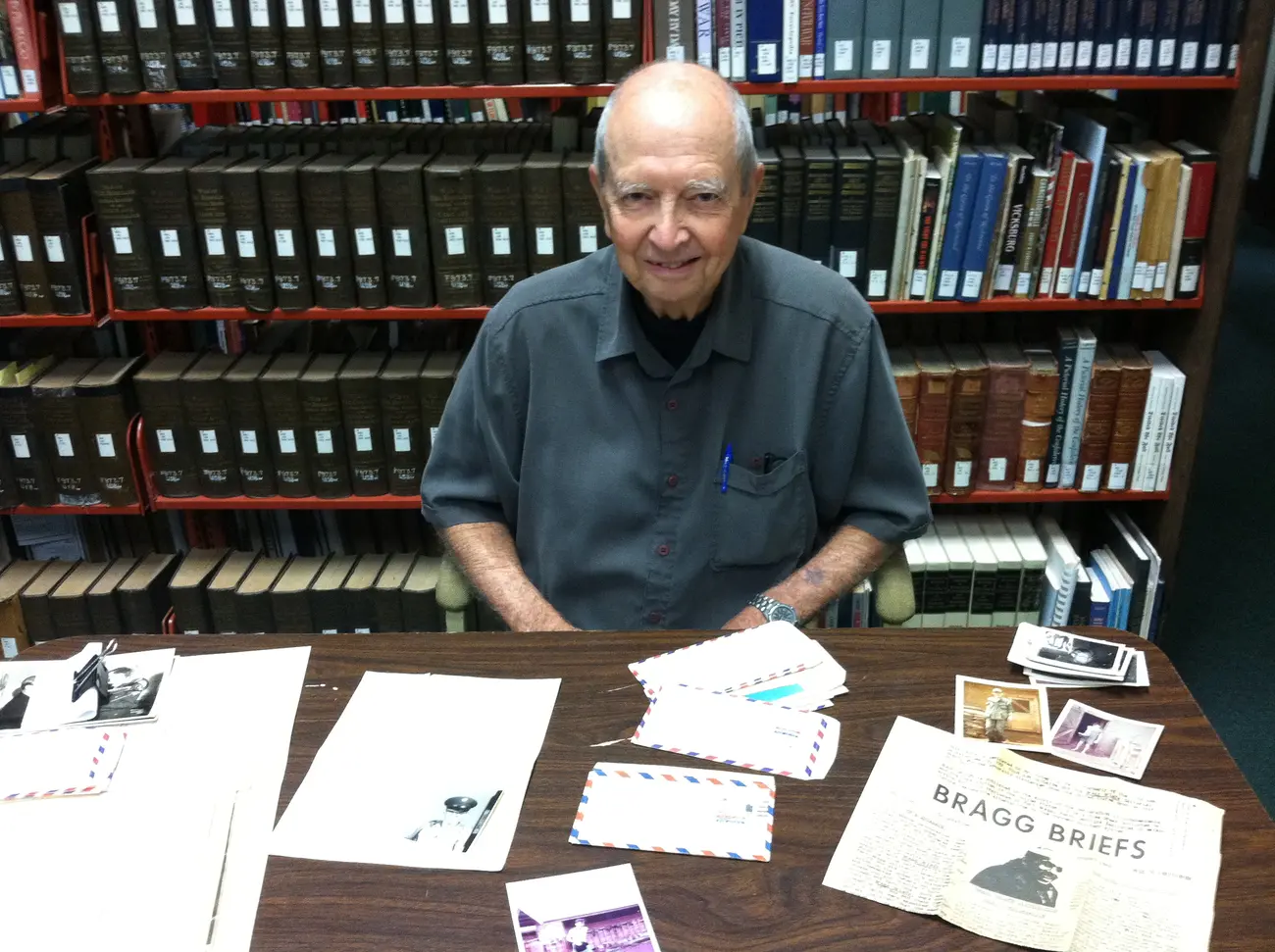
                  The effort to establish a Vietnam War Era Archive at the Library of Florida History was initiated by Florida Historical Society volunteer Bill Arbogast of Cocoa. Arbogast spent 24 years on active duty in the U.S. Army and served two tours of duty in Vietnam.

                  “We established the archive in 2013, which was the 50th anniversary of the onset of what we now know as the Vietnam War era,” says Arbogast. “1963 is what’s officially recognized by the Veterans Administration as the start of that era.”

                  Arbogast saw a significant amount of material from World War II being donated to the archive by veterans of that conflict, and thought that the time had come for Vietnam War era veterans to be encouraged do the same.

                  “We’ve got a lot of Vietnam veterans who are reaching the age where they would want their memorabilia, their documentary evidence to be archived in such a way that it would be available to future researchers,” says Arbogast.

                  The Library of Florida History is not equipped to house artifacts such as flags, insignia, or other display items. What is needed are documentary materials such as records of military service, photographs, and letters that soldiers exchanged with their families.

                  While documenting the experiences of Vietnam veterans is essential to the archive, it is hoped that a complete picture of the time period will be created.

                  “We’re looking for anyone who was impacted by the Vietnam War in one way or another,” says Arbogast. “We’re also interested in those people who looked at the war as a negative experience and participated in demonstrations against the war. Those things are important, I think, to recognize the controversy that war created among the people of this nation.”

                  Arbogast and DiBiase have created a simple process for veterans and others to submit material to the Vietnam War Era archive. A basic submission form is online at myfloridahistory.org/vietnamarchive.

                  “Even copies of original documents would be acceptable for this particular collection,” says DiBiase. “It’s really the information that we’re hoping to capture.”

                  Arbogast is hopeful that people will respond to the call for submissions to the archive.

                  “It will let us put the war in the emotional context that it created in this country. The opposition to it, the fervor of patriotism that was associated with it, the tumultuous experience that individuals had, separated from their families, separated from their loved ones.”

                  Dr. Ben Brotemarkle is executive director of the Florida Historical Society and host of the radio program “Florida Frontiers,” broadcast locally on 90.7 WMFE Thursday evenings at 6:30 and Sunday afternoons at 4:00, and on 89.5 WFIT Sunday mornings at 7:00. The show can be heard online at myfloridahistory.org.
                  PDF file(s)
                  Article Number
                  41
                  relevantdate

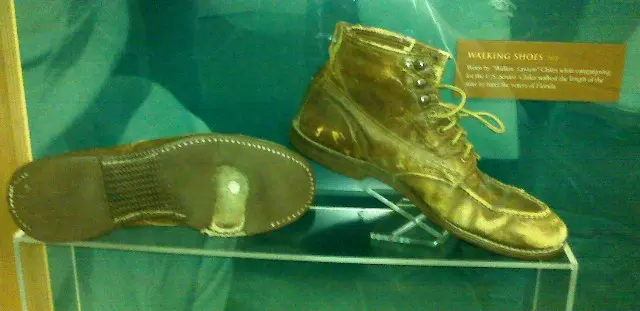
                    A pair of tattered, well-worn boots with holes on the bottom and scrapes on the side is on display in the Florida Historic Capitol Museum in Tallahassee.

                    The boots belonged to “Walkin’ Lawton” Chiles, one of Florida’s most respected and influential politicians.

                    During his four decade career in the Florida House of Representatives, the Florida State Senate, the United States Senate, and as a two-term Governor of the state, Chiles worked for transparency and accountability in government, health care reform, children’s health and education, and successfully fought the advertising practices of the tobacco industry.

                    Chiles first gained widespread notoriety by walking the entire state during his 1970 campaign for Florida’s U.S. Senate seat. He walked 1,003 miles over 91 days, shaking hands with nearly 40,000 people. Chiles began his campaign with only 4% name recognition, and ended up winning the election.

                    Born in Lakeland, Florida in 1930, Chiles grew up watching politicians bring their campaigns directly to small town audiences, addressing crowds from gazebos in public parks.

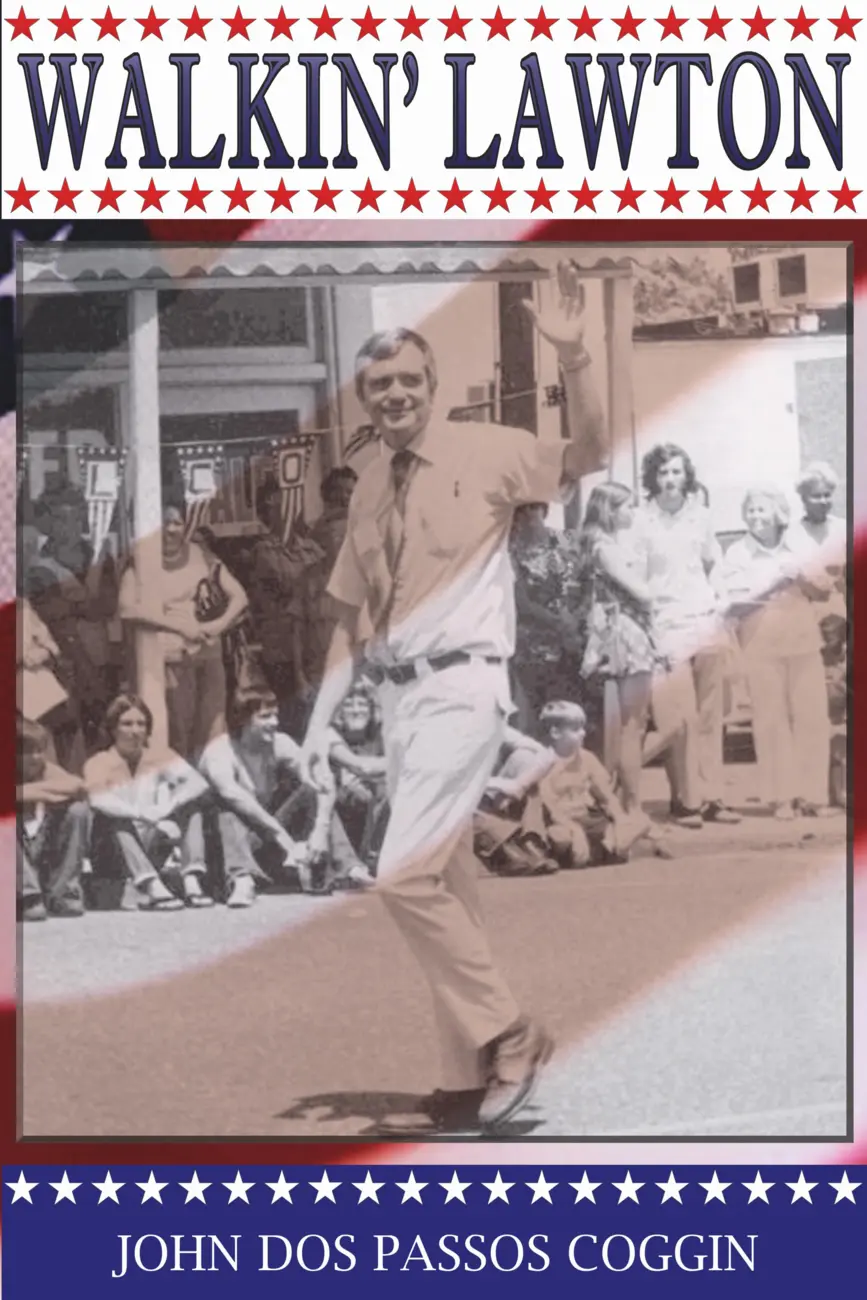
                    “I think the unique quality of his boyhood in Lakeland is something that we don’t appreciate any more in this age of mass media, of 24-hour news,” says John Dos Passos Coggin, author of the book Walkin’ Lawton.

                    “Political engagement, attendance to political rallies that occurred in downtown Lakeland, in Munn Park specifically, was both entertainment and a source of information. It was as lively and entertaining to Lakelanders like Lawton Chiles as a trip to the movies or a trip to a baseball game. It was something that brought families together, and that families would continue to talk about at the dinner table after rallies.”

                    It was this personal style of political engagement that inspired Chiles to walk the state, engaging Floridians in a meaningful dialogue. The walk captured the attention of the media, catapulting Chiles from obscurity to fame in just a few months.

                    “It was something that changed him personally,” says Coggin. “He was no longer just an average Floridian who could fade into the crowd. He was no longer an average Florida politician who could fade into obscurity. The obligation he felt to Floridians, asking for their trust, person to person, shaking thousands of hands, the walk was a promise to Florida and he did his best to keep it.”

                    As Chiles walked back and forth across the state, and from one end to the other, the conversations he had with the people of Florida changed some of his key political perspectives. Most notably, his views on the Viet Nam War evolved.

                    “From its beginnings in Century, Florida on the Alabama border to its end in Key Largo in the furthest south Florida, it was a classroom for him where he allowed himself to be a student and allowed voters to be teachers,” Coggin says. “Perhaps the most visible impressionable change was on his Viet Nam policy where he changed over the course of the walk from a hawk to a dove.”

                    Chiles’ efforts to reform health care sparked a national debate that continues today. The successful “Truth” campaign that discourages teen smoking is the result of his litigation against the tobacco industry. He championed transparency in government that resulted in important legislation. His very frugal campaigns, which were always successful, are models for modern backers of campaign finance reform.

                    His ability to connect with people made Chiles one of Florida’s most popular governors. He defeated incumbent governor Bob Martinez in 1990, and survived a challenge by Jeb Bush in 1994. Chiles died of a heart attack in the Governor’s Mansion just a few weeks before the end of his second term.

                    Chiles is remembered fondly by diverse groups of people for his sense of humor and compassion, as well as his political successes.

                    “He not only reached across racial divides in the Panhandle and rural areas in Florida, he loved the way Spanish Florida spoke, he loved Cubans, he loved mixing with all types of cultures,” Coggin says. “I think that is what made him an enduring part of Florida’s political culture from decade to decade.”

                    Aspiring political leaders today might benefit from walking a mile, or perhaps a thousand miles, in Chiles’ shoes.

                    Dr. Ben Brotemarkle is executive director of the Florida Historical Society and host of the radio program “Florida Frontiers,” broadcast locally on 90.7 WMFE Thursday evenings at 6:30 and Sunday afternoons at 4:00, and on 89.5 WFIT Sunday mornings at 7:00. The show can be heard online at myfloridahistory.org.
                    PDF file(s)
                    Article Number
                    23
                    relevantdate

                      Every Fourth of July, Floridians celebrate Independence Day with cookouts, hometown parades, and of course, fireworks as America’s victory over the British in the American Revolution is commemorated.

                      Not all American colonists supported the war, though. Many remained dedicated to King George III and England. As the American Revolution progressed, these Loyalists became refugees and were forced to flee the colonies.

                      From 1763 to 1783, Florida remained under British control; so many Loyalists came here from the American colonies to the north.

                      On December 17, 1782, as the end of the American Revolution approached, 16 ships left Charleston, South Carolina bound for the Loyalist port of St. Augustine, Florida. The ships carried hundreds of people, civilian as well as military.

                      Just before the ships could make port in St. Augustine, all 16 were lost on December 31, 1782.

                      Chuck Meide, director of the Lighthouse Archaeological Maritime Program (LAMP), was determined to find the Loyalist ships that were lost off the coast of St. Augustine in a violent New Year’s Eve storm.

                      “The first step is really to try to look at the old historic maps and figure out how the landscape has changed,” Meide says, adding that the St. Augustine inlet “was very notorious for being dangerous for ships and for changing a lot. Every time a storm would come, the channels would shift around. That’s why we have so many shipwrecks, because of the shoals.”

                      Today, modern engineering keeps the inlet in place, but historic maps show how the location of the inlet has shifted over time. Meide determined that in the late 1700s, the inlet was about 3 miles south of its present location. That’s where he decided to look for the Loyalist shipwrecks.

                      Meide and his team used high-tech equipment such as a magnetometer to search for objects made of metal, and a side-scan sonar that produces an acoustic image of the ocean floor.

                      “Basically, it’s like we’re mowing the lawn,” Meide says. “We’re going back and forth and covering an area that we feel is high probability to find shipwreck sites, and it works.”

                      When the equipment indicated that a shipwreck might be located at a particular spot, it was time for Chuck Meide to go diving. He says the conditions were difficult to work in because it was “black as midnight down there” and communication with the other archaeologists was impossible. “Imagine if you were doing archaeology on land, gagged and blindfolded.”

                      Chuck Meide was working alone in the dark water when he made the first discovery of the expedition. The magnetometer had indicated the presence of metal, so Meide was working with a ten foot pipe jetting water to clear away sand. At first he didn’t feel anything unusual. After a few times sinking the pipe “to the hilt,” Meide hit something hard.

                      In quick succession, Meide uncovered ballast stones that were common in colonial era sailing ships, an unidentifiable man-made iron object, and a wooden plank.

                      “Now my heart’s beating pretty fast,” Meide says. “The next thing I found really sealed the deal. It was another large, concreted object. It was round, it was hollow. I felt a rim and could feel inside and I realized we had a big cooking pot or a cauldron. I even felt one of the three legs on the bottom. So that suggested colonial shipwreck.”

                      That first series of discoveries was in August 2009, and the excavation has continued every summer since.

                      Subsequent discoveries helped to confirm that the shipwreck was from the colonial period, from the late 1800s, and more specifically that it was carrying British Loyalists. Meide’s team uncovered lead shot, buckles, buttons, a wine glass base, and other objects.

                      Perhaps the most definitive artifact found was a canon marked with the year 1780.

                      When the American Revolution ended in 1783, the British period was over and Florida once again became property of the Spanish. Florida became an American Territory in 1821, and was named a state in 1845.

                      As citizens of the United States, Floridians would celebrate Independence Day until 1861, when the state seceded from the Union. After Florida became part of the United States again in 1868, Fourth of July celebrations resumed and continue today.

                      Dr. Ben Brotemarkle is executive director of the Florida Historical Society and host of the radio program “Florida Frontiers,” broadcast locally on 90.7 WMFE Thursday evenings at 6:30 and Sunday afternoons at 4:00, and on 89.5 WFIT Sunday mornings at 7:00. The show can be heard online at myfloridahistory.org.
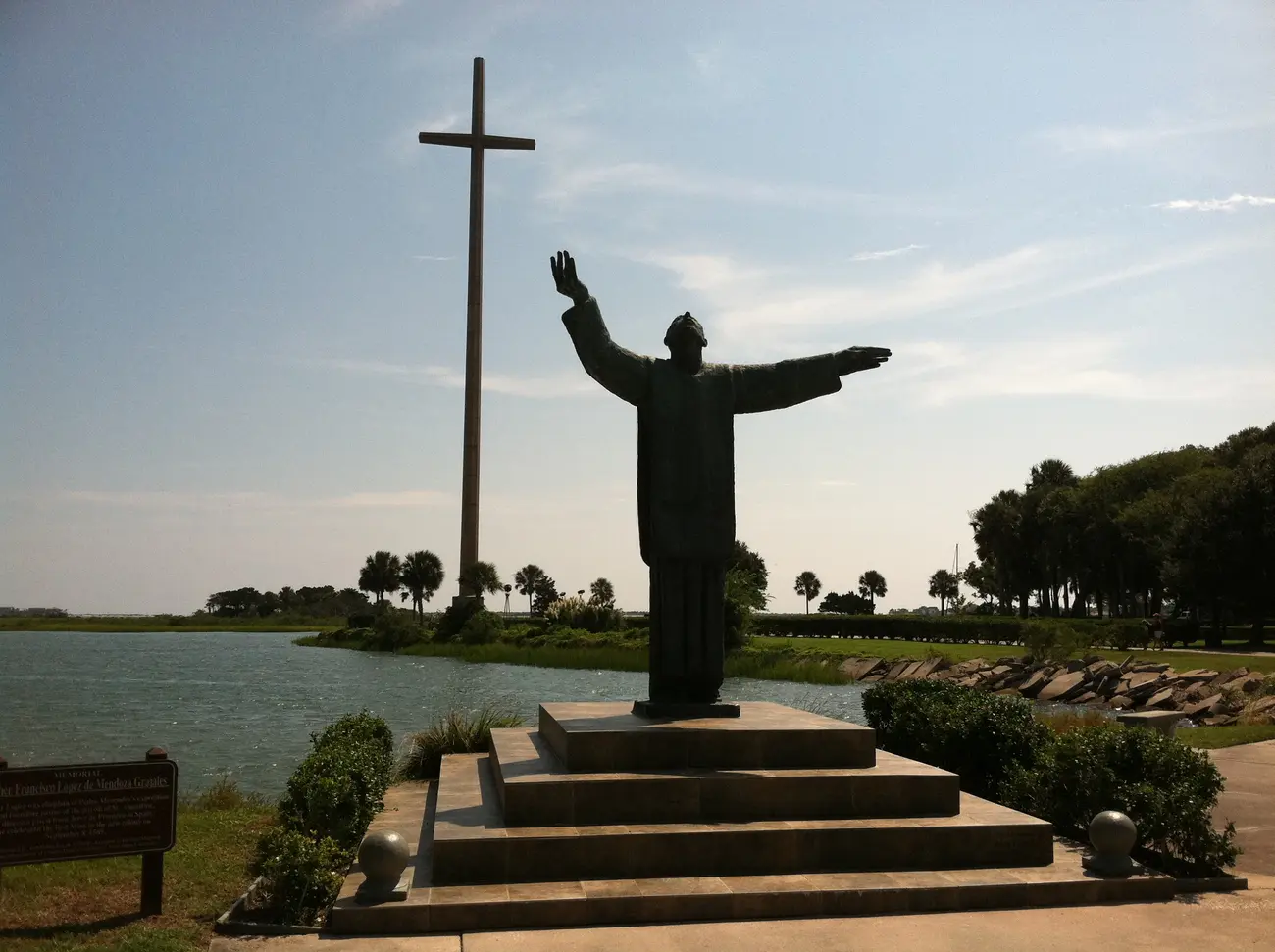
                      Photo caption info: Underwater archaeologist Chuck Meide excavates a 1780 canon from a British Loyalist shipwreck off the coast of St. Augustine.

                      PDF file(s)