Holiday

Article Number
45
relevantdate

    Christmas 1837 was not particularly festive for a group of U.S. Army soldiers marching through what is now east Orange County. Instead of celebrating with their families, the soldiers built a fort on the St. Johns River.

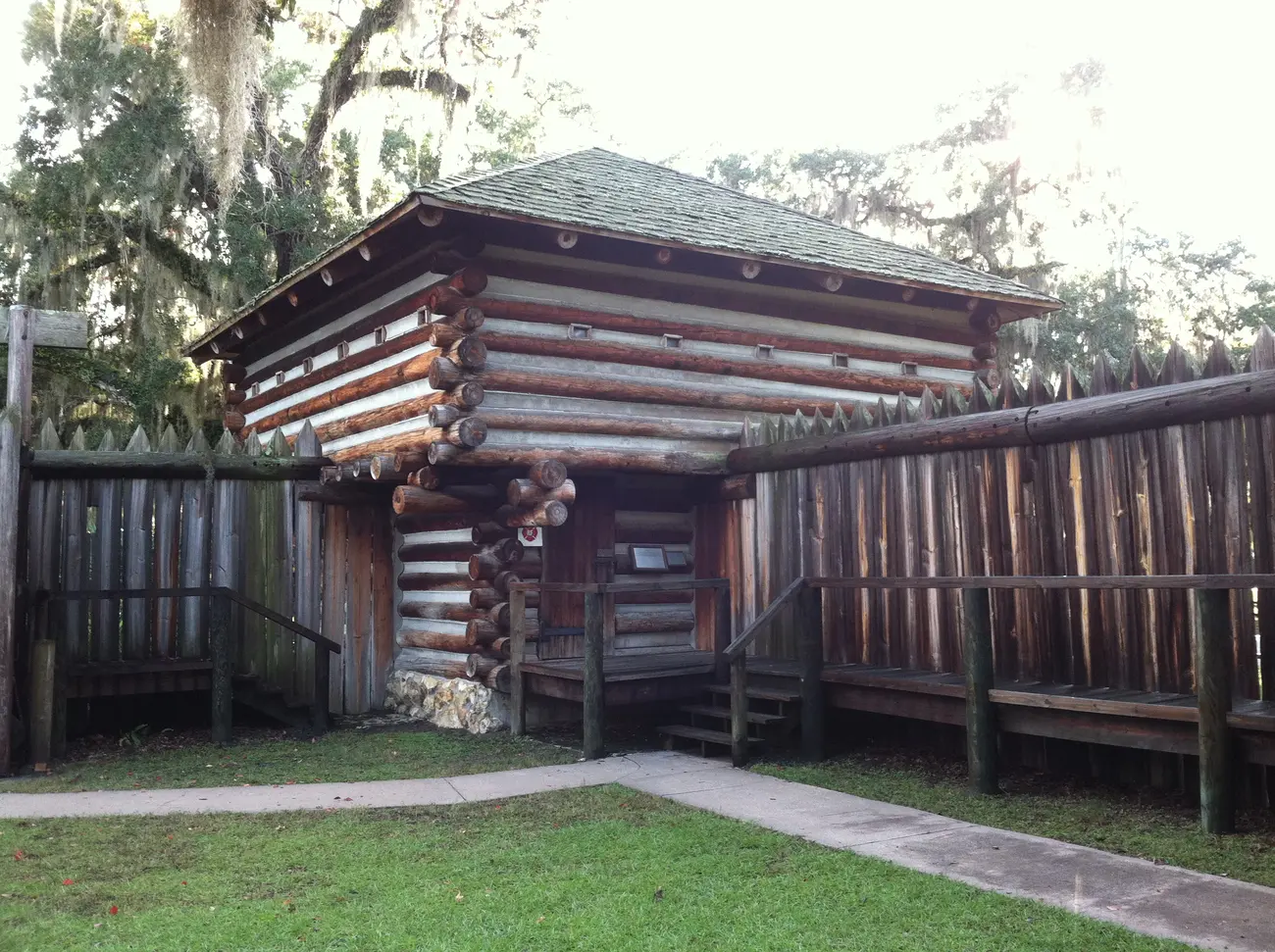
    A replica of Fort Christmas is located in the rural community of Christmas, about ten miles west of Titusville.

    Even before Florida became a Territory of the United States in 1821, the government had shown interest in acquiring the land from Spain. The fact that runaway slaves sought refuge among the Seminole Indians provided an excuse for the U.S. to invade Spanish controlled Florida.

    Beginning in the 1700s, the Seminoles, an offshoot of the Creek Indians, fled colonial expansion to the north, settling in Florida. As pioneer settlers began moving into the Florida Territory, their presence created conflicts with the Seminole Indians who were already here.

    The Seminole Indian Wars were a series of three prolonged conflicts. The most important of these was the Second Seminole Indian War, which lasted from 1835 to 1842.

    Many Florida towns grew around forts that were constructed during the Second Seminole Indian War. For example, Orlando was built around Fort Gatlin, Sanford around Fort Mellon, and Tampa around Fort Brooke.

    Some Florida cities retain their Seminole War fort names, including Fort Pierce, Fort Lauderdale, and Fort Myers.

    The U.S. Army plan was to build a series of forts in Florida, about a day’s walk apart, so the soldiers could march from one to another during the day, and have someplace safe to stay at night and store their provisions.

    “They were on a winter campaign in December of 1837,” says Vickie Prewett, Recreation Specialist at Fort Christmas Historic Park. “They arrived at a place about a mile north of here on December 25th and started building a fort. They named it Fort Christmas because they started it on Christmas Day.”

    Fort Christmas is a typical Seminole Indian War fort, made of tall pine pickets. The fort is 80 linear square feet, with two block houses that are 20 square feet each, with a storehouse and a powder magazine within the walls of the fort.

    The replica of Fort Christmas serves as a museum with exhibits focusing on the Second Seminole War and pioneer life in Florida.

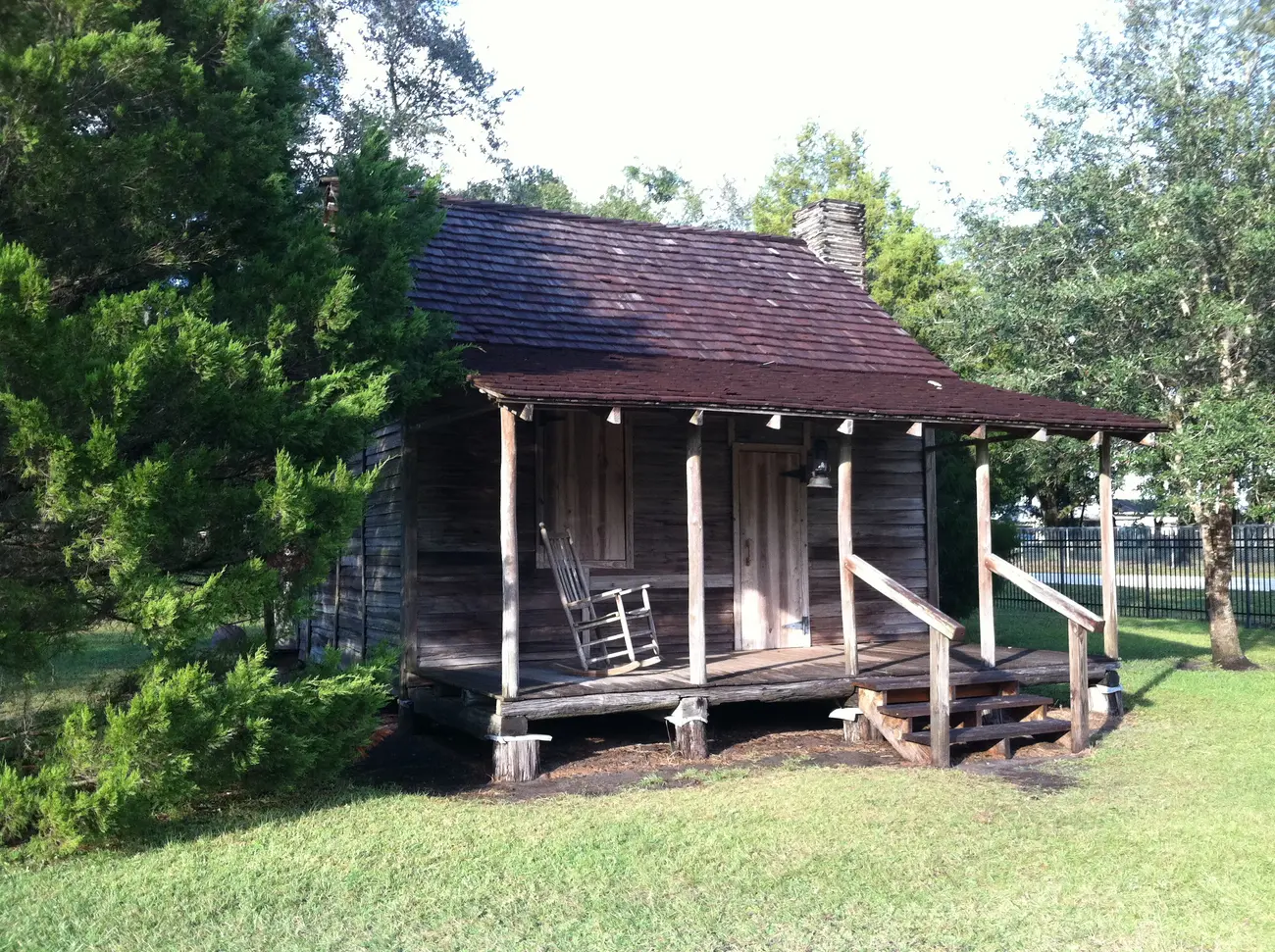
    Fort Christmas Historic Park also includes two cow camps, the Union Christmas School, and several historic Cracker houses that were relocated to the property from their original locations.

    “We try to make the homes look like someone was living there and had just stepped out for the day,” says Prewett. “We’ve got a textile exhibit, a post office exhibit, a cattle ranching exhibit, and a hunting, fishing, and trapping exhibit.”

    The Cracker houses on display belonged to families with familiar names from Florida’s pioneer days, such as Simmons, Wheeler, Bass, and Yates.

    “You see these names repeated in rural communities all throughout the state of Florida,” Prewett says.

    Several groups of students visit Fort Christmas Historic Park each week to experience a variety of educational programs.

    “My favorite program is Children’s Chores,” says Recreation Specialist Joseph Adams, “where they make and taste butter, wash clothes, snap beans, feed the chickens, and pump water. A lot of the students have chores, but the idea of the kind of chores and daily activities children had to do in the past is quite fascinating to them and very different.”

    Fort Christmas Historic Park hosts a Bluegrass Music Festival in March, but their largest annual event is Cracker Christmas, held the first full weekend in December.

    “We have about 150 to 175 crafters, people who make hand-made crafts to sell,” says Adams. “We have demonstrations of pioneer skills. The syrup making is a big thing people come back for every year. Soap making, wood carving, weaving, spinning, blacksmithing, we do about 50 to 60 different demonstrations. We also have a Confederate camp.”

    Local not-for-profit organizations provide food for Cracker Christmas, including barbeque, ‘gator bites, and beef on a stick.

    The U.S. government’s aggressive attempts to remove the Seminole tribe from Florida ultimately failed. Fort Christmas Historic Park is a living reminder of a difficult transitional period in Florida history.

    What: 37th Annual Cracker Christmas
    When: Saturday, December 6 and Sunday, December 7, 10:00 am to 4:00 pm
    Where: Fort Christmas Historic Park, 1300 Fort Christmas Road, off of SR 50

    Dr. Ben Brotemarkle is executive director of the Florida Historical Society and host of the radio program “Florida Frontiers,” broadcast locally on 90.7 WMFE Thursday evenings at 6:30 and Sunday afternoons at 4:00, and on 89.5 WFIT Sunday mornings at 7:00. The show can be heard online at myfloridahistory.org.
    PDF file(s)
    Article Number
    44
    relevantdate

      Tradition holds that the first Thanksgiving was celebrated in 1621, as English Pilgrims at Plymouth Plantation in Massachusetts shared a bountiful harvest with their Native American neighbors.

      The first Thanksgiving celebration in North America actually took place in Florida.

      Fifty-five years before the Pilgrims landed at Plymouth Rock, colonists in St. Augustine shared a feast of thanksgiving with Native Americans.

      “Not until 42 years later would English Jamestown be founded,” says eminent Florida historian Michael Gannon. “Not until 56 years later would the Pilgrims in Massachusetts observe their famous Thanksgiving. St. Augustine’s settlers celebrated the nation’s first Thanksgiving over a half century earlier, on September 8, 1565. Following a religious service, the Spaniards shared a communal meal with the local native tribe.”

      Hosting the first Thanksgiving celebration in what would become the United States is one of many “firsts” for the oldest continuously occupied European settlement in America.

      “When the Spaniards founded St. Augustine nearly 450 years ago, they proceeded to found our nation’s first city government, first school, first hospital, first city plan, first Parrish church, and first mission to the native populations,” Gannon says.

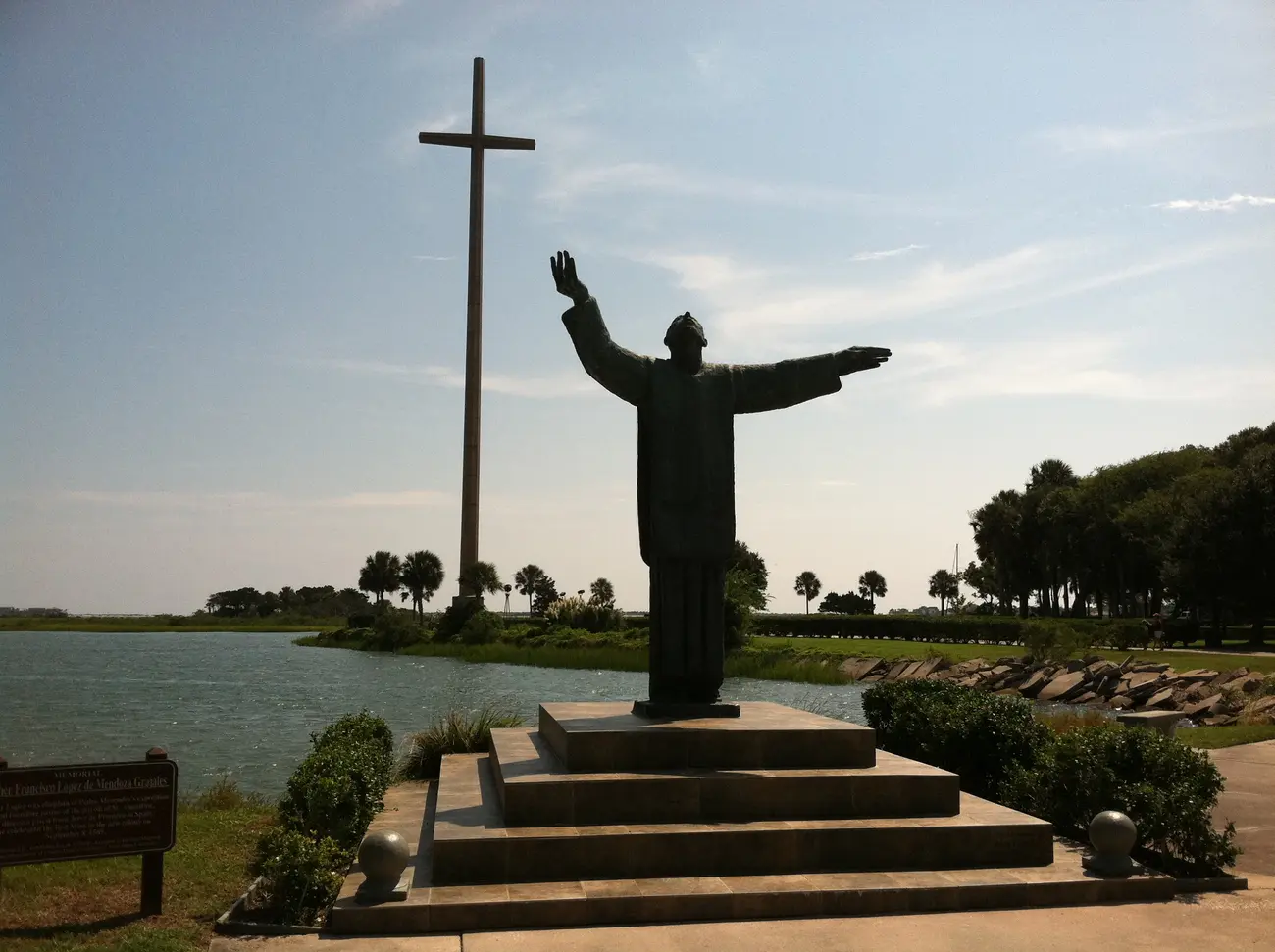
      In 1965, Gannon was a priest and historian in St. Augustine, leading several projects to help celebrate the 400th anniversary of the founding of the city. He oversaw the erection of the Great Cross on the site of the first religious service and thanksgiving feast in North America. At 208 feet tall, the stainless steel structure is the largest freestanding cross in the Western Hemisphere.

      “It was decided to build a cross, because that was central to the original ceremony, where Father Francisco López, the fleet chaplain, soon to be first pastor of the first Parrish, came ashore ahead of Pedro Menéndez de Avilés, the leader of the founding expedition, and then went forward to meet Menéndez holding a cross,” says Gannon. “Menéndez came on land, knelt and kissed the cross.”

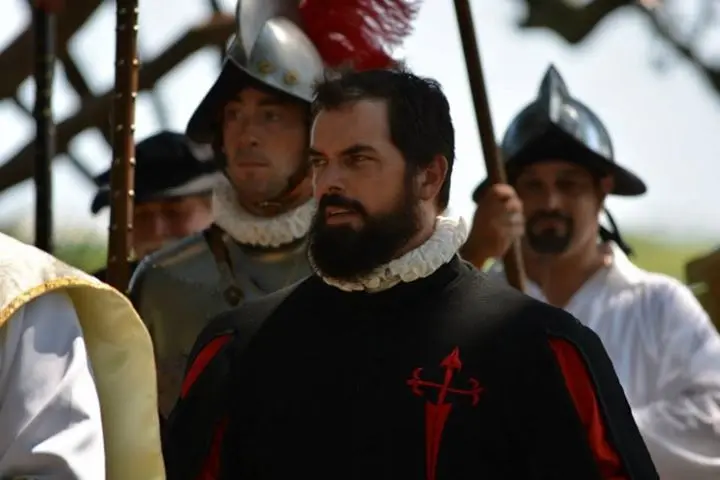
      Every year, the September 8, 1565 landing of Menéndez and the Catholic Mass that followed is reenacted in St. Augustine with dignitaries from around the world in attendance. For many years the role of Menéndez has been played by Chad Light.

      Today, visitors to the first permanent European settlement in North America can see a statue of Father Francisco López in front of the Great Cross. The statue is placed on the approximate site where Father López held the first Catholic Mass in the city, which was attended by Native Americans. Following the service, the European settlers and the native people shared a Thanksgiving meal.

      The statue of Father López is carved out of indigenous coquina stone, a sedimentary rock comprised of compressed shells. The rough surface of the coquina symbolizes the difficult journey the Spanish endured on their voyage to Florida.

      “That statue was erected in the 1950s. It was executed by a distinguished Yugoslav sculptor, Ivan Meštrović,” says Gannon. “But it was placed in a copse of trees where it did not stand out against a dark background. The plan that the architects in 1965 came forward with was to move it to a site on open ground where the figure of Father López, with his arms in the air, would stand out against the sky. And now, at long last, the statue has been moved to that space. You can see the dramatic difference in the figure of Father López as he’s seen completely and clearly now against the sky, and directly in front of the Great Cross, which stands behind him.”

      The Spanish had only just arrived in St. Augustine when their Thanksgiving dinner was served, and they did not have the benefit of having raised crops for a year as the English Pilgrims did more than half a century later.

      The Spanish had to do the best they could with leftovers from their long voyage.

      “The menu was a stew of salted pork and garbanzo beans, accompanied with ship’s bread and red wine,” says Gannon.

      While Floridians should proudly proclaim ownership of the first Thanksgiving celebration held in what would become the United States, we may want to retain the traditional menu of turkey, stuffing, vegetables, and cranberry sauce.

      Dr. Ben Brotemarkle is executive director of the Florida Historical Society and host of the radio program “Florida Frontiers,” broadcast locally on 90.7 WMFE Thursday evenings at 6:30 and Sunday afternoons at 4:00, and on 89.5 WFIT Sunday mornings at 7:00. The show can be heard online at myfloridahistory.org.

      PDF file(s)