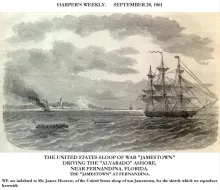
1861 - The Federal Ship Jamestown, operating off the east coast near Fernandina, captured the Alvarado, the first reported capture of a blockade runner in Florida waters. The residents of Amelia Island, who witnessed the capture, attempted to come to the aid of the stricken blockade runner. The Union ship captain, fearing a rescue foray from the nearby shore, ordered the Alvarado burned.
Florida Frontiers
A Tag for nodes that are relevant to Florida Frontiers. For example if an artilce is about Florida Frontiers and you would like a 'View' to sorty by Tag criteria for it... us it.
1842 - The Armed Occupation Act was passed by Congress on this date. Each settler who would settle and cultivate five acres or more of land in eastern and southern Florida for a period of five years would receive 160 acres of land and one year’s rations from the Federal government. Settlers were expected also to provide militia service, if needed, to control the activities of the warring Seminole Indians. This was the prelude to the official declaration of the end of the Second Seminole War on August 14, 1842.
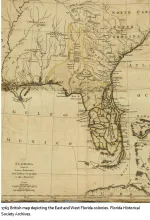
1763 - Spain transfers title of Florida to Britain in exchange for the return of the City of Havana, Cuba, which had been captured when Spain allied itself with France in the French and Indian War. Britain controlled Florida from 1763 until 1783, when it again became a Spanish possession at the end of the American Revolution. During this "British Period" when the Union Jack flew over Florida, the British divided Florida into two territories: East Florida and West Florida.
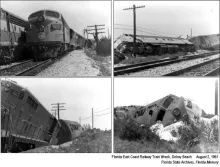
1961 - A Florida East Coast Railway train wrecked in Delray Beach on this date. Derailments and railroad related accidents are not uncommon in Florida, although rail safety has become more advanced in the last few decades, helping to ensure safe passage for trains, pedestrians and motorists along Florida’s many miles of tracks.
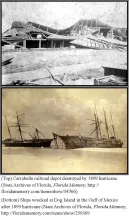
1899 – A powerful category 2 hurricane known as the 1899 Carrabelle hurricane made landfall near Apalachicola on this date. The storm was first observed near the Dominican Republic on July 28th, and then briefly made landfall over Islamorada before entering the Gulf of Mexico on July 30th. Damage in Florida’s panhandle was extensive. The city of Carrabelle was almost completely wiped from the map, at least 57 vessels were destroyed, and the small communities of Lanark, St. Teresa and McIntyre also suffered significant damage.
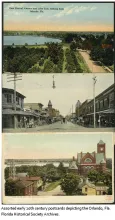
1875 – The town of Orlando was incorporated on this date. The total population was 85 inhabitants, 22 of whom were qualified voters; William Jackson Brack was elected as the first mayor. The town originally had an area of only 4 square miles. It was later incorporated as a city in 1885. Although the origins of the name Orlando are disputed, it is clear that first European settlement began during the Second Seminole War with the construction of Fort Gatlin. When Mosquito County was broken up in 1845, Orlando became the county seat of the newly created Orange County.
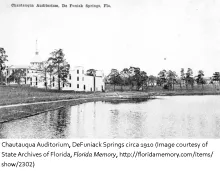
1901 – DeFuniak Springs in Walton County was incorporated as a town on this date. The town was founded by the Pensacola and Atlantic Railway and was named after Frederick R. DeFuniak, the vice-president of the Louisville and Nashville Railroad, P&A’s parent company. DeFuniak Springs was the sight of a large Chautauqua facility which was popular in the early part of the 20th century. DeFuniak Springs was also the site of the Florida Normal College, which became part of Florida State University.
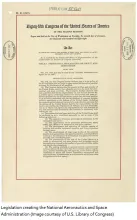
1958 - President Dwight D. Eisenhower signed the National Aeronautics and Space Act, creating NASA. The Space Age changed Florida forever, drawing thousands of new workers to the state and transforming Cape Canaveral into a hub of aeronautics, electronics design, and manufacturing. NASA still plays a prominent role in shaping Florida’s history through the research and testing of new commercial spacecraft, advanced aeronautics research, unmanned deep space missions and much more.
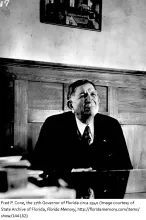
1948 – Frederick Preston Cone, the 27th Governor of Florida died at his home in Lake City on this date. Born on 28th, 1871 in Columbia County, Cone attended the Florida Agricultural College. Despite never graduating with a law degree, Cone passed the Florida Bar Exam and began practicing law in Lake City. He was elected Mayor of Lake City for three consecutive terms before serving in the State Senate from 1907 -1913. When Cone began his tenure as Governor in 1937, Florida was deep into the Great Depression and new legislation was difficult to pass.
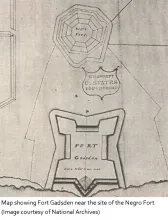
1816 – The first major military engagement of the First Seminole War, the Battle of Negro Fort, took place on this date. The fort, located on Prospect Bluff on the Apalachicola River, was originally established by the British during the War of 1812. Many of the African Americans fighting with the British stayed at the post. In the ensuing years, many runaway slaves from Georgia and Florida moved to the fort with approximately 800 people living there at the time of the attack.