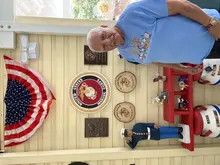
Louis “Lou” Boria Jr. was born in Brooklyn, New York, in 1927. A child of Puerto Rican parents, he recalled the contentious racial climate growing up in Brooklyn during the 1930s and early 1940s. He vividly remembered the racially charged statements he received as an adolescent, particularly “F— Puerto Rican this, F— Puerto Rico that,” and how that largely influenced his identity and his decision to join the Marine Corps underage in 1943. Boria served as a rifleman in a Marine Corps platoon throughout World War II, making his first landing at the Battle of Leyte Gulf. In addition to briefly describing his combat experiences, Boria shared stories outside of combat, particularly the racial dynamics between him as a Puerto Rican and his other white and Black military men. During his time in the Pacific Theater, Boria suffered a concussion from incoming mortars while covering shotgun for a Forward Observer. Boria continued his military service through the Korean War, recollecting his combat experience in Kimpo and Seoul and how he trained and mentored a group of Puerto Ricans initially unwilling to do their jobs. Boria withstood another injury in Korea when mortars sent him back about ten feet from where he stood as he radioed in the coordinates of the incoming mortars. A two-time Purple Heart recipient, Boria retired from the Marine Corps in 1957. He explained the various jobs he held during his post-military career, emphasizing how his Puerto Rican ethnic identity influenced such experiences. In 1991, Boria moved to Central Florida in which he outlined his reasons at the end of the conversation. Additionally, he explained how he and others founded the church that currently resides on Welch Road in Apopka, Florida.
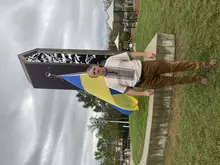
Vasyl Boichook was born in Ukraine in 1966. Vasyl recounted his adolescent experience in the former Soviet Union throughout the 1980s, particularly as the empire opened and eroded. He explained his inspiration for studying artistic woodworking and how he developed his versatility in a school he attended in Ukraine. In December 1991, Vasyl emigrated to the United States, approximately a few days after Ukrainians ratified their independence. He emphasized how his decision to leave his home country stemmed from a larger desire to fulfill his artistic and individual potential. In 1993, he moved to Florida after spending two years in New York working different jobs, acclimating to life in a different world. In Florida, Vasyl worked in the field he specialized in—woodworking—and created his own business once he understood certain entrepreneurial practices from his first cabinet-making job in the state. In 2021, Vasyl founded the Ukrainian Project Incorporation and extensively discussed its inspiration, significance, and evolution over the past four years. He shared his thoughts about the ongoing Russo-Ukrainian War and how his organization and the Annual Festival he hosts have responded to the conflict. Lastly, Vasyl described his broader observations living in Central Florida for the past three decades.

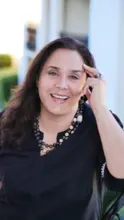
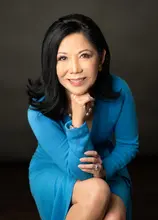
Valerie Boey Ramsey was born in New York in 1967. She recollected memories of her upbringing, particularly growing up in a middle-class Chinese-American home in New York. She shared stories of her family’s Asian lineage. In 1991, Valerie moved to Florida to work for WINK News in Fort Myers. In 2003, TSP Tampa hired her, initially covering state politics in Tallahassee. Valerie left TSP to join FOX 35 in Orlando in 2008. Additionally, Valerie highlighted how she has supported the Asian American community in Central Florida through her reporting.

Thamara Bejarano was born in Caracas, Venezuela in 1978. A daughter of two journalists, Thamara recalled her experience growing up in Caracas, especially in the 1990s. She explained in detail the 1998 election, in which Hugo Chavez gained power, leading to the kleptocracy that continues to plague the nation today. Given that Thamara and her parents worked in media, she highlighted how the Chavez and Nicolas Maduro regimes impacted her family professionally and personally. Thamara recounted a particularly harrowing incident during her time as a professor of Film Studies at the Universidad Central de Venezuela, which ultimately led her to flee the country. Thamara arrived in the United States in 2014, building several important and impressive cultural organizations that highlight different perspectives across the varied cultural landscape of Latin Americans in Orlando, specifically, and other underserved communities in the United States generally. Among these cultural organizations that Thamara emphasized included Open Scene, Prolifica, Latin Festival of Performing Arts, and Open Zine. Lastly, she shared her broader experiences living in Orlando as a Venezuelan woman and entrepreneur, particularly how the city has changed culturally and how the cultural landscape might change in the future.

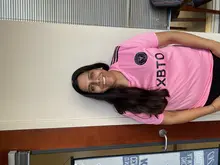
Jasdeep “Jazzy” Aujla was born in Barking, East London, United Kingdom, in 1990. She emigrated to Central Florida at four years old with her father. Economic difficulties prompted Jasdeep’s parents to leave the UK, while relatives already living in Central Florida facilitated their decision and transition to the Sunshine State. As an Indian immigrant, Jasdeep recalled early challenges acclimating to American culture, from language to aesthetics. She emphasized how the aftermath of 9/11 affected racial views regarding brown people, recounting a personal incident that happened to her while returning home from school. She remembered how, as a teenager, she disassociated from her Indian heritage in an attempt to fit into certain American “clichés,” a concept Jasdeep used constantly throughout her oral history. Jasdeep not only highlighted cultural identity crises throughout moments in her personal life but also connected such instances to larger racial, cultural, and social issues that most immigrants or children of immigrants face when living in America. Additionally, given that she spent her entire life in different parts of the state (resided in Central Florida, graduated college in North Florida, attended law school in South Florida), Jasdeep provided insightful and nuanced observations about Florida generally and what the state has represented for Indians and other ethnic groups since she arrived in 1994.

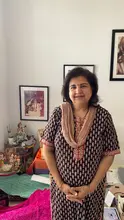
Surabhi Adesh was born in Bareilly, Uttar Pradesh, India, in 1965. Her father received a position with the Indian High Commission to teach Hindi music and culture in the West Indies and report on the broader conditions of the Indian diaspora in that region. As a result, in 1966, when Surabhi was around a year old, the family moved to Trinidad. In 1967, her father established the Bharatiya Vidya Sansthhaan Institute, also known as the Institute of Indian Knowledge, with a mission to reacquaint the Indian diaspora in Trinidad with Hindi culture through music, philosophy, and history. At eleven years old, Surabhi assisted her father in the Institute, teaching musical classes. In 1981, Surabhi and her family moved to Toronto, Canada, to expand the Institute's reach, highlighting the contributions they made in that region and the similarities and differences encountered while engaging with the Indian community in both areas. Surabhi also discussed her personal experiences through that comparative lens between both places. Financial difficulties prompted Surabhi and her family to relocate from Toronto to Orlando, Florida, in 1999. Upon arrival, Surabhi maintained her father’s legacy of teaching Indian music and knowledge through classes she held mainly at her house. Her involvement with the Asian Cultural Association facilitated this educational endeavor. Surabhi discussed her performances throughout Orlando, her teaching methods, her impact on the Indian community in Orlando, and what she learned about Indians and Orlando through her teaching career. Additionally, she highlighted the significance of maintaining Indian culture, both generally and specifically, through her pedagogy, especially in the face of what she called a “dilution” of culture generationally. Lastly, she shared her broader observations about Florida, including the state’s continuities and changes over the past quarter-century, as well as the challenges it faces in the contemporary moment (c. 2025).

Episode Number
5
Program Date
  • Spanish bring Citrus to St. Augustine Florida

    Fast Florida History #5 - Spanish bring Citrus to St. Augustine Florida

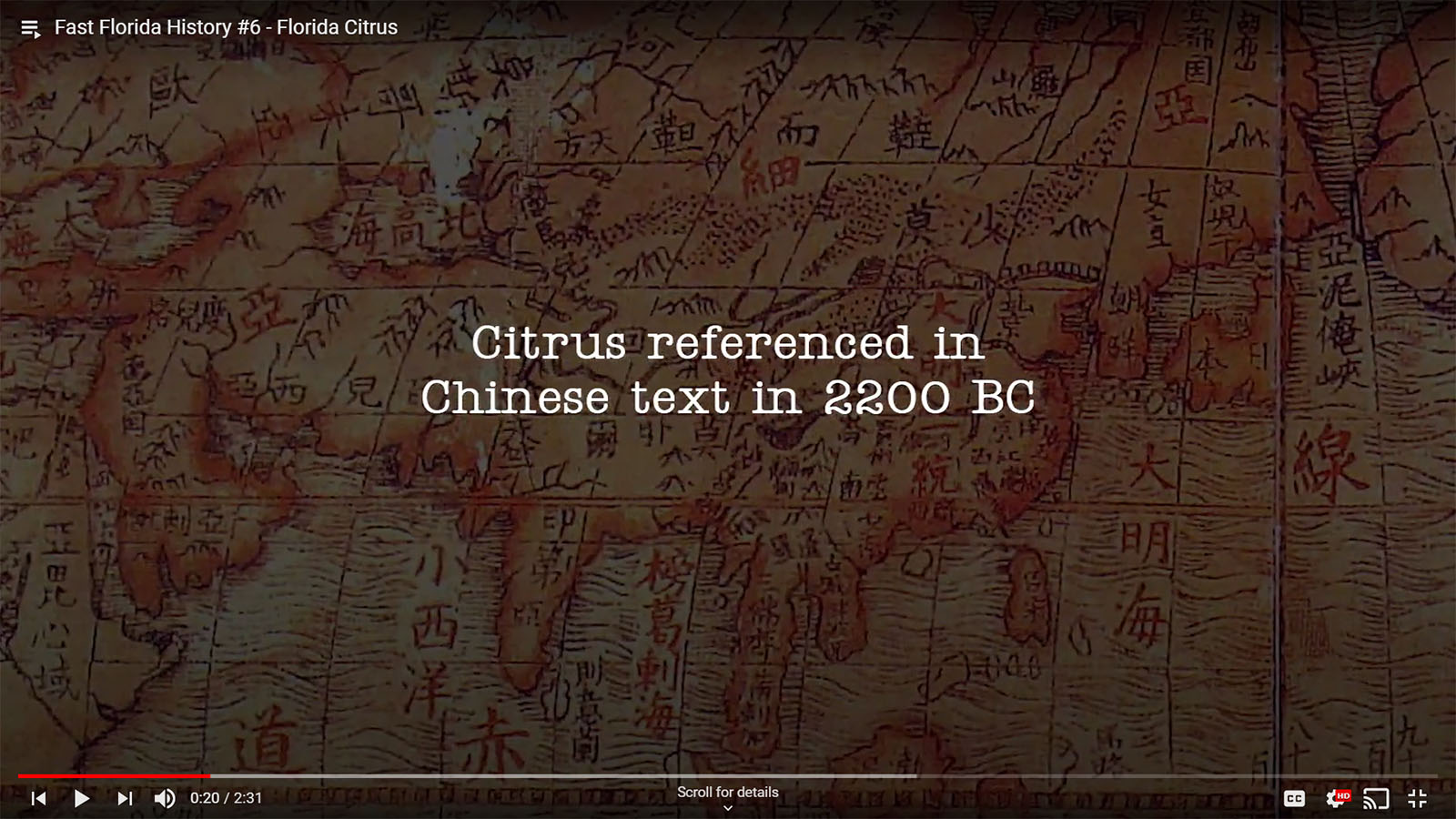
  • Citrus in China as early as 2200 BC

    Fast Florida History #5 - Citrus in China as early as 2200 BC

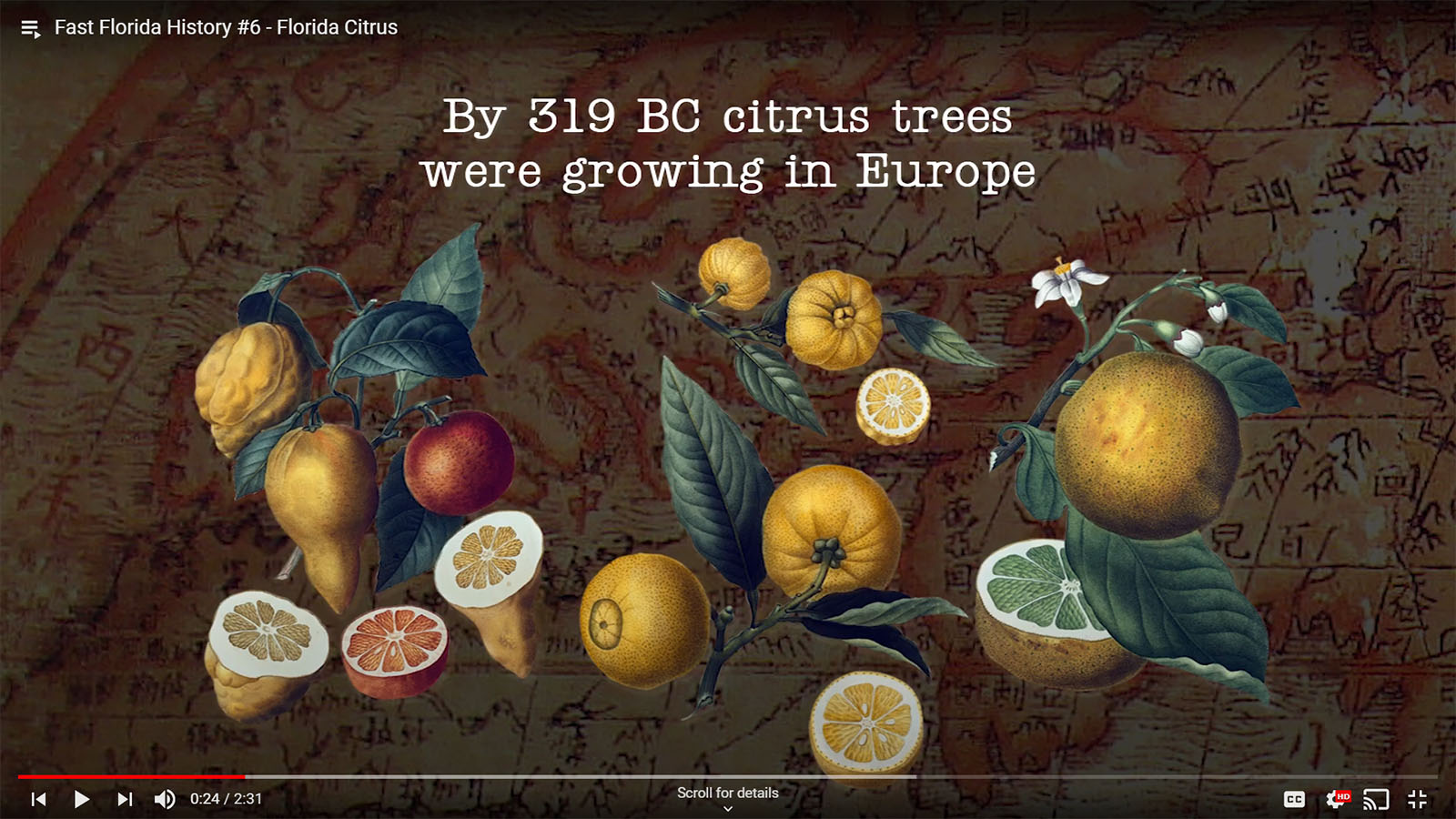
  • Citrus in Europe by 319 BC

    Fast Florida History #5 - Citrus in Europe by 319 BC

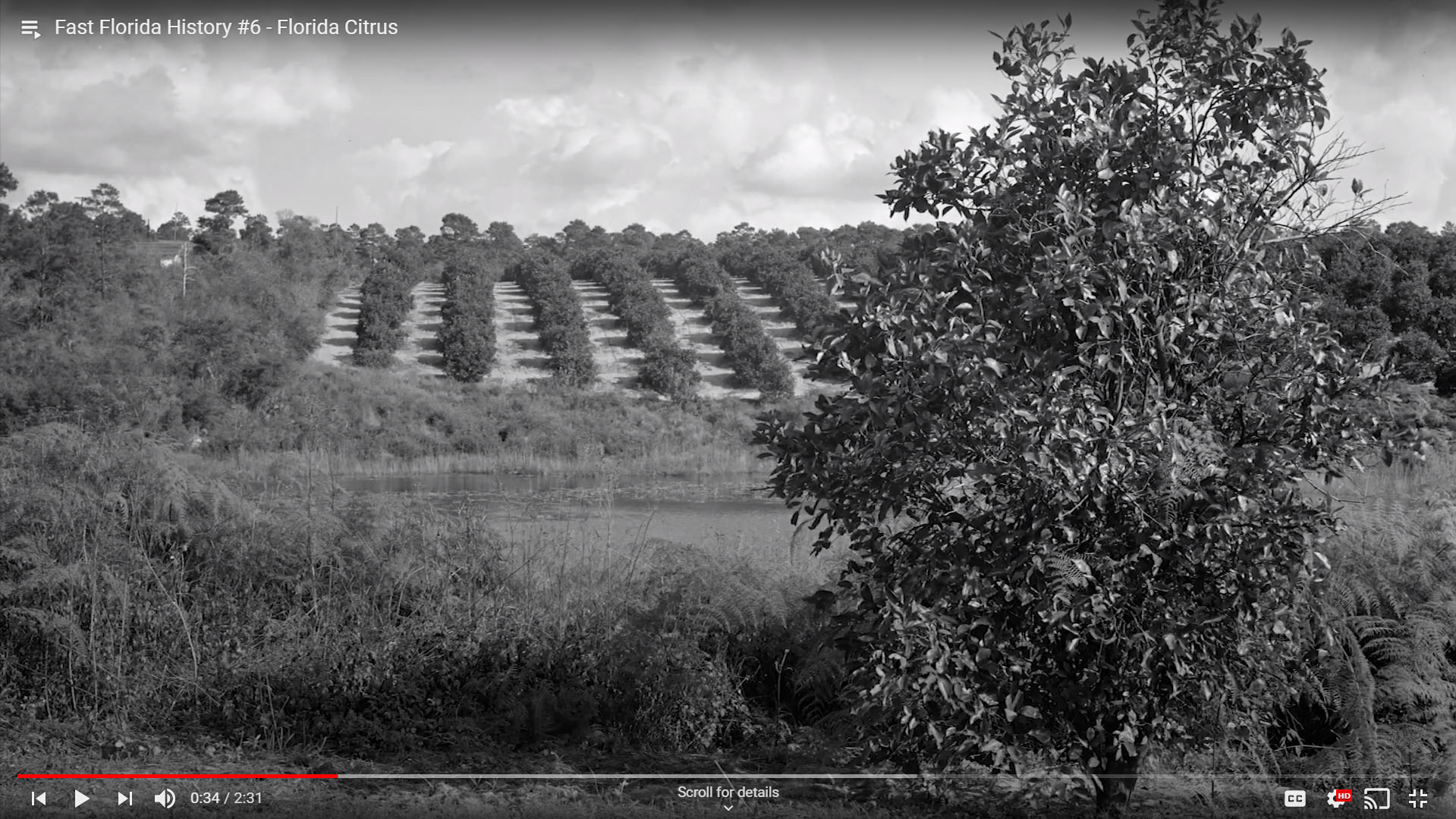
  • Florida Citrus Production

    Fast Florida History #5 - Florida Citrus Production

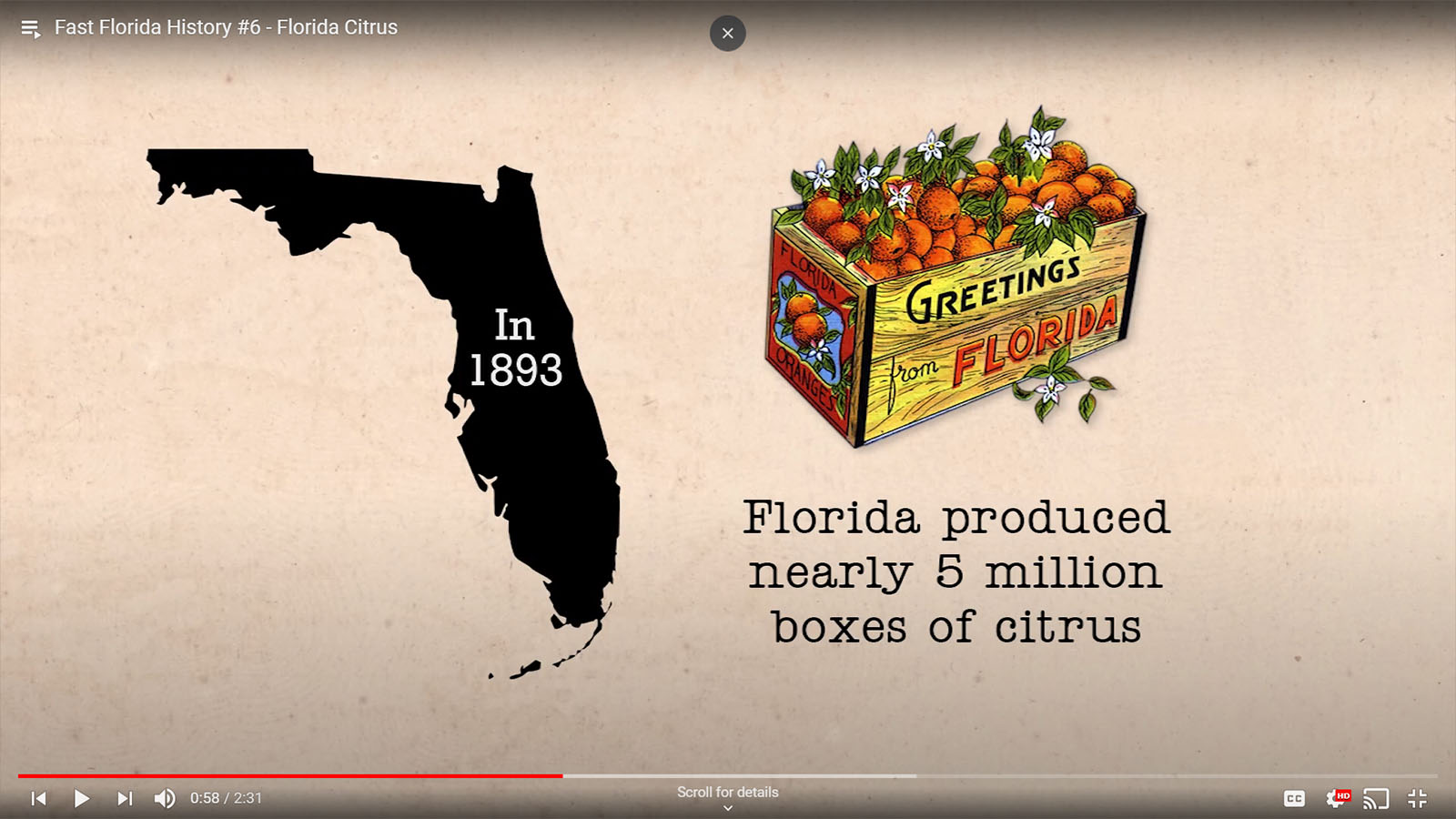
  • 1893 Florida produces near 5 million boxes of citrus

    Fast Florida History #5 - 1893 Florida produces near 5 million boxes of citrus

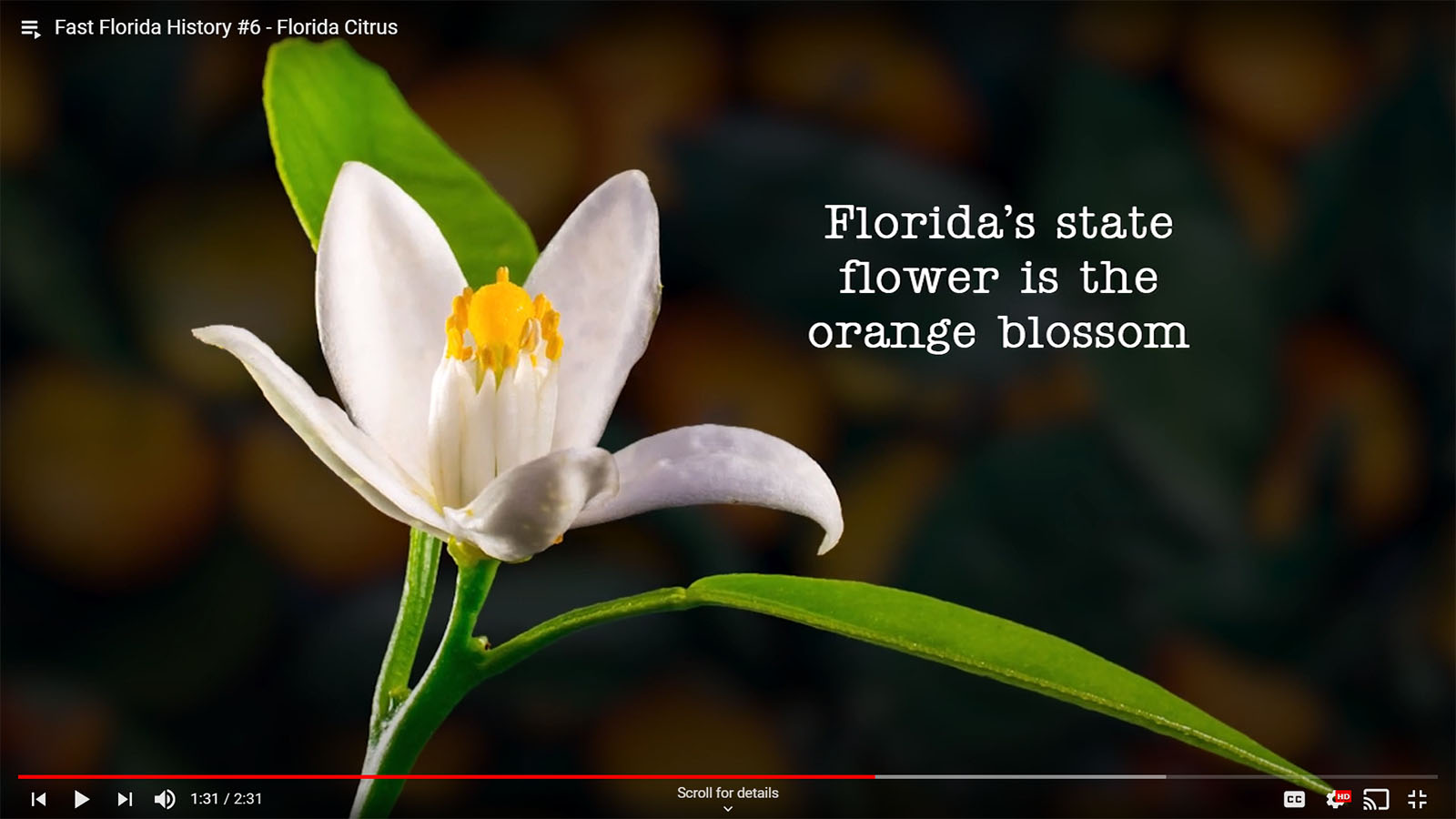
  • Orange Blossom State Flower

    Fast Florida History #5 - Orange Blossom State Flower

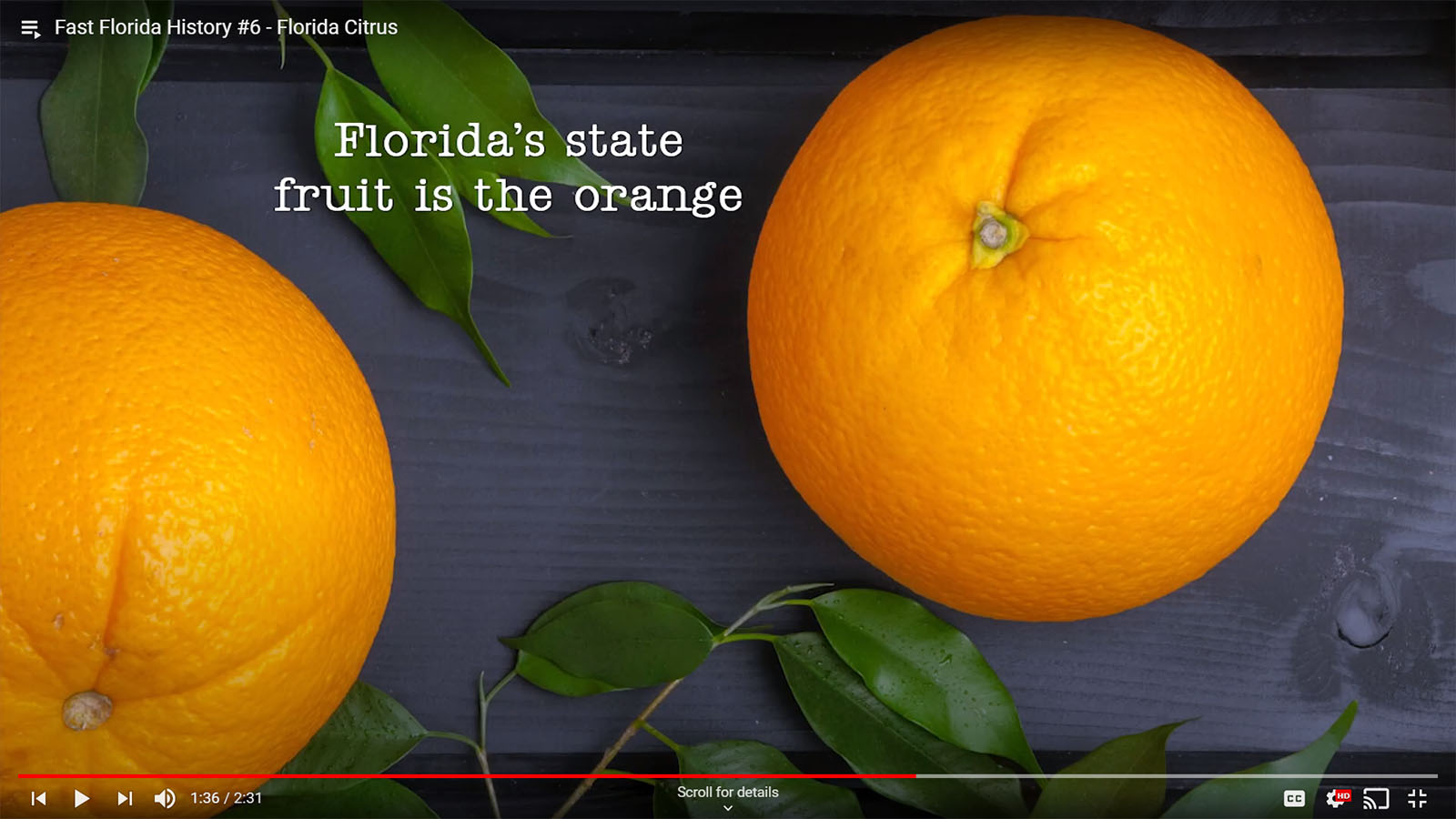
  • Orange Blossom State Fruit

    Fast Florida History #5 - Orange Blossom State Fruit

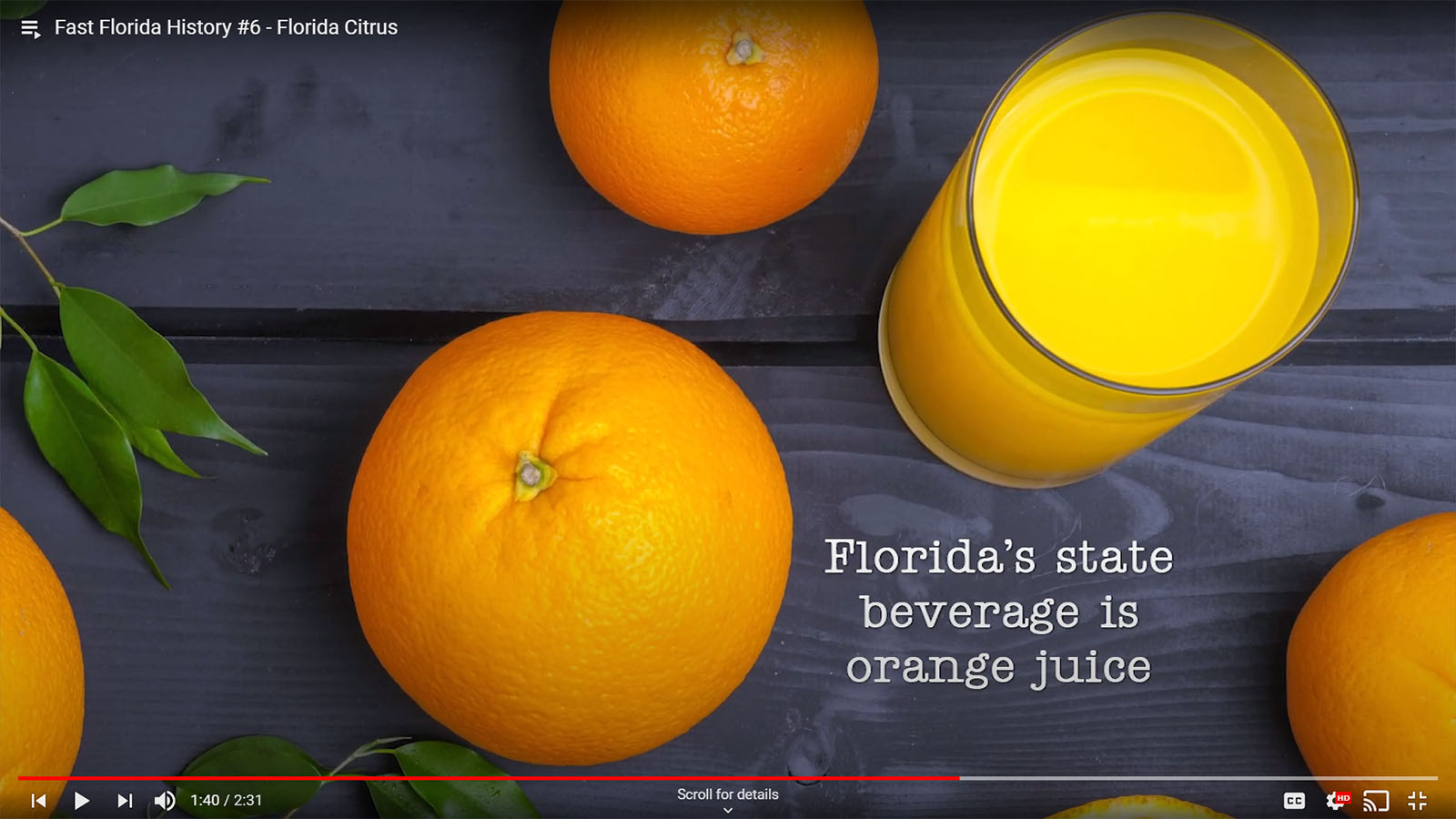
  • Orange Juice State Juice

    Fast Florida History #5 - Orange Juice State Juice

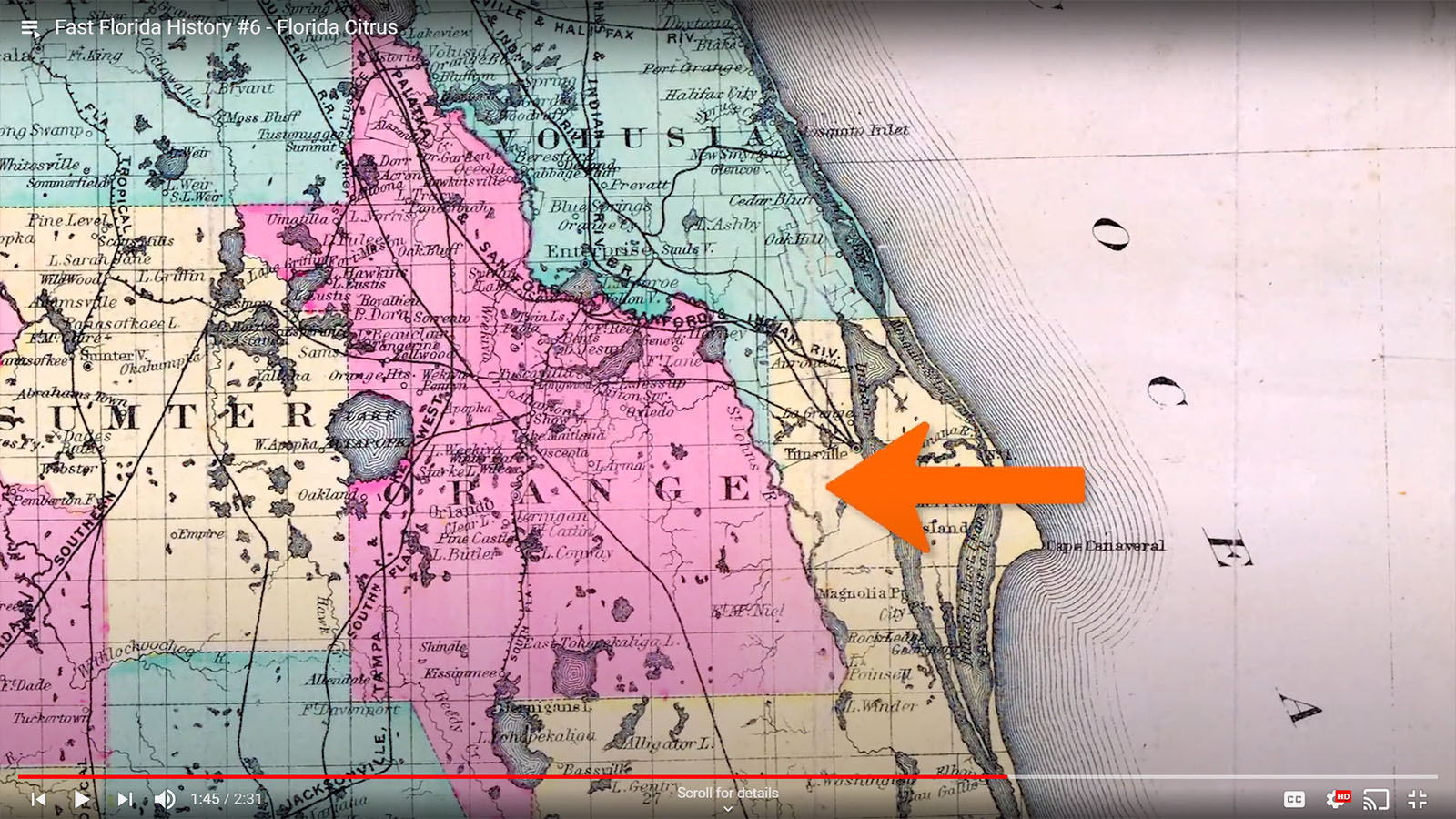
  • County named after Oranges

    Fast Florida History #5 - County named after Oranges

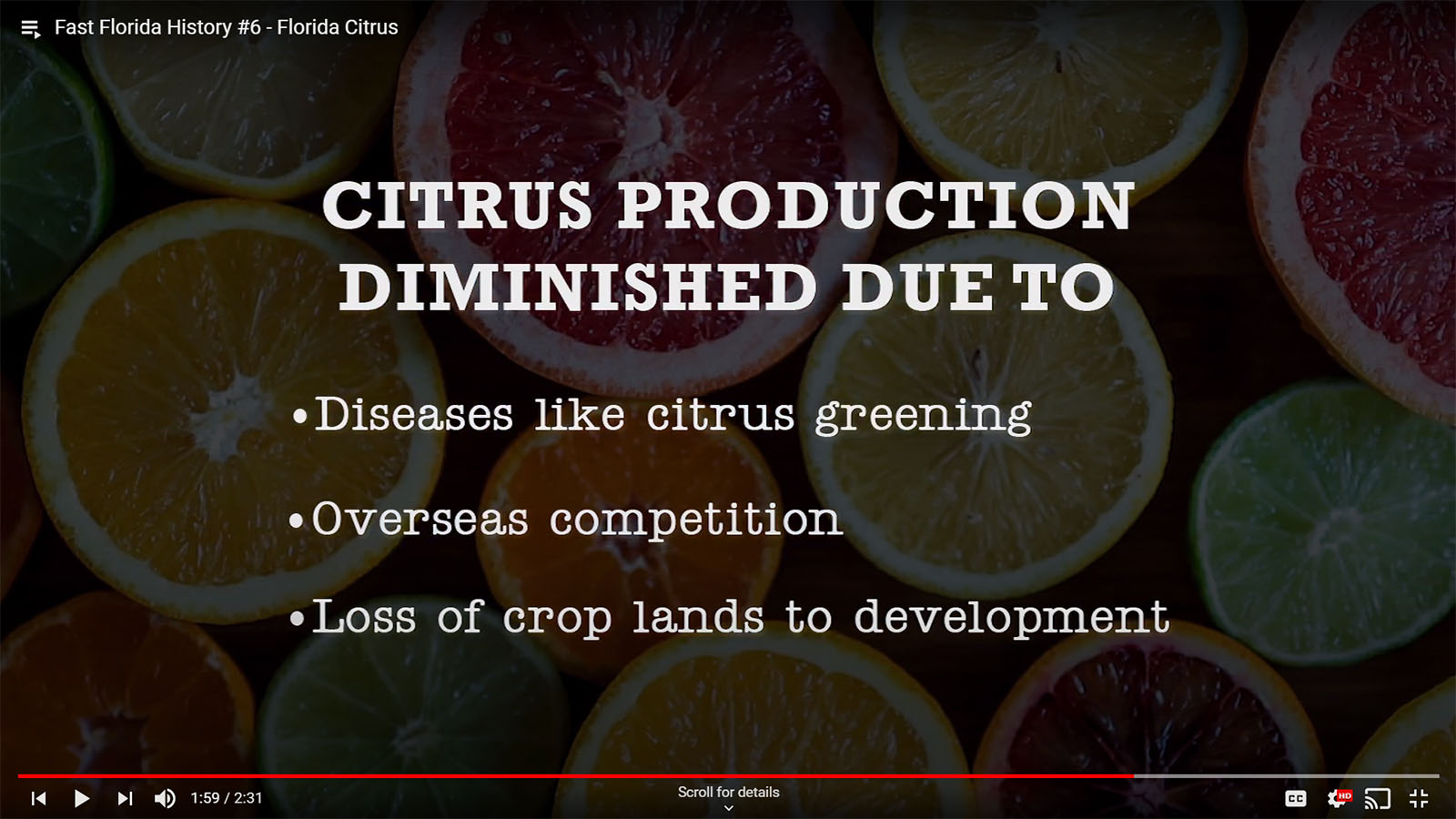
  • Citrus Production Diminished

    Fast Florida History #5 - Citrus Production Diminished


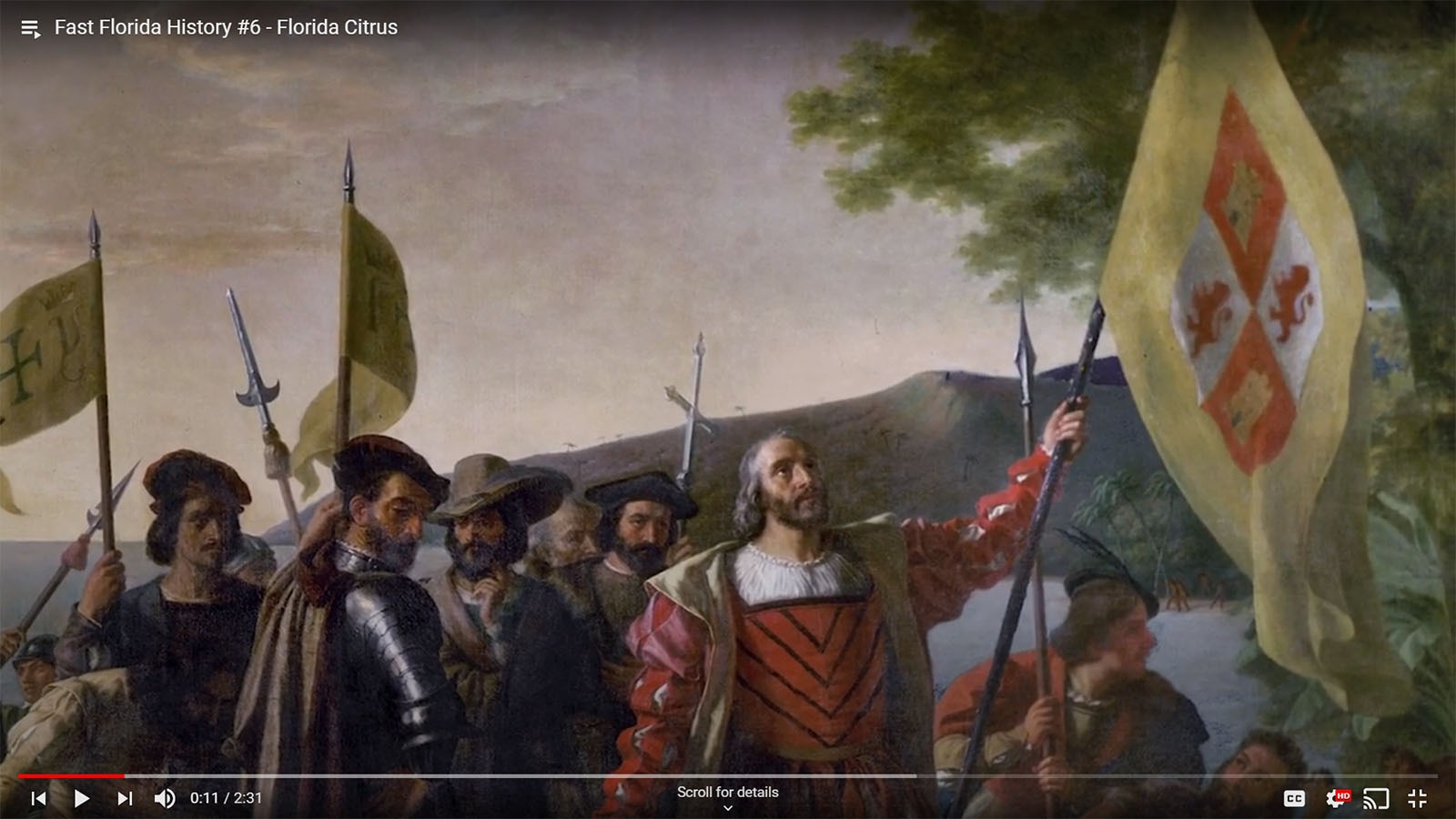
    The orange has become a well-known part of Florida’s identity. But how did citrus take root in the state? This video looks at the early history and lasting impact of citrus on the Sunshine State


    Episode Number
    4
    Program Date
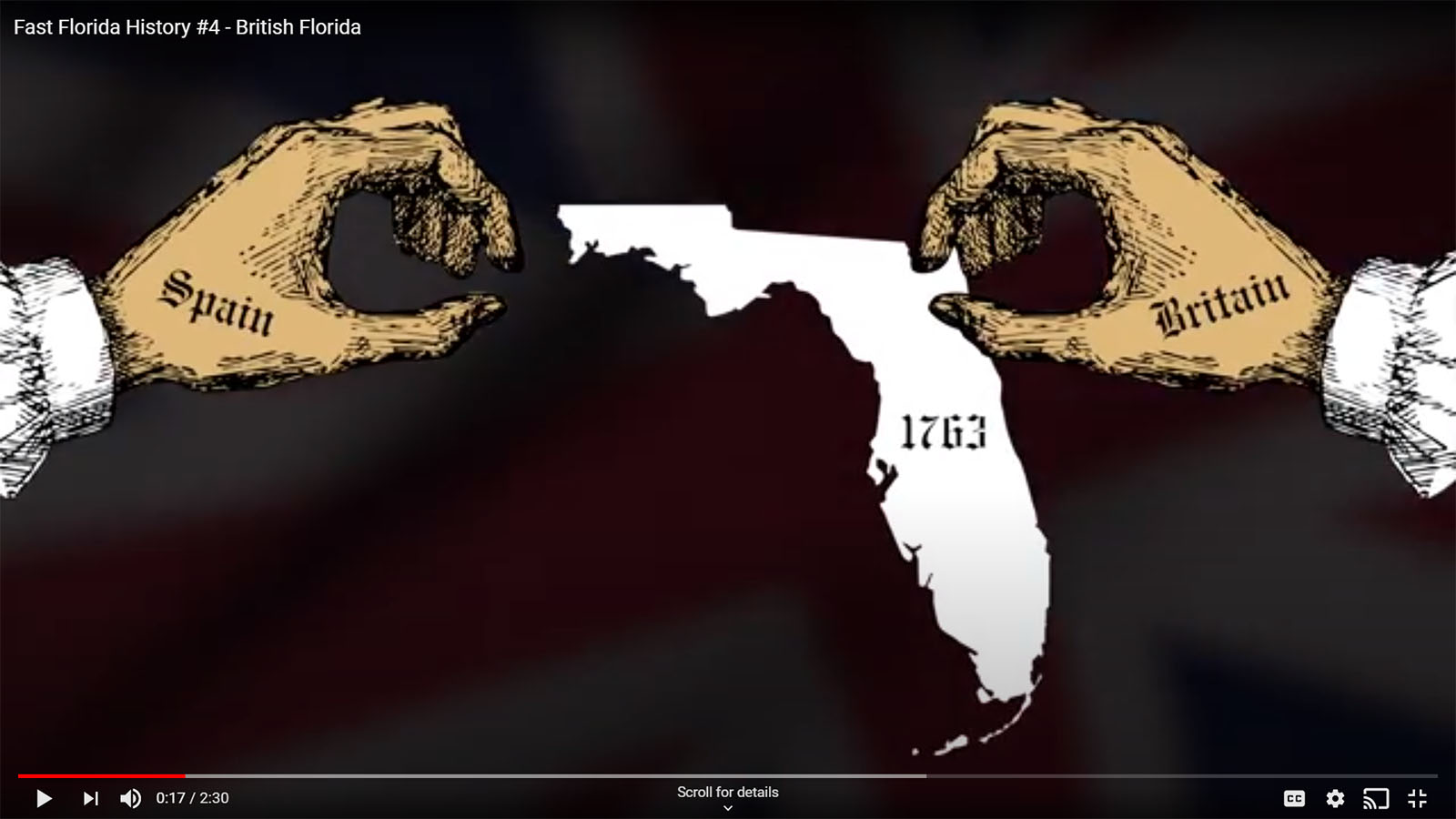
    • Florida transferred to British 1763

      Fast Florida History #4 - Florida transferred to British 1763

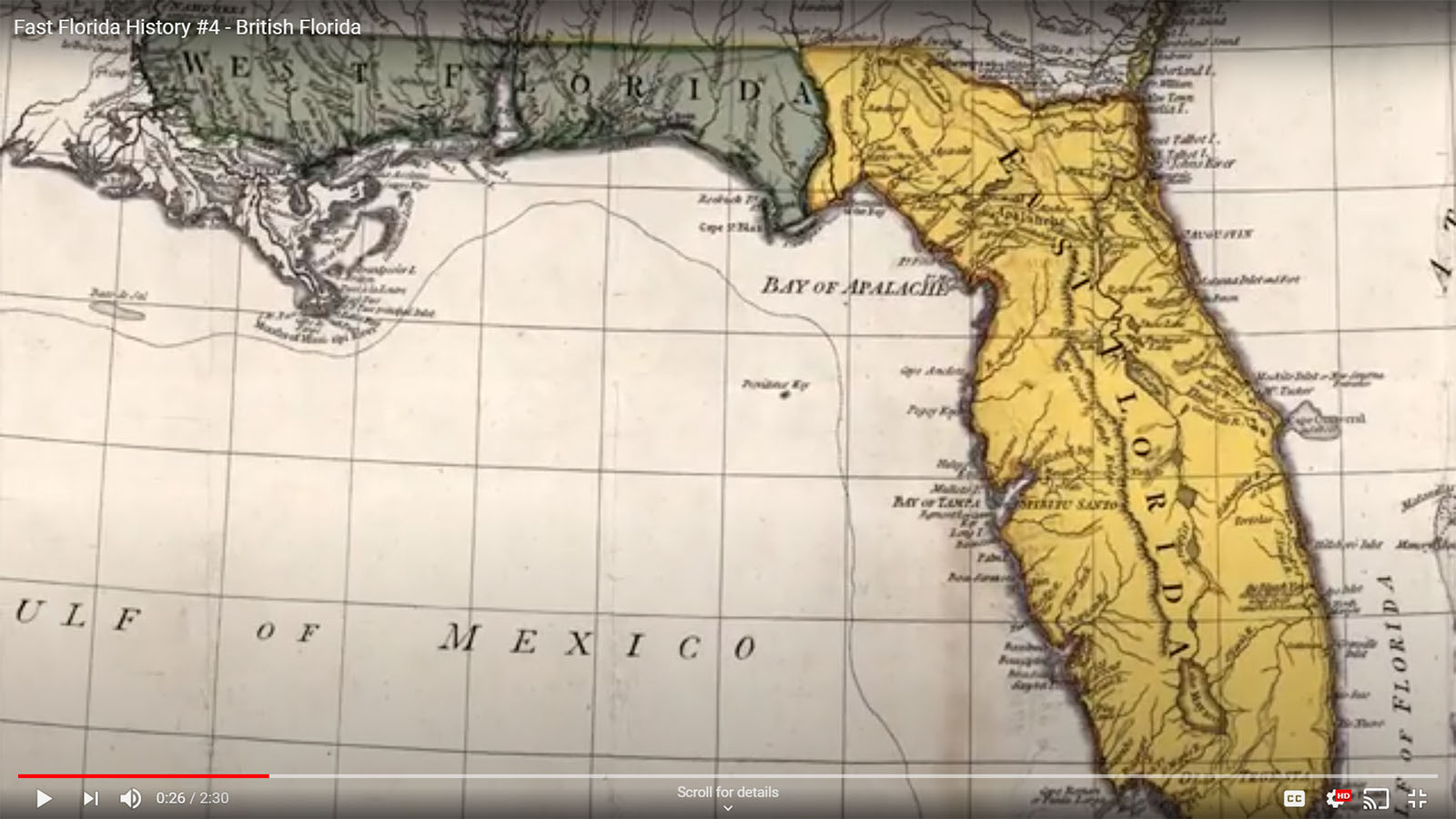
    • British East and West Florida

      Fast Florida History #4 - British East and West Florida

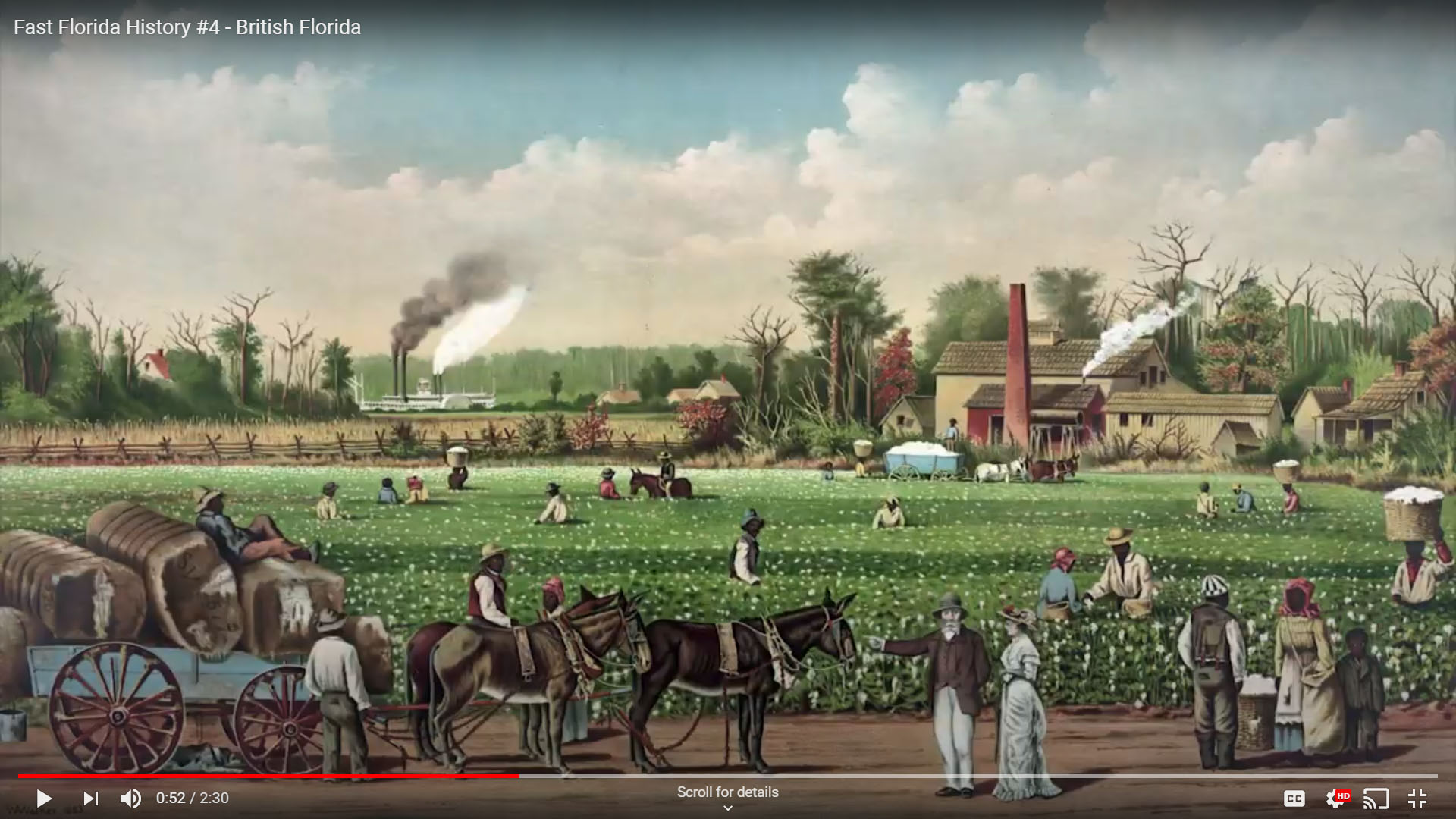
    • British Florida Commerce

      Fast Florida History #4 - British Florida Commerce

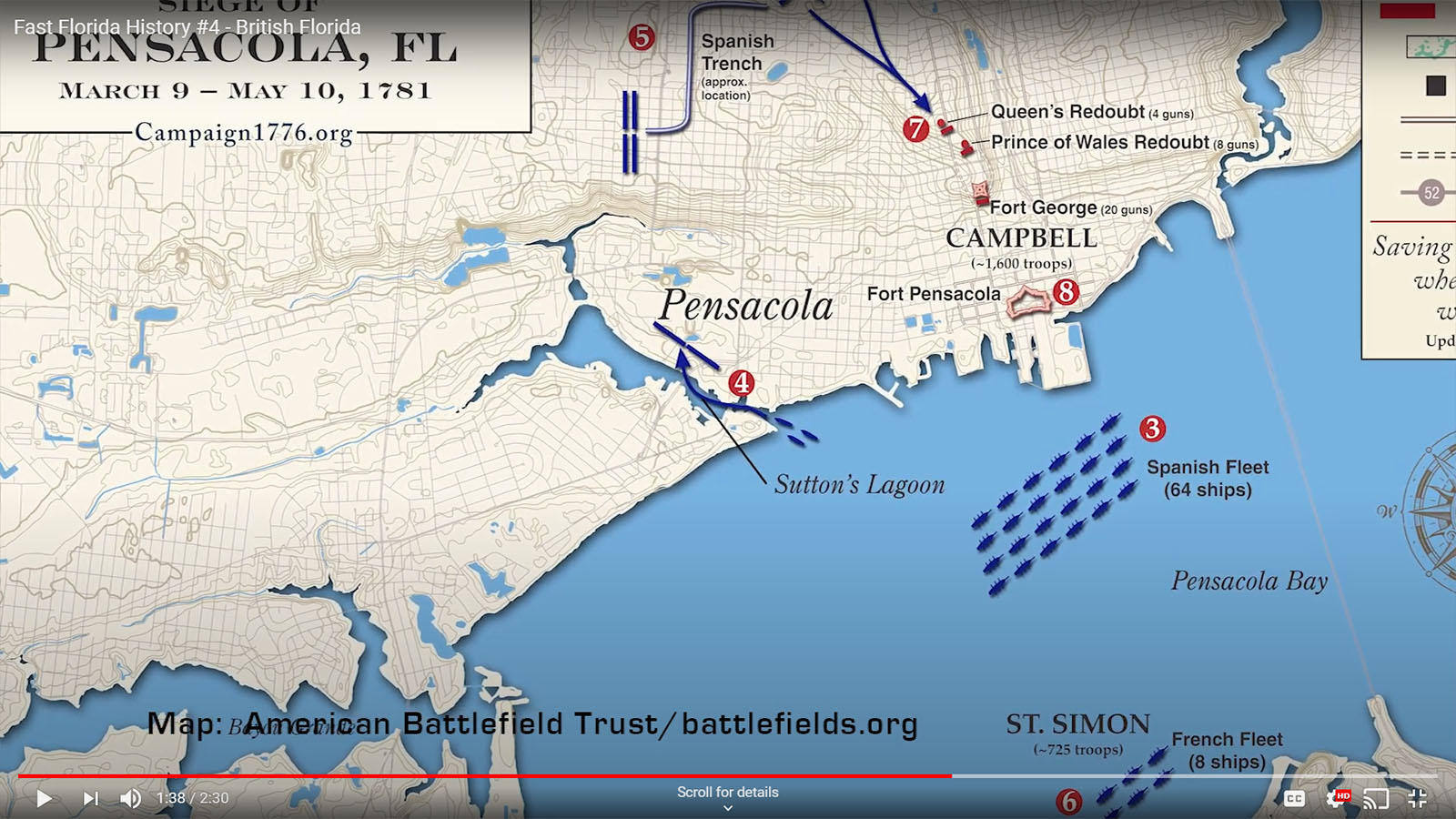
    • Siege of Pensacola, 1781

      Fast Florida History #4 - Siege of Pensacola, 1781


      Did you know that Florida was once a British colony? For 20 years, the British tried to turn Florida into a thriving colony. This episode explores the British experience in the south and discusses the role of Floridians during the American Revolutionary War.


      Episode Number
      3
      Program Date
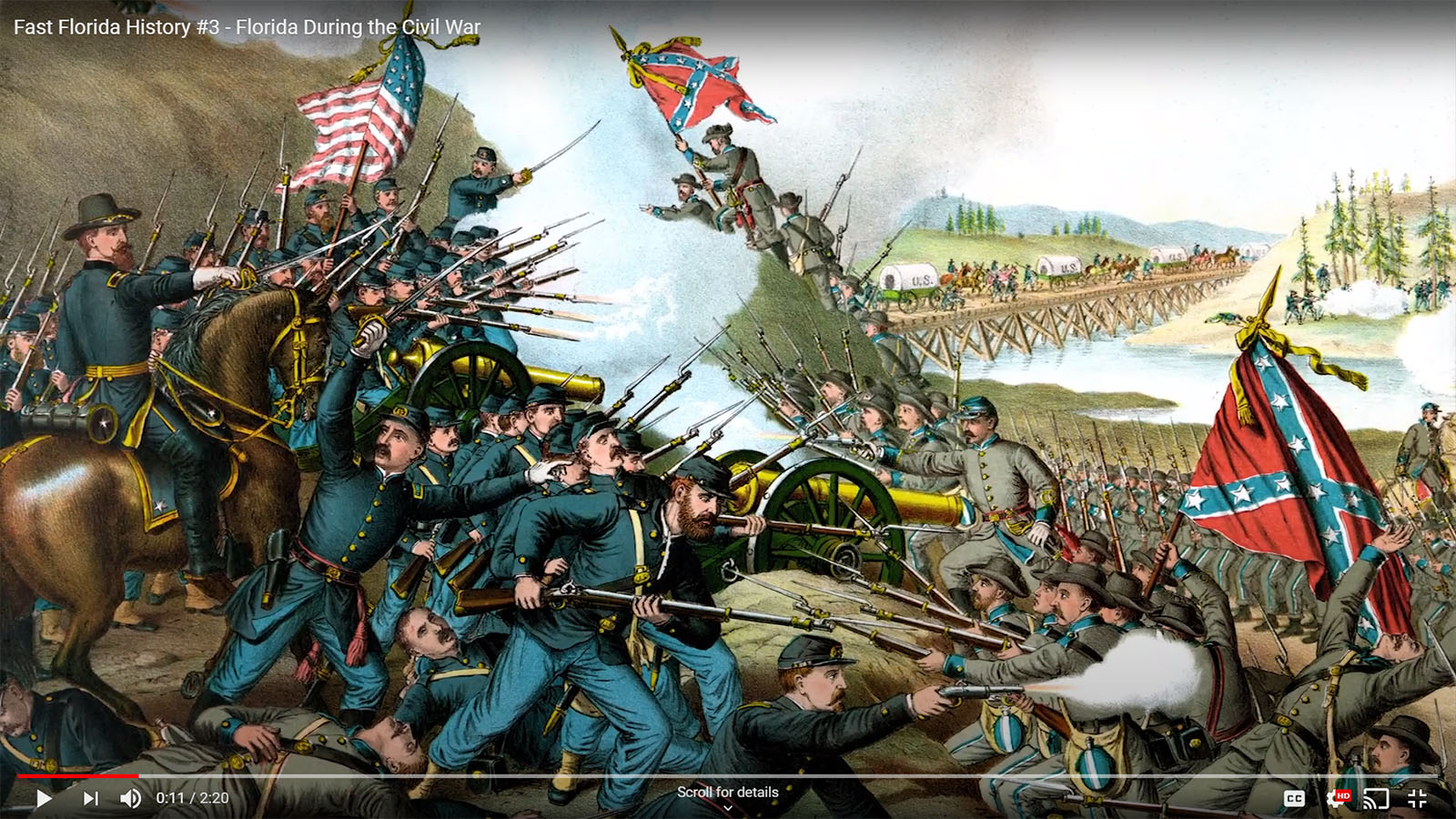
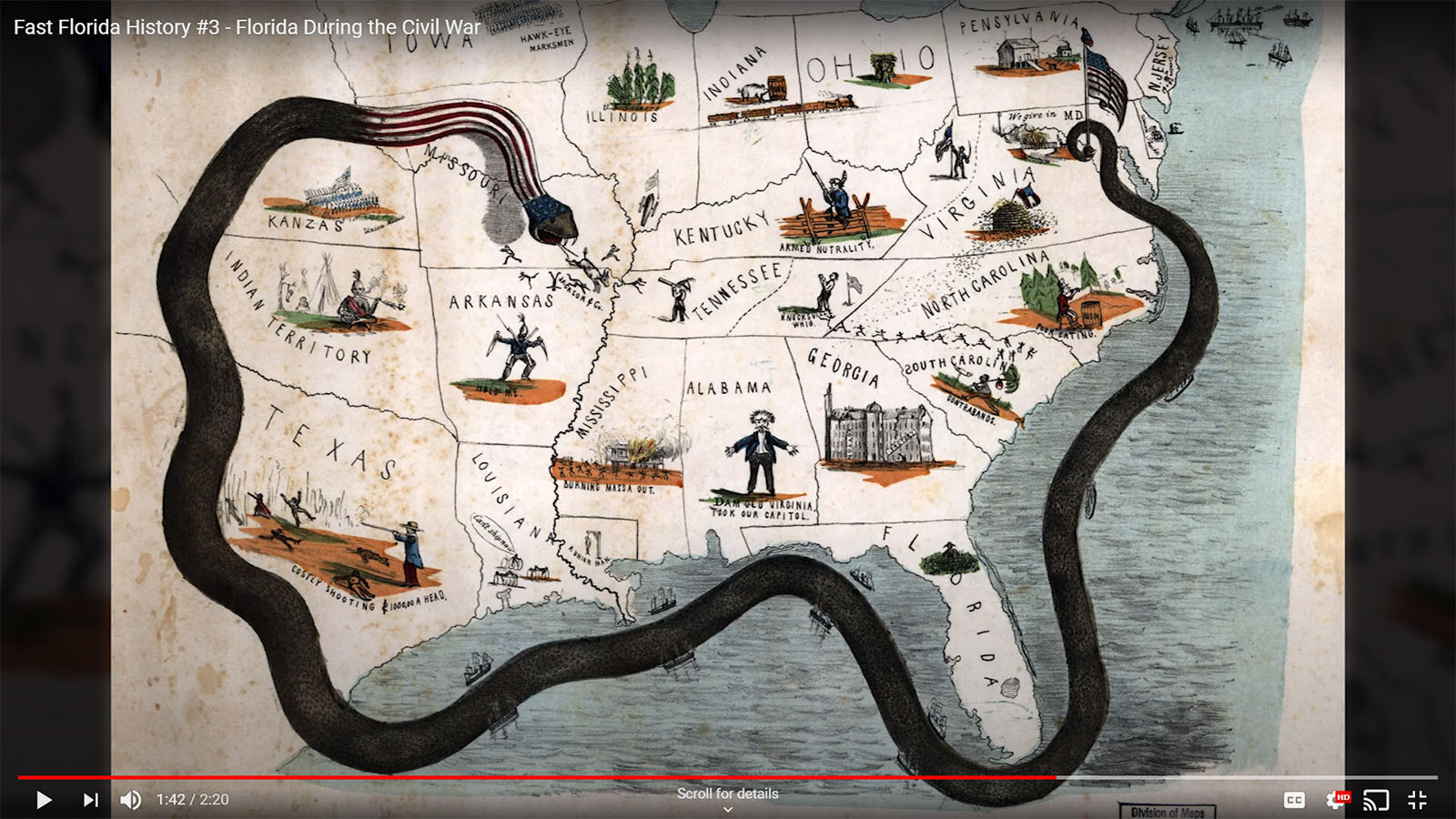
      • Florida During the Civil War

        Fast Florida History #3 - Florida During the Civil War

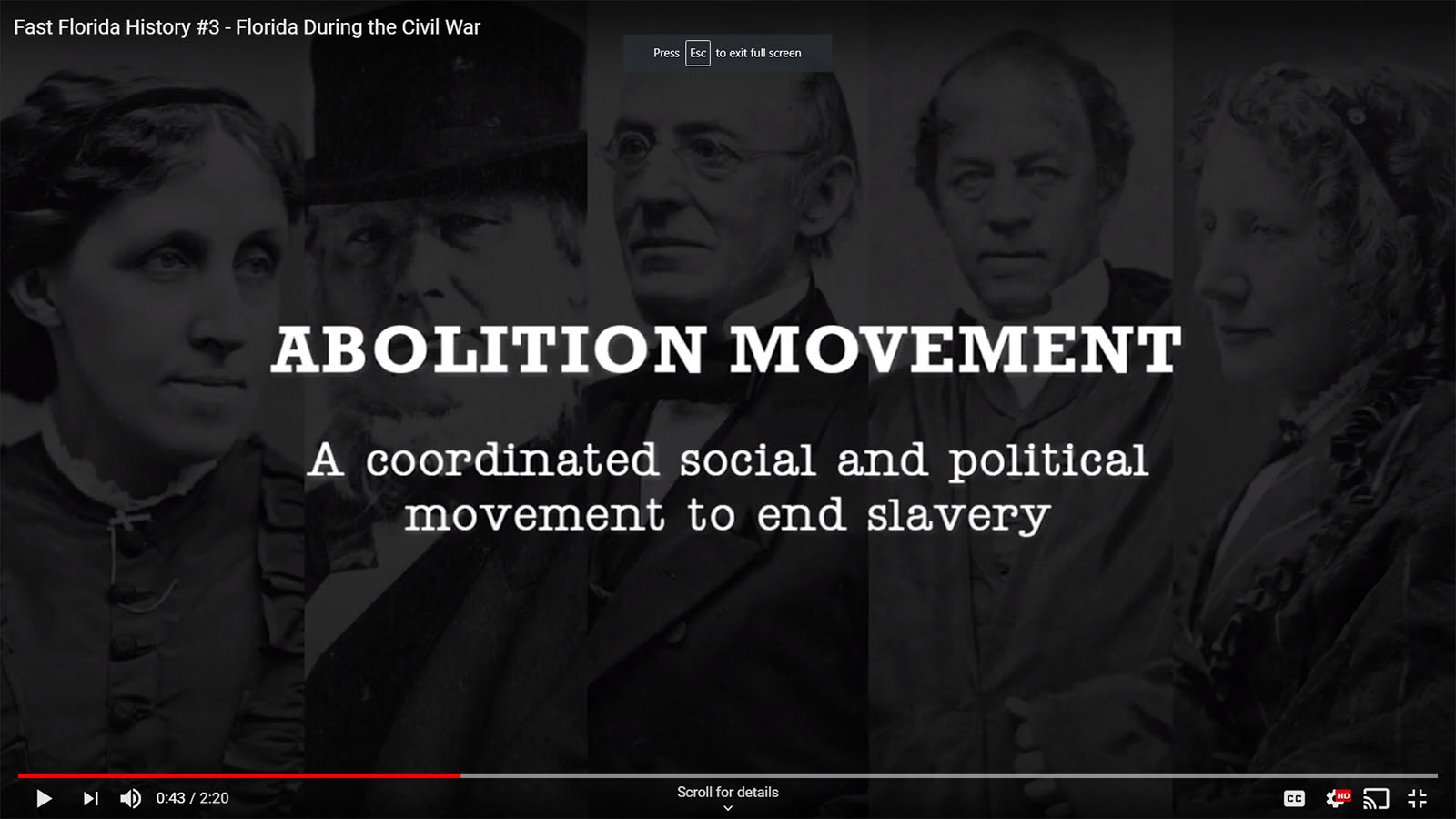
      • Abolition Movement

        Fast Florida History #3 - Abolition Movement

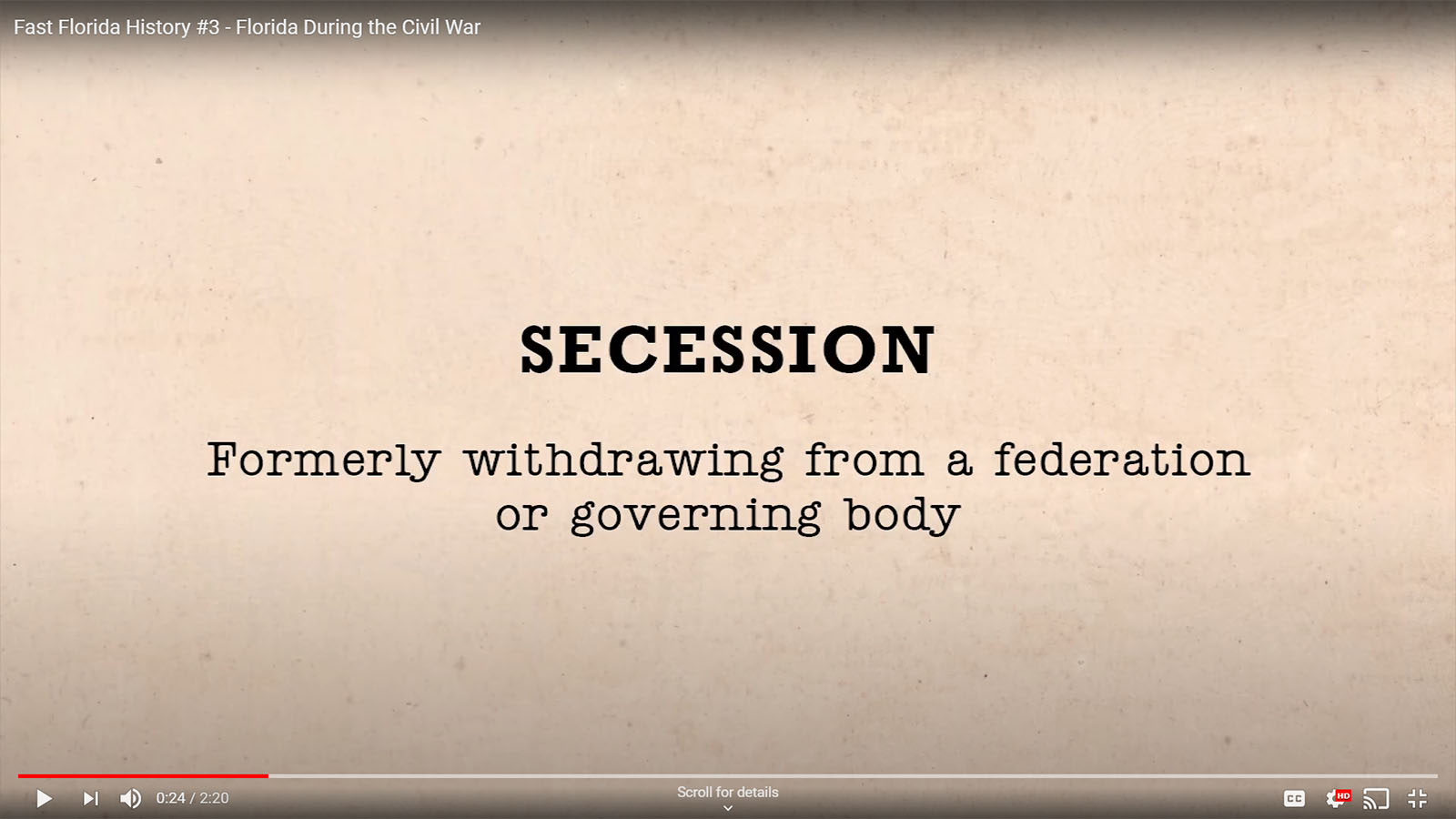
      • Florida Secession during Civil War

        Fast Florida History #3 - Florida Secession during Civil War

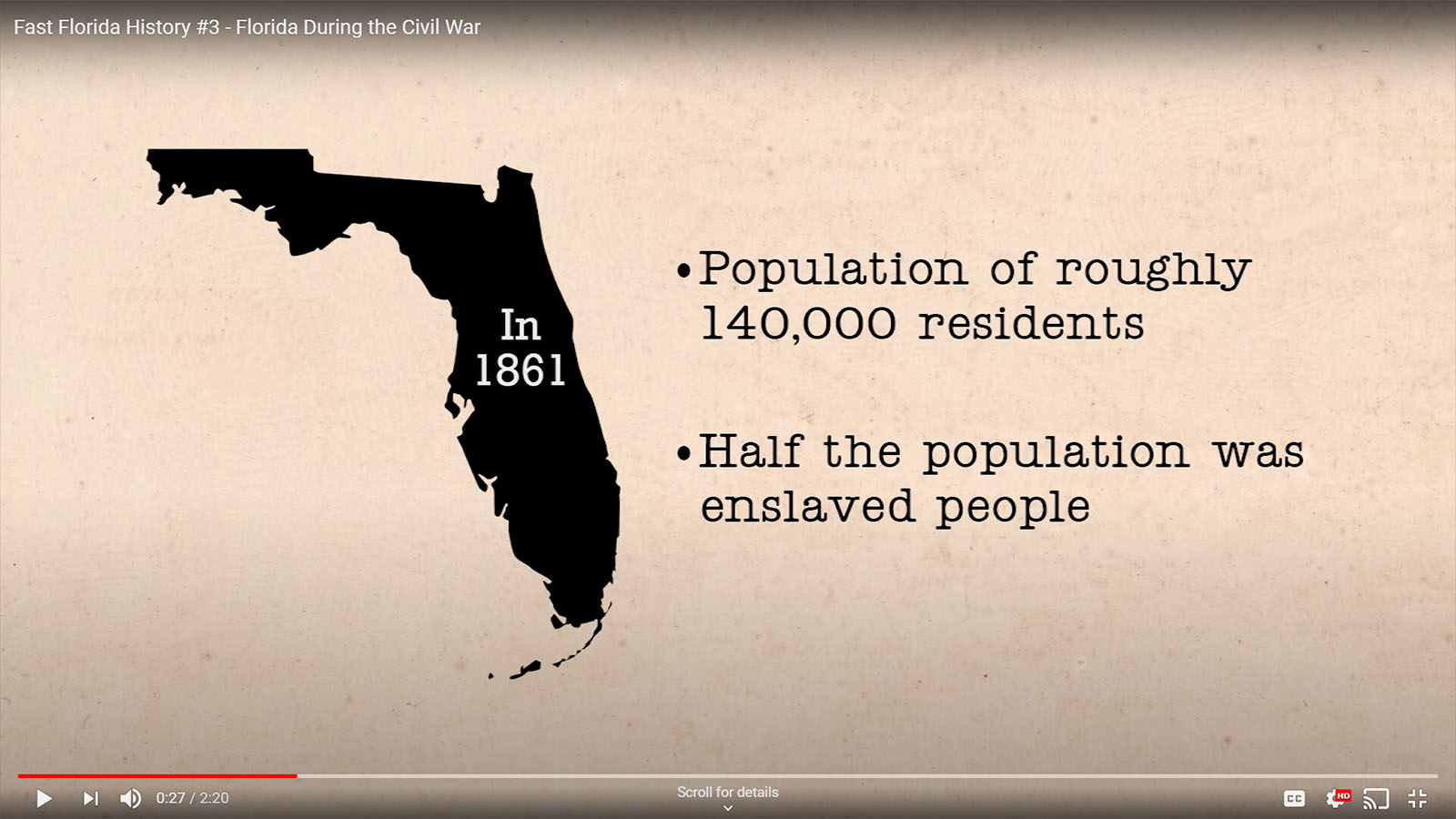
      • Florida 1861 Population

        Fast Florida History #3 - Florida 1861 Population

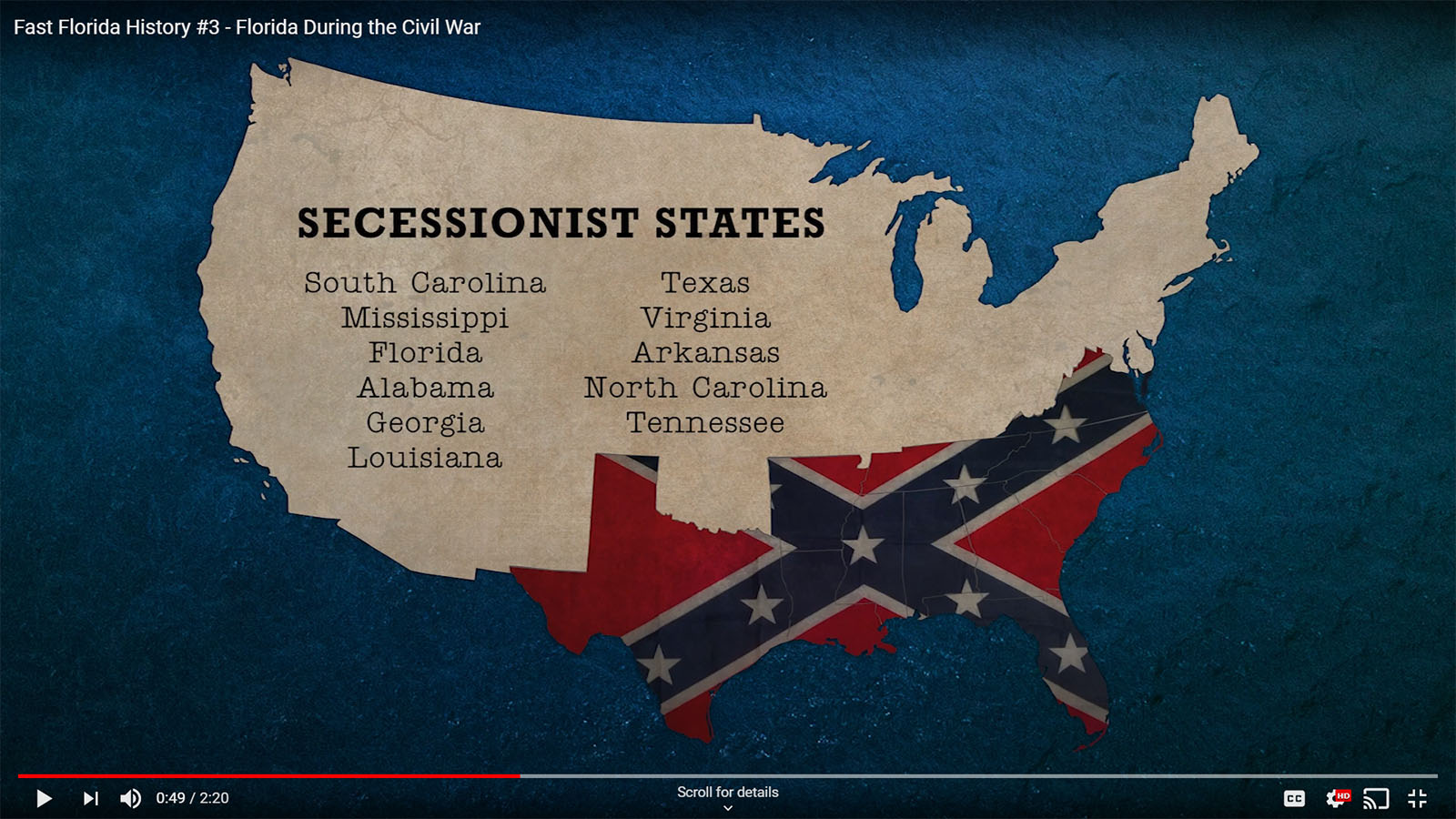
      • Civil War Secessionist States

        Fast Florida History #3 - Civil War Secessionist States

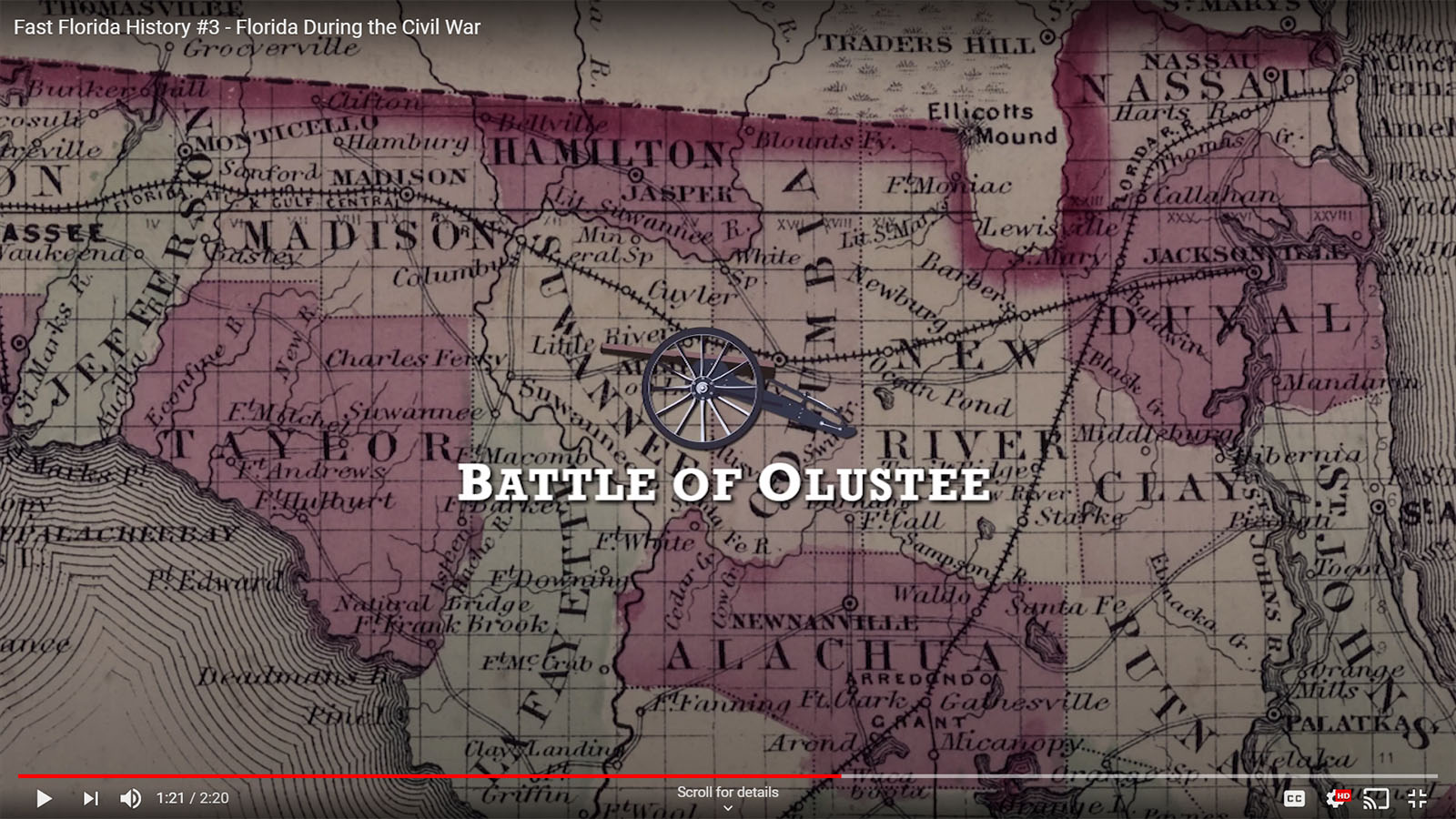
      • 5Civil War Battles in Florida

        Fast Florida History #3 - Civil War Battles in Florida

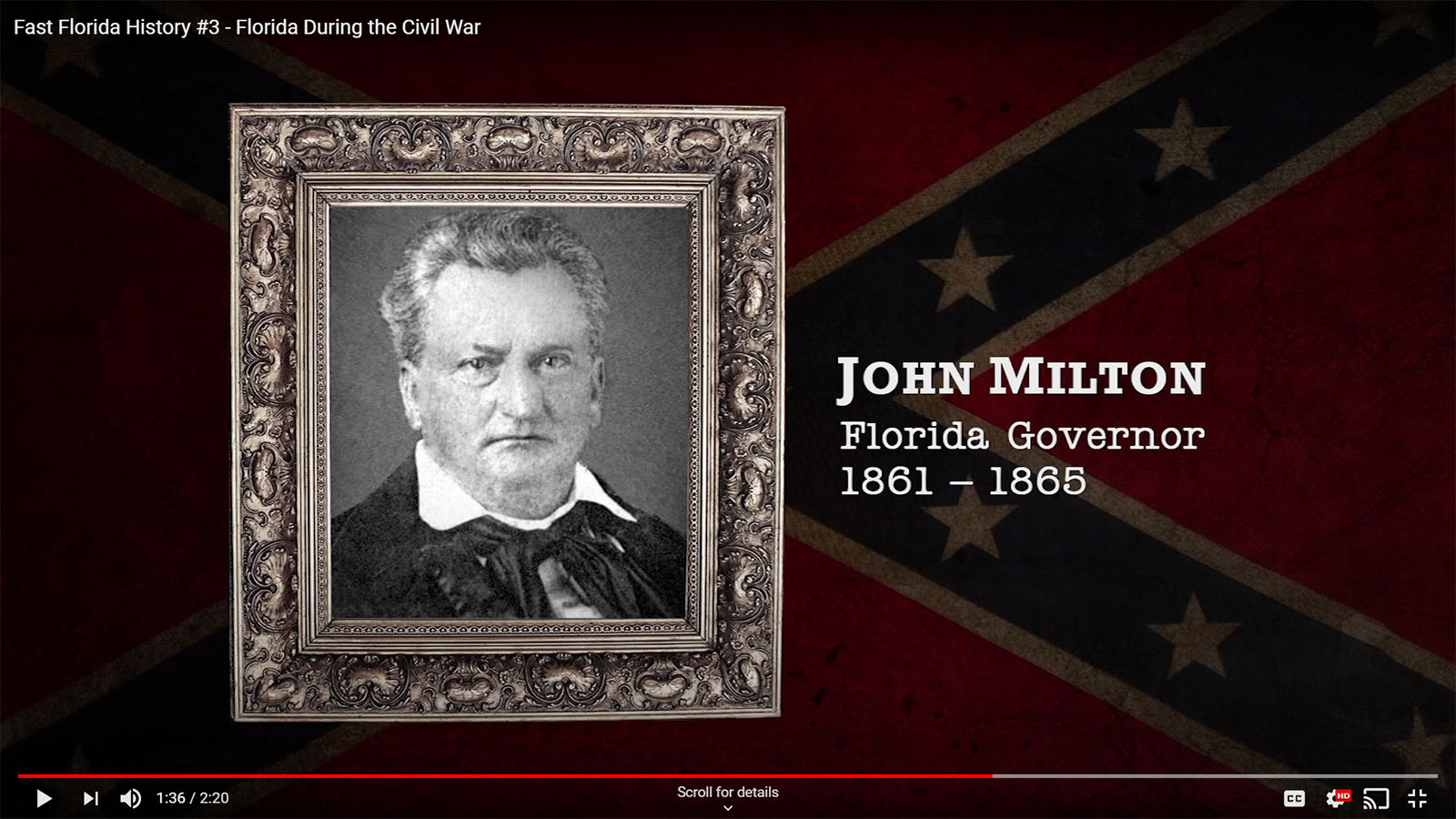
      • Governor during Civil War

        Fast Florida History #3 - Governor during Civil War

      • Civil War Blockade

        Fast Florida History #3 - Civil War Blockade


        The American Civil War erupted out of a national struggle over slavery and the rights of states to protect that institution. Florida was one of the first states to leave the Union and join the Confederacy. This video looks at the causes and impacts of America’s Civil War in Florida.
         

        Episode Number
        2
        Program Date
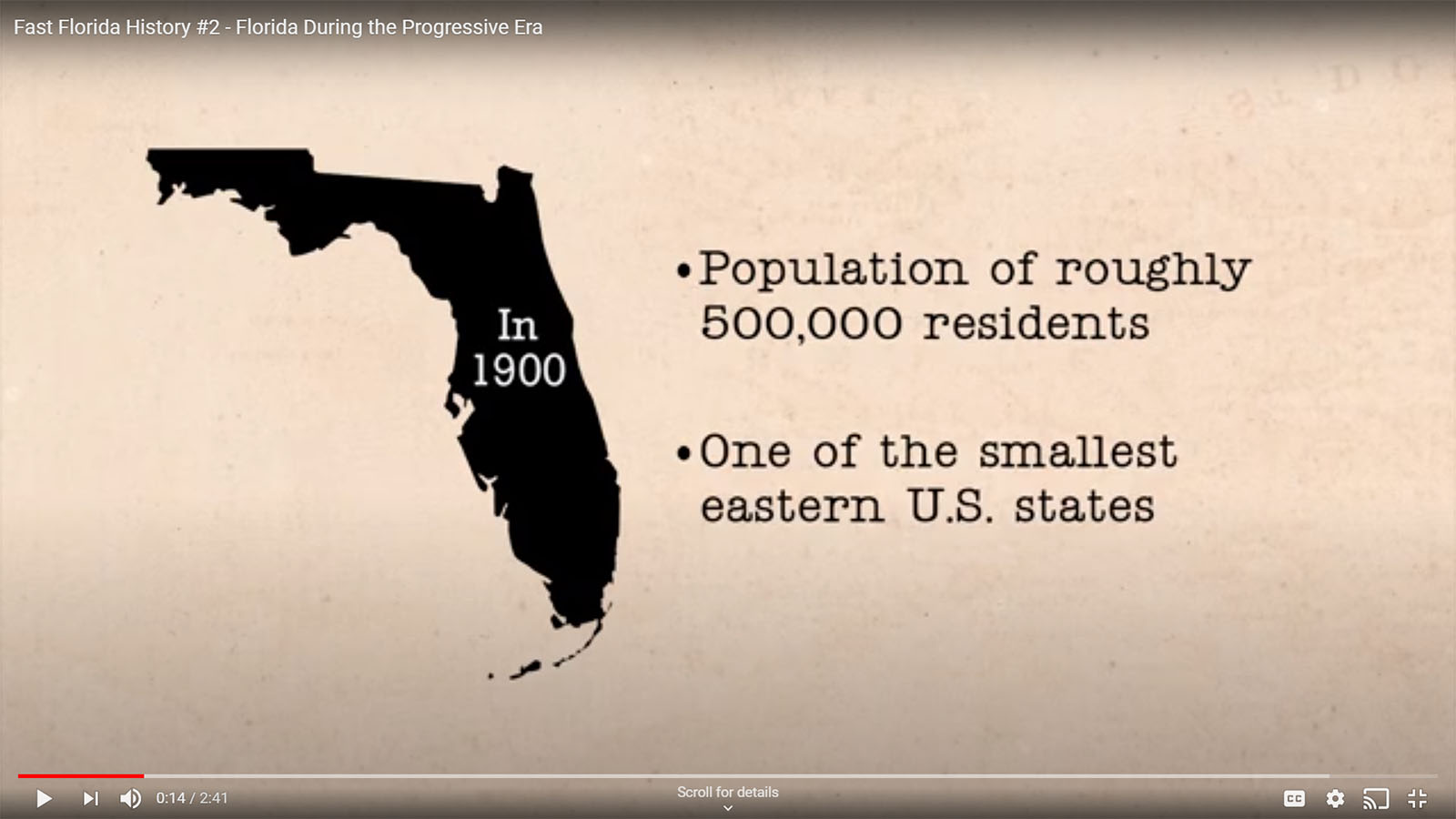
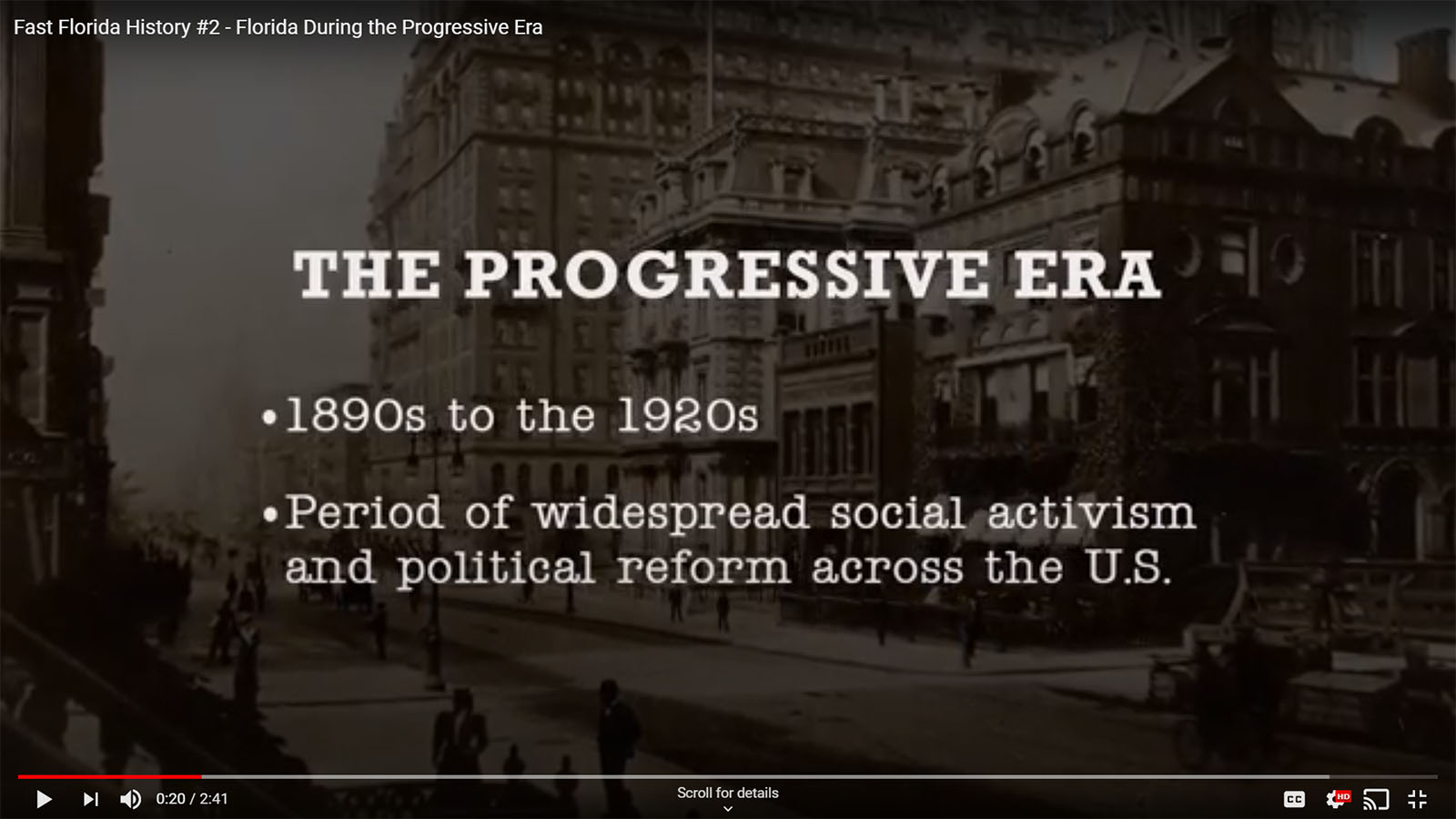
        • Fast Florida History #2 - Florida During the Progressive Era

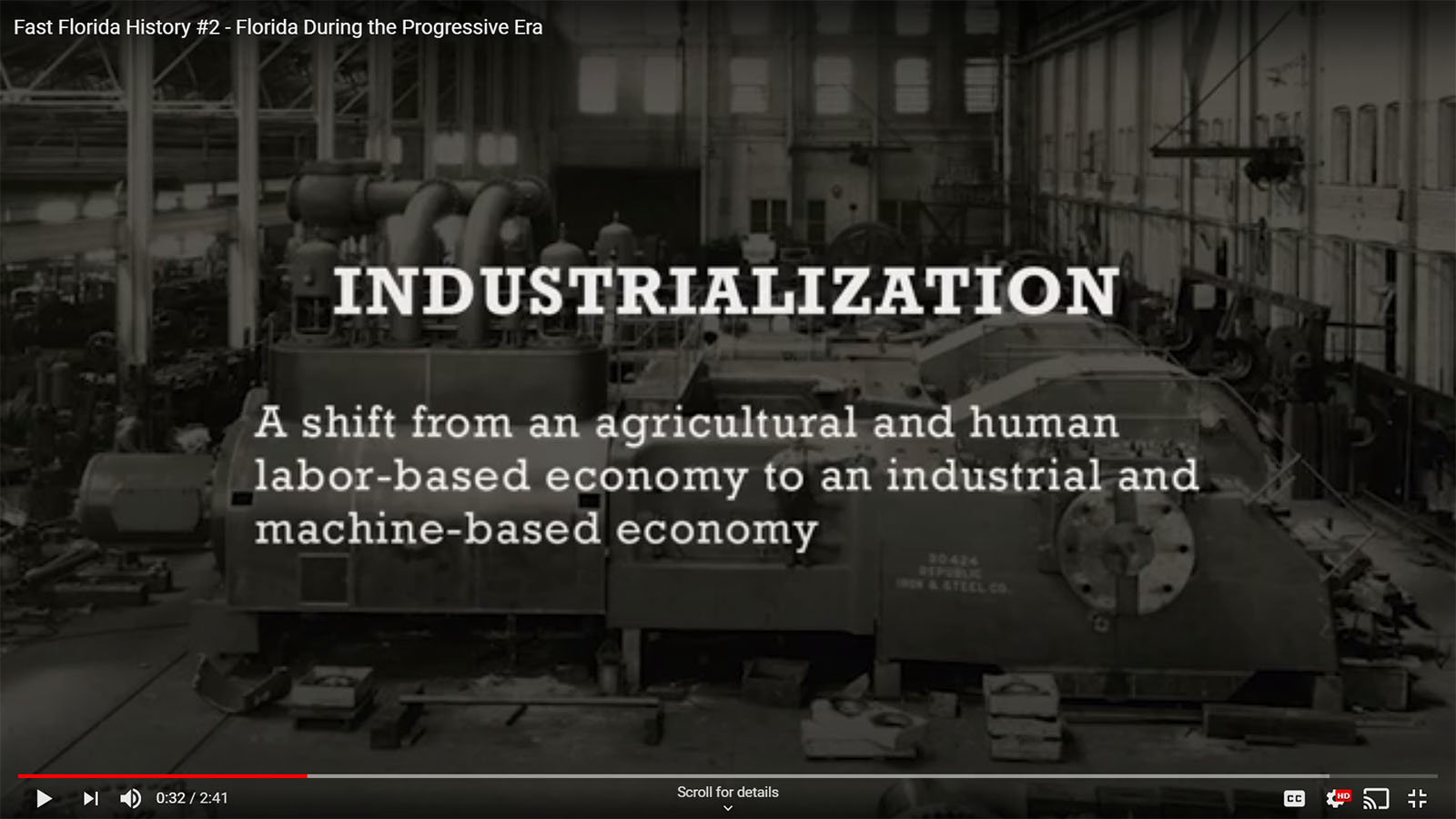
          Fast Florida History #2 - Florida During the Progressive Era

        • Fast Florida History #2 - Florida During the Progressive Era

          Fast Florida History #2 - Florida During the Progressive Era

        • Industrialization

          Fast Florida History #2 - Industrialization

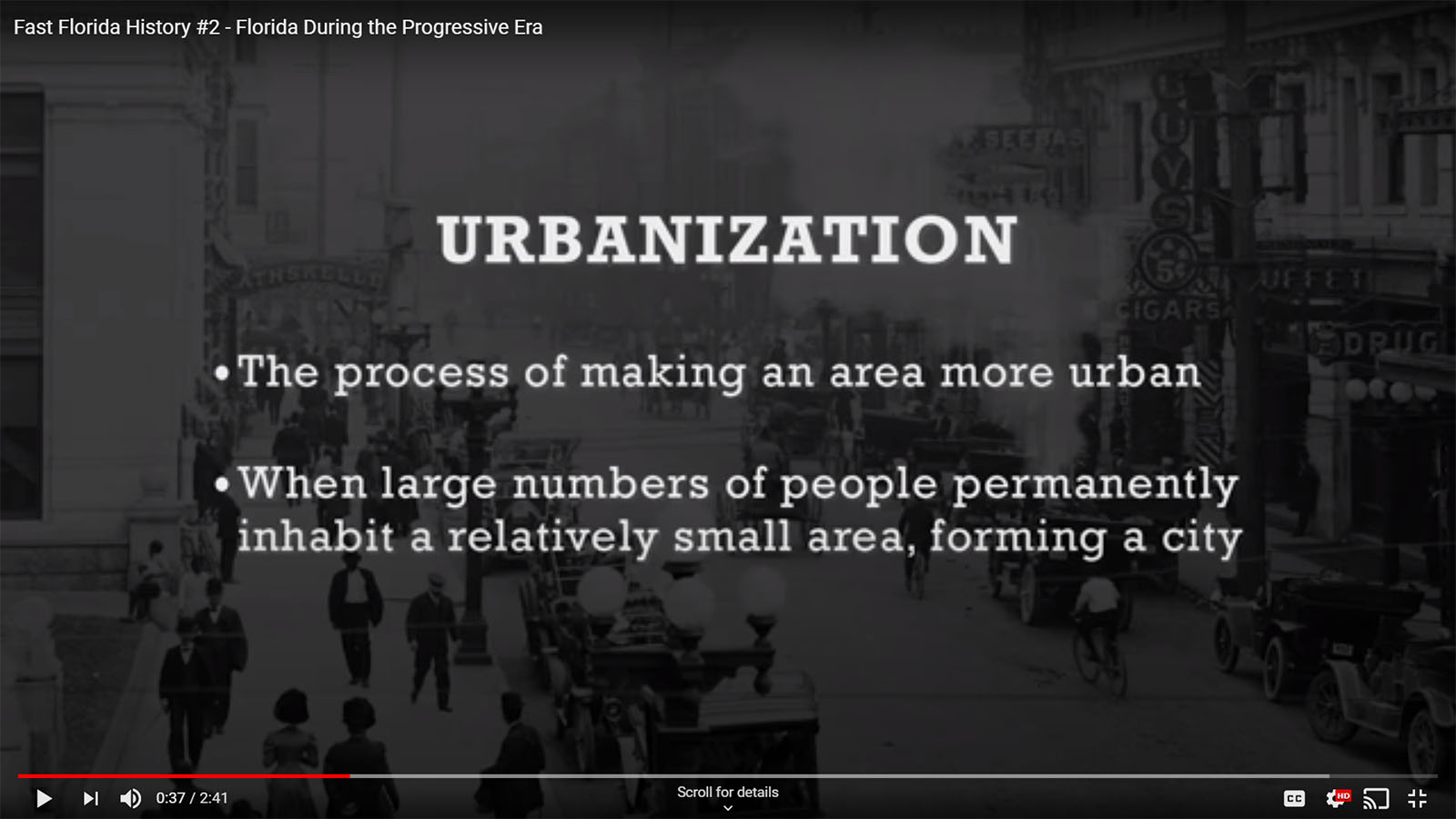
        • Urbanization

          Fast Florida History #2 - Urbanization

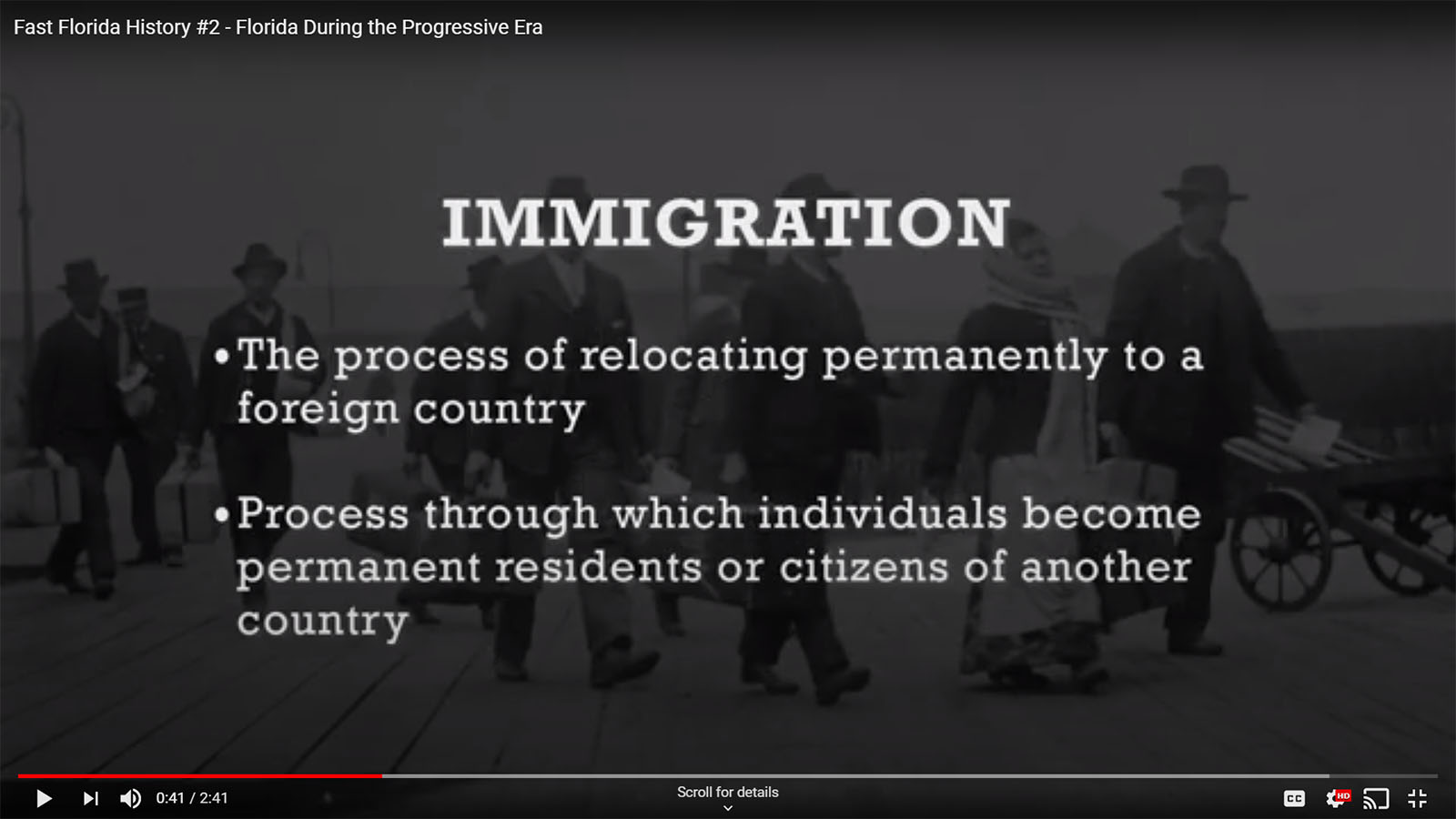
        • Immigration

          Fast Florida History #2 - Immigration

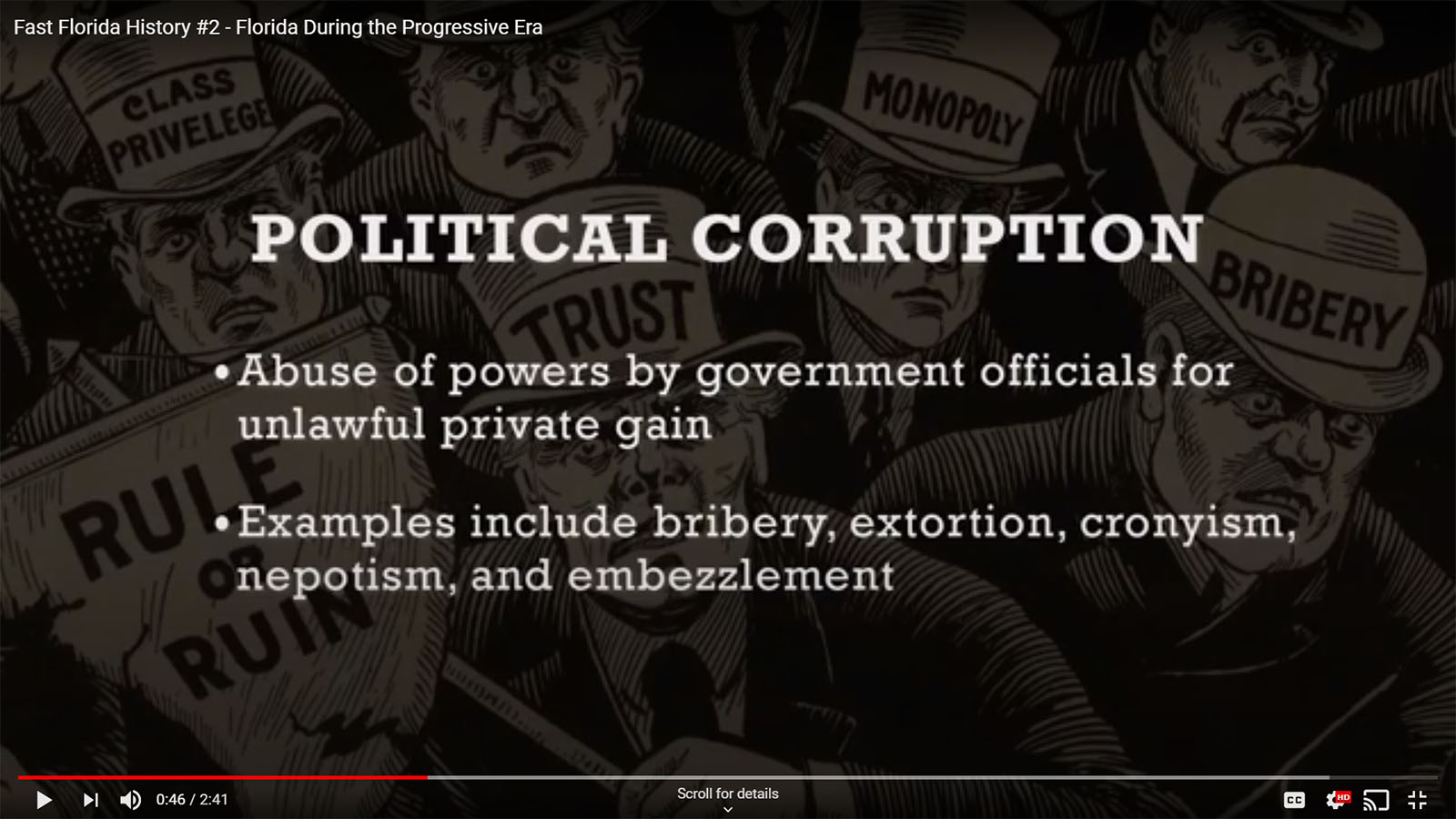
        • Political Corruption

          Fast Florida History #2 - Political Corruption

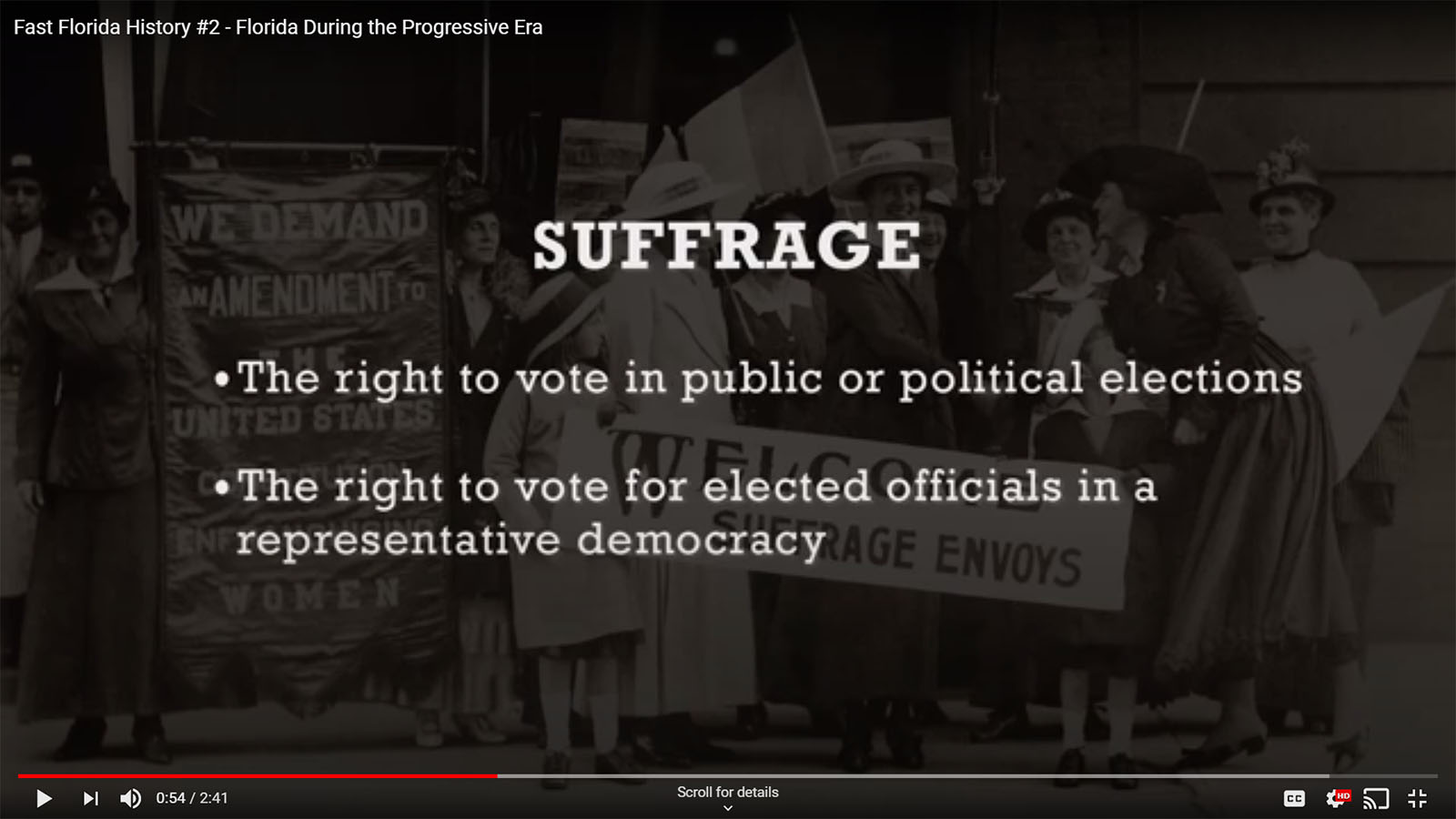
        • Suffrage

          Fast Florida History #2 - Suffrage

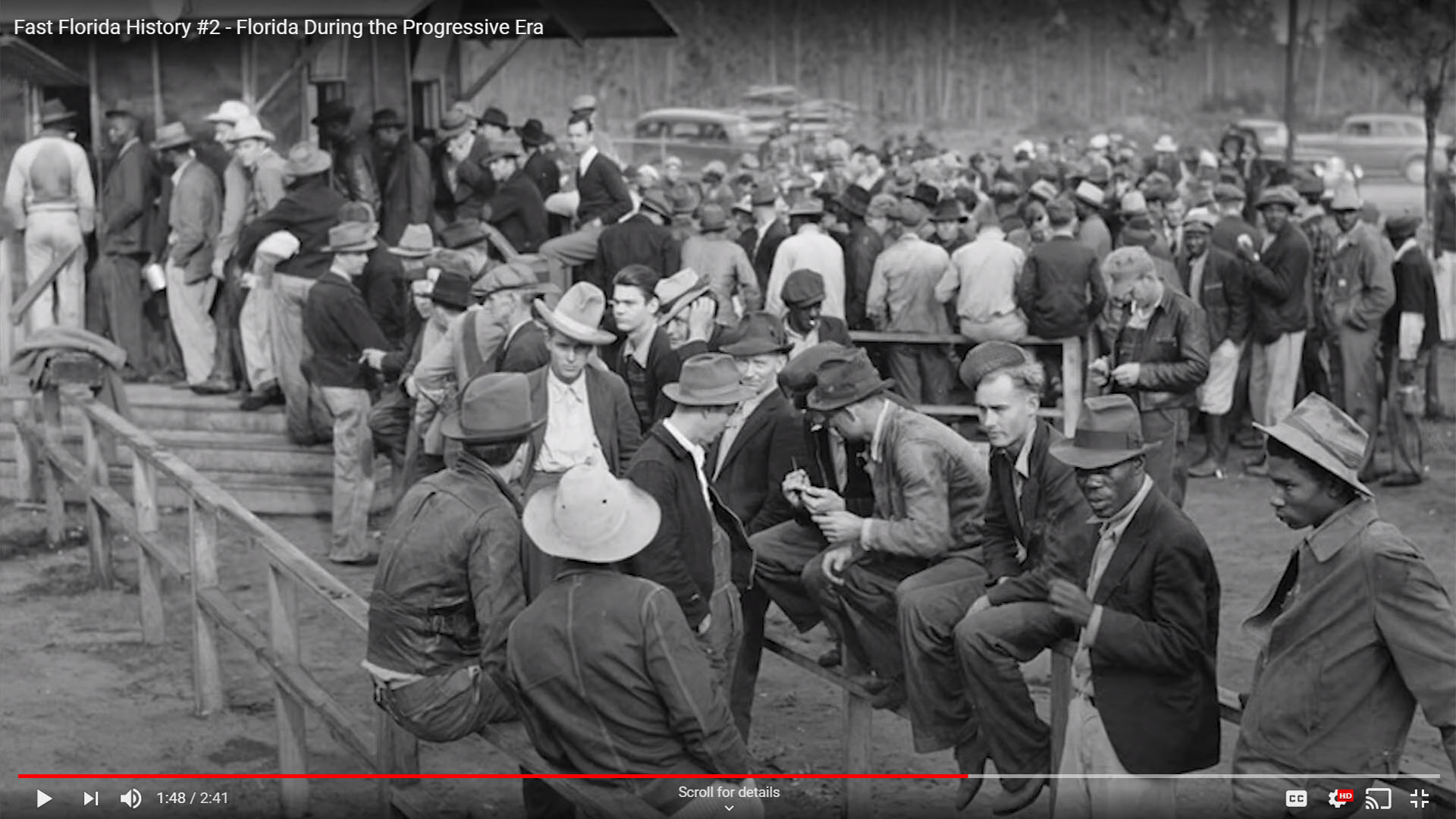
        • Waves of immigrants alter working class

          Fast Florida History #2 - Waves of immigrants alter working class


          The early 20th century was a time of tremendous social change in the United States. The period was known as the Progressive Era, and as this episode of Fast Florida History explains, Florida’s experiences were unique.