Florida Frontiers

A Tag for nodes that are relevant to Florida Frontiers.   For example if an artilce is about Florida Frontiers and you would like a 'View' to sorty by Tag criteria for it... us it.

Article Number
3
relevantdate

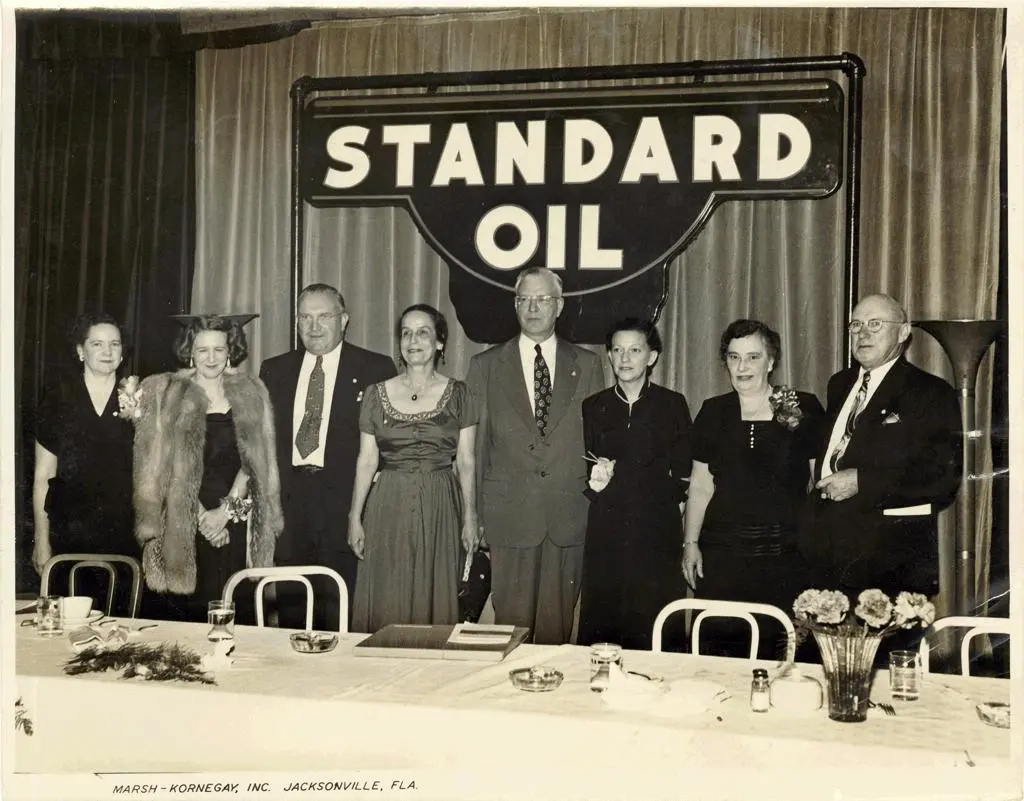
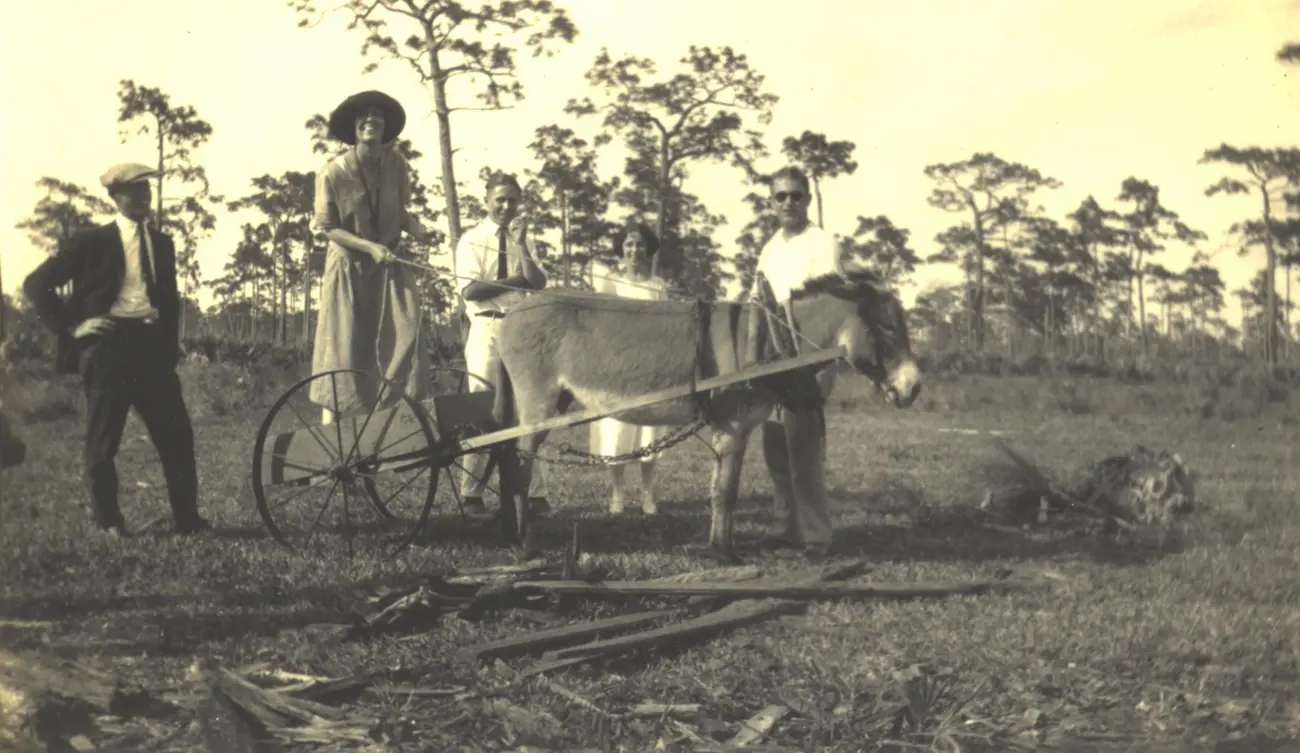
    Caroline P. Rossetter, at the tender age of 23, listened at the keyhole as a debate took place behind closed doors at the Standard Oil Company office in Louisville, Kentucky. Upon her father’s death, Carrie Rossetter requested that she be allowed to take over his Standard Oil Agency in Brevard County, Florida. That request sparked a heated discussion.

    The year was 1921, and women had received the right to vote in the United States just months before. The idea of a woman being able to run a business was preposterous to some.

    James W. Rossetter had moved his family to Eau Gallie, Florida in 1902, when Carrie was just four years old. He distributed Standard Oil products by boat up the Banana River to Cape Canaveral. Carrie had been working in her father’s office from the time she was fourteen. When James Rossetter died in 1921, Carrie desperately wanted to keep control of her father’s business.

    Finally, Carrie heard a decisive voice rise over the din, saying “Let the little lady have it! She won’t last a year and we’ll give it to a man!” With that, Caroline P. Rossetter became the first female Standard Oil Agent.

    The loudly stated prediction was at least partially accurate. Rossetter didn’t last a year as a Standard Oil Agent. She lasted 62 years, becoming one of the company’s most successful representatives until her retirement at the age of 85.

    In an interview from 1980, Rossetter said, “At the age of 82, I believe I have set the record for the longest term as a commissioned agent in the Chevron family. I remember how surprised company representatives were when I began my career. It was unheard of for a woman to go into the oil business, on her own, in 1921.”

    Carrie Rossetter’s many business accomplishments included building some of the first gasoline stations in Brevard County, and acting as the sole distributor of oil to the Banana River Naval Air Station’s civilian air force during World War II.

    Rossetter said that oil company representatives weren’t the only ones who were amazed by her. “My mother was a Southern magnolia. She couldn’t believe that I could be in business and still be a lady. My career has proven that a woman can be every bit as successful as a man in business, and I am still a Southern lady.”

    Carrie Rossetter received a letter from the White House, dated August 29, 1983. The note said, “Dear Miss Rossetter: Congratulations on your retirement. Yours has been a career marked by dedication and achievement. You should take great pride in your many years of accomplishment. Nancy joins me in wishing you continued happiness and enjoyment in the years ahead. Sincerely, Ronald Reagan.”

    An active member of the community, Carrie Rossetter contributed to educational institutions including the Florida Institute of Technology. She served as a founding member and patron of the Brevard Art Museum and as a director of the Brevard Art Center and Museum. Rossetter was one of the first and longest running members of the Eau Gallie Yacht Club, and a lifetime member of the Brevard Crippled Children’s Association.

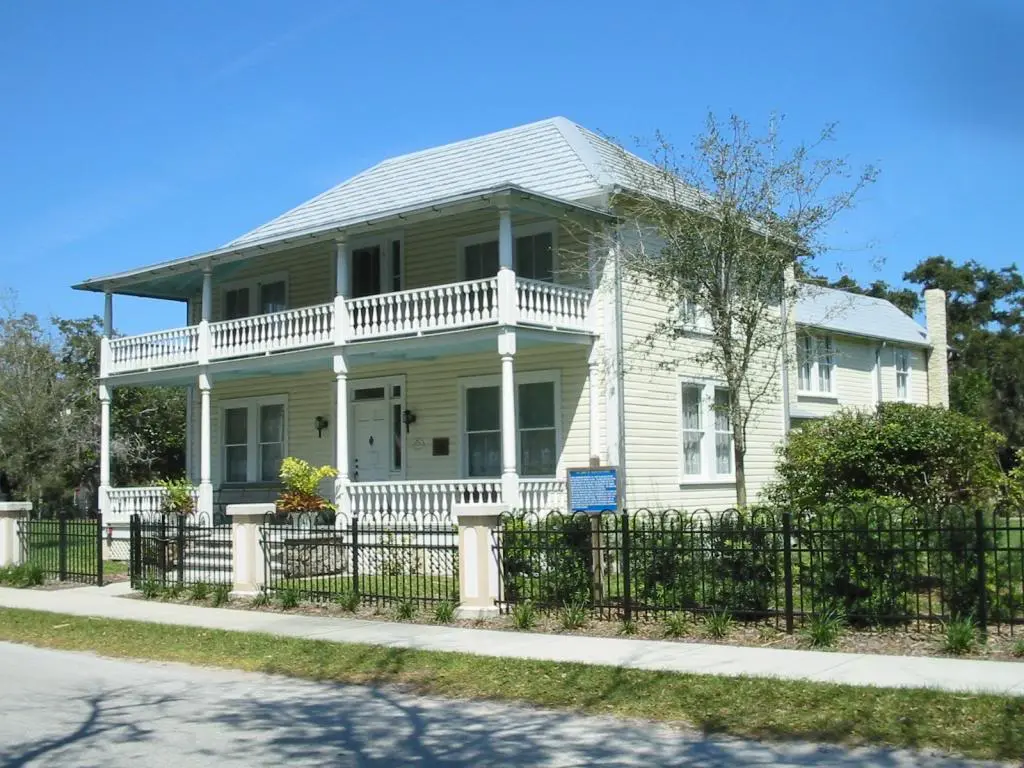
    Before her death in 1999, at the age of 101, Caroline P. Rossetter, along with her sister Ella, established a trust to secure the preservation of their family home as an historical monument.

    Listed on the National Register of Historic Places, the Rossetter House Museum and Gardens complex is located on Highland Avenue in Eau Gallie, Florida. It consists of the 1908 James W. Rossetter House, the 1901 William P. Roesch House, and the Houston Family Cemetery.

    Since 2004, the Florida Historical Society has managed the Historic Rossetter House Museum and Gardens under the direction of the Rossetter House Foundation, Inc. Through historic tours and special events, Brevard County history is celebrated and preserved for both residents and visitors.

    The Rossetter House Museum and Gardens will be included in the 2014 Eau Gallie Historic District Home Tour on Saturday, February 15, from 10:00 am to 3:00 pm, sponsored by the South Brevard Historical Society. The tour is part of the Annual Eau Gallie Founder’s Day and Fish Fry.

    Dr. Ben Brotemarkle is producer and host of “Florida Frontiers: The Weekly Radio Magazine of the Florida Historical Society,” broadcast locally on 90.7 WMFE Thursday evenings at 6:30 and Sunday afternoons at 4:00, and on 89.5 WFIT Sunday mornings at 7:00.
    PDF file(s)
    Article Number
    2
    relevantdate

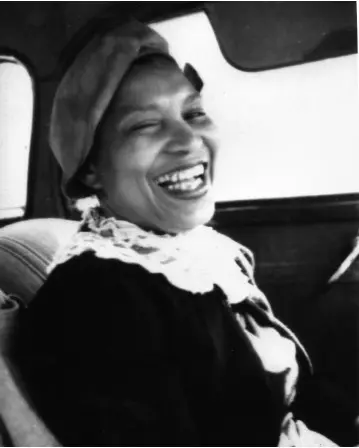
      On July 9, 1951, writer, folklorist, and anthropologist Zora Neale Hurston wrote in a letter to Florida historian Jean Parker Waterbury: “Somehow, this one spot on earth feels like home to me.  I have always intended to come back here. That is why I am doing so much to make a go of it.”

      It would be natural to assume that Hurston was writing about her adopted hometown of Eatonville, Florida. Growing up in Eatonville, the oldest incorporated municipality in the United States entirely governed by African Americans, instilled in Hurston a fierce confidence in her abilities and a unique perspective on race. Eatonville figures prominently in much of Hurston’s work, from her powerful 1928 essay How It Feels To Be Colored Me to her acclaimed 1937 novel Their Eyes Were Watching God

      Since 1990, the Association to Preserve the Eatonville Community (P.E.C.) has celebrated their town’s most famous citizen with the annual Zora Neale Hurston Festival of the Arts and Humanities. Hurston will forever be associated with the historic town of Eatonville.    

      Hurston, however, was not writing about Eatonville when she spoke of “the one spot on earth [that] feels like home to me” where she was “the happiest I have been in the last ten years” and where she wanted to “build a comfortable little new house” to live out the rest of her life.

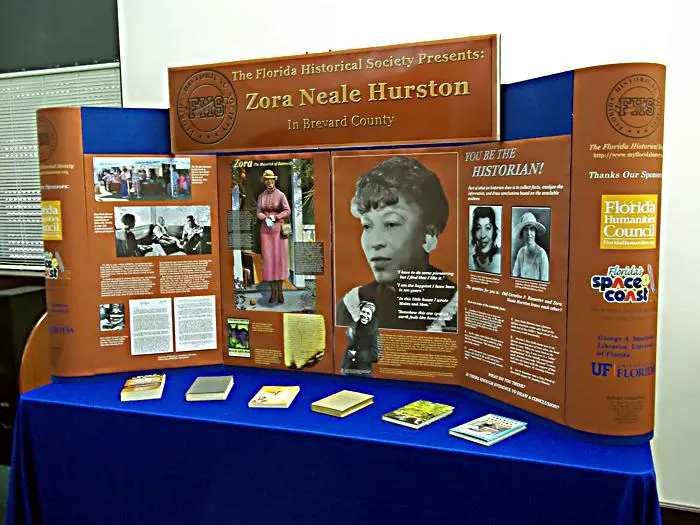
      Unknown to most, Zora Neale Hurston called Brevard County “home” for some of the happiest and most productive years of her life. 

      Hurston first moved to Eau Gallie in 1929. Here she wrote the book of African American folklore Mules and Men (published in 1935), documented research she had done in Florida and New Orleans to fill an entire issue of the Journal of American Folklore, and made significant progress on some of her theatrical pieces.

      After returning to New York in late 1929, Hurston came back to Eau Gallie in 1951, moving into the same cottage where she had lived previously. While living in Eau Gallie between 1951 and 1956, Hurston staged a concert at Melbourne High School (its first integrated event); worked on the project that became her passion, the manuscript for Herod the Great; covered the 1952 murder trial of Ruby McCollum (an African American woman who killed her white lover); and wrote an editorial for the Orlando Sentinel arguing against the Brown v. Board of Education decision. Her controversial disapproval of public school integration reflected her belief in the need to preserve African American culture and communities.

      While working as a librarian at the Technical Library for Pan American World Airways on Patrick Air Force Base, Hurston was unable to purchase her much loved Eau Gallie cottage, so she moved to an efficiency apartment in Cocoa. In June, 1956, Hurston moved from the apartment to a mobile home on Merritt Island. She was fired from her job in May 1957, because she was “too well-educated for the job.” She then left her happy life in Brevard County to take a job at the Chronicle in Fort Pierce, where she died three years later. 

      Zora Neale Hurston is remembered as a controversial figure of the Harlem Renaissance, a talented anthropologist and collector of folklore, and a beloved novelist. While she will always be closely associated with her adopted hometown of Eatonville, Brevard County is where Hurston spent some of her happiest and most productive years, in her cottage on the northeast corner of what is now the intersection of Guava Avenue and Aurora Road in Eau Gallie.

      More information about Zora Neale Hurston’s time in Brevard County can be found in the book Zora Neale Hurston’s Final Decade by Virginia Lynn Moylan and the television documentary The Lost Years of Zora Neale Hurston airing on WUCF TV, Friday, February 7 at 10:30 pm and Sunday, February 9 at 1:30 pm.

      Dr. Ben Brotemarkle is producer and host of
      “Florida Frontiers: The Weekly Radio Magazine of the Florida Historical Society,”
      broadcast locally on 90.7 WMFE Thursday evenings at 6:30
      and Sunday afternoons at 4:00,
      and on 89.5 WFIT Sunday mornings at 7:00.


      PDF file(s)
      Article Number
      1
      relevantdate

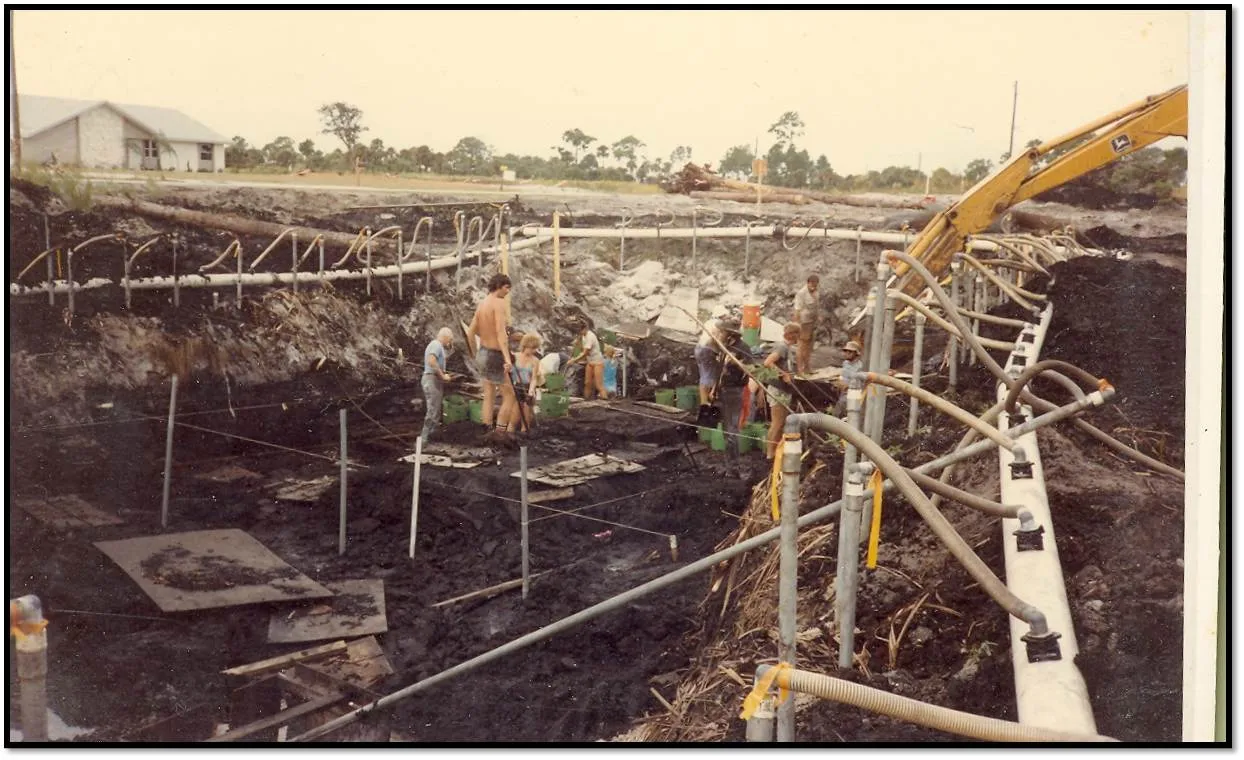
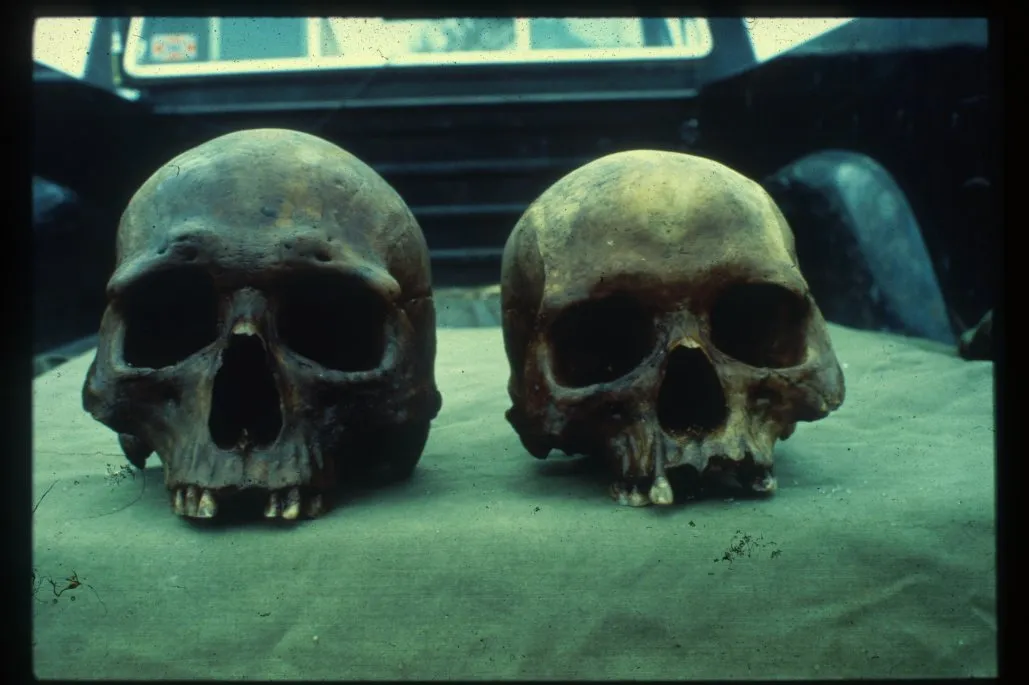
        Backhoe operator Steve Vanderjagt couldn’t believe his eyes. After uncovering a round, brownish object, he stopped clearing away the muck and debris to investigate further. When Vanderjagt picked up the object, the two empty eye sockets of a skull were staring back at him.

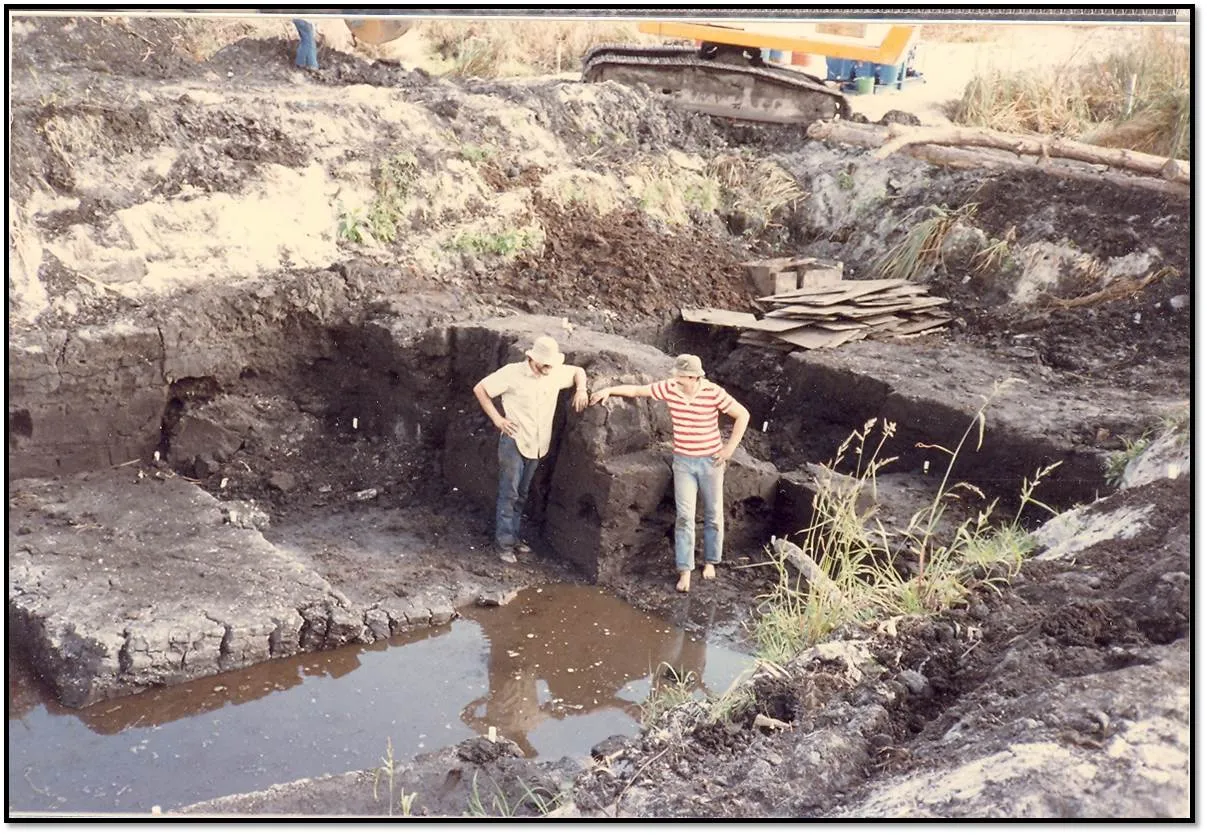
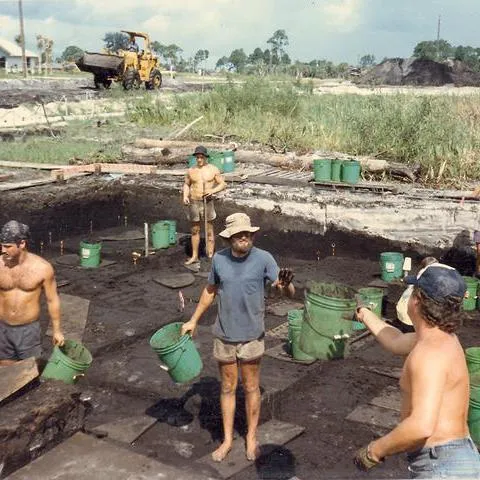
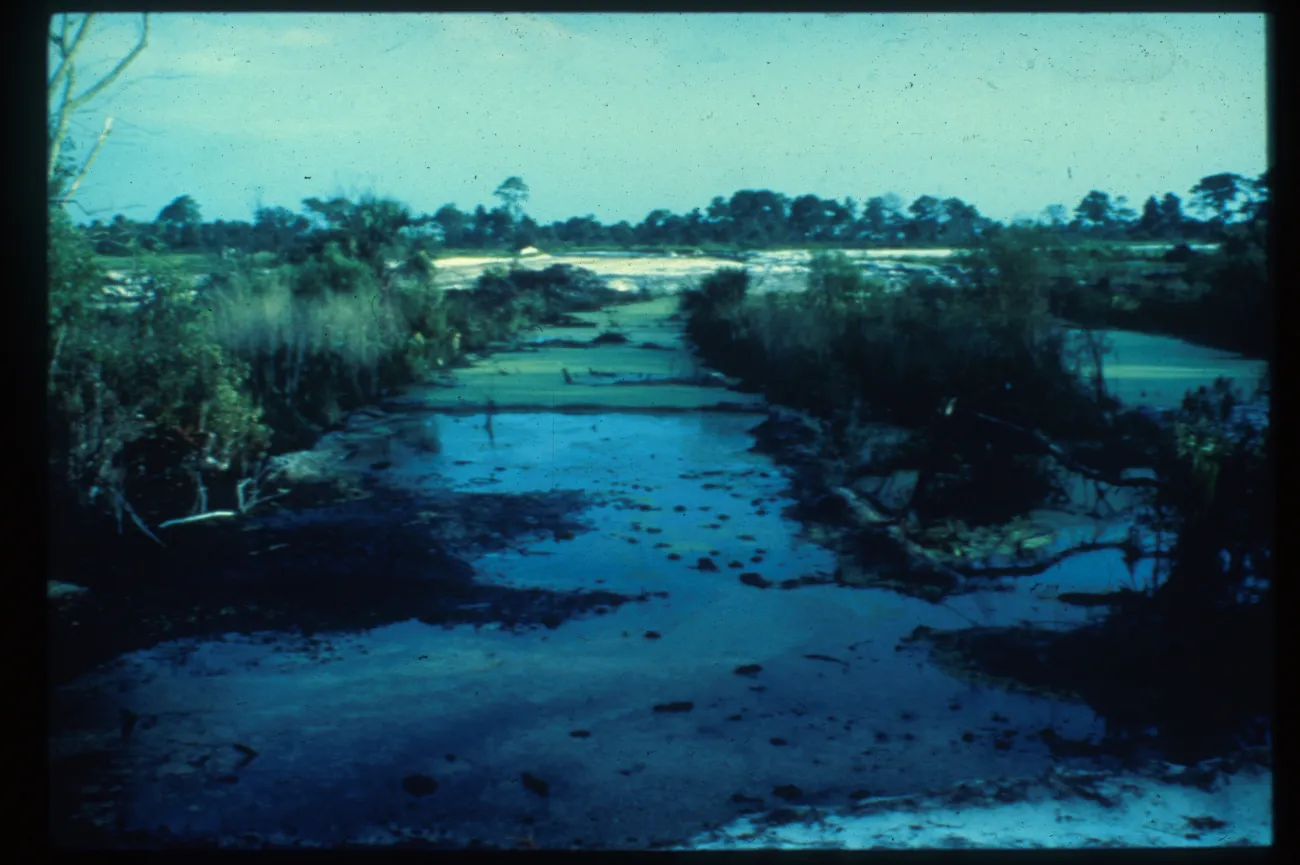
        The year was 1982, and Steve Vanderjagt was working to clear the area around a pond in what would become the Windover Farms subdivision in Titusville, Florida, near the intersection of Interstate 95 and State Road 50. It was quickly apparent that the remains of several very old skeletons had been disturbed.

        Jim Swann, the developer of the property, could have made the choice to quietly cover the bones and proceed with construction of his housing development, and no one would have been the wiser. Instead, Swann halted work on the site and brought in experts to determine exactly how old the newly discovered remains were, and what should be done with them.

        A young archaeologist from Florida State University was called in to examine the bones. Dr. Glen Doran could tell right away that the bones were Native American, and were perhaps 1,000 years old or more. After his preliminary assessment of the bones, carbon dating was performed on them. Everyone, including Doran, was shocked by the results.

        The human remains uncovered at the Windover site were between 7,000 and 8,000 years old, making them 3,200 years older than King Tutankhamen and 2,000 years older than the Great Pyramids of Egypt.

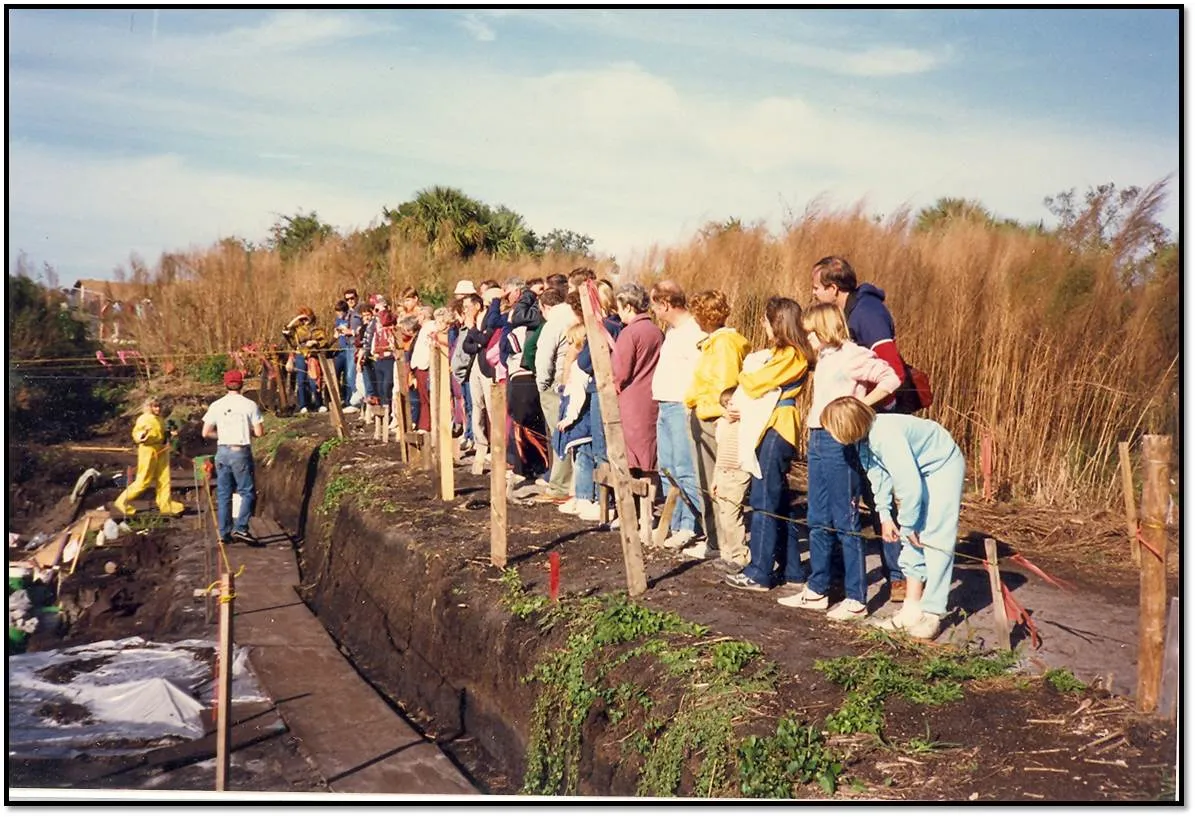
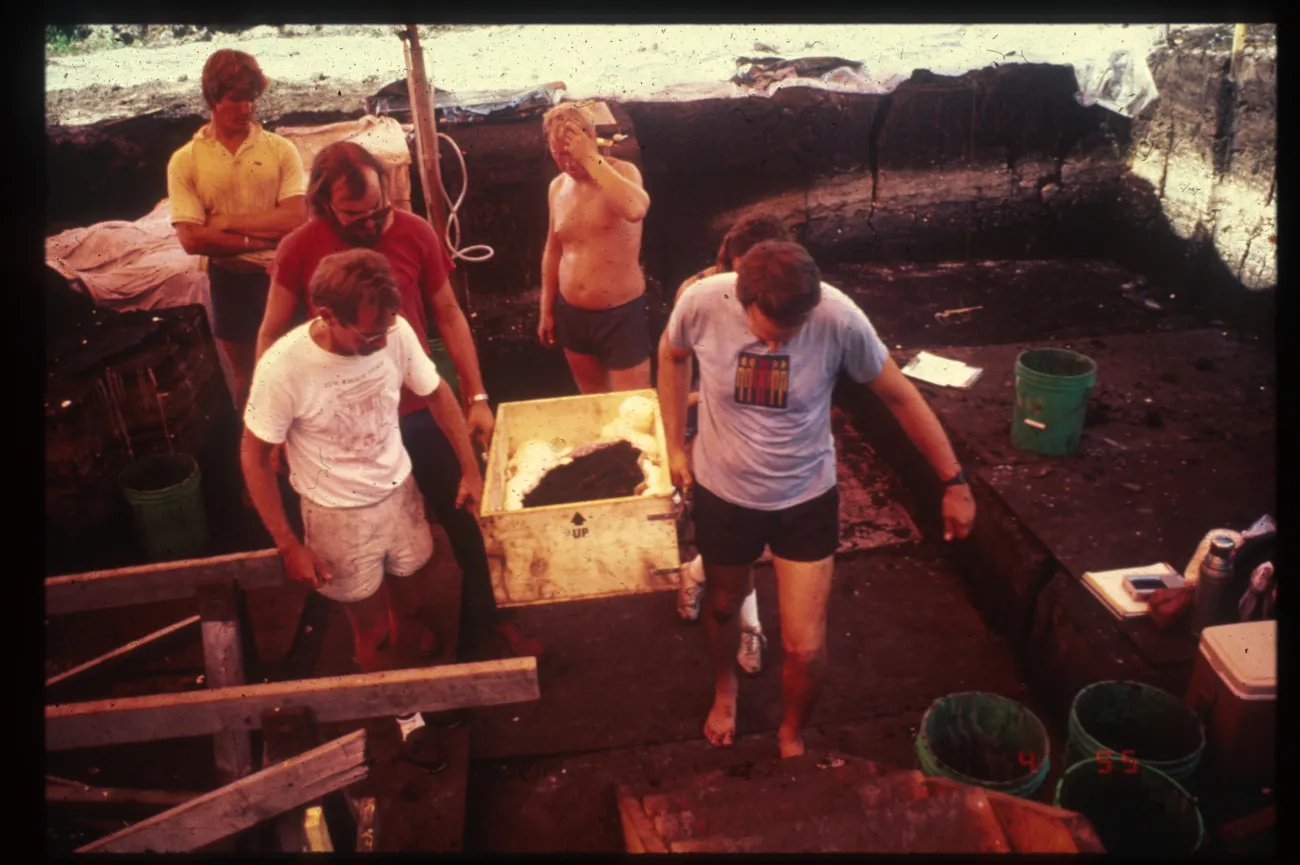
        It took two years to raise the money to do a systematic excavation of the Windover site. Three archaeological “digs” were conducted at Windover between 1984 and 1986. The astounding discoveries that were made attracted international attention.

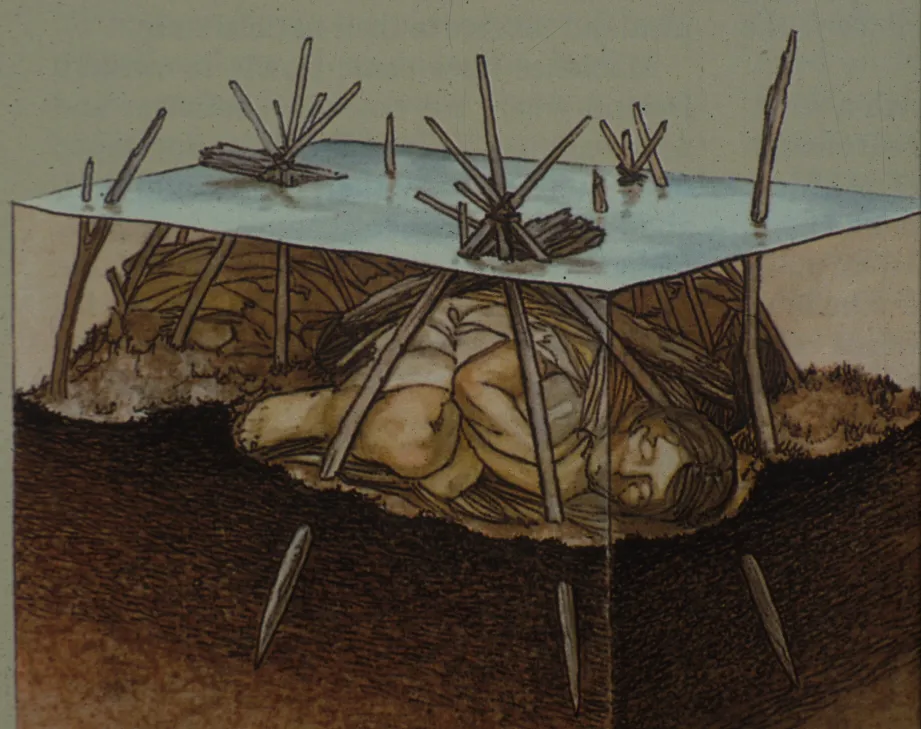
        Nearly 200 separate, intact burials were excavated at the Windover site. With only a couple of exceptions, the bodies had been ritualistically buried and placed in the same fetal position, lying on the left side. The heads were pointed west, with their faces to the north. The deceased were wrapped in what archaeologists believe is the oldest existing woven fabric in the world. Several branches were lashed together to form a tripod that held each body submerged underwater, creating a pond cemetery.

        The anaerobic environment of the peat bog combined with a remarkably favorable Ph balance in the pond allowed for amazingly well preserved burials. Archaeologists discovered that ninety-one of the skulls uncovered contained intact brain matter. The stomach contents of one ancient woman indicated that her last meal consisted of fish and berries. DNA tests on the ancient remains proved that the same families used the site as a burial ground for more than a century.

        Other discoveries at the Windover Dig help add to our understanding of prehistoric people. The damaged and diseased condition of some of the bones indicated that incapacitated people of this tribe were cared for over long periods of time, even though they could not participate in activities essential to the survival of the group, such as hunting and fishing. Bottle gourds were used as vessels thousands of years before the creation of pottery, demonstrating that the prehistoric people of Windover were horticulturalists as well as agriculturalists. The atlatl was a tool that helped hunters to throw their spears great distances with more strength and accuracy.

        Life for the prehistoric people of Florida was difficult. About half of the remains found at Windover were children, and the oldest people found were about 60. We have no way of knowing what their spiritual beliefs were, but the ritualistic burials suggest that the people of Windover probably believed in an afterlife.

        Although they lived more than 7,000 years ago, the people of Windover had fully developed brains. They resembled modern people, experiencing the same grief we feel at the passing of a loved one.

        To find out more about the Windover Dig visit the Brevard Museum of History and Natural Science at 2201 Michigan Avenue in Cocoa, and read the book Life and Death at Windover: Excavations of a 7,000-Year-Old Pond Cemetery by Dr. Rachel K. Wentz.

        Dr. Ben Brotemarkle is producer and host of “Florida Frontiers: The Weekly Radio Magazine of the Florida Historical Society,” broadcast locally on 90.7 WMFE Thursday evenings at 6:30 and Sunday afternoons at 4:00, and on 89.5 WFIT Sunday mornings at 7:00.
         

        Relevant Videos
        PDF file(s)

        The newly formed franchise of the Florida Marlins signs its first player, 16-year-old pitcher Clemente Nunez. Nunez never stepped on the mount for the Marlins, but he played as far as AA and had a good run with the Brevard County Manatees. The Marlins played their first game, winning 6-3 over the Los Angeles Dodgers, on April 5, 1993. The Marlins would go on to win the World Series in 1997 and 2003 before moving to a new stadium and being renamed the Miami Marlins in 2012.

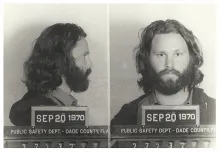
        Legendary rock star and Melbourne, Florida native Jim Morrison of The Doors was posthumously pardoned for two misdemeanor convictions, indecent exposure and open profanity, stemming from an incident in which Morrison allegedly exposed himself on stage during a 1969 concert in Miami’s Dinner Key Auditorium. What Morrison’s former lawyer said would be considered a “wardrobe malfunction” today caused uproar in conservative 1969 Miami. In response The Doors were dropped from local radio airwaves and a ‘decency rally’ was held at the Orange Bowl.

        After a mob of Republicans interrupt the proceedings election officials in Miami-Dade County, Florida vote to suspend manual recount of presidential ballots claiming they would not have enough time to finish the count before the November 26 deadline. They decide to recount only ballots that do not indicate a clear presidential choice, costing Democratic candidate Al Gore a 157-vote gain from the manual recount.

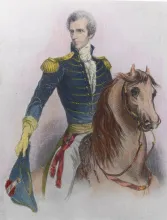
        The First Seminole War began in response to Andrew Jackson’s attacks into Spanish Florida against the Seminole Indians. This was not the first time the United States had made military excursions into the Spanish territory. Although Spain expressed outrage at having foreign military troops in their territory they eventually decided to cede the Floridas to the United States in 1819. Once the Adams-Onis Treaty took effect in 1821 the subsequent Second and Third Seminole Wars were attempts by the United States to drive the Seminoles out of its newly acquired territory.