Florida author

Article Number
155
relevantdate

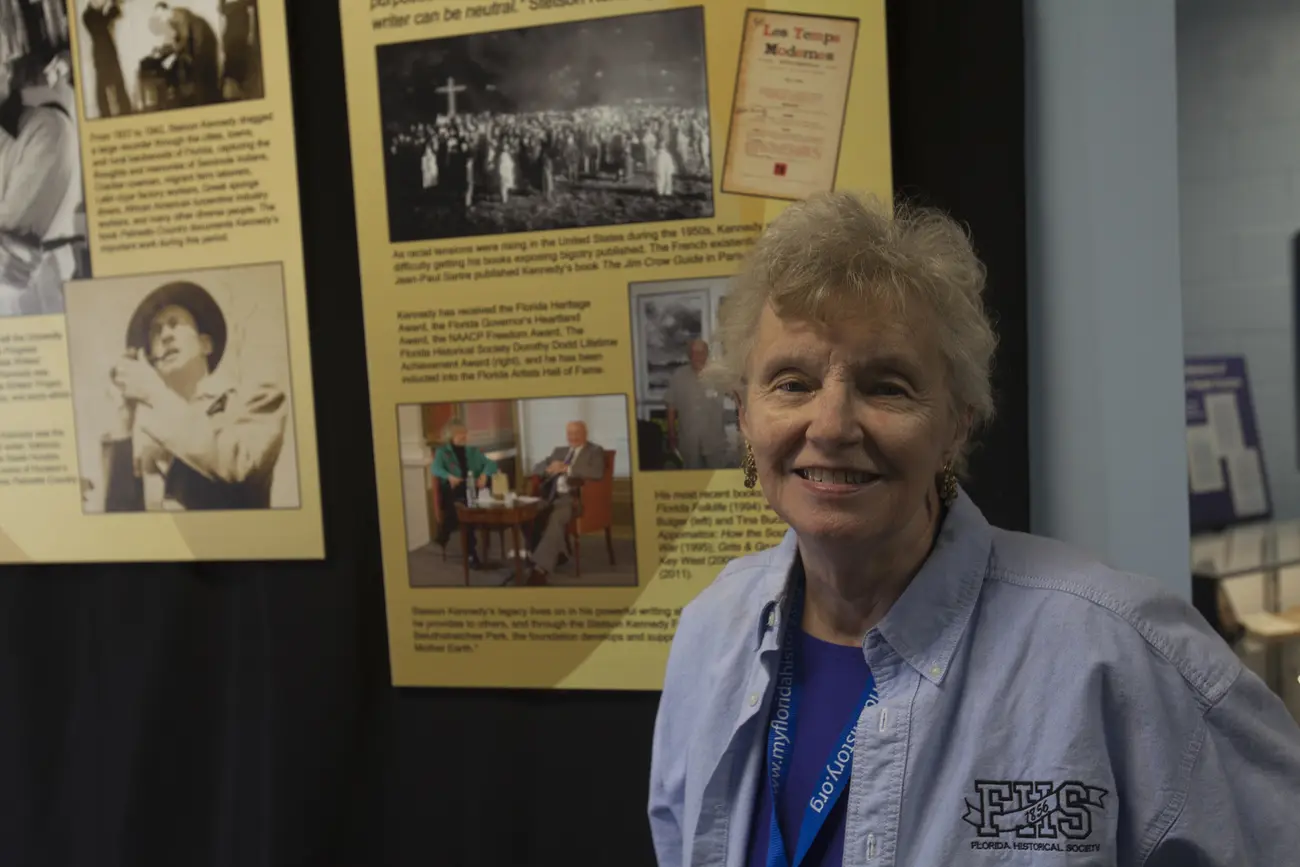
    The third and final presentation in the “Second Saturdays with Stetson Series” is Saturday, March 11, at 2:00 pm, at the Brevard Museum of History and Natural Science, 2201 Michigan Avenue, Cocoa. The free talk, presented in conjunction with the temporary exhibition “Stetson Kennedy’s Multicultural Florida” will feature Kennedy’s widow, author and educator Sandra Parks.

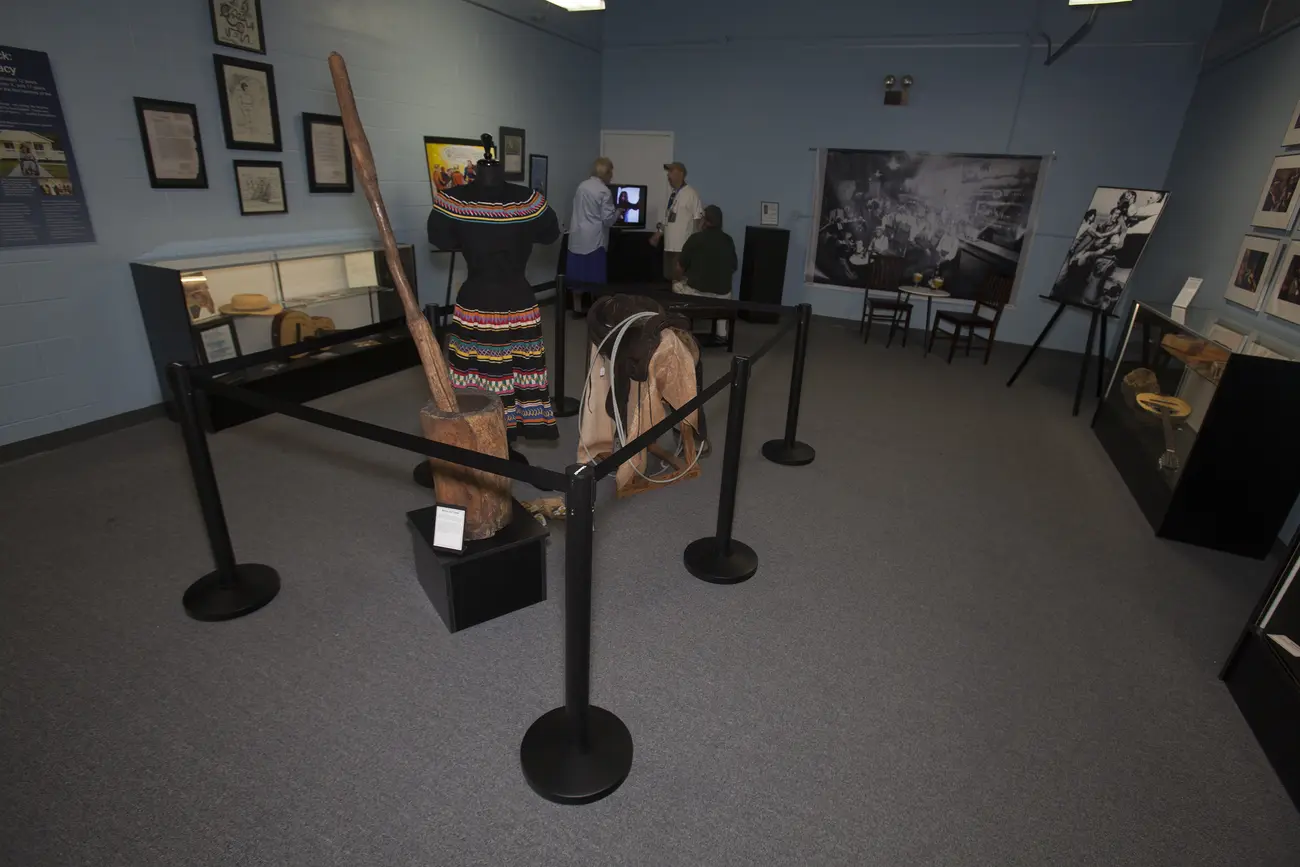
    The items on display in the exhibition “Stetson Kennedy’s Multicultural Florida” include artifacts and images reflecting the diverse Florida communities that folklorist, author, and activist Stetson Kennedy documented throughout the state in the 1930s and ‘40s. Kennedy interviewed Greek sponge divers in Tarpon Springs, Latin cigar rollers in Ybor City and Key West, African American turpentine industry workers, Cracker cowmen, Seminole Indians, and many others.

    Also on display are personal items such as Kennedy’s hat, his typewriter, and a letter he received from Dr. Martin Luther King, Jr.

    In the 1940s and ‘50s, Kennedy infiltrated the Ku Klux Klan, exposing their secret activities. He continued fighting for equal rights for all people until his death in 2011.

    The note from Dr. King, on letterhead from the Southern Christian Leadership Conference, is dated November 3, 1965. In the letter, King thanks Kennedy for his work in “our struggle for racial justice,” and his “great moral support, not only to myself, but to our entire staff.” King goes on to tell Kennedy that, “You have my heartfelt appreciation for such a worthwhile contribution to the Freedom Movement.”

    Visitors to the Brevard Museum are fortunate to be able to see the letter.

    “About a month before Stetson died, I asked him ‘where did you put the letter from Dr. Martin Luther King?’” says Parks. “I had begged him for the eight years we were together to please put it in the safety deposit box, and he would never do that. About a month before he died, he pointed to his legal documents file and said, ‘it’s in there.’”

    A few days after Kennedy died, Parks began the daunting task of going through stacks of unorganized papers that her husband had saved. She started with the box that was supposed to contain the letter from Dr. King. The letter was not there.

    “I had two other people go through the box, just in case I could have missed it,” says Parks. “Somewhere in with the takeout menus and the old phone bills there was a letter from Dr. Martin Luther King we hadn’t found yet.”

    The letter was eventually discovered among copies of various newspaper articles, several drafts of an unpublished autobiography, and other personal correspondence.

    “People think that this is some kind of scholarly exercise, but it is an endeavor for patience,” Parks says.

    Eventually, Parks had fifteen years of accumulated papers sent to the University of Florida to be sorted and archived. That collection is being merged with papers already archived at the University of South Florida.

    “In 1996, Stetson sold his then papers to the University of South Florida, along with many of his foreign language edition books that are quite rare and things we cannot find anymore,” says Parks.

    Some foreign language editions of Kennedy’s books are currently on display at the Brevard Museum.

    The entire collection of Kennedy’s papers is now under one roof at the University of Florida in Gainesville.

    “Stetson had been a student at the University of Florida,” says Parks. “He and Sam Proctor, who started the oral history center there, were friends years ago, back when they were both college boys. Most significantly, the WPA papers are there, papers of Zora Hurston’s are there, papers of Marjorie Rawlings are there.”

    Kennedy was a pioneer of oral history, had worked for the WPA Florida Writers Project, was supervisor of author Zora Neale Hurston for a time, and took a class at UF from Pulitzer Prize winner Marjorie Kinnan Rawlings.

    “Stetson had hoped that his papers would go to the University of Florida,” says Parks.

    The Florida Historical Society, which operates the Brevard Museum of History and Natural Science, assembled the exhibition “Stetson Kennedy’s Multicultural Florida” with the assistance of Sandra Parks, the University of Florida, the Florida State Archives, and private collectors.

    The Brevard Museum will display the exhibition through May.
    PDF file(s)
    Article Number
    144
    relevantdate

      Florida is a popular destination for people around the world. It is also the place that brought terms such as “hanging chad,” “Stand Your Ground” and “Don’t Tase me, bro!” to our collective consciousness.

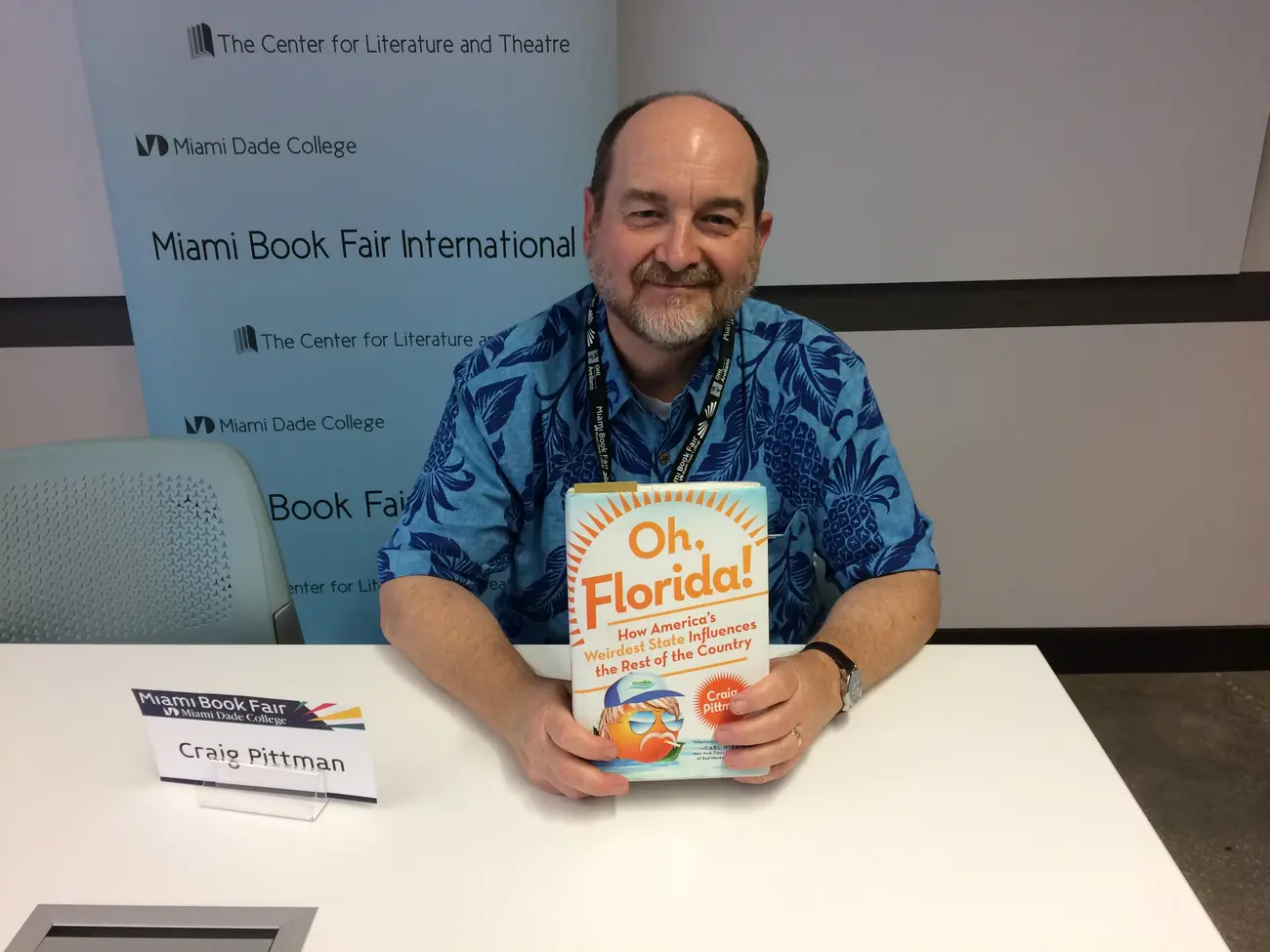
      Craig Pittman is a columnist for the Tampa Bay Times, and the author of three books on Florida’s natural environment. Pittman’s latest book, “Oh, Florida! How America’s Weirdest State Influences the Rest of the Country” is humorous, but contains a lot of good information about Florida history and culture.

      “I’m a big believer in using the ‘spoonful of sugar to make the medicine go down’ method of shoveling a lot of Florida history and culture down people’s throats,” says Pittman. “I tell a lot of the weird, wacky stuff that happens in Florida, but I use it as sort of a setup for leading them into learning more about Florida history, some of which is admittedly pretty wild and weird also.”

      Throughout its history, Florida has been a state full of contradictions, unusual stories, and eccentric individuals. Pittman has been inspired by the book “A Rogues Paradise: Crime and Punishment in Antebellum Florida, 1821-1861” by James M. Denham.

      “It was very helpful in telling me what Florida was like before we were even a state,” says Pittman. “Even then, we were pretty wild and crazy. Denham quotes one visitor to Florida from that era who said that ‘at least half the people who lived in Florida were con men and crooks and the other half were their penniless victims.’ So, not much has changed.”

      Florida became a United States Territory in 1821, and future president Andrew Jackson was the first territorial governor.

      “Being from Pensacola, I like to cite the very low opinion of Andrew Jackson’s wife about the place, calling it ‘a vast howling wilderness,’” says Pittman. “I’m not sure she’d like it much now either, with all the adult business establishments there.”

      In a chapter on our state capital, Pittman quotes poet Ralph Waldo Emerson’s impression of Tallahassee in 1827. Emerson called it “a grotesque place, selected three years since as a suitable spot for the capital of the territory, and since that day rapidly settled by public officers, land speculators, and desperados.”

      Florida became a state in 1845, and our first flag contains the words “Let Us Alone.” “People really identify with it as either a wish or a warning,” Pittman says.

      While the book “Oh, Florida!” contains thousands of anecdotes about the strange behavior of our state’s modern residents, Pittman also visited monuments, museums, and historical societies around the state to gather information. He found an interesting story in Cedar Key.

      “The mayor of Cedar Key, this was in 1890, basically set himself up as an island dictator,” says Pittman. “He had a thug who functioned as his town marshal, and the two of them walked around carrying shotguns, and they would order random people in the street to do crazy stuff like, ‘hey, you two head-butt each other.’ Nobody dared to stand up to them.”

      Eventually, one brave woman wrote a letter to President Benjamin Harrison asking him to bring an end to the situation.

      “About then is when they really slipped up, and they roughed up the keeper of the Customs House, who was a federal employee,” says Pittman. “Based on that action, and the complaint from this lady from Cedar Key, President Benjamin Harrison sent a Navy cutter to arrest the mayor.”

      While Florida is considered a paradise, we have more shark bites than anywhere else in the world, we are the lightning capital of the western hemisphere, lead the country in the number of sinkholes, and are impacted by hurricanes more than any other state.

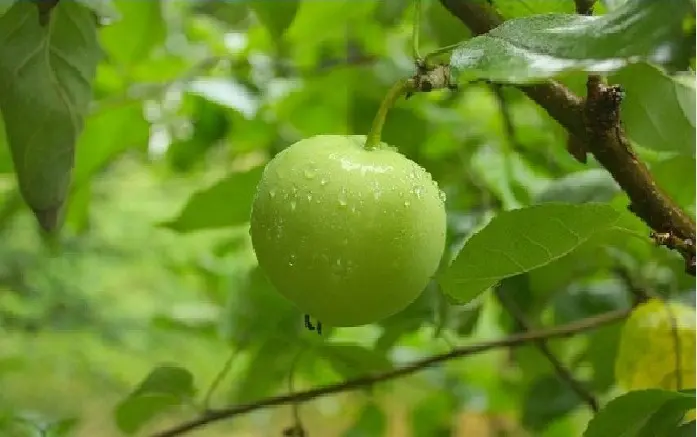
      Pioneers also had to be aware of animals, and even plants. Particularly dangerous was the manchineel tree.

      “The Spanish called it the ‘little apple of death’ because you take a bite and you’re six feet under in no time,” says Pittman. “It was the sap from that tree that allegedly the Calusa used to fatally wound Ponce de León when he made the mistake of coming back to Florida a second time. I guess they weren’t interested in repeat business for tourism at that point.”

      PDF file(s)