1971 – Polk County native Lawton Chiles assumed his seat in the U.S. Senate on this date. Arguably one of the most unconventional campaign runs in Florida history, a relatively unknown Chiles walked 1,003 miles from Pensacola to Key West meeting the sunshine state’s constituents face to face in order to gain notoriety. The journey lasted 91 days and he walked through more than one pair of boots! What was termed at the time a “public relations stroke of genius,” ultimately catapulted Chiles to an overwhelming victory over his opponent William C. Cramer in the 1970 election.
1979 - Daniel Robert “Bob” Graham was inaugurated as the Sunshine State’s thirty-eighth governor on this date. He would succeed himself as governor on January 4, 1983. Graham was born on November 9, 1936 in Coral Gables and he graduated from the University of Florida in 1959. He received a law degree from Harvard Law School in 1962. Graham entered public office as a Florida State Representative in 1966 and later as a State Senator before being elected Governor.
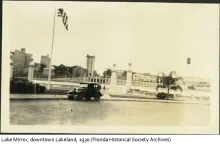
1885 – The City of Lakeland was incorporated on this date. Situated in Polk County along the Interstate-4 corridor between Tampa and Orlando, it is the largest city in the county. The area was first settled in the 1870s when rail lines began reaching south into the interior portion of the peninsula, but it was not until 1882 when a resident of Kentucky by the name of Abraham Munn purchased land in what is now downtown, and plotted out a city that Lakeland got its start. Citrus, cattle and phosphate mining became major industries in the Lakeland area, and in many ways still are.
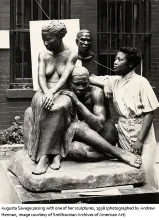
1892 – Sculptor Augusta Christine Savage (née Fells) was born in Green Gove Springs on this date. Savage was considered a preeminent contributor to the Harlem Renaissance movement of the early 20th century. Her work was featured in many prominent shows including the 1939 New York World's Fair and a permanent display at the Smithsonian American Art Museum. Savage was a proponent of equal rights for African Americans throughout her life and also constantly worked to help teach future generations art and sculpture.
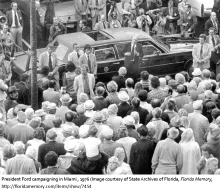
1976 – President Gerald Ford made a campaign stop in Miami on this date. Ford would go on to win the Republican primary against then Governor of California and future President Ronald Reagan, but lost the general election to Jimmy Carter. Ford had been President since August of 1974 when then President Richard Nixon resigned from office.
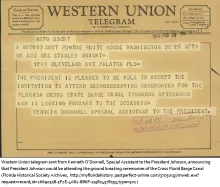
1964 – President Lyndon B. Johnson spoke at the opening ceremonies of the Cross Florida Barge Canal on this date. President Johnson even detonated the first charge to break ground for the new project. In his speech Johnson said, “The challenge of a modern society is to make the resources of nature useful and beneficial to the community, so this is the passkey to economic growth.” For centuries people theorized about building some kind of cross-state canal, but it was not until 1933 when the federal government authorized some funding.
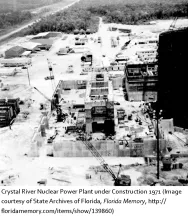
1980 – The Crystal River 3 Nuclear Power Plant was shut down after a spill of radioactive water on this date. The problem stemmed from a malfunction on a control panel which triggered the emergency shutdown and the dumping of 430,000 gallons of radioactive water. The problem was eerily similar to the Three Mile Island incident in Pennsylvania in 1979, but was quickly contained.
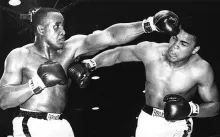
Cassius Clay (Muhammad Ali) defeated World Heavyweight Boxing Champion Sonny Liston in Miami Beach on this date. The fight was one of the most anticipated, watched, and controversial matches of all time. This first of two meetings between the two heavyweights was held in the Miami Beach Convention Hall, with over 8,000 people in attendance, and grossed nearly $4.5 million dollars, one of the highest grossing fights of all time.
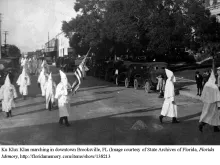
1922 - The Ku Klux Klan participated in the Tourist's Day parade in Brooksville, Florida. In the early 1920s it was not uncommon for the KKK to march without opposition in civic parades in cities and towns throughout the state, despite their ongoing efforts to intimidate and deny rights to African Americans and other minorities, often using violence.
1962 – Astronaut John H. Glenn Jr. was honored by President John F. Kennedy at Hangar S in Cape Canaveral on this date after Glenn’s successful orbit of the earth three days prior. Glenn became the first American to orbit the earth aboard the spaceship Friendship 7, and was only the fifth human in space. Glen would later be elected to the U.S. Senate in 1974 and would serve in that position until his retirement in 1999. He would also fly on a Space Shuttle mission (STS-95) in 1998, becoming the oldest person (77) to fly into space.