Florida Frontiers

A Tag for nodes that are relevant to Florida Frontiers.   For example if an artilce is about Florida Frontiers and you would like a 'View' to sorty by Tag criteria for it... us it.

Article Number
189
relevantdate

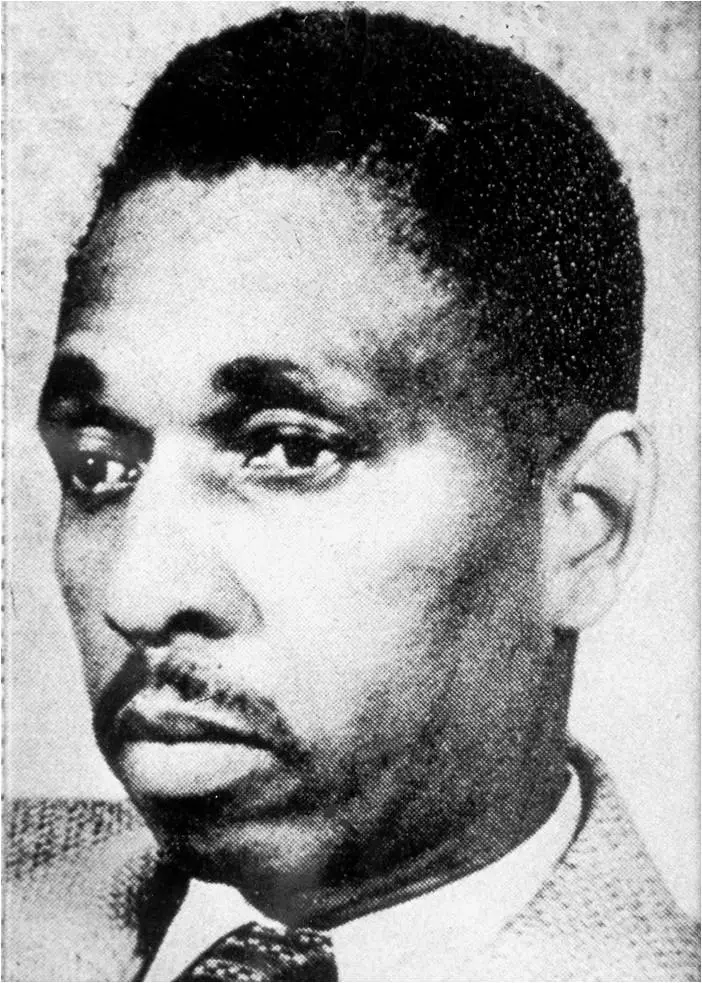
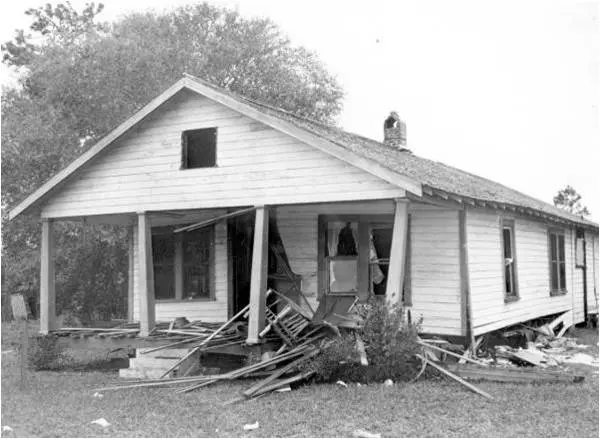
    On Christmas night 1951, a bomb exploded under the Mims home of educator and civil rights activist Harry T. Moore. The blast was so loud it could be heard several miles away in Titusville.

    Moore died while being transported to Sanford, the closest place where a black man could be hospitalized. His wife Harriette died nine days later from injuries sustained in the blast.

    The couple celebrated their twenty-fifth wedding anniversary on the day of the explosion, and Harriette lived just long enough to see her husband buried.

    The Moore’s daughter, Juanita Evangeline Moore, was working in Washington, D.C. in 1951, and was scheduled to come home for the holidays on December 27th, aboard a train called the Silver Meteor. She did not hear the news about her family home being bombed until she arrived.

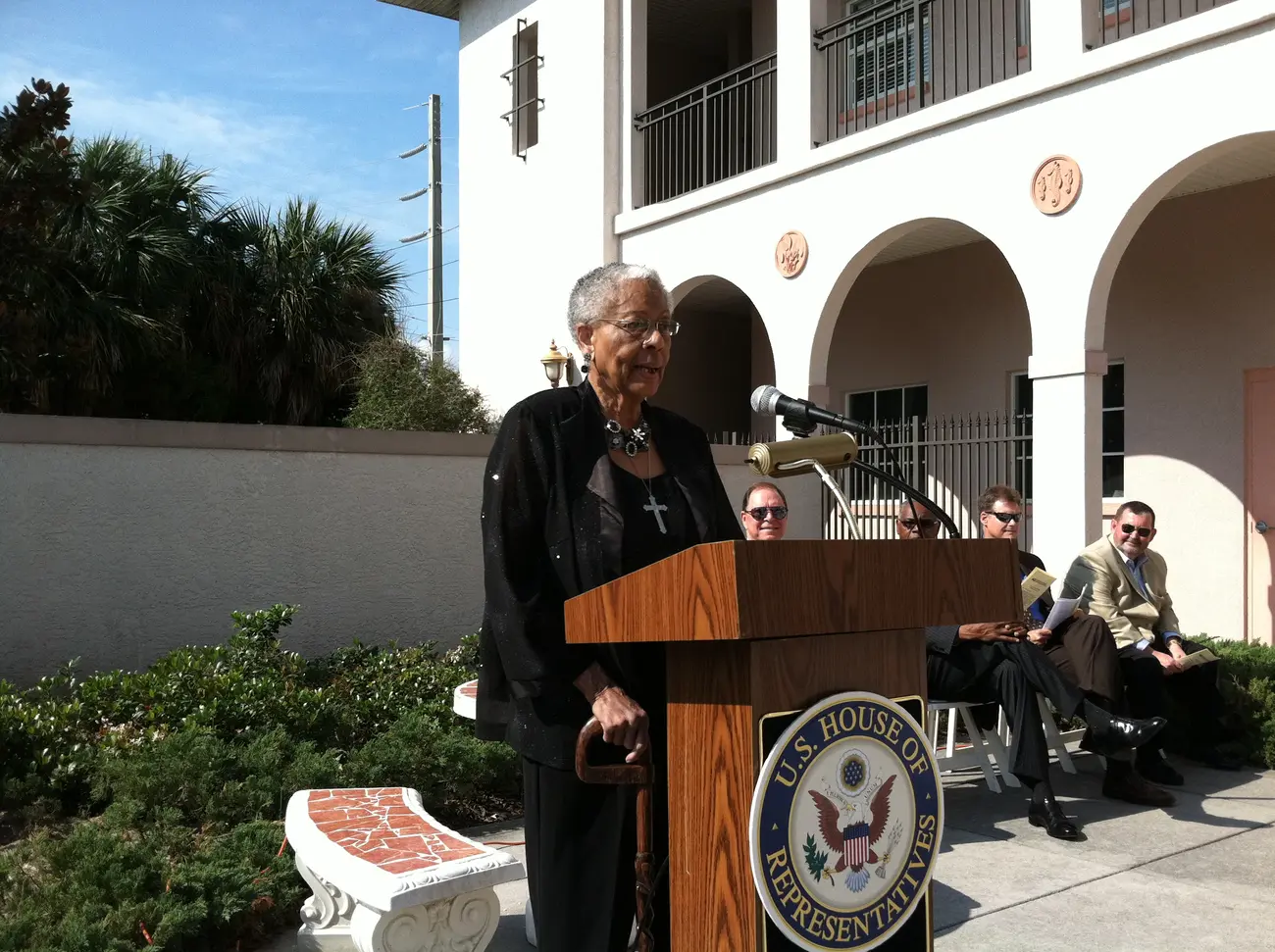
    “When I got off the train in Titusville, I knew something was very, very wrong,” Moore said in an interview before her death in October 2015. “I had not turned on radio or television, so I didn’t know a thing about it until I got off the train. I noticed that my mother and father were not in front of all my relatives to greet me and they were always there.”

    Moore was given the news by her Uncle George, who was home on leave from Korea.

    “We got into his car and got settled, and the first thing I asked was ‘Well, where’s Mom and Dad?’ No one said anything for a while, it was complete silence. Finally, Uncle George turned around and he said ‘Well, Van, I guess I’m the one who has to tell you. Your house was bombed Christmas night. Your Dad is dead and your Mother is in the hospital.’ That’s the way I found out,” said Moore.

    “I’ve never gotten over it. It was unbelievable.”

    Moore insisted on being taken to her parent’s home. The blast had done extensive damage. She saw a huge hole in the floor of her parent’s room, into which their broken bed had collapsed. Wooden beams had fallen from the ceiling. Shards of broken glass covered the bed in the room she shared with her sister, Peaches.

    Harry T. Moore was born November 18, 1905, in Houston, Florida, located in Suwannee County. At age 19, Moore graduated with a high school diploma from Florida Memorial College where he was a straight-A student, except for a B+ in French. Other students called him “Doc” because he did so well in all of his classes.

    Moore moved to Mims in 1925 after being offered a job to teach fourth grade at the “colored school” in Cocoa. He met Harriette Vida Sims. They married and had two daughters. Moore, his wife, and both of their daughters graduated from Bethune-Cookman College in Daytona.

    As a ninth grade teacher and principal at Titusville Negro School, Moore instilled in his students a sense of pride and a solid work ethic. A popular and skilled educator, Moore was fired for attempting to equalize pay for African American teachers in Brevard County.

    Moore led a highly successful effort to expand black voter registration throughout the state, dramatically increased membership in the Florida branch of the NAACP, worked for equal justice for African Americans, and actively sought punishment for those who committed crimes against them.

    “I do remember a lot of NAACP work with my Dad from the time I was able to understand what was going on,” said Juanita Evangeline Moore. “I helped him a lot with his mailing lists. We had a one-hand operated ditto machine. He usually typed out the stencil and he ran off whatever material he wanted to send out.”

    Although the murders of Harry T. and Harriette V. Moore have never been solved, it is believed that members of the Ku Klux Klan from Apopka and Orlando planted the bomb on Christmas night.

    Moore and his wife were killed 12 years before Medgar Evers, 14 years before Malcolm X, and 17 years before Martin Luther King, Jr., making them the first martyrs of the contemporary civil rights movement.

    The Moore Cultural Complex in Mims features a civil rights museum and a replica of the Moore family home.
    PDF file(s)
    Article Number
    192
    relevantdate

      When you read the terms “digital history” or “digital humanities,” you might think of online access to scanned primary source documents such as journals, photographs, or maps. While that’s important, there’s much more to digital history.

      “We can interact with the public in a way we couldn’t before,” says Connie Lester, director of the RICHES Project in the public history program at the University of Central Florida, an interdisciplinary effort that records and preserves the documents and stories of Florida communities, businesses, and institutions.

      “The public then becomes involved in the collection and interpretation of the history,” says Lester. “The digital tools allow us to do that. The digital tools allow us to see things that are hard to explain in a text fashion.”

      Historians and their students are creating exciting digital history and humanities projects using cutting edge technology such as new audio visual recording and editing software to create podcasts and blogs; and 3-D imaging of objects, artifacts, and historic sites.

      The University of South Florida St. Petersburg has posted online a 3-D image of the Cocoa Canoe, recently uncovered by hurricane Irma. Anyone can find the image online and spin the canoe around to view it from any angle.

      Laurie Taylor, digital history librarian at the University of Florida, has helped to create interactive maps of Florida and the Caribbean.

      “Digital history and digital humanities is opening up possibilities for all of us,” says Taylor. “With new tools, with new resources, we can bring those to bear using our humanities expertise which is speculative, which is imaginative, which is creative.”

      “These powerful new tools allow us to look at big data sets and look for patterns, hidden patterns, in texts, in data, and that’s exciting because this is work we could not do without a computer,” says Scot French, professor of digital and public history at the University of Central Florida. “One of our M.A. thesis candidates, Holly Baker, is doing a really exciting project where she’s tracking the song collecting journeys of Zora Neale Hurston and others in the 1930s around the state of Florida. Using a digital mapping interface, you can actually follow these journeys, click, listen to the music, listen to the interviews, see the photographs, and get a sense of what it was like to move around Florida, virtually.”

      J. Michael Francis, professor of history at the University of South Florida St. Petersburg, specializes in Spanish colonial history. He has helped to develop La Florida Digital Interactive Archive.

      “This is simply a different method of delivery of content,” says Francis. “We hope to drive an audience that might not pick up a book about colonial Florida, but might be willing to engage with a website. Might be willing to watch a video and then start to pose questions and maybe dig a little deeper. We would like to have all students have access to this material.”

      Students at Rollins College, under the direction of history professor Julian Chambliss, have engaged in a variety of digital history projects. Perhaps most notable is the online reconstruction of an African American newspaper called the Winter Park Advocate, which was believed to have been lost. Chambliss and his students found two complete issues of the paper in local archives, as well as scrapbooks of articles from the paper to create a new digital resource.

      “Increasingly in my classes we work on creating,” says Chambliss. “What can we create and distill from our interpretation of the primary sources. So we might make posters, we might do audio documentaries, we might try to reconstitute something that’s in fragments, digitally. All those are opportunities for the students to synthesize the information, and it’s like a proof of learning, a proof of concept, that they understand what these primary sources represent in the broader historical narrative.”

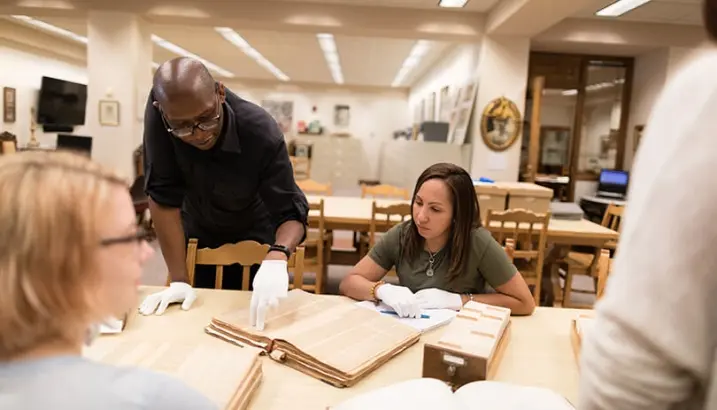
      Traditional historical research involves physically going to libraries and archives to crack open old books, and wade through archival boxes of primary source documents. It can be a thrilling tactile experience. Digital historians say that’s not going away.

      “For one thing, everything hasn’t been digitized,” says Connie Lester. “There is something about seeing the document, about holding it in your hand that is awe inspiring.”

      Article Number
      188
      relevantdate

        The small town of Palatka, Florida is about 60 miles south of Jacksonville, 45 miles east of Gainesville, and 29 miles southwest of St. Augustine. It’s the home of St. Johns River State College and the Florida School of the Arts, headquarters of the St. Johns Water Management District, and the site of Ravine Gardens State Park.

        A quiet little town today, Palatka has a rich and colorful history.

        “I’m a fifth generation on my mother’s side, born and raised in Palatka,” says Larry Beaton, historian of the Putnam County Historical Society. “My great-great grandfather was Robert Raymond Reid, who was the son of the fourth territorial governor, and he came here to Palatka in the early 1850s.”

        Beaton’s maternal grandmother lived to be over 100 years old, and would entertain her grandchildren with stories of how she remembered Palatka as a little girl.

        “She remembered walking along the riverfront with her mother and she said that the river was just like a highway,” says Beaton. “She said any direction you looked there were boats coming or going to the docks at Palatka bringing tourists and cargo.”

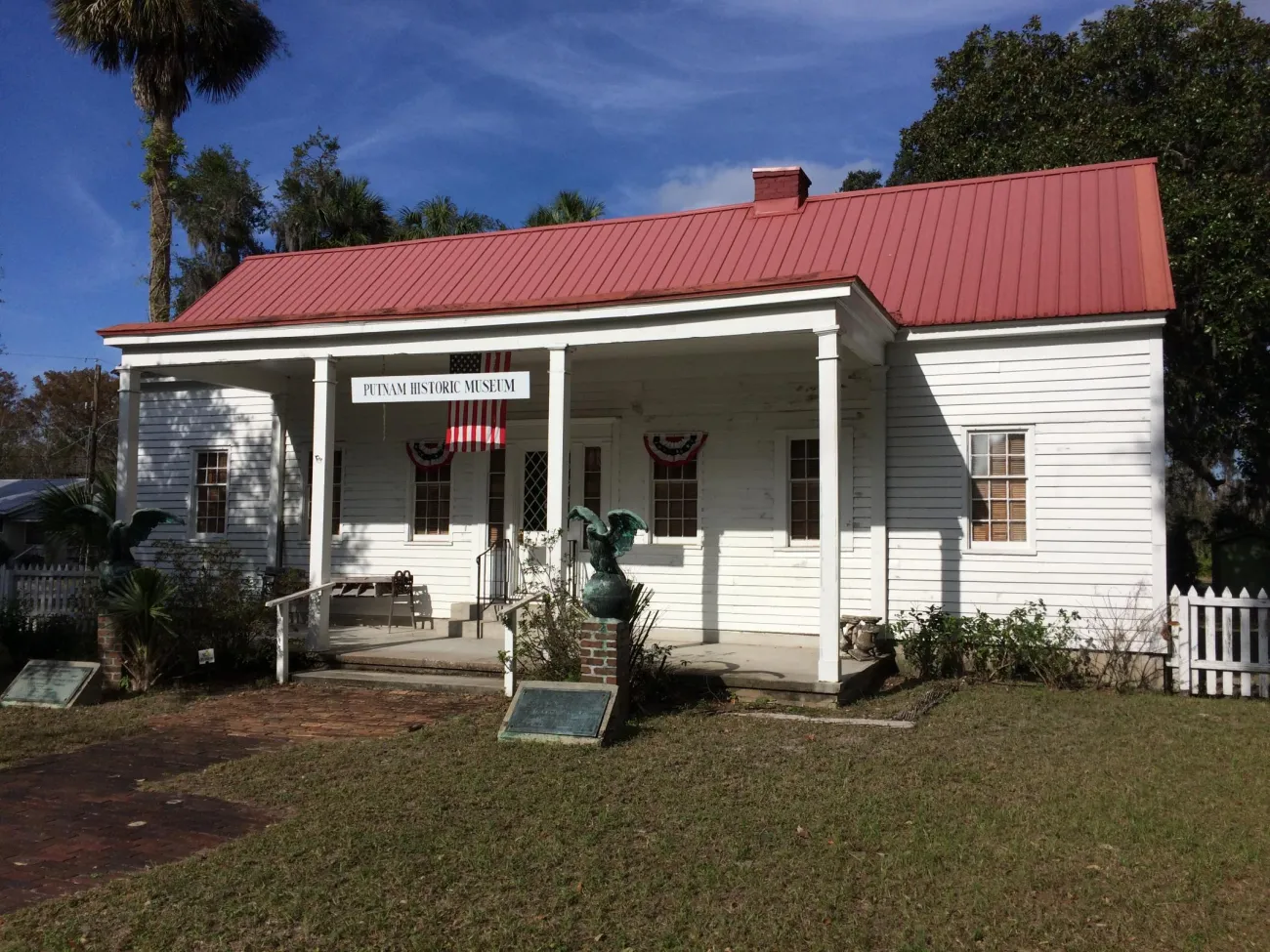
        The Putnam Historic Museum is a small building, but is full of artifacts detailing Palatka’s long history. One exhibit shows how Native Americans were the first inhabitants of Palatka, as documented by naturalist William Bartram in 1774.

        The British controlled Florida from 1763 to 1783. During that period an Englishman named Denys Rolle established Rollestown in what is now East Palatka. When the Spanish regained control of Florida in 1783, Rolle abandoned his settlement.

        Florida became a United States Territory in 1821. It was during this period that Palatka developed as an active port community on the St. Johns River.

        The Second Seminole War of the 1830s caused problems for Palatka as buildings were attacked and burned. In 1838, the U.S. Army established Fort Shannon to protect Palatka. The Putnam Historic Museum is one of the only original Army buildings from the Second Seminole War still in existence.

        “This has been identified as the Officer’s Quarters for Fort Shannon,” says Beaton. “The building was originally down on the riverfront. The Putnam County Historical Society and the City of Palatka acquired the building in 1984, and had it moved to the site here next to the Bronson-Mulholland House.”

        Florida became a state in 1845, supporting growth in Palatka. In 1849, Palatka was named Putnam County seat, and it was incorporated as a town in 1853. The following year, Judge Isaac H. Bronson built Sunny Point, now known as the Bronson-Mulholland House.

        Over the century after it was built, the Bronson-Mulholland House changed hands many times. Abandoned during the Civil War, the house was used by Confederate soldiers as a lookout for Union gunboats, and later was used as a barracks for Union colored troops. In 1866, it became a school for children of freed slaves. Later serving as a rooming house, the property fell into disrepair in the mid-twentieth century. Plans were made to demolish the house and build a playground.

        “That’s how the Putnam County Historical Society was formed, was to save the house from destruction,” says Beaton. “The city restored the house through a federal grant and now the house museum is a partnership between the City of Palatka and the Putnam County Historical Society. It’s been open for tours since 1977.”

        In the decades following the Civil War, Palatka thrived. It was a popular tourist destination, particularly for those seeking health benefits from Florida’s climate. By the 1880s, Palatka was a transportation hub for railroad lines and steamboat traffic on the St. Johns River.

        A fire nearly destroyed the town in 1884, but it rebounded. In 1893, Palatka’s Wilson Cypress Company became the second largest cypress mill in the world.

        As the twentieth century approached, Palatka began losing its stature as a thriving city. The Big Freeze of 1894-95, devastated citrus crops.

        “Also the railroads taking people further south and opening up the interior of Florida was kind of the beginning of the end of Palatka being a major tourist destination,” says Beaton.

        Today, Palatka has a quaint historic ambience with buildings preserved and restored in two nationally designated historic districts.

        PDF file(s)
        Article Number
        187
        relevantdate

          On November 22, 1963, President John F. Kennedy was shot and killed as his motorcade drove through Dallas, Texas.

          President Kennedy spent the week before his death in Florida.

          After a short stay at his family’s winter residence in Palm Beach, Kennedy toured the NASA facilities at Cape Canaveral before visiting Tampa and Miami.

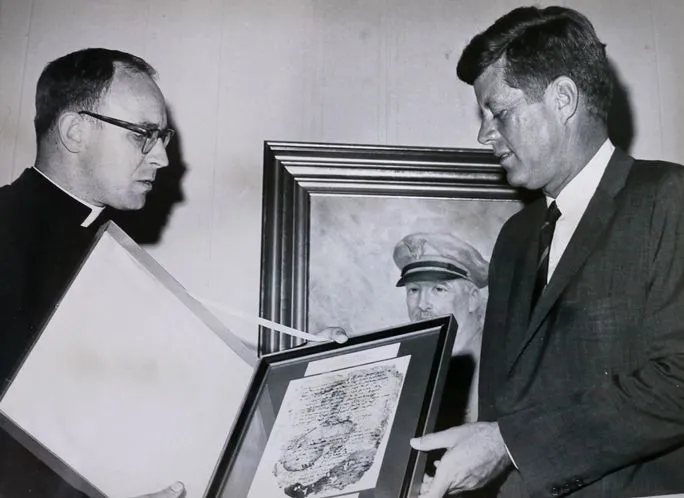
          On his last day in Florida, President Kennedy met with Florida historian and Catholic priest Michael Gannon. As the first and only Catholic American president, Kennedy was particularly interested in Gannon’s area of expertise, Catholicism in Spanish Colonial Florida.

          When Gannon spoke with President Kennedy on November 18, 1963, he was a priest in St. Augustine, preparing to celebrate the 400th anniversary of the founding of the city.

          “At the old mission where the first Parrish Mass was celebrated on September 8, 1565, it was decided to build a cross,” Gannon said. The cross was to be built on the site where Don Pedro Menéndez de Avilés first landed to settle St. Augustine, and where Father Francisco López observed the city’s first Catholic Mass.

          “Ultimately it was constructed of stainless steel and rose to a height of 208 feet. I think it’s very impressive. It can be seen 14 miles out to sea. It has become a symbol of the first mission to the North American Natives and the first Parrish established by Europeans in this country,” said Gannon.

          Also part of St. Augustine’s 400th anniversary celebration in 1965 was the expansion and redecorating of the cathedral church, the construction of a contemporary church called The Prince of Peace, and a bridge linking the new church with the historic mission grounds.

          President Kennedy’s Catholicism had been an issue during his election campaign, and he gave a national speech on the topic to reassure voters.

          Spain controlled Florida for nearly three centuries. Gannon told Kennedy about the extensive and complex history of Catholicism in Florida.

          “Everywhere Spain moved politically and economically and militarily, the church moved, too,” said Gannon.

          “The church was always a partner of Spanish expansion. The church was on the forefront. If you want to select any part of the Spanish cultural presence in Florida and the rest of North America, you would have to say that the church was in advance of all other institutions.”

          The Florida Chamber of Commerce arranged the meeting between Gannon and Kennedy as St. Augustine was preparing for its 400th anniversary celebration.

          “It was hoped by the Chamber of Commerce and by the city fathers in St. Augustine, that the president would agree to come down earlier rather than later,” said Gannon.

          “It was uncertain if he would be elected to a second term, so they wanted him to come while president and to build up interest in the city that would help generate tourist traffic for the 400th year.”

          It was arranged for Gannon to meet the president at the MacDill Air Force Base Officer’s Club.

          “I brought him a photographic copy of the oldest written record of American origin, which was a Parrish Register of Matrimonial Sacrament, a marriage between two Spaniards, a man and a woman, here in the city of St. Augustine, dated 1594,” said Gannon.

          “He seemed to be very grateful to receive the gift of the photographic copy that was beautifully framed.”

          President Kennedy was intrigued by Gannon’s stories about the oldest continuously occupied European city in what would become the United States.

          “As he left he said ‘I’ll keep in touch.’” Gannon said, pausing to recall the moment. “But four days later he was dead.”

          Michael Gannon retired from the priesthood in 1976, but continued his illustrious career as one of Florida’s most respected historians and educators, teaching at the University of Florida.

          Gannon’s best known non-fiction book is “The Cross in the Sand,” written in 1965 and republished in 1999. He was editor of and contributor to the book “The History of Florida,” originally published in 1996 and revised in 2013. Gannon’s creative work includes the 1994 novel “Secret Missions” set in Florida during World War II, and the play “My Friend Zelma: Marjorie Kinnan Rawlings on Trial.”

          Gannon died in Gainesville in April 2017, at the age of 89.

          PDF file(s)
          Article Number
          186
          relevantdate

            Tradition holds that the first Thanksgiving was celebrated in 1621, as English Pilgrims at Plymouth Plantation in Massachusetts shared a bountiful harvest with their Native American neighbors.

            The first Thanksgiving celebration in North America actually took place in Florida.

            Fifty-five years before the Pilgrims landed at Plymouth Rock, colonists in St. Augustine shared a feast of thanksgiving with Native Americans.

            Florida historian Michael Gannon, who died on April 10, 2017 at the age of 89, found documents supporting Florida’s claim to the “real” first Thanksgiving celebration.

            “Not until 42 years later would English Jamestown be founded,” Gannon said. “Not until 56 years later would the Pilgrims in Massachusetts observe their famous Thanksgiving. St. Augustine’s settlers celebrated the nation’s first Thanksgiving over a half century earlier, on September 8, 1565. Following a religious service, the Spaniards shared a communal meal with the local native tribe.”

            Hosting the first Thanksgiving celebration in what would become the United States is one of many “firsts” for the oldest continuously occupied European settlement in America, founded 452 years ago.

            “When the Spaniards founded St. Augustine, they proceeded to found our nation’s first city government, first school, first hospital, first city plan, first Parrish church, and first mission to the native populations,” Gannon said.

            In 1965, Gannon was a priest and historian in St. Augustine, leading several projects to help celebrate the 400th anniversary of the founding of the city. He oversaw the erection of the Great Cross on the site of the first religious service and thanksgiving feast in North America. At 208 feet tall, the stainless steel structure is the largest freestanding cross in the Western Hemisphere.

            “It was decided to build a cross, because that was central to the original ceremony, where Father Francisco López, the fleet chaplain, soon to be first pastor of the first Parrish, came ashore ahead of Pedro Menéndez de Avilés, the leader of the founding expedition, and then went forward to meet Menéndez holding a cross,” said Gannon. “Menéndez came on land, knelt and kissed the cross.”

            Every year, the September 8, 1565 landing of Menéndez and the Catholic Mass that followed is reenacted in St. Augustine with dignitaries from around the world in attendance.

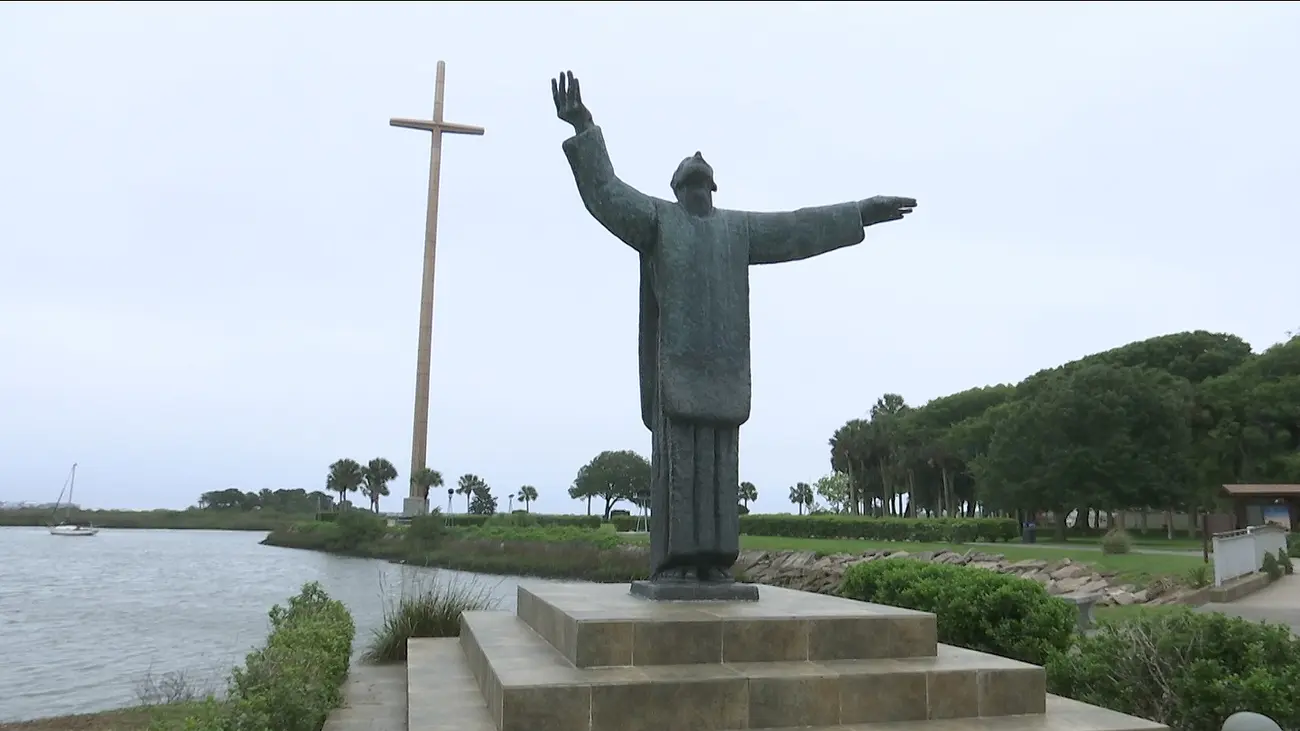
            Today, visitors to the first permanent European settlement in North America can see a statue of Father Francisco López in front of the Great Cross. The statue is placed on the approximate site where Father López held the first Catholic Mass in the city, which was attended by Native Americans. Following the service, the European settlers and the native people shared a Thanksgiving meal.

            The statue of Father López is carved out of indigenous coquina stone, a sedimentary rock comprised of compressed shells. The rough surface of the coquina symbolizes the difficult journey the Spanish endured on their voyage to Florida.

            “That statue was erected in the 1950s. It was executed by a distinguished Yugoslav sculptor, Ivan Meštrović,” said Gannon. “But it was placed in a copse of trees where it did not stand out against a dark background. The plan that the architects in 1965 came forward with was to move it to a site on open ground where the figure of Father López, with his arms in the air, would stand out against the sky. And now, at long last, the statue has been moved to that space. You can see the dramatic difference in the figure of Father López as he’s seen completely and clearly now against the sky, and directly in front of the Great Cross, which stands behind him.”

            The Spanish had only just arrived in St. Augustine when their Thanksgiving dinner was served, and they did not have the benefit of having raised crops for a year as the English Pilgrims did more than half a century later.

            The Spanish had to do the best they could with leftovers from their long voyage.

            “The menu was a stew of salted pork and garbanzo beans, accompanied with ship’s bread and red wine,” said Gannon.

            While Floridians should proudly proclaim ownership of the first Thanksgiving celebration held in what would become the United States, we may want to retain the traditional menu of turkey, stuffing, vegetables, and cranberry sauce.

            Article Number
            185
            relevantdate

              People often think of history as permanent, unchangeable, and irrefutable; a static set of facts that can never change.

              Contrary to popular belief, history is constantly changing.

              These revisions of history become necessary when new primary source documents are discovered that contradict long held assumptions, or well-known primary sources are reevaluated with fresh eyes and new conclusions are reached. Over time, societal norms evolve and change, providing historians different lenses through which to view the past.

              Sometimes, particularly with local histories, ideas about the past can become entrenched in our collective consciousness as stories are passed down from generation to generation, and repeated as fact by new generations of historians.

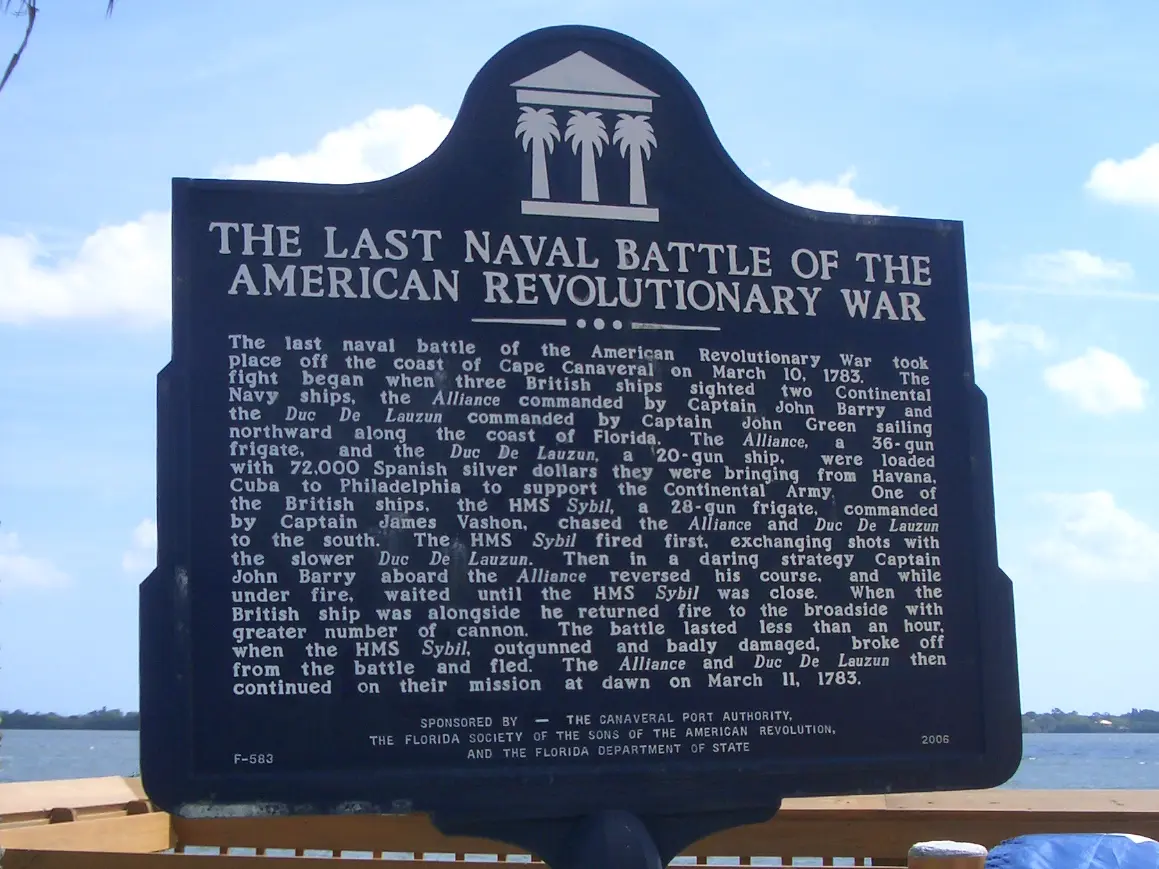
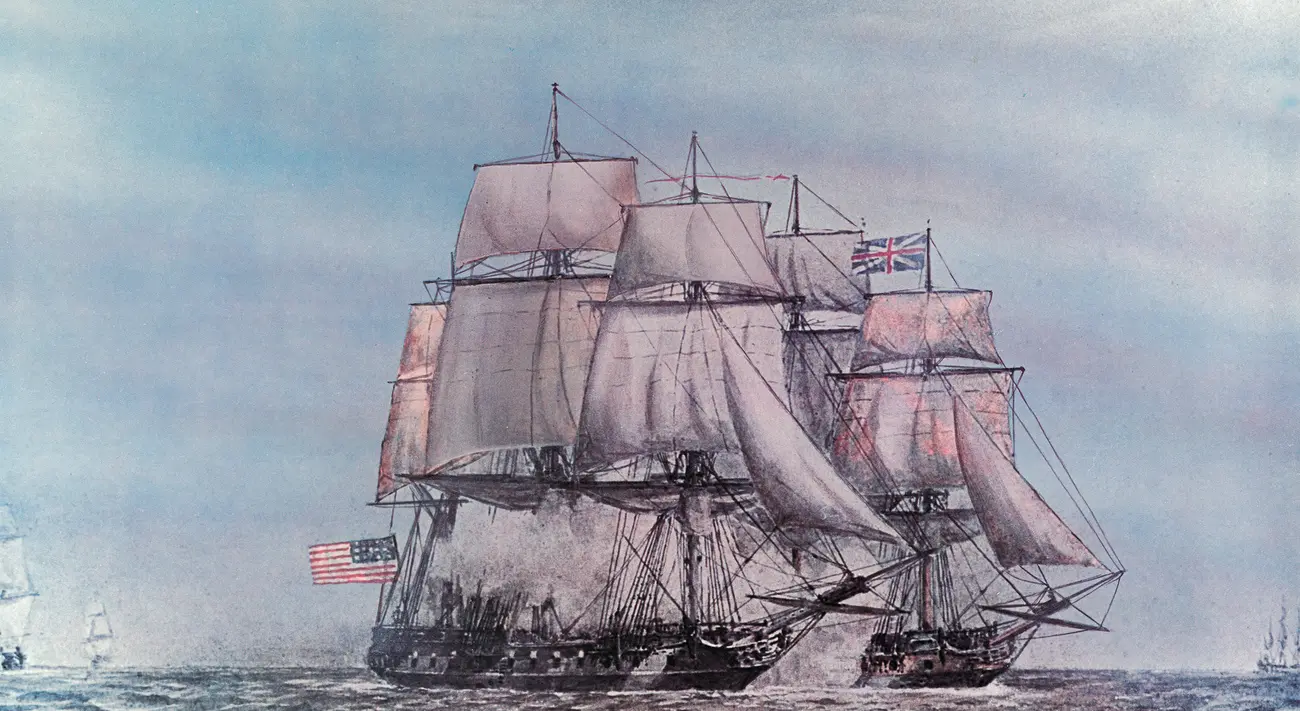
              Last week in this column, we discussed the last naval battle of the American Revolution. All of the details of the battle presented in the article are verifiable and undisputed, except for one.

              Did that battle actually take place off of Cape Canaveral?

              According to a state historic marker:

              “The last naval battle of the American Revolutionary War took place off the coast of Cape Canaveral on March 10, 1783. The fight began when three British ships sighted two Continental Navy ships, the Alliance commanded by Captain John Barry, and the Duc De Lauzun commanded by Captain John Green sailing northward along the coast of Florida.”

              The marker goes on to explain how the American ships were carrying 72,000 Spanish silver dollars from Havana, Cuba to Philadelphia to support the Continental Army. The British ships chased the Americans south. The British ship Sybil, commanded by Captain James Vashon, attacked the Duc De Lauzun. The Alliance came to the rescue of the Duc De Lauzun, and defeated the Sybil. After the British retreated, the Americans successfully completed their mission.

              Brevard County Historical Commissioner Molly Thomas has done extensive research into this battle for a series of articles appearing in the Indian River Journal. Although she was hoping to support the story of the battle occurring off of Cape Canaveral, that’s not what happened.

              “In the myriad of sources consulted for this series, very few actually mention Cape Canaveral,” says Thomas. “Only two of them, in fact. Neither of them are direct primary sources, and one of them actually makes its allusion to Cape Canaveral by referencing the other source in the footnotes.”

              The 1938 biographical narrative “Gallant John Barry, 1745-1803: The Story of a Naval Hero of Two Wars” was written by William B. Clark using Captain John Barry’s personal papers. In his description of the battle, Clark places the British ships “some 30 leagues southeast of Cape Canaveral.”

              As Thomas points out, 30 leagues is 103.57 miles, and Captain Barry’s own account places the Alliance six or seven miles southwest of that location.

              “From that moment, they promptly turned around and headed south-southwest for nearly five hours,” says Thomas. “They could have traveled nearly 50 miles during that five hour chase, which actually puts the last battle of the American Revolution somewhere between West Palm Beach and Boca Raton, Florida. Even for the most enthusiastic local historian to say that this location, (more than 140 miles to the southeast) is ‘off the coast of Cape Canaveral’ seems a bit of a stretch.”

              The confusion in the popular narrative probably comes from Captain Barry, and later his biographer William B. Clark, using Cape Canaveral as a reference point in their descriptions of the battle.

              “For several hundred years, Cape Canaveral was the only noteworthy landmark along the Florida coast between the Keys and St. Augustine that sailors could use to gauge their whereabouts or help them explain where they were when something happened,” says Thomas. “As William Clark had direct access to Barry’s papers, he had to have seen the name Cape Canaveral somewhere in his collection in order to incorporate it into his narrative. Unfortunately, it was likely only mentioned as a landmark.”

              Historians are beginning to reassess the overlooked but important role that Florida played in the American Revolution, particularly as a Loyalist stronghold controlled by the British throughout the war.

              The last naval battle of the American Revolution is still a part of Florida history, even if the conflict took place about 140 miles south of Cape Canaveral.

              PDF file(s)
              Article Number
              184
              relevantdate

                The British controlled Florida from 1763 to 1783, encompassing the entire American Revolution. Florida remained loyal to England and King George III throughout the conflict.

                The last naval battle of the American Revolution took place off of Cape Canaveral on March 10, 1783. Two American ships, the Alliance and the Duc de Lauzun, were on a mission to bring 72,000 Spanish silver dollars from Cuba to the American colonies to pay the Continental soldiers.

                The American ships were intercepted by three British ships, the Alarm, the Sybil, and the Tobago at Cape Canaveral.

                “I think in my article I refer to it as a two-ship treasure fleet on a secret mission to secure funding to pay the American soldiers that had been pretty much languishing for almost two years without pay in upstate New York and other places throughout the colonies,” says Brevard County Historical Commissioner Molly Thomas, who has written a series of three articles about the battle for the most recent issues of the Indian River Journal.

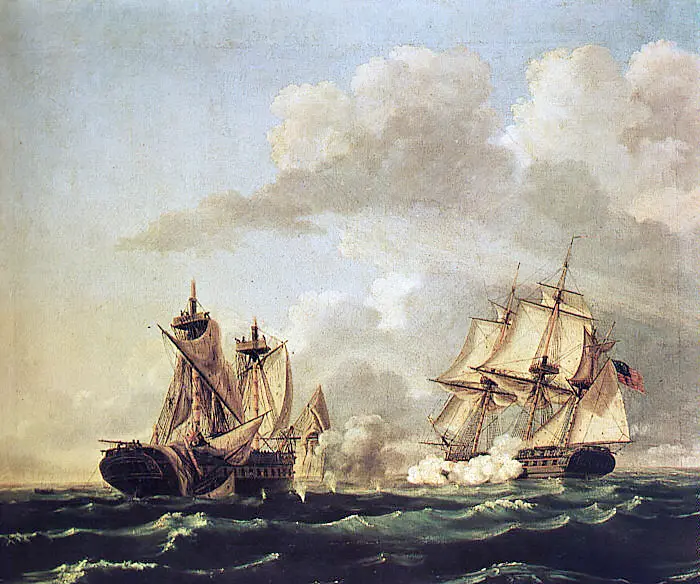
                As the American ships carrying much needed funds for the Continental Army met with the British ships determined to stop them, one ship from each side took the lead in battle.

                “Basically, you had two ships sailing north, and you had three ships sailing south,” says Thomas. “The ships heading north were the Americans, and the three sailing south were the British. Only the Alliance and the Sybil really engaged. The other two (British ships) the Tobago and the Alarm kind of lingered back a little bit, and didn’t get involved in the fight. The Duc de Lauzun just did its best to stay out of it because it couldn’t keep up with any of them.”

                The HMS Sybil was under the command of James Vashon, and the USS Alliance was under the command of John Barry.

                Vashon had received intelligence that the Duc de Lauzun was carrying money from Cuba. It was also the weaker of the two American ships, having removed most of her cannons and ammunition to lighten the load, to try to be faster.

                “The Sybil started to go after the Duc,” says Thomas.

                Barry saw an opportunity to position the Alliance between the Sybil and the Duc de Lauzun.

                “So that’s when the actual fight started.”

                Robert Morris of the Continental Congress was the mastermind of the secret plan to bring Spanish money from Cuba to fund the American Revolution. His plan led to the last naval battle of the war.

                “He was the chief financier for a lot of things to do with the military and he was also what they called the Agent of Marine, which is basically like the Secretary of the Navy now,” says Thomas. “He was a self-made shipping mogul, so he had a lot of connections both in buying and selling ships. He actually purchased the Duc de Lauzun himself, and he also had a lot of access just in networking with people in other ports. So he was able to coordinate them going down to Havana to secure this money from a French financier.”

                Ironically, the Treaty of Paris was signed more than a month before the last naval battle of the American Revolution occurred. No one in the Americas knew that the war was over, because word had not yet arrived from Europe. That knowledge may not have stopped the secret mission to Cuba, because America really needed the money.

                “The Battle of Yorktown had already happened,” says Thomas. “Everything had stopped for the most part as far as hostilities went, but they wouldn’t disband the army. Despite all the many letters that George Washington had written, they refused to disband it because they didn’t actually believe that they were going to come to any terms. So, for that two year window after Yorktown and then this battle, the soldiers were not paid. They didn’t have the money to pay them.”

                The Americans won the last naval battle of the American Revolution, and the mission to bring funds back from Cuba was successful.

                Following the war, Florida would return to Spanish control in 1783, until becoming a United States Territory in 1821. Florida became a state in 1845.

                PDF file(s)
                Article Number
                183
                relevantdate

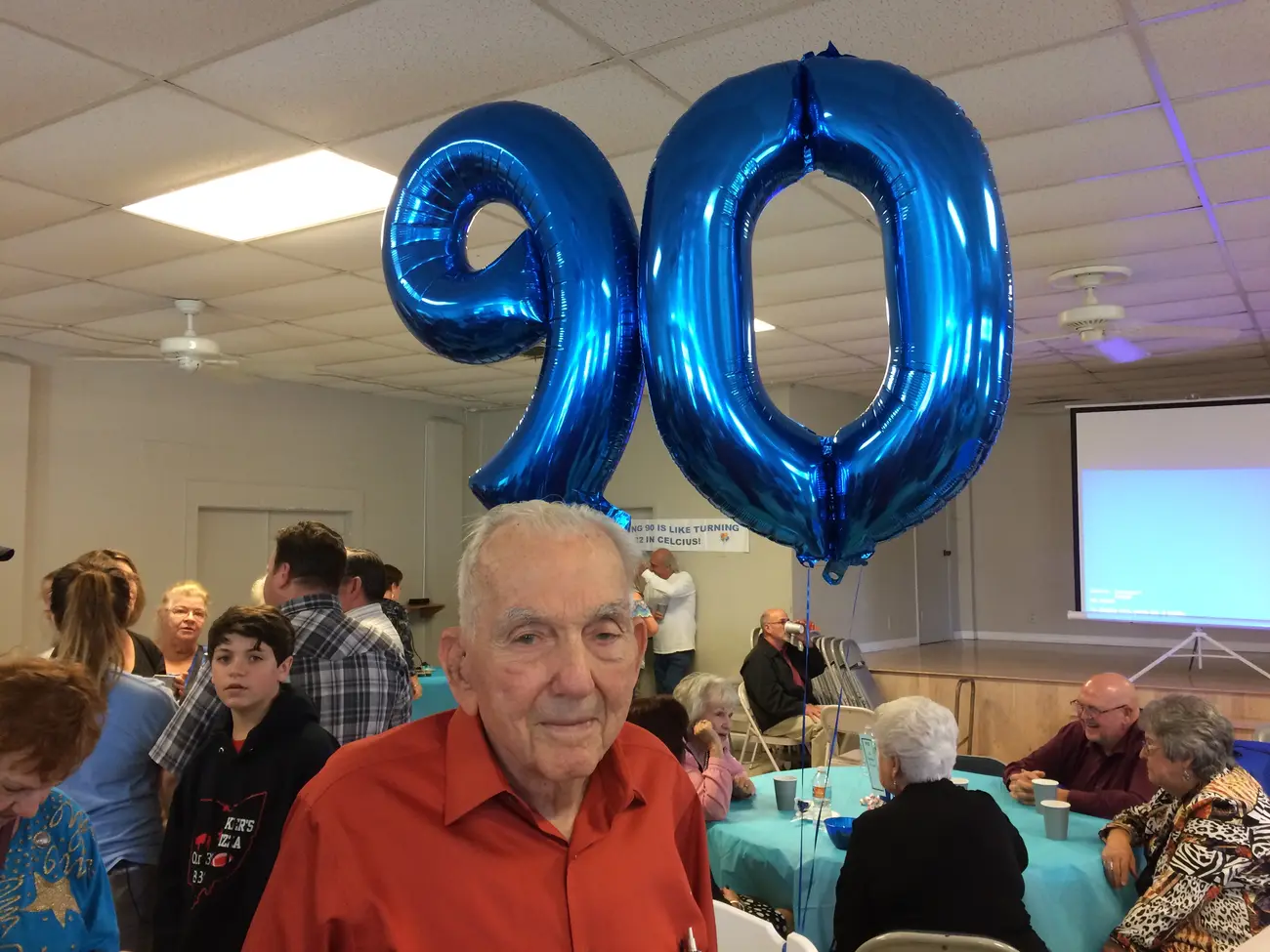
                  On Sunday, October 29, hundreds of people gathered at the Cocoa-Rockledge Garden Club to wish George “Speedy” Harrell a happy 90th birthday. The venue was full all afternoon as family and friends came and went to the “open house” style event that featured refreshments, a slide show of images featuring Harrell, and, of course, birthday cake.

                  Harrell was seated in a rocking chair at the center of the room, greeting a steady stream of well-wishers.

                  While his actual birthday is September 28, Harrell decided to postpone his birthday celebration so that relatives from Texas could join the festivities.

                  “Speedy” Harrell was born on River Road in Rockledge, and has lived in Central Brevard County his entire life. He remembers a time before DDT was developed as an insecticide. He says that if you put your hand on a window screen on the shady side of a house, it took only a few seconds for the mosquitos to form a solid black mirror of your hand as they attempted to bite you through the wire mesh. Everyone had window screens, because there was no air conditioning.

                  Harrell graduated from Rockledge High School in 1945, with thirty-two classmates. He remembers using a “mosquito beater” to keep the blood suckers off of his mother as she put laundry on the line to dry, and to protect his brother as he milked a cow. Florida pioneers like the Harrell family would lash together palm fronds to create “mosquito beaters” to brush away swarms of the biting insects.

                  In 1986, when George “Speedy” Harrell decided to organize an annual gathering for people who lived in Brevard County prior to 1950, he chose to name the group Mosquito Beaters. Harrell says, “I thought it would be great if we had one day that we get together, not a funeral or a wedding.”

                  Every year, about 1,000 people attend the Mosquito Beaters Annual Gathering. The event is so popular that local high school class reunion activities are planned to coincide with it. There are no formal presentations or academic discussions. The gathering is just a large group of friends and family coming together to remember old times and talk about the way it used to be in East Central Florida.

                  Harrell was only 14 years old when the United States entered World War II in 1941. He was too young to serve in the military immediately after Pearl Harbor, instead earning the nickname “Speedy” playing football as a high school freshman. He remembers everybody making sacrifices during wartime.

                  “The rationing of everything was set up to conserve what we had,” says Harrell. “Gasoline was rationed weekly based on need. I was a growing boy with big feet, and would have to go to the Rationing Board and explain that I needed a new pair of shoes to get it. Tires for your automobile, you had to go before the Rationing Board and show that you needed a new tire.”

                  Harrell turned 18 before the war ended, and was sent to serve the U.S. Army in Germany. That was the only time he lived outside of Brevard County.

                  In the 1950s, the population of Brevard County exploded.

                  While the Mosquito Beaters was originally formed for people who had lived in Brevard County prior to 1950, that requirement has relaxed in recent years. Harrell explains, “If we stayed with ‘before 1950’ they’d all be dead and I’d be there talking to myself.” He says that now anyone is welcome to attend the gathering, “if they don’t tell us how they done it back home.”

                  In addition to founding the Mosquito Beaters, Harrell started the Space Coast Post Card Collectors Club, and the Florida State Knife Collectors Club. He has co-authored four books on Central Brevard County and the St. Johns River.

                  The Mosquito Beaters have an office in the Library of Florida History on Brevard Avenue in Cocoa, where their collection of photographs and documents is held. The building was originally a 1939 WPA-era post office, where Harrell worked as a postman before his retirement in 1982 as a Post Office Superintendent in Brevard County. Now, he can be found there almost every day, working as a volunteer.

                  PDF file(s)
                  Article Number
                  182
                  relevantdate

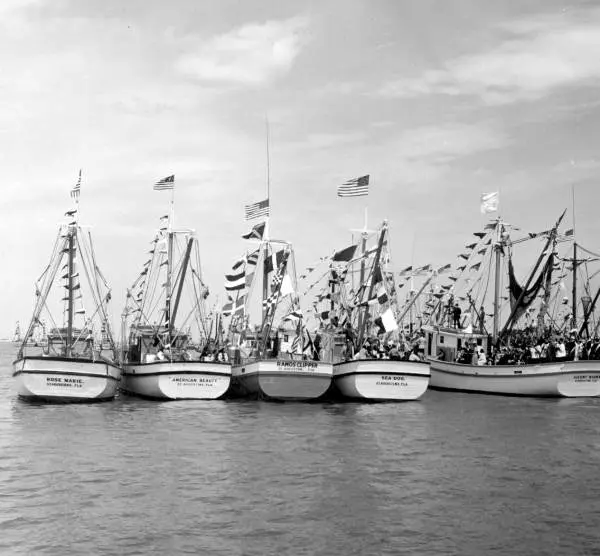
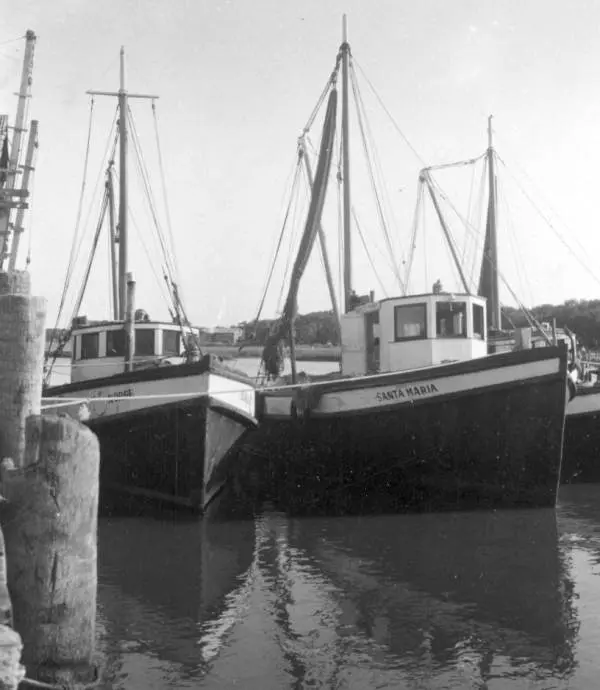
                    There’s something distinctly Floridian about watching shrimp boats trawling our coastal waters, particularly in the northeastern part of the state. Shrimping and shrimp boat building have been an important part of the culture of St. Augustine and Fernandina Beach for more than a century.

                    “Mike Salvador was a fisherman, he was a mariner, he was an entrepreneur,” says maritime historian Brendan Burke, co-author of the book “Shrimp Boat City: 100 Years of Catching Shrimp and Building Boats in St. Augustine, the Nation’s Oldest Port.” “In Fernandina in the first decade of the twentieth century, he assembled what I would consider to be the greatest maritime chapter in Florida’s state history.”

                    The shrimping industry that Salvador helped to established involved thousands of people. Families from diverse cultural backgrounds were part of the birth and growth of Florida’s shrimping industry in the early to mid-twentieth century.

                    “You have African American families that that are getting into the enterprise in fish houses, as labor on the boats, and as owners of some of the boats,” Burke says. “You have Greek immigrant families that are building boats, mostly in Fernandina and St. Augustine but other places as well, like Tarpon Springs. You have Italian immigrant families that are coming either directly from Italy or transmigrating from places up north like the Fulton Fish Market in New York.”

                    New York’s Fulton Fish Market was an integral part of Florida’s shrimping industry, distributing the tons of shrimp being caught in Florida waters to restaurants and dinner tables around the world. The shrimp would make it to the market via the railroad and the growing interstate road system.

                    There was a “boom” in Florida’s shrimping industry in the 1940s and ‘50s as the population of the state increased dramatically after World War II, and demand for shrimp increased.

                    “Shrimp were mostly an ethnic food prior to the 1920s, ‘30s, and 40s,” says Burke. “Maybe you would have heard of a shrimp cocktail in the big cities, but if you’re in Omaha, or if you’re in Des Moines, or if you’re in Topeka, you probably didn’t eat shrimp habitually. After the war, you had all these young men and women who traveled around the country, around the world, and they’d met other people and they learned to do strange things like eat shrimp. The war changed us in many ways, but it changed what we put on our plates. St. Augustine and a lot of other port towns, started to supply that need.”

                    Gradually the emphasis in St. Augustine shifted from catching shrimp to building the boats to do it. In the mid-twentieth century, shrimp boats left St. Augustine for richer fishing grounds in Louisiana, southwest Florida, Mexico, and elsewhere.

                    “What stayed in St. Augustine was the ability to build the boats that supplied the fleets,” says Burke. “Between 1919 and 1985, I can account for about thirty-five hundred boats that were built in town that went all over the place. We built boats for 23 countries around the world. We shipped them out almost by the dozen. They were rarely built on speculation; they were a well-known quantity. That’s a legacy that Florida has left on global fishing and global foodways.”

                    Brendan Burke is a maritime historian with the St. Augustine Lighthouse Archaeological Maritime Program. He co-wrote the book “Shrimp Boat City” with Ed Long.

                    “He worked in and around the industry for most of his professional life. He was in the Coast Guard, he was always on the water, always on the docks, and he saw and met and heard the people, the things, and the stories of the industry. In the 1980s he realized that he was seeing fewer people, hearing fewer stories, and seeing fewer boats. Something transformative was happening, and the industry was in decline. It was dying.”

                    Long and Burke started documenting the stories of St. Augustine’s shrimping industry and collected that information into a book. They also helped to create an exhibit at the St. Augustine Lighthouse Museum.

                    Florida’s shrimping industry still exists, but reached its peak in the 1980s.

                    “Today, if you put ten shrimp on a plate, only one of them will be wild caught American shrimp,” says Burke.
                     

                    PDF file(s)
                    Article Number
                    181
                    relevantdate

                      Florida Frontiers is the name of this column. It’s also the name of a public radio program, podcast, and public television series produced by the Florida Historical Society. In all its forms, Florida Frontiers celebrates the diverse history and culture of our state.

                      The second annual Florida Frontiers Festival will be held Saturday, October 21, from 11am to 5pm on the grounds of the Brevard Museum of History and Natural Science, 2201 Michigan Ave., in Cocoa.

                      The event will feature a day of Florida music, demonstrations including Highwayman artist R.L. Lewis, vendors, food, a beer garden, and a children’s area with a “bouncy house” and games. Admission includes entrance to the museum, featuring permanent exhibits from the Ice Age to the Space Age, and the touring exhibition “Florida Before Statehood.”

                      Advance tickets available at FloridaFrontiersFestival.com are $15 for adults. Children 12 and under are free with a paid adult. VIP packages are $75, with amenities including complimentary food, beer, and wine in an air conditioned setting, and reserved seating in front of the stage.

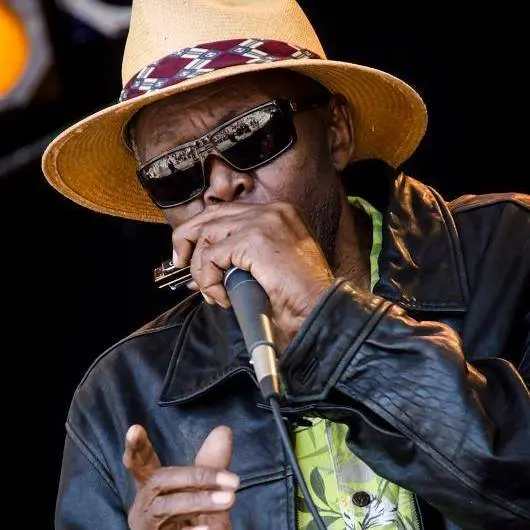
                      The Willie Green Blues Band is headlining this year’s Florida Frontiers Festival. Green earned the 2017 Florida Heritage Award, and he has performed with blues legends including B.B. King, Eric Clapton, and Robert Cray.

                      Green started out playing clubs in south Florida in the mid-twentieth century. Since the 1980s, he has been performing regularly at The Yearling Restaurant in Cross Creek, named after the beloved book by Florida writer Marjorie Kinnan Rawlings.

                      “I play other people’s stuff, but I make it my own,” says Green. “I’m just an old time blues musician and I’m not going to change. The blues is me. I hope they like it when I play it.”

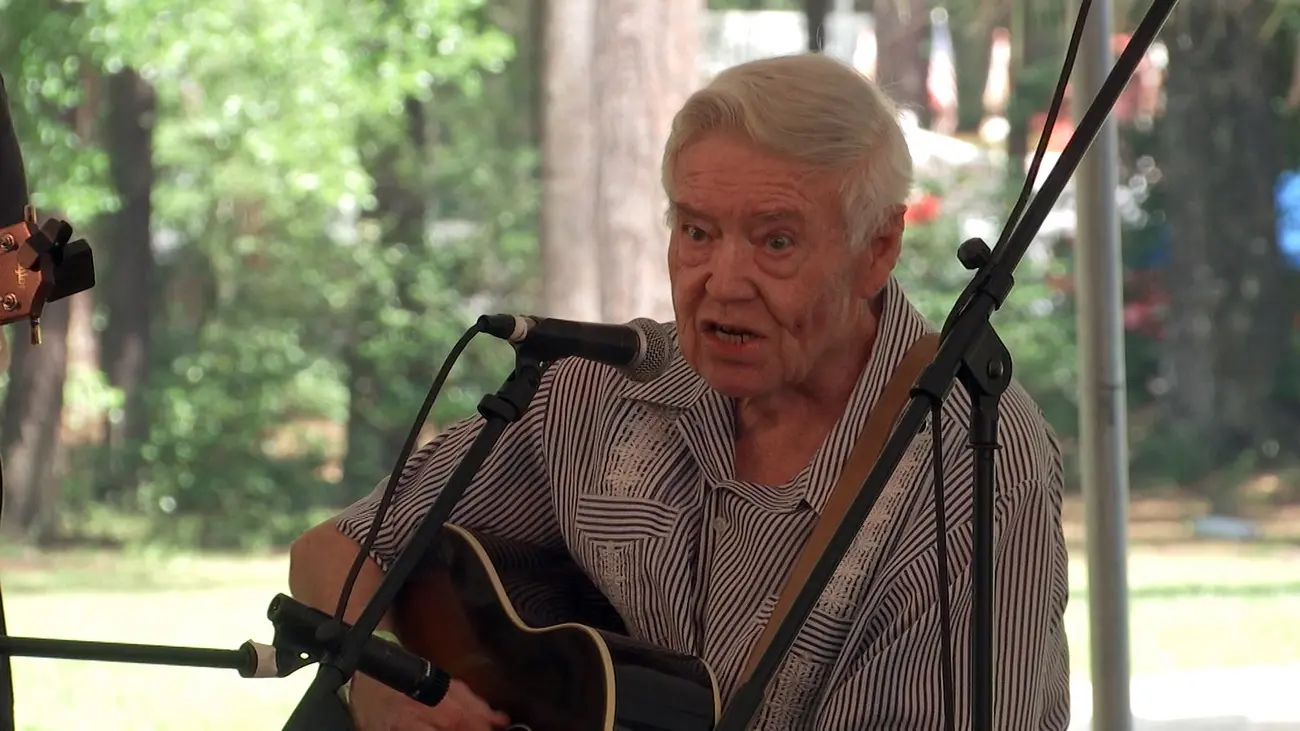
                      Also headlining the second annual Florida Frontiers Festival is Florida folk legend Frank Thomas, who writes and performs songs about the history, people, and places of Florida. Songs such as “Old Cracker Cowman,” “The Flatwoods of Home,” and “Spanish Gold” have earned him a loyal following. In 2013, Thomas was inducted into the Florida Artists Hall of Fame.

                      Thomas’s Florida roots run deep.

                      “The Thomas side of the family came into Florida in 1820,” says Thomas. “He married a girl who was born in St. Augustine in 18 and 5, and her parents was well established there, they’d been there about 20 years, so I’m thinking it had to be late 1780s or early 1790s.”


                      Members of the Thomas family experienced a lot of Florida history.

                      “Longevity seems to run in my family,” says Thomas. “My daddy was born in 18 and 82. Now he grew up in a whole different era. Now think about that. I was born in (19)43. He was 61 when I was born. His daddy died at a fairly early age. A one-eyed mule kicked him in the head. That’s what killed him. My great-granddaddy, who I sing about in the song ‘The Flatwoods of Home,’ fought in the Great War of Northern Aggression and fought in the Seminole Indian Wars.”

                      Thomas grew up in Middleburg, Florida, in a musical family who played gospel music. His first performing experiences were in church. His early musical influences also included performers on radio broadcasts of the Grand Ole Opry, including Hank Williams, Lefty Frizzell, and Webb Pierce.

                      After serving seven years in the Army in the 1960s, Thomas began touring with nationally known gospel, country, and bluegrass bands as a guitarist and singer. He played with groups including the Taylor Brothers, the Webb Family, and the Arkansas Travelers.

                      “I made my way back to Florida in the late (19)70s, and I met Will McLean,” says Thomas. “Will was a big inspiration for me. He encouraged me to write songs about Florida. He said ‘You know, you write all these love songs and cheatin’ songs, you don’t do much of that. Write about what you know.’ He used to tell me that it would take all of us doing all we can to tell Florida’s story. There’s so much history in the state of Florida.”

                      Also performing at the second annual Florida Frontiers Festival are the Native Rhythms Festival Ensemble, heritage musician Bob Lusk, acoustic rock musician Mike Garcia, and singer-songwriter Chris Kahl.

                      PDF file(s)