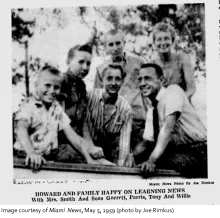
1959 – Howard Van Smith, a writer for the Miami News, was awarded the Pulitzer Prize for national reporting on this date.
A Tag for nodes that are relevant to Florida Frontiers. For example if an artilce is about Florida Frontiers and you would like a 'View' to sorty by Tag criteria for it... us it.
1959 – Howard Van Smith, a writer for the Miami News, was awarded the Pulitzer Prize for national reporting on this date.
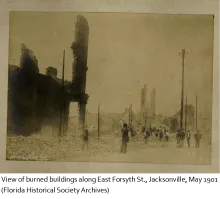
1901 – A boiler explosion at a candle factory in Jacksonville spread to a nearby mattress factory on this date. The fire was initially underestimated and within hours it had spread across the city resulting in one of worst disasters in Florida history. Known as the “Great Fire of 1901,” the blaze destroyed over 2,000 buildings and left 10,000 people homeless in the span of about 8 hours. Some reports claimed that the flames could be seen from as far north as Savannah. Amazing only 7 deaths were reported at the time.
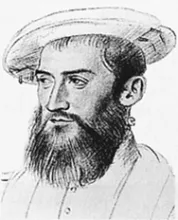
1562 –Two small French ships with 140 Huguenots led by Jean Ribaut landed in Florida on this date. Using the instructions from Verrazano's voyage of North America, Jean Ribaut reached the coast of Florida near St. Augustine. He sailed northward to the mouth of a wide river the Spaniards called "The St. Johns", but which Ribaut renamed "the River of May." On the banks of the St. Johns River, Ribaut erected a stone marker with the French Coat of arms announcing France's claim to Florida. The group traveled north to what is today South Carolina and built fort Charlesfort.
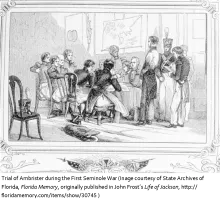
1818 – Robert Ambrister and Alexander Arbuthnot were hanged by American soldiers led by then General Andrew Jackson at St. Marks on this date. The two British citizens were tried and sentenced in a military court for espionage and aiding the enemy during the First Seminole War. Jackson’s intention was to blame the Seminole War on outside foreign agitators such as Ambrister and Arbuthnot in order to justify U.S. military intervention into Spanish Florida. The incident gained international attention and Jackson’s actions in Florida were under close scrutiny.
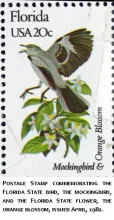
1909 –The Florida House of Representatives approves the orange blossom (citrus sinensis)as the official State Flower of Florida. La Florida, Spanish for “land of flowers”, was named by Ponce de Leon in 1513. When it came to declaring an official state flower, the Land of Flowers had many, many choices. There was much support for the camellia and much support for the gardenia, but the native orange blossom's fragrance and widespread appeal won the honor.
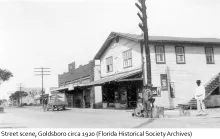
1911 –The legislature passed the Sanford Charter Bill, and the town of Goldsboro in Seminole County was dissolved. Historical Goldsboro was founded in 1891 as the second all African American town in the State of Florida, Historic Eatonville being the first. Registered voters in what had been the village of Goldsboro met on Dec. 1, 1891, at a store opened by William Clark in 1886. The year after incorporation, the first community school was opened, a post office was established and Zion Methodist became the first church.
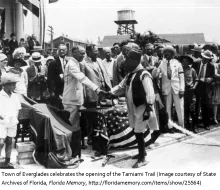
1928 – The Tamiami Trail (U.S. 41), linking Miami and Naples through the Everglades, officially opened to travelers on this date. Construction on the east-west section of the road lasted for 12 years. Once completed, cars could travel east from Naples to Miami for the first time. Before the completion of the Tamiami Trail, wetlands, alligators, mosquitoes and cypress swamps made traveling across southern Florida extremely difficult, and few travelers were able to complete the 108 mile journey.
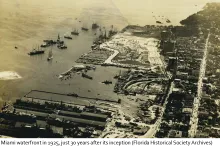
1896 – The first train of Henry Flagler’s Florida East Coast Railroad arrived in Miami on this date! A year earlier Henry Flagler and Julia Tuttle, Miami’s founder, had reached a deal which would eventually grant Flagler half of Mrs. Tuttle’s land north of the Miami River. The land was for the development of a new city including hotels, streets, docks and other public facilities, laying the foundation for the city of Miami to incorporate in July of 1896. By 1897 approximately 2,000 people inhabited the new town, half of whom were employed in some capacity by Flagler.
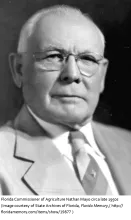
1960 – Arguably Florida’s most influential, and certainly its longest running Commissioner of Agriculture Nathan Mayo died on this date while in office. Mayo, having served in that capacity for 37 years became one of Florida’s most vocal proponents of Florida agricultural products. Born in North Carolina in 1876, Mayo moved to Marion County with his family when he was 10. He established a farm in Summerfield where he lived throughout his life. Mayo was elected to the state legislature in 1921 and was appointed Commissioner of Agriculture in 1923.
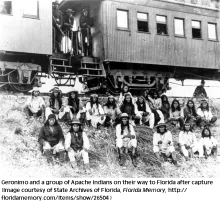
1886 – The first 77 Chiricahwa Apache Indian prisoners from the southwestern U.S. arrived at Fort Marion in St. Augustine on this date. Comprised mainly of women and children, over 500 Indians would be held captive in the fort by October of that year. The small groups under the leadership of Geronimo were pursued by intense U.S. military forces in the southwestern U.S. until almost all surrendered. Although many were sent to Fort Marion in St.