Florida Frontiers Articles are newspaper reports covering history-based events, exhibitions, activities, places and people in Florida. The newspaper articles premiered in January 2014. We explore the relevance of Florida history to contemporary society and promote awareness of heritage and culture tourism options in the state.
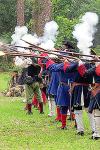 In 1738, the first legally sanctioned free black settlement was established in what would become the United States. El Pueblo de Gracia Real de Santa Teresa de Mose, popularly known as Fort Mose, was a community of former slaves who pledged allegiance to the King of Spain, became Catholic, and agreed to defend Spanish controlled Florida from invaders. Located just north of St. Augustine, Fort Mose...
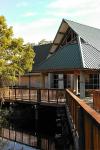 The traditional culture of the Seminole Tribe of Florida is preserved at the Ah-Tah-Thi-Ki Museum on the Big Cypress Reservation in south Florida, near Clewiston. The state of the art museum and archival facility features permanent exhibitions and rotating gallery space, a research library, and an extensive collection of newspapers, oral histories, manuscripts, and artifacts including patchwork...
Artist Jackson Walker has dedicated his life to preserving Florida history through large oil paintings. “I got to thinking about Florida, and my own family’s history, and it just kind of dawned on me, well that’s what you know, that’s where you live, that’s who you are,” says Walker. His 48 x 72 inch painting “They called it La Florida: The First Landing of Ponce de León in Florida, April 2, 1513”...
Hank Mattson is known as the “Cracker Cowboy Poet” who “tells it like it was.” A native of Lake Placid in Highlands County, Mattson recites his poetry and discusses Florida’s pioneer culture at libraries, schools, and festivals throughout the state. “When This Old Hat Was New” is a poem Mattson wrote about Jacob Summerlin’s life as a Florida cowman in the 1800s. Appalachian folk musicians Dana and...
The Plant system of railroads helped to create modern Florida. When Henry B. Plant was born in 1819, Florida was still under Spanish control. By 1821, Florida was named a United States Territory, and in 1845 it became a state. Before his death in 1899, Plant helped to develop Florida with railways, steamships, and luxury hotels. In discussions of railroads and their impact on Florida’s growth...
When the Seminole Indians first appeared in Florida in the 1700s, they occupied lands where other Native Americans had lived for thousands of years. Tribes such as the Calusa, Timucua, and Apalachee lived in Florida long before European contact in the 1500s. While the archaeological record contains tools, pottery, and other artifacts, the visual record of pre-European contact people in Florida is...
Naturalist, ornithologist, and artist John James Audubon first came to Florida in 1831 to capture images of Florida birds for his illustrated book “Birds of America.” Audubon did not have a pleasurable stay in St. Augustine, complaining in his letters about hard rowing through the salt marshes, difficult wading through mud and water, and fighting sand flies and mosquitoes. When Audubon returned to...
From 1925 through 1953, the luxury passenger train Orange Blossom Special traveled from New York City to Miami and back. Other Florida stops included Jacksonville, Ft. Lauderdale, and Hollywood before the train returned north via Winter Haven, Bradenton, Tampa, St. Petersburg, Orlando, Gainesville, and Tallahassee. The Orange Blossom Special came to Florida between mid-December and mid-April. Even...