Florida Frontiers Articles are newspaper reports covering history-based events, exhibitions, activities, places and people in Florida. The newspaper articles premiered in January 2014. We explore the relevance of Florida history to contemporary society and promote awareness of heritage and culture tourism options in the state.
 As World War II began in 1939, the population of Florida was less than two million people. The population of the state grew exponentially each decade after World War II, and military installations constructed during that conflict were a major factor in that growth. Daniel Hutchinson is Assistant Professor of History at Belmont Abbey College in North Carolina. His doctoral dissertation at Florida...
 A visit to the Marjorie Kinnan Rawlings Historic State Park in the rural community of Cross Creek is like a trip back in time to the 1930s. The home there is furnished just as Rawlings had it when she was writing her Pulitzer Prize winning novel “The Yearling,” her autobiography “Cross Creek,” and other works depicting the lives of Florida Crackers. Rawlings’s typewriter and notes sit on a table...
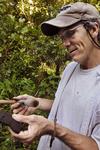 About 1,000 years ago, agricultural communities were established in what would become the Southeastern and Midwestern United States, and what is called the Mississippian culture flourished. Keith Ashley is an archaeologist and research coordinator at the University of North Florida in Jacksonville. Ashley’s research is demonstrating a link between Native Floridians and the thriving Mississippian...
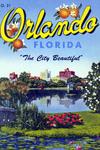 The statewide headquarters of the Florida Historical Society is in Cocoa, but the organization hosts their Annual Meeting and Symposium in a different Florida city each year. In recent years the event has been held in St. Augustine, Fort Lauderdale, Tampa, Jacksonville, and Pensacola. In 2013, to commemorate the 500th anniversary of the naming of our state, the Florida Historical Society hosted...
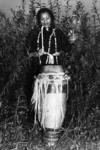 Last week, a conference called “Tracing the Caribbean Footprints of Zora Neale Hurston: A 125th Birthday Commemorative Cruise” was held aboard the cruise ship Freedom of the Seas, with private tours in Haiti and Jamaica. The conference cruise was sponsored by the Association to Preserve the Eatonville Community. That organization is dedicated to the preservation of the oldest incorporated African...
 The American Civil War divided the country between the industrialized northern states and the agricultural southern states that depended upon slave labor to support their economy. Disagreement over the issue of whether or not individual states had the right to decide if slavery should be legal within their borders led to the War Between the States. Florida was the third state to secede from the...
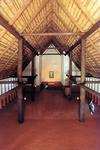 The Apalachee tribe lived in Florida’s Panhandle, and by the 1500s they had developed a sophisticated culture with farming villages and ceremonial centers. Anhaica, the Apalachee capital, was located near present day Tallahassee. The Apalachee were part of an extensive trade network that extended north to the Great Lakes and west to present day Oklahoma. The Florida tribe would trade shells, shark...
 Historical Archaeologist Kathleen Deagan led a series of excavations that identified the original encampment of Pedro Menéndez de Avilés from 1565. From that encampment, the city of St. Augustine was established as the oldest continuously occupied European settlement in what is now the United States. “We began that project in the 1970s, thinking we were going to be studying an Indian village,”...