Library of Florida History

Library of Florida History

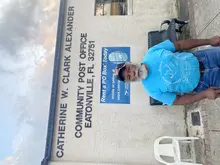
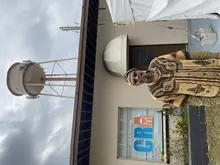
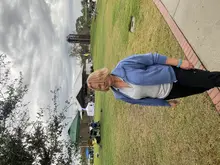
Edward H. Greene was born in Winter Park, Florida, in 1948. He grew up in several communities across Orlando in the 1950s and 1960s, most notably in Eatonville. He recalled his adolescent experience in Eatonville, particularly attending Hungerford High School. Edward’s family intersects deeply with Eatonville’s history, as his grandmother’s uncle was Joe Clark, the formerly enslaved African American who founded Eatonville in 1887. Edward’s grandmother, Catherine “Willie” Clark Alexander, also remains significant to Eatonville’s history, as she served as the town’s first postmaster for twenty-four years from 1955 to 1979. Edward shared his grandmother’s story, specifically the day she was abducted from the post office and brutally murdered, which remains one of the most heinous crimes in Eatonville’s history. Additionally, Edward recounted his collegiate experience at Bethune-Cookman, which mandatory military service temporarily interrupted. Lastly, Edward discussed how Orlando has changed since his adolescence, specifically within a racial context.


N.B. We conducted this interview at the end of the Zora Neale Hurston Festival of the Arts and Humanities, when the lawn maintenance crew cleaned the area and event staff packed up equipment, disrupting the audio. Additionally, Edward’s mic did not function until approximately 3:40, thus any audio from him before remains faint, but not completely inaudible.

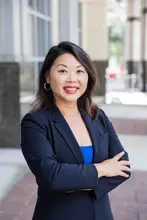
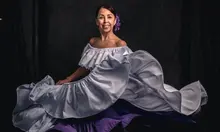
Lisa Gong Guerrero was born in Guangdong Province, China, in 1977. Lisa emigrated to Tampa, Florida, at around five years old with her family. She explained the circumstances that prompted her family to leave China, emphasizing the limited opportunities, especially for young girls and women. Lisa recalled her K12 education experiences, particularly the racial and cultural challenges she faced as a Chinese immigrant. She credited her grandparents and mother for maintaining their Chinese heritage as they increasingly acclimated to American society. Lisa grew up in the Town and Country neighborhood in Tampa and remembered being around many African Americans and Hispanics. Attending the University of Florida in the late 1990s introduced Lisa to the Asian American community outside her family and relatives. She joined several student organizations at UF, including the Chinese Student Union and Asian Student Union, explaining the programs they initiated and their importance generally and personally. After graduating from UF in 2000, Lisa worked for several businesses, traveling in and out of Florida during this time. She attended Barry College of Law in Orlando from 2003 to 2006, working for the State Attorney’s Office in the Ninth Circuit upon finishing law school. In addition to outlining her responsibilities, Lisa became the first Asian-American homicide prosecutor, the first Bureau Chief, and the first Asian-American Deputy Chief Assistant State Attorney in that office. During this time, she co-founded the Greater Orlando Asian-American Bar Association (GOAABA), underlining the lack of legal organizations focused on the growing Asian population in Central Florida as a central motive for creating GOAABA. In 2024, Lisa ran for Orange County Judge Group Eleven, sharing her campaigning experiences and how it impacted her and the larger Asian American community in Orlando. She also discussed her broader observations about Orlando's cultural and political continuities, changes, and challenges over the past twenty years.

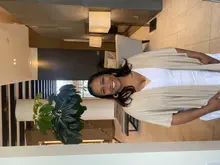
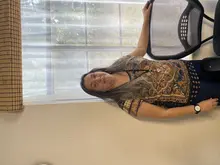
Guenet Gittens-Roberts was born in Guyana in 1975. She recollected her upbringing in Guyana during the 1980s, particularly how the country’s multicultural and diverse religious landscape influenced her profoundly. Guenet recalled memories of her parents owning a screen printing company and the intertwined relationship between work and life. Despite not explicitly realizing it then, Guenet reflected on the unique experience of being born only nine years after Guyana achieved independence from the British. Guenet spent her summers in Brooklyn, New York, and even attended Louis D. Brandeis High School in the Upper West Side. She emigrated permanently to the US around 2000, settling briefly in New York and then in Miami, Florida. Guenet recounted her experience living in Miami, particularly how she resonated with the deep Caribbean influences in the region. She then moved to Orlando with a mission to unite Caribbean peoples living in the City Beautiful, as she identified a lack of connections between the various but separate peoples of Caribbean origin living in the area. As a result, she served as the President of the Caribbean American Chamber of Commerce of Greater Orlando while establishing a print and digital newspaper titled Caribbean American Passport NewsMagazine to bolster the intracultural connections of Caribbean peoples in Orlando. She discussed her roles in both of these endeavors extensively. Lastly, Guenet shared broader observations about the immigrant experience in Florida and America, challenges Central Florida faces today (c. 2025), and how to maintain the tenuous American experiment.

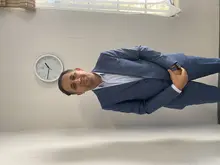
Samir Fkiyi was born in Morocco in 1986. After briefly discussing his experiences growing up in Morocco, Samir recounted his decision to leave and emigrate to the United States in 2011. He realized that perceptions in Morocco about Americans—and vice versa—differed from what he observed living in the States. In fact, Samir created a YouTube channel to challenge the cultural stereotypes often associated with Americans and Moroccans, leveraging the dual identity most immigrants possess. Samir worked at Walt Disney World from 2011 to 2015, and explained how that experience facilitated his adjustment to living in the US. After working at Disney, Samir opened his restaurant, Darna Cuisine, and briefly recollected the memories of operating a Moroccan restaurant in Orlando. Additionally, since May 2022, Samir has served as the President of the Moroccan American Cultural Society. He underlined the importance of such a cultural organization for Moroccans specifically and other communities generally in the Central Florida area. Lastly, Samir shared his broader observations living in Orlando.

Reginald (Reggie) Finlayson was born on May 12, 1954, and grew up in Milwaukee, Wisconsin. His father’s family history, however, has deep connections to Florida, particularly his grandfather, who built one of the oldest remaining Black churches in Miami—the Macedonia Missionary Baptist Church in Coconut Grove. Reggie recollected stories about his grandfather’s time serving as the church’s minister and its significance to the Black community in Coconut Grove. Additionally, Reggie recounted his father’s experiences growing up in Jim Crow Orlando during the interwar and immediate post-World War II years. He also compared how Jim Crow materialized between the South and North, as his family resided mainly in the North, especially once Reggie was born in 1954. Reggie briefly mentioned the connections his family had with notable Black figures, including Martin Luther King, Jr., and Zora Neale Hurston. Lastly, he explained why he drove from Milwaukee to attend the Zora Neale Hurston Festival of the Arts and Humanities in Eatonville, Florida, and the festival’s greater relevancy considering the current (~2020s) racial and political climate.

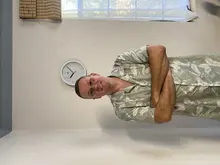
Alex Erdmann was born on August 26th, 1969, in Thuringia, East Germany. Alex recollected his experience growing up in East Germany, from the Soviet influence to the difficulty of seeing family that lived across the Berlin Wall in West Germany. Alex joined the East German military to professionalize as a chef, which remained one of the few ways to practice culinary arts then. Interestingly, the end of Alex’s military service coincided with the fall of the Berlin Wall in 1989, and he recounted a particular emotional memory about living through that event. Alex worked as a chef in several places across Europe before arriving in the United States in 1998. He deepened his professional career once he stayed in the US by building four culinary art schools nationwide, consulting for several food companies, and even leading a project to improve hospital food in Arkansas. Given such comprehensive professional experience, Alex compared the similarities and differences between the culinary arts landscape in Europe, New Jersey, Michigan, and Orlando. Alex moved to Orlando in 2018 to create the Walt Disney World Center for Culinary Arts and Hospitality for Valencia College’s downtown campus, and he thoroughly discussed this experience and why it proves important for him and Orlando's tourist industry. Lastly, he shared his broader observations on living in Orlando as a German businessman, particularly how the city has changed culturally and from a culinary perspective and how the city might change in the next twenty years.

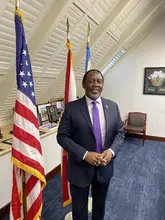
Mayor Jerry L. Demings was born in Orlando, Florida, in 1959. He recounted his upbringing throughout the 1960s and early 1970s in Washington Shores, a predominantly Black neighborhood in Orlando. He recollected memories of his father working as a taxi driver for twelve hours a day, seven days a week, and his mother as a housemaid, all while both of them operated several small businesses within their communities to make ends meet. He described how the larger Civil Rights Movement influenced him personally and impacted his community more broadly, meeting several important civil rights figures when they visited Orlando. Mayor Demings recalled his schooling experience and how he navigated the transition from segregation to integration in Orange County public schools. He attended Jones High School from 1974 to 1977, sharing a particular harrowing incident after a game in a visiting school that expressed objections to Jones High’s racially mixed athletics team. Mayor Demings returned to Orlando in 1980 after graduating from Florida State University. He explained how he ended up in the Orlando Police Department, an institution he proudly served for over twenty years. He explained various initiatives that he created and led during his time serving in the Orlando Police Department, including Orlando’s first bicycle patrol, a Boy Scout Troop program, and others. In 1998, then-mayor of Orlando Glenda E. Hood appointed Demings as Orlando's Chief of Police, making him the first African-American to serve in that position. Demings landed several public positions that made him the first Black person to occupy such titles—including his current status as the Mayor of Orange County—and he discussed the significance of such breakthroughs personally and within a larger racial context, given his background from the Civil Rights Era. Since he has essentially spent his entire life in Orlando and has served in prominent public positions throughout Orange County, Mayor Demings articulated a deep understanding of the area’s social, cultural, and political milieu and how it has changed throughout his life. Lastly, Mayor Demings briefly shared his working book project, tentatively titled “Black in Blue at the Top.”

Adriana Collado was born in Havana, Cuba, in 1966. Seven years removed from the start of the Cuban Revolution, Adriana recounted her upbringing in a society transitioning from a capitalistic free model to a communist oriented world. She emphasized how the state forced children to prioritize the leader and follow politics more than anything, including their own families. The idea of the Revolution enticed her parents to stay on the island, as promises of improved healthcare enamored her psychiatrist father, and covering such an unprecedented political and social experiment attracted her journalist mother. Adriana ultimately assumed both her parents’ careers, first attempting psychiatry by attending medical school in Cuba. She explained how the 1983 US invasion of Grenada—in which the Cuban regime claimed as their territory—marked her “wake-up call,” as the government expelled her medical student classmates for opposing the state’s decision not to return the Cubans who resided in Grenada, which included the students’ parents. Discontent with this incident, Adriana left medical school and transitioned into studying journalism in Cuba. She recalled a particularly unique experience in which she confronted Fidel Castro and the Cuban state during a meeting in which she and other journalist students questioned media practices and standards in a communist society. In 1990, Adriana fled the island for fear of persecution since she spoke against the regime during that meeting. She emigrated to New York and lived there for the next fifteen years. She recollected memories about 9/11 and her experiences working in several Spanish newspaper outlets. In 2005, Adriana moved to Orlando to join the Spanish division of the Orlando Sentinel. In 2017, Adriana returned to school to fulfill her lifelong passion of working in the field of psychology/psychiatry. Adriana shared her two-decade observations of Orlando’s changing cultural and ethnic landscape. She underscored the “Other-ing” process she experienced in Orlando and the profound nuances that most immigrants deal with in navigating different societies and cultures and their own fluid identities within them.

Roksalana Cisyk was born in Ukraine, at the time the former Soviet Union, in 1969. She recounted her experiences growing up in the former Soviet Union. Roksalana shared how her worldview on the United States changed once her aunt, who lived in the US, brought items from the capitalist society. She visited the US several times and permanently emigrated to the country in 1994, three years after Ukrainian independence. Roksalana studied applied mathematics in Ukraine and worked for a major corporation that accredited medical institutions in Chicago. She placed the former Soviet Union’s model of education, particularly in applied mathematics, higher than what she experienced in Chicago. Roksalana and her family moved to Florida in 2008 for personal and familial reasons. She discussed her involvement in the Ukrainian Project Incorporation, the same organization that hosts the Annual Ukrainian Festival in Orlando (where the oral history took place), and how it remains intimately connected with the Russo-Ukrainian War. In 2024, Roksalana returned to Ukraine after fifteen years, and she described the war conditions she observed. Lastly, she outlined her experiences living in Central Florida generally for the past seventeen years.

Volodymyr Chornyy was born in Ukraine in the former Soviet Union in 1981. Volodymyr recalled his experiences growing up in the former Soviet Union, particularly how education changed after the USSR fell in 1991. He fondly remembered the Ukrainian independent spirit of the 1990s, while also emphasizing the economic difficulties many families faced during this transition. Volodymyr studied medicine in Ukraine and shared his professional experiences working as a doctor, particularly in the country's rural regions. In 2007, Volodymyr emigrated to the United States for better educational and career opportunities. He underwent medical residency in New York, finishing his specialization in nephrology at the University of Florida in Gainesville in 2015. Since he attended medical school in Ukraine and the US, Volodymyr compared how medical practice differed between the two nations. In addition to sharing his general observations living in Central Florida, Volodymyr discussed extensively the Apopka branch of the Ukrainian American Youth Association that he co-founded in 2024, and its immense cultural significance for the younger generations who are both Ukrainians and Americans. Lastly, Volodymyr explained his connections with the Annual Ukrainian Festival Vatra Orlando (where the oral history took place), its importance, and the ongoing Russo-Ukrainian War.