Article Number
148
relevantdate

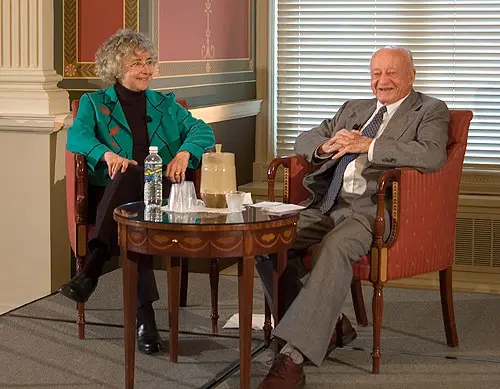
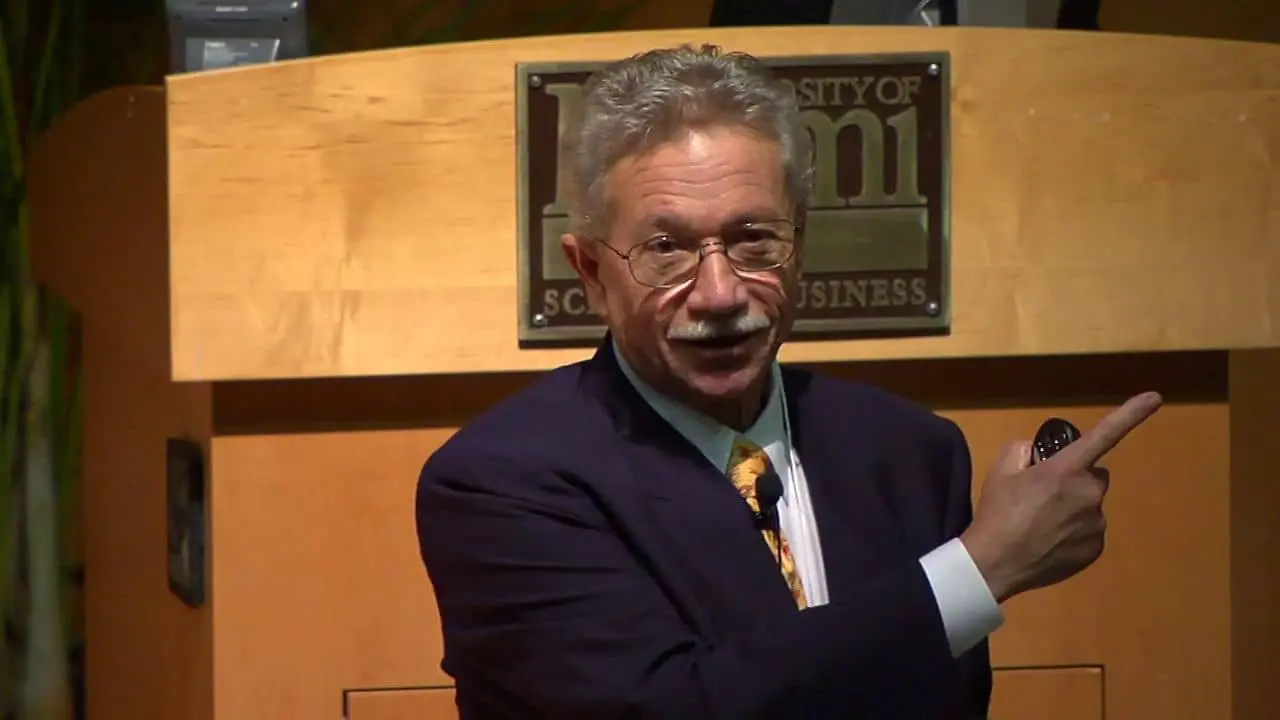
    Two people with extensive careers documenting the history and culture of Florida will be in Brevard County this week discussing their new books.

    On Friday, January 13, at 7:00 pm, author and archaeologist Jerald T. Milanich will discuss his new book “Handfuls of History: Stories about Florida’s Past” at the Library of Florida History, 435 Brevard Ave., Cocoa Village.

    On Saturday, January 14, at 2:00 pm, author and folklorist Peggy A. Bulger will discuss her new book “Stetson Kennedy: Applied Folklore and Cultural Advocacy” at the Brevard Museum of History and Natural Science, 2201 Michigan Ave., Cocoa.

    Dr. Jerald T. Milanich is Curator Emeritus of Archaeology at the Florida Museum of Natural History, Emeritus Professor of Anthropology at the University of Florida, and one of the most respected historical archaeologists in the state.

    “The past is fun to think about and to learn about,” says Milanich. “I love to do both. I also enjoy writing about the past. When we study and consider history, and when we write about it, we are making the past new again, which, of course, leads to more history. Florida is a state with a history like no other. People have been living here for as many as 14,000 years, maybe more.”

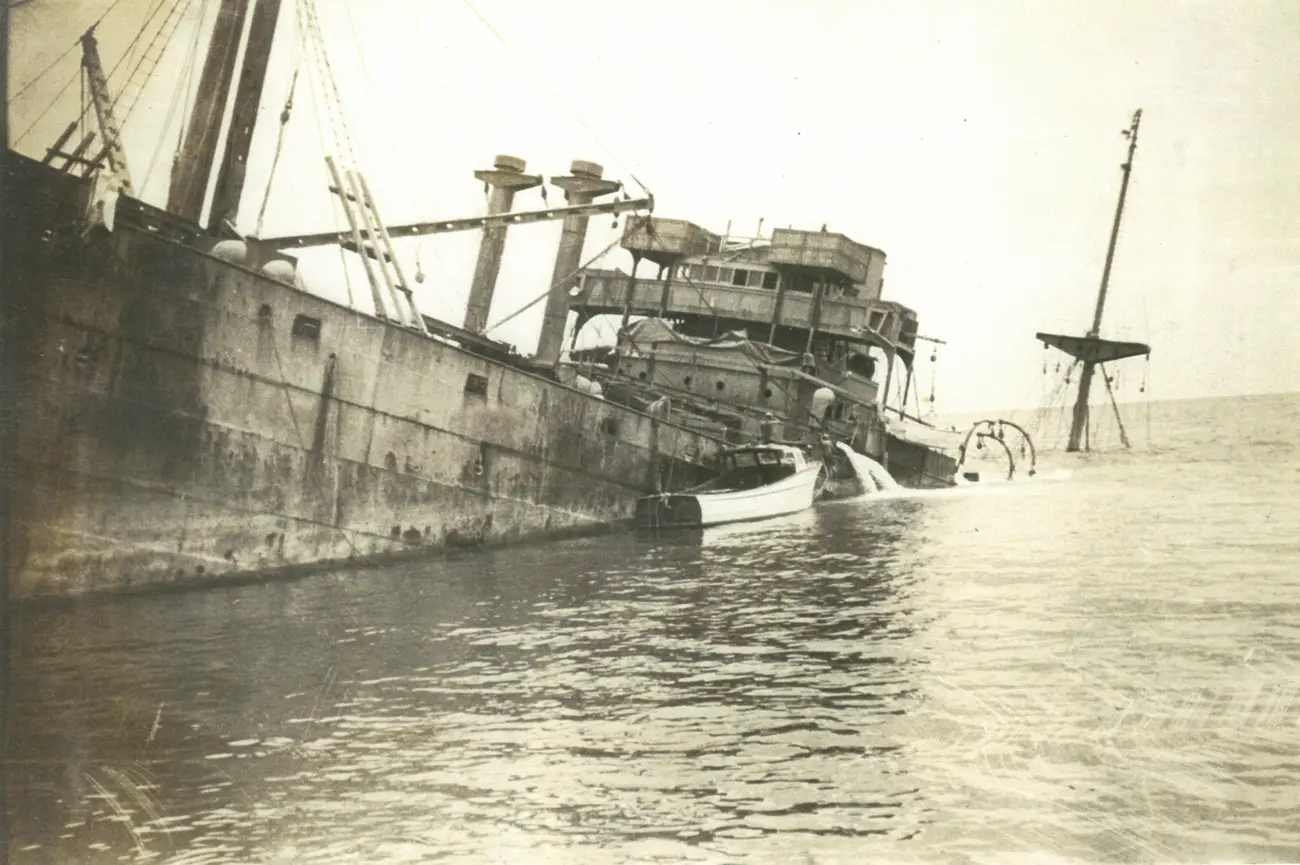
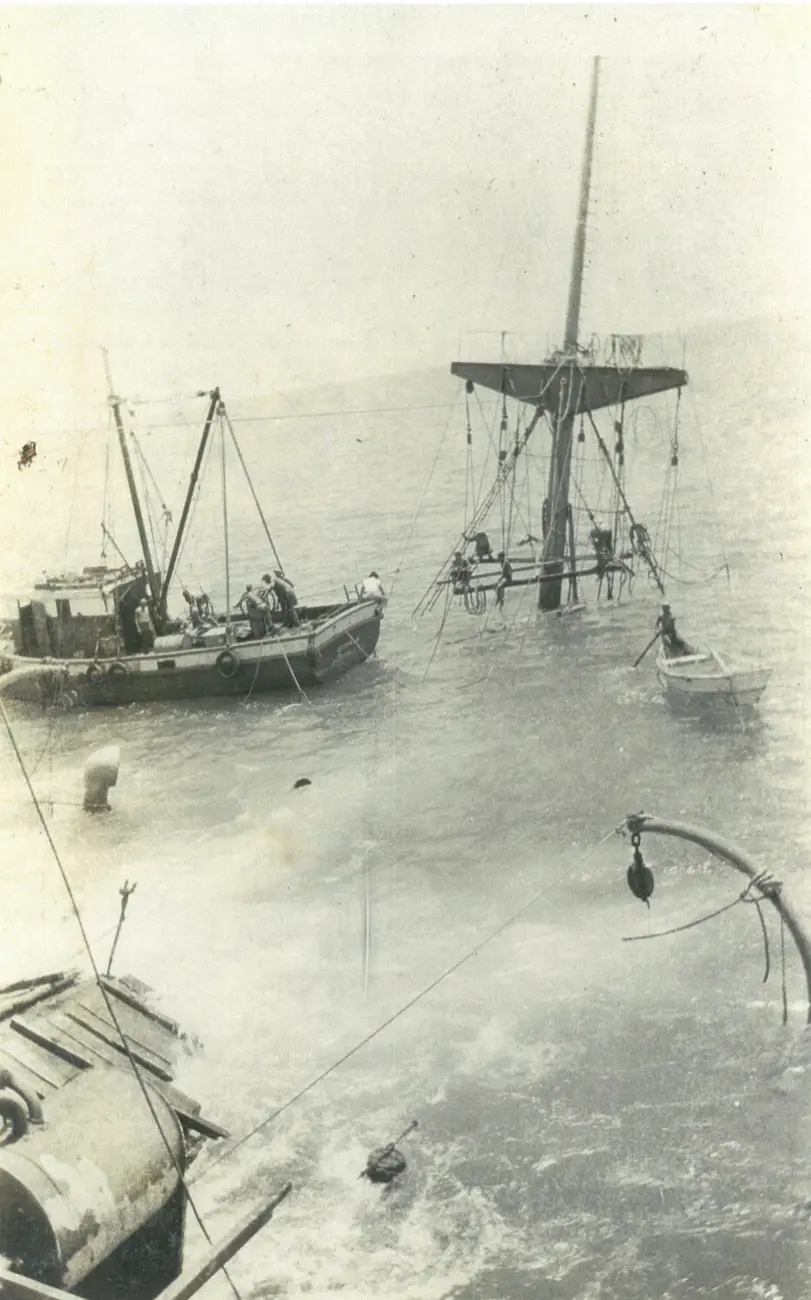
    In his new book, “Handfuls of History: Stories about Florida’s Past,” Milanich discusses pre-Columbian Florida, Colonial Period people and events, and the nineteenth century shipwreck of the steamship City of Vera Cruz.

    Milanich explores the origins of archaeology in Florida with Clarence B. Moore, and offers advice to future archeologists. He may even stir up some controversy as he questions the authenticity of the Miami Circle.

    “My goal is to make history something people will value, even though the events of the past certainly were not necessarily pleasant experiences for those who lived them,” says Milanich. “If there is one thing that history tells us, it is that greed, fear, ignorance, and the quest for power have contributed to the demise of people and societies. Maybe the past is not all that different from the present. But by understanding the past perhaps we can enjoy a better future.”

    Dr. Peggy Bulger was the state’s first folklorist, serving as Folk Arts Coordinator in 1976. From 1976 to 1989 she held senior folklore positions at the Florida Folklife Program, and created the Florida Folklife Collection. Bulger served as Folk Arts Director and Senior Program Officer for the Southern Arts Federation in Atlanta from 1989 to 1999, when she then became Director of the American Folklife Center at the Library of Congress. Since 2011, she has been back in Florida, working with other folklorists throughout the state.

    Bulger has been gathering material for her book “Stetson Kennedy: Applied Folklore and Cultural Advocacy” for forty years.

    “I started really delving into materials that were done during the WPA,” says Bulger. “Stetson Kennedy, Zora Neale Hurston, Alan Lomax, Herbert Halpert, all of them were folklorists who had worked in Florida back in the ‘30s and ‘40s. I was 25-years-old in 1976, and I thought that anyone who had lived in the 1930s and ‘40s was dead, because that was ancient history.”

    Bulger was shocked and pleased to discover that Stetson Kennedy was alive and well and living in Jacksonville.

    “I went to see Stetson and I started interviewing him about the WPA and the work that he had done here in Florida,” Bulger says. “Over the course of the years, we became fast friends, from ’76 to when he died in 2011. He really informed the work that I did in Florida.”

    Stetson Kennedy was born in Jacksonville on October 5, 1916. From 1937 to 1942, he traveled the cities, towns, and rural backwoods of Florida documenting the cultural heritage of the state’s diverse populations. Using the name John Perkins, Kennedy later infiltrated the Ku Klux Klan, exposing their secrets. He was an activist for positive social change, working to make life better for Floridians until his death on August 27, 2011.

    Bulger’s talk is presented in conjunction with the exhibition “Stetson Kennedy’s Multicultural Florida” at the Brevard Museum of History and Natural Science.

    The presentations of both Milanich and Bulger are free and open to the public.
    PDF file(s)
    Article Number
    147
    relevantdate

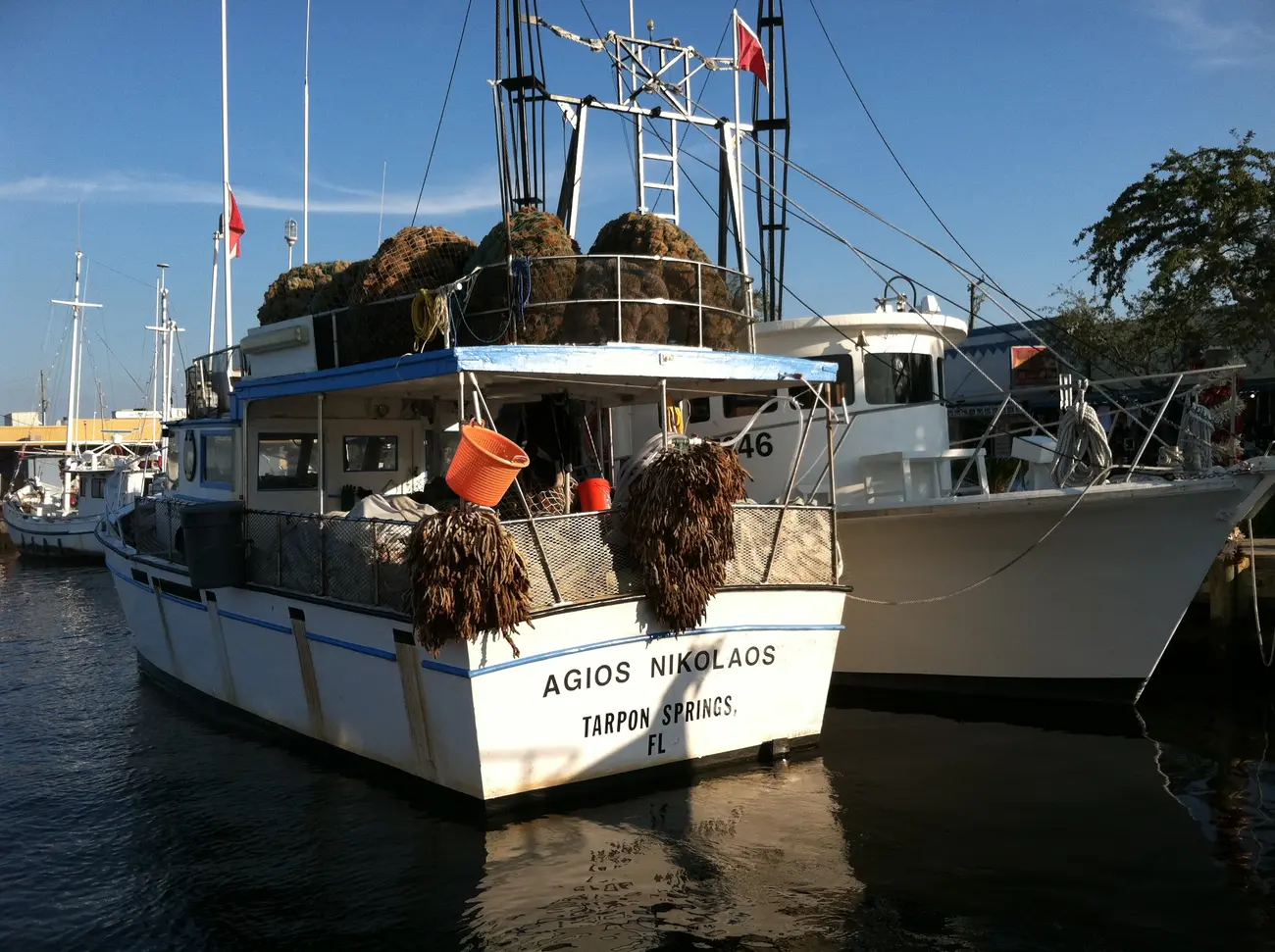
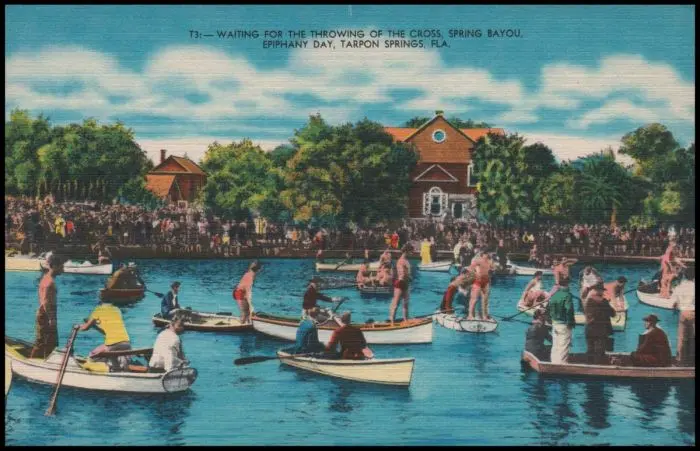
      Since 1906, people have gathered at Spring Bayou in Tarpon Springs each January 6th to watch young men compete to find a submerged wooden cross. Today, thousands attend the ceremony. The unique Epiphany celebration is one example of the Greek culture that is still prevalent in Tarpon Springs.

      In the city of Tarpon Springs you can listen to Greek music played on a bouzouki, try the pastry baklava, have a meal of lamb stew or a Greek seafood dish, sip the licorice flavored alcoholic beverage ouzo, and enjoy many other aspects of traditional Greek culture.

      You can see the Neo-Byzantine style architecture of St. Nicholas Greek Orthodox Church, and watch the sponge divers unload their catch on the city dock downtown.

      Tarpon Springs has the largest percentage of Greek Americans of any city in the United States.

      “Even today, after people have been here four or five generations, there is still a big segment of the population that speaks Greek,” says Tina Bucuvalas, curator of arts and history for the City of Tarpon Springs.

      When the first Greeks came to Tarpon Springs in 1905, a thriving town was already in place.

      When Hamilton Disston bought 4 million acres of land for 25 cents per acre in 1881, it included the land that would become Tarpon Springs. To stimulate development, Disston brought businessman Anton Safford to Tarpon Springs.

      The Victorian home that Safford lived in can be visited today. The Safford House Museum features period furniture and original family artifacts that present the home as it was in 1883.

      The Orange Belt Railway came to town in 1887. The train depot is now a museum.

      “The building we’re in was built in 1909 because the original railroad station burned down in 1908. This was restored in 2005,” says Sharon Sawyer of the Tarpon Springs Area Historical Society.

      “The railroad was brought here by Peter Demens. He brought the railroad from Sanford to Tarpon Springs and then on down to St. Petersburg. Before the railroad came, everybody had to get here by boat or wagon, so the railroad in 1887 made a big difference here in town.”

      It was the sponge industry that really put Tarpon Springs on the map.

      By the mid-1800s, there was a thriving sponge industry in the Florida Keys, but by the early 1900s, Tarpon Springs was the largest sponge port in the United States.

      While sponges in the Keys were harvested with long poles, in Tarpon Springs, Greek sponge divers donned canvas suits with round metal helmets.

      “John Cocoris realized that the way that sponges were harvested in Greece would produce far more than the hooking methods they were using in Florida,” says Tina Bucuvalas.

      “They brought over Greeks. At first 500 came in 1905, and then within a couple of years there were 1,500, and there were a lot of boats. It very quickly made Tarpon Springs the Sponge Capital of the World. Tarpon Springs was a big, important town at a time when St. Petersburg was a wide spot in the road.”

      With the large influx of Greek sponge divers and their families to Tarpon Springs, businesses and institutions to serve them were established, including restaurants, grocery stores, bakeries, and coffee houses.

      Today, Tarpon Springs retains a distinctive European flavor.

      “They get up in the morning and have Greek food, and sweep out their courtyards which have various plants you might see in Greece,” says Bucuvalas. “They’ll have their coffee outside. The old ladies in their head scarves will be going over to St. Michael’s Chapel or St. Nicholas, or down to the bakery.”

      St. Nicholas Greek Orthodox Church was constructed in 1907 and expanded in 1943 with marble imported from Greece.

      The unique Epiphany celebration held each January 6th attracts people from around the world. Following a ceremony at the church, the congregation walks to the dock at Spring Bayou, where a wooden cross is thrown into the water. The young man who retrieves the cross is believed to bring special blessings to his family for the year.

      The Patriarch of Constantinople, the Greek Orthodox equivalent of Catholicism’s Pope, came to Tarpon Springs in 2006 for the 100th anniversary of the town’s Epiphany ceremony.

      PDF file(s)
      Article Number
      146
      relevantdate

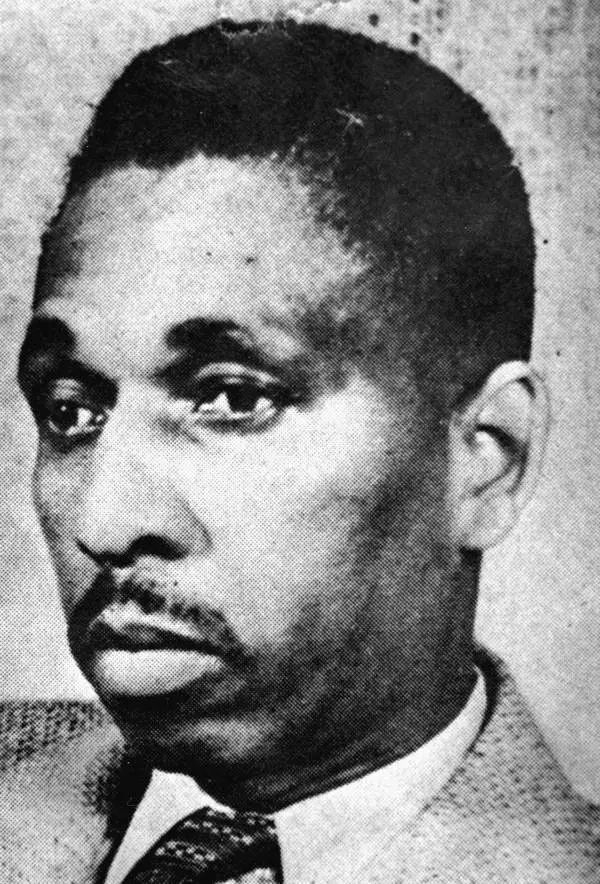
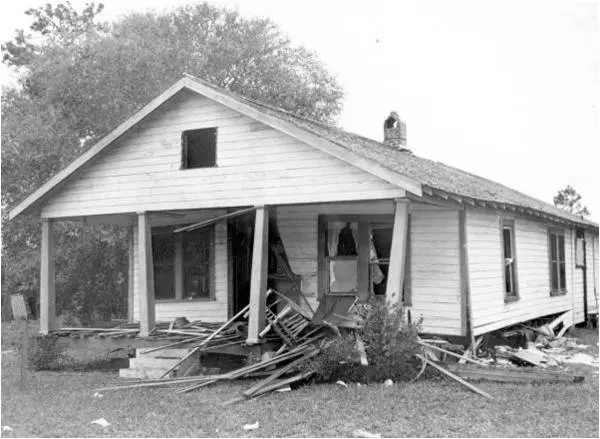
        On Christmas night 1951, a bomb exploded under the Mims home of educator and civil rights activist Harry T. Moore. The blast was so loud it could be heard several miles away in Titusville.
        Moore died while being transported to Sanford, the closest place where a black man could be hospitalized. His wife Harriette died nine days later from injuries sustained in the blast.
        The couple celebrated their twenty-fifth wedding anniversary on the day of the explosion, and Harriette lived just long enough to see her husband buried.
        The Moore’s daughter, Juanita Evangeline Moore, was working in Washington, D.C. in 1951, and was scheduled to come home for the holidays on December 27th, aboard a train called the Silver Meteor. She did not hear the news about her family home being bombed until she arrived.
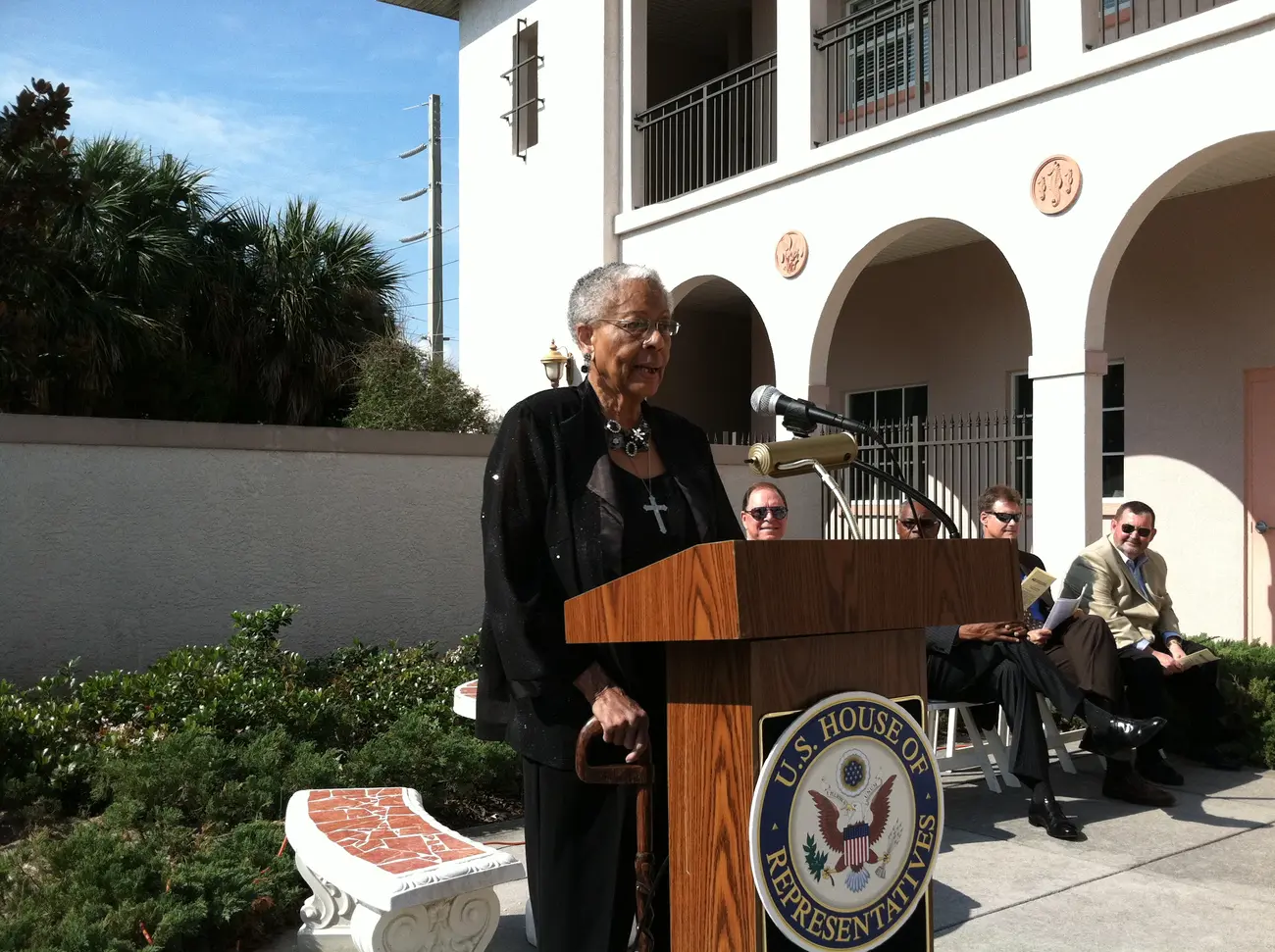
        “When I got off the train in Titusville, I knew something was very, very wrong,” Moore said in an interview before her death in October 2015. “I had not turned on radio or television, so I didn’t know a thing about it until I got off the train. I noticed that my mother and father were not in front of all my relatives to greet me and they were always there.”
        Moore was given the news by her Uncle George, who was home on leave from Korea.
        “We got into his car and got settled, and the first thing I asked was ‘Well, where’s Mom and Dad?’ No one said anything for a while, it was complete silence. Finally, Uncle George turned around and he said ‘Well, Van, I guess I’m the one who has to tell you. Your house was bombed Christmas night. Your Dad is dead and your Mother is in the hospital.’ That’s the way I found out,” said Moore.
        “I’ve never gotten over it. It was unbelievable.”
        Moore insisted on being taken to her parent’s home. The blast had done extensive damage. She saw a huge hole in the floor of her parent’s room, into which their broken bed had collapsed. Wooden beams had fallen from the ceiling. Shards of broken glass covered the bed in the room she shared with her sister, Peaches.
        Harry T. Moore was born November 18, 1905, in Houston, Florida, located in Suwannee County. At age 19, Moore graduated with a high school diploma from Florida Memorial College where he was a straight-A student, except for a B+ in French. Other students called him “Doc” because he did so well in all of his classes.
        Moore moved to Mims in 1925 after being offered a job to teach fourth grade at the “colored school” in Cocoa. He met Harriette Vida Sims. They married and had two daughters. Moore, his wife, and both of their daughters graduated from Bethune-Cookman College in Daytona.
        As a ninth grade teacher and principal at Titusville Negro School, Moore instilled in his students a sense of pride and a solid work ethic. A popular and skilled educator, Moore was fired for attempting to equalize pay for African American teachers in Brevard County.
        Moore led a highly successful effort to expand black voter registration throughout the state, dramatically increased membership in the Florida branch of the NAACP, worked for equal justice for African Americans, and actively sought punishment for those who committed crimes against them.
        “I do remember a lot of NAACP work with my Dad from the time I was able to understand what was going on,” said Juanita Evangeline Moore. “I helped him a lot with his mailing lists. We had a one-hand operated ditto machine. He usually typed out the stencil and he ran off whatever material he wanted to send out.”
        Although the murders of Harry T. and Harriette V. Moore have never been solved, it is believed that members of the Ku Klux Klan from Apopka and Orlando planted the bomb on Christmas night.
        Moore and his wife were killed 12 years before Medgar Evers, 14 years before Malcolm X, and 17 years before Martin Luther King, Jr., making them the first martyrs of the contemporary civil rights movement.
        The Moore Cultural Complex in Mims features a civil rights museum and a replica of the Moore family home.

        PDF file(s)
        Article Number
        145
        relevantdate

          The statewide headquarters of the Florida Historical Society is in Cocoa, but the organization hosts their Annual Meeting and Symposium in a different Florida city each year. In recent years the event has been held in Orlando, St. Augustine, Fort Lauderdale, Tampa, Jacksonville, and Pensacola.

          In 2013, to commemorate the 500th anniversary of the naming of our state, the Florida Historical Society hosted their annual meeting aboard a cruise ship that sailed out of Port Canaveral. The return voyage from the Bahamas followed Ponce de León’s path of discovery, sailing up the east coast of Florida.

          “That cruise was the most popular conference we’ve ever had,” says Tracy Moore, president of the Florida Historical Society. “We’ve been around since 1856, so that’s really saying something. People enjoyed it so much they began asking us right away when we were going to do a conference cruise again.”

          The answer is here. The Florida Historical Society will hold their next Annual Meeting and Symposium aboard the Carnival Sensation cruise ship, May 18-22, 2017.

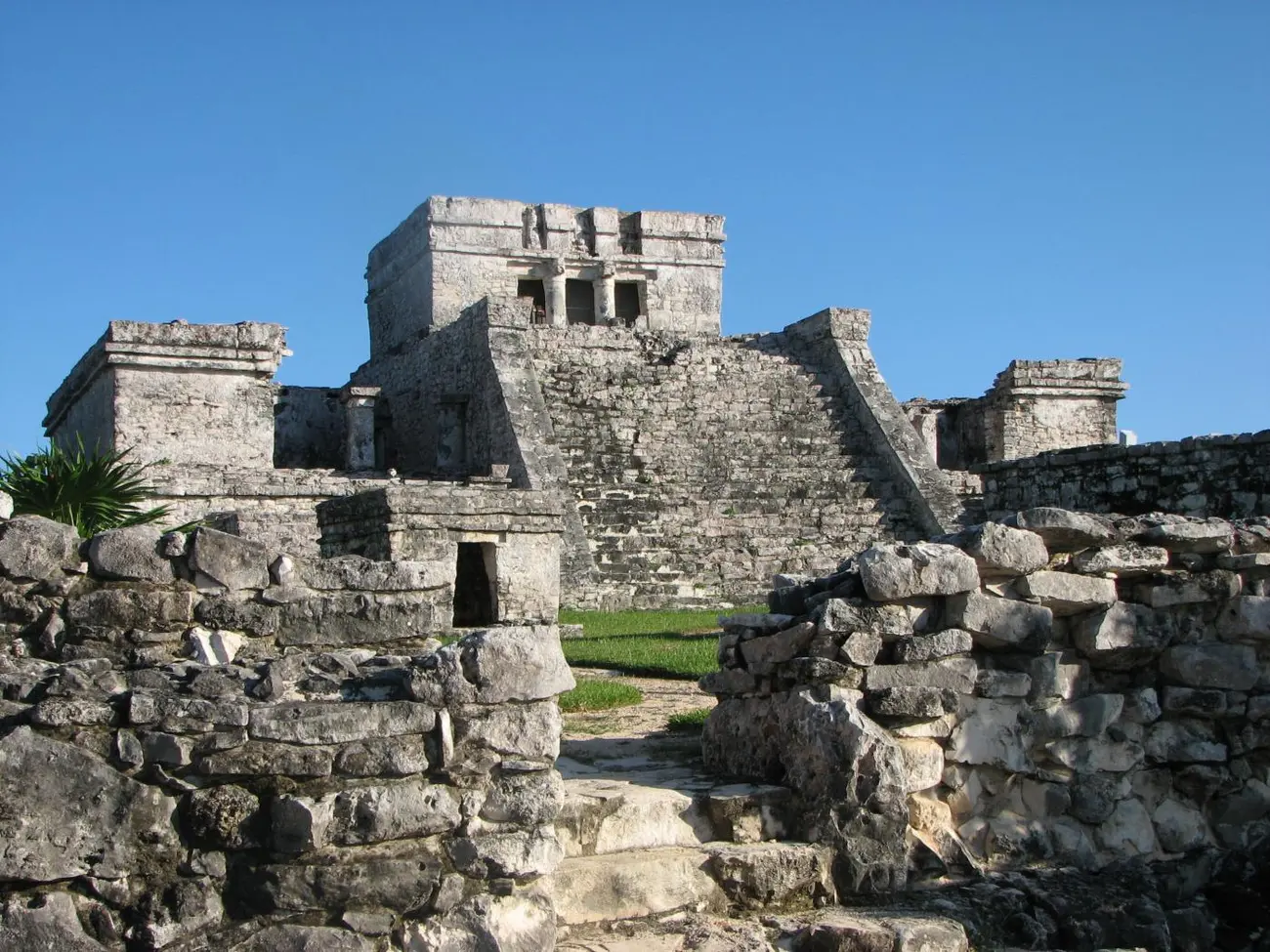
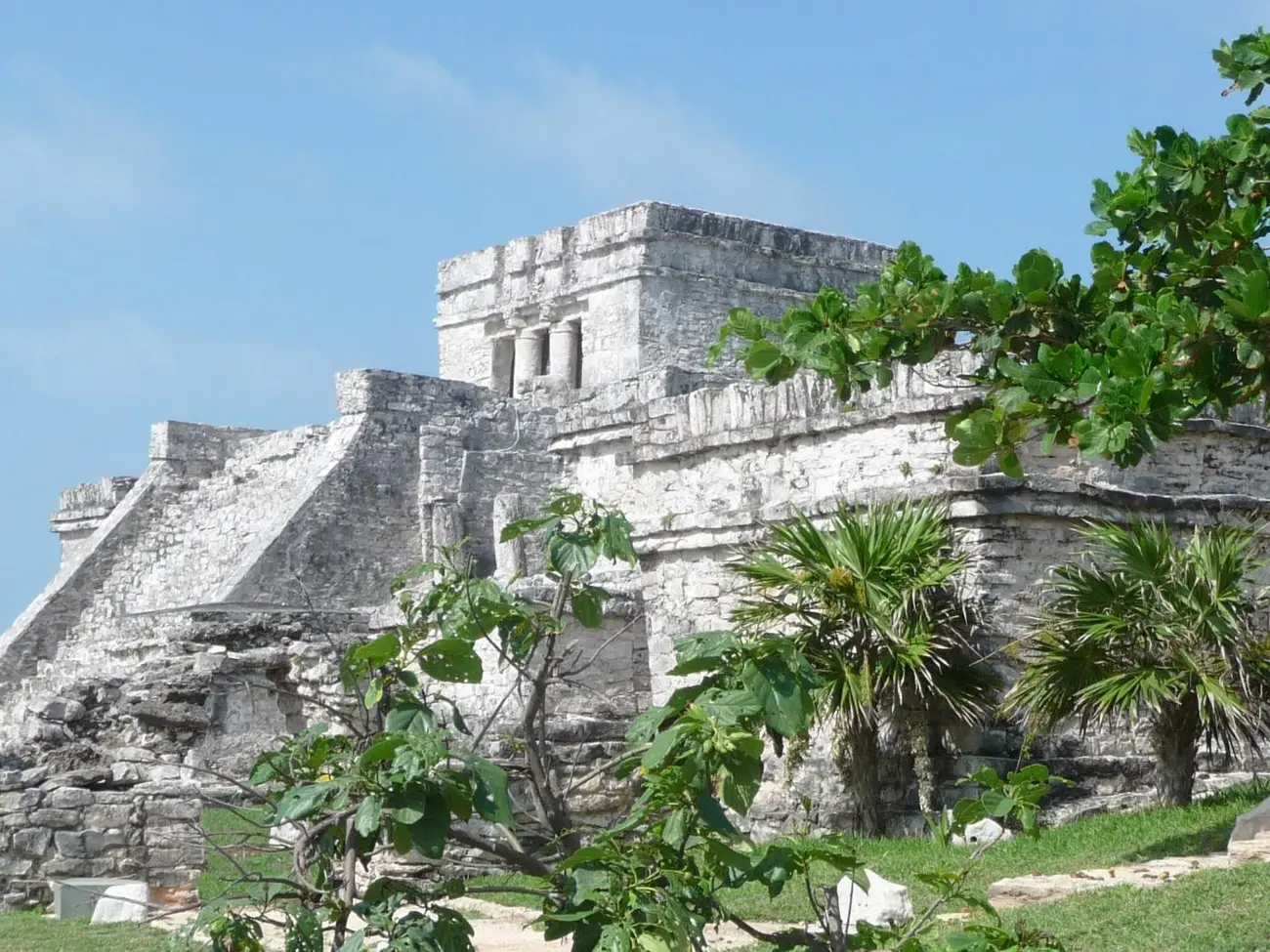
          “We’ll be leaving out of Miami, and spending a day in Key West taking tours of historic sites and museums such as the Harry S. Truman Little White House, writer Ernest Hemingway’s House, and other exciting places,” says Moore. “From there we’ll travel to Cozumel, where we’ll take a tour to the breathtaking Mayan ruins at Tulum. This ancient city sits high on a cliff overlooking the ocean. It’s really spectacular.”

          The theme for the conference is “Islands in the Stream: Exploring History and Archaeology in Key West and Cozumel.”

          “While we’ll be on a cruise ship and having a lot of fun, all of the scholarly elements of our annual meeting that people expect from the Florida Historical Society will remain intact,” says Ben DiBiase, FHS director of educational resources. “In addition to the historic tours on land, we will have fascinating paper presentations and round table discussions on a wide variety of Florida history topics while on board ship.”

          One of the keynote speakers for the conference will be Robert Kerstein, author of the book “Key West on the Edge: Inventing the Conch Republic.”

          “Dr. Kerstein’s book is a thoroughly researched study of this unique town that we’ll be visiting,” says DiBiase. “It follows the development of Key West from an isolated outpost of people who salvaged shipwrecks, to an important military installation, to the tourist mecca it is today.”

          Another keynote speaker for the conference will be Sandra Starr, senior researcher emerita from the Smithsonian Institution. She will be giving a presentation called “Maya Mariners, the Yucatan, and Florida: A Researcher’s Tale of Seduction into the Cross-Gulf Travel Theory.”

          There has been speculation for decades that the ancient Maya may have used boats to cross the Gulf of Mexico to visit Florida. Some have argued that evidence of this contact can be found in the language, pottery, and earthen mounds of some of Florida’s indigenous people.

          “The possible connection between the ancient Mayan people and the indigenous people of Florida is a fascinating topic for discussion, and Sandra Starr will help us to explore those possibilities before we tour one of the most impressive Mayan cities,” says DiBiase.

          The Florida Historical Society Archaeological Institute is based at the Brevard Museum of History and Natural Science in Cocoa, and archaeology has been a primary focus of FHS for more than a century.

          To participate in the Florida Historical Society Annual Meeting and Symposium cruise, you must register through the FHS website at myfloridahistory.org, or call 321-690-1971 ext. 205. A $100 per person deposit will hold a cabin for the conference.

          The cost of the event varies based on what kind of cabin a participant wants, but all registrations include the cruise, meals, the featured tours at Key West and Cozumel, symposium registration, taxes, fees, and port charges. Inside cabins start at $699.99 per person, double occupancy.

          “Last time that we did a conference cruise, we filled all of our allotted cabins quickly,” says Moore, who also owns Robinson Cruise Planners in Cocoa. “We suggest that you contact the Florida Historical Society right away to reserve your cabin. This conference cruise would make a really wonderful holiday gift.”

          PDF file(s)
          Article Number
          144
          relevantdate

            Florida is a popular destination for people around the world. It is also the place that brought terms such as “hanging chad,” “Stand Your Ground” and “Don’t Tase me, bro!” to our collective consciousness.

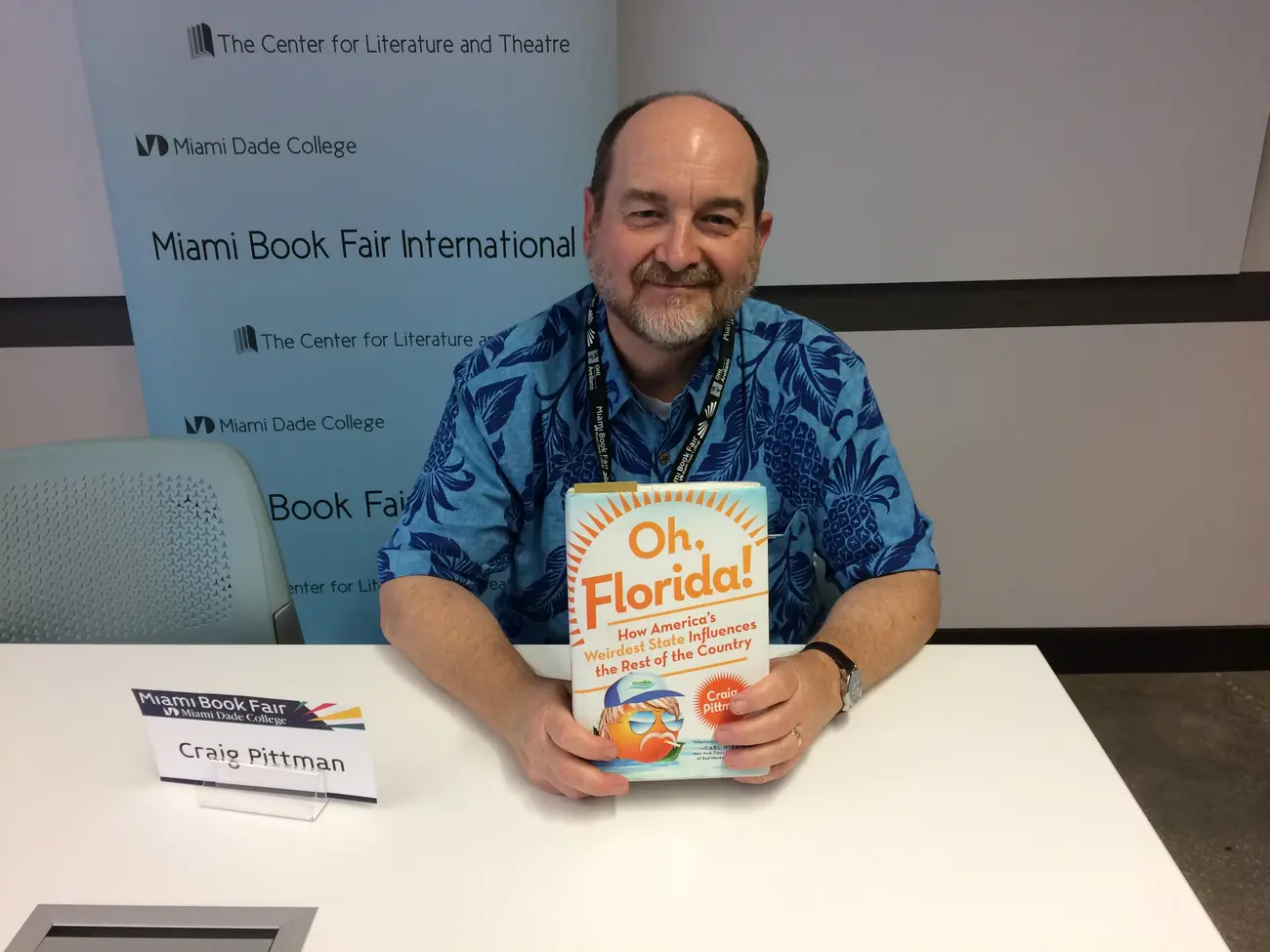
            Craig Pittman is a columnist for the Tampa Bay Times, and the author of three books on Florida’s natural environment. Pittman’s latest book, “Oh, Florida! How America’s Weirdest State Influences the Rest of the Country” is humorous, but contains a lot of good information about Florida history and culture.

            “I’m a big believer in using the ‘spoonful of sugar to make the medicine go down’ method of shoveling a lot of Florida history and culture down people’s throats,” says Pittman. “I tell a lot of the weird, wacky stuff that happens in Florida, but I use it as sort of a setup for leading them into learning more about Florida history, some of which is admittedly pretty wild and weird also.”

            Throughout its history, Florida has been a state full of contradictions, unusual stories, and eccentric individuals. Pittman has been inspired by the book “A Rogues Paradise: Crime and Punishment in Antebellum Florida, 1821-1861” by James M. Denham.

            “It was very helpful in telling me what Florida was like before we were even a state,” says Pittman. “Even then, we were pretty wild and crazy. Denham quotes one visitor to Florida from that era who said that ‘at least half the people who lived in Florida were con men and crooks and the other half were their penniless victims.’ So, not much has changed.”

            Florida became a United States Territory in 1821, and future president Andrew Jackson was the first territorial governor.

            “Being from Pensacola, I like to cite the very low opinion of Andrew Jackson’s wife about the place, calling it ‘a vast howling wilderness,’” says Pittman. “I’m not sure she’d like it much now either, with all the adult business establishments there.”

            In a chapter on our state capital, Pittman quotes poet Ralph Waldo Emerson’s impression of Tallahassee in 1827. Emerson called it “a grotesque place, selected three years since as a suitable spot for the capital of the territory, and since that day rapidly settled by public officers, land speculators, and desperados.”

            Florida became a state in 1845, and our first flag contains the words “Let Us Alone.” “People really identify with it as either a wish or a warning,” Pittman says.

            While the book “Oh, Florida!” contains thousands of anecdotes about the strange behavior of our state’s modern residents, Pittman also visited monuments, museums, and historical societies around the state to gather information. He found an interesting story in Cedar Key.

            “The mayor of Cedar Key, this was in 1890, basically set himself up as an island dictator,” says Pittman. “He had a thug who functioned as his town marshal, and the two of them walked around carrying shotguns, and they would order random people in the street to do crazy stuff like, ‘hey, you two head-butt each other.’ Nobody dared to stand up to them.”

            Eventually, one brave woman wrote a letter to President Benjamin Harrison asking him to bring an end to the situation.

            “About then is when they really slipped up, and they roughed up the keeper of the Customs House, who was a federal employee,” says Pittman. “Based on that action, and the complaint from this lady from Cedar Key, President Benjamin Harrison sent a Navy cutter to arrest the mayor.”

            While Florida is considered a paradise, we have more shark bites than anywhere else in the world, we are the lightning capital of the western hemisphere, lead the country in the number of sinkholes, and are impacted by hurricanes more than any other state.

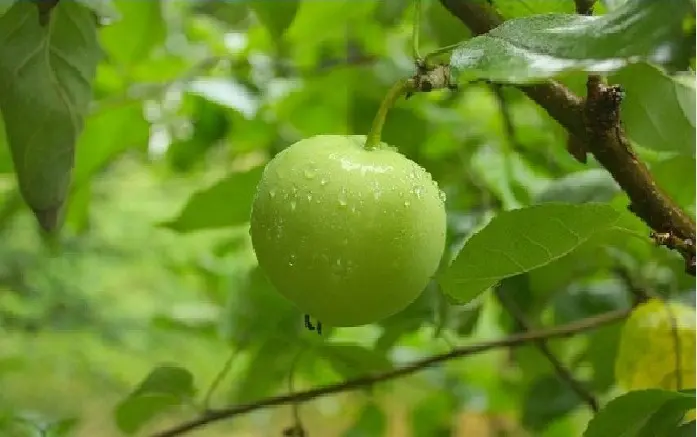
            Pioneers also had to be aware of animals, and even plants. Particularly dangerous was the manchineel tree.

            “The Spanish called it the ‘little apple of death’ because you take a bite and you’re six feet under in no time,” says Pittman. “It was the sap from that tree that allegedly the Calusa used to fatally wound Ponce de León when he made the mistake of coming back to Florida a second time. I guess they weren’t interested in repeat business for tourism at that point.”

            PDF file(s)
            Article Number
            143
            relevantdate

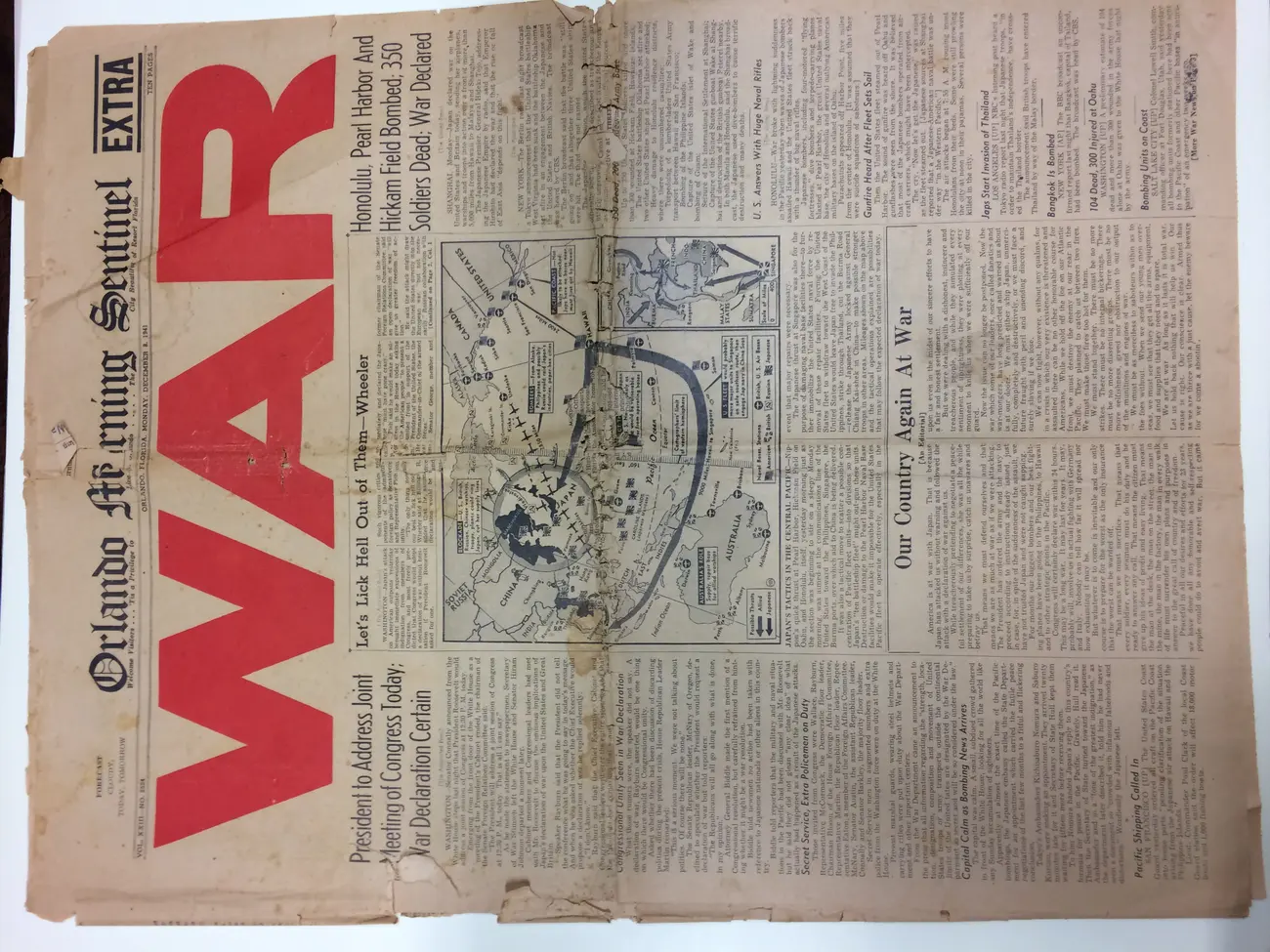
              The Monday, December 8, 1941, Orlando Morning Sentinel “Extra” edition had a one word headline in bright red block letters nearly four inches tall: WAR.

              Front page articles detailed the attack on Pearl Harbor, described the imminent declaration of war on Japan, and outlined what retaliation for the attack might look like.

              The paper’s front page editorial stated, “This may be a long war. It may last for years. It may, probably will, involve us in actual fighting with Germany and Italy.”

              The editorial went on to say, “That means sacrifice. That means that every soldier, every seaman must do his duty and be ready to answer any call. That means the citizen must give up his ideas of profit and easy living. That means the man…in every walk of life must surrender his own plans and purposes in answer to the great call of country and of freedom.”

              Young men in Brevard County were ready to answer the call.

              “I remember a friend that used to hunt with my dad that came by the house, and he told us about Pearl Harbor,” says lifelong Brevard County resident George L. “Speedy” Harrell, who was 14 years old in 1941. “A lot of people enlisted in the service right away.”

              Harrell was too young to serve in the military immediately after Pearl Harbor, instead earning the nickname “Speedy” playing football as a freshman at Cocoa High School. He remembers everybody making sacrifices during wartime.

              “The rationing of everything was set up to conserve what we had,” says Harrell. “Gasoline was rationed weekly based on need. I was a growing boy with big feet, and would have to go to the Rationing Board and explain that I needed a new pair of shoes to get it. Tires for your automobile, you had to go before the Rationing Board and show that you needed a new tire.”

              Harrell turned 18 before the war ended, and was sent to serve the U.S. Army in Germany.

              Immediately after the United States joined World War II, German submarines began attacking supply ships off the coast of Florida.

              “Many cargo ships were sunk off Cape Canaveral and Cocoa Beach by German U-Boats,” said Brevard County resident Bob Cowart in 1988. “The cargo vessels liked to hug the coastline as much as possible in their north-south routes. Since they had to swing far offshore in order to avoid the shallow water off the Cape, that area became one of the favorite spots for the German submarines to torpedo them.”

              On May 1, 1942, less than five months after the attack on Pearl Harbor, the British freighter La Paz was torpedoed off Cape Canaveral and towed to Cocoa Beach, where it sank. The stern of the ship rested on the bottom of the ocean, but the bow was visible above the water. The La Paz was raised, towed to Jacksonville, repaired, and returned to service during the war.

              “I had the privilege of working on the salvage operation, along with other local 16 and 17 year olds, and will always remember this as a great experience for a kid of that age,” said Cowart.

              Many Brevard County residents remember fondly how 900 cases of Johnny Walker Scotch whiskey was “rescued” from the La Paz and brought ashore for locals to enjoy.

              Most ships were not salvageable after being torpedoed by the Germans, but their crews were often able to escape on lifeboats. The refugees would travel through Merritt Island and Cocoa on their way home.

              “I remember talking to one seaman who said that he had made three voyages out of New York, and that Cocoa Beach was the furthest south he had come before being torpedoed,” Cowart said.

              Not all of the crew members of torpedoed ships were so lucky. One ill-fated lifeboat was displayed at the corner of Brevard Avenue and King Street in Cocoa.

              “It was riddled with bullet holes by a German sub which surfaced and machine gunned the helpless survivors in the lifeboat,” said Cowart. “Twelve men died in the lifeboat.”

              The attack on Pearl Harbor brought the United States into a global conflict that was partially fought along the coast of Brevard County.

              PDF file(s)
              Article Number
              142
              relevantdate

                The beautifully landscaped streets of Coral Gables are lined with Mediterranean style buildings that have become a preferred form of Florida architecture. The affluent Miami suburb is recognized as an iconic planned community.

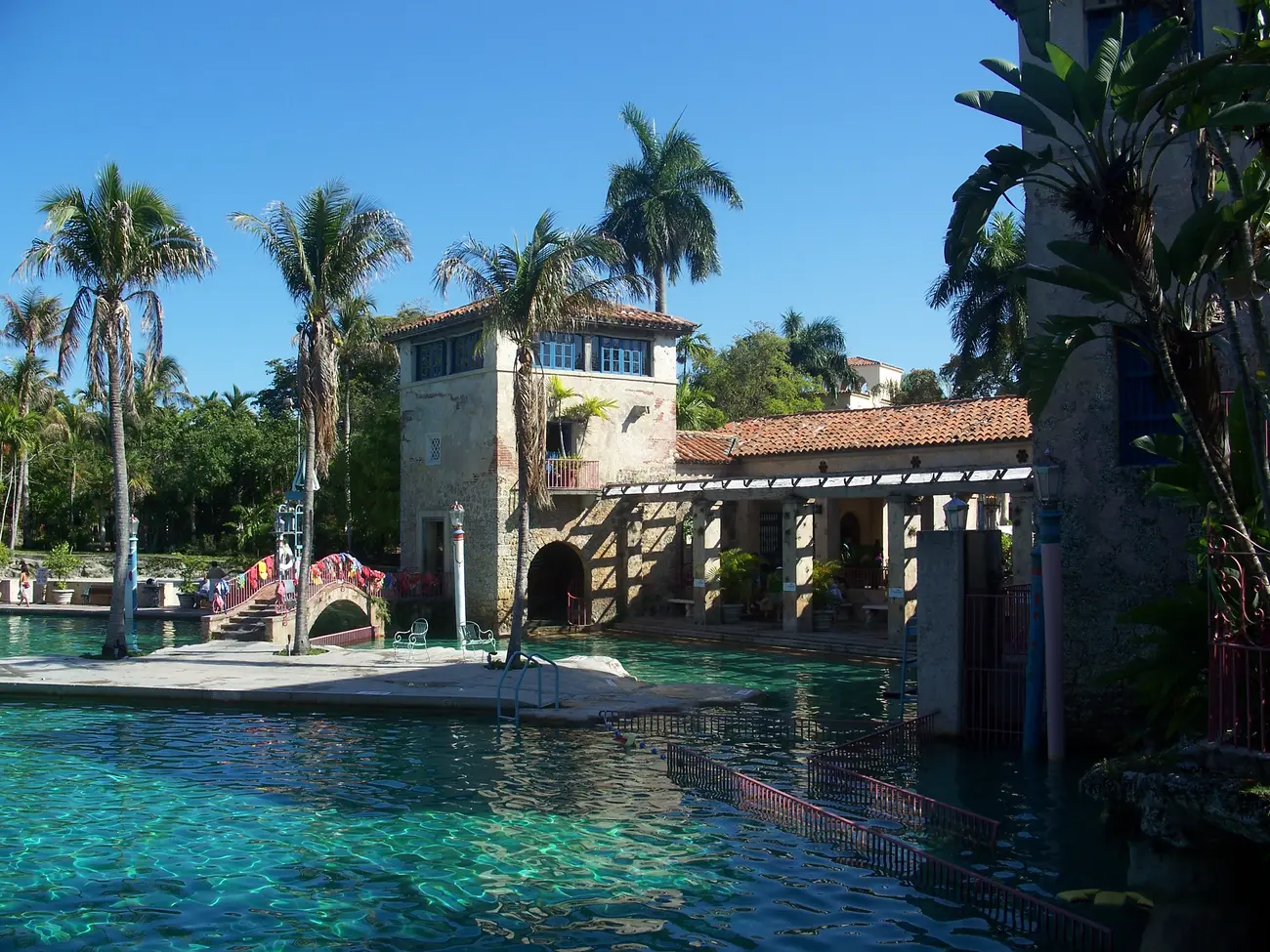
                Coral Gables was the vision of George Merrick, who in the 1920s transformed his family’s citrus grove into a community that included what was then middle class housing, public recreational facilities such as the Venetian Pool, trolley transportation, the Biltmore Hotel, and an educational institution that would become the University of Miami.

                Miami historian Arva Moore Parks has spent decades working to preserve the Coral Gables community. She is author of the award-winning book “George Merrick: Son of the Southwind, Visionary Creator of Coral Gables,” published by University Press of Florida.

                “I moved into Coral Gables in 1970, and bought an old beat up house, and everybody thought I was crazy,” says Parks. She soon found herself leading the first Historic Preservation Board in South Florida. “That’s when I started learning about Coral Gables. When we worked to save the Merrick House, I got to know Richard Merrick, who was George Merrick’s youngest brother. His wife Mildred was a librarian at UM, who I’d known for a long time. About ten years ago she said ‘I have some material no one’s ever seen,’ and that is what prompted the writing of the book.”

                Parks was given exclusive access to primary source documents including personal letters, notes about Coral Gables, and short stories written by George Merrick.

                Parks found the short stories particularly intriguing. “I recognized immediately that they were eyewitness accounts, because he was 13 when he came here,” says Parks. “He fictionalized what he witnessed. Sometimes he changed the names, but I could recognize who he was talking about.”

                In 1899, George Merrick’s family moved from Duxbury, Massachusetts to Miami, Florida, to participate in the citrus industry. The pioneering spirit of his family helped to inspire the 13 year old.

                “When he got here, everybody had to learn,” says Parks. “His father and mother were both college graduates and they moved into the back country into an old homestead, because his father wanted to leave the ministry and raise grapefruit. They became pioneers, but they had a very different background. They were intellectual college graduates in an era when there weren’t a lot of those around.”

                As a young man, George Merrick dreamed of transforming his family’s land into a beautiful, planned community. His goal was to create an affordable place to live with public infrastructure to benefit residents.

                “He was very visual and he read all the time,” says Parks. “He loved Washington Irving’s ‘Alhambra’ and that’s where he got a lot of ideas.”

                While attending college in New York, Merrick lived with his mother’s brother, Denman Fink, who was an illustrator and artist. The two began discussing the possibilities for a planned community with architectural controls. After continuing his college education at Rollins College in Winter Park, Florida, Merrick returned to South Florida.

                Merrick assembled a team that included his cousin George Fink who was an architect, and Frank Button who was a landscape architect working nearby for the Deering family. Together they designed the original plan for Coral Gables. The team planted more than 30,000 trees to augment the Mediterranean style architecture of the community.

                The Florida Land Boom of the 1920s was followed by a bust, and then the Great Depression. George Merrick lost his fortune.

                “He was literally thrown out in 1928,” says Parks. “They had created a city and he was on the commission, but he was having some health problems. They threw him off the commission because he missed too many meetings.”

                As the Great Depression hit, Merrick’s properties were being foreclosed and he never recovered financially. In 1940, he was able to become Post Master, and was very popular in the position. At his death in 1942, Merrick’s estate was worth less than $400.

                Merrick’s legacy lives on in the community of Coral Gables.

                “It’s been very successful,” says Parks. “The values have gone up. I think people realize that it is the architectural controls more than anything else, that have kept the feeling in Coral Gables today.”

                PDF file(s)
                Article Number
                141
                relevantdate

                  As part of the continent Gondwana 650 million years ago, the foundation of Florida was tucked between the land masses that would become South America and Africa. The rest of eastern North America was then part of another continent called Laurentia. As the Earth’s tectonic plates shifted, the basement rocks of our modern continents moved across the globe.

                  About 300 million years ago, Gondwana and Laurentia collided, forming the Appalachian Mountains in what would become North America and the Mauritanide Mountains in what would eventually be Africa. The Florida portion of Gondwana joined with Laurentia at a line that runs southwest to northeast through modern south Alabama, south Georgia, southern South Carolina, and eastern North Carolina.

                  By about 200 million years ago, Gondwana and Laurentia had sutured together to form the supercontinent Pangea. At this point Florida’s basement rock was located north of the equator, much closer to its current position, but was surrounded by land. Florida was near the middle of the Pangea supercontinent, far from any ocean, probably surrounded by desert. Pangea did not last long from a geological perspective, breaking up after just 85 million years.

                  The breakup of Pangea resulted in the creation of Florida as a peninsula.

                  “North America separated from Africa, South America separated from Africa, Europe and Asia did their own thing, India broke away and slammed into the south side of Asia, creating the Himalaya mountains,” says Albert C. Hine, professor of Marine Science at the University of South Florida and author of the book “Geologic History of Florida: Major Events That Formed the Sunshine State.”

                  “So it was a period of time where there was a significant reorganization of the continental masses on earth, and during that time the basement rocks that created the Florida peninsula were isolated and left alone, and then on top of the basement rocks, the limestones have accumulated that we see, and the rocks and sediments that we see that form our beaches have occurred over the past 200 million years,” Hine says.

                  For tens of millions of years, most of Florida was separated from the rest of North America by the Georgia Channel Seaway. Eventually, the water receded and Florida became a visible extension of North America, but with a distinctly different foundation than the rest of the continent. The Suwannee Basin and the Florida-Bahama Blocks that make up the foundation of the Florida peninsula have much more in common with the rocks of northwest Africa than with the bedrock of the rest of North America.

                  At different points in geologic history, Florida has been totally submerged, but it has also been twice as wide as it is now.

                  “During glacial events, the huge ice sheet, it’s called the Laurentide Ice Sheet, covered most of North America, and the Fenno-Scandanavian Ice Sheet covered most of Europe,” says Hine. “Water was extracted from the ocean and snowed on land. Over thousands of years, that snow built up into thick ice sheets. So water was withdrawn from the ocean as much as 400 feet. So sea level dropped about 400 feet, 130 meters. As a result, Florida being topographically low and flat, that exposed a huge portion of the Florida platform to the air, and became dry.”

                  Prehistoric animals and probably Pre-Columbian people lived on dry land that is now submerged under 200 feet of water in the Gulf of Mexico.

                  Hine says that rising sea levels are an inevitable part of Florida’s future.

                  “It’s a function of global warming and global climate change,” says Hine. “Scientists realize, of course, it’s been politicized, to our chagrin, but the data are real, and the predictive models are the best we can possibly make them, and they’re getting better with time. That’s been demonstrated. All that clearly shows that sea level is going to rise in Florida in time periods that are important to humans. Not thousands of years or millions of years, but in decades. As a result, we have to start to plan how we’re going to deal with that. As we’re planning, we continue to try to make the science better, and to make the predictions better.”

                  PDF file(s)
                  Article Number
                  140
                  relevantdate

                    Tradition holds that the first Thanksgiving was celebrated in 1621, as English Pilgrims at Plymouth Plantation in Massachusetts shared a bountiful harvest with their Native American neighbors.

                    The first Thanksgiving celebration in North America actually took place in Florida.

                    Fifty-five years before the Pilgrims landed at Plymouth Rock, colonists in St. Augustine shared a feast of thanksgiving with Native Americans.

                    “Not until 42 years later would English Jamestown be founded,” says eminent Florida historian Michael Gannon. “Not until 56 years later would the Pilgrims in Massachusetts observe their famous Thanksgiving. St. Augustine’s settlers celebrated the nation’s first Thanksgiving over a half century earlier, on September 8, 1565. Following a religious service, the Spaniards shared a communal meal with the local native tribe.”

                    Hosting the first Thanksgiving celebration in what would become the United States is one of many “firsts” for the oldest continuously occupied European settlement in America, founded 451 years ago.

                    “When the Spaniards founded St. Augustine, they proceeded to found our nation’s first city government, first school, first hospital, first city plan, first Parrish church, and first mission to the native populations,” Gannon says.

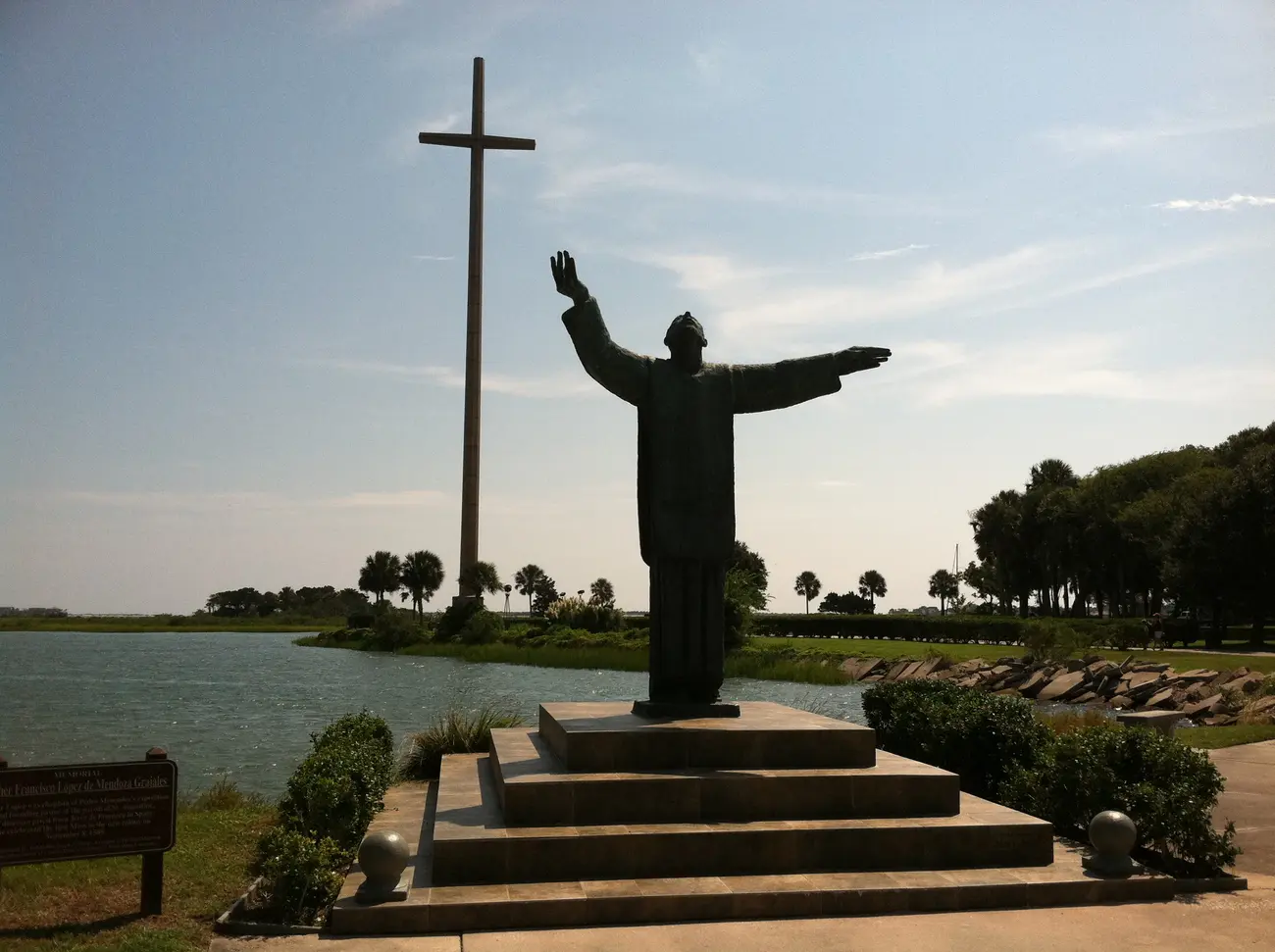
                    In 1965, Gannon was a priest and historian in St. Augustine, leading several projects to help celebrate the 400th anniversary of the founding of the city. He oversaw the erection of the Great Cross on the site of the first religious service and thanksgiving feast in North America. At 208 feet tall, the stainless steel structure is the largest freestanding cross in the Western Hemisphere.

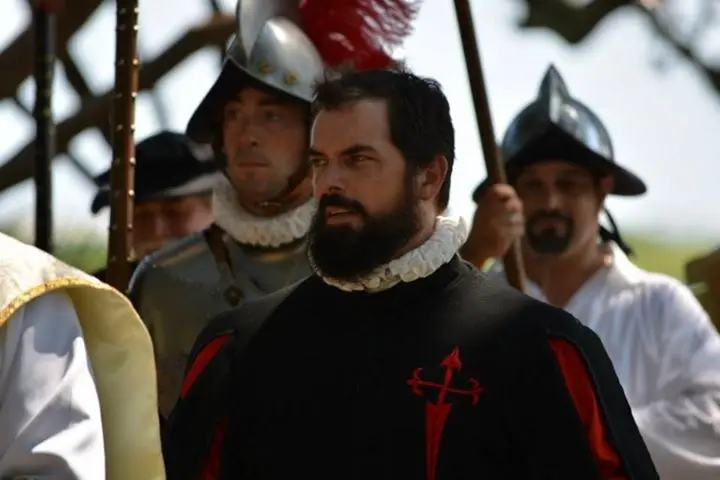
                    “It was decided to build a cross, because that was central to the original ceremony, where Father Francisco López, the fleet chaplain, soon to be first pastor of the first Parrish, came ashore ahead of Pedro Menéndez de Avilés, the leader of the founding expedition, and then went forward to meet Menéndez holding a cross,” says Gannon. “Menéndez came on land, knelt and kissed the cross.”

                    Every year, the September 8, 1565 landing of Menéndez and the Catholic Mass that followed is reenacted in St. Augustine with dignitaries from around the world in attendance. For many years the role of Menéndez has been played by Chad Light.

                    Today, visitors to the first permanent European settlement in North America can see a statue of Father Francisco López in front of the Great Cross. The statue is placed on the approximate site where Father López held the first Catholic Mass in the city, which was attended by Native Americans. Following the service, the European settlers and the native people shared a Thanksgiving meal.

                    The statue of Father López is carved out of indigenous coquina stone, a sedimentary rock comprised of compressed shells. The rough surface of the coquina symbolizes the difficult journey the Spanish endured on their voyage to Florida.

                    “That statue was erected in the 1950s. It was executed by a distinguished Yugoslav sculptor, Ivan Meštrović,” says Gannon. “But it was placed in a copse of trees where it did not stand out against a dark background. The plan that the architects in 1965 came forward with was to move it to a site on open ground where the figure of Father López, with his arms in the air, would stand out against the sky. And now, at long last, the statue has been moved to that space. You can see the dramatic difference in the figure of Father López as he’s seen completely and clearly now against the sky, and directly in front of the Great Cross, which stands behind him.”

                    The Spanish had only just arrived in St. Augustine when their Thanksgiving dinner was served, and they did not have the benefit of having raised crops for a year as the English Pilgrims did more than half a century later.

                    The Spanish had to do the best they could with leftovers from their long voyage.

                    “The menu was a stew of salted pork and garbanzo beans, accompanied with ship’s bread and red wine,” says Gannon.

                    While Floridians should proudly proclaim ownership of the first Thanksgiving celebration held in what would become the United States, we may want to retain the traditional menu of turkey, stuffing, vegetables, and cranberry sauce.

                    PDF file(s)
                    Article Number
                    139
                    relevantdate

                      The Chicago Cubs won the 2016 World Series Championship. The Cubs came back from a 3-1 game deficit to play a full series of 7 games. The final game required an extra tenth inning for the Cubs to defeat the Cleveland Indians in a dramatic 8-7 finish, following a rain delay. The win ended a 108-year drought for the Cubs, the longest in Major League Baseball history.

                      The 1906 Cubs won a record setting 116 of 154 games played that season. The team was the first to play in three consecutive World Series Championships, and the first to win twice in a row, in 1907 and 1908.

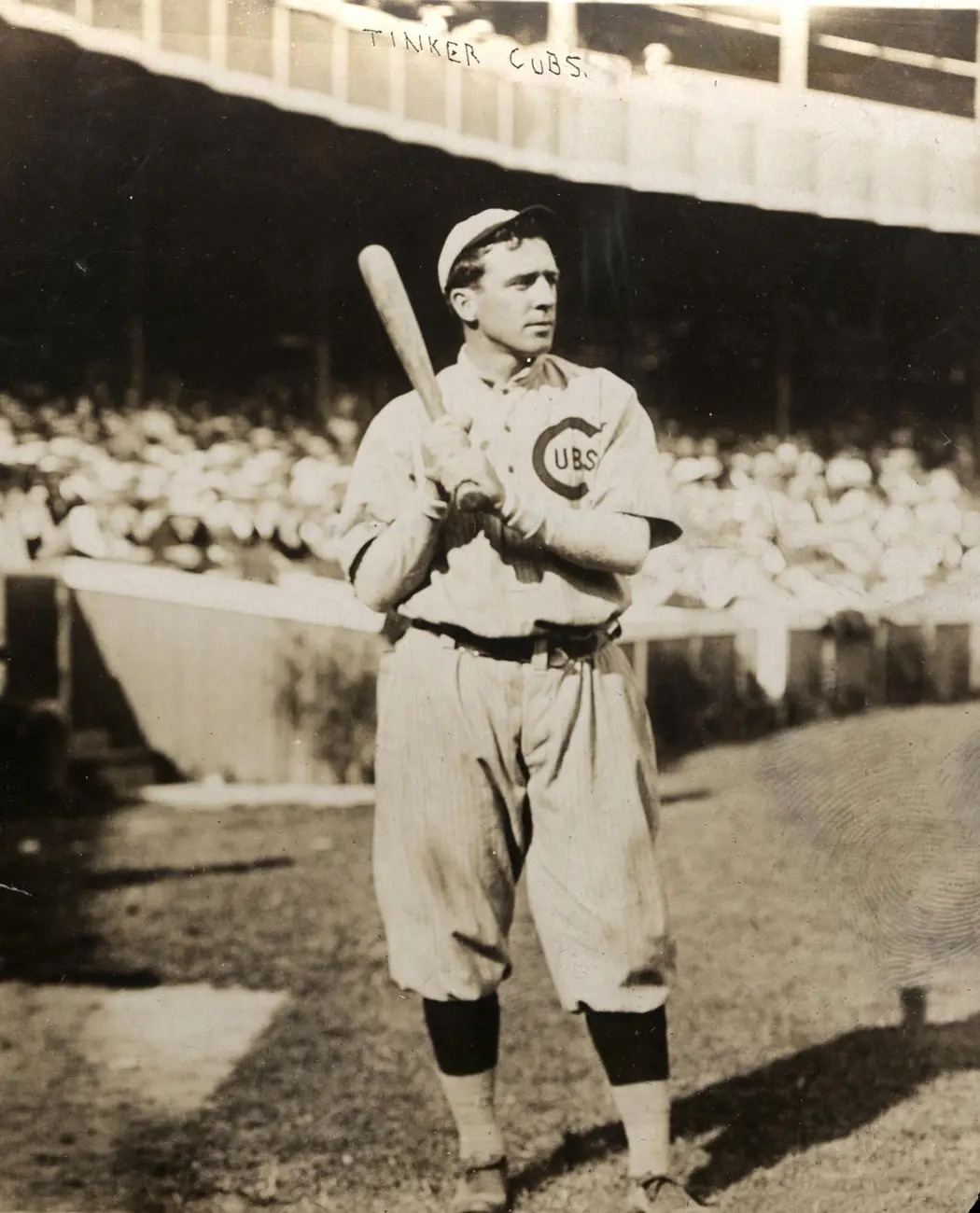
                      The last time that the Cubs won the World Series, in 1908, Joe Tinker was an important player on the team. Tinker has strong ties to Central Florida, and played a key role in the development of the Orlando area.

                      From 1902-1912, Cubs shortstop Joe Tinker, second baseman Johnny Evers, and first baseman Frank Chance perfected a double play combination that helped to defeat opposing teams. The 1910 poem “Baseball’s Sad Lexicon” by Franklin Pierce Adams is written from the perspective of a New York Giants fan.

                      These are the saddest possible words:
                      “Tinker to Evers to Chance.”
                      Trio of bear cubs, and fleeter than birds,
                      Tinker and Evers and Chance.
                      Ruthlessly pricking our gonfalon bubble,
                      Making a Giant hit into a double—
                      Words that are heavy with nothing but trouble:
                      “Tinker to Evers to Chance.”

                      The three teammates were elected into the National Baseball Hall of Fame in 1946.

                      Tinker played for the Cubs from 1902-1913. After one season with the Cincinnati Reds, Tinker returned to the Cubs as a player and manager until 1916. After leaving the Cubs, Tinker was part owner and manager of a minor league team, the Columbus Senators.

                      Tinker’s wife had persistent health problems, and they decided to move to Orlando in 1920. Tinker became owner and manager of the Orlando Tigers.

                      “The Tigers were the second incarnation of Orlando’s initial baseball franchise,” says Michael Perkins, executive director of the Orange County Regional History Center. “They were the Caps in 1919 and ’20, then the Tigers in 1921, and then the Bulldogs in until 1924. All of the teams played Class C baseball in the Florida State League. The Tigers won the League under Tinker’s management in 1921.”

                      Using wealth he had acquired from a successful career in professional baseball, Tinker started a real estate company, buying and selling land in Orange County and Seminole County. Tinker profited greatly from the Florida Land Boom of the 1920s. His offices were in the Tinker Building at 16 and 17 West Pine St. in Orlando, which is listed on the National Register of Historic Places.

                      “The Tinker Building cost Tinker $90,000 to build in 1925, an enormous sum for the time,” says Perkins. “It held his real estate offices for about two years before Florida’s economic collapse of 1927 caused the local real estate market to bust.”

                      Orlando’s Tinker Field, named after Joe Tinker, is adjacent to the Citrus Bowl. Tinker Field has served as the Spring Training home of the Brooklyn Dodgers, Cincinnati Reds, Washington Senators, and Minnesota Twins. It was also the original home field of the Orlando Rays. While not as iconic as the Cubs home at Wrigley Field in North Chicago, Orlando’s Tinker Field is listed on the National Register of Historic Places.

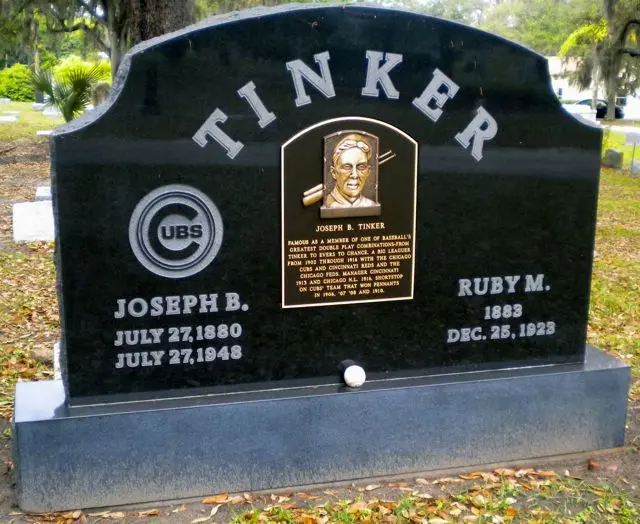
                      On Christmas Day, 1923, Tinker’s wife Ruby committed suicide following an apparent nervous breakdown. In 1926, he was remarried to Mary Ross Eddington of Orlando.

                      “By 1930, he had lost his considerable fortune and actually went on a ten week theatrical tour of the country with a small troupe that included his old team mate, Johnny Evers,” says Perkins. “He spent the rest of his life in and around baseball, and helped convince the Cincinnati Reds and Washington Senators to hold their Spring Training games in Orlando.”

                      Tinker died of complications from diabetes in Orange Memorial Hospital on July 27, 1948, his 68th birthday. He is buried in Orlando’s historic Greenwood Cemetery.

                      It’s been 108 years since the Chicago Cubs last won the World Series Championship, when Tinker played for the team.

                      PDF file(s)