Article Number
158
relevantdate

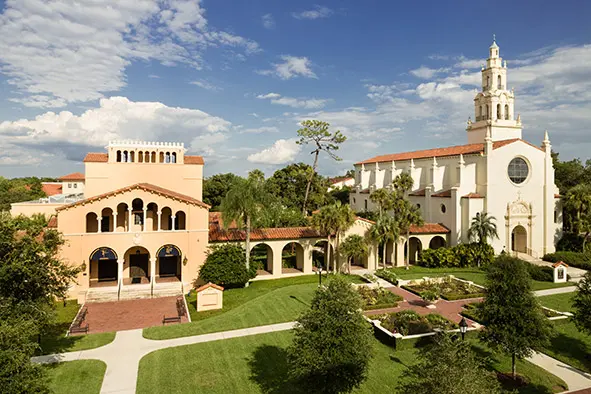
    In the early 1880s, Loring A. Chase and Oliver Chapman bought much of the land that would become Winter Park. Over the next few years a railroad station and several hotels were built, and Winter Park became a popular vacation destination for wealthy northerners.

    Rollins College was built in 1885 by the Congregational Church. The college acquired its current emphasis on the liberal arts under the direction of Hamilton Holt, president of Rollins from 1925 through 1949.

    Winter Park was incorporated in 1887.

    Wealthy benefactors helped contribute to the growth of Winter Park into the twentieth century. Businessman Francis Knowles is remembered in the name of the chapel that is the centerpiece of Rollins College, entrepreneur Franklin Fairbanks has a major road named for him, and industrialist Charles Hosmer Morse is the namesake of a significant museum.

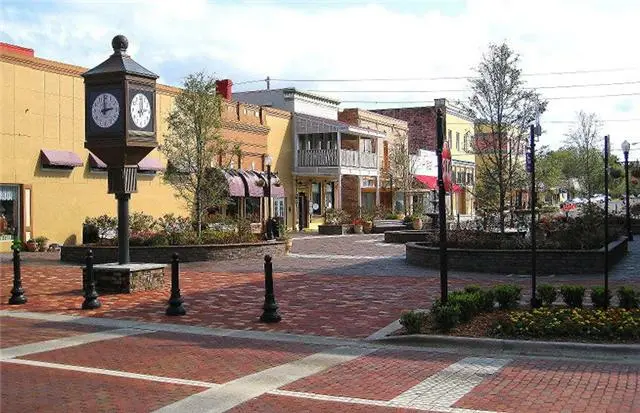
    Artist and interior designer Jeannette McKean founded the Charles Hosmer Morse Museum of American Art in 1942 on the campus of Rollins College. The museum relocated to Welbourne Avenue before finding its permanent home in an expanded facility on the city’s main street, Park Avenue. Morse was McKean’s grandfather.

    Jeannette McKean was married to Hugh F. McKean, a 1930 graduate of Rollins College and an art instructor there beginning in 1932. Hugh McKean served as president of Rollins from 1952 until 1969. He was also director of the Morse Museum from its founding until his death in May 1995. McKean died just two months before the grand opening of the greatly expanded museum.

    Following his graduation from Rollins, McKean was awarded a fellowship to study with Louis Comfort Tiffany, who was a painter and stained glass artist. Tiffany was the son of the famous jewelry store founder.

    “Mr. Tiffany believed very strongly that the more people you could reach with art, the better off everybody would be,” McKean remembered in a 1992 interview. “He thought that it was necessary to know art to live a complete life, or a satisfactory life.”

    Tiffany’s Long Island estate, Laurelton Hall, was destroyed by a fire in 1957. Jeannette and Hugh McKean went there to save Tiffany’s artwork, bringing it back to Winter Park.

    The Charles Hosmer Morse Museum of American Art has the most comprehensive collection of Tiffany’s work to be found anywhere. The collection includes stained glass windows, lamps, candlesticks, paintings, and the reconstructed Tiffany chapel from the 1883 World’s Fair.

    A scenic boat tour departs from a dock on Morse Boulevard. The canals that connect lakes Virginia, Osceola, and Maitland were built by Winter Park’s founders to facilitate the transportation of logs and building materials. One of the most impressive estates that can be seen from the boat is the former home of sculptor Albin Polášek, which is now a museum housing many of the artist’s works. Polášek’s best known work, Man Carving His Own Destiny, depicts a male figure still partially embedded in stone, using tools to free himself from the rock.

    John Tiedtke was another important figure in the cultural development of Winter Park. Tiedtke vacationed in Florida with his family in the 1920s. In the 1930s, he was very successful in the state’s sugar industry, and he moved to Winter Park in 1948.

    The Winter Park Bach Festival was established in 1935. Tiedtke served as president of the event from 1950 until his death in 2004 at the age of 97.

    “The Bach Festival was started by a very dynamic woman, a Mrs. Sprague-Smith, and she did a great job of creating it and getting it going,” Tiedtke remembered in a 1995 interview. “In 1950, she died suddenly. I was on the board, and nobody else on the board wanted the responsibility of trying to run it and keep it going, so I finally agreed to do it. Then, for two or three years, Hugh McKean, the president of Rollins, and I kept trying to find somebody to run it, and we couldn’t. He finally suggested that I just take the title of president because I’d been running it anyway.”

    The Winter Park Bach Festival continues today, featuring a 160 voice choir and an orchestra performing a wide variety of classical music.

    Winter Park remains a haven for culture in Florida.
    PDF file(s)
    Article Number
    157
    relevantdate

      Bob Kealing is probably best recognized in Central Florida as a longtime reporter for WESH Channel 2. He is also the author of four well respected books on Florida history and culture.

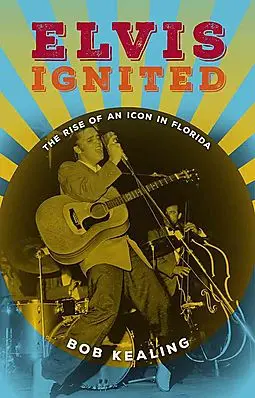
      Kealing will discuss his new book “Elvis Ignited: The Rise of an Icon in Florida,” on Saturday, April 1, at 2:00 pm, at the Library of Florida History, 435 Brevard Avenue, Cocoa. The free presentation is open to the public.

      In his books, Kealing explores the lives of people with strong Florida connections, who each had a significant impact on popular culture.

      “Kerouac in Florida: Where the Road Ends” looks at the life of Beat Generation writer Jack Kerouac, who was living and working in Florida when his most famous works were published. “Calling Me Home: Gram Parsons and the Roots of Country Rock” tells the story of a native Floridian who helped to create a new genre of music. “Life of the Party: The Remarkable Story of How Brownie Wise Built, and Lost, a Tupperware Empire” (the 2016 update of Kealing’s 2008 book “Tupperware Unsealed”) is under contract to be made into a film.

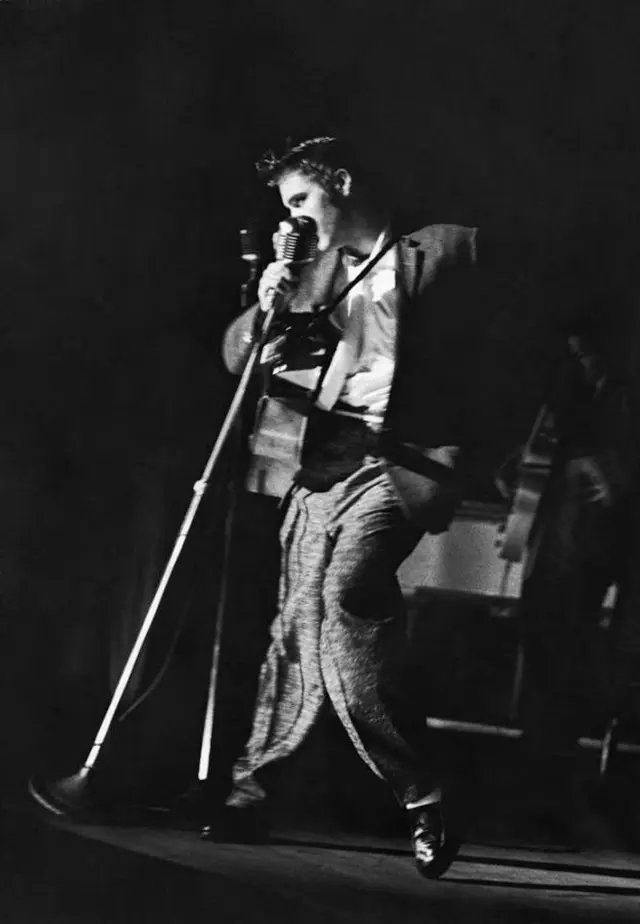
      The new book, “Elvis Ignited: The Rise of an Icon in Florida,” contains fascinating stories about the singer’s early career in the Sunshine State.

      “I became interested in telling the story about young Elvis in Florida because for years I'd been picking up bits and pieces of information about his time here and it fascinated me,” says Kealing. “My interest accelerated while researching my Gram Parsons book because it became apparent Presley really was the Johnny Appleseed of nascent rock and roll in Florida. Turns out Florida and Floridians were crucial to Presley's rise to national prominence. That's why I tell people this book is not just nostalgia, though there's plenty of that in there, too.”

      During a pivotal point in Presley’s career, the future superstar did a series of performances throughout Florida that helped to catapult him onto the national stage.

      “Presley's four Florida tours, two in 1955 and two more in '56, bookend his rise from hillbilly oddity to the unquestioned King of Rock and Roll,” Kealing says. “Presley's last Florida tour in August of '56 marked the dawning of Presleymania, where the 21 year old kid from the Memphis projects burned hotter in Florida than the midday sun in July. This book explains in detail which Floridians spearheaded the fame, helped make it happen, where in Florida Presley's first million-seller was written and first recorded all in the same day.”

      Elvis Presley died in 1977, but his popularity continues today. His influence on more than 60 years of popular music is undeniable. Every year, more than 600,000 people visit Graceland, the singer’s former home in Memphis, Tennessee. The White House is the only private residence to receive more annual visitors.

      “Presley's early days represent a kind of liberation in his fans own lives, which to that point were painted in black and white and dominated by their parents conservative views” says Kealing. “Presley's music gave them an art form, and to a degree, an identity all their own. There's also sadness and tragedy in the Presley story, thanks to poor career choices and the suffocating presence of another former Floridian, his manager Tom Parker. Knowing how Presley struggled later in life and left an unfinished career, binds his fans to him even more closely. More than anything else though, it's the uniqueness of Presley's voice and talent. There's never been anyone like him and likely won't be.”

      Kealing not only documents Florida history and culture, he helps to preserve it. He was instrumental in establishing Jack Kerouac’s Orlando home as the site of an ongoing writers-in-residence program. He worked to make Derry Down, the Winter Haven venue where Gram Parsons got his start, named a historic landmark and revitalized as a performance venue.

      “I also hope to see this research used as the provenance to recognize the historic importance of several Florida sites in the Presley story,” Kealing says. “I'm talking about places tied to Presley's early time as a live performer. Florida was Presley's breakout state and there are places we could recognize as important mileposts along the way.”

      PDF file(s)
      Article Number
      156
      relevantdate

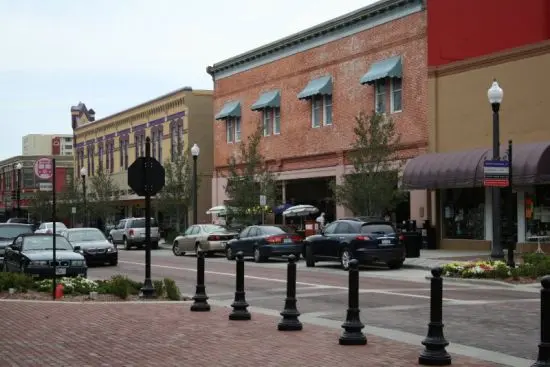
        The three block area of downtown Sanford has more than 20 buildings listed in the National Register of Historic Places. Most of the buildings were constructed in the late 1800s, and the newest one was built in 1923. All of the buildings in Sanford’s downtown historic district are remarkably well preserved.

        The residential area directly adjacent to downtown Sanford is also designated as an historic district, with many early twentieth century houses listed in the National Register of Historic Homes.

        Sanford has a turbulent history dating from the 1830s, with periods of prosperity alternating with prolonged periods of economic hardship.

        Like many Florida towns, Sanford was built around a fort constructed during the Second Seminole War. Fort Mellon was constructed at the site of Camp Monroe in 1837, named after Captain Charles Mellon, who died defending the camp. Pioneer settlers building homes nearby called their community Mellonville.

        As a port for commercial steamboat traffic on the St. Johns River in the 1840s, Mellonville was the major distribution point for building materials and other goods needed by settlers throughout Central Florida.

        Henry Sanford came to the area following the Civil War.

        “When Henry Sanford came here in 1870, he was looking for an investment during the Reconstruction period, and he had been advised that Florida was a good investment,” says Alicia Clarke, curator of the Sanford Museum. “He was from Connecticut, and he was a diplomat who had lived overseas most of his life. He landed at Mellonville, found out there was a large former Spanish land grant to the west of Mellonville, which he purchased for eighteen thousand dollars. It was over twelve thousand acres, and he founded the town of Sanford, which was a planned city drawn out on paper.”

        As a port city and by 1880 a railroad terminal, Sanford prospered in the late nineteenth century. As a transportation hub for several decades, Sanford was actually a more prominent and prosperous town than its neighbor to the south, Orlando. Sanford called his city “The Gateway to South Florida.”

        “We had a thousand citizens very early on, which for that time period was a lot,” Clarke says. “We became very quickly the largest inland city in Florida, and also very quickly we were the fourth largest city in Florida.”

        After flourishing initially, the city of Sanford faced a series of economic ups and downs.

        In September 1887, a bakery in downtown Sanford caught fire and destroyed much of the town. Brick buildings were constructed to replace the burnt wooden structures, and many of them still stand.

        The Big Freeze of 1894-95 destroyed the citrus industry in Sanford, but many farmers turned to celery as their primary crop. By the early twentieth century Sanford was exporting $8 million worth of celery per year, earning the nickname “Celery City.”

        Henry Sanford lost his fight to have the Orange County seat moved from Orlando to Sanford, but when Seminole County was created in 1913, Sanford was named its county seat.

        “Things changed when the automobile was invented,” says Clarke. “Henry Sanford had no way of knowing that was going to happen. The riverboat ceased to be quite as important.”

        The Great Depression impacted Florida several years earlier than the rest of the country, and Sanford was nearly crippled. The city was revitalized in 1942 when the Navy built an air station in Sanford, but the town suffered when the station moved to Orlando in 1968.

        Historic preservation efforts inspired by the bicentennial of the United States in 1976 resulted in the gradual revitalization of Sanford.

        “A lot of comminutes of our size were trying to find something to do to revive interest in their local history,” Clarke says. “What they did downtown was to put the commercial district on the National Register. They hired some researchers to go and research the oldest buildings downtown, and they were submitted to Washington, and put on the National Register. Then a local district was created around those buildings to protect the entire downtown commercial area through special zoning and ordinances. That really started the thinking of revitalizing downtown.”

        Historic preservation efforts in Sanford continue to the present. The results provide a glimpse into Florida’s past.

        PDF file(s)
        Article Number
        155
        relevantdate

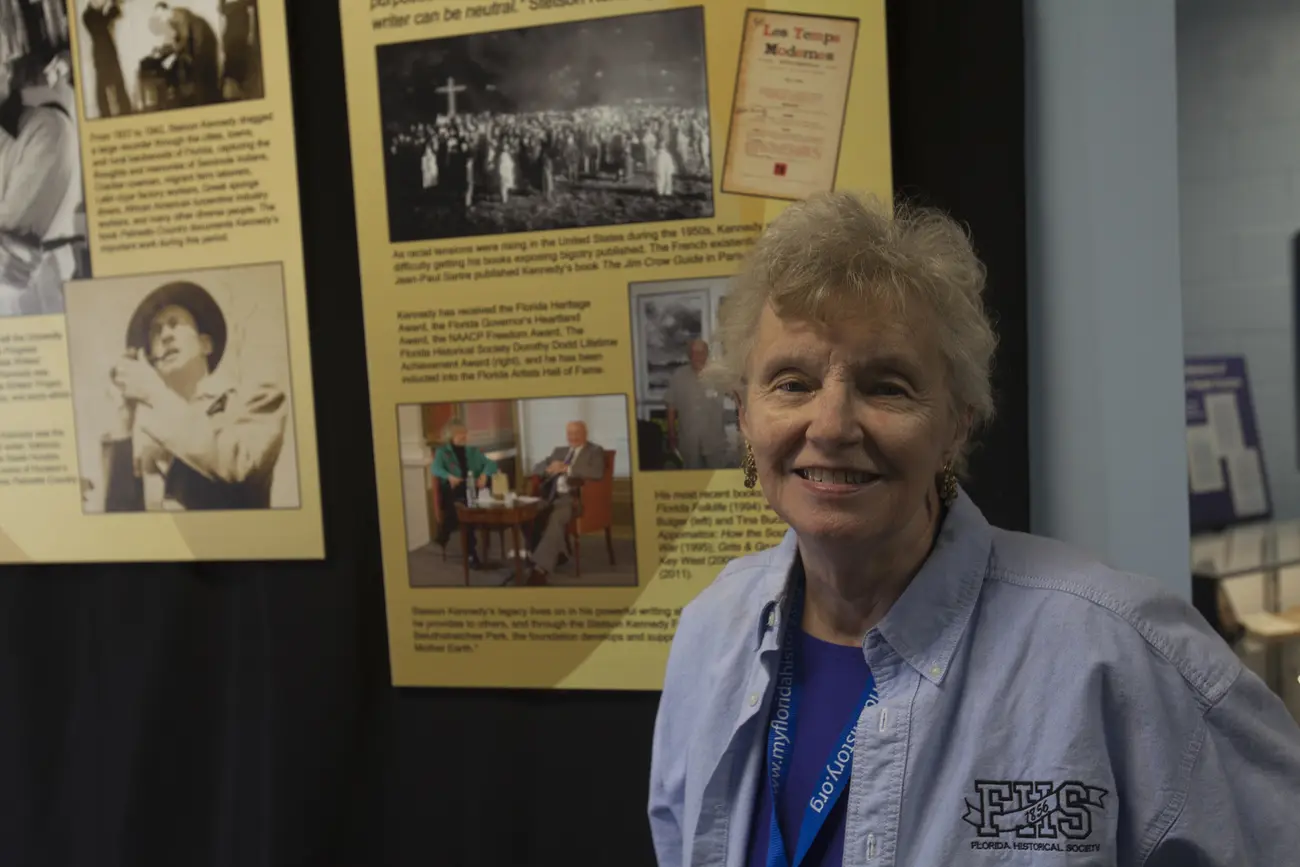
          The third and final presentation in the “Second Saturdays with Stetson Series” is Saturday, March 11, at 2:00 pm, at the Brevard Museum of History and Natural Science, 2201 Michigan Avenue, Cocoa. The free talk, presented in conjunction with the temporary exhibition “Stetson Kennedy’s Multicultural Florida” will feature Kennedy’s widow, author and educator Sandra Parks.

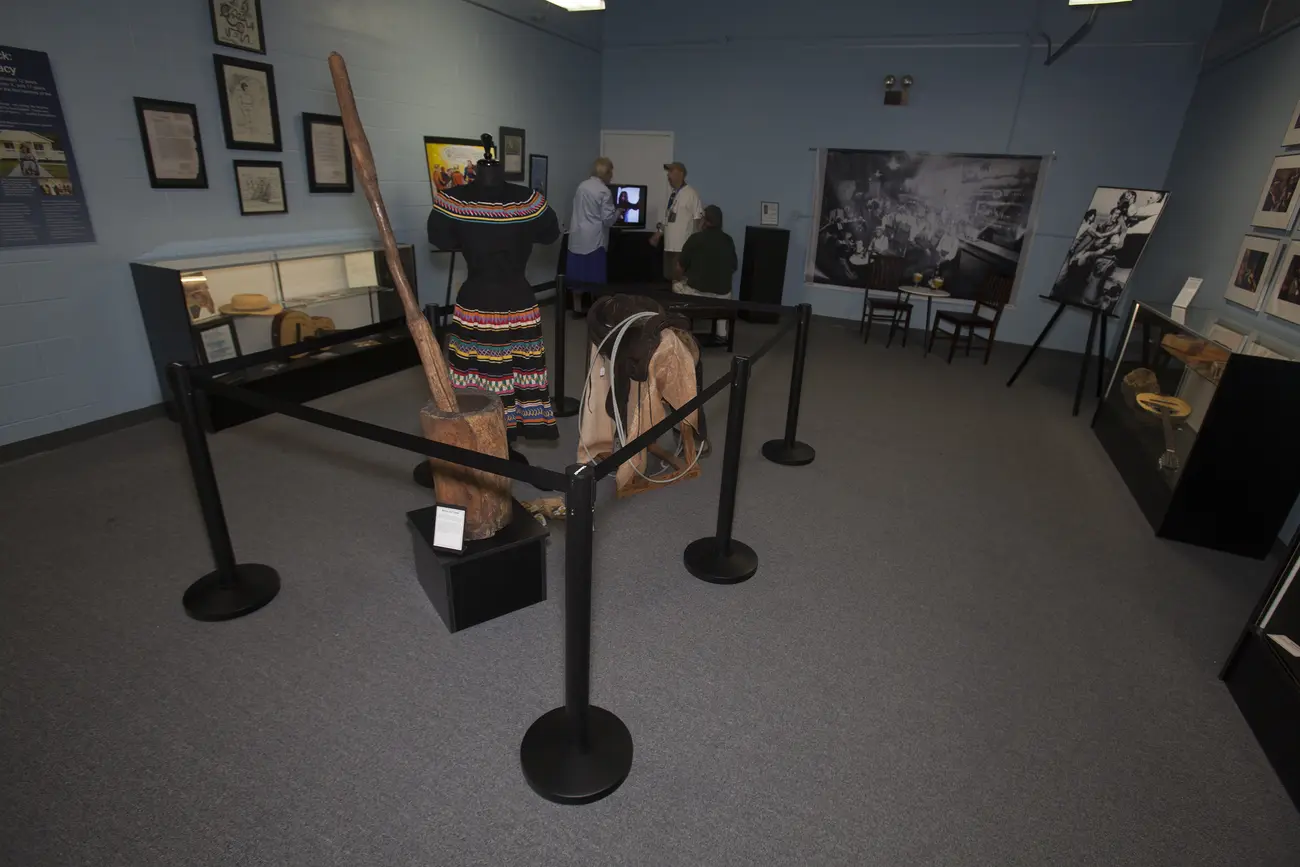
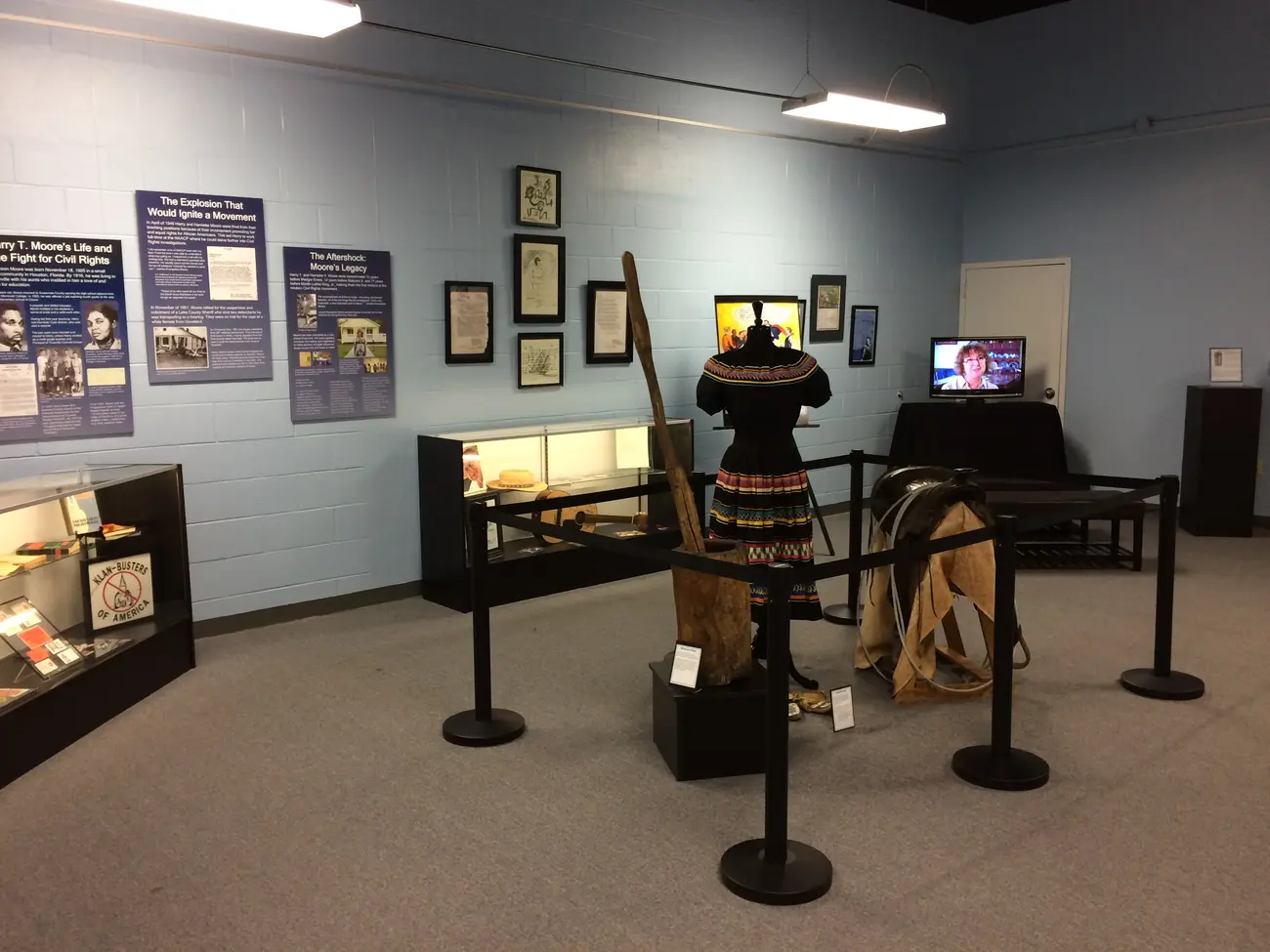
          The items on display in the exhibition “Stetson Kennedy’s Multicultural Florida” include artifacts and images reflecting the diverse Florida communities that folklorist, author, and activist Stetson Kennedy documented throughout the state in the 1930s and ‘40s. Kennedy interviewed Greek sponge divers in Tarpon Springs, Latin cigar rollers in Ybor City and Key West, African American turpentine industry workers, Cracker cowmen, Seminole Indians, and many others.

          Also on display are personal items such as Kennedy’s hat, his typewriter, and a letter he received from Dr. Martin Luther King, Jr.

          In the 1940s and ‘50s, Kennedy infiltrated the Ku Klux Klan, exposing their secret activities. He continued fighting for equal rights for all people until his death in 2011.

          The note from Dr. King, on letterhead from the Southern Christian Leadership Conference, is dated November 3, 1965. In the letter, King thanks Kennedy for his work in “our struggle for racial justice,” and his “great moral support, not only to myself, but to our entire staff.” King goes on to tell Kennedy that, “You have my heartfelt appreciation for such a worthwhile contribution to the Freedom Movement.”

          Visitors to the Brevard Museum are fortunate to be able to see the letter.

          “About a month before Stetson died, I asked him ‘where did you put the letter from Dr. Martin Luther King?’” says Parks. “I had begged him for the eight years we were together to please put it in the safety deposit box, and he would never do that. About a month before he died, he pointed to his legal documents file and said, ‘it’s in there.’”

          A few days after Kennedy died, Parks began the daunting task of going through stacks of unorganized papers that her husband had saved. She started with the box that was supposed to contain the letter from Dr. King. The letter was not there.

          “I had two other people go through the box, just in case I could have missed it,” says Parks. “Somewhere in with the takeout menus and the old phone bills there was a letter from Dr. Martin Luther King we hadn’t found yet.”

          The letter was eventually discovered among copies of various newspaper articles, several drafts of an unpublished autobiography, and other personal correspondence.

          “People think that this is some kind of scholarly exercise, but it is an endeavor for patience,” Parks says.

          Eventually, Parks had fifteen years of accumulated papers sent to the University of Florida to be sorted and archived. That collection is being merged with papers already archived at the University of South Florida.

          “In 1996, Stetson sold his then papers to the University of South Florida, along with many of his foreign language edition books that are quite rare and things we cannot find anymore,” says Parks.

          Some foreign language editions of Kennedy’s books are currently on display at the Brevard Museum.

          The entire collection of Kennedy’s papers is now under one roof at the University of Florida in Gainesville.

          “Stetson had been a student at the University of Florida,” says Parks. “He and Sam Proctor, who started the oral history center there, were friends years ago, back when they were both college boys. Most significantly, the WPA papers are there, papers of Zora Hurston’s are there, papers of Marjorie Rawlings are there.”

          Kennedy was a pioneer of oral history, had worked for the WPA Florida Writers Project, was supervisor of author Zora Neale Hurston for a time, and took a class at UF from Pulitzer Prize winner Marjorie Kinnan Rawlings.

          “Stetson had hoped that his papers would go to the University of Florida,” says Parks.

          The Florida Historical Society, which operates the Brevard Museum of History and Natural Science, assembled the exhibition “Stetson Kennedy’s Multicultural Florida” with the assistance of Sandra Parks, the University of Florida, the Florida State Archives, and private collectors.

          The Brevard Museum will display the exhibition through May.

          PDF file(s)
          Article Number
          154
          relevantdate

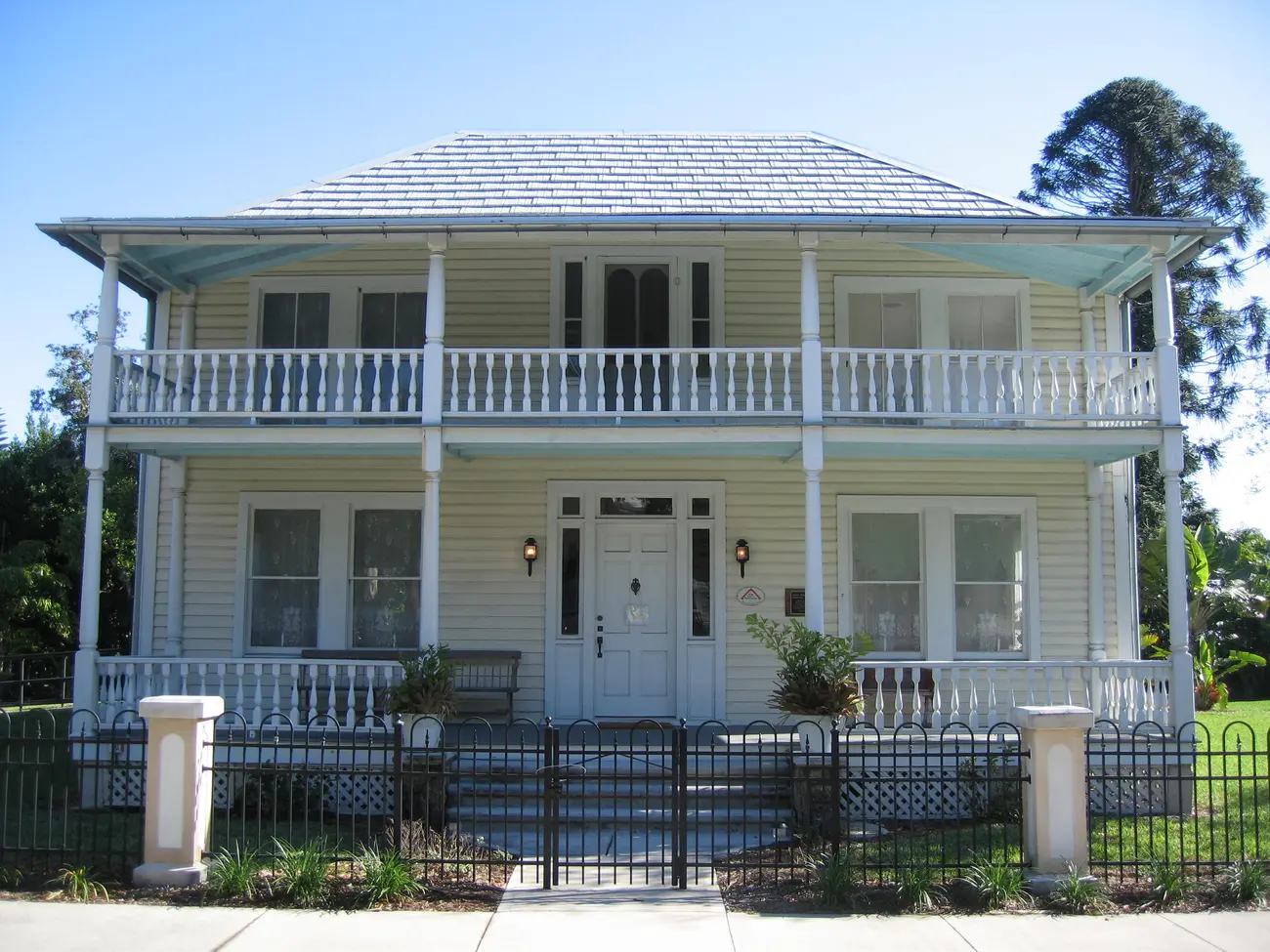
            The Historic Rossetter House Museum and Gardens, 1320 Highland Ave., Eau Gallie, is hosting the presentation “Zora in Brevard,” Saturday, March 4, at 10:00 am and 2:00 pm. The $15 ticket includes a discussion about Zora Neale Hurston’s life and work, a portrayal by actress Lila Marie Hicks, and a tour of the Rossetter House. Reservations are available at 321-254-9855.

            On July 9, 1951, writer, folklorist, and anthropologist Zora Neale Hurston wrote in a letter to literary agent Jean Parker Waterbury: “Somehow, this one spot on earth feels like home to me. I have always intended to come back here. That is why I am doing so much to make a go of it.”

            It would be natural to assume that Hurston was writing about her adopted hometown of Eatonville, Florida. Growing up in Eatonville, the oldest incorporated municipality in the United States entirely governed by African Americans, instilled in Hurston a fierce confidence in her abilities and a unique perspective on race. Eatonville figures prominently in much of Hurston’s work, from her powerful 1928 essay How It Feels To Be Colored Me to her acclaimed 1937 novel Their Eyes Were Watching God.

            Since 1990, the Association to Preserve the Eatonville Community has celebrated their town’s most famous citizen with the annual Zora Neale Hurston Festival of the Arts and Humanities. Hurston will forever be associated with the historic town of Eatonville.

            Hurston, however, was not writing about Eatonville when she spoke of “the one spot on earth [that] feels like home to me” where she was “the happiest I have been in the last ten years” and where she wanted to “build a comfortable little new house” to live out the rest of her life.

            Unknown to most, Zora Neale Hurston called Brevard County “home” for some of the happiest and most productive years of her life.

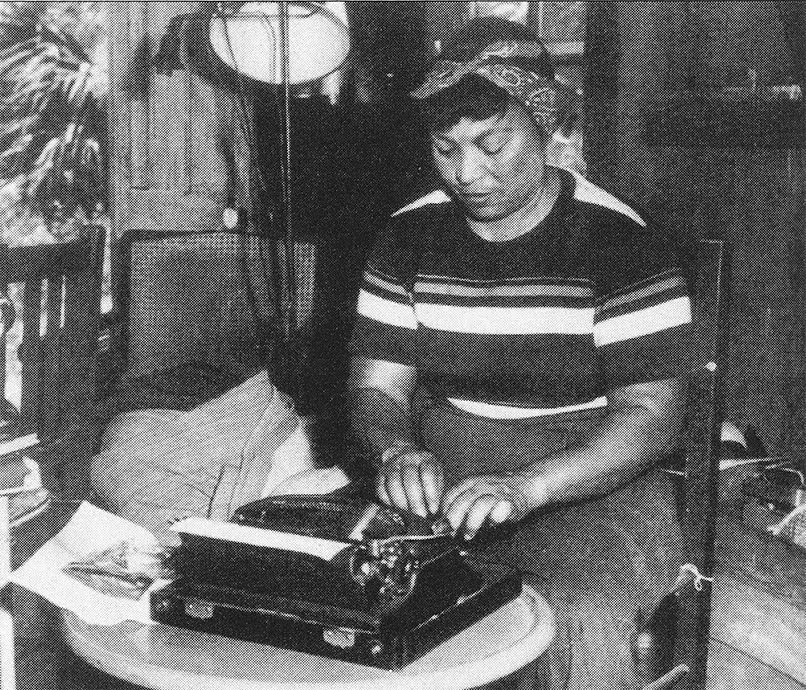
            Hurston first moved to Eau Gallie in 1929. Here she wrote the book of African American folklore Mules and Men (published in 1935), documented research she had done in Florida and New Orleans to fill an entire issue of the Journal of American Folklore, and made significant progress on some of her theatrical pieces.

            After returning to New York in late 1929, Hurston came back to Eau Gallie in 1951, moving into the same cottage where she had lived previously. While living in Eau Gallie between 1951 and 1956, Hurston staged a concert at Melbourne High School (its first integrated event); worked on the project that became her passion, the manuscript for Herod the Great; covered the 1952 murder trial of Ruby McCollum (an African American woman who killed her white abuser); and wrote an editorial for the Orlando Sentinel arguing against the Brown v. Board of Education decision. Her controversial disapproval of public school integration reflected her belief in the need to preserve African American culture and communities.

            While working as a librarian at the Technical Library for Pan American World Airways on Patrick Air Force Base, Hurston was unable to purchase her much loved Eau Gallie cottage, so she moved to an efficiency apartment in Cocoa. In June, 1956, Hurston moved from the apartment to a mobile home on Merritt Island. She was fired from her job in May 1957, because she was “too well-educated for the job.” She then left her happy life in Brevard County to take a job at the Chronicle in Fort Pierce, where she died three years later.

            Zora Neale Hurston is remembered as a controversial figure of the Harlem Renaissance, a talented anthropologist and collector of folklore, and a beloved novelist. While she will always be closely associated with Eatonville, Brevard County is where Hurston spent some of her happiest and most productive years, in her cottage on the northeast corner of Guava Avenue and Aurora Road in Eau Gallie, just blocks from the Historic Rossetter House Museum.

            Hurston returns to Eau Gallie this Saturday in the form of actress Lila Marie Hicks.

            “It’s one thing to read the story of Zora Neale Hurston collecting work songs,” says Hicks, “but to hear her singing a line song as she struts onto the stage does more than any letters on a page could ever do."

            PDF file(s)
            Article Number
            153
            relevantdate

              There is a road in downtown Orlando called Division Street. It has traditionally been the dividing line between the predominately white community to the east, and the African American community to the west.

              As downtown Orlando was established in the late 1800s, a separate but parallel black community emerged. By the early twentieth century, the Parramore neighborhood included several blocks of prosperous black owned businesses including a tailor shop, a theater, and attorney’s offices. There were African American physicians, dentists, photographers, and other professional people. Churches were integral to the community.

              In 1929, a prominent black physician named William Monroe Wells opened the Wells’Built Hotel on South Street.

              “He came here in 1917 from Fort Gaines, Georgia, and records show that by 1921 he was listed in city directories as a physician and owner of a ‘notions’ store, and by 1926 he obtained a permit from the City of Orlando to build a hotel,” says former Florida State Senator Geraldine F. Thompson, founder of the Association to Preserve African American Society, History, and Tradition (PAST, Inc.) “During that time, when African Americans visited the Central Florida area, they did not have lodging available to them at any of the major hotels in the area because of segregation.”

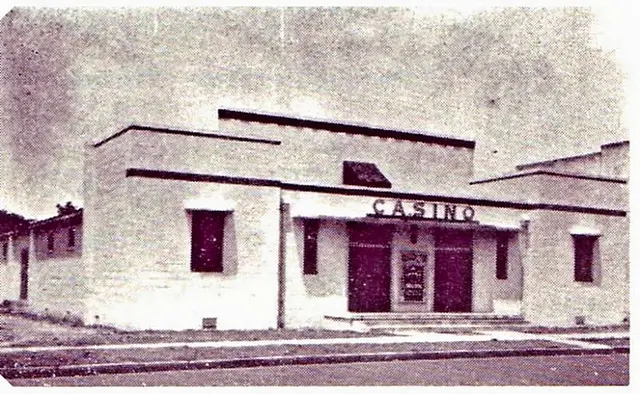
              Directly next door to the Wells’Built Hotel, Dr. Wells built the South Street Casino. This was not a gambling establishment, but a community center. There was a basketball court inside, and people held graduations, wedding receptions, and other gatherings at the venue.

              Today, the Amway Center on South Street hosts popular musical acts. In the mid-twentieth century, it was the much smaller South Street Casino that brought well known African American performers to the area. Musicians including Erskine Hawkins, Cab Calloway, Ella Fitzgerald, Louis Armstrong, Ray Charles, B.B. King, and many others would perform at the South Street Casino and stay next door at the Wells’Built Hotel.

              Legendary drummer David “Panama” Francis played in the South Street Casino many times. Francis was born in Miami in 1918, and was playing in nightclubs by age 13. Shortly after arriving in New York in 1938, Francis played with Lucky Millinder’s Orchestra for six years at the Savoy Ballroom in Harlem. He played and recorded with many great artists of the day, including Duke Ellington, John Lee Hooker, James Brown, Buddy Holly, the Four Seasons, and the Platters.

              Before his death in 2001, Francis remembered playing in the South Street Casino.

              “I played there about twice a year,” Francis said. “The old timers remember the band that used to come up from Miami, George Kelley’s band. That place was so hot. Until, I mean the perspiration was all down in my shoe. I could hear when I walked, I’d hear the squish, squish, squish of the water that was in there ‘cause, you know, there was no air conditioning or nothing like that. And it’d be packed.”

              The South Street Casino had a creative marketing strategy to entice people to attend the Saturday night dances there.

              “Back then, you know, there was no radio and TV and all that, so what happened—if the dance would, say, start at nine o’clock, they’d let all of the people in [earlier] for free to listen to the band, and you’d play about half an hour of music,” said Francis. “All of the good dancers would be standing around—who, you know, were the critics. If they gave the nod that, you know, that the band is all right, they’d let all of the people out—and then they had to pay to come in and hear the band. So that’s how they used to do. A lot of times they would get on a truck and ballyhoo.”

              In the second half of the twentieth century, the Parramore neighborhood entered a period of economic and social decline. The South Street Casino burned down in 1987, and the Wells’Built Hotel was abandoned and threatened with demolition.

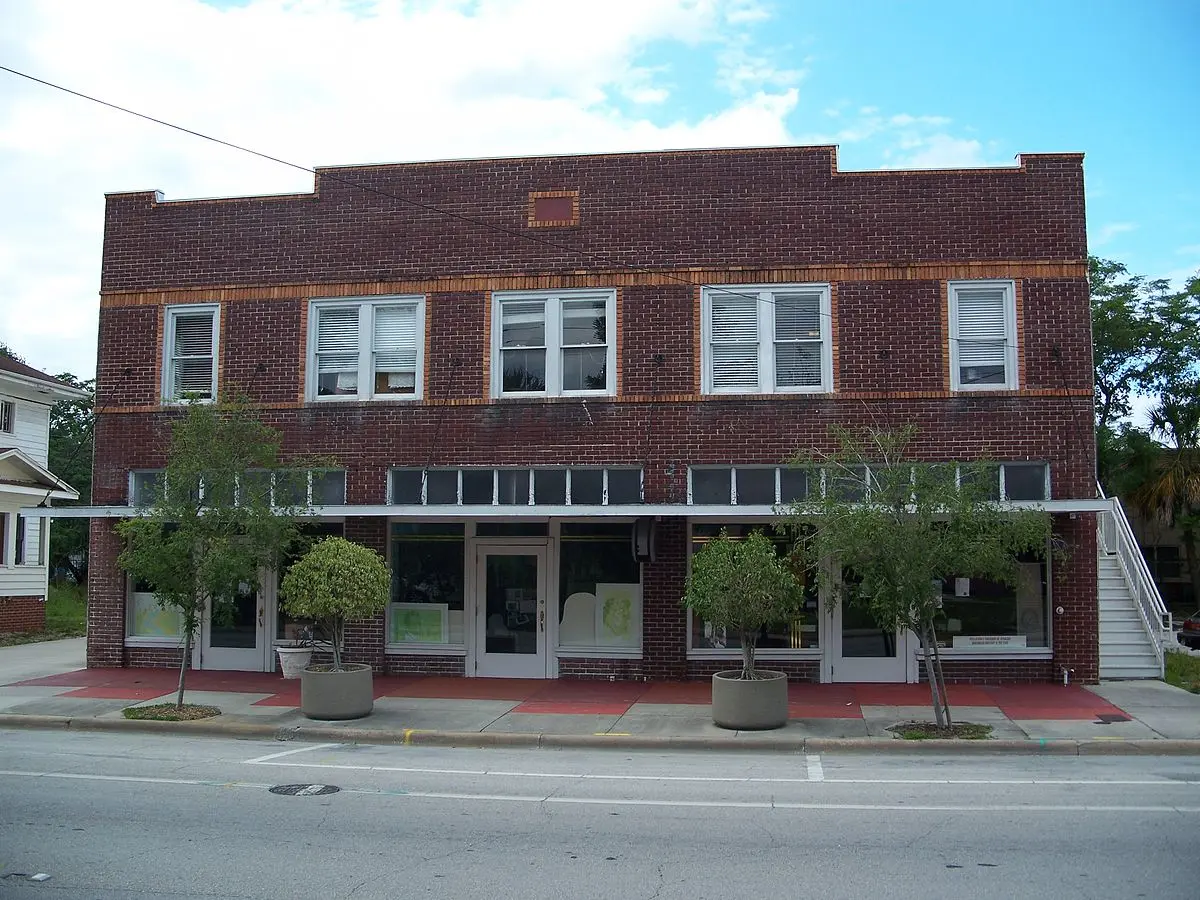
              In 2001, the building was refurbished by the Association to Preserve African American Society, History and Tradition, and transformed into the Wells’Built Museum of African American History and Culture. The museum is part of a larger effort to improve and revitalize the Parramore neighborhood.

              PDF file(s)
              Article Number
              152
              relevantdate

                Imagine you are on a boat traveling south along Florida’s east coast. A brief but violent storm hits and your boat sinks. You manage to swim to shore. Exhausted from fighting with the sea and believing you are now safe, you fall asleep on the beach.

                When you wake up, you realize your ordeal has just begun.

                The hot Florida sun has already burned your skin. You are covered with bites from sand fleas and mosquitoes. You stumble inland to find undeveloped scrubland as far as the eye can see, and no source of fresh water in sight.

                It’s the late 1800s, and the entire population of Florida is less than 270,000 people.

                Luckily for you, one of those people is the keeper of a remote House of Refuge, and he is patrolling the shoreline nearby. He will find you soon, and take you to safety.

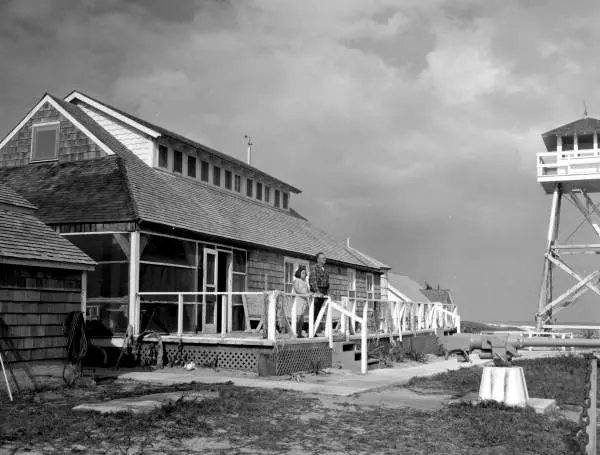
                Ten Houses of Refuge were built by the U.S. Life Saving Service between 1876 and 1886 to help shipwreck survivors. They were exclusively built in Florida.

                Sandra Thurlow has written a series of books about the history of the Indian River region of Florida, including “Gilbert’s Bar House of Refuge: Home of History.” Her new book, co-authored with Timothy Dring, is “U.S. Life Saving Service: Florida’s East Coast.”

                “It’s surprising how sparsely it was populated,” says Thurlow. “They called it ‘a howling wilderness,’ especially the lower east coast. So when shipwrecks happened, the survivors usually came to shore and got to survive that far, but then their life was in question because there was no way to find civilization to get food or water, and they didn’t know which way to go. So after storms, keepers of the Houses of Refuge would walk in either direction, and look for survivors.”

                Sumner Increase Kimball led the U.S. Life Saving Service from its creation in 1871, until it merged with the U.S. Revenue Cutter Service in 1915, to form the U.S. Coast Guard. Under Kimball’s direction, the activities of the Houses of Refuge were well documented.

                “He was a brilliant bureaucratic supervisor,” says Thurlow. “There’s voluminous paperwork surviving.”

                While written records for the Houses of Refuge are plentiful, photographs are not. Thurlow and Dring managed to assemble hundreds of photographs for their book from a variety of sources.

                “Each one is precious,” Thurlow says.

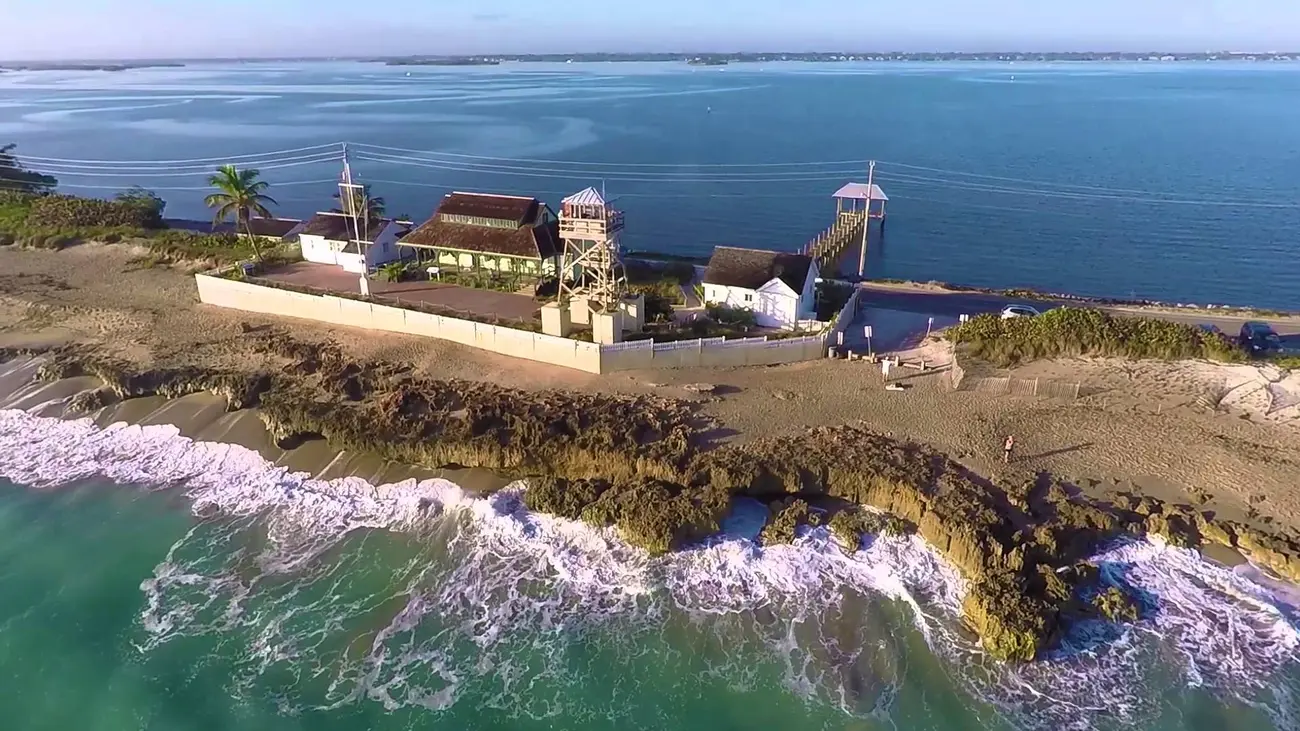
                Of the 10 built, Gilbert’s Bar House of Refuge in Stuart is the only one still standing. It’s on the National Register of Historic Places and is preserved as a museum.

                “Coincidentally, the most exciting time ever in a House of Refuge was right there, at Gilbert’s Bar,” says Thurlow. “In October, 1904, there were two shipwrecks back to back. There were 22 men put up in the House of Refuge as a result of those shipwrecks. There were quite a few casualties involved. One (of the shipwrecks) has become an underwater archaeological site right off of the Gilbert’s Bar House of Refuge. People dive on it, and on a calm day you can see a bit of the wreckage from the House of Refuge porch. Two ships, the Georges Valentine and the Cosme Calzado wrecked within 24 hours.”

                Shipwrecks didn’t happen every day, of course. The Houses of Refuge were mostly occupied by the families of the keepers, and daily life could be slow paced. Thurlow tells many stories of individuals associated with the Houses of Refuge, but her favorite is about a shipwreck survivor named Axel Johansen.

                “He was Norwegian and he was in a shipwreck off of Chester Shoal House of Refuge,” says Thurlow. “He washed ashore with little life left in him. He passed out as soon as he got to the sand. Two daughters of the House of Refuge came and discovered him, and told their parents, and they nursed him back to health. He went back to Norway. It was the days of sailing ships dwindling, and his life had changed. He remembered Florida and the good reception and care he got on Cape Canaveral, and he came back and married one of the daughters.”

                After World War II, Florida’s coastline was becoming much more populated, and the Houses of Refuge went out of service.

                PDF file(s)
                Article Number
                151
                relevantdate

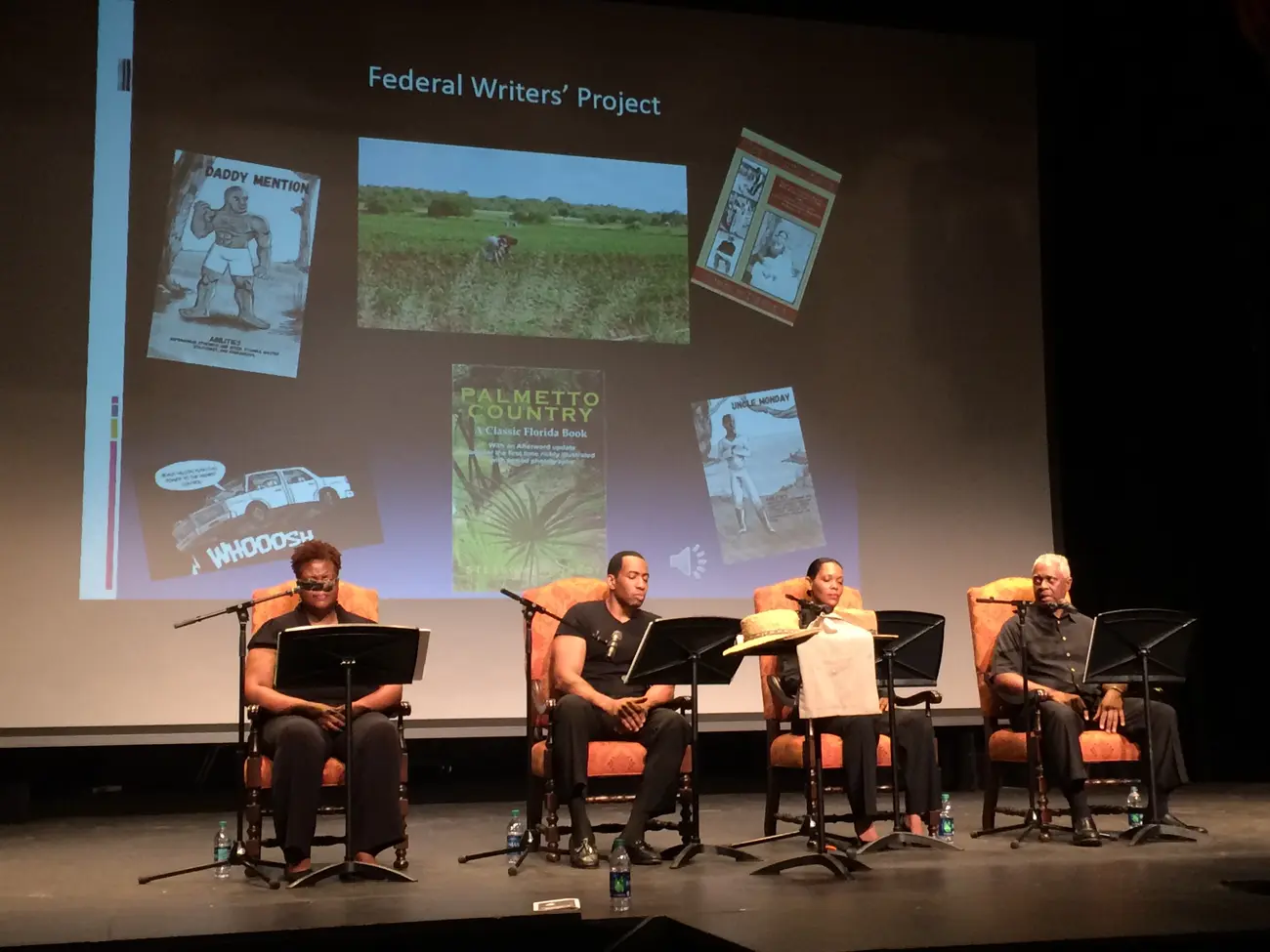
                  Cultural figures from Florida history including Stetson Kennedy, Zora Neale Hurston, and Harry T. Moore will come to life in a performance by the Young Minds Building Success Readers Theater from Jacksonville.

                  The original production “Stetson Kennedy Legacy: Man in the Mirror” will be performed at the Brevard Museum of History and Natural Science, 2201 Michigan Avenue, Cocoa, Saturday at 2:00 pm. The presentation is free and open to the public.

                  Young Minds Building Success Readers Theater is part of a larger effort to provide educational outreach.

                  “Young Minds Building Success was formed in an endeavor to encourage the individual potential for children and young adults, assist in the needs of families and communities, promote a realistic link between educational services and the needs of the business community, partner with educators, businesses, community leaders, and other organizations,” says executive director Tangela Floyd.

                  The free performance of “Stetson Kennedy Legacy: Man in the Mirror” is possible because of sponsorship provided by the Stetson Kennedy Foundation.

                  “Our mission is to do all we can to help carry forward mankind’s unending struggle for human rights in a free, peaceful, harmonious, democratic, just, humane, bounteous and joyful world, to nurture our cultural heritages, and to faithfully discharge our commitment of stewardship over Mother Earth and all her progeny,” says foundation director and Kennedy’s widow, Sandra Parks.

                  Saturday’s performance is part of the “Second Saturdays with Stetson” series being presented in conjunction with the temporary exhibit “Stetson Kennedy’s Multicultural Florida” at the Brevard Museum of History and Natural Science. The exhibition commemorates Kennedy’s documentation of our state’s diverse cultural heritage, and his work to foster equality for all.

                  Folklorist, author, and activist Stetson Kennedy lived from 1916 to 2011.

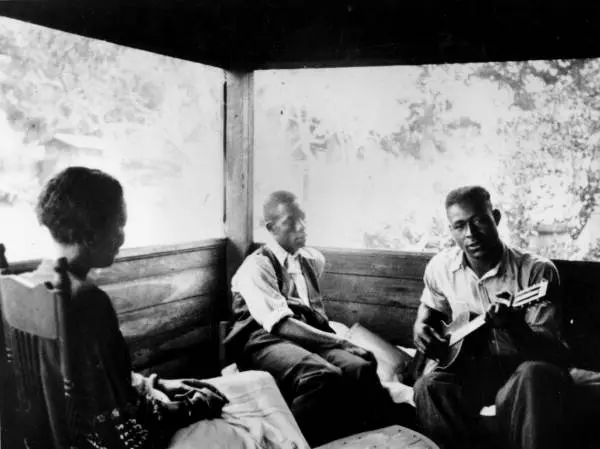
                  From 1937 to 1942, Kennedy traveled throughout Florida recording the oral histories, folktales, and work songs of the state’s diverse population. He spoke with Cracker cowmen, Seminole Indians, Greek sponge divers, Latin cigar rollers, African American turpentine still workers, and many others.

                  This work resulted in Kennedy’s book “Palmetto Country,” originally published in 1942.

                  The exhibition includes personal items such as Kennedy’s typewriter, hats, and the handwritten lyrics to the Woody Guthrie song “Stetson Kennedy.” An interview filmed with Kennedy in 2008 is part of a video display.

                  Kennedy worked for the Works Project Administration’s Florida Writers Project as head of the unit on folklore, oral history, and socio-ethnic studies.

                  “Well, it was the Great Depression, for one thing, and I didn’t have a job along with tens of millions of other Americans,” Kennedy said in 2008. “At the same time, President [Franklin Delano] Roosevelt had organized something called the Federal Writers Project, and I thought this would be an opportunity for a twenty-one-year-old to start a writing career, so I signed up for the Florida Writers Project.”

                  In addition to being a folklorist and author, Kennedy was a social activist. In the 1940s he risked his life by infiltrating the Ku Klux Klan and exposing their secrets. Using the name John Perkins, Kennedy was able to gather information that helped lead to the incarceration of a number of domestic terrorists. He wrote about his experiences in the 1954 book “I Rode with the Klan,” which was later republished as “The Klan Unmasked.”

                  “When I went overseas some years later, I thought I’d get away from my nightmares, you know, of being caught,” Kennedy said. “But in Paris, it was raining frequently, and the traffic cops wore white rubber raincoats with capes and hoods, and their hand signals were very much like the Klan signals, so I kept on having nightmares.”

                  Kennedy continued working until his death in 2011, at the age of 94. His last book, “The Florida Slave,” was published posthumously. His other books include “Southern Exposure,” “The Jim Crow Guide: The Way It Was,” “South Florida Folklife,” “After Appomattox: How the South Won the War,” and “Grits and Grunts: Folkloric Key West.”

                  “Most people are disgusted when they see or hear about prejudice and injustice,” says Tangela Floyd, director of the production “Stetson Kennedy: Man in the Mirror.” “The difference between Stetson and most people is, he did something about it. Readers Theater is our small way of helping to continue his legacy.”

                  PDF file(s)
                  Article Number
                  150
                  relevantdate

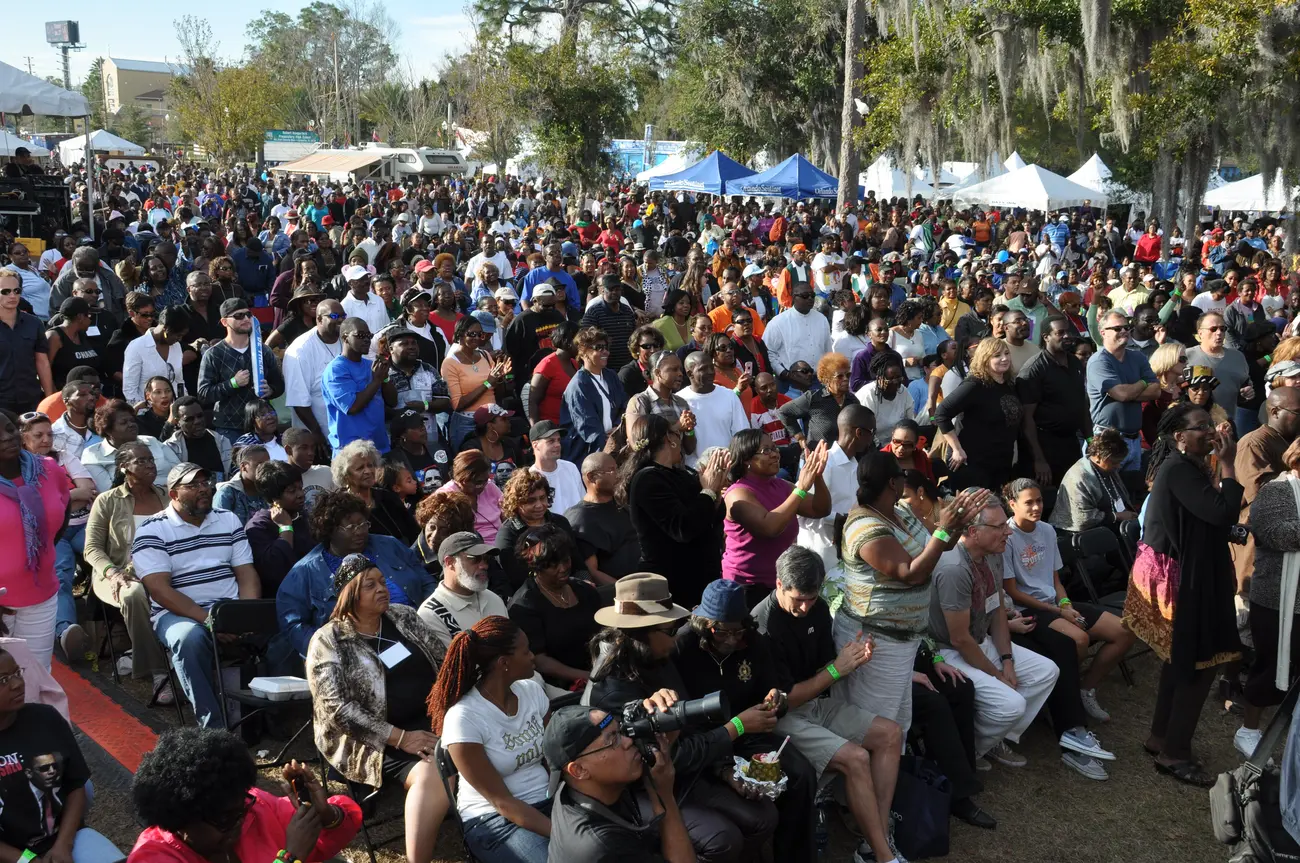
                    The 28th annual Zora Neale Hurston Festival of the Arts and Humanities was held January 21-29.

                    The event was presented by the Association to Preserve the Eatonville Community, and included a series of presentations called “Communities Conference: Civic Conversations Concerning 21st Century American Life in Communities of Color” in venues at Rollins College and Eatonville.

                    Elizabeth Van Dyke performed in “Zora Neale Hurston: A Theatrical Biography” at the Dr. Phillips Center for the Performing Arts in Orlando, and the ZORA! Golf Tournament was held at Metro West Golf Course. There was a tour of yards and gardens in Historic Eatonville.

                    The three day Outdoor Festival portion of the event featured vendors selling original arts and crafts, food vendors with fried fish and other festival food, and musical performances throughout each day including headliners The Whispers, and Jonathan Butler & Friends.

                    Eatonville is the oldest incorporated African American municipality in the United States. Growing up in the all black town had a profound effect on Zora Neale Hurston’s attitudes about race that can be seen in her work.

                    “We say that Zora Neale Hurston and the Eatonville community are two sides of the same hand,” says N.Y. Nathiri, executive director of the Association to Preserve the Eatonville Community. “For Zora Neale Hurston, Eatonville represents the quintessential cultural impact that people of African ancestry, particularly rural southern people in this country, contribute to the culture of the United States.”

                    In the 1930s and ‘40s, writer, folklorist, and anthropologist Zora Neale Hurston was a celebrated figure of the Harlem Renaissance. Hurston is best remembered for her 1937 novel “Their Eyes Were Watching God,” the story of Eatonville resident Janie Crawford and her attempts at self-realization.

                    “’Their Eyes Were Watching God’ is history, it’s fiction, it’s pathos, it’s tragedy, all rolled up together in one incredible literary gem,” says Florence Turcotte, literary manuscripts archivist at the University of Florida’s P.K. Yonge Library of Florida History. “Making history come alive is sort of what I like to do, and that’s what excites me about Zora, is that she fictionalized real life and said a lot about the human condition, and a lot about life in Florida during her stay here.”

                    Hurston’s other novels include “Jonah’s Gourd Vine,” the story of an unfaithful man with an understanding wife; “Moses: Man of the Mountain,” a retelling of the biblical story of Moses; and “Seraph on the Suwanee,” Hurston’s only book that features white people as main characters. Hurston also wrote dozens of short stories, essays, and dramatic works.

                    Hurston’s literary career began even before she graduated from Barnard College in 1927. In 1925, her short essay “Spunk” was included in a respected anthology called “The New Negro.” While attending college in New York, Hurston worked with Harlem Renaissance contemporaries including Langston Hughes and Wallace Thurman on the literary magazine “Fire!”

                    After earning her Bachelor of Arts degree in anthropology, Hurston continued her graduate studies at Columbia University. As an anthropologist who studied under the renowned Franz Boas, Hurston published two collections of folklore. “Tell My Horse” looks at life in Haiti and Jamaica, including the practice of Voodoo. She wrote the book “Mules and Men” while living in Brevard County, in Eau Gallie.

                    “The book ‘Mules and Men’ was published in 1935, and was essentially a non-fiction account of Hurston’s adventures and experiences as a folklorist and anthropologist, in the late 1920s and early 1930s,” says Virginia Lynn Moylan, author of the book “Zora Neale Hurston’s Final Decade.” “The first section is devoted to her experiences in Eatonville collecting folklore, and includes 70 of her glorious folktales, including ‘Why Women Always Take Advantage of Men.’ The second section covers the period that she did research in New Orleans, into Hoodoo religion and practices. Today, it is still considered the preeminent collection of African American folklore.”

                    By the time Hurston died in 1960, she was broke, forgotten, and her books were out of print. Today, she is recognized as an important writer whose work is taught in classrooms around the world.

                    “Work that is truly of merit, lives,” says N.Y. Nathiri. “Today, Zora Neale Hurston’s work, her literature, her genius, is acknowledged and celebrated throughout the literary world.”

                    PDF file(s)
                    Article Number
                    149
                    relevantdate

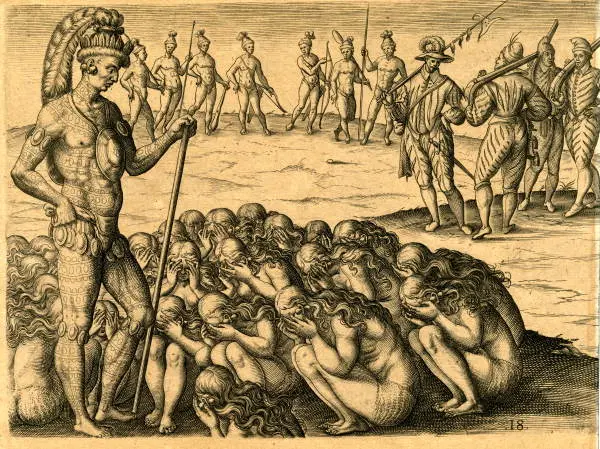
                      Since they were first published in 1591, the engravings of Theodore de Bry have been the most enduring images of Florida natives at the time of European contact.

                      “The de Bry engravings that were always thought to be based on Jacques le Moyne’s paintings have become the epitome of the best source for what Florida Indians looked like,” says Jerald T. Milanich, one of the most respected historical archaeologists in the state.

                      For more than four centuries, historians, archaeologists, artists, and the general public have relied upon de Bry’s images to provide information about the clothing, weapons, hair styles, headdresses, jewelry, tattoos, housing, baskets, canoes, cooking methods, and traditions of Florida’s Timucua Indians.

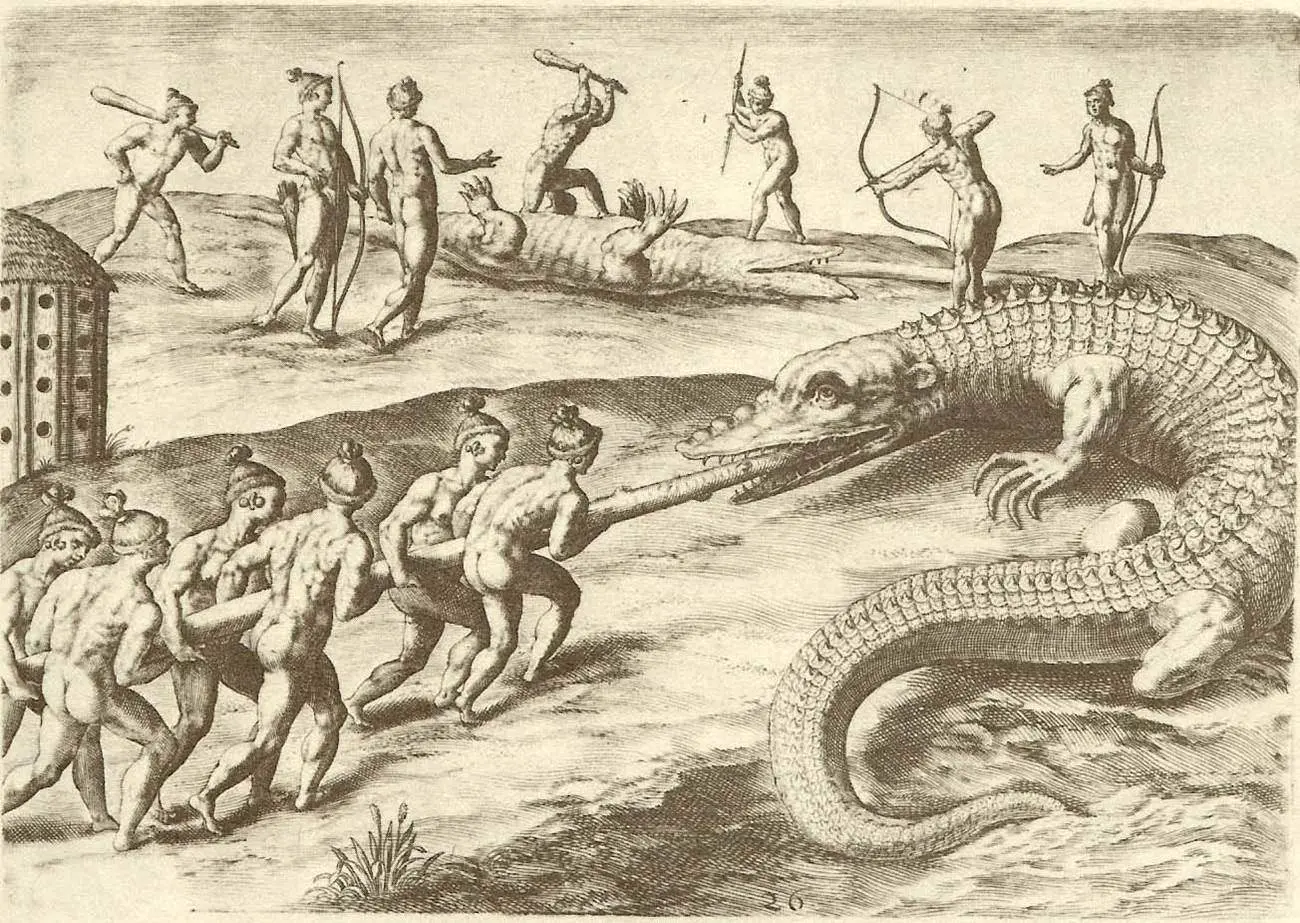
                      While some of what de Bry depicts in his engravings is supported by written historical descriptions, much of the content now appears to be the product of imagination, or based upon images of non-Floridians.

                      As Milanich and other modern scholars began to notice problems with the de Bry engravings, the list of discrepancies continued to grow.

                      “One was that the French soldiers portrayed in these engravings had their helmets on backwards,” says Milanich. “Another thing is that some of the engravings show Timucua Indians in north Florida drinking a sacred tea called Black Drink out of nautilus shells from the Pacific Ocean. We know that they drank it out of big whelk conch shells. So something was funny, something was weird about this.”

                      Another image shows Indians fighting a gigantic alligator with human-like ears and muscular arms.

                      De Bry was born in what is now Belgium, in 1528. He moved his family to London in 1585, before settling in Frankfurt in 1588. De Bry was a skilled engraver, known for his detailed images. Although he published books of images depicting Florida Indians and other native people of the New World, de Bry never visited the Americas.

                      “Everyone thought, including me, that although there were mistakes in these engravings, that they were based on paintings done by Frenchman Jacques La Moyne, who came to Florida in 1564 and did watercolors, probably after he returned to Europe,” says Milanich. “Those watercolors are lost, and may have never existed. Jacques le Moyne [may have] died before he did what he wanted to do. He talked with Theodore de Bry and gave him ideas.”

                      Close inspection of the 42 Florida engravings created by de Bry show that he borrowed imagery from a variety of sources, including books that his company published on other native cultures. Elements found in the Florida engravings were lifted directly from illustrations of Brazilian Indians.

                      “Not only did he do that for the volume he published on Florida, but he did it on volumes he published about other native peoples in the Americas,” Milanich says.

                      De Bry was also inspired by the work of artist John White, who visited North Carolina and painted the Indians there. White’s paintings of the Carolinian Indians are displayed at the British Museum. White also painted a Timucua Man and a Timucua Woman, and de Bry borrowed imagery from those pieces.

                      “John White never saw a Timucua man or a Timucua woman in his life, and what we know now is that he used his Carolinian Indians as models to do the Timucua Indians,” says Milanich. “He also used a French account by Jean Ribault that described the Indians as being heavily painted and the women wearing moss dresses.”

                      The de Bry engravings of Timucua Indians have been used repeatedly in books about the indigenous people of Florida, and inspired museum exhibits. Artists depicting Florida Indians have been influenced by de Bry’s images when creating their own work.

                      “I wrote a book about the Timucua Indians [published in 1996] and a lot of information I put in that came from those engravings,” says Milanich. “I got lucky, because I also used other historical documents.”

                      Milanich says that we must now question all of the conclusions reached using the de Bry Florida Indian engravings as a source.

                      “We thought we had a wonderful source, a code, a portal into the past, and suddenly things aren’t as we expected or as we thought,” says Milanich. “That often happens. Maybe someday we’ll find another source.”

                      PDF file(s)