Article Number
178
relevantdate

    “Yesterday, December 7th, 1941, a date that will live in infamy, the United States of America was suddenly and deliberately attacked by naval and air forces of the Empire of Japan,” said President Franklin Delano Roosevelt.

    Within an hour of FDR’s speech on December 8th, 1941, Congress voted to bring the United States into World War II.

    A recording of FDR’s address to Congress can be heard as you enter the “Florida Remembers World War II” exhibit, on permanent display at the Museum of Florida History in Tallahassee.

    “Florida’s role in World War II was really transformative,” says Bruce Graetz, senior museum curator. “Florida was a relatively rural area before World War II. There was a large influx of servicemen for training during the war, industry like ship building occurred, and by the time the war was over, we’re getting into what’s considered modern Florida.”

    According to government statistics, approximately 248,000 Floridians served in World War II. During the war, the population of the state exploded. Key West had 13,000 residents in 1940, and 45,000 by war’s end five years later. The population of Miami doubled to almost 325,000. Florida became an active training ground for American troops.

    “Florida’s mild climate and flat terrain allowed for year round training for aviation,” says Graetz. “Camp Blanding [near Starke] is now a National Guard Camp. During World War II, it’s said that population-wise, Camp Blanding was the fourth largest city in the state.”

    American troops were provided with amphibious training at Camp Gordon Johnston in Carrabelle, Florida.

    “Between those two bases, the three significant U.S. Infantry divisions that went ashore at Normandy had some of their training here in Florida,” Graetz says. “In Daytona Beach, the WACS, the Women’s Auxiliary Corps, developed a training base. Noted African American educator Mary McLeod Bethune had lobbied President Roosevelt to set up a WAC training base, so from 1942 to early 1944, a large number of women trained here in Florida.”

    The “Florida Remembers World War II” exhibit includes informational panels, and displays of uniforms, photographs, documents, posters, and personal artifacts.

    “Camp Blanding even had a souvenir pillow case that soldiers would buy and send home to sweethearts as a token of where they were training here in Florida,” says Graetz.

    More than 50,000 African Americans from Florida entered the military during World War II, primarily as Army support personnel. Some of the famous Tuskegee Airmen were from Florida.

    “We’re very fortunate to have had donated for this exhibit, some of the memorabilia of James Polkinghorne, who’s from Pensacola,” says Graetz. “He was a Tuskegee Airman fighter pilot who was flying a strafing mission in Italy when his aircraft went down and he was killed. We have his training yearbook, his posthumous Purple Heart, his pilot’s file, and photographs.”

    Florida’s participation in World War II went beyond serving as a training ground for soldiers. Immediately after the United States joined the war, German submarines began attacking supply ships off the coast of Florida.

    “Quite a few tankers and freighters were attacked and sunk in Florida,” says Graetz. “In the early months of the war, pretty much the first seven months of 1942, civilians would see a burning tanker [from the shore] and even see a submarine surface. So it really brought the war home to Florida.”

    In the 1940s, it was not uncommon to see men working in citrus groves wearing clothing marked with a “P” and “W,” indicating that they were German prisoners of war.

    “They were brought back first from the North African campaigns, and some were captured submariners, and then eventually from Europe,” says Graetz. “Germans that were captured and brought to Florida were considered fortunate as opposed to Germans who were captured by the Russians and sent to Siberia. They were held in bases around Florida, and they took classes in English and American Values.”

    After the war, Florida’s population expanded by 46%. Many soldiers returned here with their families, or to get an education on the G.I. Bill. To accommodate the influx, the Florida State College for Women became Florida State University.

    “Florida produced a booklet called ‘After Victory’ promoting Florida as a state people could move to,” Graetz says.
    PDF file(s)
    Article Number
    177
    relevantdate

      Texans are dealing with the aftermath of hurricane Harvey. Powerful hurricanes have impacted Floridians on multiple occasions.

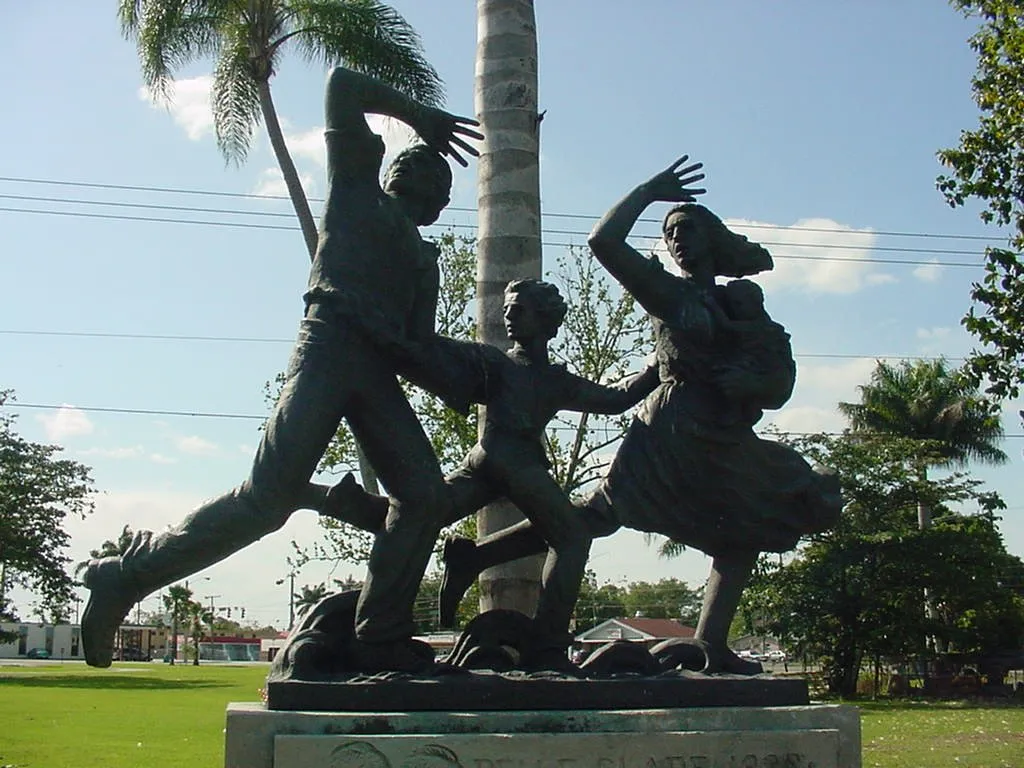
      The hurricane of 1928 was particularly devastating to residents of south Florida.

      “When you talk about Florida, you have to talk about hurricanes,” says Eliot Kleinberg, author of the book “Black Cloud: The Deadly Hurricane of 1928.”

      Kleinberg first heard about the hurricane of 1928 while working as a reporter for the Palm Beach Post. “In 1988, for the sixtieth anniversary of the storm, I was sent out to Belle Glade to cover a commemorative event. The more I talked to these people, I said, how is it possible that this profound hurricane happened and most of the world doesn’t know anything about it?”

      The 1928 hurricane played a pivotal role in Zora Neale Hurston’s 1937 novel “Their Eyes Were Watching God.” The storm leads to tragedy for the novel’s protagonist, Janie Crawford, while she and her lover Tea Cake are living as migrant workers in the Everglades.

      “People have no idea that the hurricane in Zora’s book was a real hurricane,” says Kleinberg. “She takes some literary license with the hurricane. She gives it 200 mile per hour winds and she describes a gigantic tidal wave, which isn’t exactly how it happened. It was more like a slow and steady rise, but in talking about the hurricane and its effect on black people, the migrant workers in the glades, she was spot on.”

      Today, meteorologists armed with satellite imagery track every movement of a hurricane for weeks before landfall, providing multiple models of possible paths a storm might take. In 1928, storm forecasting was not as sophisticated.

      “As remarkable as it is to imagine now, back then hurricanes would travel through the ocean for days before anyone knew they existed,” says Kleinberg. “In the case of this storm, a ship in the eastern Caribbean came across it, and telegraphed about the storm.”

      The hurricane tore through the Caribbean islands, killing as many as 2,000 people in Puerto Rico alone. The night before the hurricane struck Florida, weather officials were saying that the storm was not going to hit the state. It made landfall near West Palm Beach on September 16.

      Even if good information had been available, it might not have made a difference.

      “To say that they knew or didn’t hear the hurricane warning presumes that they had a radio, which in 1928, a lot of people didn’t, and there certainly wasn’t any television,” says Kleinberg. “A newspaper is only as good as its deadline, which is 12 to 15 hours. Even if they knew, where could they go?”

      The people living in isolated little towns around Lake Okeechobee had very few options as the lake swelled and flooded the surrounding area. A person would not want to head east, into the storm, and roads heading west and north were difficult to travel in good weather conditions.

      “This presumes you had a car, which in 1928 wasn’t a given,” says Kleinberg. “They really, literally, had nowhere to run.”

      An estimated 2,500 Floridians were killed by the 1928 hurricane, and a disproportionate number of those people were African American. After the storm, white victims and black victims were treated very differently. For health reasons, all of the bodies had to be quickly placed into mass graves.

      “They took all of the white victims and they put them in a mass grave in the City Cemetery in West Palm Beach, let family members try to identify them, tag them, but 674 black victims were literally just dumped in a hole,” says Kleinberg. Black families were not given the same consideration, and many don’t know if their relatives were dumped in the mass grave or not. “The other great tragedy is that for the next 60 years, the grave was unmarked.”

      The nearly 700 black victims of the hurricane were forgotten, as a road was rerouted over part of the unmarked mass grave at what is now the corner of Tamarind Avenue and 25th Street, about two miles northwest of downtown West Palm Beach.

      “If this hurricane had smashed a black tie affair in Palm Beach, they’d still be talking about it,” says Kleinberg.

      PDF file(s)
      Article Number
      176
      relevantdate

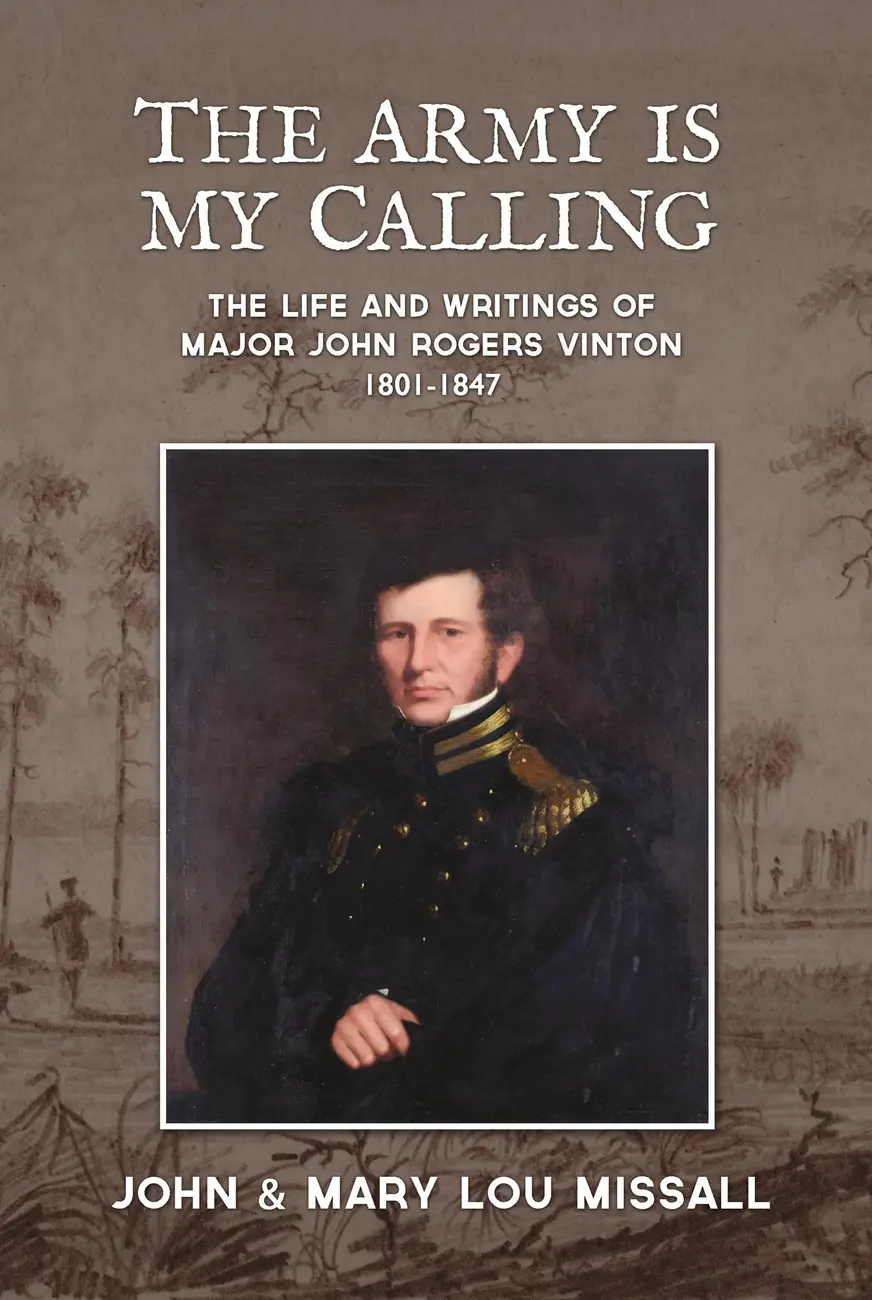
        The life of a soldier who fought in Florida during the Second Seminole War is chronicled in detail in the new book “The Army is My Calling: The Life and Writings of Major John Rogers Vinton, 1801-1847,” by John and Mary Lou Missall.

        The married co-authors are best known for their first book, “The Seminole Wars: America’s Longest Indian Conflict.”

        “I got interested in it while I was working on my Master’s degree through California State University,” says Mary Lou Missall. “I wanted to do my thesis on some aspect of Florida history.”

        Realizing that there was a lack of scholarship on the Seminole Indian Wars, Mary Lou focused her research on that series of conflicts. After graduating, she and her husband collaborated on their comprehensive first book.

        “We had never been able to find a book that covered all three wars, everything in between, the politics and all of that, so we decided to write one,” says John Missall.

        Together, the Missalls have also edited the books “This Miserable Pride of a Soldier: The Letters and Journals of Col. William S. Foster in the Second Seminole War,” and “This Torn Land: Poetry of the Second Seminole War.”

        In addition to their non-fiction books, the Missalls have used their expertise to write works of fiction based on fact. They wrote “Elizabeth’s War: A Novel of the First Seminole War,” and “Hollow Victory: A Novel of the Second Seminole War,” which both earned the Patrick Smith Book Award.

        “As part of doing research and reading up on all this stuff, the imagination gets working and you start putting yourself in these situations, and characters start coming to mind, and you write a story,” says John. “It’s also real important for us when we do write fiction, that we do our research on the historical facts,” adds Mary Lou.

        For their new biography, the Missalls focus on the life of John Rogers Vinton, who entered West Point at the age of 12, and went on to serve in Florida during the long Second Seminole War.

        “Vinton was a 30-year career army officer who served from the War of 1812 up until his death in the Mexican War in 1847,” says John Missall. “Most 19th century biographies focus on the big names; the presidents, the generals, and other famous leaders, especially from the Civil War. Vinton was different. He was there in the field, doing important work, carrying out the orders of his superiors in often trying circumstances.”

        It was the personal details of Vinton’s life that the Missalls found most intriguing.

        “What made Vinton an excellent subject for such a study was that he left numerous journals and letters and came from a large family whose personal correspondence has also been preserved,” says Mary Lou Missall. “Through these documents we’ve been able to follow his life from the day he graduated from West Point until the day he was killed in Mexico.”

        While he was a career soldier, John Rogers Vinton was also a skilled artist. The Missalls have included color plates of artwork in their book “The Army is My Calling.”

        “He did take some lessons while stationed in Washington in the 1820s, and drawing was an important part of the curriculum at West Point,” says John Missall. “In the days before photography, officers stationed on the frontier were expected to be able to faithfully record the new landscapes they encountered. Still, a lot if it was natural talent, and it was something he definitely enjoyed doing.”

        As the Missalls became engrossed in the life of John Vinton through his letters, military records, and art, they visited places associated with him. Buildings where Vinton lived and worked still stand in St. Augustine, Florida; Augusta, Georgia; and Atlantic Beach, North Carolina.

        A small church in Pomfret, Connecticut has a memorial to Vinton.

        “In that church are a set of Tiffany stained glass windows, one of them dedicated to Major John Rogers Vinton, killed in action in the Mexican War,” says Mary Lou Missall.

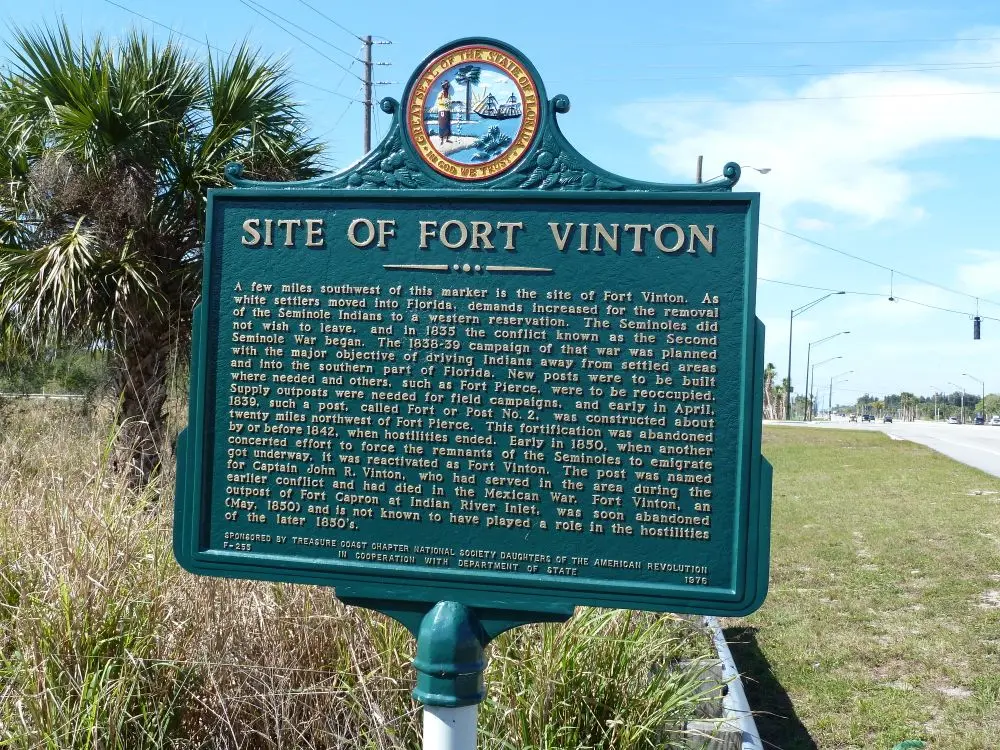
        A state historic marker on Highway 60 near 122nd Avenue in Indian River County marks the approximate location of Fort Vinton, which was named after Major Vinton in 1850.

        PDF file(s)
        Article Number
        175
        relevantdate

          About 1,000 years ago, agricultural communities were established in what would become the Southeastern and Midwestern United States, and the Mississippian culture flourished.

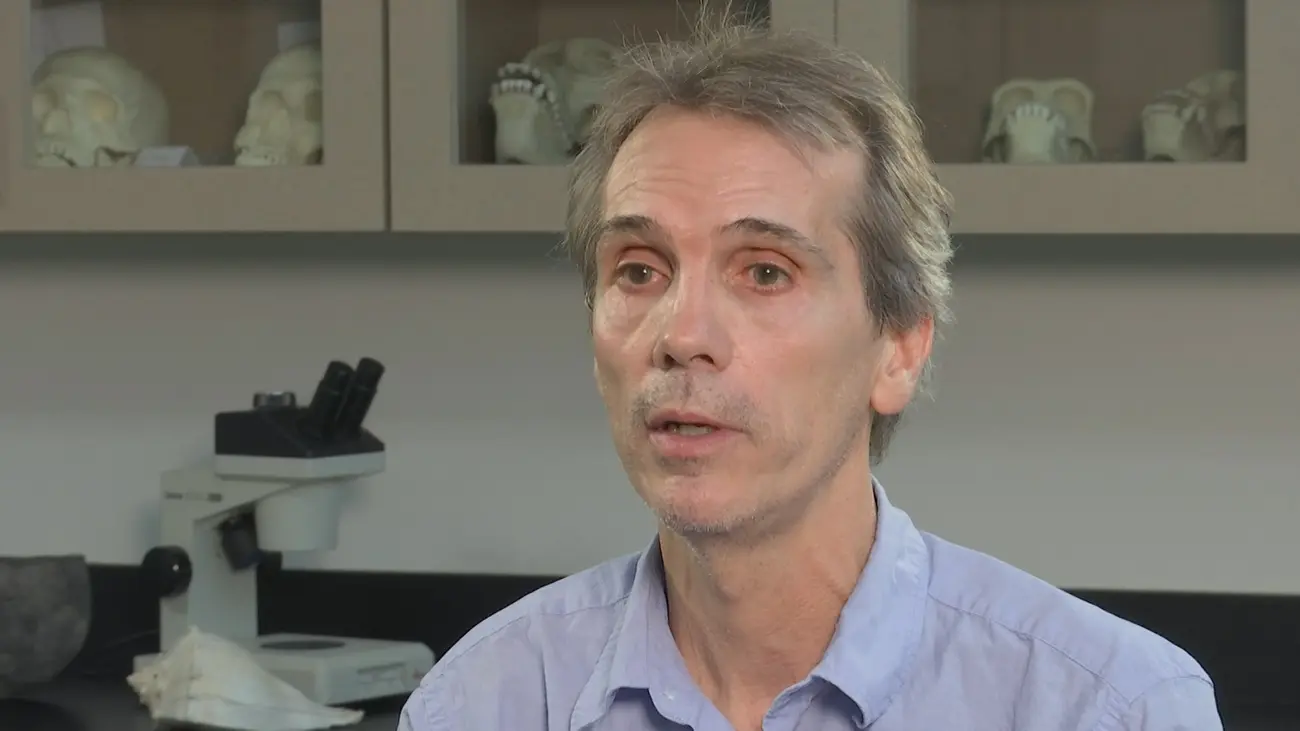
          Keith Ashley is an archaeologist and research coordinator at the University of North Florida in Jacksonville. Ashley’s research is demonstrating a link between Native Floridians and the thriving Mississippian culture.

          Ashley and his research are featured in the latest episode of the television series “Florida Frontiers,” airing this month on PBS affiliates throughout the state. The program is also available online at myfloridahistory.org.

          “Mississippian World is a term that we’ve kind of superimposed as archaeologists,” says Ashley. “Basically these were Chieftain level groups, meaning that they had institutionalized inequality. They had chiefs who controlled more than one village. They were involved in intensive maize agriculture. They were involved in these far flung trade and exchange networks, and they had these large mound complexes with platform mounds that probably were the platforms for chiefly residence.”

          On maps of the Mississippian World, peninsular Florida is excluded. New archaeological evidence uncovered by Ashley demonstrates that Native Americans living in Northeast Florida were part of an extensive trade network that extended to present day St. Louis.

          “The Mississippian World’s delineating groups were intensive maize agriculturalists, and the groups here weren’t,” says Ashley. “But they were clearly involved in interaction networks and trade with them.”

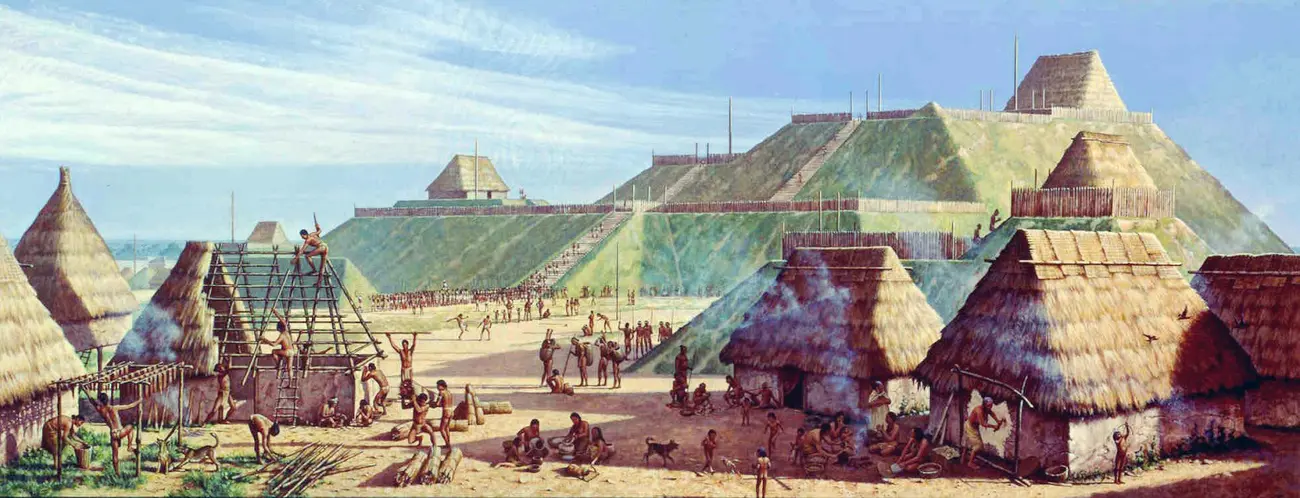
          In addition to growing maize, or corn, the Mississippian cultures were known for their construction of platform mounds, on which they would build houses, towns, temples, and burial buildings. The largest chiefdom of the Mississippian World was at a ceremonial complex at Cahokia, located near present day Collinsville, Illinois, across the Mississippi River from St. Louis, Missouri.

          “Cahokia probably sprang up about 1000 AD, and then by about 1250 it’s in decline and by 1300 it’s gone,” says Ashley. “In its wake, what you see are a lot of other rival chiefdoms that sprout up. You see these chiefdoms rise and fall throughout the area. Sometimes they group together, other times they just break down, so it’s a really dynamic landscape.”

          Ashley says that the St. Johns culture of Northeast Florida roughly coincides with the Mississippian World. The St. Johns Period begins about 500 AD, and continues until European contact, 1,000 years later.

          “They’re fishers, collectors, hunters,” says Ashley. “The people in Northeastern Florida really gravitate to the Mississippian interaction network and become part of it. I think they have a resource that people in the landlocked areas of Alabama, Georgia, and Missouri want, and that’s shell.”

          In the late 1800s and early 1900s, Clarence B. Moore documented significant archaeological sites in Florida. Moore did much of his work in the Jacksonville area, excavating the Grant Mound and the Shields Mound, where he uncovered some intriguing artifacts. Some of the artifacts were made with copper, mica, galena, and other minerals common in the Mississippian World, but not Florida.

          Ashley believes that these artifacts, including a pair of copper ear decorations found by Moore at the Grant Mound, help to prove contact between Florida natives and other Native Americans who were very distant geographically.

          “These small little ear pieces maybe a couple of inches in size, look like a face,” says Ashley. “They would have had a long nose pultruding from them. So far, we’ve only found seven complete pairs of those in copper in the entire United States, and all of them, we believe, are manufactured at Cahokia.”

          Ashley has expanded on the information gathered by Moore, discovering distinctive pottery and other artifacts that further support the idea of Native Floridians interacting with distant neighbors to the north.

          “We found a small little point called a Cahokia Point near Shields Mound,” Ashley says. “We had archaeologists from Cahokia look at it, and they told us that, yes, this is a Cahokia point, and it looked like any point that they would find at Cahokia.”

          In between the St. Johns culture Indians and the Mississippian Indians, was a pocket of hunter gatherers who also had contact with Northeast Florida residents about 1,000 years ago.

          Chemical analysis of distinctive pottery found near Jacksonville shows that some comes from central Georgia, while the design was also adopted by Native Floridians.

          PDF file(s)
          Article Number
          174
          relevantdate

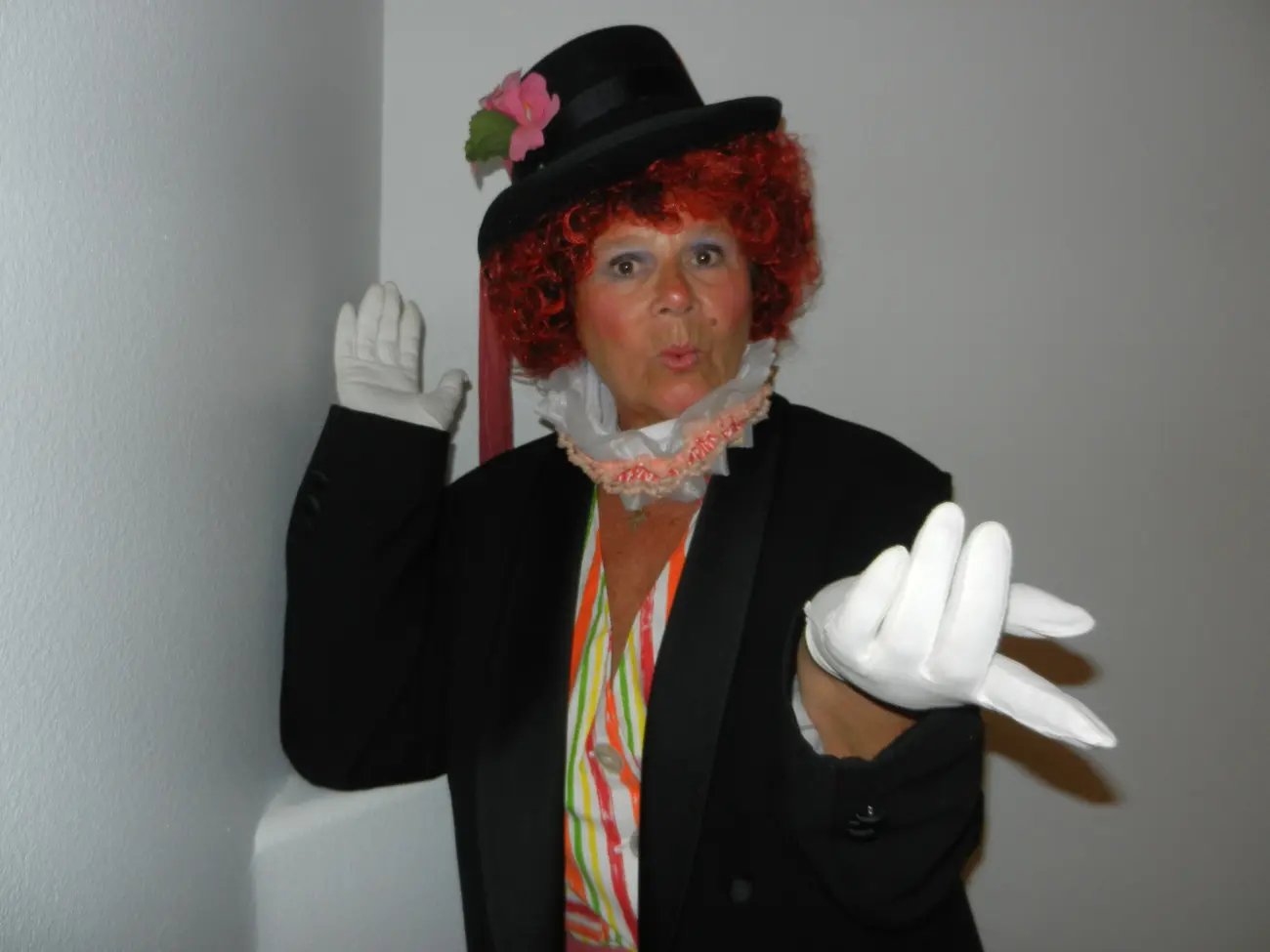
            Before the annual presentation of “Mosquitos, Alligators, and Determination” begins, Lady Gail Ryan engages audience members, finding out where they are from and leading them in a high spirited “sing along” of Florida songs including “Where the Orange Blossoms Grow” and “She’ll Be Comin’ Down the Shell Road.”

            “Come early,” Ryan says. “The pre-program begins the minute the audience arrives. Music will help tell about historical events with songs the audience can sing.”

            The tenth annual production of “Mosquitos, Alligators, and Determination” will be held this weekend and next, with matinee performances at 2:30 pm, August 5, 6, 12, and 13 at the Library of Florida History, 435 Brevard Avenue, Cocoa. Doors will open for the pre-show at 2:00.

            As founder and director of the Brevard Theatrical Ensemble, Ryan is responsible for organizing the annual presentation of “Mosquitos, Alligators, and Determination.” The production, which changes every year, features a series of vignettes portraying stories of Florida history and culture.

            This year a patriotic theme will be part of the production.

            “Historical storytellers must give their audience an authentic and interesting story that promotes understanding of what is happening in today’s world,” Ryan says. “I have tried to present past conflicts and events that would help the public understand today’s political fighting and see what happens when greed and division takes command.”

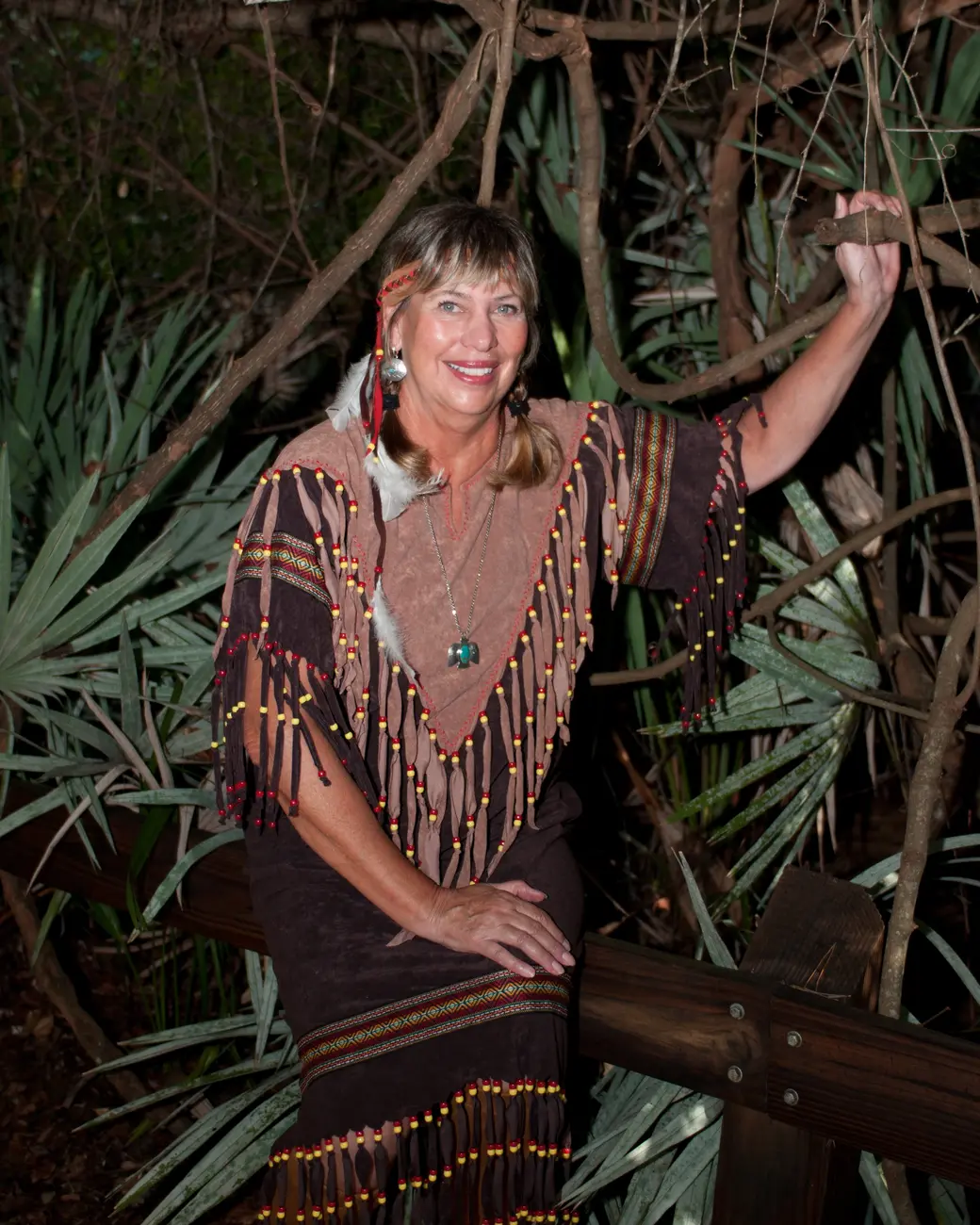
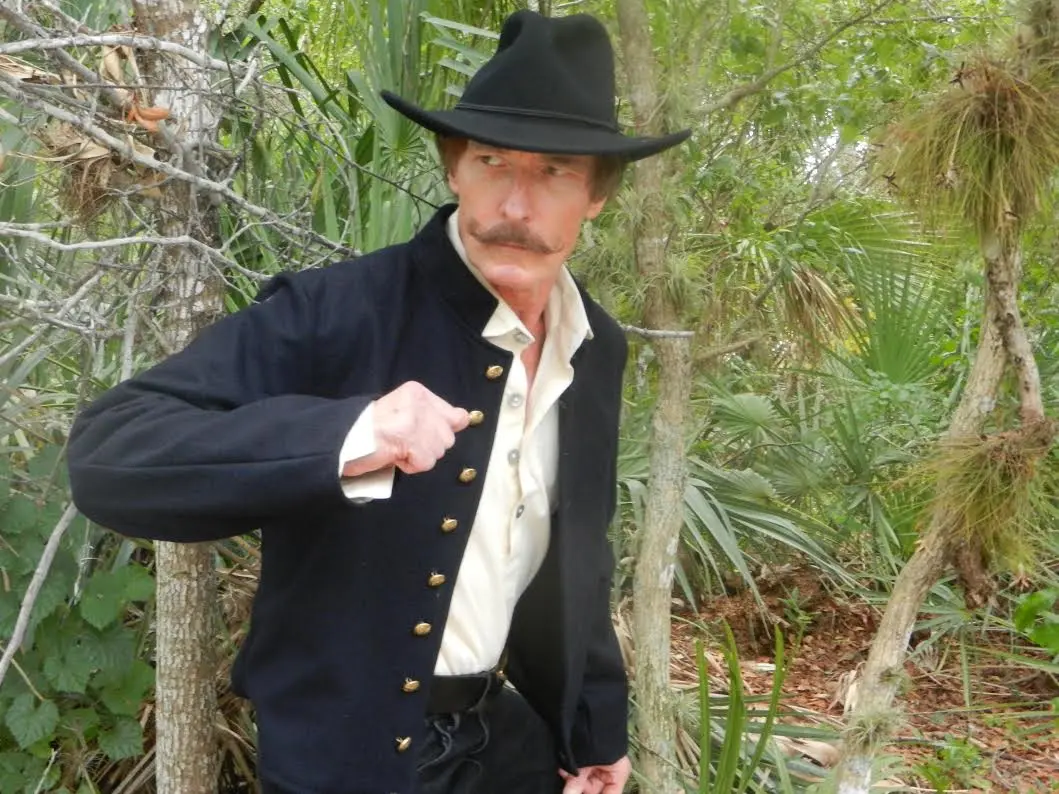
            Some of the stories that Ryan’s troupe will be presenting this year include tales of Florida’s native people, how the Methodist Circuit Riders brought law and order to Territorial Florida, and how Hamilton Holt influenced the liberal arts tradition at Rollins College. A version of Stephen Crane’s tale of shipwreck survival as depicted in his short story “The Open Boat” will be presented. Family lore about an encounter with gangster Al Capone in Florida will be shared, and we’ll be taken to Key West in 1973.

            Ringling Brothers and Barnum & Bailey Circus ceased operation this year, and that organization has strong Florida ties.

            “We’re including a tribute to the circus in our program, with music and a feeling of great gratitude for Ringling’s gift to Florida,” says Ryan.

            A native Floridian born in Miami in 1929, Ryan’s energy and enthusiasm for the history and culture of our state is contagious.

            “I was born right in the blast of the boom,” says Ryan. “I didn’t realize anything about anyone being poor because we raised our own vegetables. We lived in the sunshine. I washed my hair in the rain. We had the best time.”

            Ryan’s parents and sister moved to Florida from Indiana, driving down in two Model “T” Fords and camping along the way. While camping just off of a shell road in Brevard County, the family was awakened by a noisy group of wild hogs. The Ryans moved on, settling in Miami.

            “Our house was built from the lumber that (Henry) Flagler sold when he tore down the Royal Poinciana Hotel,” says Ryan. “If it hadn’t been for Flagler, we wouldn’t have lived in this marvelous house. We never had any termites because he had the original Florida pine.”

            Although Ryan remembers her childhood in Florida fondly, she grew up with her heart set on seeing the world and performing music. She achieved her goals, getting her education in Michigan and New York, and learning to speak Italian while studying in Europe.

            Ryan returned to Miami, teaching there for several decades. She earned the honorific title “Lady” from the Dade County Commission for her work organizing the Miami Renaissance Fairs.

            In the mid-1980s, Ryan moved to the Space Coast. She organized the Storytellers of Brevard, which evolved into the Brevard Theatrical Ensemble.

            For the past decade, BTE has been presenting a new version of “Mosquitos, Alligators, and Determination” every year. It might seem simpler to use a fixed script, but constant change is part of the production’s charm.

            “Florida’s history is so complex and varied,” Ryan says. “It is, or course, all of USA’s history and important for us to know.”

            Tickets for “Mosquitos, Alligators, and Determination 10” at the Library of Florida History in Cocoa are $15 each and available online at www.myfloridahistory.org. Reservations are strongly suggested, as these performances are “sold out” every year.

            PDF file(s)
            Article Number
            173
            relevantdate

              Beginning Saturday, July 29, the exhibition “Florida Before Statehood” will be on display at the Brevard Museum of History and Natural Science, 2201 Michigan Avenue, Cocoa. The opening event begins at 2pm with a presentation by historian Ben DiBiase, director of educational resources for the Florida Historical Society.

              “It covers Florida history from the Ice Age to the modern day,” says Madeline Calise, museum manager at the Brevard Museum of History and Natural Science. “We take a look at Spanish exploration, early settlers and their challenges, the mission period of Florida, the British period, and a little bit about all the flags that Florida has flown under and the impacts that those different nations had on Florida.”

              The foundation of the exhibit, including a series of informational panels and a timeline display, was created in Tallahassee.

              “It is a traveling exhibit from the Museum of Florida History, so we’re really excited to have it,” says Calise. “It was created as part of the Viva Florida program in 2013, which was celebrating 500 years of Florida history, starting with 1513.”

              While Ponce de Léon gave our state its name in 1513, people have been living here for more than 14,000 years. The “Florida Before Statehood” exhibit explores that history as well as European contact and occupation.

              “Europeans had been living in Florida over 330 years before Florida became a state in 1845, and prior to European contact, indigenous groups had lived in the state for thousands of years,” says Ben DiBiase. “In 1565, we had the establishment of St. Augustine, the oldest continuously occupied European settlement in North America, so there was generation of people living in St. Augustine before Jamestown was ever established.”

              St. Augustine was established to secure Spain’s claim on Florida. In 1564, the French built Fort Caroline near Jacksonville, but the colony was wiped out by the founders of St. Augustine. The Spanish then constructed a series of missions in Florida and the American southeast.

              “Moving into the eighteenth century, after the French and Indian War, the Spanish actually lost control of Florida,” says DiBiase. “Beginning in 1763, the British took control. They partitioned the territory into East and West Florida, with the Apalachicola River being the dividing line. St. Augustine was the capital of East Florida, Pensacola the capital of West Florida. In 1783, after the end of the American Revolution, the Spanish again gained control of Florida. That’s what we call the Second Spanish Period.”

              By 1821, Florida was a United States Territory, gaining statehood in 1845. All of this rich and colorful history is detailed in the “Florida Before Statehood” exhibit.

              In addition to the informational panels and timeline provided by the Museum of Florida History, the version of the exhibit at the Brevard Museum of History and Natural Science will be augmented with displays of fascinating original documents and artifacts from the Florida Historical Society archives and the Brevard Museum collections.

              One of the additional objects to be displayed is a chronological history of Spanish colonization originally published in Spain in 1723.

              “It’s a very Spanish perspective,” says DiBiase. “This is the original book. It’s the original binding, a leather bound book. It has the original vellum pages, some beautiful script work. This is really more a work of art now, than a historical narrative. A lot of the facts can be argued today, but what’s important is that it informed generations of Europeans who were coming over to the New World about the history of Florida.”

              Other documents and artifacts that will augment the exhibit include a British map from the 1760s, Seminole Indian clothing, original papers from Territorial governor Richard Keith Call, and a set of rifles used in a duel to settle a political dispute in the 1830s.

              The temporary “Florida Before Statehood” exhibit fits in well with the permanent displays at the Brevard Museum which include skeletons of Ice Age mega-fauna, artifacts of prehistoric people, displays of pioneer life, and images of outer space. There is also a Butterfly Garden and 22 acres of nature trails to explore.

              The “Florida Before Statehood” exhibit is included in the regular museum admission of $9 for adults and $5 for children 4-12.

              PDF file(s)
              Article Number
              172
              relevantdate

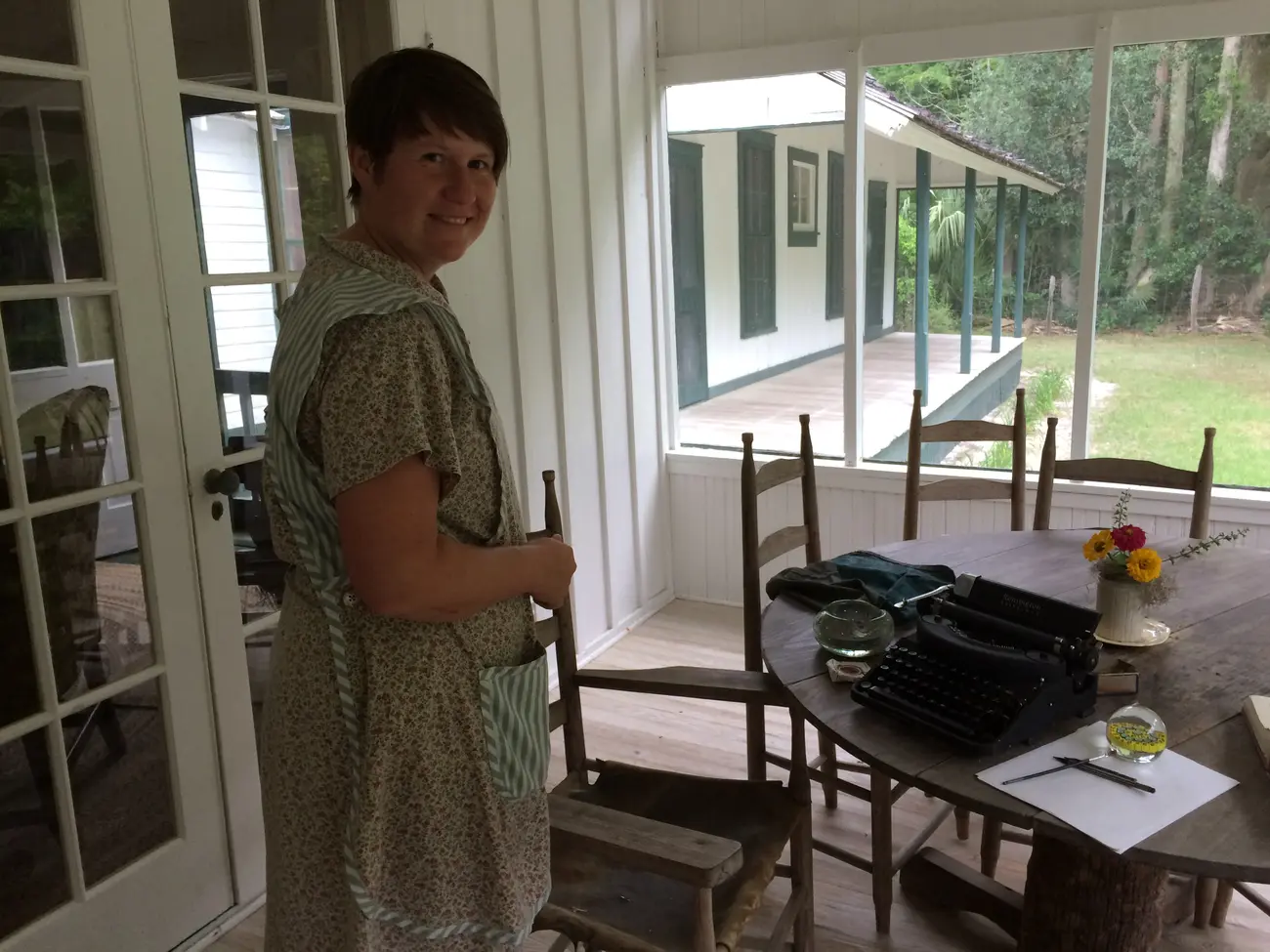
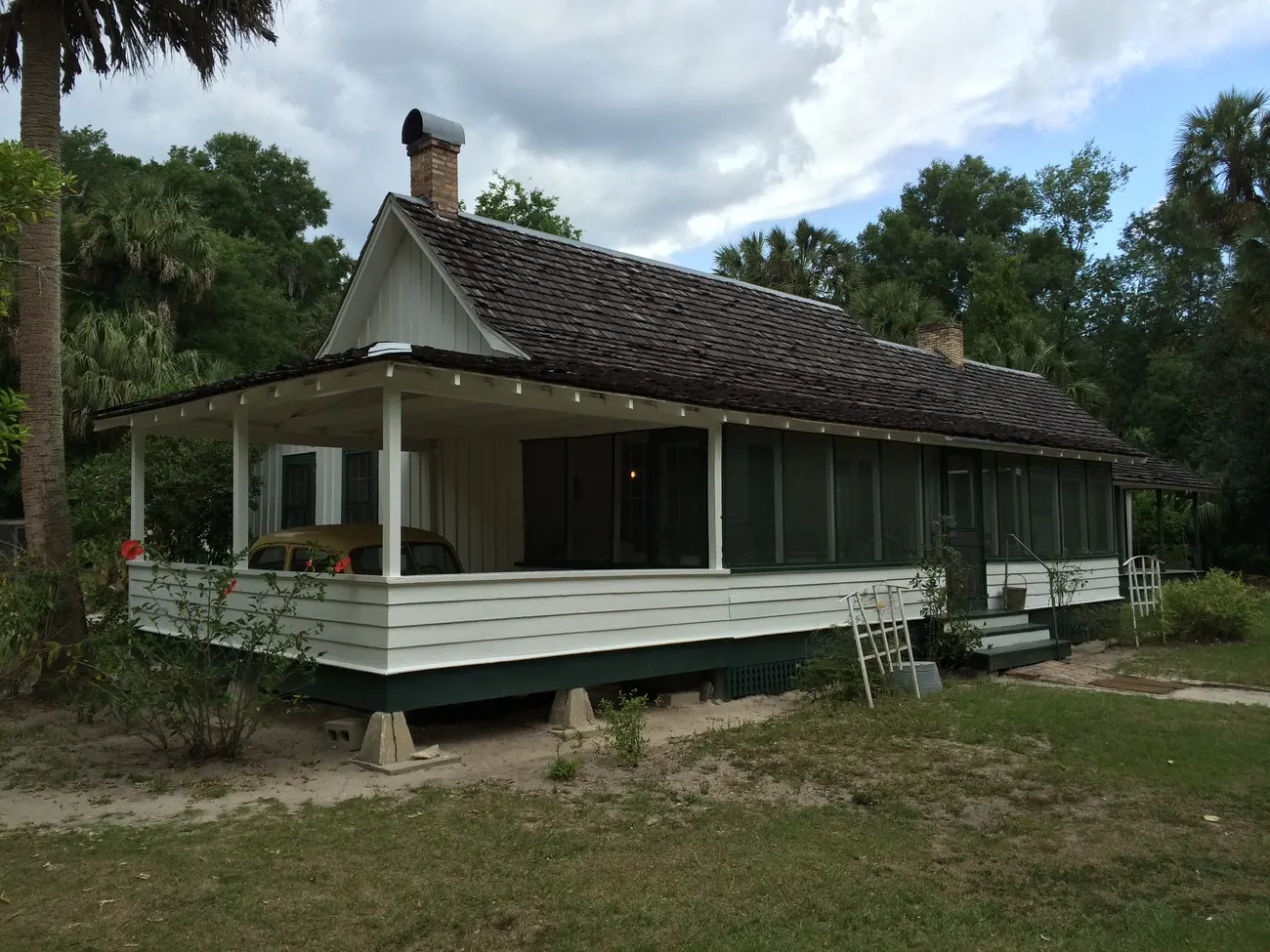
                A visit to the Marjorie Kinnan Rawlings Historic State Park in the rural community of Cross Creek is like a trip back in time to the 1930s. The home there is furnished just as Rawlings had it when she was writing her Pulitzer Prize winning novel “The Yearling,” her autobiography “Cross Creek,” and other works depicting the lives of Florida Crackers.

                Rawlings’s typewriter and notes sit on a table on the front porch, along with her ashtray and a pack of Lucky Strikes cigarettes, as if the writer has just gotten up to get a glass of iced tea from the kitchen.

                Each room of the house contains furniture and personal items that belonged to Rawlings or are very similar to what the beloved Florida writer owned.

                “She always described it as a rambling farmhouse,” says Carrie Todd, Park Ranger at Marjorie Kinnan Rawlings Historic State Park. “Maybe a little shabby chic is the way to talk about it. It’s white with green lattice on the bottom. It’s 3,000 square feet, four bedrooms, two bathrooms, so it’s large, but it doesn’t seem large. It seems just sort of rambling when you’re trying to go through it.”

                A Fish Fry celebrating the author’s 121st birthday will be held at the Alachua County property on Saturday, August 5th, from 5:00 pm to 7:00 pm. Tickets to the event are $8.00.

                Although famous for her stories about rural life in Florida, Marjorie Kinnan Rawlings was not a native. She was born in Washington, D.C., and attended college at the University of Wisconsin Madison, graduating in 1918. She lived in Louisville, Kentucky and Rochester, New York before moving to Florida with her husband Charles Rawlings in 1928.

                The couple planned to support themselves with the orange trees on their property, allowing them to write in a beautiful, serene, rural setting.

                “They were both writers,” says Todd. “They both were going to write novels and they thought it was going to be an easy time to make money with that citrus crop.”

                Growing citrus was a lot more work than the couple had anticipated. Charles Rawlings grew tired of life in the country, and the two were divorced. Marjorie Kinnan Rawlings felt a connection to her Florida land, and stayed there to write.

                “Marjorie walked through the rusty old gate and immediately fell in love,” Todd says. “The book ‘Cross Creek’ she often describes as a love story to a place. But Charles Rawlings had a completely different idea about what this was going to be. He thought he was going to be a gentleman farmer. Where Marjorie saw rustic charm, he saw the lack of paint, and the lack of screens, and the lack of electricity, and the lack of running water. He hadn’t been as successful as a writer, so when Marjorie hit it big, he maybe was a little jealous.”

                Rawlings first attempted to write Gothic romance novels, but could not interest publishers in her work. Literary editor Maxwell Perkins was fascinated with Rawlings’s letters and stories about her life in rural Florida, and encouraged her to write a novel about that.

                “Maxwell Perkins knew that Marjorie was onto something, that she had this really great talent” says Todd. “He got her to take the notes and the little bits she had been writing down ever since she first stepped into Florida, and turn it into a book. ‘The Yearling’ particularly, but she has eight novels and 26 short stories about Florida, so she had a lot of material to work with.”

                Rawlings’s most popular book, “The Yearling,” won the Pulitzer Prize for literature in 1939, and was made into a very successful film starring Gregory Peck and Jane Wyman in 1946. Her 1942 autobiography “Cross Creek” was adapted for a 1983 film starring Mary Steenburgen.

                In 1941, Rawlings married Norton Baskin, living in both the St. Augustine area and Cross Creek.

                “He operated the Castle Warden Hotel, it’s now the Ripley’s Believe It or Not Museum,” says Todd. “She did live in St. Augustine with him most of the time, but came back to Cross Creek to write. She could only write here. This was really her place of inspiration.”

                PDF file(s)
                Article Number
                171
                relevantdate

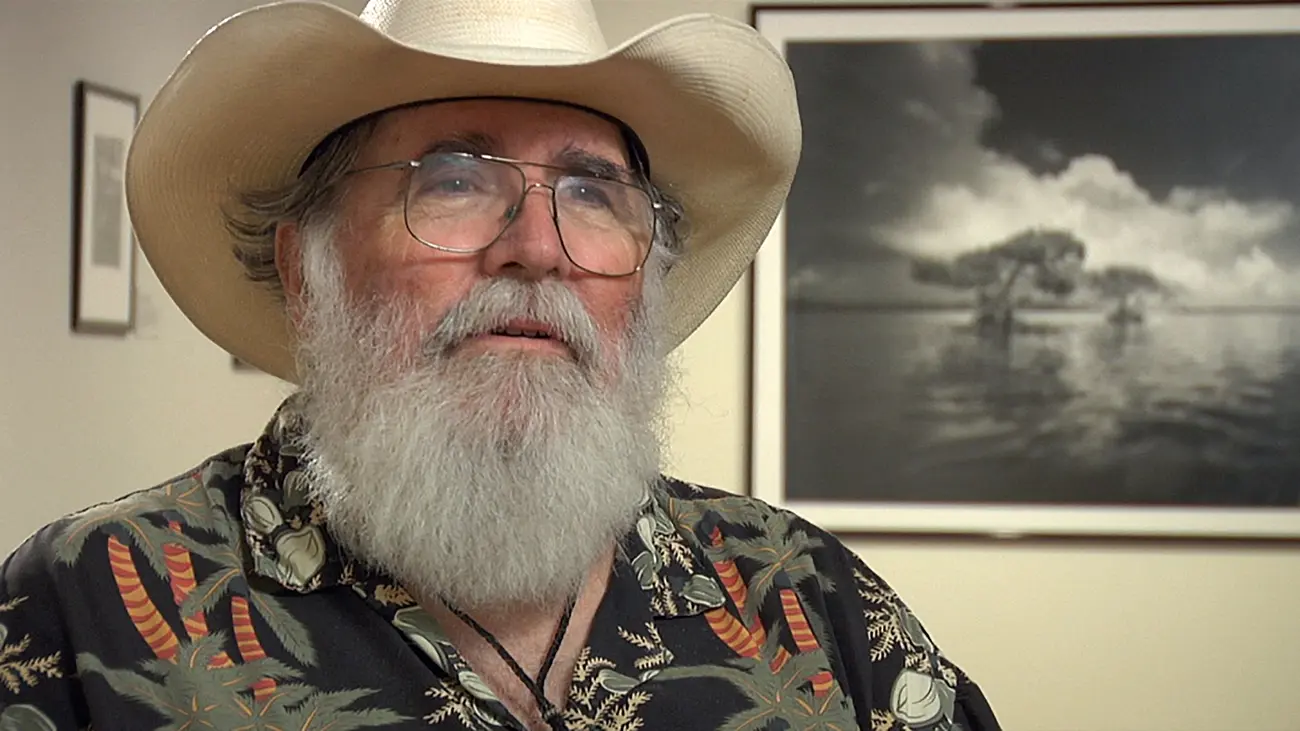
                  Renowned Florida photographer Clyde Butcher suffered a stroke on May 6, which affected his speech and coordination on his right side. Butcher’s rehabilitation is going well, and he expects to be back at work in the fall.

                  The black and white photographs of Clyde Butcher allow us to look at the natural Florida in a different way.

                  When most people think of Florida’s natural environment, an explosion of color comes to mind. We imagine multiple shades of green in a Florida swamp, bright red Poinciana trees, and the turquoise waters of the Gulf Coast. We picture the oranges, purples, pinks, and blues of the Florida sky.

                  “The main reason to do black and white is because the colors are so vibrant you can’t see the image,” Butcher says. “Black and white shows the oneness of nature. Without the whole system, nature doesn’t work, and I think the black and white brings a reflection of that in the work so you can actually see the landscape. You don’t just see the color.”

                  Butcher’s work has been compared to that of photographer Ansel Adams, best known for his black and white images of the American West. Like Adams, Butcher mostly uses a large format camera. Some of his images are as large as 6 feet by 9 feet.

                  “When you’re in nature you’re scanning, and you’re looking around, and you’re putting this whole scene of nature together in your mind,” Butcher says. “That’s the same feeling I want you to get looking at a photograph, is being there.”

                  Capturing his amazingly detailed images of Florida’s natural landscape sometimes requires that Butcher wait hours or even days for the right conditions. He’s known to stand chest high in water or lay on the ground for long periods of time to get the photograph he wants.

                  Much of Butcher’s work has a three-dimensional quality. Clouds, for example, often seem to be floating right out of the photograph toward the viewer. “I’ve been working with a wide-angle lens since 1960, so I’ve learned to be able to create these spaces,” Butcher says.

                  Many of Butcher’s photographs contain empty spaces that seem to invite the viewer in, to participate in the natural scene depicted. While some of his images are of coastal and island settings, most are focused on the Everglades. “For some reason you call it a swamp, I guess there’s some designation, but it’s actually more of a river,” Butcher says. “It’s a unique place. People don’t know what they have here. It’s gorgeous.”

                  Butcher’s photographs do not include people. His images seem to capture a time in Florida before humans arrived to build highways and homes.

                  “One of the main reasons I don’t put people in the pictures is because if someone is there, they’re taking your space,” Butcher says, adding that people’s clothing and hairstyles could “date” his photographs and he wants the images to exist outside of a particular historical period.

                  Butcher goes beyond preserving Florida’s natural environment in his photographs. He is an active environmentalist who brings attention to the need for conservation with his work. Butcher has created exhibits specifically to benefit the Florida Department of Environmental Protection, the state’s “Save Our Rivers” program, the South Florida Water Management District, and a variety of environmental groups.

                  In 1998, Butcher was inducted into the Florida Artists Hall of Fame.

                  Butcher’s Big Cypress Gallery is located in the heart of the Everglades, between Naples and Miami on the Tamiami Trail. His gallery and studio is in the middle of a National Park that protects the wild Florida.

                  From the Big Cypress Gallery, trained guides lead visitors on “Swamp Walks” through the water and trails of the Everglades, exposing them to cypress trees, alligators, exotic birds, and rare wildlife. Butcher and the guides encourage people on the walk to remain silent for five minutes, to become absorbed in the unique natural surroundings.

                  “People are shocked that Florida is still here. They think about Disneyworld and Orlando and Miami, and they think it’s gone,” Butcher says. “Florida’s still here, it’s just a little harder to get to.”

                  Butcher is featured in the latest episode of “Florida Frontiers Television,” now available online at myfloridahistory.org.

                  PDF file(s)
                  Article Number
                  170
                  relevantdate

                    Every Fourth of July, Floridians celebrate Independence Day with cookouts, hometown parades, and of course, fireworks as America’s victory over the British in the American Revolution is commemorated.

                    Not all American colonists supported the war, though. Many remained dedicated to King George III and England. As the American Revolution progressed, these Loyalists became refugees and were forced to flee the colonies.

                    From 1763 to 1783, Florida remained under British control; so many Loyalists came here from the American colonies to the north.

                    On December 17, 1782, as the end of the American Revolution approached, 16 ships left Charleston, South Carolina bound for the Loyalist port of St. Augustine, Florida. The ships carried hundreds of people, civilian as well as military.

                    Just before the ships could make port in St. Augustine, all 16 were lost on December 31, 1782.

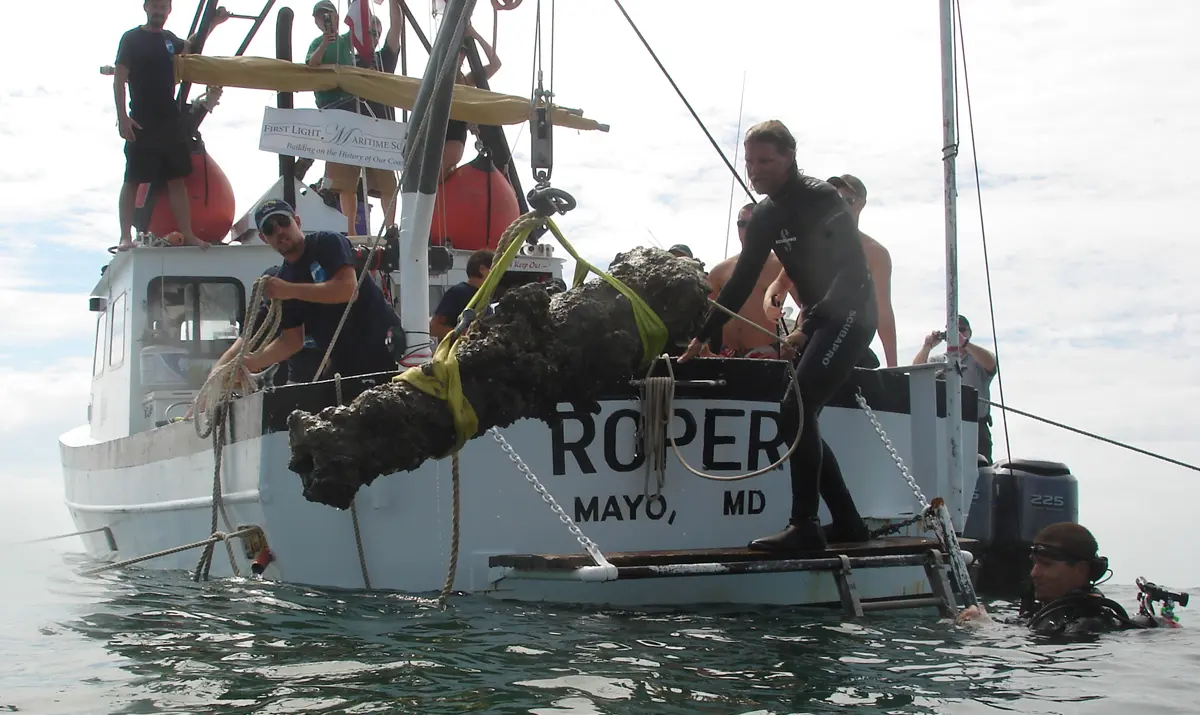
                    Chuck Meide, director of the Lighthouse Archaeological Maritime Program (LAMP), was determined to find the Loyalist ships that were lost off the coast of St. Augustine in a violent New Year’s Eve storm.

                    “The first step is really to try to look at the old historic maps and figure out how the landscape has changed,” Meide says, adding that the St. Augustine inlet “was very notorious for being dangerous for ships and for changing a lot. Every time a storm would come, the channels would shift around. That’s why we have so many shipwrecks, because of the shoals.”

                    Today, modern engineering keeps the inlet in place, but historic maps show how the location of the inlet has shifted over time. Meide determined that in the late 1700s, the inlet was about 3 miles south of its present location. That’s where he decided to look for the Loyalist shipwrecks.

                    Meide and his team used high-tech equipment such as a magnetometer to search for objects made of metal, and a side-scan sonar that produces an acoustic image of the ocean floor.

                    “Basically, it’s like we’re mowing the lawn,” Meide says. “We’re going back and forth and covering an area that we feel is high probability to find shipwreck sites, and it works.”

                    When the equipment indicated that a shipwreck might be located at a particular spot, it was time for Meide to go diving. He says the conditions were difficult to work in because it was “black as midnight down there” and communication with the other archaeologists was impossible. “Imagine if you were doing archaeology on land, gagged and blindfolded.”

                    Meide was working alone in the dark water when he made the first discovery of the expedition. The magnetometer had indicated the presence of metal, so Meide was working with a ten foot pipe jetting water to clear away sand. At first he didn’t feel anything unusual. After a few times sinking the pipe “to the hilt,” Meide hit something hard.

                    In quick succession, Meide uncovered ballast stones that were common in colonial era sailing ships, an unidentifiable man-made iron object, and a wooden plank.

                    “Now my heart’s beating pretty fast,” Meide says. “The next thing I found really sealed the deal. It was another large, concreted object. It was round, it was hollow. I felt a rim and could feel inside and I realized we had a big cooking pot or a cauldron. I even felt one of the three legs on the bottom. So that suggested colonial shipwreck.”

                    That first series of discoveries was in August 2009, and the excavation has continued every summer since.

                    Subsequent discoveries helped to confirm that the shipwreck was from the colonial period, from the late 1800s, and more specifically that it was carrying British Loyalists. Meide’s team uncovered lead shot, buckles, buttons, a wine glass base, and other objects.

                    Perhaps the most definitive artifact found was a canon marked with the year 1780.

                    When the American Revolution ended in 1783, the British period was over and Florida once again became property of the Spanish. Florida became an American Territory in 1821, and was named a state in 1845.

                    As citizens of the United States, Floridians would celebrate Independence Day until 1861, when the state seceded from the Union. After Florida became part of the United States again in 1868, Fourth of July celebrations resumed and continue today.

                    PDF file(s)
                    Article Number
                    169
                    relevantdate

                      The Cross-Gulf Travel Theory proposes the idea that the ancient Maya came to southwest Florida when devastating droughts occurred on the Yucatán Peninsula of Mexico as early as the ninth century, and that they ended up around Lake Okeechobee.

                      The Maya may have believed that they were following their god to Florida.

                      Images of the Oculate Being can be traced in ancient cultures from South America to Mexico. Different cultures separated by distance and time develop a very similar deity who is usually pictured flying, has what art historians call “goggle eyes,” and is associated with agriculture, particularly the growing of corn.

                      Sandra Starr, former senior researcher at the Smithsonian Institution National Museum of the American Indian, is the first to recognize that the different ancient deities of South and Central America all share the same mythology.

                      “It’s always a surprise to see that the large maize corn cultures all created a deity for what kept them alive, the corn and maize,” says Starr. “Even though the cultures were sometimes thousands of miles away, they envisioned this man as a separate person, but with the same legend. That’s the astounding part.”

                      While the deities appear in different forms and with different names, Starr has identified visual cues that indicate that the deities share the same story.

                      “Most profoundly, that he appeared out of nowhere and he went away, saying he would return,” says Starr. “So there are many things that are alike. But as you can assume, the creative people in each of these cultures were either untrained or had very little to do with each other, so they used the materials that were nearest to them. Some were all stone; some were ceramic, some were almost impossible to work with. They still expressed this deity. So, of course, it took different shapes.”

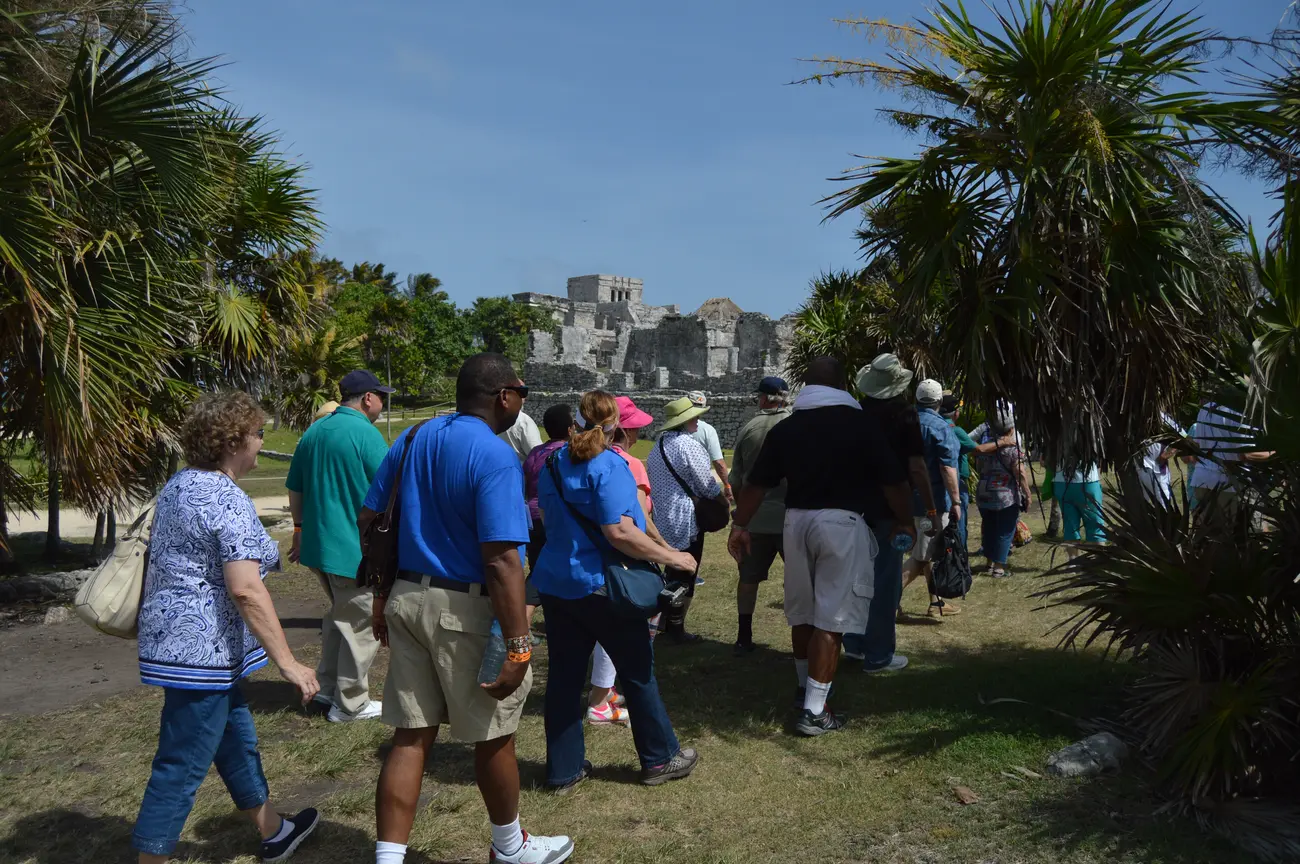
                      The ancient Maya on the Yucatán Peninsula of Mexico had sophisticated cities at places such as Chichén Itzá and Tulum, where they built stone temples that endure today. The Maya would make pilgrimages to these temples.

                      “You go to the temples you have built, a pyramid-like thing in most cases, to the deity of corn and maize,” Starr says. “In every case, when you follow the pilgrimage lines, and you already understand that the deity made a statement that he would return, and you are at the end of the road there in the Yucatán, and the drought was killing you all, you would, if you hypothesize yourself in the situation, you would want to find him.”

                      The plausibility of the Cross-Gulf Travel Theory is supported by the fact that the ancient Maya were accomplished mariners, known for constructing very large canoes.

                      “These were sailing vessels that could seat 25,” says Starr. “They were 8 or 9 feet across, and heavy duty, and had different bow and stern than the other types of pointed canoes. I think because of their mathematical genius, their ability to have orientation from the stars, these were ideal mariners.”

                      The Gulf currents could have brought the Maya to southwest Florida, and they may have ended up near Lake Okeechobee.

                      Starr hypothesizes that when severe drought may have driven people off the coast of the Yucatán and into the Gulf of Mexico, they would have brought gifts, and materials they would need when they reached land.

                      The Maya would have brought maize to grow, and archaeologist William Sears, who died in 1996, found a rare abundance of maize corn pollen at the Fort Center Archaeological Site near Lake Okeechobee. The site also contains a crescent shaped mound most closely associated with the Maya.

                      The crested caracara bird was important to Mayan royalty. The bird is found in South and Central America, but is not common in Florida.

                      “When you start to map where those birds are, I was astonished and thrilled to find that there was a whole section in the center of Florida, around Lake Okeechobee, where there are some of these crested caracaras,” says Starr. “They don’t fly much; they wouldn’t have migrated, so how did they get there?”

                      While the Cross-Gulf Travel Theory is not yet generally accepted as fact among anthropologists, evidence supporting the idea continues to be accumulated.

                      PDF file(s)